Behold, the Man Is Become as One of Us - The Terrible Knowledge of a Fallen Mind
Key Passage: Genesis 3:22
Introduction
There are some verses in the Bible that men quote lightly because they do not feel the weight of what is actually being said. Genesis 3:22 is one of them. “And the LORD God said, Behold, the man is become as one of us, to know good and evil.” A modern reader, drunk on the devil’s old sales pitch, might hear that and think man has been elevated, enlarged, enlightened, and improved. But that is not what happened in Eden. Man did gain a kind of knowledge, but it was not holy enlargement. It was not divine purity. It was not noble ascent. It was corrupted awareness. It was the knowledge of good and evil gained, not by standing above evil in righteousness, but by falling into evil in transgression. That makes all the difference. Man did not become godlike in holiness. He became guilty in consciousness.
That is why this verse is so severe. It exposes the whole lie of the serpent. Satan promised opened eyes, and Adam and Eve got them. He promised knowledge, and they got it. He implied a kind of godlike awakening, and in a twisted sense, they entered a new realm of awareness. But what kind of awareness was it? Not the clear, serene, undefiled knowledge of a holy God. It was the miserable, inwardly stained knowledge of creatures who now knew good by memory and evil by participation. Before the fall, they knew goodness in innocence. After the fall, they knew evil in guilt. That is not advancement. That is ruin. That is what the modern world still cannot seem to understand. It keeps treating transgression like enlightenment and corruption like growth. But Genesis 3:22 stands there like a sword and says otherwise.
This is one of the most urgent truths for the hour we are living in. The age worships knowledge. It worships exposure, experience, experimentation, boundary-breaking, and self-discovery. It tells people they become deeper, wiser, and more complete by tasting what God forbade. It glorifies the fall as if corruption were maturation. But the Bible says man’s great problem is not a lack of forbidden knowledge. It is the possession of forbidden knowledge in a corrupt condition. Fallen man now knows too much in the wrong way. He knows evil by stain, shame, appetite, memory, and guilt. So this essay must deal with that terrible knowledge, the false enlightenment of the fallen mind, and the profound difference between innocent understanding and guilty consciousness. Man did become something after disobedience, but not what the serpent advertised. He became mentally enlarged in the worst possible way - aware, but ruined.
Chapter 1: The Serpent Promised Enlightenment Through Disobedience
The road to Genesis 3:22 begins with Satan’s pitch in Genesis 3:5. “For God doth know that in the day ye eat thereof, then your eyes shall be opened, and ye shall be as gods, knowing good and evil.” That is the original sales pitch of rebellion. The devil does not present sin first as filth. He presents it as awakening. He markets disobedience as enlightenment. He does not begin by saying, “You will be ashamed, afraid, hiding, cursed, and dying.” He says, in effect, “You will be expanded. You will be initiated. You will be upgraded.” That is how temptation still works. It wraps transgression in the language of deeper perception.
This is why the devil’s lie has such staying power. It appeals to human pride. Men do not only want pleasure. They want elevated self-consciousness. They want to believe that by stepping outside God’s word they are becoming more than they were. That is why sin is often defended as discovery, freedom, authenticity, or the breaking of childish restraints. The serpent offered Eve something that sounded like maturity. He made obedience sound like limitation and rebellion sound like enlargement. Hell has never found a better sales strategy. It is still using it in classrooms, entertainment,
politics, false religion, and the imaginations of private sinners.
But the lie was in the way the knowledge would be gained and the condition in which it would be held. God knows good and evil in absolute holiness, sovereign righteousness, and uncorrupted judgment. Man would know good and evil as a fallen creature pierced by shame and stained by sin. That is the trap. The devil often promises a result while hiding the condition attached to it. Yes, they would know. But they would know as ruined beings. Yes, their eyes would be opened. But they would be opened onto nakedness. Yes, they would enter a new awareness. But it would be awareness under guilt. That is the false enlightenment of the serpent.
Chapter 2: Man Did Gain Knowledge, but Not the Knowledge of God
Genesis 3:22 does not deny that something happened. The Lord says, “Behold, the man is become as one of us, to know good and evil.” That means the change was real. This is not a case where nothing at all was gained. Something was gained, but the gain itself was terrible. Man now possessed a consciousness he did not possess before. He had crossed a line. Innocence was gone. He could no longer know the world as one who had never transgressed. The knowledge was real, but it was not the knowledge of God in kind. It was not divine omniscience or holy judicial purity. It was creaturely knowledge under corruption.
That distinction is everything. God’s knowledge of evil does not defile Him. He knows evil exhaustively while remaining infinitely pure, untouched, and sovereign over it. Man’s post-fall knowledge of evil is not like that. It is the knowledge of one who has entered into evil. It is participatory knowledge. It is guilty knowledge. It is not the surgeon’s knowledge of disease from outside the infection; it is the patient’s knowledge of disease from within the sickness. That is what changed in Eden. Man did not gain noble judicial distance. He gained inward contamination. He knew evil because evil had now gotten into him.
This is why the phrase must never be preached like a compliment to fallen humanity. It is not God congratulating Adam for reaching a higher plane. It is God stating, with judicial solemnity, what man has now become through transgression. The verse is descriptive, not celebratory. It tells the truth about the altered state of man’s consciousness. He is no longer innocent. He is no longer simply a recipient of good in purity. He now carries a divided awareness. He knows what goodness is because he has lost it. He knows what evil is because he has joined it. That is not godhood. That is tragedy.
Chapter 3: Innocence and Guilty Awareness Are Not the Same Thing
Before the fall, Adam and Eve were not ignorant in the childish sense. They were innocent. That is different. The modern world treats innocence as deficiency, as though the person who has not tasted corruption simply lacks education. But the Bible presents innocence as a clean state, not a stunted one. Adam and Eve knew God, knew their place, knew the garden, knew one another, knew command, knew blessing, and knew obedience before the fall. What they did not know was evil by participation. They had not entered the realm of guilt, shame, and inner stain. That was not immaturity. That was purity.
After the fall, that innocence is gone forever. It cannot be recovered by experience. Once a soul knows evil by joining it, it cannot unknow it in that original Edenic way. That is why sin is so devastating. It does not merely add a layer of information. It alters the knower. It changes consciousness itself. Adam and Eve do not merely become aware of a new category. They become guilty selves living with a knowledge now tied to their own corruption. Innocence does not mature into guilt the way a child matures into adulthood. Innocence is shattered by guilt. That is what happened in Eden.
This is one of the great lies of modern education divorced from Scripture. It assumes that every boundary crossed is growth and every experience absorbed is enrichment. But Scripture says otherwise. Some knowledge is defiling when gained through disobedience. Some awareness is ruinous. Some eyes are better left unopened to certain things. That is not anti-knowledge. That is moral sanity. There is a profound difference between innocent understanding under God and guilty consciousness after rebellion. The world mocks that difference because it has swallowed the serpent’s language. But Genesis 3 says the loss of innocence is not enlightenment. It is damage.
Chapter 4: The Opened Eyes of Fallen Man First Saw Nakedness
The first evidence of this terrible knowledge is not philosophical sophistication. It is shame. “And the eyes of them both were opened, and they knew that they were naked” (Genesis 3:7). That is what the enlightenment produced. Not serenity. Not power. Not glory. Nakedness, shame, fear, and hiding. The first fruit of the fallen mind is not high culture. It is inward exposure. The awakened consciousness of sinful man first turns on himself and discovers he is no longer right. That is why Genesis 3 is so honest. It lets the devil’s promise be tested by the immediate result.
This tells you something crucial about false enlightenment. It promises expansion but produces exposure. It promises wisdom but produces shame. It promises liberation but produces hiding. That is because the knowledge gained is not held in a clean vessel. The mind has been altered morally. So the first thing the enlightened sinner discovers is not that he has become more. He discovers that he is now less at ease before God than he ever was before. He sees himself, but not in glory. He sees himself in guilt. The opened eyes are turned first toward a ruined self-awareness.
That pattern has never changed. Fallen man calls corruption education, but the result is still often the same inward turmoil, shame, fragmentation, and self-conscious misery that appeared in Eden. Men and women may boast for a season in what they now know, what they have seen, what they have tasted, and what they have become aware of. But under the surface there is often fear, confusion, bondage, and hiding. The ancient sequence remains intact. Opened eyes without holiness do not produce peace. They produce nakedness felt as guilt. That is the first sermon of the fallen mind.
Chapter 5: Fallen Man Knows Good by Loss and Evil by Experience
One of the most devastating aspects of this new knowledge is the way it is structured. Before the fall, man knew good by dwelling in it. After the fall, he knows good partly by loss. He knows what he had because he no longer has it as before. He remembers purity because purity has been wounded. He feels peace by contrast because peace has been disturbed. At the same time, he knows evil no longer as a category merely warned against, but as a reality entered by his own act. That is what makes this knowledge terrible. Good is remembered in loss, and evil is known in experience.
That is the basic psychology of the fallen race. Men know they were made for something more than what they now are, but they also know themselves now as corrupted. They have some awareness of truth, righteousness, beauty, and goodness, but they carry that awareness in a ruined condition. Romans 2 says the Gentiles show “the work of the law written in their hearts, their conscience also bearing witness” (Romans 2:15). That means fallen man still has moral awareness. But it is not Edenic innocence. It is conscience under corruption. He knows enough to accuse, excuse, hide, justify, and fear. He knows enough to feel the fracture, but not enough in himself to heal it.
This is why man is such a contradiction after the fall. He can speak about virtue while practicing vice. He can admire truth while lying. He can feel guilt while defending sin. He can condemn others while excusing himself. Why? Because he now knows good and evil in a divided, fallen way. His mind is not simple anymore. It is twisted. It is morally split. It carries memory of what ought to be and the stain of what now is. Genesis 3:22 explains that contradiction better than all the psychology books stacked together.
Chapter 6: Modern Man Still Worships the Serpent’s Version of Knowledge
The spirit of Genesis 3 is still alive in the modern world because modern man still believes the serpent’s old doctrine. He still treats forbidden knowledge as advancement. He still thinks the road to maturity lies through transgression. He still glorifies experience regardless of moral cost. He still assumes that being exposed to more darkness somehow makes a soul deeper, richer, and wiser. The age worships the opened eyes of the fall. It exalts the person who has seen everything, tasted everything, experimented with everything, and crossed every line. That is just Genesis 3 with better marketing and worse consequences.
You can see it everywhere. Children are told they must be introduced early to things that once would have horrified decent people, as though premature corruption were education. Entertainment glorifies vice as complexity. Universities celebrate deconstruction of moral boundaries as intellectual courage. False spirituality offers “hidden knowledge” that pulls the soul away from plain obedience to God’s word. The whole culture is drunk on the idea that innocence is small and corruption is deep. That is exactly the lie the serpent told in Eden. The slogans have changed. The doctrine has not.
The tragedy is that many who chase that kind of knowledge end up like Adam and Eve - more aware, perhaps, but not more whole. More exposed, but not more free. More stimulated, but not more pure. More conscious, but not more peaceful. The world keeps worshiping awareness while ignoring holiness. It keeps exalting information while neglecting transformation. But the Bible says the terrible thing about the fallen mind is not that it knows too little. It is that it knows under sin. That is why modern man can be technologically brilliant and morally diseased at the same time. Genesis 3:22 already explained him.
Chapter 7: Only Regeneration Can Answer the Fallen Mind
If the problem is not simply lack of knowledge but corrupted knowledge held in a fallen mind, then the solution cannot merely be more information. Fallen man does not need only a classroom. He needs new birth. He does not need more opened eyes in the serpent’s sense. He needs cleansing, renewal, and the mind of Christ. “And be renewed in the spirit of your mind” (Ephesians 4:23). That is the issue. The terrible knowledge of Genesis 3 cannot be reversed by education alone because the knower himself has been altered. The sinner needs more than data. He needs regeneration.
This is why the gospel is so glorious. Christ does not merely instruct the fallen mind from outside. He saves, cleanses, indwells, and renews. The believer is given a new standing and a new life. He still remembers evil, still lives in a fallen world, and still battles the flesh, but he is no longer left alone inside Adam’s ruined consciousness. The Holy Ghost comes in. The word of God renews the mind. The conscience is cleansed. The heart is reoriented. This is not a return to Edenic innocence in this life, but it is the beginning of a redeemed way of knowing - knowing God in Christ, knowing sin truthfully, and knowing good not merely by memory of loss but by living communion with Him.
And that points toward the final hope. One day the redeemed will know in purity again, not by becoming ignorant, but by being glorified. They will not return to innocence in the childish sense. They will enter holiness without corruption. They will know evil as conquered history, not as present stain. They will know good in the unveiled presence of God forever. That is the great answer to the terrible knowledge of a fallen mind. Not more serpent-light, but resurrection life. Not more transgressive awareness, but glorified purity under the face of God in Christ.
Conclusion
“Behold, the man is become as one of us, to know good and evil” is one of the most sobering statements in Scripture because it tells the truth about what man became through sin. He did gain a kind of knowledge, but not in holiness. He gained corrupted awareness. He did not become godlike in purity. He became ruined in perception. He did not rise into divine wisdom. He fell into guilty consciousness. The difference between those things is the difference between light and hell. The serpent promised enlightenment, but the enlightenment came in the worst possible condition - in sin.
That is why the verse is so relevant to this generation. The world still worships the devil’s doctrine of forbidden knowledge. It still thinks that corruption deepens the soul and that innocence is naivete. It still calls shame wisdom and guilt maturity. But Genesis 3:22 exposes the fraud. Fallen man knows good and evil, yes, but he knows it as a stained creature, not as a holy judge. He knows good by losing it and evil by entering it. That is not advancement. That is damage. The opened eyes of the fall are not a trophy. They are a wound.
And that is why the answer must be more than information. It must be Christ. The fallen mind does not simply need to learn more. It needs to be redeemed, renewed, and ultimately glorified. Only then can the terrible knowledge of Genesis 3 be answered. Until then, the verse stands as a warning to every soul tempted to glorify corruption in the name of awareness. Man did become something after disobedience, but it was not what the serpent advertised. He became more conscious, yes - but also more ruined.
• • •
Missing some Tweet in this thread? You can try to
force a refresh

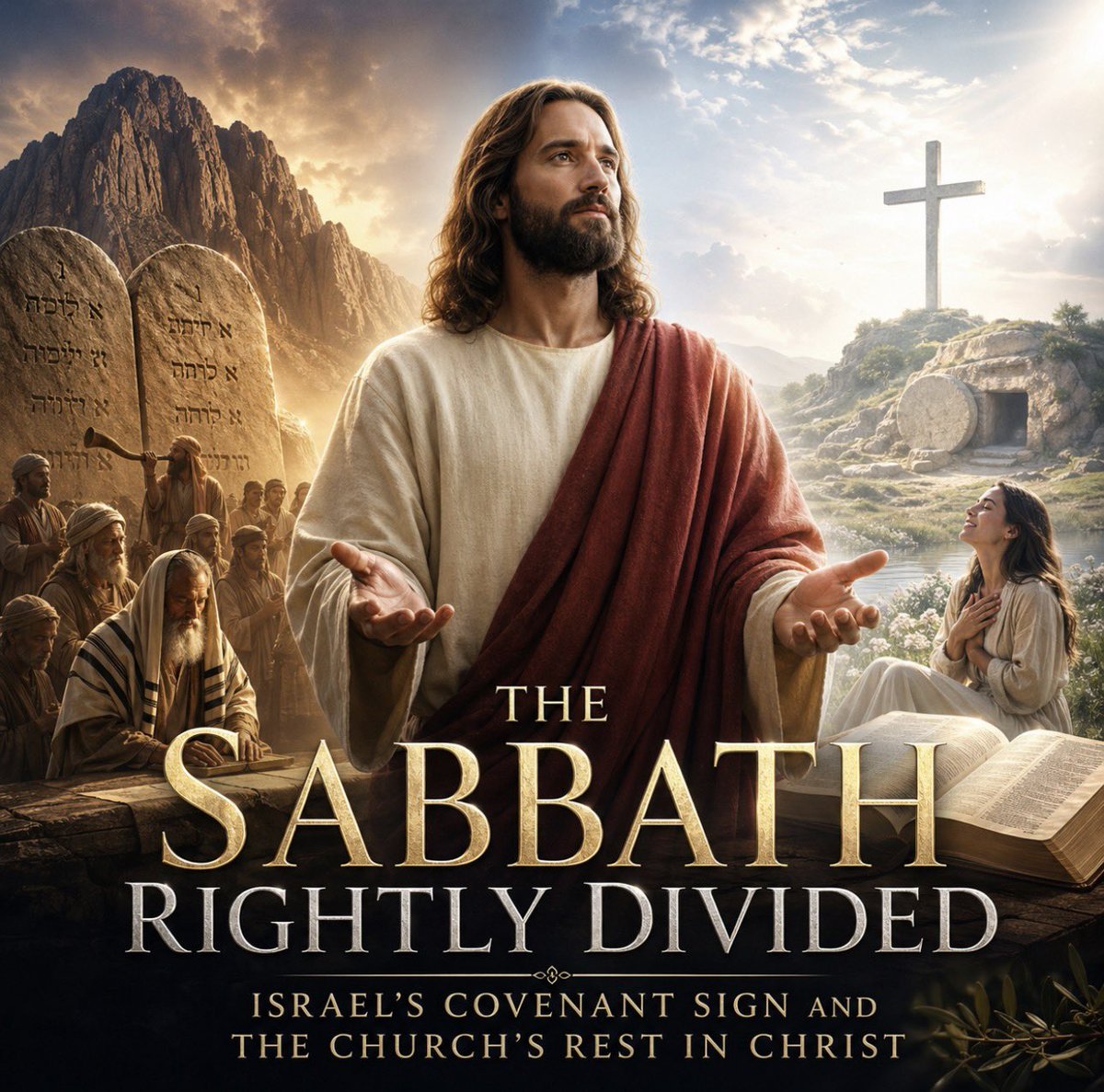
The Sabbath Rightly Divided: Israel’s Covenant Sign and the Church’s Rest in Christ
Main Point: The Sabbath was a holy covenant sign given to Israel under the law, but the Church is not commanded to keep the Sabbath as Israel did. The believer’s rest is found in Christ, and no man is allowed to judge the body of Christ by Sabbath days.
Introduction
The Sabbath is one of those subjects where people can take a Bible truth, refuse to rightly divide it, drag it across dispensational lines, and then beat the Church over the head with a commandment God gave to Israel under the law. That is how bondage gets built. A man opens Exodus 20, sees the fourth commandment, reads “Remember the sabbath day, to keep it holy,” and then runs straight into a Church Age believer’s life demanding Saturday observance, Sabbath restrictions, and Old Testament penalties, without stopping long enough to ask who was being addressed, under what covenant, for what purpose, and how Paul teaches the body of Christ to handle days under grace. That is not careful Bible study. That is stealing Israel’s mail, ignoring Paul, and then acting like you are more spiritual because you put people under a yoke God did not put on the Church.
Now let us be plain from the start. The Sabbath was not evil. The Sabbath was not unimportant. The Sabbath was not a mistake. God sanctified the seventh day in Genesis 2 after His work of creation was finished. Later, under Moses, He gave Israel the Sabbath as part of the law. It was serious. It was holy. It was tied to Israel’s covenant relationship with God. Exodus 31 says the Sabbath was a sign between God and the children of Israel. That is the key that unlocks the door. The question is not whether the Sabbath mattered. Of course it mattered. The question is whether the Church, the body of Christ, saved by grace after the finished work of Jesus Christ, is placed under Israel’s Sabbath command as a binding ordinance today. The answer from Paul is no. Colossians 2:16 says, “Let no man therefore judge you… in respect of… the sabbath days.” That verse alone should settle the matter for anyone who believes the words on the page.
The Bible believer does not throw away the Sabbath. He rightly divides it. He sees creation rest in Genesis, covenant command in Exodus, national sign in Exodus 31, kingdom and Jewish context in the Gospels, transitional history in Acts, liberty in Romans 14, warning against bondage in Galatians 4, freedom from Sabbath judgment in Colossians 2, and spiritual rest in Christ in Hebrews 4. That is Bible study. The Church is not Israel. The body of Christ is not under the Mosaic covenant. Pastors are not Levitical priests. Church buildings are not the temple. Sunday is not the Christian Sabbath in the sense of replacing Israel’s seventh-day law. The believer’s standing is in Christ, his rest is in Christ, his righteousness is in Christ, and his walk is governed by the Spirit through sound doctrine, not by being dragged back under the shadow of a covenant sign given to Israel.
Chapter 1: God Sanctified the Seventh Day Before He Gave Israel the Sabbath Command
Genesis 2:2-3 says, “And on the seventh day God ended his work which he had made; and he rested on the seventh day from all his work which he had made. And God blessed the seventh day, and sanctified it.” That is the first mention of the seventh day being blessed and sanctified. God rested because His work was complete, not because He was tired. The Almighty does not get worn out. The rest of God in Genesis is the rest of completed work. Creation was finished, ordered, declared good, and God rested on the seventh day.
But here is where men often make a leap the text does not make. Genesis 2 shows God blessing and sanctifying the seventh day, but it does not show Adam being given a Sabbath command with Mosaic restrictions. It does not show Adam being told not to gather sticks. It does not show Noah keeping Sabbath law. It does not
show Abraham being commanded under the fourth commandment. It does not show a pre-Mosaic Sabbath ordinance enforced with the penalties later given to Israel. The seventh day is sanctified in creation, but the Sabbath command as a covenant law comes later through Moses to Israel.
That distinction matters. If a man refuses it, he will start dragging every reference to the seventh day into one flat system. But the Bible develops doctrine progressively. A thing can appear in seed form in Genesis and then receive covenantal form later. Marriage appears in Genesis before the law. Circumcision is given to Abraham before Moses. The Sabbath as a commandment and covenant sign is given to Israel under Moses. Genesis 2 establishes the pattern of divine rest after completed work. Exodus establishes Sabbath observance as law for Israel. Those are related, but they are not identical in administration.
Chapter 2: The Sabbath Command Was Given to Israel Under the Law
Exodus 20 gives the fourth commandment: “Remember the sabbath day, to keep it holy.” God then commands six days of labor and the seventh day as the sabbath of the LORD. That commandment is part of the covenant law given at Sinai to Israel. The people standing there were not Gentile nations, not the body of Christ, not the Church Age believer seated in heavenly places. They were Israel, redeemed out of Egypt, gathered at Sinai, receiving the law through Moses. The law had a historical setting, a national people, a covenant structure, and specific commands tied to Israel’s life under God.
Deuteronomy 5 repeats the commandment, but it gives a reason tied directly to Israel’s deliverance from Egypt: “And remember that thou wast a servant in the land of Egypt, and that the LORD thy God brought thee out thence through a mighty hand and by a stretched out arm: therefore the LORD thy God commanded thee to keep the sabbath day.” That is not universalized Church Age language. That is Israel’s national history. The Sabbath was linked to creation rest in Exodus and to redemption from Egypt in Deuteronomy. Both are true, but the command is still given in the law to Israel.
This is why it is dishonest to lift the Sabbath command out of Exodus 20, carry it into the Church, and then ignore the rest of the Mosaic law around it. If a man wants to put the Church under Sabbath law, let him read the penalties too. Numbers 15 shows a man gathering sticks on the Sabbath, and he is stoned. Exodus 31 says the one who profanes it shall surely be put to death. The Sabbath under the law was not a casual preference. It was part of Israel’s covenant order with real penalties. Modern Sabbath pushers want the commandment without the covenant context, the day without the penalties, and Moses without the full law. That is not right division. That is selective legalism.
Chapter 3: Exodus 31 Defines the Sabbath as a Sign Between God and Israel
Exodus 31:16-17 is the verse that ought to stop the argument: “Wherefore the children of Israel shall keep the sabbath, to observe the sabbath throughout their generations, for a perpetual covenant. It is a sign between me and the children of Israel for ever.” That is specific. It does not say the Sabbath is a sign between God and the Church. It does not say it is a sign between God and all nations. It does not say it is a sign between God and Gentile believers in the body of Christ. It says it is a sign between God and the children of Israel.
A sign points to a covenant relationship. Circumcision was a sign connected with Abraham’s seed. The rainbow was a sign connected with God’s covenant after the flood. The Sabbath was a sign connected with Israel under the law. That does not make the Sabbath meaningless. It makes it specific. God knows how to identify who He is speaking about. If He says Israel, believe Israel. If He says the Church, believe the Church. If He says the nations, believe the nations. Confusion begins when men blur those
distinctions and then call the blur spirituality.
The Sabbath was part of Israel’s identity as a separated nation. It marked them off from the nations around them. Their calendar, feasts, sacrifices, priesthood, temple, dietary laws, circumcision, and Sabbath observance all belonged to a covenant system. When a man today tries to make Sabbath-keeping a requirement for the body of Christ, he is reaching back into Israel’s covenant sign and trying to lay it on a people who are not under that covenant. Paul spent a good portion of his ministry fighting men who tried to put Gentile believers under the yoke of the law. The Sabbath question fits inside that larger fight.
Chapter 4: Jesus and the Sabbath Must Be Read in Israel’s Setting
In the Gospels, Jesus deals often with the Sabbath because He is ministering to Israel under the law before the cross. He attends synagogues. He heals on the Sabbath. He exposes Pharisaic hypocrisy. He declares that “the Son of man is Lord even of the sabbath day” (Matthew 12:8). Those passages are powerful, but they must be read in their setting. Jesus was not establishing a post-Calvary Church Age Sabbath ordinance. He was confronting Israel’s religious leaders and revealing His authority over the very law they claimed to defend.
Matthew 12 is especially important. The Pharisees accuse the disciples when they pluck ears of corn on the Sabbath. Jesus answers by pointing to David eating the shewbread and the priests profaning the Sabbath in the temple and being blameless. He then says, “in this place is one greater than the temple.” That is a staggering claim. The Lord of the Sabbath is standing in front of Sabbath legalists, and they are too blind to see Him. They use the Sabbath to accuse the One who owns it. That is religion at its worst.
Jesus also says, “The sabbath was made for man, and not man for the sabbath” (Mark 2:27). The Sabbath was never intended to become a Pharisee weapon for crushing people under man-made traditions. It was a divine command within Israel’s covenant life, pointing to rest, worship, order, and God’s authority. But the Pharisees turned it into a system of accusation. That same spirit is alive today. Men take a command given to Israel, add their own pressure, and then judge Church Age believers who stand in Pauline liberty. The Lord rebuked that spirit then, and Paul rebukes it later.
Chapter 5: The Church Is Not Commanded to Keep the Sabbath
Here is where the matter becomes very simple. When Paul writes to the body of Christ, he never commands Sabbath-keeping as a requirement. He never says, “Brethren, remember the Sabbath day.” He never tells Gentile believers they are under the fourth commandment as a covenant sign. He never makes Saturday observance a test of spirituality. Instead, Romans 14:5-6 says, “One man esteemeth one day above another: another esteemeth every day alike. Let every man be fully persuaded in his own mind.” That is not Mosaic Sabbath enforcement. That is liberty.
Galatians 4:9-11 is even stronger. Paul rebukes believers for turning again to weak and beggarly elements and says, “Ye observe days, and months, and times, and years. I am afraid of you.” That is not Paul celebrating legal calendar bondage. He sees danger when believers who were saved by grace begin placing themselves under religious observances as though those things perfect them. The Galatians were being bewitched by law teachers. Paul does not pat them on the back for getting more “Hebrew.” He warns them.
Then Colossians 2:16 gives the direct command: “Let no man therefore judge you in meat, or in drink, or in respect of an holyday, or of the new moon, or of the sabbath days.” There it is. No man is allowed to judge the body of Christ by Sabbath days. Why? Verse 17 says, “Which are a shadow of things to come; but the body is of Christ.” The Sabbath was a shadow. Christ is the substance. A shadow has a purpose, but once the substance stands before
John Piper Exposed - When Christian Hedonism, Pleasure-Centered Theology, and Experiential Calvinism Replace the Simplicity of Scripture
There are some men who are easy to spot because they are loud, flashy, careless, and obviously commercial. They wear their compromise on their sleeve and their corruption on their face. Then there are others who are far more dangerous because they come wrapped in seriousness, academic depth, missionary zeal, strong language about the glory of God, and a reputation for weighty preaching. John Piper belongs to that second category. He is not a Benny Hinn type spectacle. He is not a soft motivational talker. He sounds grave, thoughtful, poetic, intense, and God-centered. That is exactly why so many conservative Christians drop their guard around him. They hear him speak about the majesty of God, the nations, suffering, joy in Christ, and the supremacy of God, and they assume that because the tone is serious, the theology must be sound all the way through. But the Devil has never been limited to using clowns. He can use professors too. He can use men who read Edwards, quote Lewis, speak of missions, and fill their sermons with passionate phrases about delight in God while still introducing a framework that bends plain Bible truth into a highly systematized, pleasure-centered, experiential theology.
The heart of the issue with John Piper is not that he says nothing true. He says many true things. That is what makes him influential. Error that never borrows truth rarely gets very far. The issue is that he takes certain biblical truths and stretches them until they begin governing everything else in ways Scripture itself does not. He does not simply say that believers should rejoice in the Lord, which is true. He builds a whole system around joy, delight, desire, pleasure, satisfaction, and happiness in God, then makes that framework the controlling lens through which worship, love, missions, marriage, giving, suffering, and the Christian life as a whole are interpreted. That is where Christian Hedonism comes in. He may dress it up in refined language, and he may insist he means pleasure in God and not worldly lust, but the term itself and the system behind it shift the center of gravity. The Christian life stops sounding like faith in what God said, obedience to what God commanded, and submission to what Scripture plainly teaches. It starts sounding like a lifelong project of maximizing joy, delight, and satisfaction in God in such a way that even duty, sacrifice, suffering, and holiness are drawn into the orbit of a pleasure-principle.
That is why this essay matters. John Piper has influenced pastors, missionaries, seminary students, conference speakers, young fundamentalists, conservative evangelicals, and Calvinistic circles for years. He is not a fringe figure. He is a system-builder. He is a tone-setter. He is a gateway voice for a whole way of reading the Bible and a whole way of feeling religion. The tragedy is that many men who would have rejected overt charismatic foolishness or prosperity circus religion have swallowed Piper’s system because it came through the front door of serious preaching and exalted language about God. But a thing does not become safe because it sounds lofty. The serpent talked theology in Eden. The question is not whether a man sounds intelligent. The question is whether he is handling the words of God plainly, simply, and soundly. And when John Piper’s theology is brought into the light, what emerges is a system where Christian Hedonism, pleasure-centered theology, and experiential Calvinism begin replacing the simplicity that is in Christ.
Chapter 1: Christian Hedonism Puts the Wrong Center in the Middle of the Christian Life
The first and greatest problem with John Piper is the phrase he chose, defended, popularized, and built an empire around: Christian Hedonism. That is not a side remark. That is not an unfortunate passing
expression. That is the central framing device of his ministry. He openly teaches that the chief end of man is to glorify God by enjoying Him forever and that the pursuit of joy in God is not a secondary feature of the Christian life but its essential engine. Now right away some people will say, “What is wrong with enjoying God?” Nothing is wrong with enjoying God. Saints should rejoice in the Lord. They should delight in Christ. They should love the Lord their God. But that is not the whole issue. The issue is not whether joy belongs in the Christian life. The issue is whether joy should be made the interpretive center of everything, and whether the pursuit of personal satisfaction should be framed so strongly that it becomes the organizing principle of worship, love, obedience, holiness, and suffering. That is exactly what Piper has done.
The Bible never calls the Christian life Christian Hedonism. That term is not just provocative. It is corrupting. Hedonism, by definition, is historically tied to pleasure as a chief good. Piper tries to baptize the word, qualify the word, redirect the word, and sanctify the word, but the effect remains the same. He normalizes the idea that the believer’s highest duty is inseparably tied to the pursuit of pleasure. He insists this pleasure is in God, and that sounds safer, but even then the emphasis begins to change the tone of Christianity. Instead of preaching first that God is holy, man is guilty, Christ is sufficient, and the believer must submit to Scripture whether he feels pleasure or not, Piper repeatedly trains people to think in terms of joy, delight, desire, happiness, and satisfaction as the very framework through which all duty becomes intelligible. The center moves from what is true and right to what is joy-producing in God. That is too much weight to put on one theme, even a biblical one.
Once that happens, the plain sense of Christian obedience starts getting altered. Obedience is no longer primarily because God said so. Worship is no longer first because God is worthy. Love is no longer first because righteousness demands it. The whole structure becomes “do this because it leads to deepest joy in God.” That may sound like a subtle difference, but it is enormous. It turns the Christian life into a pleasure-logic, even if it is “spiritual pleasure.” It trains the saint to ask not only, “What did God command?” but “How does this maximize my enjoyment of God?” The simplicity of a childlike faith that obeys because the Father spoke gets displaced by a more complex theological machine. And once you replace simplicity with a machine, you start producing disciples who are more fluent in Piper’s categories than in Scripture’s plain ones.
Chapter 2: Pleasure-Centered Theology Distorts Worship, Love, and Obedience
The second problem is that Piper’s system makes pleasure so central that worship, love, and obedience begin sounding dependent on the pursuit of delight. He says things that appear profound, such as God being most glorified in us when we are most satisfied in Him. That sentence is famous because it is clever, memorable, poetic, and emotionally compelling. But clever theology is not automatically sound theology. The Bible says whether ye eat or drink, or whatsoever ye do, do all to the glory of God. It does not say God is most glorified in you when your inward state of satisfaction is at its highest. That is Piper’s formula, not Paul’s. Paul grounds duty in divine command, divine ownership, divine truth, and divine judgment. Piper repeatedly grounds duty in delight. That changes the center of the whole matter.
Take worship, for instance. The Bible teaches worship because God is God. He is worthy whether I feel delight or dryness. He is worthy if I am weeping, trembling, broken, confused, or under a dark cloud. But Piper’s system keeps moving back to the idea that worship reaches its essence in delight and satisfaction. Again, delight belongs in
worship, but if you make delight the central explanatory principle, then you are making the inward experience of pleasure too dominant. The simple believer in a season of spiritual drought may begin to question whether he is truly worshiping if he is not experiencing the right kind of delight. The saint under deep affliction may begin to measure spiritual health by emotional intensity rather than by faithful endurance. Piper often tries to include suffering inside his joy framework, but the framework still puts too much stress on experience and affection.
The same problem appears in love and obedience. Piper wants to say that love is strongest when it pursues joy in the joy of the beloved, and obedience is sustained by the superior pleasure of God over sin. There is truth in the idea that sin loses power when Christ is prized more highly. But Piper keeps turning that truth into the key that unlocks nearly everything. The result is that love starts sounding less like self-denial under God’s command and more like an enlightened pursuit of God-centered joy. Obedience starts sounding less like submission to a holy Lord and more like the best route to deepest pleasure. He does not deny submission, but his framing weakens its plainness. The soldier obeys because the Captain commands. The servant obeys because the Master is right. The child obeys because the Father spoke. Piper adds another layer that need not be there and should not be there.
Chapter 3: Experiential Calvinism Makes Feeling Too Central to Doctrine
The third issue is what can only be called experiential Calvinism. Piper is not simply Calvinistic in a doctrinal sense. He is deeply experiential in the way he presents Calvinism. He wants the sovereignty of God to be savored, felt, relished, enjoyed, and emotionally tasted. Again, this is what makes him appealing. He is not a dry five-point pamphlet machine. He makes sovereignty sound warm, majestic, emotionally rich, and spiritually intoxicating. But that is also where the danger lies. The doctrines of grace become not merely truths to be believed, but a total atmosphere to inhabit, feel, and emotionally revel in. That can make the hearer less concerned with whether the doctrine is being handled rightly and more concerned with whether the doctrine is creating the right kind of inward sensation.
This becomes especially serious in the way Piper speaks about suffering. He consistently frames suffering under the absolute sovereignty of God in ways that are intense, emotionally weighty, and experientially charged. He wants people to feel the grandeur of God’s rule over every affliction, every disease, every disaster, every pain. He wants them to say, “Though he slay me, yet will I trust him,” and there is a biblical truth there. But Piper presses divine sovereignty so hard and with such emotionally absolute force that weaker believers can come away with a crushing view of life in which every wound, horror, and devastation is immediately drawn into a tight decree-framework without enough room for the Bible’s plain distinctions, pastoral gentleness, and simple submission to mystery where God has not spoken in detail. He is often theologically daring where the saints would be safer with reverent restraint.
This is what experiential Calvinism often does. It turns the doctrines of grace into an all-encompassing interpretive universe where the believer is expected not only to affirm divine sovereignty but to feel it as beautiful, to savor it as sweet, and to rest in it with near-poetic relish. That may work for the philosophical temperament or the theological romantic, but it can burden ordinary saints. Some believers just need to know God is good, Christ is faithful, the Bible is true, and they are to trust Him even when they do not understand. Piper often moves beyond that simplicity and builds a world where one must emotionally metabolize sovereignty in a specific way. That is not the simplicity of Scripture. That is a
There is a law running through your Bible that every religious faker in America hates with a passion, and that law is this: God will never bless what has not first come under the blood. He will not sanctify your zeal, baptize your sincerity, excuse your rebellion, or perfume your flesh. He starts with death, because the flesh deserves death. He starts with sacrifice, because sin must be judged before fellowship can be enjoyed. He starts with blood, because there is no approach to a holy God apart from atonement. In Leviticus 8, when Aaron and his sons are being consecrated for priestly service, the first great lesson is not garments, not oil, not beauty, not dignity, not office, and not ceremony. The first lesson is blood. The text says, “And he brought the bullock for the sin offering: and Aaron and his sons laid their hands upon the head of the bullock for the sin offering. And he slew it; and Moses took the blood” (Leviticus 8:14-15). That is not accidental. That is God preaching before Moses ever opens his mouth.
The modern church world has tried to reverse the order. It wants blessing before blood, power before purity, platform before consecration, ministry before cleansing, and applause before the altar. Men want to be anointed without being broken. They want to be used without being emptied. They want the crown without the cross, the fire without the sacrifice, and the office without the death sentence upon the old man. But God has never changed His order. Before Aaron can wear the holy garments, before he can minister at the altar, before he can stand in the sanctuary, a victim has to die and blood has to be handled. That is because priesthood without blood is theater. Worship without blood is fraud. Holiness without blood is self-righteousness in a costume. The Lord is teaching in picture form what He will later state in plain words: “without shedding of blood is no remission” (Hebrews 9:22).
That truth does not vanish when you leave Leviticus and come to Calvary. It explodes. All those rivers of blood in the Old Testament were shouting ahead to one crimson stream running down the cross of Jesus Christ. Every slain bullock, every sprinkled altar, every bleeding victim was a witness against man’s goodness and a prophecy of God’s remedy. The sinner is not improved into acceptance. He is forgiven through substitution. The priest is not polished into holiness. He is set apart through blood. The worshipper is not welcomed because he means well. He is received because another has died in his place. So if you are going to understand Leviticus 8:14-15 rightly divided, then you must get this settled in your soul: blood comes before blessing, atonement comes before anointing, cleansing comes before calling, and the altar comes before the sanctuary. If you miss that, you will miss the whole chapter and half the churches in your town will help you miss it.
1. God Begins With a Sin Offering, Not a Celebration
The chapter does not open with a parade. It opens with a problem. Aaron is about to become high priest, and his sons are about to enter priestly service, but before anything else is done, the bullock for the sin offering is brought forward. That alone destroys the fantasy that religious office makes a man inherently clean. Aaron is not treated as a celebrity. He is treated as a sinner needing atonement. The text says, “And he brought the bullock for the sin offering” (Leviticus 8:14). Notice that. Before the beautiful robes, before the breastplate, before the mitre, before the oil, comes the sin offering. God is not impressed by rank. He is not dazzled by title. He does not say, “Aaron is the chosen man, so let us skip the bloody part.” No, sir. The chosen man has to come the same way every sinner comes, through a substitute.
That should flatten a whole generation of pulpit peacocks. There is something rotten in professing Christianity when men think
ordination erases depravity. It does not. Titles do not wash sin away. Degrees do not make the flesh holy. Collars, robes, pulpits, committees, seminaries, and flattering introductions do not impress the Judge of all the earth. Aaron himself has to stand there and lay his hands on the victim. He has to identify with the offering. He has to confess by action that he deserves what is about to happen to that bullock. That is the doctrine. The victim dies because the priest is guilty. That same doctrine shows up in the New Testament when the sinner flees to Christ. “For he hath made him to be sin for us, who knew no sin; that we might be made the righteousness of God in him” (2 Corinthians 5:21). You do not enter service by denying guilt. You enter service by seeing guilt transferred to a substitute.
There is another sting in that passage for the modern reader. God begins with the sin offering because sin is the real issue, not self-expression. The world talks about trauma, environment, upbringing, and social pressure. The Lord talks about sin. The church growth experts talk about relevance, atmosphere, and branding. The Lord talks about sin. Liberal religion wants to start with affirmation. God starts with sacrifice. That is why so much religion today has blessing language but no bleeding altar. It wants the fruit without dealing with the root. But God does not build His house on sentiment. He builds it on justice satisfied. There can be no blessing until sin has been judged, and there can be no real holiness until the sinner has first come under the sentence of death and the shelter of the blood.
with affirmation. God starts with sacrifice. That is why so much religion today has blessing language but no bleeding altar. It wants the fruit without dealing with the root. But God does not build His house on sentiment. He builds it on justice satisfied. There can be no blessing until sin has been judged, and there can be no real holiness until the sinner has first come under the sentence of death and the shelter of the blood.
2. The Laying on of Hands Declares Substitution
The next thing you see is Aaron and his sons putting their hands upon the head of the bullock. “And Aaron and his sons laid their hands upon the head of the bullock for the sin offering” (Leviticus 8:14). That is not a cute little ritual. That is identification. That is transfer by picture. That is a visible sermon showing that the guilt of the priest is being placed upon the innocent victim. The bullock is standing in their stead. In type, the beast becomes what they are so that they may stand where they otherwise could not stand. This is the old gospel in picture form. The holy God requires death for sin, and the sinner survives only because another dies under his judgment.
That truth runs like a scarlet cord all the way to Calvary. When John the Baptist pointed at Jesus Christ and said, “Behold the Lamb of God, which taketh away the sin of the world” (John 1:29), he was not inventing something new. He was identifying the fulfillment of what Leviticus had been teaching for centuries. Christ did not die as a tragic example. He died as a substitute. He did not merely show us love. He bore wrath. He did not simply sympathize with our suffering. He stood in our place under divine judgment. Isaiah said, “The LORD hath laid on him the iniquity of us all” (Isaiah 53:6). There is your laying on of hands in prophecy. God placed on His Son what belonged to you and me, and He poured out on the sinless One what justice demanded from the guilty.
Now that doctrine is offensive to religious pride because it leaves no room for boasting. If the victim died in my place, then I had nothing to offer but guilt. If Christ bore my sins, then my tears did not help Him, my resolutions did not strengthen Him, and my promises did not assist Him. Salvation was not a cooperative effort between my sincerity and God’s mercy. It was a rescue. It was substitution. It was blood
atonement. That is why people who hate the old gospel spend so much time trying to explain away substitutionary blood redemption. They know exactly what it destroys. It destroys the glory of man and leaves all the glory with Jesus Christ. Aaron’s hands on the bullock’s head preach what every sinner must finally admit: “That should have been me.”
3. The Blood Is Applied Before the Priest Is Consecrated
After the victim is slain, Moses takes the blood and applies it where God commands. “And he slew it; and Moses took the blood, and put it upon the horns of the altar round about with his finger, and purified the altar, and poured the blood at the bottom of the altar, and sanctified it, to make reconciliation upon it” (Leviticus 8:15). There is movement in that verse. The blood is not admired from a distance. It is not discussed academically. It is applied. God is not interested in people who merely admire the doctrine of atonement while remaining strangers to its power. Blood in the basin is not enough. It must be brought where God says it belongs.
That is the problem with dead orthodoxy. There are whole denominations that can discuss atonement historically, linguistically, and symbolically, but they have never come under the blood by faith. They can talk about redemption and remain unredeemed. They can parse Greek verbs and die in their sins. They can preach sermons on the cross while trusting their church membership, sacraments, confirmation, endurance, repentance formula, or moral effort. But the Bible does not say blessed are they that analyze the blood. It says, “In whom we have redemption through his blood, even the forgiveness of sins” (Colossians 1:14). There has to be personal application. There has to be faith in what the blood accomplished. There has to be a moment when the sinner quits hiding behind religion and takes God’s side against himself.
Notice too that the altar is purified and sanctified by blood. The place of approach itself has to be dealt with. That is because sin contaminates everything it touches. Man cannot even approach God without the ground of approach being sanctified through sacrifice. In the New Testament that truth reaches its highest fulfillment in Jesus Christ Himself. He is the altar, the priest, and the offering. He is the meeting place between God and man. He said, “I am the way, the truth, and the life: no man cometh unto the Father, but by me” (John 14:6). Not by your church. Not by your reform. Not by your tears. Not by your law keeping. Not by your endurance. By Him. And the reason is simple. He alone has blood that satisfies God. So before Aaron ever ministers, the altar is touched with blood, because blessing follows the blood trail and never outruns it.
4. Holiness Without the Altar Is Hypocrisy
There is a kind of holiness that God hates. It is the holiness of the Pharisee, the holiness of the religious actor, the holiness of the polished hypocrite who has standards without a substitute and rules without redemption. That crowd can dress right, talk right, condemn others right, and still be dead wrong because their holiness is not rooted in the altar. It is self-manufactured. It is cosmetic. It is what Paul called “having a form of godliness, but denying the power thereof” (2 Timothy 3:5). In Leviticus 8 the Lord wrecks that fraud before it starts. Aaron cannot be dressed into holiness before the blood is shed. The altar has to come first.
That is why any holiness movement that minimizes the blood of Christ is headed straight into deception. If a man tells you that holiness is mainly external reform, he has not learned Leviticus. If he tells you that sanctification is achieved by self-discipline apart from the finished work of Christ, he has not learned Calvary. If he tells you that God blesses moral effort before a sinner is redeemed by blood, he is not preaching the Bible. Scripture says, “Much more then, being now justified by his blood, we shall be
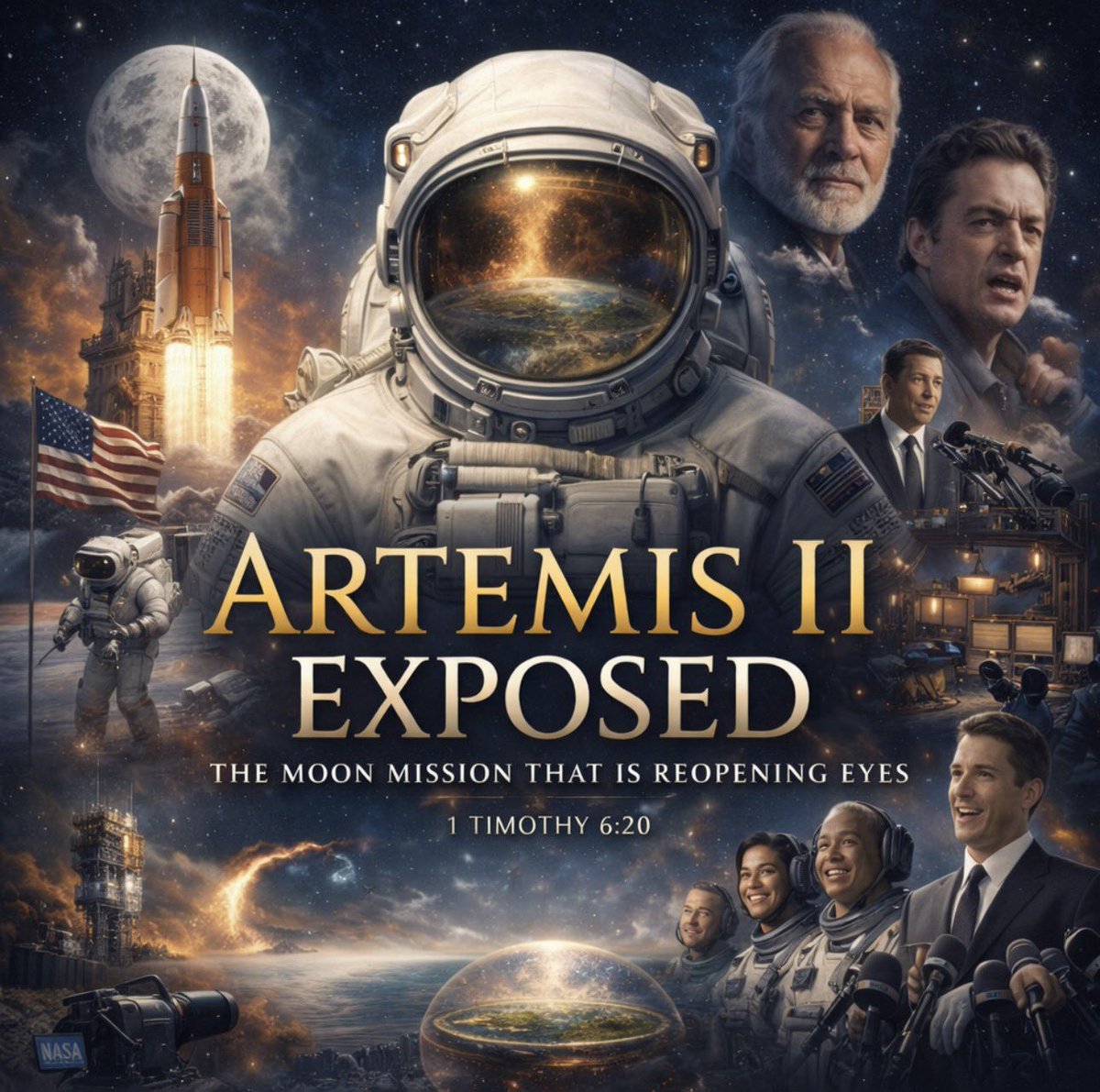
Artemis II Exposed: The Moon Mission That Is Reopening Eyes
The longer I watch this Artemis II spectacle unfold, the less it looks like progress and the more it looks like desperation. That is the first thing that hits me. This does not feel like the triumphant return to the moon that the world was promised. It feels like a system trying to keep an old story alive with newer tools, prettier graphics, softer interviews, tighter scripting, and just enough polished imagery to keep the casual viewer nodding along. But if you have been paying attention for any amount of time, if you already learned not to hand blind trust to institutions that have lied repeatedly in other areas, then this latest mission does not come across as inspiring. It comes across as suspicious, overproduced, thin, and strangely weak for something that is supposed to represent humanity’s bold return to the moon. Even some of the people discussing it from a skeptical side keep saying the same thing in different ways: the more Artemis II is shown, the less convincing it looks.
One of the reasons this mission is provoking such a strong reaction is because people are no longer as easy to impress as they once were. That may be the biggest change. There was a time when a government logo, a dramatic voiceover, a studio-quality image, and a few smiling spokesmen were enough to carry almost any story. But now people have lived through too many scripts, too many manipulations, too many institutional contradictions, and too many polished narratives that later unraveled. That changes the lens. Once your eyes have been trained to notice editing, spin, framing, omission, and emotional bait, you cannot go back to innocence. So when Artemis II rolls out with a launch, a handful of carefully released images, controlled interior footage, and a mountain of claims, people do not simply clap anymore. More and more of them ask the most dangerous question a narrative can face: “Does this actually make sense?” That is exactly the kind of questioning the skeptics in these discussions keep pressing. They are not dazzled by the package. They are staring at the seams.
And that is why I want to hit this hard. This is not about being mean-spirited. This is not about mocking people for wanting to believe in something grand. It is about forcing the conversation back to inconsistency, common sense, and simple observation. If a thing is true, it should become stronger under scrutiny, not weaker. If a mission is authentic, then the more people look, the more confidence ought to grow. But with Artemis II, the opposite seems to be happening among skeptics. The launch profile raises questions. The visuals raise questions. The still images raise questions. The interior footage raises questions. The wording from NASA representatives raises questions. Even comedians and alternative commentators who are not giving technical arguments are reacting the same way at gut level: this does not smell right. So that is what this essay is about. It is about reopening eyes while this thing is still playing out, and showing why so many are not buying what they are being sold.
1. The first problem with Artemis II is that it feels like a continuation of an old script, not a fresh proof
The first thing a man notices once he stops drinking the institutional Kool-Aid is that Artemis II does not arrive as a clean slate. It arrives carrying the full weight of everything people already distrust about NASA. That matters. NASA is not introducing itself to a naïve public in a vacuum. It is walking onto the stage with decades of unresolved suspicion behind it. So when people hear “we are going back to the moon,” some do not start with excitement. They start with the obvious question: going back assumes you went there before. That is exactly how one of the skeptical transcripts frames the issue. The mission is not being judged in isolation. It is being judged as a sequel to a story many
already rejected. If the foundation is cracked, then the new floor you build on top of it does not inspire confidence. It just spreads the crack.
That is why the public relations angle feels weak. Instead of overwhelming people with undeniable clarity, Artemis II seems to be depending on inherited momentum. It is as if NASA expects people to emotionally import all the glory of Apollo into a mission that, on its own terms, is only a flyby. That is one of the things critics keep hammering. They are pointing out that with all the technological development supposedly available now, the public is still not getting the kind of raw, straightforward, indisputable visual record that ought to accompany such a historic mission. They see a lot of atmosphere, but not enough substance. A lot of official language, but not enough plain proof. A lot of production, but not enough verification. That mismatch is one of the reasons the mission is backfiring among those already disposed to distrust NASA.
And that is where the psychological crack widens. Once people sense that a story is leaning on prestige rather than proof, they begin to push back harder. They become alert to every little inconsistency, because now the story is no longer simply being heard. It is being tested. Artemis II has walked into that kind of environment. It is not being given the benefit of the doubt. It is being forced to earn trust from people who have already seen too many official narratives fail elsewhere. So the first problem is not just technical. It is contextual. NASA is trying to sell a continuation of a script to a growing number of people who no longer believe the script deserves automatic trust. And once that happens, everything else gets harsher light on it.
2. The rocket launch itself is making people more suspicious, not less
One of the biggest talking points in the skeptical material is the launch profile. Again and again, people point to the same thing: the rocket goes up, then arcs over, then disappears from public view out over the ocean. The critics make a great deal of that because what the average person imagines when he hears “moon mission” is something shooting upward with unmistakable purpose. Instead, what he sees is something resembling the same parabolic arc he has seen from other launches, followed by a handoff to screens, commentary, and later imagery. The skeptical reading is simple: the visible part ends just where independent public observation also ends. That may not prove fraud by itself, but it absolutely feeds suspicion in people who already distrust the larger narrative.
The defenders always respond with orbital mechanics, gravity assists, slingshots, and the technical language of why sideways is the path upward. Fine. But the problem is not that such explanations exist. The problem is that these explanations arrive inside a trust crisis. A man who already suspects a system of deception does not suddenly surrender his instincts because the explanation uses harder words. In fact, the harder the explanation becomes, the more he wonders whether complexity is being used as a smokescreen. That is exactly the tone in the uploaded discussions. The launch path is treated not as a settled proof, but as another moment where the public is expected to mistrust what it sees and defer to what it is told. Once a person notices that pattern, his confidence drops fast.
And then there is the old experiential point. One of the discussants in the uploaded material recalls seeing a launch in person and expecting it to go straight up, only to watch it arc over toward the ocean and think, out loud, that it looked like it went into the sea. That is not a mathematical argument. It is a human one. It captures the problem perfectly. The official story and the lived impression did not line up. That gap between observed impression and institutional explanation is where skepticism grows. Artemis II seems to be producing more of that, not less.
The launch was supposed to reassure. Instead, for many skeptics, it just reminded them why they started doubting in the first place.
3. The footage inside the capsule looks controlled, staged, and strangely selective
Another major reason Artemis II is reopening eyes is the interior footage. This point comes through loudly in both the Dubay material and the discussion material. Critics keep asking why the public gets so much crew banter, floating items, food play, smiling faces, and carefully framed interior shots, while receiving so little straightforward external footage through the windows. That is not a trivial complaint. If the views are truly as breathtaking and historic as advertised, why is the camera so often aimed inward at the crew instead of outward at the thing the public is supposedly being taken to witness? That selectivity is not lost on skeptics. They read it as stage management.
What makes it worse, in their eyes, is how polished the interior footage appears. The lighting seems unusually even. The framing often feels too composed. Large parts of the craft fill the foreground. The movement seems convenient. And in one argument from the discussion transcript, the very question of who is filming becomes a problem. If the astronauts visible on camera are all accounted for, who is performing the smooth pan or tilt? Critics are not treating those as tiny quibbles. They are treating them as tells. To them, it feels less like candid onboard reality and more like a set where everything is being curated to maintain a certain illusion without giving the public unrestricted visual access to the outside.
Then you layer on top of that the AI age. This is crucial. We no longer live in a world where a polished visual automatically carries authority. We live in a world where polish itself provokes suspicion, because people know how easily images, video, lighting, composites, and cleanup can be manipulated. The critics in these files are not simply saying, “I don’t like how it looks.” They are saying that the footage fits too neatly into a world where augmented reality, compositing, AI cleanup, and post-production make almost anything presentable. Once that suspicion enters the mind, every perfect interior shot starts looking less like proof and more like production.
4. The still images are creating more doubt than wonder
NASA’s released images are supposed to be emotional anchors. They are meant to stop the debate and restore awe. But in the skeptical material, they are doing the opposite. Dubay goes after the earth images hard, arguing that they look artificial, inconsistent, and impossible to reconcile with one another. He points to the shape of the earth in some live visuals versus the crisp circular form in later images. He questions continent placement, lighting, the visible proportions of Africa, and how so much of the globe could appear as ocean with so much land seemingly absent from view. In his mind, these are not minor artistic imperfections. They are evidence of fabrication.
The discussion transcript adds to that skepticism by treating the images as too sparse and too weak for the scale of claim being made. One of the hosts even says he was disappointed because he expected far more visual output. That matters. Disappointment becomes suspicion when it meets distrust. If a man expects abundant straightforward imagery from a mission of this importance and instead gets a few selective stills that look dubious to him, the result is not reassurance. It is frustration. That frustration is visible all through the transcript. The stills are not functioning like trophies. They are functioning like exhibits in a case against the mission.
One of the great lies destroying homes in this generation is the lie that marriage exists to serve the private preferences of the two people inside it. Men and women now talk as though covenant can be edited by mood, adjusted by irritation, suspended by disappointment, and rewritten by emotional fatigue. In other words, they treat marriage like self-rule with paperwork. They may still use the old words - husband, wife, commitment, vows, covenant, even God - but underneath those words they often mean something much smaller. They mean, “I stay as long as this serves me. I obey as long as this suits me. I endure as long as this feels reasonable to me.” That is not marriage in Scripture. That is self on a throne wearing a wedding ring.
The Holy Ghost does not speak that way. In 1 Corinthians 7:10 Paul says, “And unto the married I command, yet not I, but the Lord, Let not the wife depart from her husband.” That one verse alone blows the roof off the whole religion of self-rule in marriage. It means once a man and woman enter covenant, they do not remain absolute sovereigns over the bond. They do not get to act like marriage is a private arrangement endlessly renegotiated by personal convenience. God has spoken. The Lord has something to say about the bond, and what He says carries more weight than your mood, your irritation, your hurt, your pride, your loneliness, your sense of fairness, or your latest conclusion about what you “need right now.”
That is why this subject matters so much. The church is full of people who still want the vocabulary of covenant while secretly practicing the philosophy of self-rule. They want all the dignity of biblical marriage and none of the restraint. They want the public honor of commitment and the private freedom to reinterpret it whenever the flesh begins to squirm. But marriage is not self-rule. It is covenant under God. It is authority over appetite. It is command over feeling. It is vow over whim. It is obligation over self-protection. And if that truth is not recovered, no amount of sentimental marriage talk will save what is collapsing under the weight of modern autonomy.
1. Marriage Begins Where Autonomy Ends
The first hard truth many people do not want to hear is that marriage begins where absolute autonomy ends. Before marriage, a man and a woman stand as separate individuals before God. Once they enter marriage, they are no longer merely parallel lives with occasional intersection. They are joined. Scripture says, “They twain shall be one flesh” (Matthew 19:5). That means marriage is not just emotional closeness or legal recognition. It is actual covenant union. And where covenant union is real, self-rule cannot remain absolute.
That is why Paul’s language in 1 Corinthians 7 is so sharp. He says the wife hath not power of her own body, but the husband, and likewise also the husband hath not power of his own body, but the wife (1 Corinthians 7:4). That is the end of autonomous bodily self-rule within marriage. It does not erase personhood. It does not excuse abuse. It does not justify tyranny. But it does mean the covenant changes the categories. The spouses are no longer free-floating personal kingdoms. They belong to one another under God’s order.
The modern world hates that because it worships individual sovereignty. It teaches people to enter marriage while still thinking like consumers. It says, “Protect yourself first. Keep your options open. Reserve the right to redefine the terms. Make sure your needs remain central.” That is not covenant. That is a merger between two selfish people who still want to remain their own gods. Scripture comes in like a sword and says no. Once the covenant is formed, autonomy is broken down by mutual belonging. Marriage begins where self-rule begins to die.
2. Covenant Is Not a Draft You Keep Editing
One of the reasons marriages are so unstable now is because many people act like covenant is a draft document they keep revising. They talk about boundaries, needs, growth, seasons, compatibility, and shifting expectations, and sometimes those words hide perfectly valid concerns. But often they hide something much uglier: a refusal to let a vow remain a vow. The person is not really trying to solve problems inside the covenant. He is trying to move the covenant lines until the covenant says whatever he wants it to say this month.
But when Paul says, “Let not the wife depart from her husband” (1 Corinthians 7:10), he is not speaking draft language. He is speaking covenant language. He is telling the married that the bond is under command, not under endless personal revision. That does not mean every hard case is simple. It does mean the starting point is not, “How shall I reinterpret this marriage so it feels manageable for me?” The starting point is, “What has the Lord already said about this covenant?” That is a completely different way of thinking.
The flesh hates that because the flesh wants edit rights. It wants to keep a back door unlocked. It wants to reserve the right to redefine faithfulness according to changing emotional weather. But covenant means some things are settled before the storm hits. That is the whole point of a vow. If a vow only stands while everything feels warm, then it was never a vow worth speaking. Marriage is not a draft. It is a covenant under God’s witness, and God does not stutter every time our feelings change.
3. The Lord’s Authority Enters the Marriage Bond
Paul says, “I command, yet not I, but the Lord” (1 Corinthians 7:10). That phrase is devastating to self-rule because it means Christ has authority inside the marriage bond itself. Many people are willing to give Christ some authority over church attendance, morality in general, finances in theory, and perhaps even public appearances. But when it comes to marriage, they start speaking like private rulers. They act like what happens inside the home is ultimately theirs to define so long as they can justify it emotionally.
Paul says no. “The Lord” has spoken. That means the marriage bond is not exempt from divine authority. It is not a private republic with two rulers and no king above them. Christ steps right into it and says what is to happen and what is not to happen. He says what is joined and what is not to be put asunder. He says what duties exist between husband and wife. He says what defrauding is. He says what departure is. He says what putting away is. That means the spouses do not possess final interpretive rights over their own covenant.
This is where a lot of spiritual rebellion hides. It hides under the language of pain, growth, peace, closure, and emotional necessity, but beneath that language there is often a very simple sin: refusing to let Christ be Lord of the bond. The person is not merely hurting. He is insisting on ruling. He is not merely confused. He is insisting that his present judgment must outrank the Lord’s command. Marriage becomes self-rule the moment Christ’s voice is pushed below private preference. And that is exactly the moment the marriage begins to rot from the inside.
4. Feelings Are Real but They Are Terrible Rulers
A hard marriage truth that almost nobody wants to hear anymore is this: feelings matter, but feelings make terrible rulers. They are real, and they should not be dismissed as though they mean nothing. Hurt is real. Disappointment is real. Attraction, coldness, fatigue, resentment, and fear are all real. But real does not mean authoritative. A feeling may describe what is happening inside you without giving you the right to govern the covenant by it.
If feelings ruled marriage, then every rough season would become a referendum on whether the vow still stands. Every disappointment would become an argument for departure.
Every conflict would become a legal appeal to self-preservation. But the very reason God gave commandment in marriage is because commandment protects what feelings alone cannot sustain. “Let not the wife depart from her husband.” That is not a denial of pain. It is a divine refusal to let pain become sovereign.
This is why self-rule in marriage almost always comes dressed in emotional sincerity. It does not usually say, “I reject God’s authority.” It says, “I cannot do this anymore.” It says, “This no longer feels right.” It says, “I have to be true to myself.” It says, “I need peace.” But if those phrases mean, “Therefore I may now suspend what God commanded,” then they are not truth. They are just emotions trying to seize the throne. Feelings are real, but unless they are brought under Scripture, they become dictators that call rebellion healing.
5. Self-Rule Makes Departure Sound Like Liberation
One of the most poisonous ideas of the age is that departure equals freedom. Walk out, and now you are free. Break the bond, and now you are finally yourself. Put distance between you and the covenant, and now healing can begin. That is the language of a culture that has forgotten what covenant even is. Paul does not talk that way. He says the wife is not to depart. And if she does depart, she is to remain unmarried, or be reconciled to her husband (1 Corinthians 7:11). In other words, departure does not magically create moral liberty.
That is exactly what self-rule refuses to accept. Self-rule says, “If I leave, I reset.” Covenant says, “If you rupture what God joined, the moral seriousness of the bond does not evaporate because you changed addresses.” That is why Paul’s words sound so foreign to modern ears. He does not treat departure like a clean liberation from obligation. He treats it like a disorder that must still be governed by God’s word.
Satan loves self-rule here because it makes people believe escape is inherently righteous. He does not need to argue the whole theology. He just needs to make departure feel brave, clean, necessary, or self-honoring. Once that happens, the person stops asking, “What did the Lord command?” and starts asking only, “What feels survivable to me?” But departure governed by self-rule is not freedom. It is usually just one more act of autonomy against the covenant God established.
6. Marriage Requires Submission to Something Above Self
The only marriages that survive with any true biblical health are marriages where both spouses submit to something above themselves. If the husband submits only to his own appetite and judgment, he becomes a tyrant, a coward, or a wanderer. If the wife submits only to her own emotions and conclusions, she becomes a sovereign in rebellion against the bond. But if both submit to God’s word, then there is at least a fixed point beyond the flesh to which both may be called back when things go dark.
That is why Scripture keeps pressing marriage under divine categories: covenant, one flesh, due benevolence, mutual authority, not defrauding, not departing, not putting away. Those are not merely relationship tips. They are restraints on self. They are the framework by which God keeps marriage from dissolving into two independent wills colliding endlessly under one roof. A spouse who refuses submission to God will eventually reinterpret the marriage entirely around self.
And this is where many so-called Christian marriages are in more danger than they know. They use Christian vocabulary, but in actual practice the husband is ruled by himself and the wife is ruled by herself. They may stay together outwardly for a time, but the bond grows weaker because the shared submission to the Lord is thin or absent. Marriage cannot be held together by two self-rulers indefinitely. Someone’s will eventually explodes or withdraws. The covenant survives where self is bent low beneath the word of God.
One of the easiest ways for a Christian to lose track of what God is doing in his life is to keep everything floating loose in his head like papers blowing across a parking lot in a storm. He prays for things, forgets what he prayed for, gets answers, forgets what was answered, gets convicted, forgets what the Lord dealt with him about, makes promises, forgets what he said, and then wonders why his spiritual life feels scattered and thin. A lot of believers are sincere, but sincerity without structure often turns into spiritual fog. They love the Lord, but they cannot remember what burden they had last Tuesday, what verse the Lord used last month, or what specific prayer God answered two weeks ago. That is not because the Lord was absent. It is often because the saint was unorganized, distracted, and too careless to mark what God was doing.
Now a prayer journal is not a magical object. It is not a sacrament. It is not a substitute for the Holy Ghost, the Bible, or the prayer closet. It is a tool. But like many simple tools, it can become mighty useful in the hands of a believer who means business with God. Habakkuk was told, “Write the vision, and make it plain” (Habakkuk 2:2). There is something powerful about writing things down plainly. It forces clarity. It slows the mind. It exposes vagueness. It creates memory. It helps a man stop pretending that his spiritual life is stronger than it is while also helping him see that God has been more faithful than he realized. A prayer journal can become a kind of spiritual witness stand where the facts are laid out instead of left to the unreliable moods and memories of the flesh.
A lot of Christians resist anything written because they think spontaneity is the same thing as spirituality. It is not. A man can be “spontaneous” and still be lazy, forgetful, shallow, and scattered. Another man can write things down and still be tender, prayerful, and deeply dependent on God. The issue is not whether you use paper. The issue is whether your heart is alive. And if writing helps your heart become more watchful, more thankful, more specific, more honest, and more steady, then you had better thank God for the help instead of acting like disorder is somehow a mark of deeper faith. So let us talk plainly about seven reasons to keep a prayer journal. Not because everybody has to use one the same way, but because there is a lot more value in this habit than many believers first realize.
1. A Prayer Journal Helps You Become Specific Before God
The first reason to keep a prayer journal is that it helps you become specific before God. A great deal of weak praying comes from vague praying. People say, “Lord, bless everybody,” “help all the missionaries,” “forgive me where I failed you,” or “be with us today,” and then they call that a strong prayer life. Brother, that is not strong. That is fog. It may be sincere, but it is often lazy. Scripture says, “let your requests be made known unto God” (Philippians 4:6). Requests. That means actual requests, not spiritual mist floating around in the atmosphere. Writing forces you to stop speaking in broad blur and start naming the thing.
When you write a prayer down, you often realize how fuzzy your thinking was before the pen hit the page. Suddenly you must decide what exactly you are asking God to do. Are you asking for wisdom about a decision, or are you asking for the Lord to change a person? Are you praying for salvation for a soul, revival in your own heart, strength in a trial, healing in a body, direction in a ministry, or victory over a recurring sin? The act of writing demands precision. It makes you quit hiding behind religious language. That is one reason it helps so much. It takes a Christian out of the cloudy land of “something is wrong somewhere” and into the plain ground of “this is what I need from the Lord right now.”
That kind of specificity strengthens prayer because it sharpens attention and builds faith. When you know what you are praying, you are more likely to pray it earnestly. Blind Bartimaeus said, “Lord, that I might receive my sight” (Mark 10:51). He did not give the Lord a foggy speech. He knew the request. A prayer journal helps you do that same thing in practical daily life. It trains your soul to stop mumbling around issues and start bringing them clearly before the throne. That alone is worth a good deal.
2. A Prayer Journal Helps You Remember What You Asked For
The second reason to keep a prayer journal is that it helps you remember what you asked for. The flesh is forgetful. It is one of the great weaknesses of the human condition. You can pray hard over something for three days, then get swallowed by other pressures, and two weeks later barely remember the burden with any clarity at all. That is one reason many Christians have no real continuity in prayer. Their burdens come and go like sparks out of a fire, bright for a second, then gone in the wind. But the Bible shows repeated, remembered prayer. Paul told the Romans he made mention of them always in his prayers (Romans 1:9). That kind of remembered intercession usually does not happen by accident.
A journal helps hold burdens in place so they do not slide off the table the moment life gets noisy. If you write down names, needs, situations, and ongoing requests, then tomorrow you do not have to start from scratch, and next week you do not have to rely on a strained memory. You can open the journal and see plainly what has been laid before God. That creates persistence. It helps you keep carrying people, ministry concerns, family needs, personal battles, and unanswered matters before the Lord instead of letting them vanish in the confusion of daily life.
This matters because some requests need steady prayer, not one emotional flare-up and then neglect. The widow in Luke 18 kept coming. Elijah prayed earnestly. Daniel set his face to seek the Lord. A prayer journal helps ordinary believers practice that same kind of continued remembrance. It says, in effect, this matter is not forgotten. I am still bringing it before God. The journal becomes a way of guarding burdens from being stolen by distraction.
3. A Prayer Journal Helps You Notice God’s Answers
The third reason to keep a prayer journal is that it helps you notice God’s answers. This is one of the sweetest benefits of all. A lot of saints would be far more encouraged if they realized how many prayers God has already answered for them. But because they do not write their requests down, they often fail to see the answer clearly when it comes. They prayed for wisdom, then later found direction. They prayed for help, then later found strength. They prayed for an open door, then one opened. They prayed for a check in their spirit, then the Lord restrained them. But because nothing was clearly recorded, the answer comes and goes without much notice. The result is forgetfulness instead of thanksgiving.
Psalm 103 says, “forget not all his benefits” (Psalm 103:2). A prayer journal is one way of obeying that verse practically. When you write what you asked for and later mark how God answered, you build a visible testimony of His faithfulness. That can become a powerful encouragement on dark days. There is something strengthening about flipping back through pages and seeing how the Lord guided, provided, restrained, healed, corrected, comforted, and answered over time. The flesh forgets. Paper remembers. And what paper remembers can stir the soul to praise the God who did it.
This also protects you from the foolish lie that prayer “doesn’t really do much.” Brother, prayer does more than you know, but a journal often helps you see it. Some answers are immediate, some delayed, some partial, some different from what you expected, and some are “no,” which is also an answer. But when the matter is written down, the hand of God becomes easier to trace. A man who keeps no record often misses half the mercies that passed through his life. A man who keeps a journal is better positioned to say, “The LORD hath done great things for us” (Psalm 126:3).
4. A Prayer Journal Helps You See Spiritual Patterns in Your Life
The fourth reason to keep a prayer journal is that it helps you see spiritual patterns in your life. A lot of Christians live in the present moment only and never step back far enough to notice the repeated ways they drift, fear, stumble, react, or grow. They keep fighting the same battles without recognizing the patterns around them. They do not see what seasons tend to weaken them, what situations tempt them most, what burdens keep resurfacing, or what truths God keeps bringing back around. But when you write your prayers, struggles, confessions, needs, and answers over time, patterns start emerging. That is useful information for a believer serious about growth.
For example, you may discover that every time you become overly hurried, your prayer life weakens and your temper sharpens. Or every time you neglect the Word for a few days, fear increases. Or certain relational pressures keep exposing the same pride, insecurity, or bitterness. On the positive side, you may notice that when you spend more time in the Psalms, your spirit steadies, or when you pray for specific people, your heart softens. Those patterns are not insignificant. They help you understand where the battle lines often run. Proverbs says, “A prudent man foreseeth the evil, and hideth himself” (Proverbs 22:3). A journal can help make you more prudent because it shows the tracks your soul has been leaving.
This makes your prayer life wiser. You are no longer just reacting each week as though everything is brand new. You start noticing where you tend to drift and where the Lord repeatedly meets you. That leads to better confession, better guardrails, better priorities, and deeper gratitude. In other words, the prayer journal helps you know yourself better under the light of God instead of living as a stranger to your own recurring spiritual habits.
5. A Prayer Journal Helps You Be More Honest With God
The fifth reason to keep a prayer journal is that it helps you be more honest with God. One of the great problems with ordinary prayer is that a man can hide in vague phrases and never really face what is going on inside him. But when he sits down to write, the paper has a way of exposing how much fog, excuse-making, half-truth, and spiritual performance he has been using. A journal can press a man toward plainness. It can make him stop saying, “things have been hard,” and finally admit, “I have been afraid,” or “I have been bitter,” or “I have been proud,” or “I have not wanted to obey.” That is valuable. God already knows what is in there, but the journal helps you say it.