विदेहद्वेषि दस्युमतोच्छेदन
We have no problem with any state or any caste, but it is right for me to refute the distortion of the history of my motherland Everyone's feelings are respected.
Let's examine this claim we wuuzz methil karnat sarrrr
Let's a long thread 🧵
We have no problem with any state or any caste, but it is right for me to refute the distortion of the history of my motherland Everyone's feelings are respected.
Let's examine this claim we wuuzz methil karnat sarrrr
Let's a long thread 🧵
https://twitter.com/The__Chalukya/status/1882321870370021762
First, let's talk about who the Karnatas were. Archaeologists haven't found any evidence on this yet, all we know is that they came to Mithila from Karnataka. Now we will tell you some historical references which have considered the Karnat dynasty to be of Karnataka and

not of Marathi. The child of consanguineous marriage says that Nanyadev, this name is Marathi. Now let us see what historians think about this He says that these words are of Karnataka origin. And a Ganga king also had the same name, so it is proved


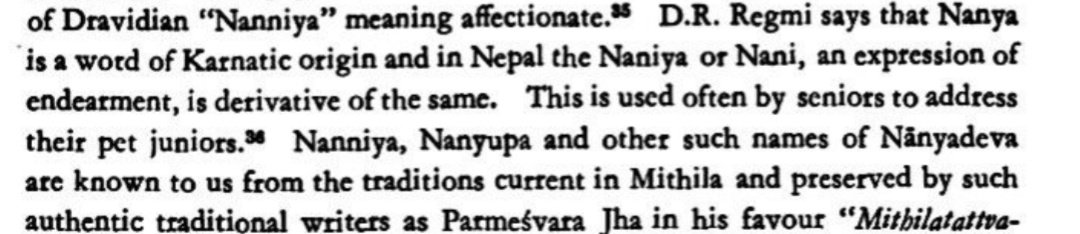
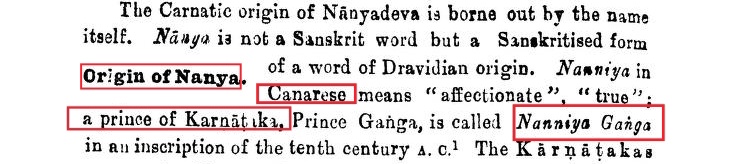
Now this lowly person is forcibly adding the word 'appa' to it whereas apa is just a 'p' and historians say its correct form is nanyupadeva


Hence, it is proved that the theory of this name being originating from Maharashtra is not proven.
https://x.com/i/status/2037751314801955159
This is not fromArchaeological Survey of India but now you are a fool fellow of Anpadh Survey of India Hey piglets, this is not published by the Archaeological Survey of India This is just a library sticker which he mistook for a publisher. This proves that this illiterate person
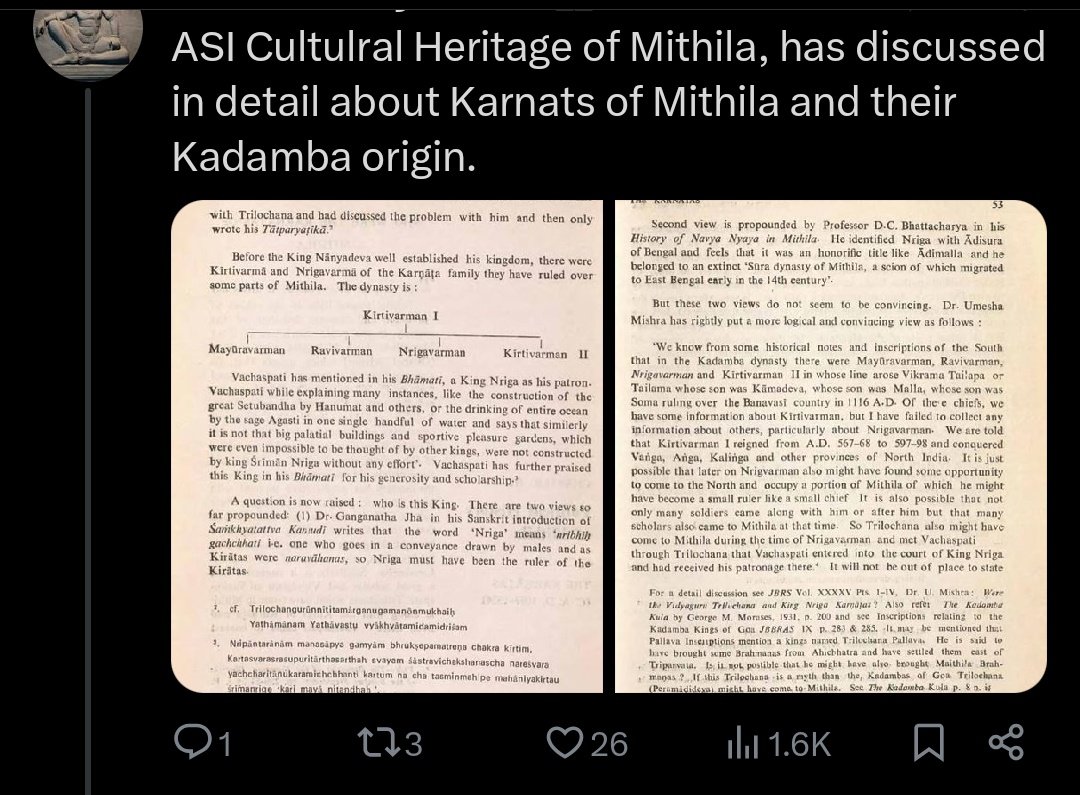
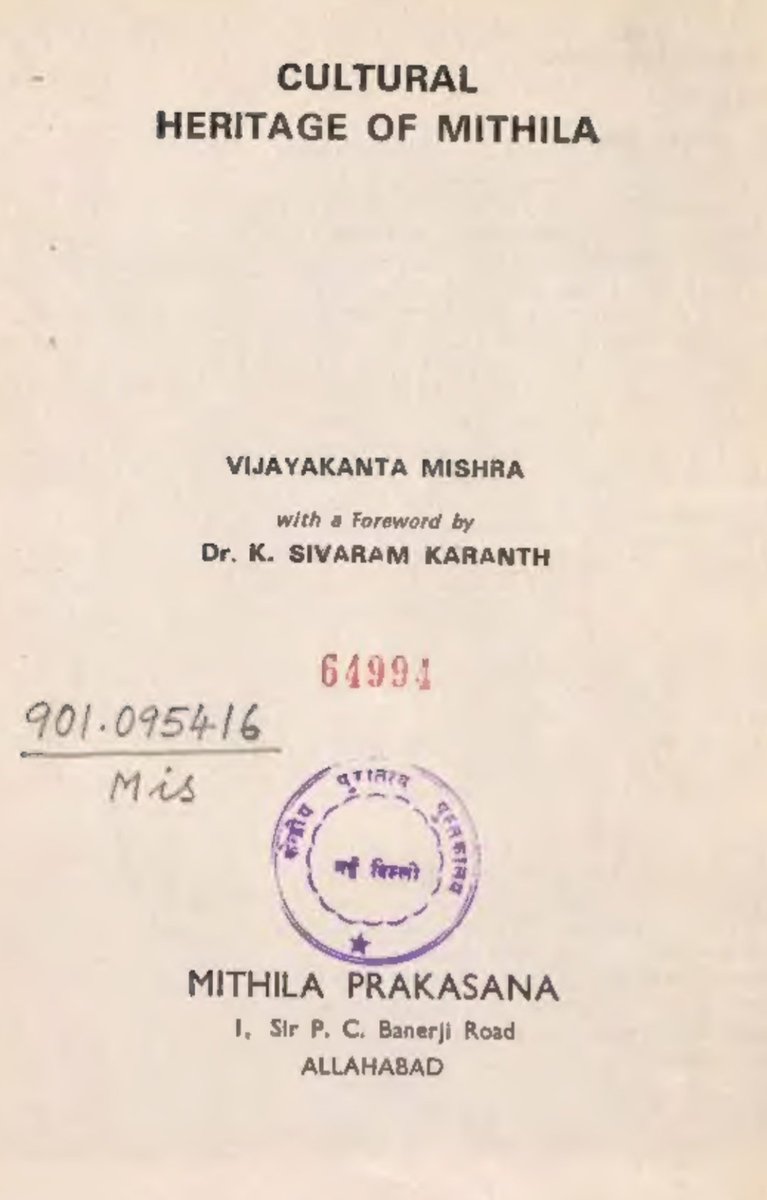
has never been to the library. Well, since this fool has already mentioned it, let's now refute it. It is said that the king named Nriga, who is honored in Vachaspati Mishra's commentary on Brahmasutra, is the Chalukya king Nriga, but this is a mystery in itself.
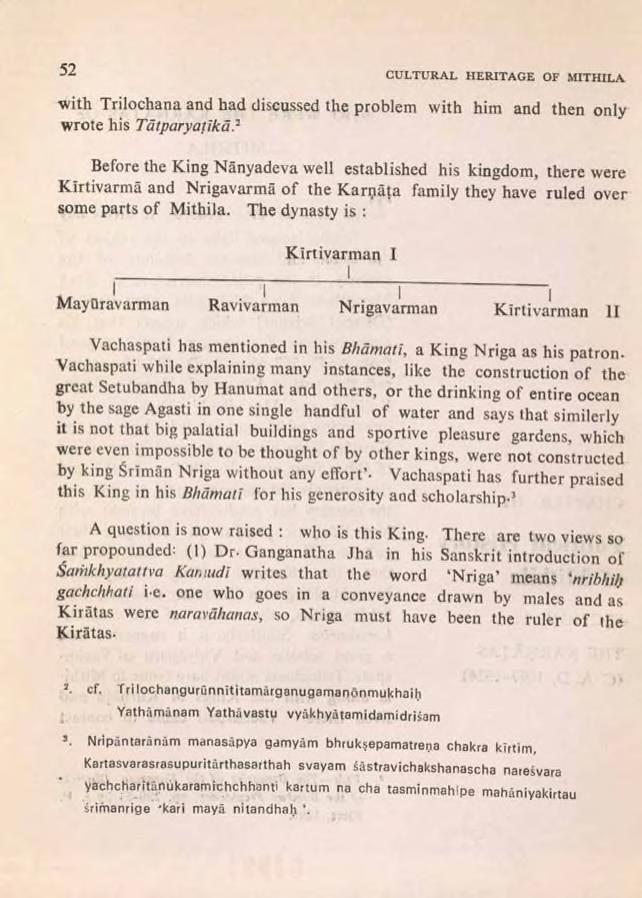
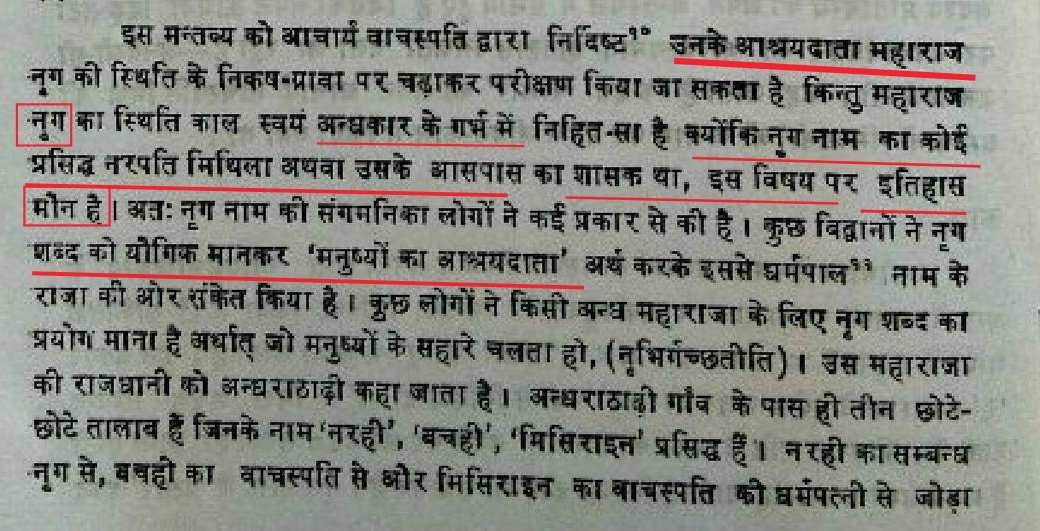
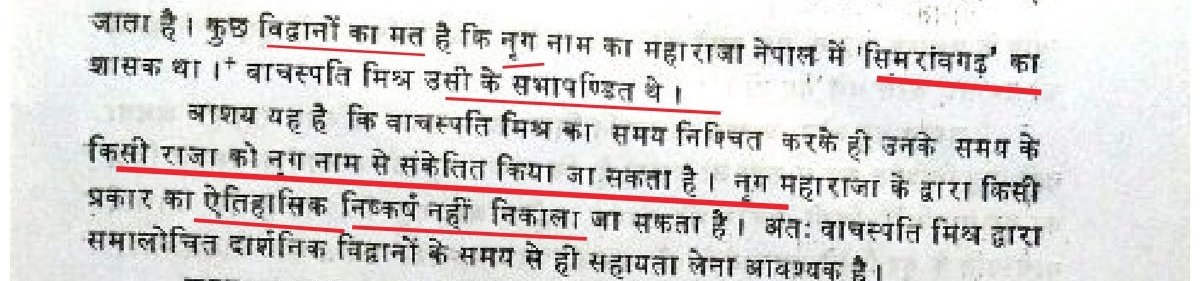
And see the descriptions above, the historian has clearly said that it is impossible to draw any historical conclusion from this.The commentators who have written commentaries on Vachaspati Mishra's commentary have also considered it to have two meanings. They themselves are in

doubt whether it is a यौगिक meaning or a king. And some more questions can be asked about this: what is the evidence for your taking Nriga to mean Nrigavarman? What is the evidence for linking him to Nanyadeva merely because of his presence? What is the link between them?
I read almost every research paper and the theory of origin proposed in all of them was refuted by others, meaning there is no conclusion. Now further objections will be resolved.
First of all, we should see what is the opinion of historians on that description of the said Bhasa Vanshvali and whether Hari Singh ever went to Bhatgaon or not?And did they receive this goddess from the south?Relation with Buddhism and iconography These will be discussed

#according_to_tredition First let's talk about where he got those statues. Even if we accept that the Karnat king took Taleju Devi to Nepal, it still does not prove that she is a goddess from the South because Karnat himself brought this goddess from Ayodhya This is written in

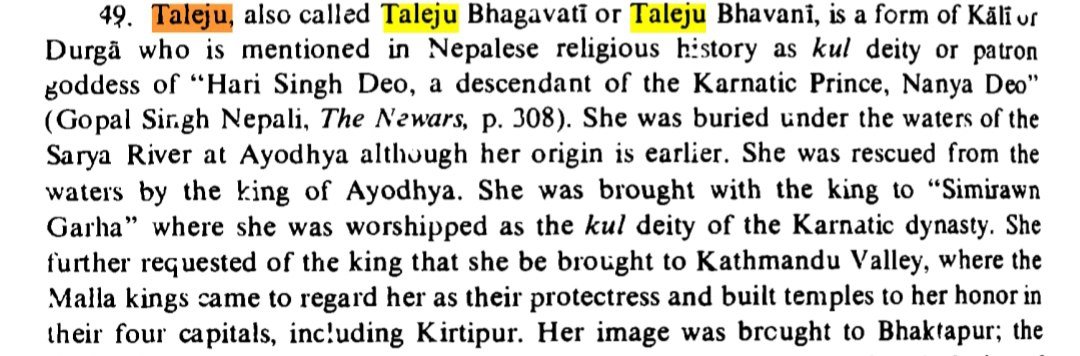


The Nepal vanashavli Now let us refute this matter whether Harisingh established Taleju Devi? So the answer is absolutely not because the Bhasavanahavali which is cited as evidence has a factual error because it mentions that Harisingh had established the capital there but this
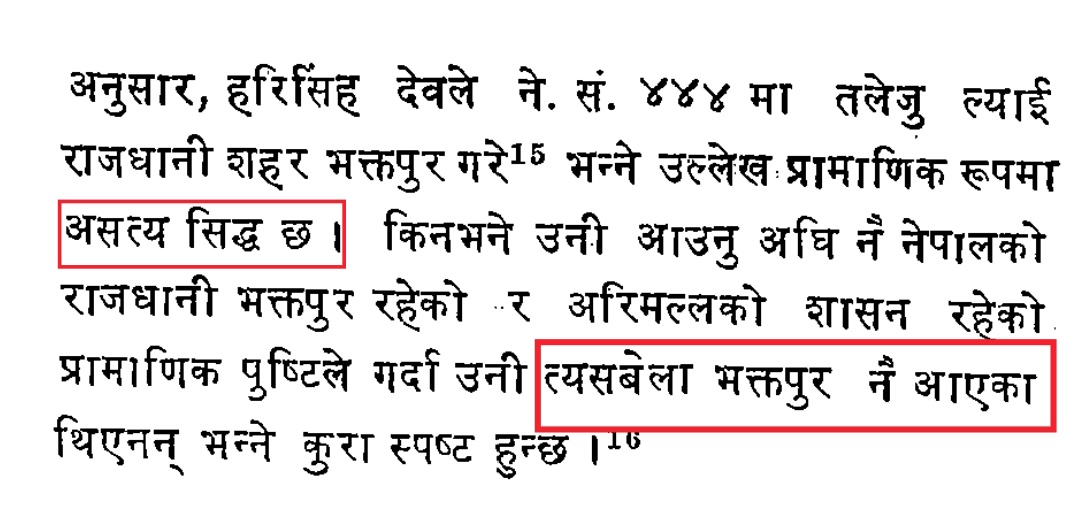
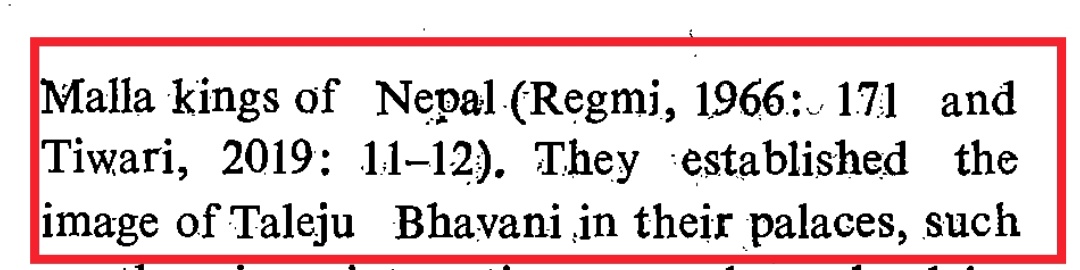

is untrue. Because the capital was already established there before Hari Singh Arimalla was already ruling there. So this is not possible In the Bhasavanshavali where these prostitutes are doing so much randirona, Nanyadev has been described as Suryavanshi Rajput. 🤣?


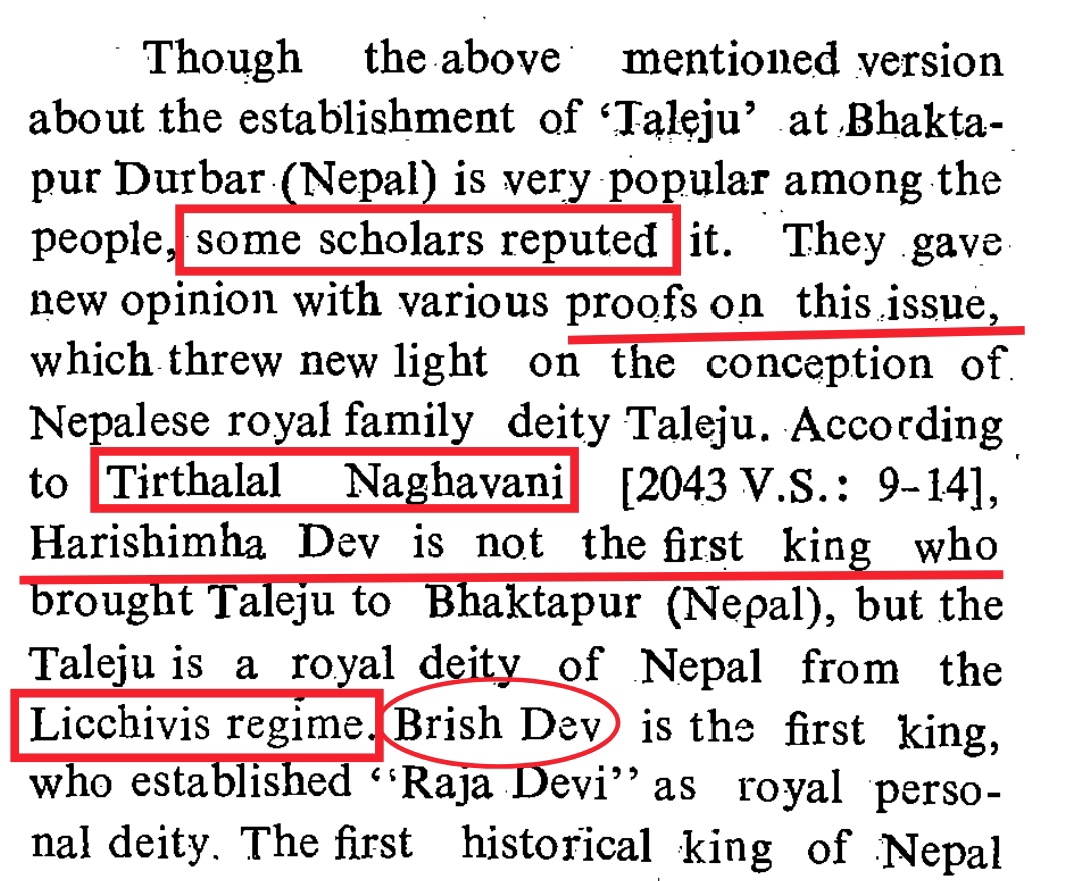
This BKL gives anything as proof even if it causes dig to his own mother. Below, scholars from the Archaeological Department of Nepal themselves prove that Hari Singh did not bring Taleju to Nepal; after coming to Nepal, he died in Patan and never reached Bhaktapur.

Neither did the idol get installed as two kings were already ruling there, so this is impossible. Historians clearly say that Taleju Devi was established by the Malla rulers. Historians mainly attribute the construction of this temple to two Malla kings as evidence of both is
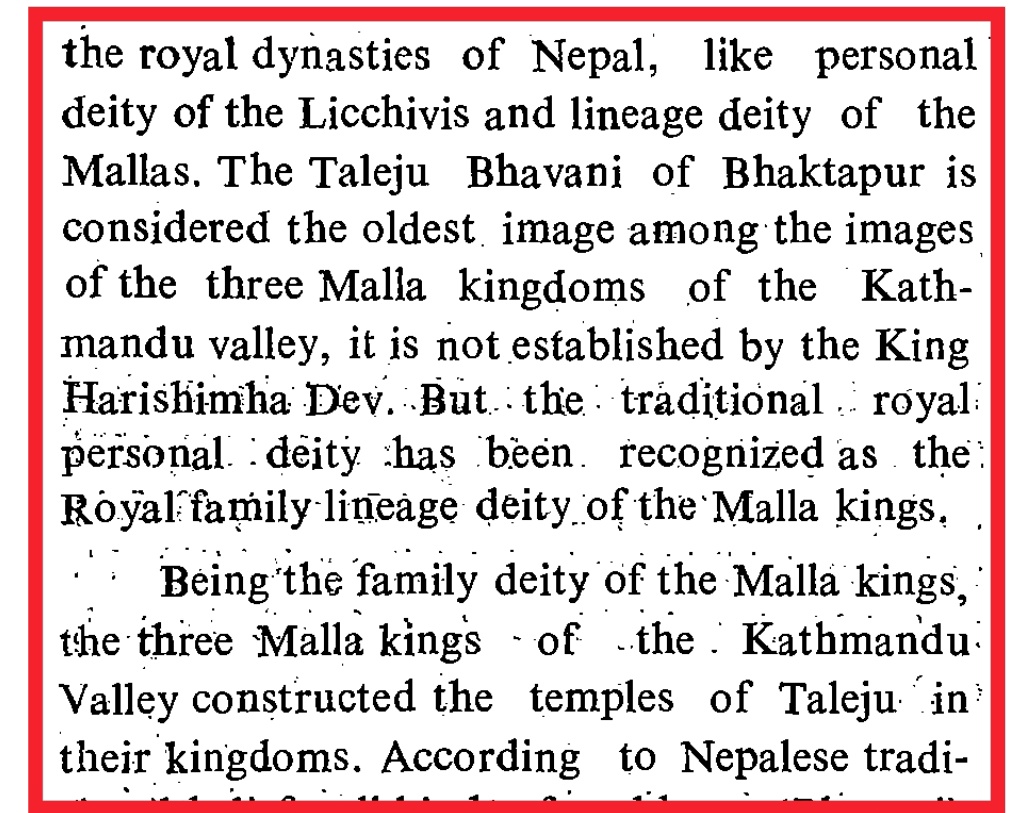


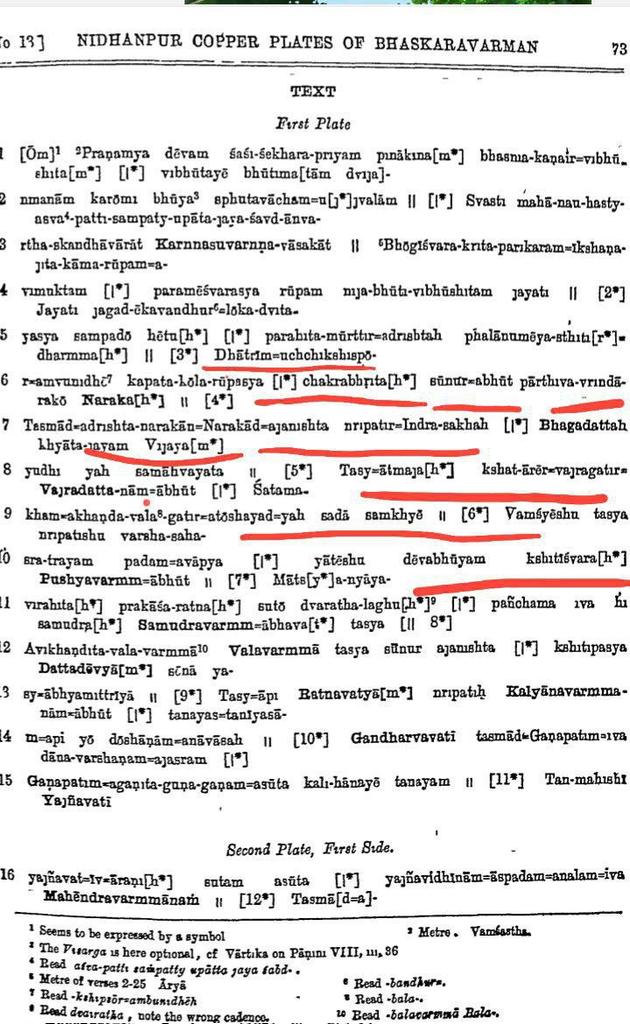
available. An inscription is also found, according to historians, its 18 lines prove that Taleju was founded by the Malla ruler Mahendra. Now there is no doubt that Hari Singh did not build this temple.
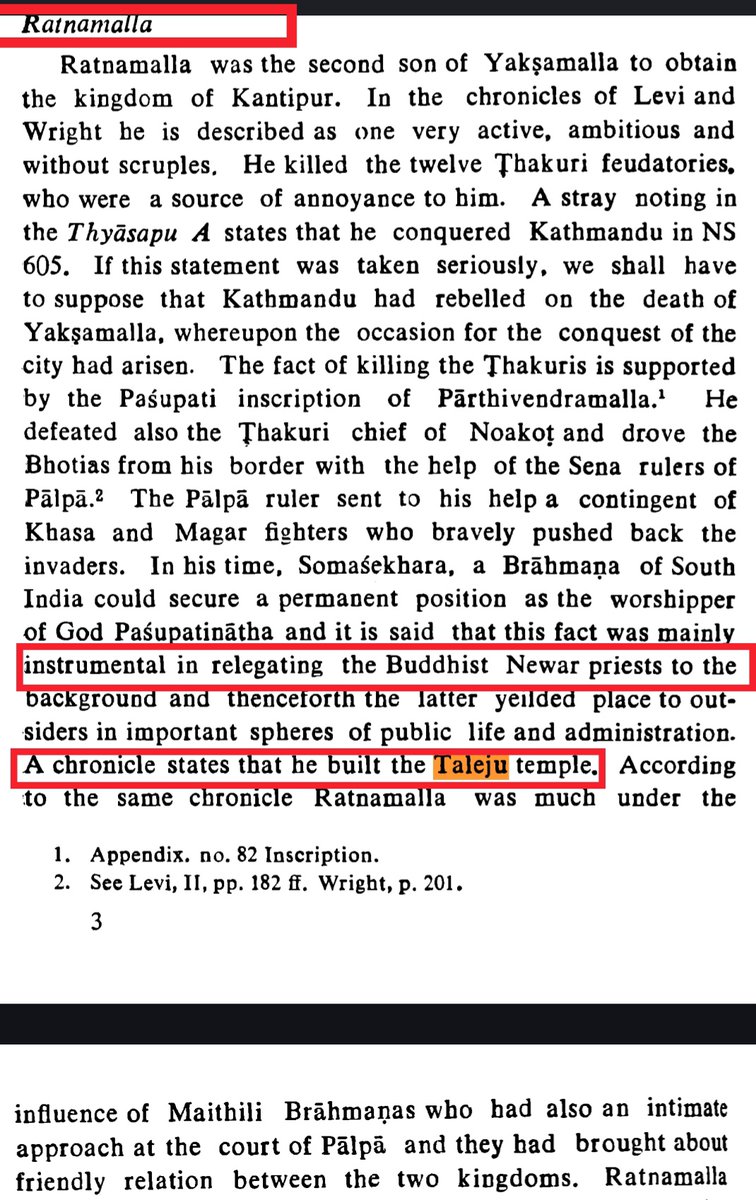


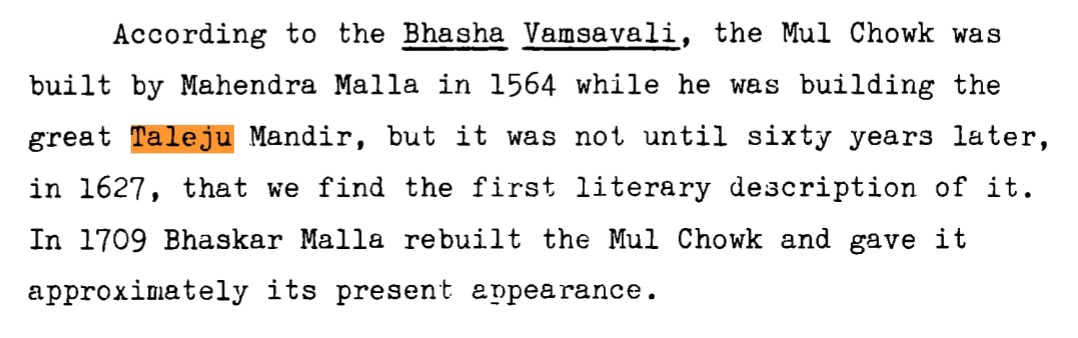
Now, let's consider the comparisons made between Taleju Devi and Tulja Devi of the South. Is this fair? Absolutely is believed that Bhaktapur Taleju was formed by the union of three “puras” (settlements). In Sanskrit, a group of three puras is called “not.It
Tripura”; hence, the name “Tripura” is thought to have originated for Bhaktapur Taleju. In Sanskrit, the Bhaktapur palace (Taleju Palace) is referred to as “Tripura Mahal,” meaning the beautifully adorned palace of the three puras. Even today, local people commonly call it
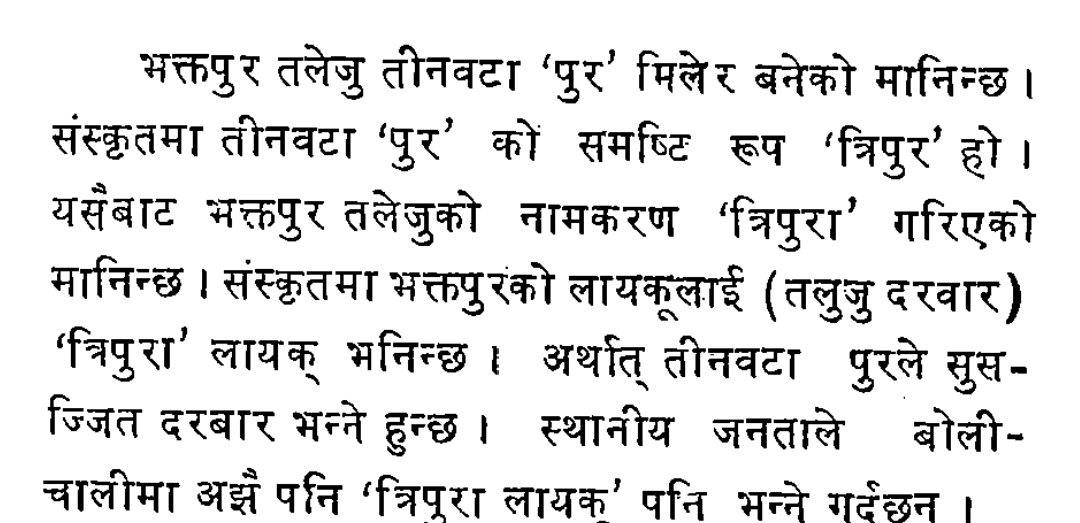
Tripura Mahal That means this name Taleju is for the structure for temple and not from the South. This illiterate person does not know the difference between Mandavay and Manav, what should I say now? Well, the evidence he has provided will now be tested.

The research paper cited by him as proof states that the Karnat first originated from Ayodhya. He went south, stayed there for a few years and then came back north.they were a Suryavanshi Rajput king.🤣 Kya hoga is chutiye Abe bakland kuch padh to liya kar see
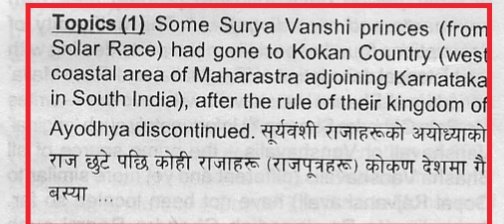
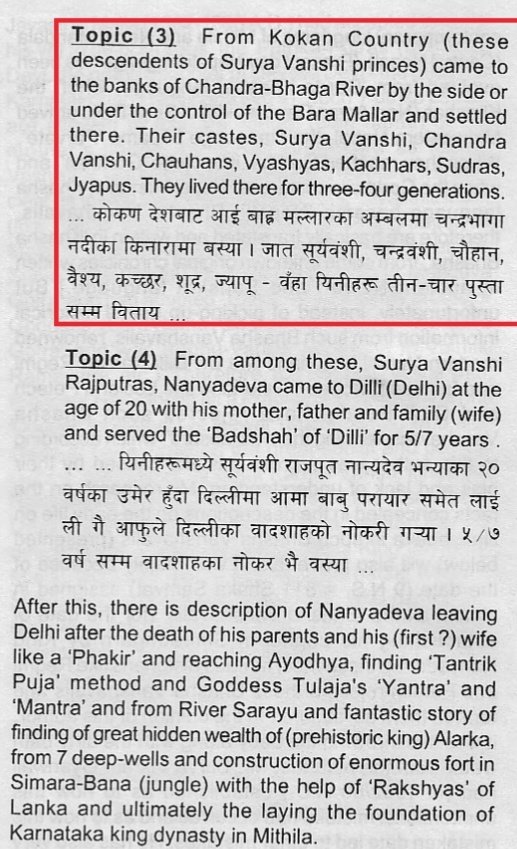
Further the author says that it is definitely proven that Chalukyas were also from Ayodhya 🤣😭😱 this is written in it, yet he is quoting this research paper in our refutation. Either he is illiterate or he is telling half-truths because he is cunning.

The same author cites another Nepali chronicle which clearly states that Nanyadeva had given the state of Karnataka. But an illiterate person has little to read. But here the author says that there is an error in the era. Well, there is always an error in the date in historical
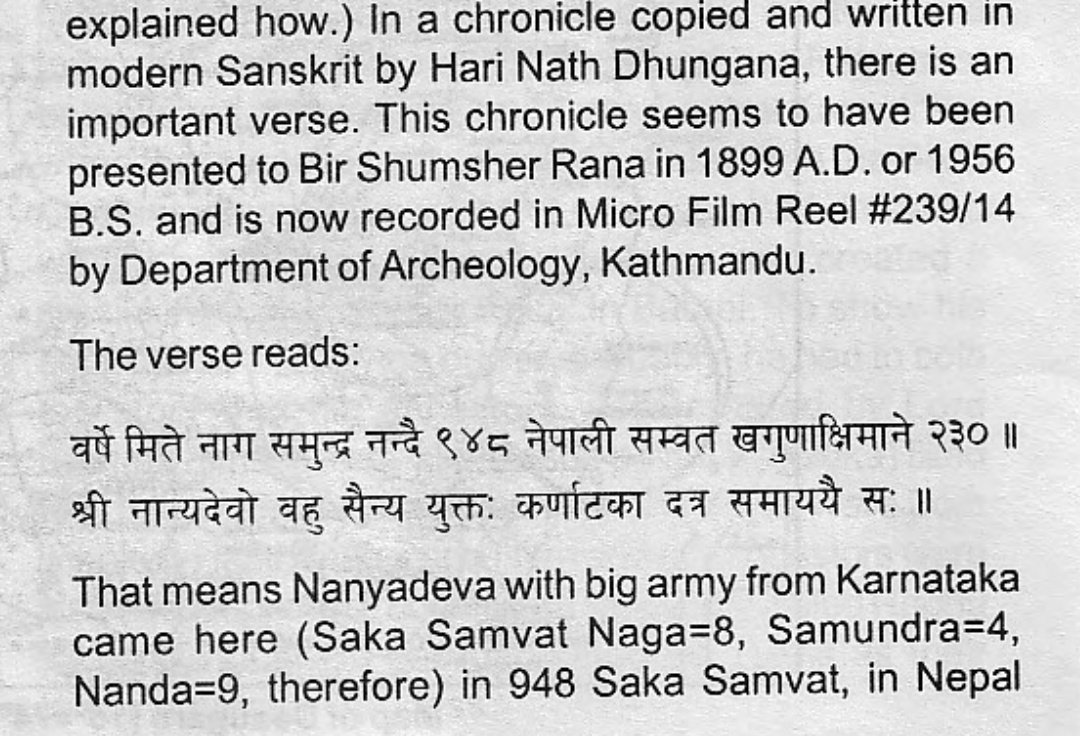
descriptions; we can also see this in the accounts of Chinese travellers, hence the historical event cannot be denied.The conclusion of this research paper is quite humorous but in our favor. As for the rest, in what he quoted from Varnaratnakara, nothing is

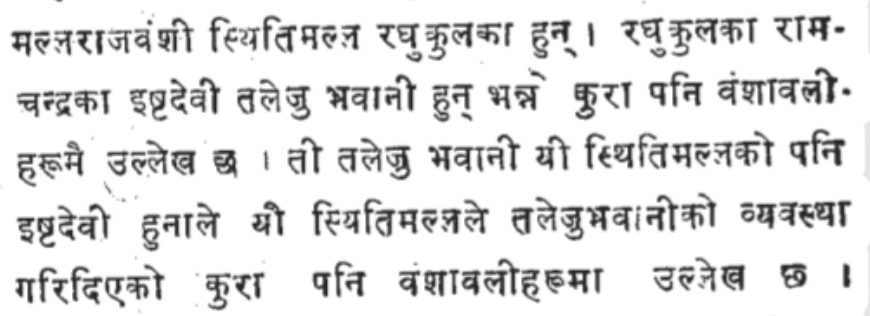
written on the subject of lineage. He is a fool, hence this is the only reason quoted in it. And if we talk about Taleju Devi, she was completely different from Tulja Devi and in the genealogy she is called the family goddess of Raghukul, which proves that she originated from UP.
The thread is not over, it will be expanded a bit, this was the limit of the thread, hence it had to be ended here. There is no insult to any caste in this thread. If you cannot contribute to the history of Bihar, then at least do not distort it.
@threadreaderapp unroll
@rattibha unroll
• • •
Missing some Tweet in this thread? You can try to
force a refresh