🚨Greenhouses can grow food in extreme climates, but they often depend on fossil-derived CO₂ inputs to maximize crop yields.
New study investigates whether Direct Air Capture (#DAC) could replace those emissions-intensive CO₂ sources by capturing C directly from air.🧵1/13
New study investigates whether Direct Air Capture (#DAC) could replace those emissions-intensive CO₂ sources by capturing C directly from air.🧵1/13
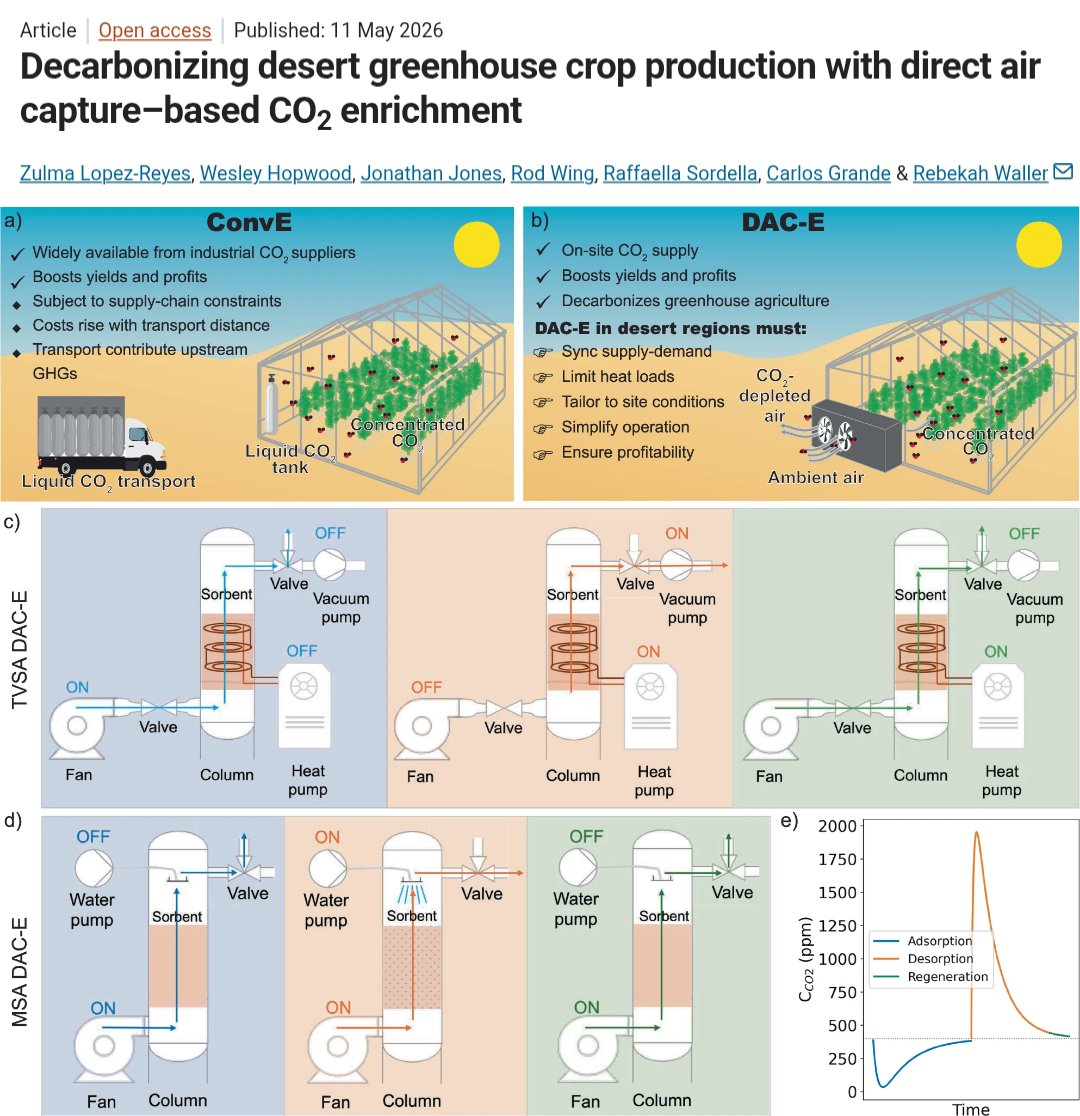
2/ Researchers modeled a 1-ha sealed high-tech greenhouse in Jeddah, Saudi Arabia producing cherry tomatoes & lettuce under hot-arid conditions.
The system maintained ~1000ppm CO₂ conc, which are required to sustain high crop productivity in climate-controlled desert agri.
The system maintained ~1000ppm CO₂ conc, which are required to sustain high crop productivity in climate-controlled desert agri.
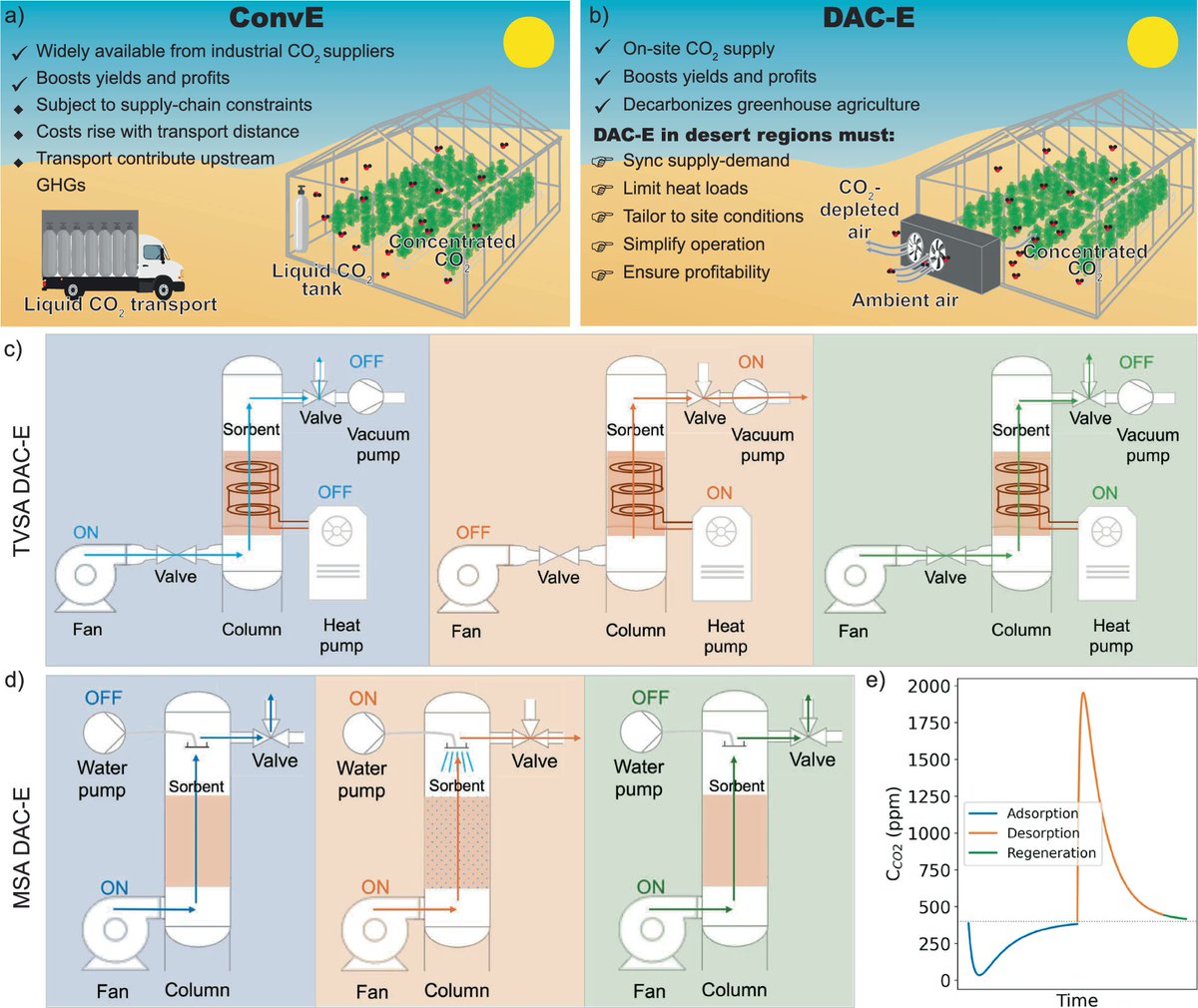
3/ The study evaluated two adsorption-based DAC systems:
• temperature-vacuum swing adsorption (TVSA)
• moisture-swing adsorption (MSA)
Both were benchmarked against conventional trucked liquid CO₂ enrichment currently used in commercial greenhouse operations
• temperature-vacuum swing adsorption (TVSA)
• moisture-swing adsorption (MSA)
Both were benchmarked against conventional trucked liquid CO₂ enrichment currently used in commercial greenhouse operations
4/ Researchers calculated annual CO₂ demand at:
• 144 tCO₂/yr/ha for lettuce
• 419 tCO₂/yr/ha for cherry tomatoes
Higher CO₂ demand in tomato cultivation created stronger economies of scale, lowering DAC enrichment costs relative to lettuce systems.
• 144 tCO₂/yr/ha for lettuce
• 419 tCO₂/yr/ha for cherry tomatoes
Higher CO₂ demand in tomato cultivation created stronger economies of scale, lowering DAC enrichment costs relative to lettuce systems.
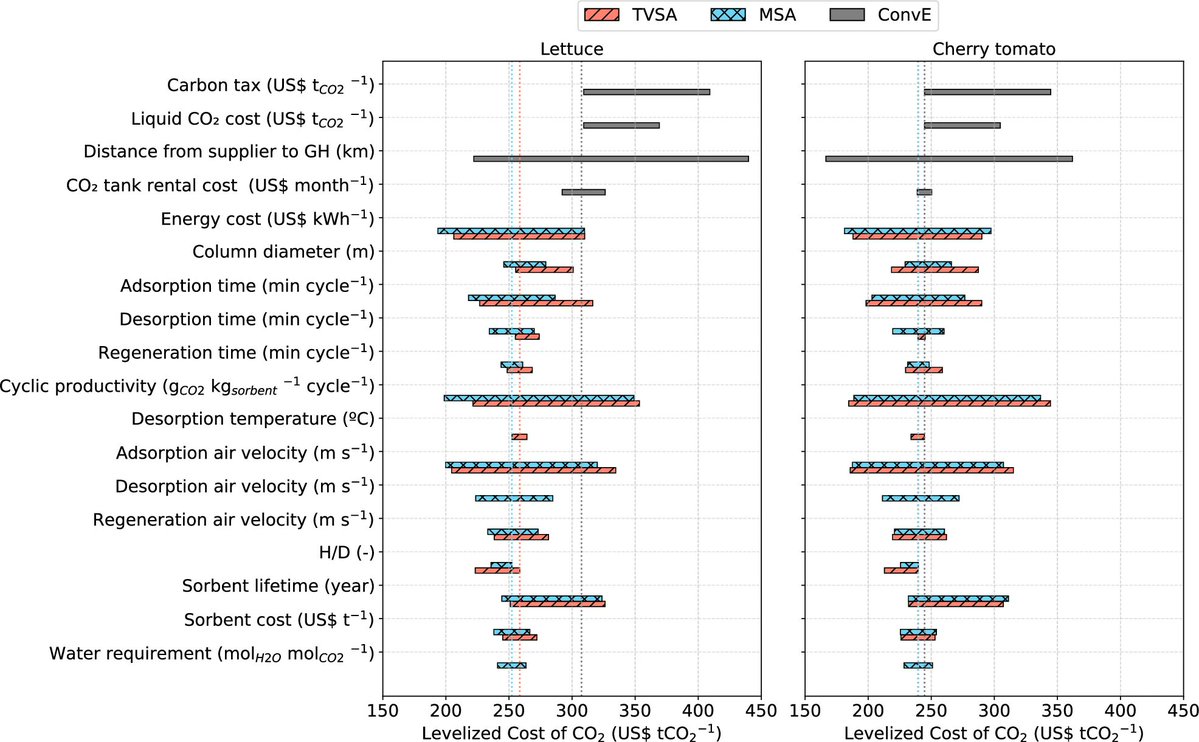
5/ The modeled DAC systems achieved remarkably similar economics:
• MSA: US$252/tCO₂ for lettuce and US$240/tCO₂ for tomatoes
• TVSA: within ~2% of MSA costs
Meanwhile, conventional trucked CO₂ was 22% more expensive for lettuce systems under baseline assumptions
• MSA: US$252/tCO₂ for lettuce and US$240/tCO₂ for tomatoes
• TVSA: within ~2% of MSA costs
Meanwhile, conventional trucked CO₂ was 22% more expensive for lettuce systems under baseline assumptions
6/ One of the paper’s most imp findings is that greenhouse DAC avoids many of the costly requirements associated with conventional CDR systems.
7/ Because the captured CO₂ is immediately used inside the greenhouse, the system avoids:
• compression
• transport infrastructure
• high-purity storage requirements
• pipeline dependence
• compression
• transport infrastructure
• high-purity storage requirements
• pipeline dependence
8/ Energy consumption emerged as the dominant operating cost.
The DAC systems required:
• ~2.2 MWh/tCO₂ for TVSA
• ~2.5 MWh/tCO₂ for MSA
Fan electricity alone accounted for up to 98% of operational energy use in MSA systems
The DAC systems required:
• ~2.2 MWh/tCO₂ for TVSA
• ~2.5 MWh/tCO₂ for MSA
Fan electricity alone accounted for up to 98% of operational energy use in MSA systems

9/ The study also quantified water requirements for moisture-swing DAC systems:
• 1,384 m³/yr for lettuce
• 4,112 m³/yr for tomatoes
Water costs accounted for ~10% of MSA operating expenses, an important consideration for deployment in arid regions.
• 1,384 m³/yr for lettuce
• 4,112 m³/yr for tomatoes
Water costs accounted for ~10% of MSA operating expenses, an important consideration for deployment in arid regions.
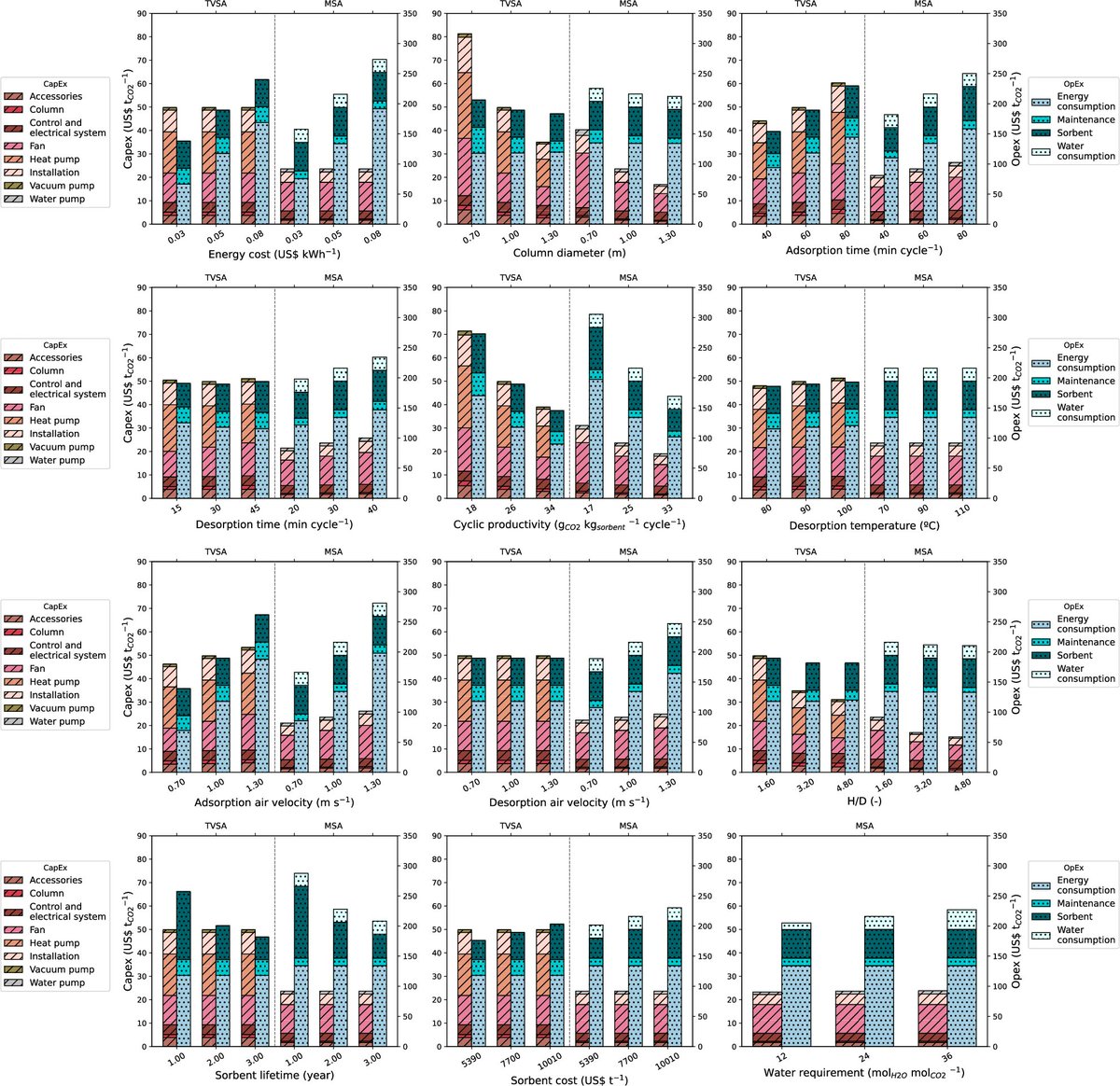
10/ Sensitivity analysis showed the strongest economic drivers were:
• electricity prices
• sorbent productivity
• adsorption cycle performance
• column diameter and airflow design
• electricity prices
• sorbent productivity
• adsorption cycle performance
• column diameter and airflow design
11/ A ~30% drop in sorbent productivity nearly doubled levelized DAC costs, highlighting how critical material performance is for commercial viability.
12/ The lifecycle assessment found DAC-enabled greenhouse systems can substantially reduce emissions when powered by solar PV.
For lettuce production, emissions fell from:
• 0.50 kgCO₂e/kg crop using grid electricity
to
• 0.076 kgCO₂e/kg crop using PV electricity
For lettuce production, emissions fell from:
• 0.50 kgCO₂e/kg crop using grid electricity
to
• 0.076 kgCO₂e/kg crop using PV electricity
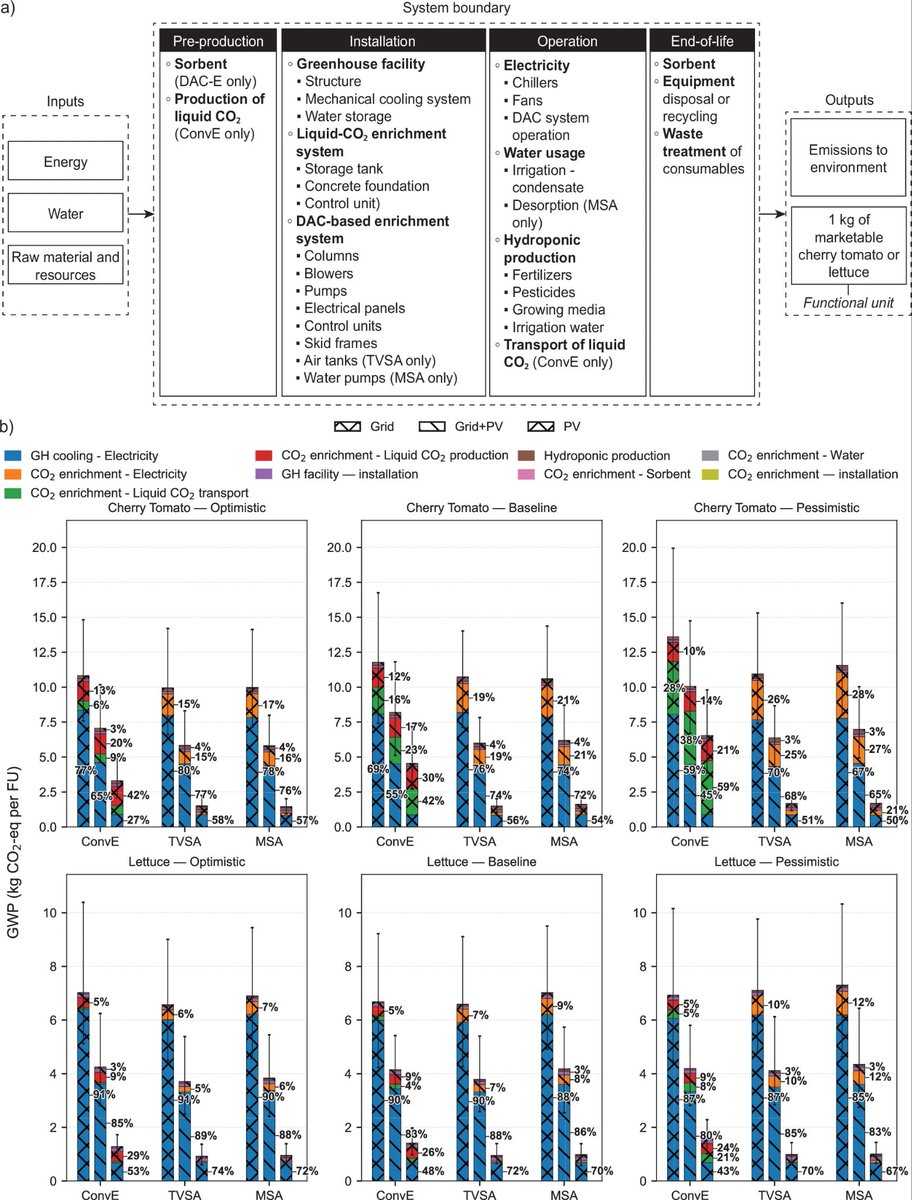
The study concludes that low-cost solar power in desert regions could make DAC-enabled greenhouse agriculture both economically viable and lower-carbon than conventional CO₂ supply chains.
More details here:
🧵13/13nature.com/articles/s4426…
More details here:
🧵13/13nature.com/articles/s4426…
For more details, subscribe to the Carbon Removal Updates Substack Newsletter:
carbonremovalupdates.substack.com
carbonremovalupdates.substack.com
"unroll" @threadreaderapp
• • •
Missing some Tweet in this thread? You can try to
force a refresh