Lauri Myllyvirta Profile picture
May 18 12 tweets 3 min read Read on X
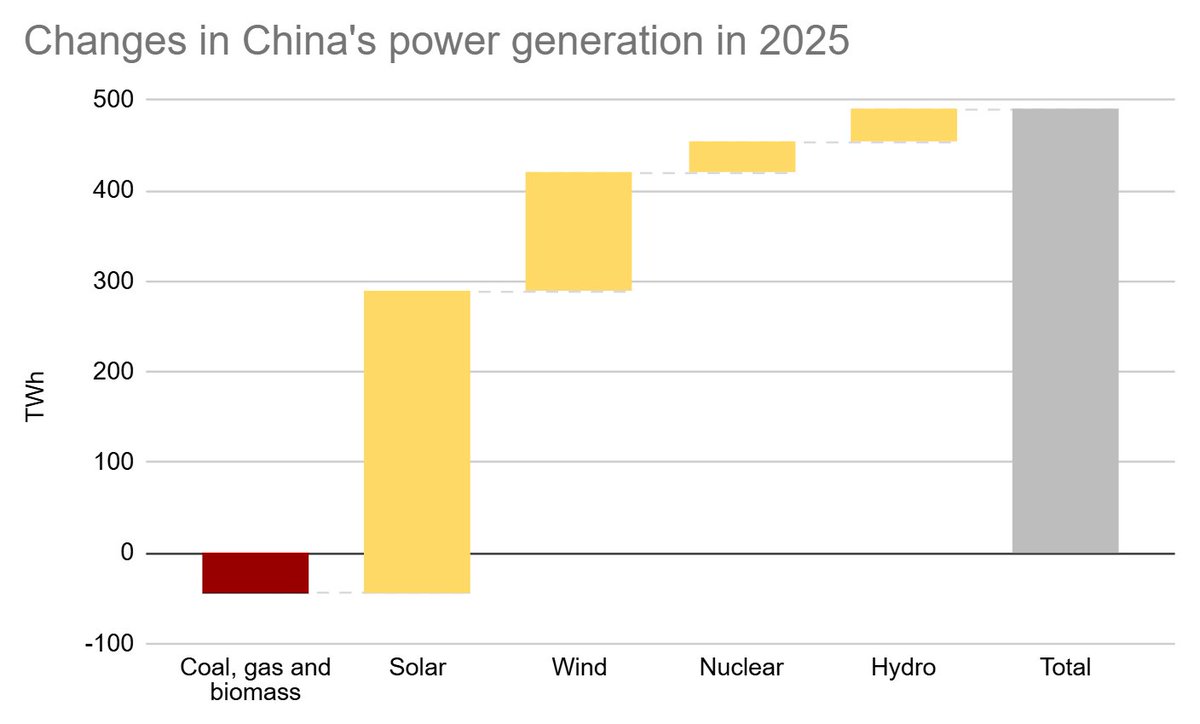
China's power generation from coal and gas increased 3% on year in March, the 4th month of increase in a row, due to underperformance of wind, solar & nuclear. Wind conditions in March-April have been extraordinarily bad, solar bad too; nuclear has seen long refueling outages. Image
Unfavorable weather doesn't account for all of the weakness in clean power generation this year - grid congestion due to inflexible operation of coal plants and transmission lines plays a role too, especially in Jan-Feb when weather conditions were actually better than last year.
Grid congestion doesn't affect just wind&solar - nuclear gets curtailed too! China's largest nuclear operator CGN reported one of its plants getting curtailed in Q1, and in China it's usually a safe bet that more curtailment happens than gets reported.
www1.hkexnews.hk/listedco/listc…Image
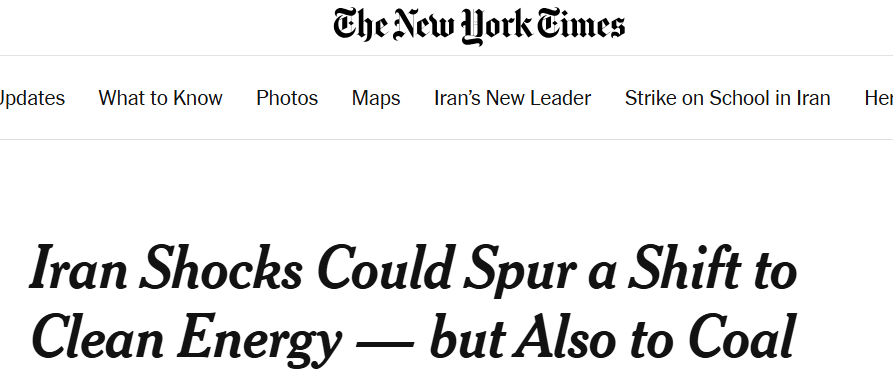
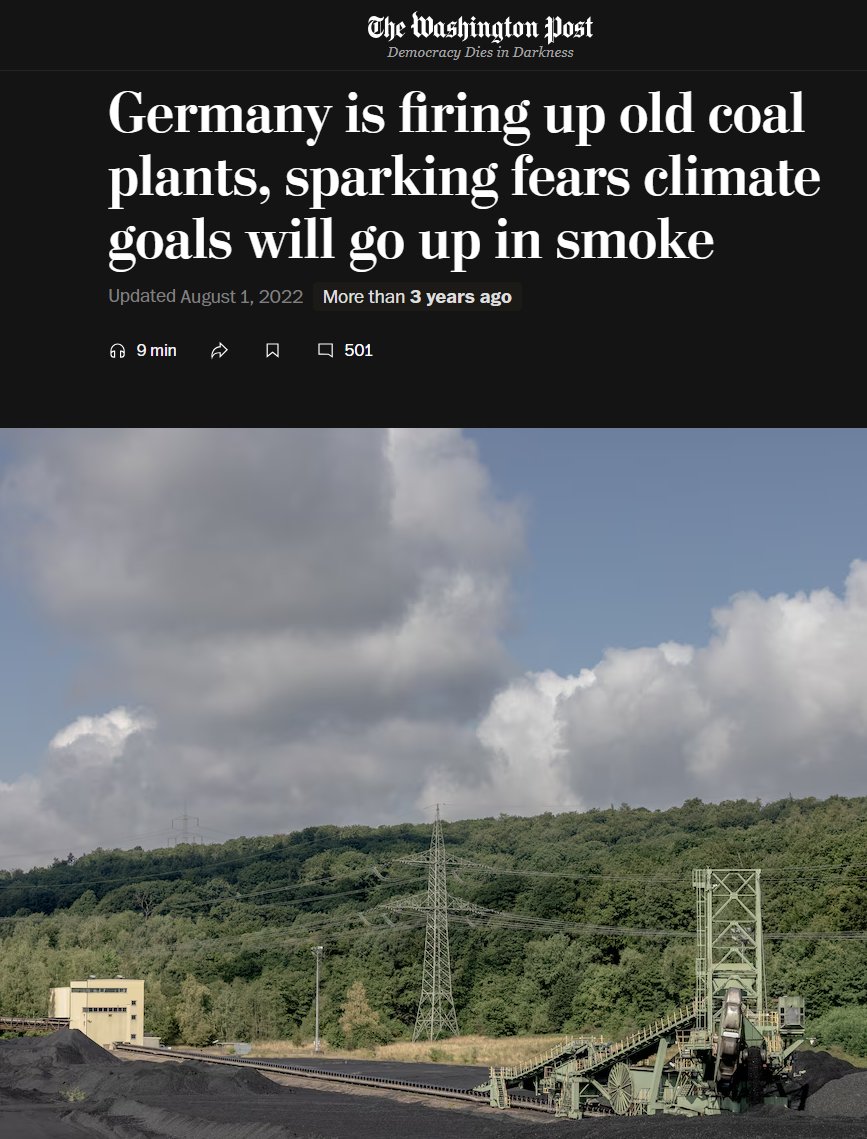
We've warned since the resumption of coal power construction in 2020 that there isn't space for both clean energy and coal to grow. This warning is being realized at the worst time - during a fossil fuel crunch.
The government is working to resolve the issue of clean energy curtailment and the weak clean energy growth this year hopefully injects some urgency. There is the encouraging precedent of rampant curtailment in early to mid 2010s brought down sharply by 2020.
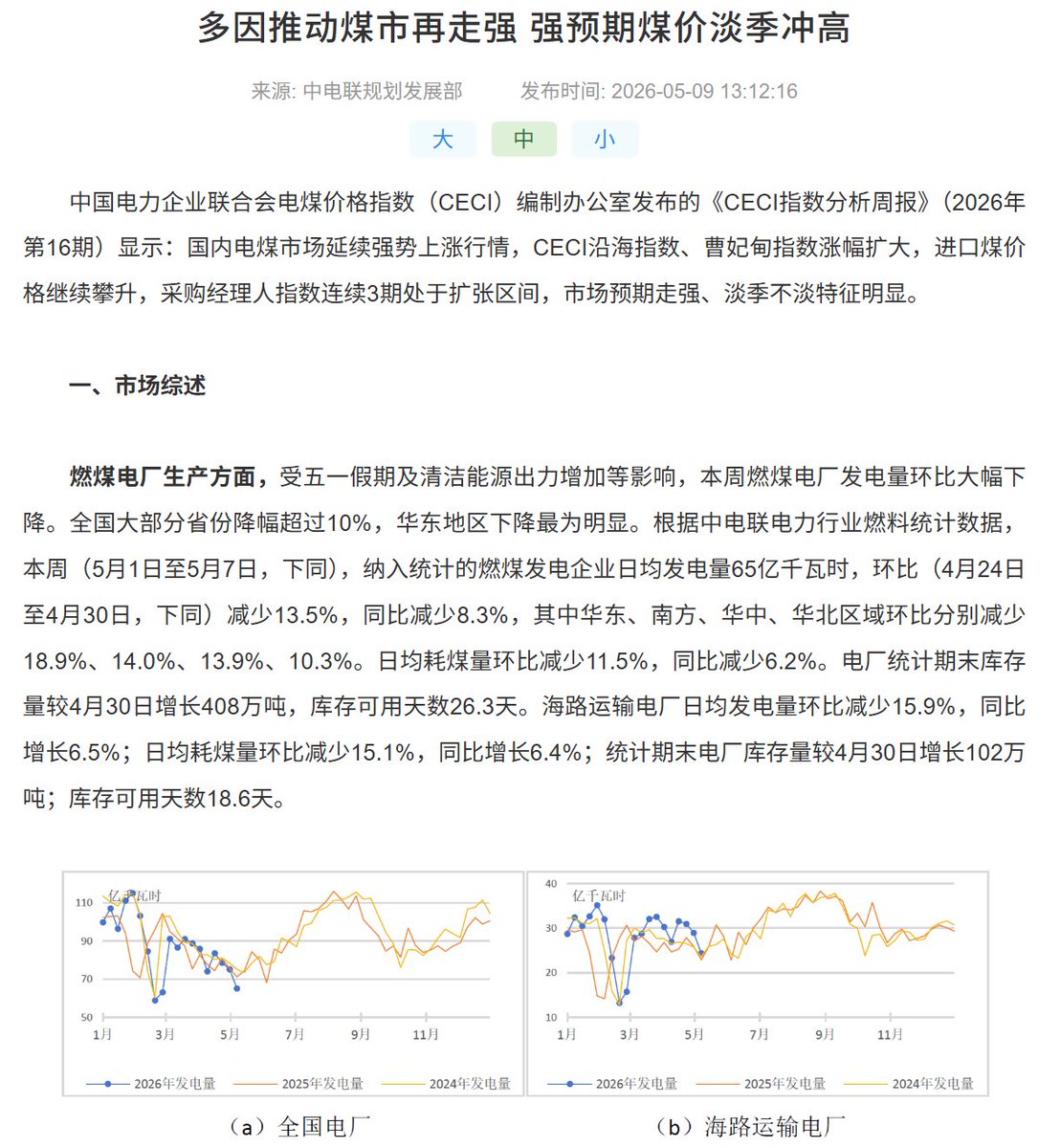
Good news is that the fossil power rebound seems to have ended in May, with a -8% drop in coal power generation in the first week of the month according to China Electricity Council. Image
The fossil fuel crunch affected China's refining and chemical industry, with refinery throughput down 6%, ethylene and chemical fibers down 4%.
Together with a small 1% increase in domestic oil production, the drop in oil refining and chemicals production goes some way towards explaining the sharp reduction in China's oil imports.
Solar cell output fell 25% due to weaker installations in China and a drop in exports after the March surge. Domestic solar deployment has slowed down after last year's frenzy.
EV production inched up even as overall vehicle production fell, with the share of EVs rising to 51% of all vehicles produced, up from 47% in April last year.
Steel and cement output continued to fall, by 3% and 11%, showing how falling construction volumes are continuing to result in emission reductions.
The growth in overall value of industrial production slowed down to 4% in April, from 6% in Q1, with the high oil prices and weakness in clean energy manufacturing both exerting a toll.

• • •

Missing some Tweet in this thread? You can try to force a refresh

 

Keep Current with Lauri Myllyvirta

Lauri Myllyvirta Profile picture

Stay in touch and get notified when new unrolls are available from this author!

Read all threads

This Thread may be Removed Anytime!

PDF

Twitter may remove this content at anytime! Save it as PDF for later use!

Try unrolling a thread yourself!

how to unroll video
  1. Follow @ThreadReaderApp to mention us!

  2. From a Twitter thread mention us with a keyword "unroll"
@threadreaderapp unroll

Practice here first or read more on our help page!

More from @laurimyllyvirta

Mar 12
Lots of questions and muddled thinking about whether the impending fossil fuel crisis will benefit coal. Key thing to understand: Fossil fuel demand will fall; fuel-switching between coal and gas is temporary, while accelerated clean energy investments are structural. Image
Image
Just look at the 2021-2022 fossil fuel crisis. When Russia throttled gas supply to Europe and fuel prices skyrocketed, there was a deluge of headlines about countries, especially Europe, "going back to coal". Image
Of course, when facing a physical shortage of gas and sky-high prices, power generators ramped up their coal plants. But that was a very short-lived bounce that also combined with the Covid rebound. Image
Image
Read 9 tweets
Feb 28
China's official statistics report a 0.3% drop in CO2 emissions from energy&industry in 2025, the third time that annual emissions have fallen this century and the first fall predominantly driven by clean energy growth. Image
Coal consumption grew 0.1%, oil consumption 3.6% and gas consumption 2%, while non-fossil energy use grew 14%. Yet, after subtracting non-energy use, total fossil energy consumption fell 0.4%, showing how chemical industry demand drove fossil fuel use.
Power generation from carbon-free sources grew 14%, covering all of the 4.8% growth in total power generation and pushing thermal power (coal, gas and biomass) down 0.7%. Image
Read 9 tweets
Oct 28, 2025
NEW from us: current clean energy targets and trends enable China, India, and Indonesia to peak power sector emissions by 2030. This would be a global breakthrough given that these nations have been the largest growth markets for coal in the decade since the Paris Agreement. Image
China, India and Indonesia used 73% of the world's coal in 2024. Without their emissions growth, global energy sector CO2 would have peaked before 2020. Coal use grew 15% in China, 42% in India, and 150% in Indonesia 2015-2024, while consumption in the rest of the world fell 23%. Image
China’s power sector emissions have been falling since early 2024 and will continue to decline if the country continues its current clean energy growth. Image
Read 14 tweets
Sep 22, 2025
A key point I always try to convey to policymakers and business folks in the west is that China's competitiveness in manufacturing is underpinned by unrivaled scale and ecosystem. The stereotype far too often is that it's all about subsidies and cheap labor, which...
...causes people to drastically underestimate the challenge of building alternative supply chains and the scale of the resources required to do it.
Or well, a lot of powerful people seem to be so out of touch with the physical production of things that they vastly *overestimate* the challenge in some areas (rare earths) and vastly underestimate it in others (solar and batteries).
Read 8 tweets
Aug 13, 2025
NEW from us: Last year, China started construction on an estimated 95 gigawatts (GW) of new coal power capacity, enough to power the entire UK twice over.

We explain why China's still building new coal power plants, and when and how it might stop and begin phasing out. Image
We address several persistent myths and misconceptions about coal power in China. These are the key points we make: Image
POINT 1: New coal is not needed for energy security
Making sure there is enough capacity to cover peak demand is what the government (mainly) means when they talk about “energy security” as the justification for new coal power.
Read 34 tweets
Jul 31, 2025
Important data drop that I've been waiting for on China's massive solar installations in H1:
🌞 solar power capacity additions doubled year-on-year to 212 gigawatts, with total capacity at the end of H1 increasing a whopping 54% year on year
Distributed solar accounted for 53% of new additions.
👉 This implies plenty of centralized solar projects are still on the way, many aiming to finish before the end of China's current 5-year plan in December.
Solar generation grew 43% while capacity grew 54%.
🔎 This suggests capacity utilization is slipping—likely due to higher curtailment—but the impact is still much smaller than the surge in capacity.
Read 8 tweets

Did Thread Reader help you today?

Support us! We are indie developers!


This site is made by just two indie developers on a laptop doing marketing, support and development! Read more about the story.

Become a Premium Member ($3/month or $30/year) and get exclusive features!

Become Premium

Don't want to be a Premium member but still want to support us?

Make a small donation by buying us coffee ($5) or help with server cost ($10)

Donate via Paypal

Or Donate anonymously using crypto!

Ethereum

0xfe58350B80634f60Fa6Dc149a72b4DFbc17D341E copy

Bitcoin

3ATGMxNzCUFzxpMCHL5sWSt4DVtS8UqXpi copy

Thank you for your support!

Follow Us!

:(