Deep Dive into the Next Generation of DeFi || @Aave V4
Aave V4 will introduce a new architecture and innovative concepts that will fundamentally change DeFi lending.
In this thread, we’ll explore in detail how it works, what it changes, and the benefits it brings ↓
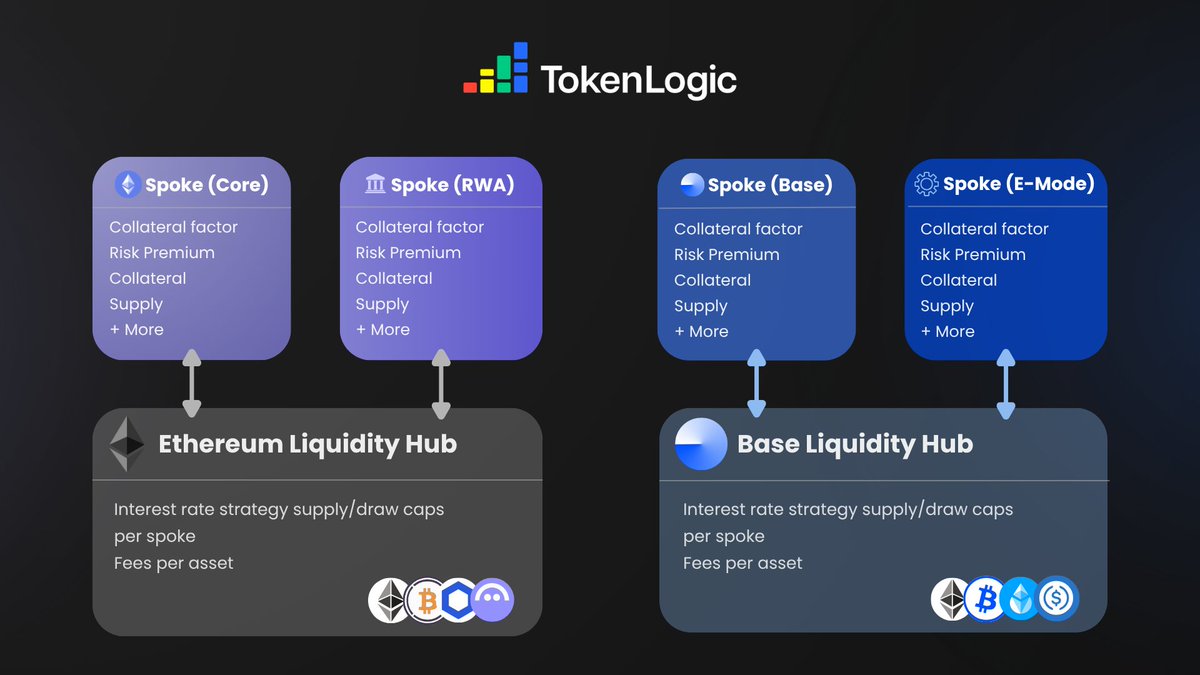
One of the biggest architectural changes is the introduction of Liquidity Hubs.
A Liquidity Hub can be seen as a Unified Liquidity Layer — the core of the new Aave architecture.
This means liquidity will no longer be fragmented by market, but unified per network.
The hub will manage supply and borrow caps, interest rates, supported assets, and incentives.
► The major advantage: other modules will be able to draw (=borrow) liquidity from it.
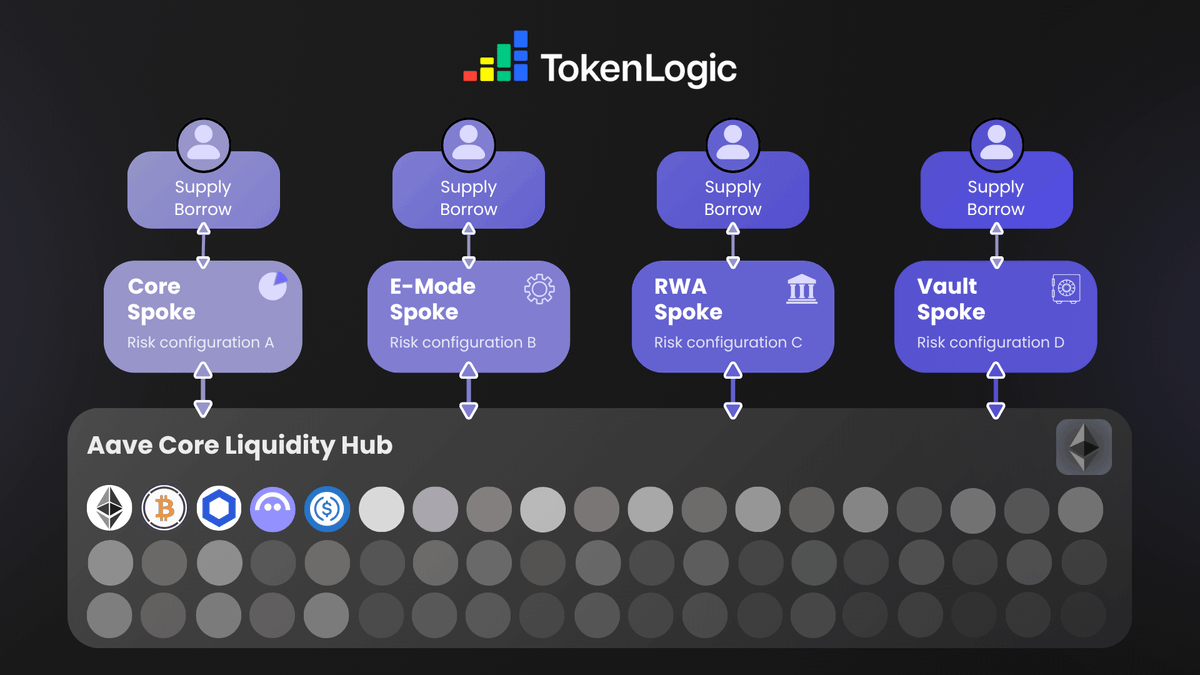
This solves the liquidity fragmentation problem of Aave V3, as multiple “spokes” will be able to interact with the same shared liquidity source.
To interact with these Liquidity Hubs, Aave V4 introduces "Spokes".
In simple terms, a Spoke is a configurable borrowing strategy.
Instead of having separate instances like in Aave V3, for example the Core instance and the Prime instance, Aave V4 will have a Core Spoke and a Prime Spoke, both drawing liquidity from the Ethereum Liquidity Hub.
Each Spoke will cater to a different risk profile, with distinct risk parameters such as higher LTVs or different interest rate strategies, and potentially different sets of listed assets.
► In other words, risks are isolated within each Spoke. If one Spoke is affected by an issue, the risk cannot contaminate the others.
Spokes will serve different needs. For example, one Spoke could serve users holding $ETH who want to borrow stablecoins, while another could serve users depositing LSTs using E-Mode to enter a recursive yield trade.
These are two different profiles, so the risks they bring to the protocol shouldn’t be handled within the same Spoke.