Swarajya Profile picture
May 20 6 tweets 2 min read Read on X
In 2021, Mukesh Ambani announced a 40 GWh cell gigafactory at Jamnagar, scaling to 100.

In May 2026, Reliance is back in talks with CATL — to buy finished cells and package them into Indian boxes, with press releases still calling it manufacturing. 🧵 Image
Reliance is not alone. Exide's cells are licensed from SVOLT, Amara Raja's from Gotion and Highstar, Tata's Agratas from AESC — the Chinese-owned maker that has a board seat.

Every conglomerate that set out between 2021 and 2023 to build cells has retreated to assembling them. Image
Licensing now, R&D later, has been a plausible playbook — CATL was a TDK licensee, Samsung SDI started on Japanese chemistry.

But the trick is to pair the licensing with R&D investment at scale, and the Indian conglomerates have done the licensing without the R&D.
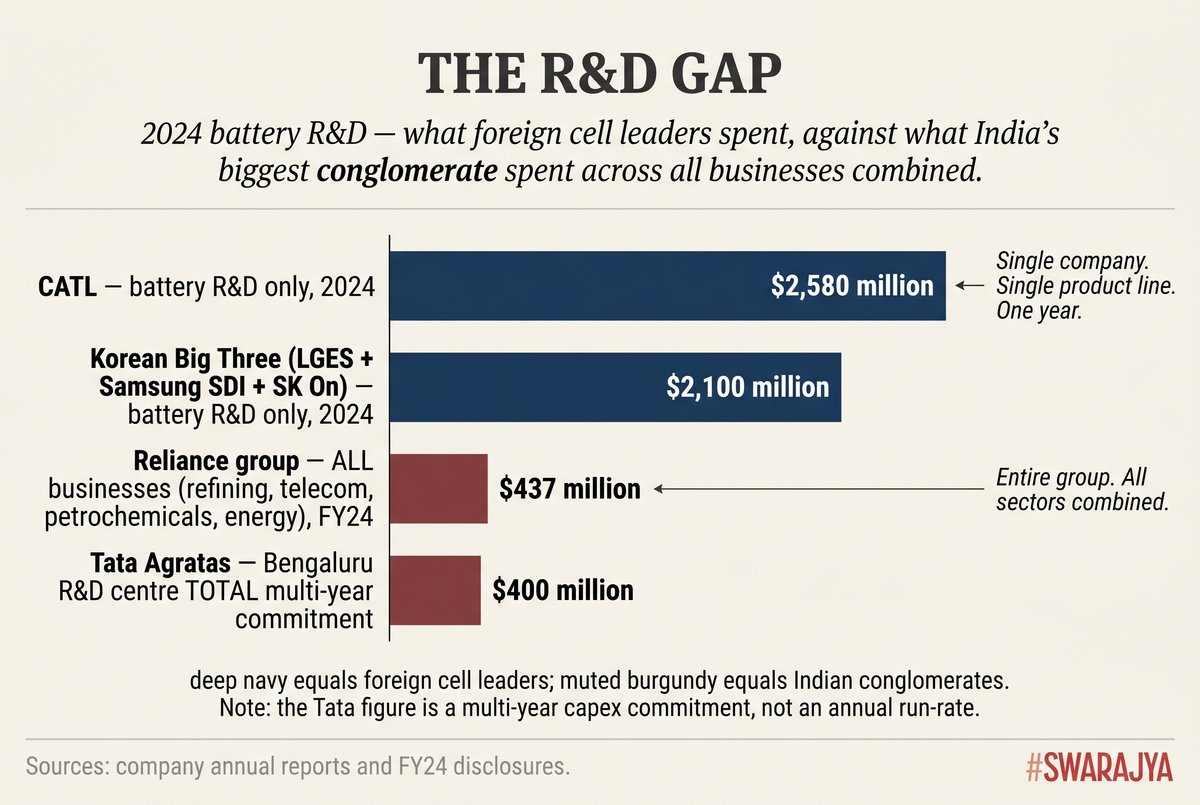
CATL spent $2.58 billion on battery R&D in 2024 and the Korean Big Three $2.1 billion combined, while Reliance's entire group R&D budget across all sectors that year was $437 million. CATL alone spent six times that on batteries. Image
A turnkey BESS sold globally for $117 per kilowatt-hour in 2025, of which $75 was core equipment from China, mostly the cells.

Indian assemblers capture 40% of the system value; rest stays in China, with cell margins holding while integration margins compress. Image
On the current trajectory, the Indian battery industry will be born already dependent.

The capital and the talent are in place. What is missing is the corporate appetite for the long, expensive half of the playbook.

Full piece in @SwarajyaMag.

swarajyamag.com/tech/from-cell…

• • •

Missing some Tweet in this thread? You can try to force a refresh

 

Keep Current with Swarajya

Swarajya Profile picture

Stay in touch and get notified when new unrolls are available from this author!

Read all threads

This Thread may be Removed Anytime!

PDF

Twitter may remove this content at anytime! Save it as PDF for later use!

Try unrolling a thread yourself!

how to unroll video
  1. Follow @ThreadReaderApp to mention us!

  2. From a Twitter thread mention us with a keyword "unroll"
@threadreaderapp unroll

Practice here first or read more on our help page!

More from @SwarajyaMag

May 17
India says it wants to become a deep-tech and manufacturing power. It has IITs, startups, research grants, and now even a ₹1 lakh crore innovation fund.

So why do so few Indian technologies become real products? 🧵 Image
A big reason is that India’s research system splits innovation into separate worlds.

Universities do “research.”
Industry does “products.”

The difficult middle — turning a lab prototype into a usable technology — belongs to nobody.
This middle stage is called the “valley of death.”

A university may build a promising battery, chip, laser, or automotive system prototype.

But taking it from experiment to manufacturable product needs:

-engineering
-testing
-integration
-patient funding Image
Read 7 tweets
May 16
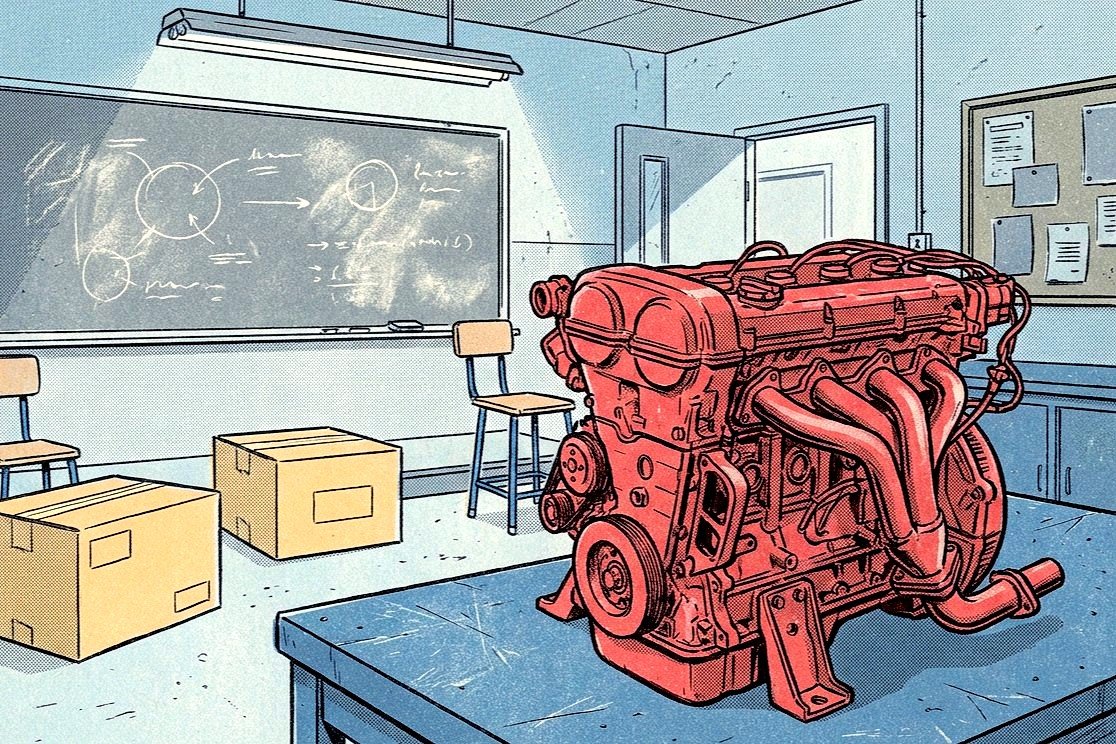
A major Indian OEM donated engines to a university lab.

No specs, no joint team, no embedded engineer for integration. Just hardware tossed over to the lab. That's industry-academia "collaboration" in India.

Here's why it is that way. 🧵
India follows NASA's TRL system — a 9-level readiness scale.

Academia owns TRL 1–3.
Industry owns TRL 7–9.

And the middle 4–6? That is nobody's job. That middle is where ideas go to die. Image
Industry sits at TRL 7 like a dissatisfied customer — "Why would I use this? It's not market-ready."

Fair. But you were never in the room when it was being built.

It gets worse.
Read 9 tweets
May 12
In Bengaluru, a man spent three months and 25 visits trying to get his eKhata.

After multiple rejections, the ARO finally told him in Kannada, 'give something.' He refused.

By then his exhausted father had quietly paid ₹90,000 to an agent. The eKhata had not arrived. 🧵
On a ₹5 crore property deal in India, the state collects roughly 5.68% in stamp duty and registration charges.

All it gives back is a record that the transaction happened. It does not confirm that the seller had the right to sell or that the buyer is safe from later claims. Image
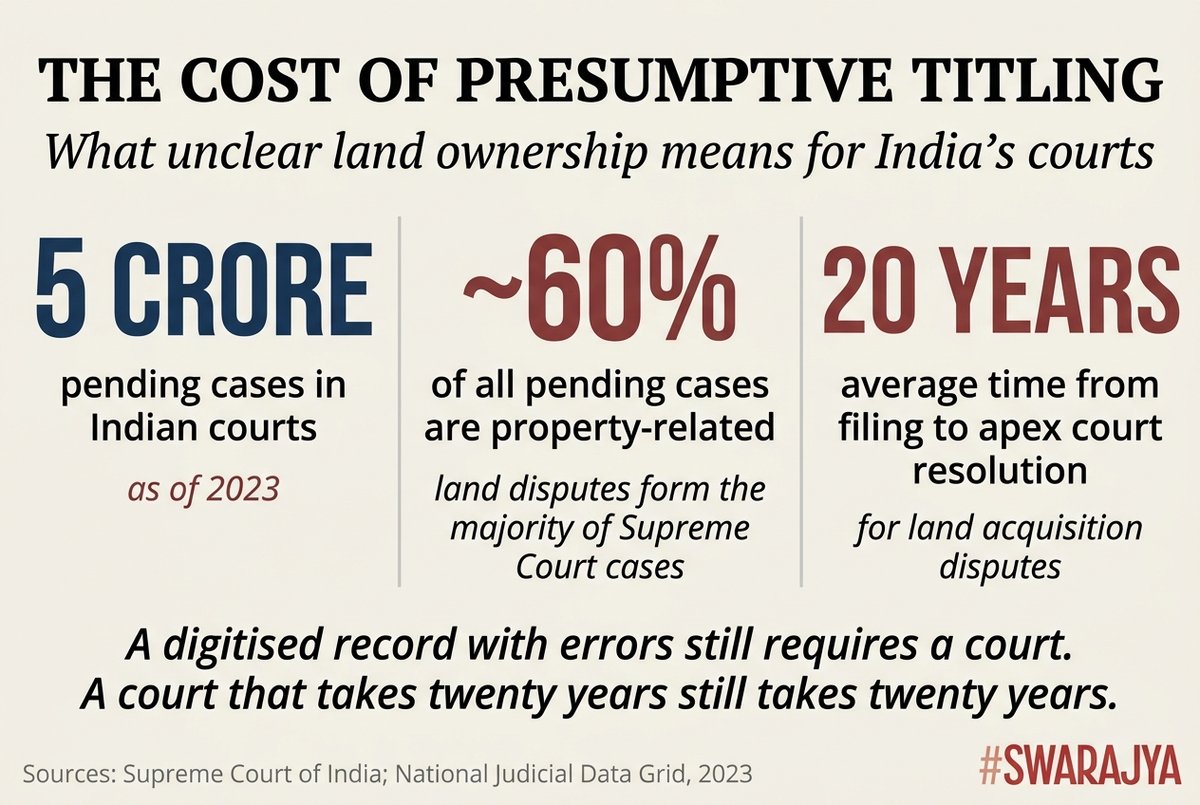
Around 60% of India's 5 crore pending court cases are property-related. The average land acquisition dispute takes twenty years to reach the apex court.

The reason is structural. India still uses presumptive titling, which records transactions without confirming ownership. Image
Read 6 tweets
May 5
One woman cleaned floors for Rs 4,500/month. The other stitched leaf plates in a forest village to survive.

On 4 May 2026, both won seats in the West Bengal Assembly — by margins of 12,000 and 32,000 votes.

This is what actually happened. 🧵
Neither had money, land, or a political family.

What they had: years of going door to door, on bicycles, in constituencies where backing the wrong party could get you hurt.

They built their base the slow way. The unglamorous way.
One lost in 2021 and went back to cleaning houses.

The other won — and spent 5 years as an opposition MLA with no funds released, stones pelted at her vehicle, and threats serious enough to need security inside her tarpaulin home.

Neither left. Neither switched sides.
Read 4 tweets
May 3
In 2009 Lok Sabha elections, Congress won 206 seats — a 61-seat jump from 2004.

Analysts credited MNREGA, the nuclear deal, etc.

What no one pointed out was the new electoral map 🧵 Image
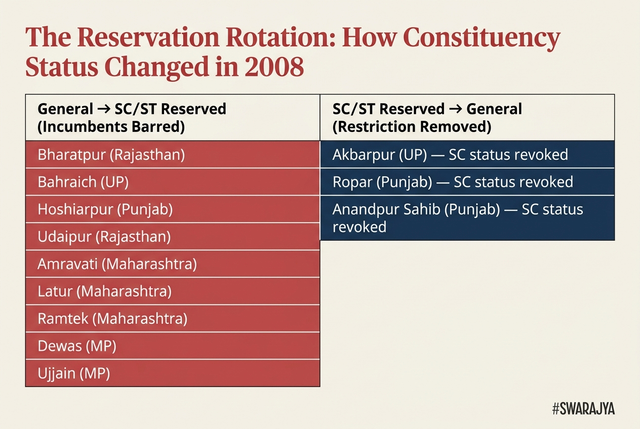
India's constituencies were redrawn in 2008 — the first full delimitation since 1973.

The 2009 election was the first fought on that new map.

SC reservations were rotated, vote-banks dissolved, new seats created in 'Congress-friendly' belts. Image
In Rajasthan, 11 seats BJP had held in both 1999 and 2004 flipped to Congress.

Bharatpur: 3-time BJP incumbent barred — seat declared SC-reserved.

Pali: 3 ACs converted to SC-reserved. Congress won by 1.96 lakh votes.
Read 6 tweets
Apr 25
Two MBA graduates tried to export one container of rice. The government portal asked them to re-upload a document. There was no field to do it.

The workaround was an email address listed nowhere on the site. Without knowing someone, their first export would have died there. 🧵
Parliament just decriminalised 717 provisions across 79 laws. The Jan Vishwas Bill removes the jail threat that gave inspectors leverage over small businesses for decades.

Significant reform. But it only touches Central laws, roughly a third of an MSME's compliance burden. Image
40-45% of the burden sits with states. Another 20-25% with municipal bodies. The portals that don't work, the inspectors who show up, the approvals that stall — none of that changed on 1 April.

The woman in Tirupur still doesn't know 717 provisions were decriminalised. Image
Read 4 tweets

Did Thread Reader help you today?

Support us! We are indie developers!


This site is made by just two indie developers on a laptop doing marketing, support and development! Read more about the story.

Become a Premium Member ($3/month or $30/year) and get exclusive features!

Become Premium

Don't want to be a Premium member but still want to support us?

Make a small donation by buying us coffee ($5) or help with server cost ($10)

Donate via Paypal

Or Donate anonymously using crypto!

Ethereum

0xfe58350B80634f60Fa6Dc149a72b4DFbc17D341E copy

Bitcoin

3ATGMxNzCUFzxpMCHL5sWSt4DVtS8UqXpi copy

Thank you for your support!

Follow Us!

:(