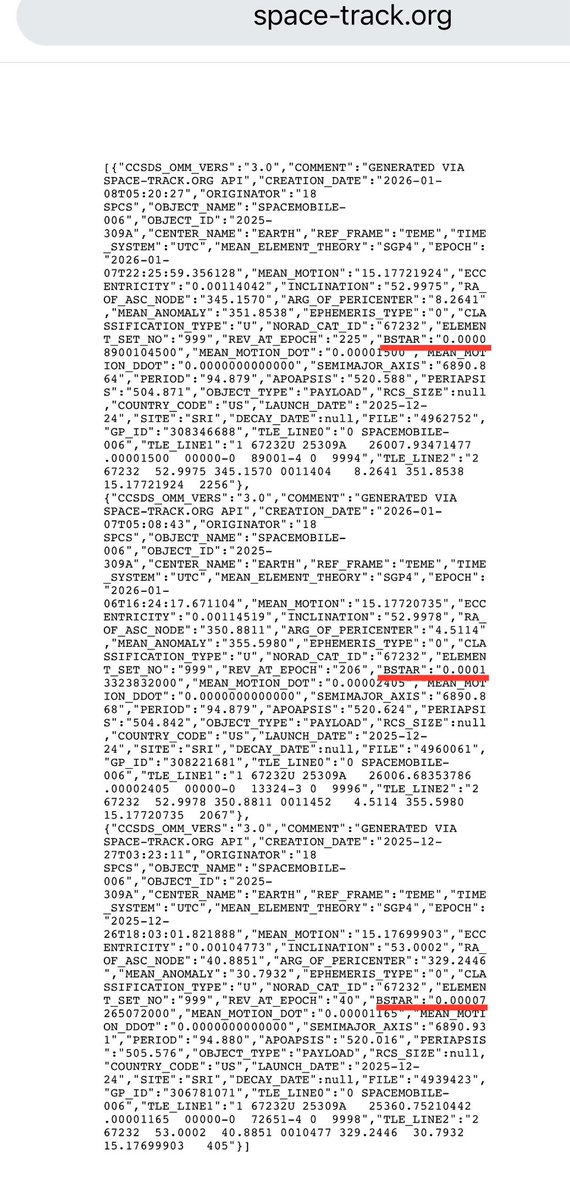
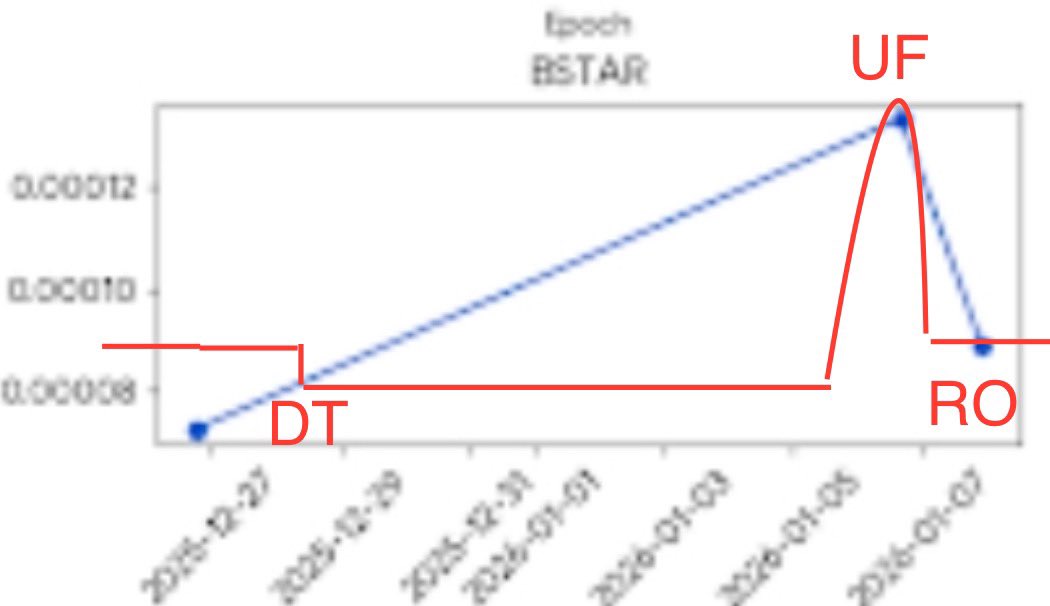
What does the capabilities of a full $ASTS Spacemobile constellation look like?
what can it do?
1/
what can it do?
1/
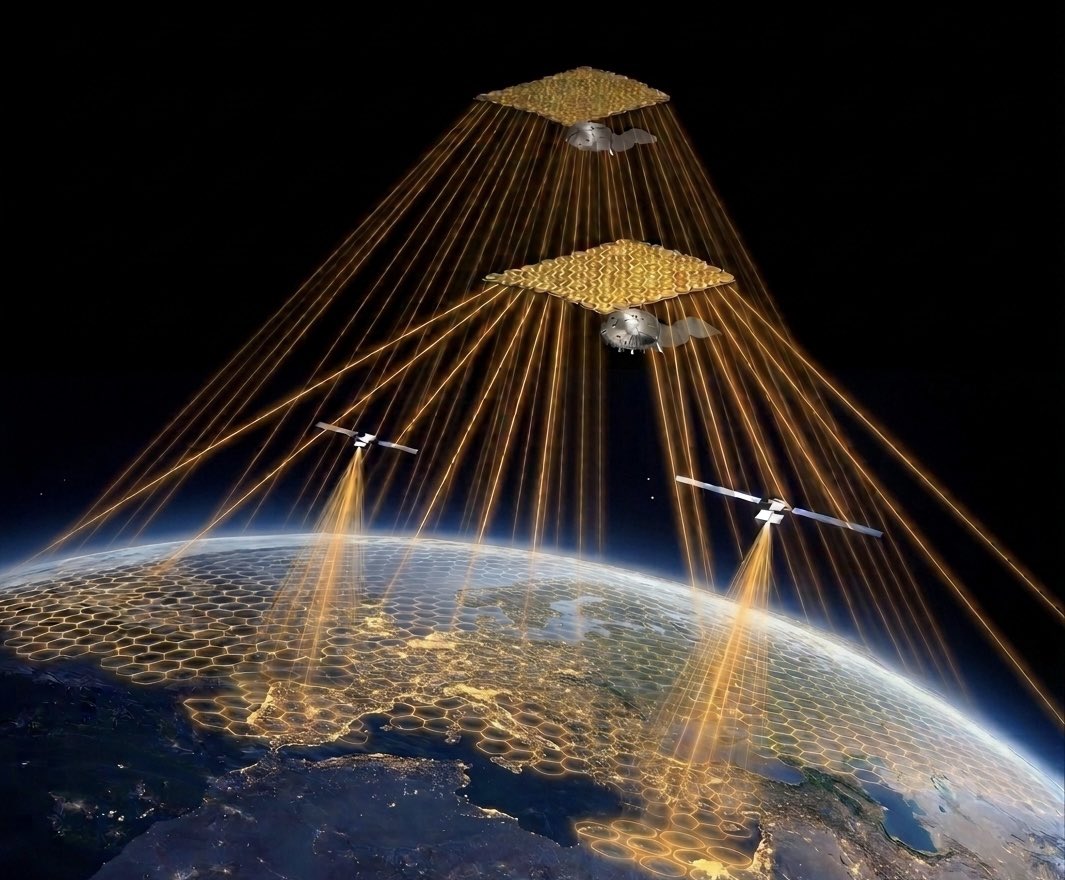
Conceptually it is a way to use solar energy and spectrum to produce intangible services such as assured PNT, sensing, IoT comms, DoD comms and broadband commercial comms.
We’ll consider the latter.
Broadband commercial comms.
2/
We’ll consider the latter.
Broadband commercial comms.
2/
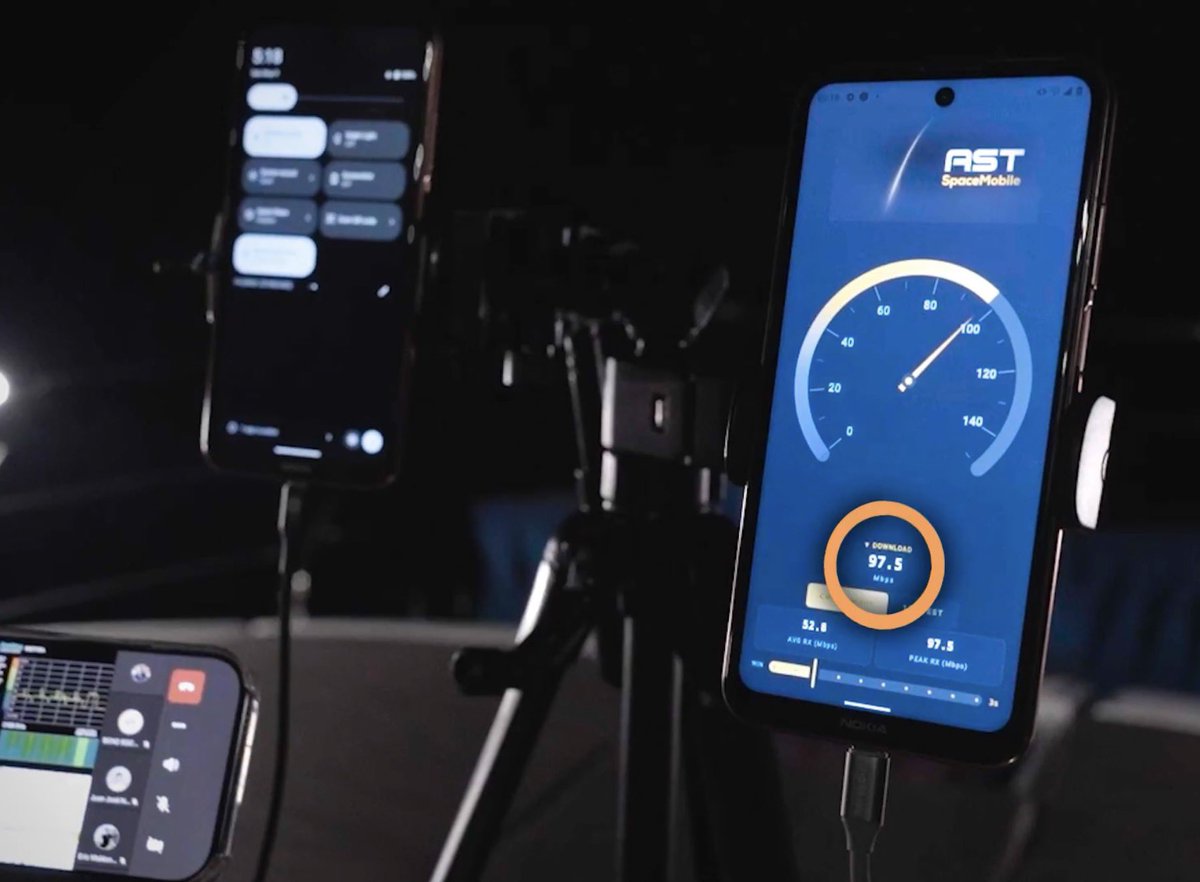
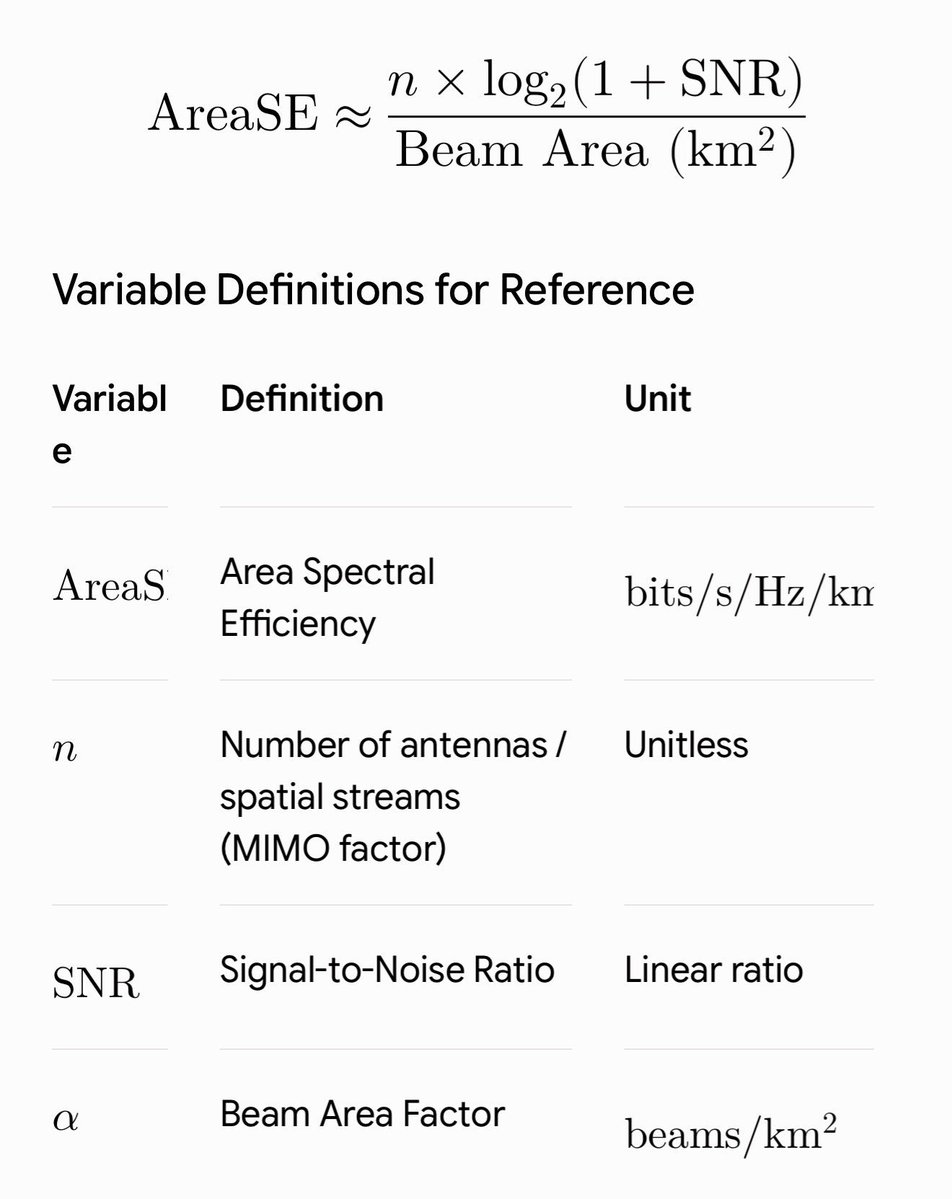
The key metric here is area spectral efficiency.
It can be derived from Shannons formula in steps.
Here is how you get spectral efficiency.
3/
It can be derived from Shannons formula in steps.
Here is how you get spectral efficiency.
3/

And here is how spectral efficiency, SE, is distributed conceptually if you just make a earth fixed grid that you light up with equal sized beams.
It’s a bit higher mid beam.
4/
It’s a bit higher mid beam.
4/

As the users in a cell shares the same spectrum area spectral efficiency ASE (or more precise per area unit spectral efficiency) becomes dependent on the beam area used.
Cut the area served in half by using more narrow beamcells and ASE increases by 2x all else equal.
5/
Cut the area served in half by using more narrow beamcells and ASE increases by 2x all else equal.
5/
It is very directive beams made by the phased array that creates these cells like a laser creates a footprint on a wall.
The larger part of a large array is used the more narrow cells are created.
6/
The larger part of a large array is used the more narrow cells are created.
6/

It’s called spectrum reuse. To increase the spectrum reuse of towers you need more radioheads and more towers.
To increase spectrum reuse from satellites you need enough satellites that are large.
7/
To increase spectrum reuse from satellites you need enough satellites that are large.
7/
Interestingly the size of array needed for a certain beamwidth varies with frequency.
Higher frequency (as used by Starlink) requires a smaller array and lower frequency (as in the first tier of AST) requires a larger array to create the same size of beamcell.
8/
Higher frequency (as used by Starlink) requires a smaller array and lower frequency (as in the first tier of AST) requires a larger array to create the same size of beamcell.
8/
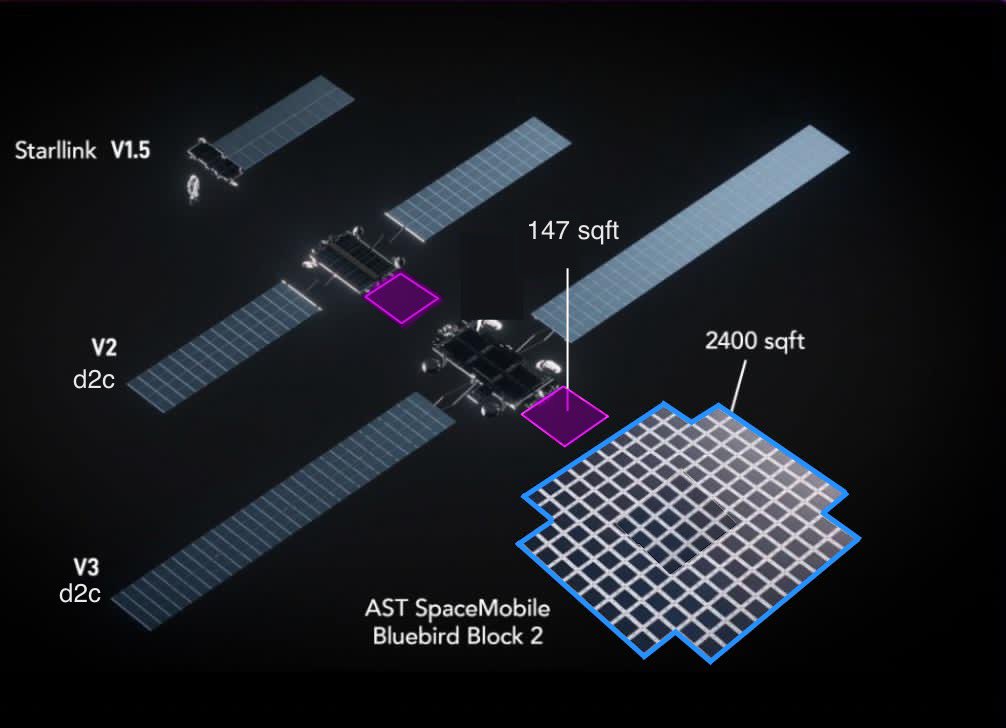
That said the higher frequencies also have much worse propagation characteristics so they really need the size too for Signal strength reasons
Make their cells as large as lowband can be & the signal gets to weak by the user.
$ASTS will use large arrays also for high frequency.
Make their cells as large as lowband can be & the signal gets to weak by the user.
$ASTS will use large arrays also for high frequency.

Bits per second per Hz per m ²
That’s area spectral efficiency
And the KPI to compare d2c constellations by.
No single analyst has as of yet made an attempt to do that comparison of full constellations.
It would be wise and to add sensitivity analysis of the inputs.
/10
That’s area spectral efficiency
And the KPI to compare d2c constellations by.
No single analyst has as of yet made an attempt to do that comparison of full constellations.
It would be wise and to add sensitivity analysis of the inputs.
/10
But to do it we need to investigate what these full constellations are actually capable of and how they adress the equation from first principles.
This is the full expression
/11
This is the full expression
/11

Food time soon and I’m the chef…
Will continue this thread at a later time.
We’ll dive into the unitless n factor, discuss multiplexing and how to think of beam size on full constellation.
We’ll also discuss 4x4 MIMO sub 6GHz and multi tier constellation architecture.
/12
Will continue this thread at a later time.
We’ll dive into the unitless n factor, discuss multiplexing and how to think of beam size on full constellation.
We’ll also discuss 4x4 MIMO sub 6GHz and multi tier constellation architecture.
/12
Let’s run through a few more design criteria first.
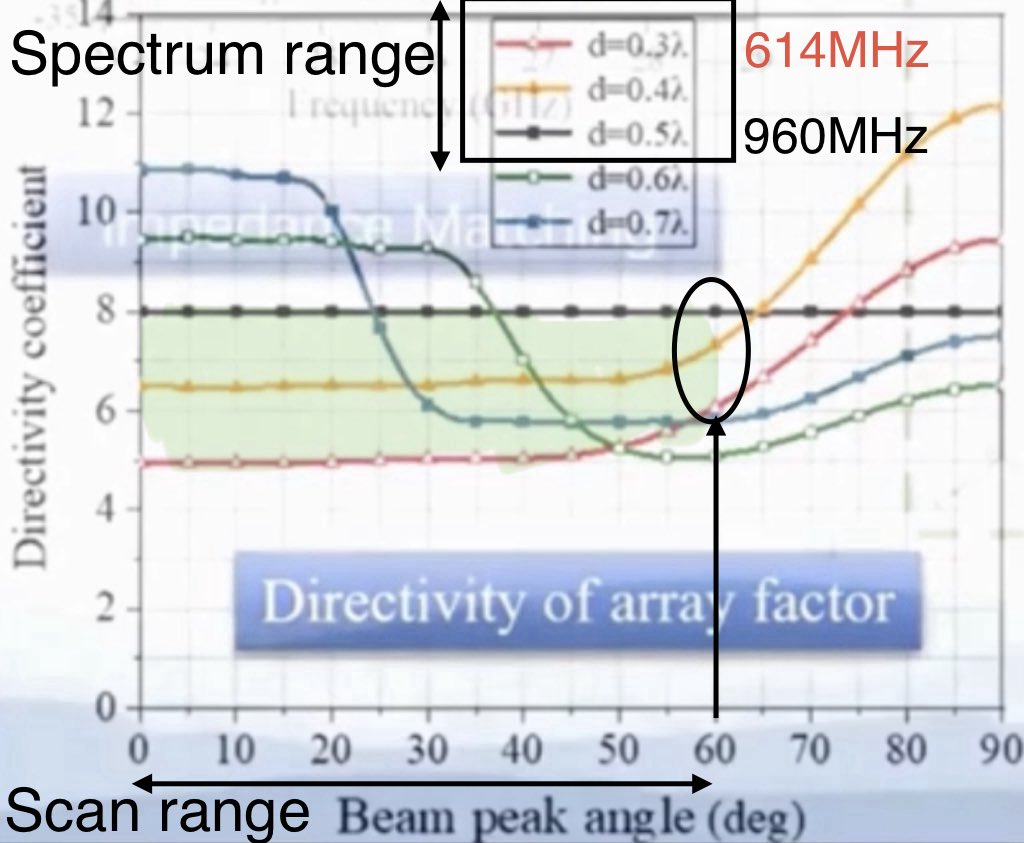
The reason $ASTS lowband birds have a certain operating range that is 614-960 MHz or upper bound 1.56 x lower is due to that antenna element distance is fixed for a satellite and so directivity at high scan angles fades if that range is too wide.
The reason $ASTS lowband birds have a certain operating range that is 614-960 MHz or upper bound 1.56 x lower is due to that antenna element distance is fixed for a satellite and so directivity at high scan angles fades if that range is too wide.
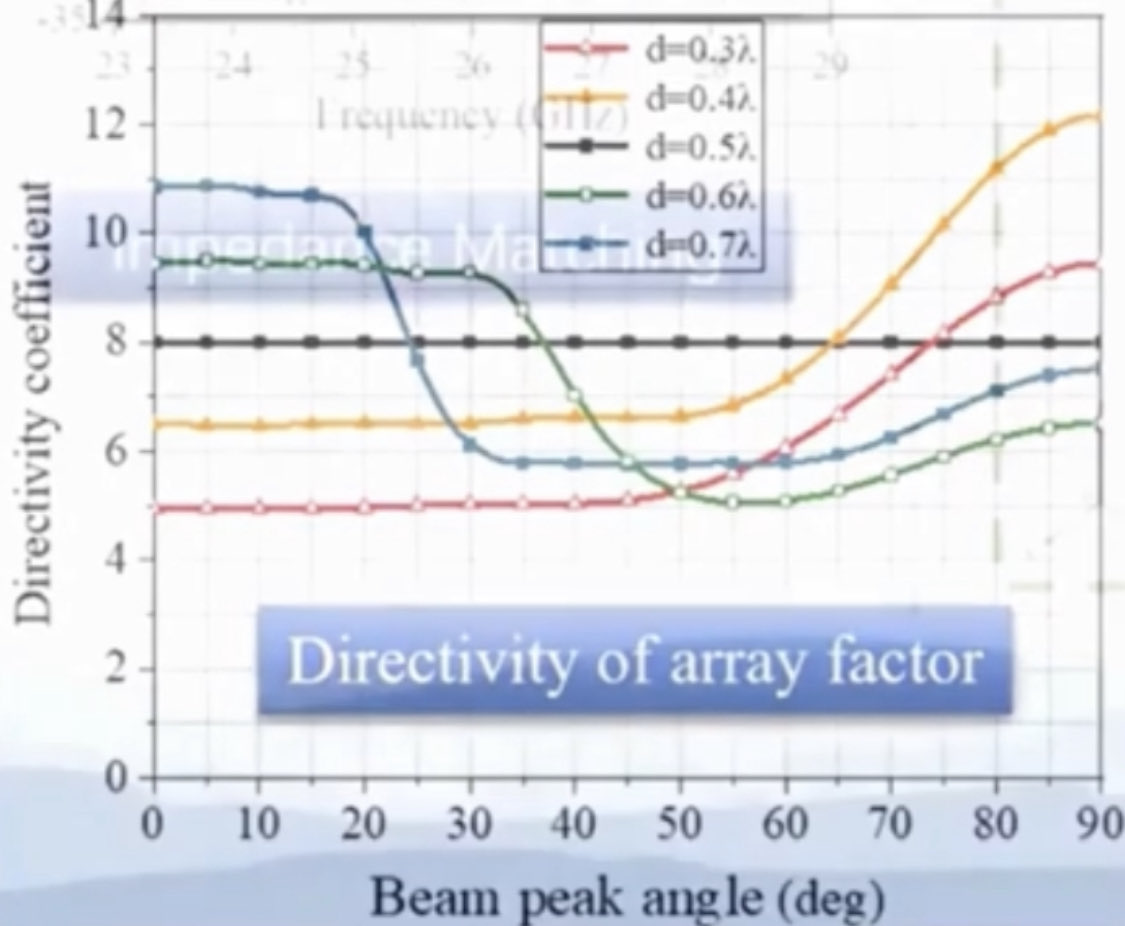
So they end up using a spectrum range and a scan angle range (field of view) where the highest bound has the highest directivity.
This chart is relative to that black 0.5 wavelength directivity and in reality it’s nothing like flat.
This chart is relative to that black 0.5 wavelength directivity and in reality it’s nothing like flat.
The directivity of the array, here described as beamwidth, drops off on high scan angles so previous chart was relative to these baselines shown here.
This is the characteristic of 0.5 wavelength corresponding to 960 MHz in the BlueBird block 2 example; Black in previous chart.
This is the characteristic of 0.5 wavelength corresponding to 960 MHz in the BlueBird block 2 example; Black in previous chart.
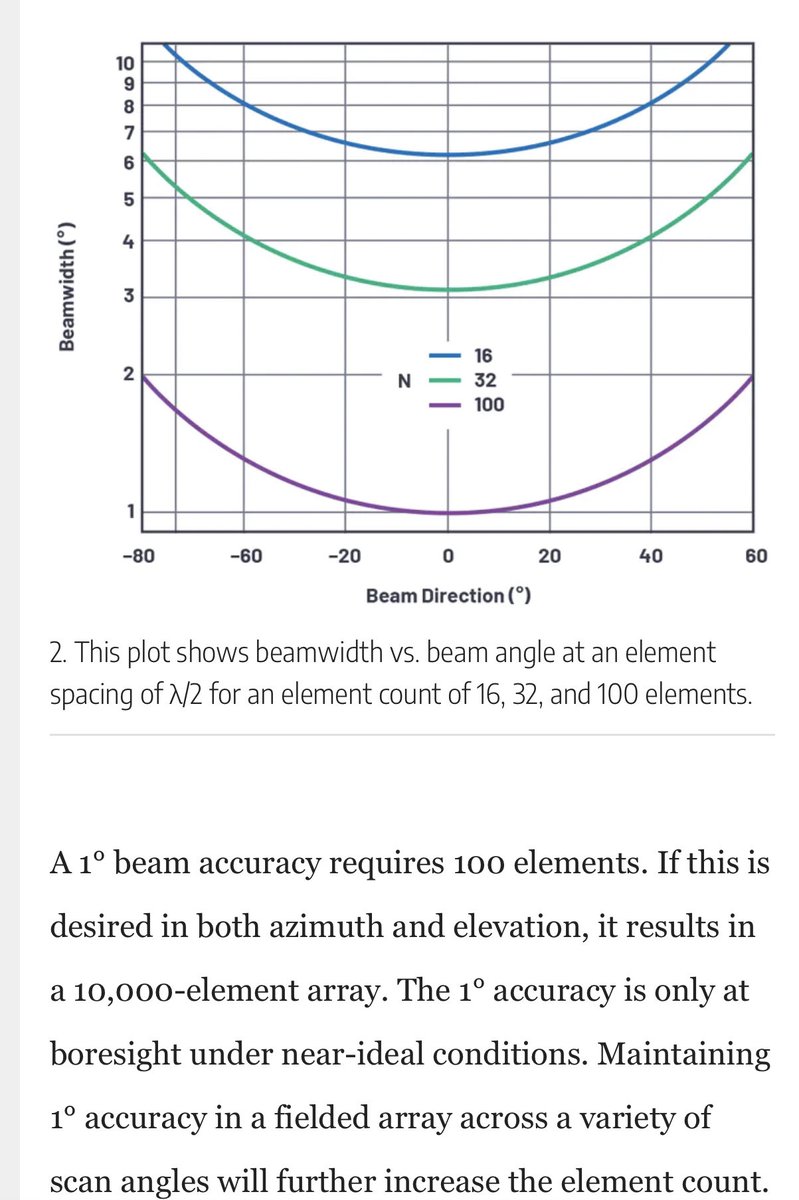
Charts like these can tell us that for the same beam width to be created at 20, 40 and 60 degrees scan angle off boresight varying number of antenna elements are needed (50,70 and 100 respectively)
It gets even more complicated…
It gets even more complicated…
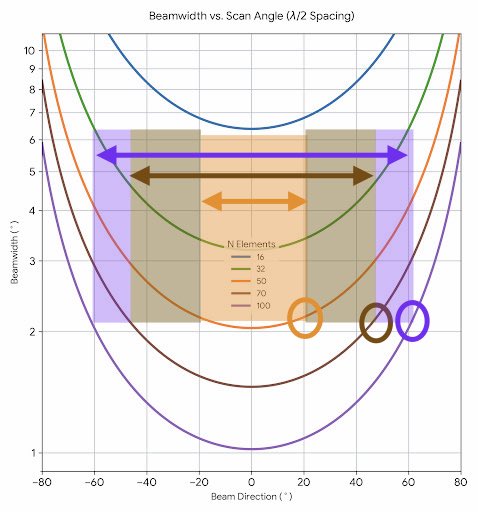
As can be seen here the beams on the perifery not only get less effective aperture and thus need more antenna elements. They also need to be more narrow to create the same size beamcell because the distance is much longer.
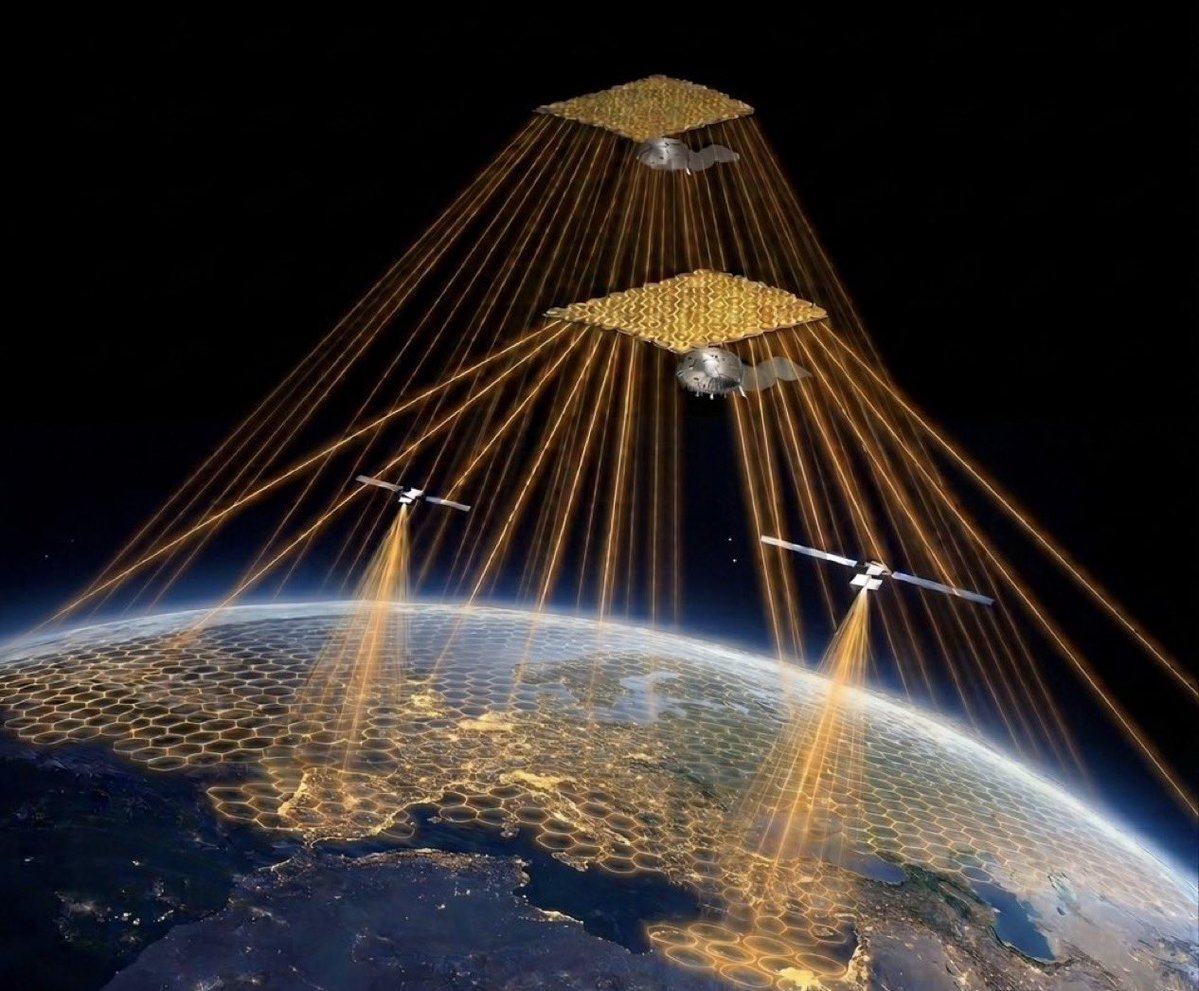
AST mitigates this in many ways.
One is optimzed gain contour dual pol antenna elements as seen by the conceptual blue chart they add most gain in the off boresight directions where it is most needed.
That drastically cuts elements/size needed for the limiting use case.
One is optimzed gain contour dual pol antenna elements as seen by the conceptual blue chart they add most gain in the off boresight directions where it is most needed.
That drastically cuts elements/size needed for the limiting use case.

Another way is roll angle adjustments. Imagine a Bluebird (actual screenshot RN) crossing near but not straight over US.
This craft can roll the array a 10-20 degrees right with zero effect on drag. But a huge increase of effective projected aperture towards US mainland.
This craft can roll the array a 10-20 degrees right with zero effect on drag. But a huge increase of effective projected aperture towards US mainland.

More factors than pure distance and less effective projected aperture (scan loss) makes the limiting case a challenge. It hits earth at slant angle and even more elements are needed to circularize the beamcell.
In case it’s lost on you we’re still at a primer to discussing one aspect of the KPI formula. The per beam area part.
And it’s widely assumed by analysts AST will stay at a static max sized beam structure as the one in filings. A beam size defined by the limiting edge cells.
And it’s widely assumed by analysts AST will stay at a static max sized beam structure as the one in filings. A beam size defined by the limiting edge cells.

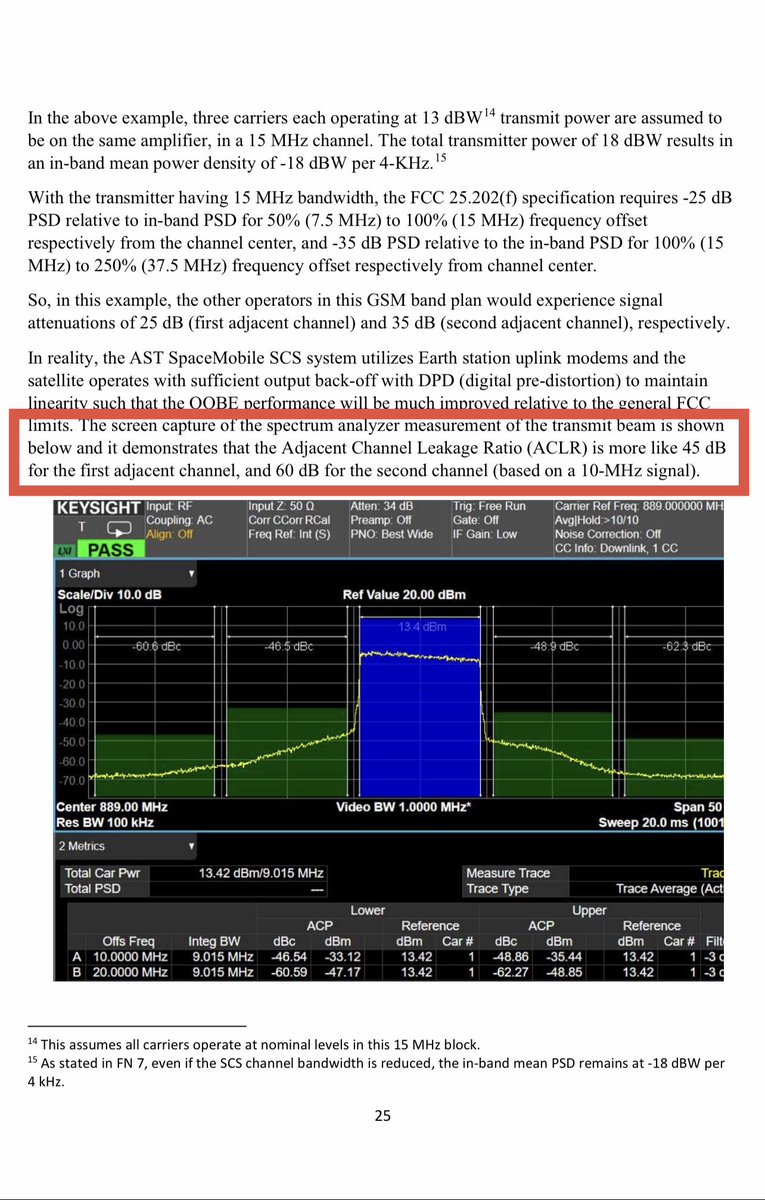
But here is the thing. $ASTS has a ~9dB margin to scale even w/o waivers because of using multiolr state of the art RF technologies and patents (45 dB ACLR, phasing/weighting sidelobe mitigation etc)
And the fixed version is in no way something they’re technically limited to.
And the fixed version is in no way something they’re technically limited to.
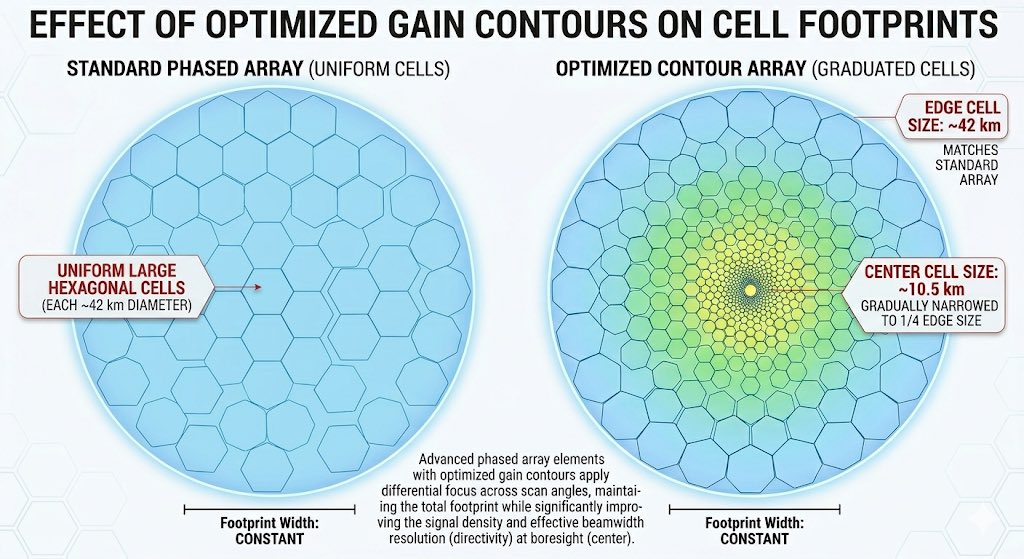
You can do your own calculations but using all the elements needed for the edge use case at boresight the beamcell created at full aperture and close distance is much smaller. The diameter cut to 1/4, cuts the area to 1/16.

Caveats apply ofc.
But the thing we (SpaceMob OGs) learned in 2021 listening to Marshack is that $ASTS has a fully virtualised network. They run a virtual copy of every user devuce and so AI orchestratiin can optimize every aspect of the network to the real time user demand.
Including beam size and beam bandwidth.
But the thing we (SpaceMob OGs) learned in 2021 listening to Marshack is that $ASTS has a fully virtualised network. They run a virtual copy of every user devuce and so AI orchestratiin can optimize every aspect of the network to the real time user demand.
Including beam size and beam bandwidth.
This tweak of the area factor adds one order of ten base magnitude increase of total throughput of the network by adding more satellites alone.
I believe this is the rationale about concentrating to 53 degrees inclination as densification comes first over high ARPU markets then
I believe this is the rationale about concentrating to 53 degrees inclination as densification comes first over high ARPU markets then
I asked an AI to visualize this AI orchestrated densification tweak for you.
Some notes here: This will not be fully deployable until the constellation scales.
Starlink did similar tweak to make densification by flying lower. Dangerously low skyrocketing their replenish req.
Some notes here: This will not be fully deployable until the constellation scales.
Starlink did similar tweak to make densification by flying lower. Dangerously low skyrocketing their replenish req.
Further caveats apply such as true SCS use limits these tweaks as tower usage in 4G/5G isn’t dynamically orchestrated in a fused hybrid network.
Mobile networks in their tower version aren’t mobile they’re static. 6G and NTN changes that.
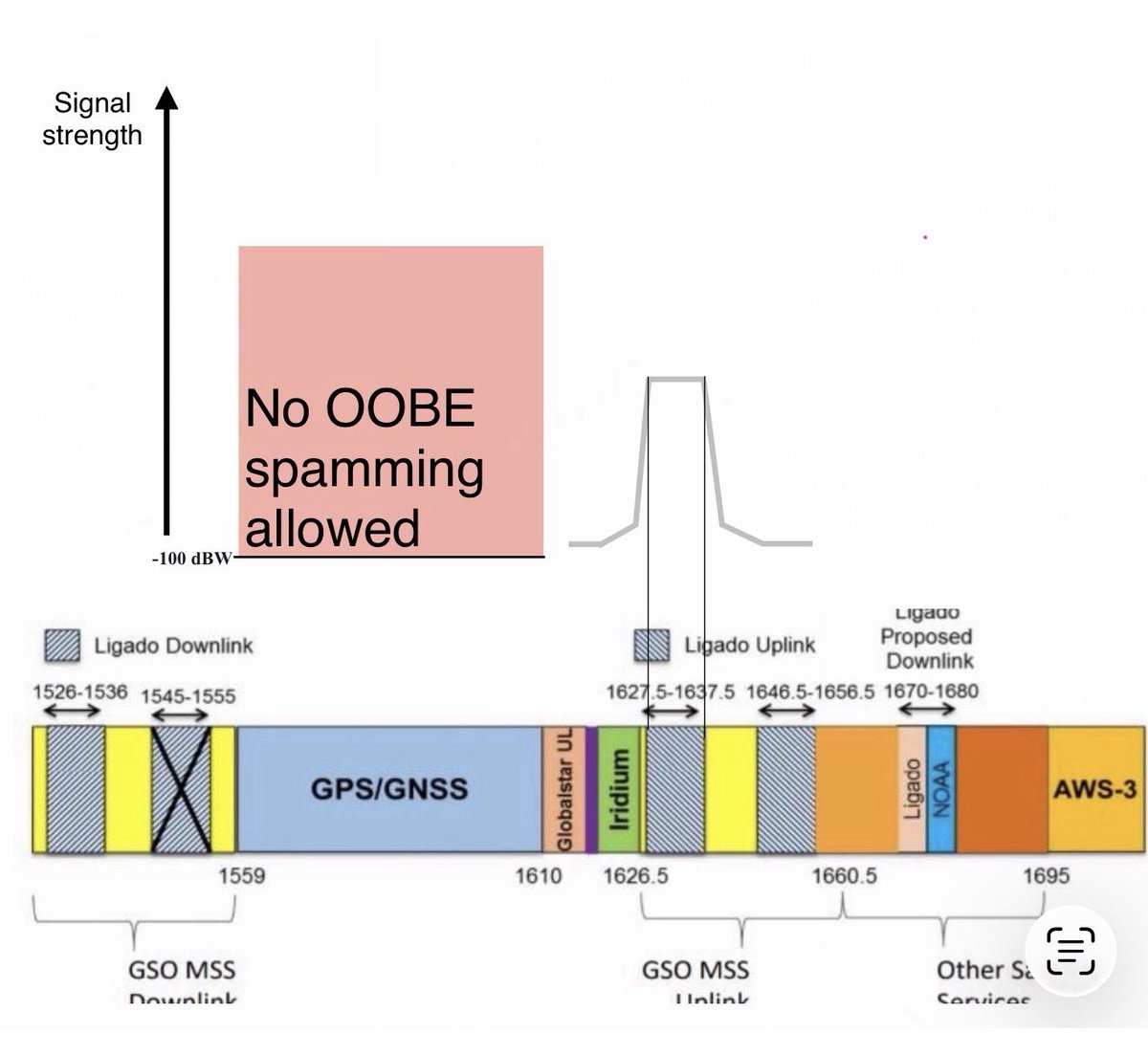
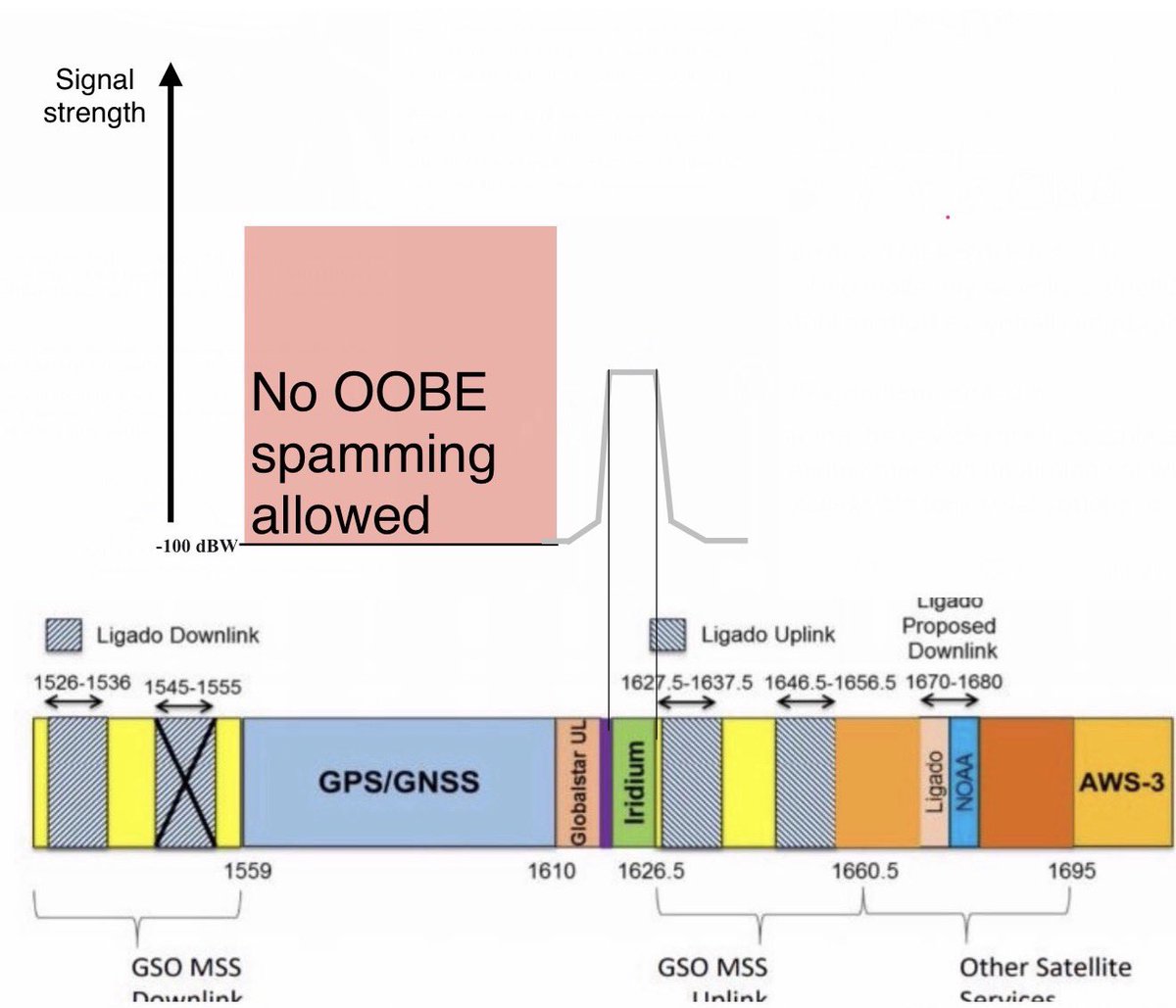
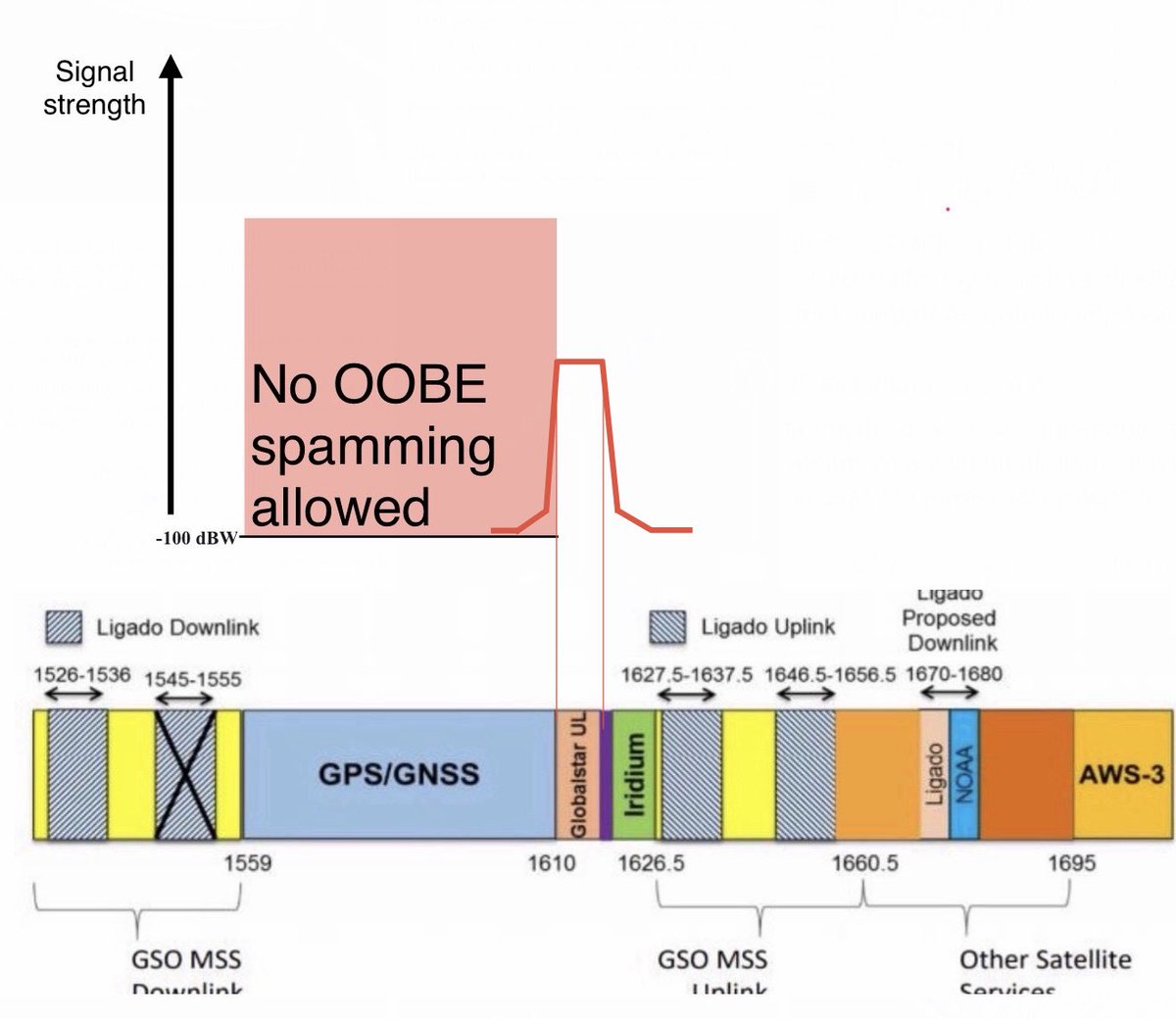
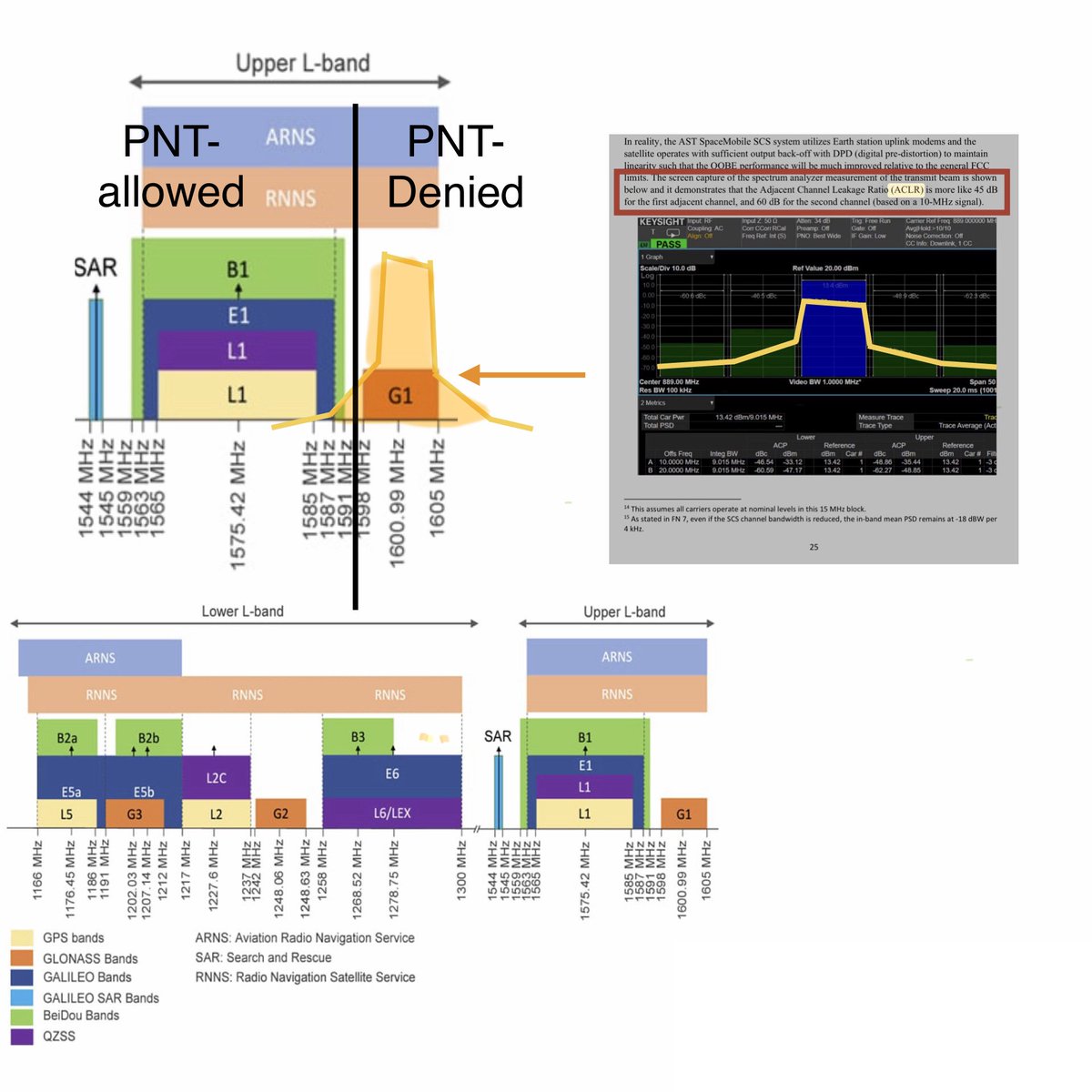
MSS spectrum like Ligado is there now.
Mobile networks in their tower version aren’t mobile they’re static. 6G and NTN changes that.
MSS spectrum like Ligado is there now.
The Slink densification that they’re forced to anyway as they don’t have proper latency tweaks is going lower. That’s problematic for two reasons.
One is they’re so close that each satellite utilisation drops. It will mostly be idle. While AST sats can look further for users.
One is they’re so close that each satellite utilisation drops. It will mostly be idle. While AST sats can look further for users.
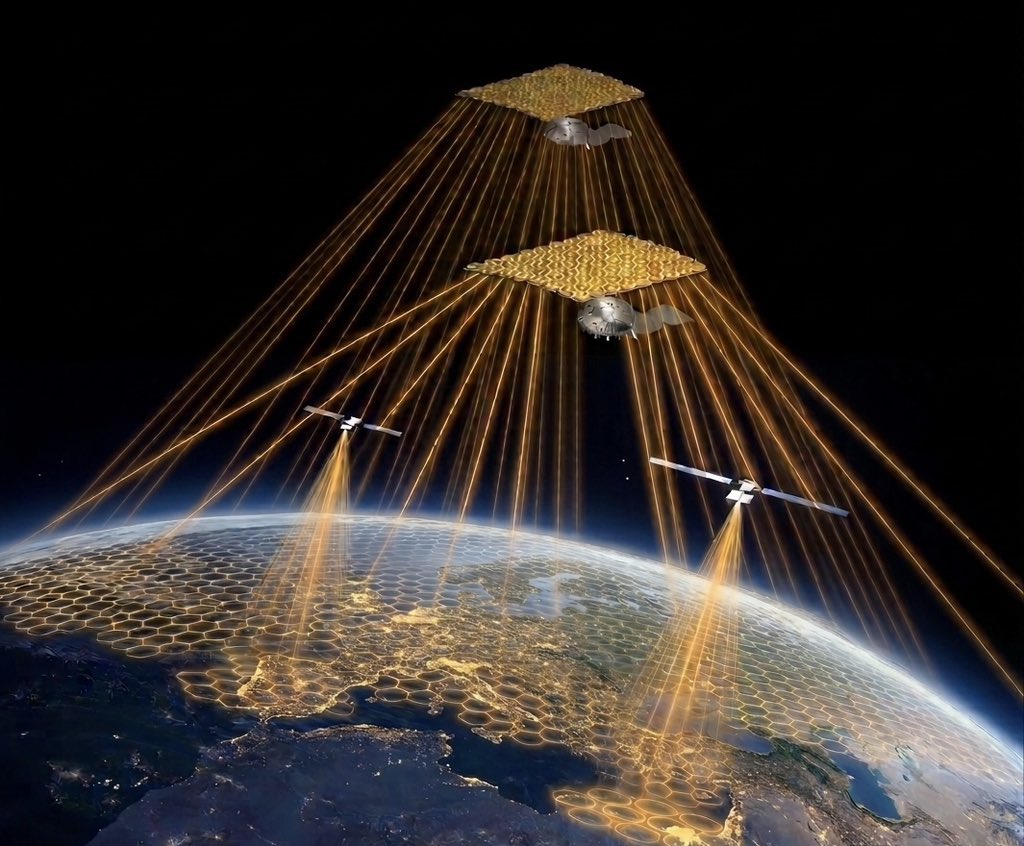
That said $ASTS recently revealed their expected orbital lifetime at 690 increased to 15 years.
They must be experienceing much lower degradation of batteries and electronics on block1 than first expected (and/or lower drag on Block 2) this used to be 7-10 years.
Some could be lowered a bit if needed for further densification w/o suffering extremely painful replenishment rates and skyrocketing CapEx like Starlink Mobile way down at half the altitude and 10x drag.
They must be experienceing much lower degradation of batteries and electronics on block1 than first expected (and/or lower drag on Block 2) this used to be 7-10 years.
Some could be lowered a bit if needed for further densification w/o suffering extremely painful replenishment rates and skyrocketing CapEx like Starlink Mobile way down at half the altitude and 10x drag.
Then there are two more tiers.
These are much more narrow beam cells to start with.
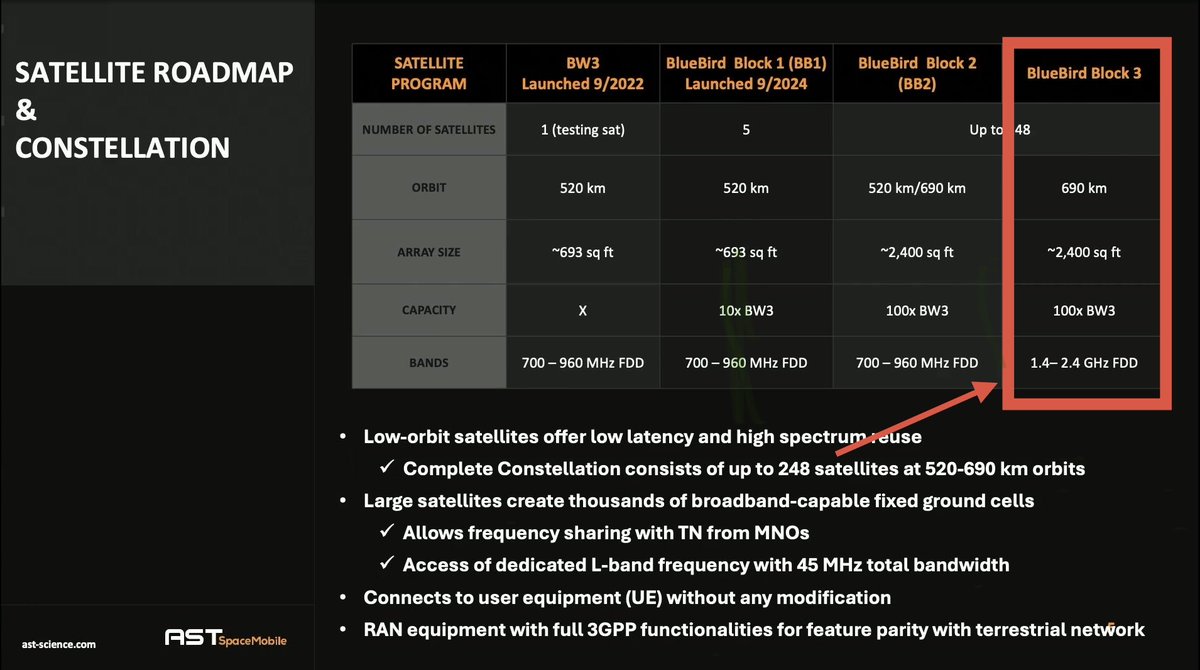
Block3 has 4x the number of antenna positions.
Block4 has 16x
These tiers add enormous throughput to the grand total and can run the same tweak.
These are much more narrow beam cells to start with.
Block3 has 4x the number of antenna positions.
Block4 has 16x
These tiers add enormous throughput to the grand total and can run the same tweak.
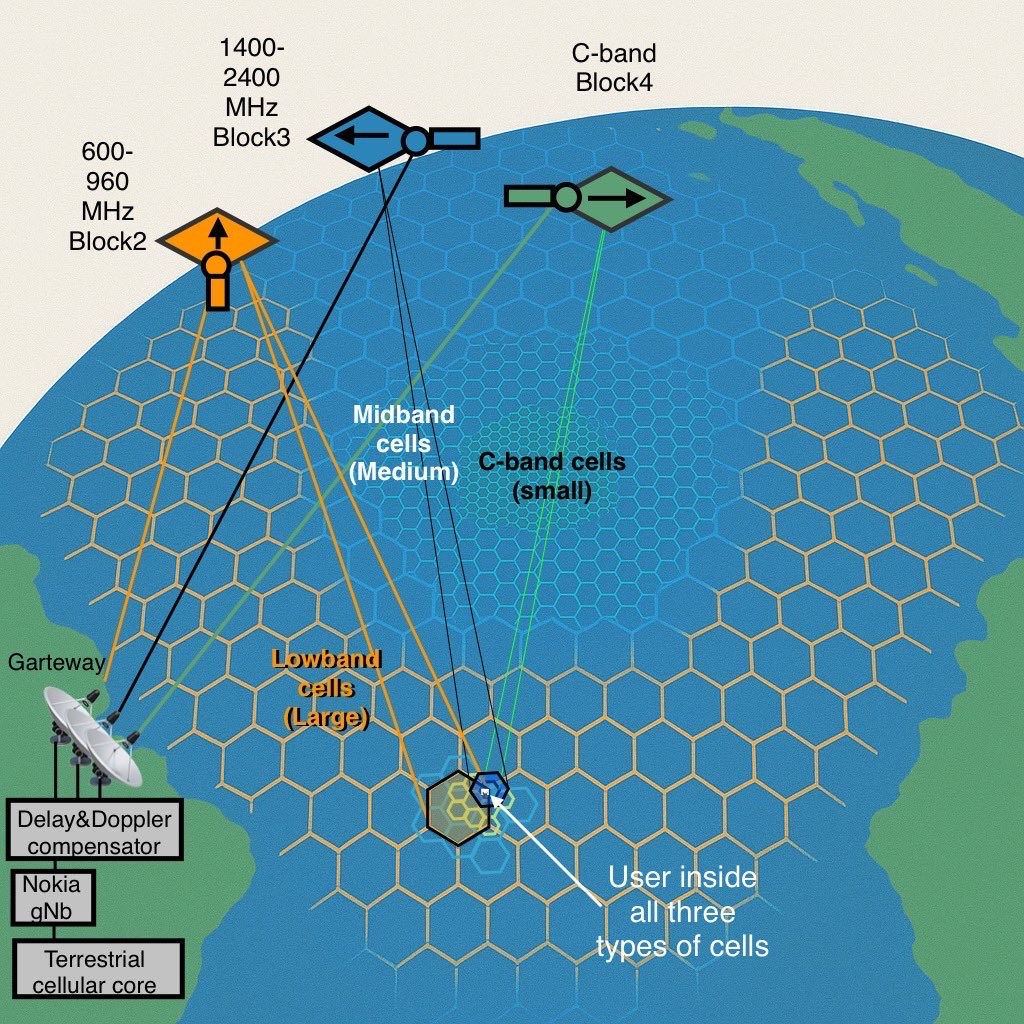
That’s the beam area factor.
$ASTS unique adaptive beamforming and variable gain earth fixed beams and oer end user device virtualisation gives them edge. S-link has none of this. Zero.
Now lets do n.
We need to talk about multiplexing and orthogonality to grasp that.
$ASTS unique adaptive beamforming and variable gain earth fixed beams and oer end user device virtualisation gives them edge. S-link has none of this. Zero.
Now lets do n.
We need to talk about multiplexing and orthogonality to grasp that.
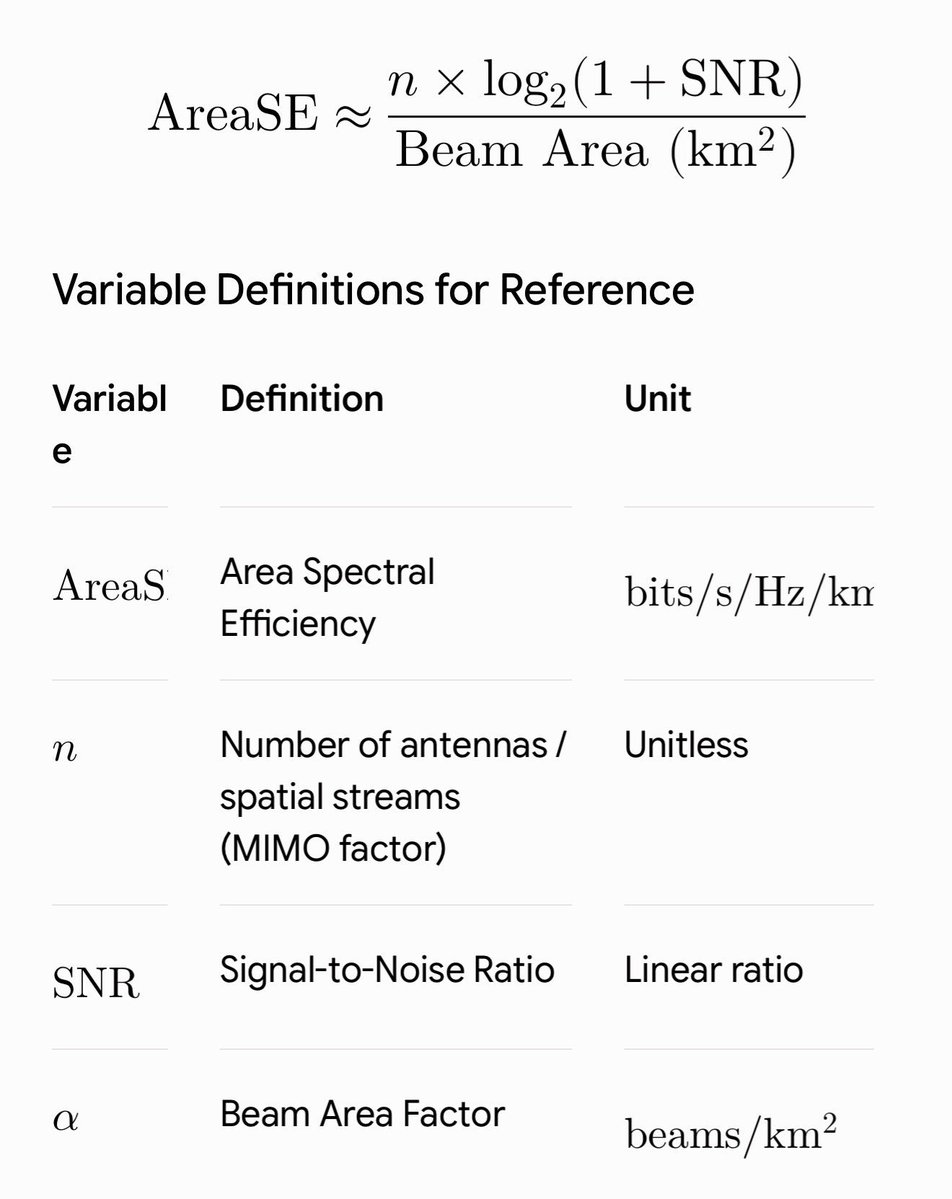
We can think of n as the number of paths or ways the information can be expressed. Where these ways are unrelated to eachother or “orthogonal” to eachother.
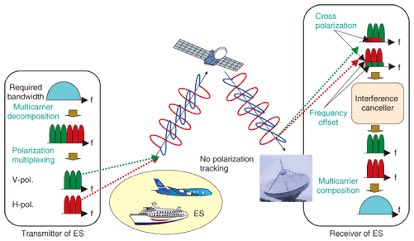
$ASTS have dual polarization antenna elements (Starlink v2 mini does not) at each antenna position sits two different antennas quite literally orthogonal or 90 degrees to eachother
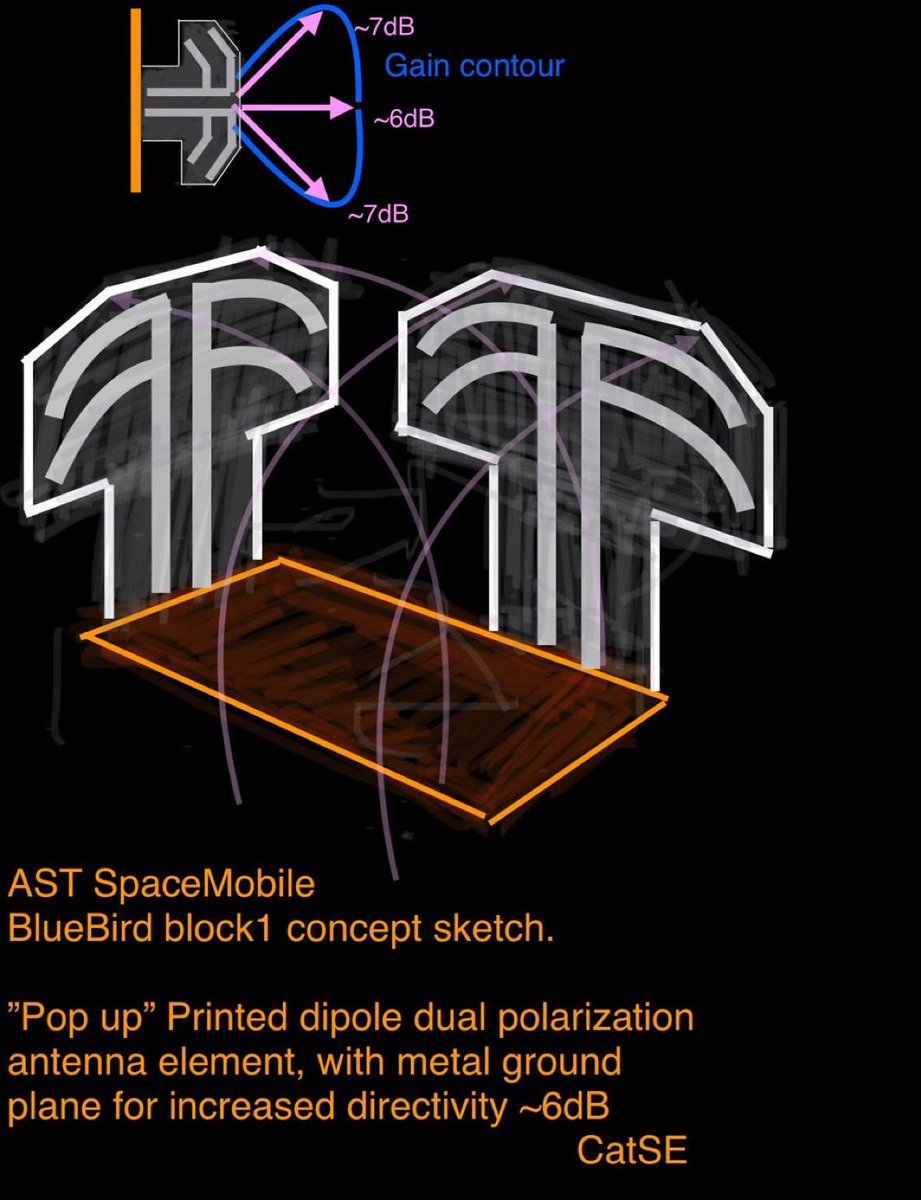
This is one example of orthogonal multiplexing that 2x throughput
That’s n going from 1 to 2 in the equation
That’s n going from 1 to 2 in the equation
Then there are advanced waveforms there’s a set of them OTFS best known to spacemob.
Instead of tweaking either time or frequency as in legacy radar the physical environment is considered a constant and both latency and doppler (the change in frequency and time) used to transmit information.
That’s n going from 2 to 4 as these multiplexing tweaks are multiplicative.
Instead of tweaking either time or frequency as in legacy radar the physical environment is considered a constant and both latency and doppler (the change in frequency and time) used to transmit information.
That’s n going from 2 to 4 as these multiplexing tweaks are multiplicative.
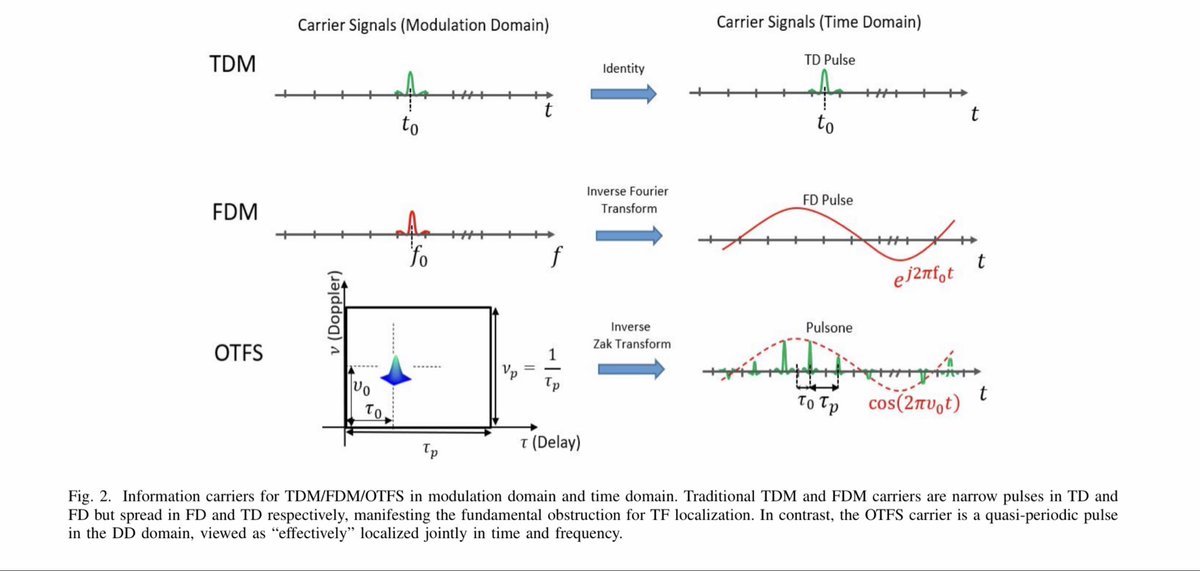
Then there is spatial multiplexing as satellites are on different spots on the sky they provide different paths for signals to travel, creating different delay / doppler characteristics.
Adding to n the way satellites within the field of view is added.
This occurs first at high ARPU markets with the current 53 degrees inclination.
Adding to n the way satellites within the field of view is added.
This occurs first at high ARPU markets with the current 53 degrees inclination.
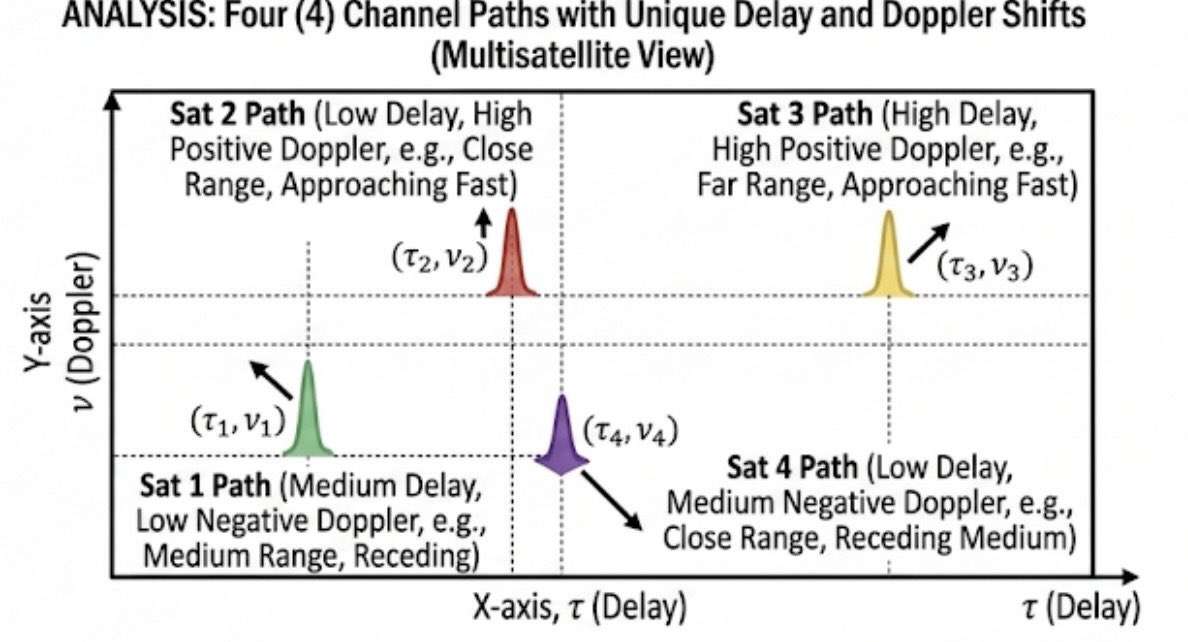
When I say that densification happens first at high ARPU markets and many of these n multiplying affects get realize there first it’s becaus at 53 degrees satellites spend most time near those high ARPU latitudes. (EU, US, Japan, Australia, etc)
Then there are tricks to punch through.
Coordinated Multi-Point (CoMP). If two BlueBird satellites are flying overhead, they can both look at the exact same smartphone on the ground. Instead of interfering with each other, they coordinate their phases to perform distributed multi-satellite beamforming. They turn two physically separate spacecraft into a singular, massive "virtual" antenna array, multiplying data speeds and signal stability.
It’s the equivalent of multi static radar operations.
And if you build towards such military use cases why not leverage it also for comms.
It gives ability to pick up the faintest of uplinks, to hear the very weakest signals.
Weather that’s radar bouncing of a chinese stealth plane or a cellphone in a cellar.
Coordinated Multi-Point (CoMP). If two BlueBird satellites are flying overhead, they can both look at the exact same smartphone on the ground. Instead of interfering with each other, they coordinate their phases to perform distributed multi-satellite beamforming. They turn two physically separate spacecraft into a singular, massive "virtual" antenna array, multiplying data speeds and signal stability.
It’s the equivalent of multi static radar operations.
And if you build towards such military use cases why not leverage it also for comms.
It gives ability to pick up the faintest of uplinks, to hear the very weakest signals.
Weather that’s radar bouncing of a chinese stealth plane or a cellphone in a cellar.
As phones ones started to connect to towers instead of cupper landlines a steady mutualistic co-evolution occurred.
Improvements aren’t exclusive to the tower/satellite it occurs also inside phones on a once a year basis.
As one example iPhone 17pro and Samsung S26 both feature proximity sendors and high power modes that makes a stronger connection when held away from the head.
Improvements aren’t exclusive to the tower/satellite it occurs also inside phones on a once a year basis.
As one example iPhone 17pro and Samsung S26 both feature proximity sendors and high power modes that makes a stronger connection when held away from the head.
That tweak makes a lot of difference to the SNR aspect (signals to noise and interference ratio)
Another way $ASTS pumps that number is through said very directive beams, and excellent ACLR that leads to a very low self (interference) induced noise floor.
And these are some of the many ways $ASTS tweaks every aspect of the KPI formla to their benefit via uncompromising first principles engineering.
Another way $ASTS pumps that number is through said very directive beams, and excellent ACLR that leads to a very low self (interference) induced noise floor.
And these are some of the many ways $ASTS tweaks every aspect of the KPI formla to their benefit via uncompromising first principles engineering.
x.com/catse___apex__…
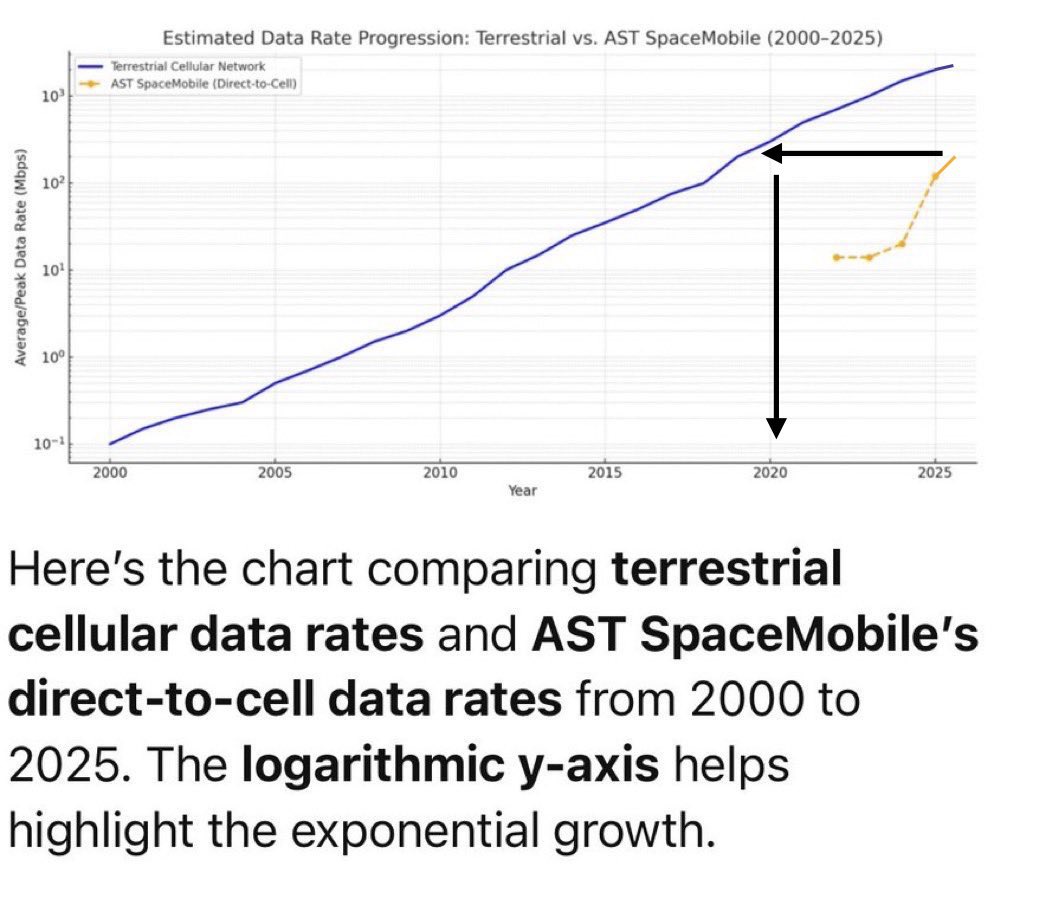
And so SpaceMob tracks the narrowing of the TM-NTN performance gap (something else no analyst gas ever done).
Looks like $ASTS will initially beat towers on fringe use cases, rural, sea etc.
But what’s interesting is that rate of change is faster than terrestrial even before most tweaks are fielded.
AST is catching up on terrestrial.
So it will reach cupper landline replacement and suburban use cases early by the looks of it.
And have adequate capacity for urban not spots.
And so SpaceMob tracks the narrowing of the TM-NTN performance gap (something else no analyst gas ever done).
Looks like $ASTS will initially beat towers on fringe use cases, rural, sea etc.
But what’s interesting is that rate of change is faster than terrestrial even before most tweaks are fielded.
AST is catching up on terrestrial.
So it will reach cupper landline replacement and suburban use cases early by the looks of it.
And have adequate capacity for urban not spots.
That’s nice. That’s when more spectrum is drawn into a self reinforcing feedback loop.
Because whereas the equation above was about efficiency, total throughput and total value generated depends alsoon the spectrum bandwidth you deploy on the system and multiply that efficiency with.
Because whereas the equation above was about efficiency, total throughput and total value generated depends alsoon the spectrum bandwidth you deploy on the system and multiply that efficiency with.
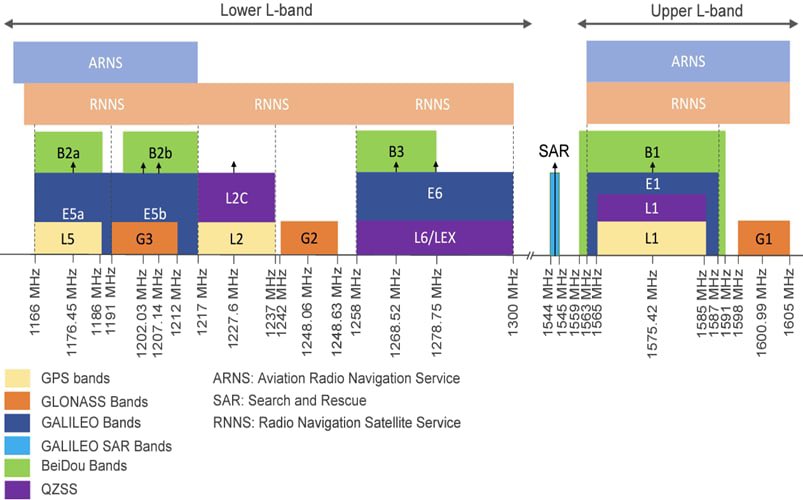
The three tiers of spectrum ranges $ASTS has gets too little attention here. It’s unique and the ability to deploy such massive chunks of spectrum in itself is a unique selling point.
A trait that unlocks market domination and disruption of terrestrial deployment methods for a range of high ARPU use cases.
No one is close. No other system is aiming for the right edge of this chart. But $ASTS is.
🐾
A trait that unlocks market domination and disruption of terrestrial deployment methods for a range of high ARPU use cases.
No one is close. No other system is aiming for the right edge of this chart. But $ASTS is.
🐾

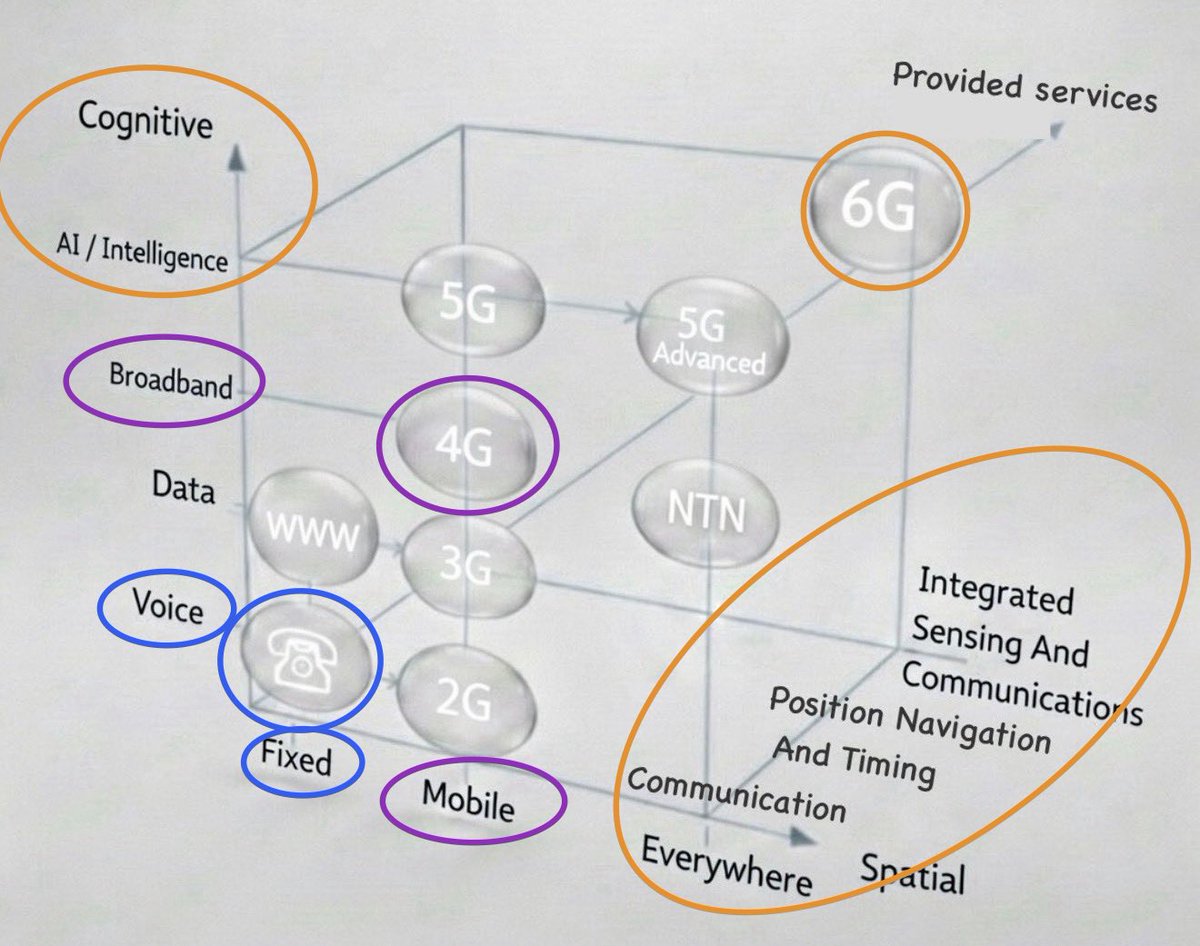
That was a commercial comms brief walkthrough of the potential for the space component in isolation.
We’ll discuss the other services some other day.
And there is also in 6G all the good things the space component adds to the terrestrial component to make it much more efficient.
🐾
We’ll discuss the other services some other day.
And there is also in 6G all the good things the space component adds to the terrestrial component to make it much more efficient.
🐾
@threadreaderapp unroll
• • •
Missing some Tweet in this thread? You can try to
force a refresh