Liam Halligan Profile picture
May 25 6 tweets 6 min read Read on X
UK inflation was down in April, but will soon surge to 5pc and beyond – which will have seismic economic and political consequences

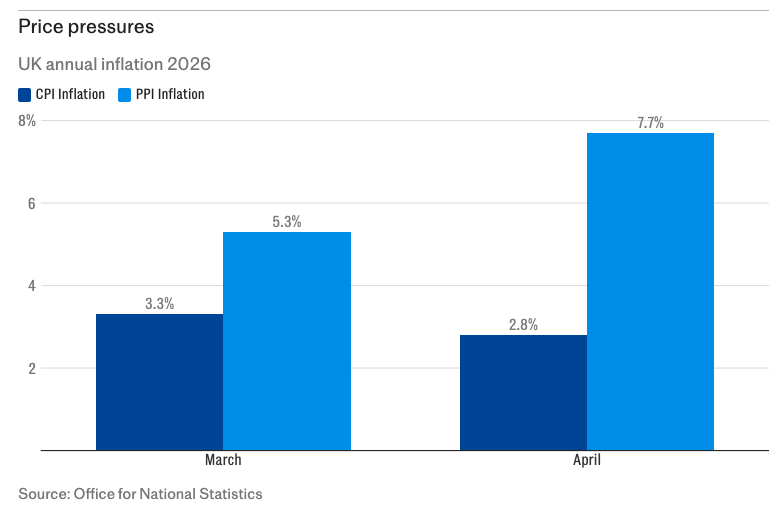
The consumer price index (CPI) grew 2.8pc during the year to last month, down from 3.3pc in March.

“We have the right economic plan,” opined Rachel Reeves, as the figures were released last week. “To change course now would risk our economic stability”. If only that were true.

Last month’s headline inflation drop was a blip, driven by one-off price adjustments detached from economic realities. Those factors will soon be reversed.

Growing price pressures will drive CPI inflation up over the coming months, in my view above 5pc. And if the Strait of Hormuz stays closed beyond the summer, blocking exports of oil, gas and fertiliser feedstocks from the Middle East, inflation could go much higher still.

My latest "Economic Agenda" column in @Telegraph

🧵1/6

telegraph.co.uk/business/2026/…
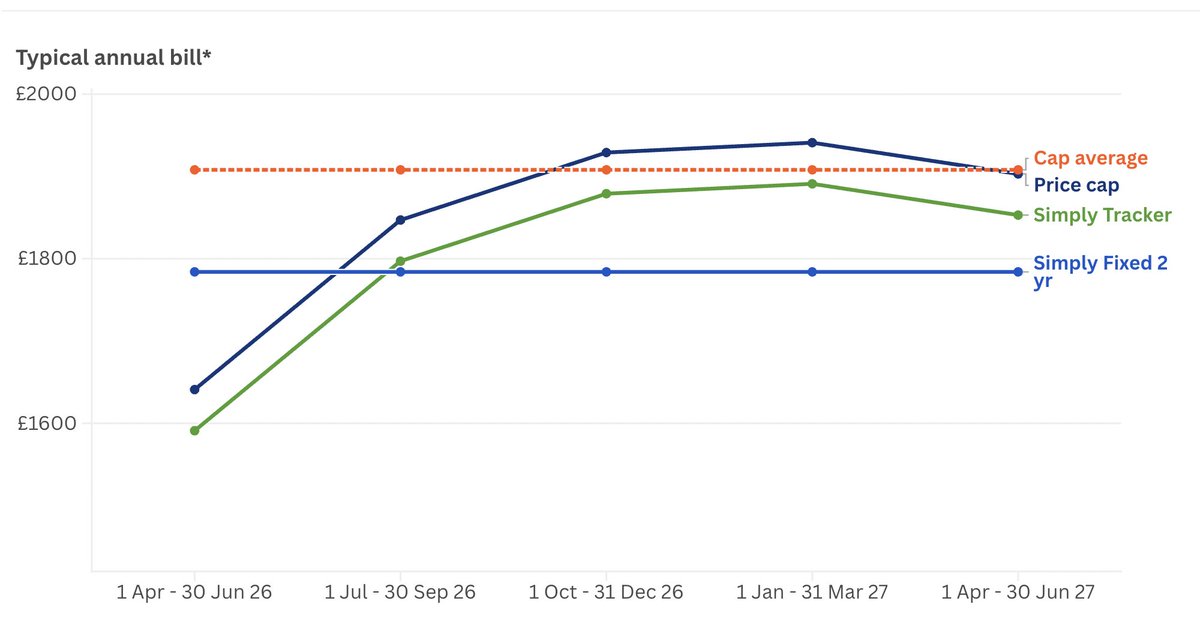
The April inflation dip to 2.8pc was partly due to a lowering of the Ofgem energy price cap – after the government shifted structural “green levies” and “policy costs” out of household bills and into general taxation.

The impact of that sneaky move will soon reverse, with the cap then reflecting recent surges in wholesale energy prices. Industry insiders point to a 12pc cap increase on 1st July, pushing typical household gas and electricity bills up almost £200 per year.

Last month’s inflation fallback was also caused by a particularly nasty “Awful April” in 2025 – with unusually sharp start-of-the-tax-year rises in council tax, broadband and mobile charges, TV licence and car tax and some other prices imposed by firms and the state. This year’s rises were still steep, but less so – lowering headline CPI.

Yet prices pressures are building, with an array of forecasters – from the Bank of England to the International Monetary Fund and countless City firms – all agreed that, despite this April number, UK inflation will soon significantly rise.

The IMF is looking at a 4pc peak, while the Bank of England, in its “worst-case scenario” of the US/Iran conflict intensifying, foresees 6pc inflation by early 2027. Under those circumstances, I’d say that’s too low.

🧵2/6Image
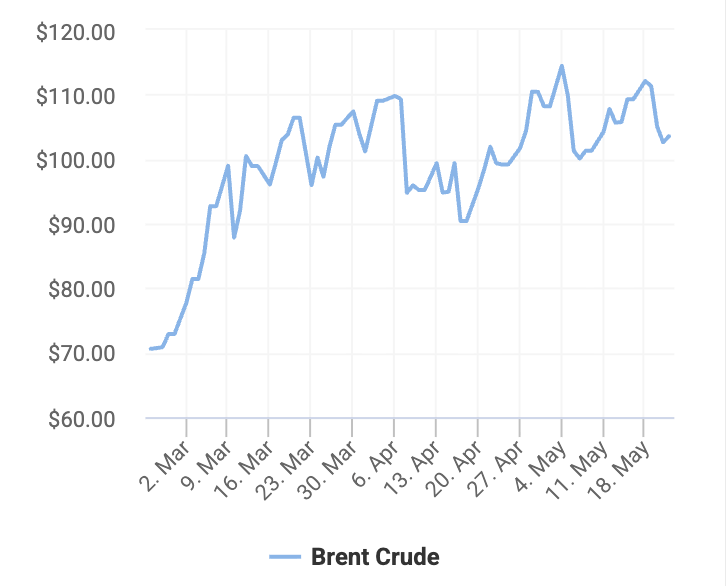
Oil prices have already ballooned from $70 a barrel in mid-February, before the escalation this Middle East conflict, to $107 now – more than 50pc up. But even if the US and Iran declared peace tomorrow, and the mouth of the Persian Gulf reopened, energy production and export facilities across the region have been seriously damaged.

During the last three months of war, US/Israeli strikes on Iran and Tehran’s counter-strikes have damaged infrastructure previously delivering 10-15pc of global oil and gas output – much of which will remain inoperable for months, in some cases years, to come. With global strategic petroleum reserves drained to a 40-year low, it strikes me energy prices will go much higher.

Already, UK petrol prices rose 17p on average last month to 159p per litre, with diesel soaring 30p to 191p – increases of 12pc and 18pc respectively. That’s caused a sharp 10pc drop in fuel sales, as motorists have cut back on travel. Expect more of this in the coming months, as high fuel prices slow GDP growth, while pushing headline inflation up.

🧵3/6Image
Rising fuel prices are also inflating costs across manufacturing, transport and the price of other raw materials. That’s why, while April saw the CPI measure fall, inflation as gauged by the Producer Price Index (PPI) rose from 5.3pc in March to no less than 7.7pc last month.

A leading indicator of where CPI inflation is going, PPI inflation points to significantly higher prices soon for ordinary shoppers.

While ministers can’t be blamed for Middle Eastern conflict, successive governments have left Britain vulnerable to soaring energy prices – given our lack of gas storage capacity and chronic dependence on energy imports.

But Labour’s decisions to tax North Sea oil and gas production even more than the Tories, and ban new North Sea drilling – in contrast to Norwegian and Danish operators – have made Britain’s energy crunch even worse.

Labour can also be blamed for the inflationary impact of the rise in firms’ hiring costs – not least the sharp increase in national insurance contributions and successive inflation-busting rises in the minimum wage, not least for younger workers.

🧵4/6Image
No wonder unemployment hit 5.5pc in March, up from 4.2pc when Labour took office in July 2024, with youth unemployment at an 11-year high.

And no wonder the Bank of England is now warning of “second-round effects” from higher wage costs and employment taxes. Struggling with increased overheads, firms are passing higher staff costs on to consumers, with workers demanding higher wages in turn.

We’re on the cusp of a 1970s-style “wage-price-spiral”, which would turbocharge UK inflation – and that is largely this government’s fault.

Britain’s cost-of-living crisis is unfortunately about to intensify, with food price inflation soaring to 8-10pc by the end of this year according to Food and Drink Federation, as the lagged impact of disruptions to energy and fertiliser supplies, as well as global shipping, hit worldwide markets.

That will do serious political damage, given that poorer households spend a higher share of their income on food, while trying to cope with increasingly expensive fuel.

And yet higher inflation also means that government borrowing costs will rise further, as Britain’s international creditors demand higher yields to lend, just as Labour’s increasingly indulgent leadership contest pushes the party further to the left.

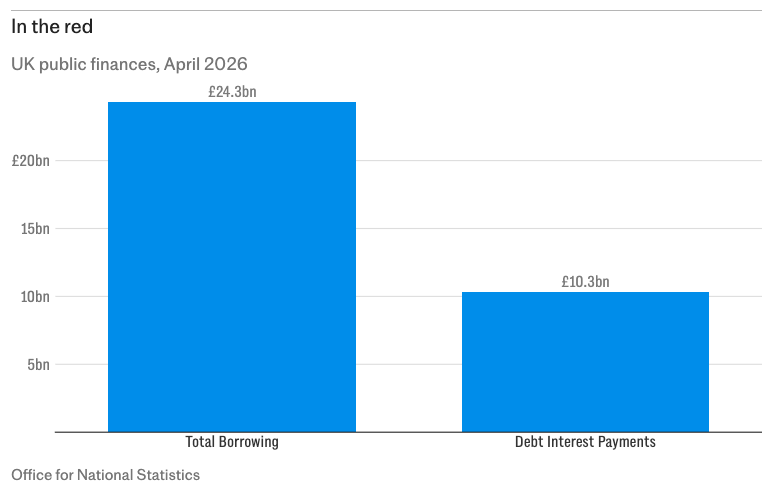
Yet the government already borrowed £24.3bn last month – the highest April borrowing figure ever, outside of the Covid pandemic.

That's equivalent to roughly half the entire amount of council tax collected across the UK during the last fiscal year – and, amidst runaway welfare spending, that's been put on tick, in a single month, adding to our already huge national debt.

Yet faced with increasing public discontent due to spiralling food and energy prices, Labour will find it even harder to borrow and spend over the coming months, in a bid to keep voters onside.

🧵5/6Image
When Labour took office, headline inflation was 2pc. That same figure has since averaged 3.1pc, compared to 2.7pc in the US over the same period, 2.2pc in Germany and 1.9pc in France.

“We promised to cut inflation – and we have”, said Reeves last week. That statement is arrant nonsense, despite last month's one-off inflation fall – as will soon become painfully clear.

🧵6/6

telegraph.co.uk/business/2026/…

• • •

Missing some Tweet in this thread? You can try to force a refresh

 

Keep Current with Liam Halligan

Liam Halligan Profile picture

Stay in touch and get notified when new unrolls are available from this author!

Read all threads

This Thread may be Removed Anytime!

PDF

Twitter may remove this content at anytime! Save it as PDF for later use!

Try unrolling a thread yourself!

how to unroll video
  1. Follow @ThreadReaderApp to mention us!

  2. From a Twitter thread mention us with a keyword "unroll"
@threadreaderapp unroll

Practice here first or read more on our help page!

More from @LiamHalligan

Apr 21
UK 10-year gilt yields today surged no less than 0.4 percentage points - or 40 basis points - due to fears that Britain is almost uniquely vulnerable among the world's big economies to spiralling fuel food and fuel prices.

The UK is the most inflation-prone economy in the G7. That weakness hasn't been caused, but has been more starkly exposed, by this US/Iran conflict.

So the huge global investors that lend governments money are charging Britain far more than any other G7 nations - more than Spain, Greece and Morocco (!) - to borrow, as compensation for higher expected UK inflation.

A 40bps point move in a single day, on a large-nation sovereign bond market, is a huge and deeply alarming shift.

The UK government's 10-year borrowing cost is now 5.15pc - its highest level since June 2008, just ahead of the global financial crisis.

This is a situation that warrants immediate and determined attention and yet our entire political and media class remains fixated with the ultimate Westminster-centric story – a deeply indulgent row about who knew what, when with regards to the appointment of Peter Mandelson as US Ambassador.

History will not be kind to us ...

My latest @Telegraph "Economic Agenda" column

🧵1/6

telegraph.co.uk/business/2026/…
Britain’s economy will be hit harder by this US/Iran conflict than any other G7 nation, says the International Monetary Fund.

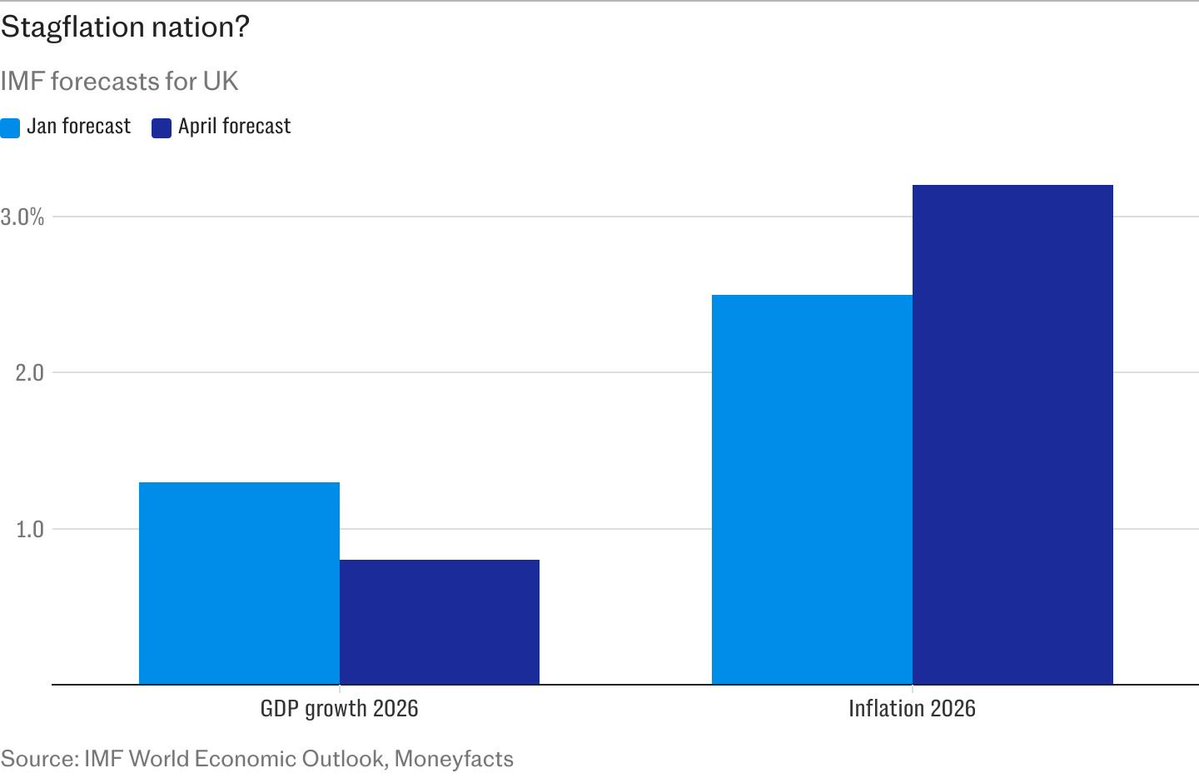
Having grown 1.4pc in 2025, UK GDP is now set to expand just 0.8pc this year, sharply down from the 1.3pc forecast the IMF published in January.

Growth per head looks even worse, with GDP per capita predicted to rise just 0.2pc this year, putting Britain bottom of the growth table among major economies.

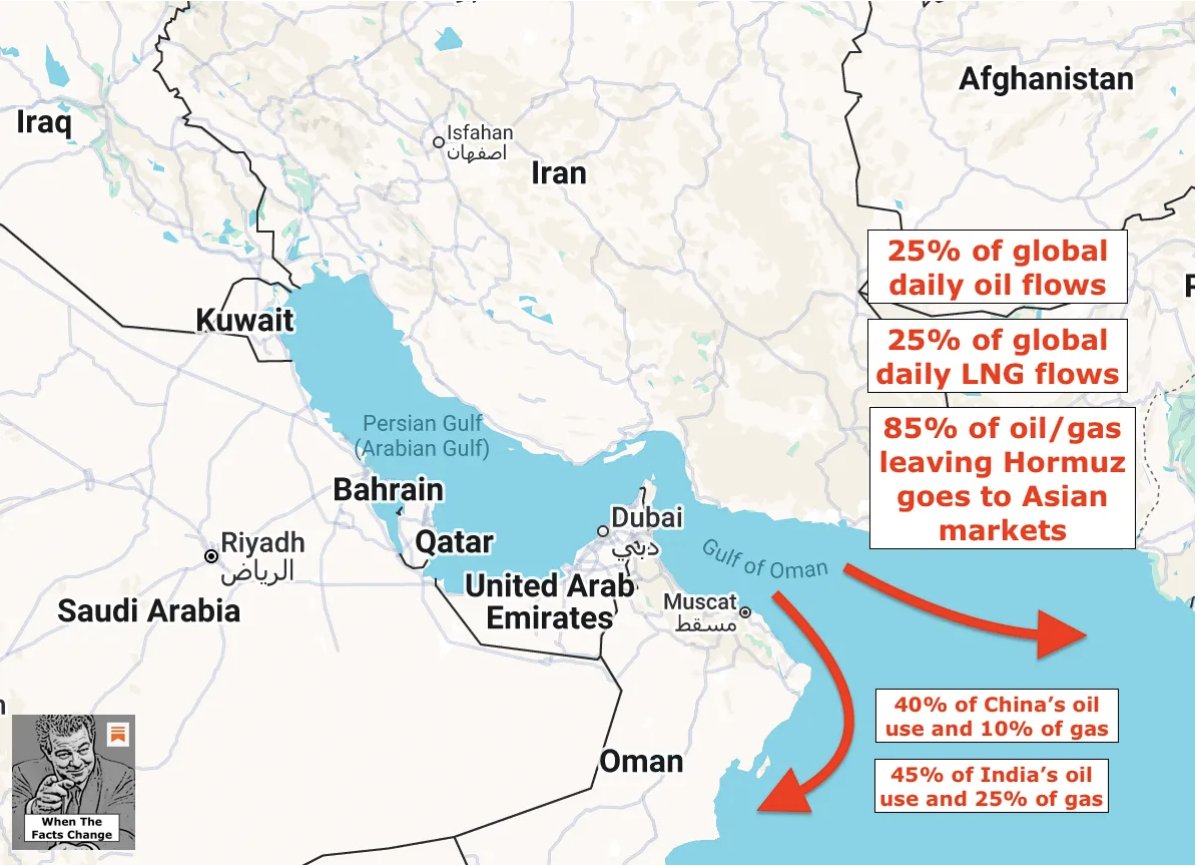
The world is enduring the most serious energy supply shock since the 1973 Yom-Kippur war. There were signs Iran was willing temporarily to open the Strait of Hormuz – the mouth of the Persian Gulf, ordinarily the route taken by a fifth of the oil and gas the world uses each day.

But now, of course, Hormuz is closed and the scene of serious military conflict.

🧵 2/6Image
The reality is that, even if Hormuz is reopened soon - a very big if – since the US and Israel first launched airstrikes on Iran at the end of February, export facilities across the Middle East have been seriously damaged by Iranian counter-strikes.

The damage done by Tehran's missiles will impact global energy supplies for years to come.

More than eighty energy facilities have been hit, significantly affecting global oil and gas production, refining and export capabilities – with around thirty facilities incurring very severe damage.

Ras Laffan Industrial City, the heart of Qatar’s energy complex and the world's largest LNG export terminal, has been badly hit – and will take up to five years to restore fully.

Saudi Arabia’s iconic Ras Tanura oil plant (the desert kingdom's largest crude facility) has also suffered serious damage due to Iranian missiles, as have major production sites at Khurais and Manifa.

In Kuwait, the Mina Al-Ahmadi and Mina Abdullah refineries have endured huge damage from Iranian drone attacks, shutting down multiple operational units.

Oil and gas terminals in Iraq and Bahrain are also impacted – alongside the targeted US/Israeli strikes on Iran’s own refineries and storage depots, believed to have knocked out four-fifths of the Islamic Republic’s export capacity.

So whatever happens with Hormuz over the coming weeks, the facilities that drive some 10-15pc of global energy production will remain out of action for a long time, which means energy prices will likely stay high.

🧵3/6Image
Read 6 tweets
Feb 16
"Net zero isn’t delivering for ordinary people, but is instead adding to their financial burden and, in many cases, undermining any vestige of job security. That’s why, since 2021, the share of the UK public wanting the UK to hit 'net zero' before 2050 has almost halved.

My latest @telegraph column


🧵1/8telegraph.co.uk/business/2026/…
This time last year, Rachel Reeves was insisting there was “no trade-off between economic growth and net zero”. A rapid transition towards green energy and away from fossil fuels was, the Chancellor argued, the “industrial opportunity of the 21st century”.

Assaulted by reality, Reeves later changed her tune. “Well-meaning” green regulations have gone “too far in one direction”, she told a Washington audience last April. The Chancellor cited environmental measures as a major barrier to investing in essential UK infrastructure, labelling some of them “absolutely insane”.

But Reeves’s rhetorical volte face did little to impact policy, as the government robotically loaded-up companies with net-zero-related costs throughout 2025. Major industrial sites continued to close or impose job cuts, with companies, unions and industry analysts directly citing net-zero policies as a key factor.

Around the time of Reeves’s Washington speech, the historic Vauxhall/Stellantis van plant in Luton closed, ending 120 years of manufacturing, followed by Scotland’s sole oil refinery at Grangemouth and Lincolnshire’s Lindsey refinery. In each case, the decision was demonstrably driven by environmental regulation and sky-high UK energy costs.

🧵2/8Image
The future of Britain’s only remaining blast furnace remains in the balance, after British Steel’s Chinese owners walked away from the iconic Scunthorpe plant – again in part due to net-zero policies.

Electric Glass Fiber UK (EGFU) closed its Wigan plant last June, with Acetyls making deep jobs cuts at its Hull chemical facility in October, both pointing to net zero policies and an inability to compete against high-carbon imports.

Oil and gas extraction in the North Sea has plunged over the last decade, previously supporting over 400,000 well-paid jobs but now less than 100,000, after thousands more went in 2025.

In part due to falling reserves, these losses have also been driven by net-zero policies – not least the highly-punitive North Sea windfall tax, which has put the headline rate on corporate earnings to a ludicrous and investment-busting 78pc.

🧵3/8Image
Read 8 tweets
Dec 9, 2025
“What would you do if you were Chancellor?”

For a couple of decades now, as I’ve penned economics columns in The Telegraph and elsewhere, it’s a question that’s often been put to me.

But never as frequently as over the last few weeks – because, in all the years I’ve been writing and thinking about the UK economy, never has our policymaking been so needlessly damaging.

My latest @Telegraph column

🧵1/9

telegraph.co.uk/business/2025/…
Yes, Britain was buffeted by the worldwide dot-com collapse in the late 1990s and the global financial crisis a decade later. We suffered during the eurozone crisis of 2010-2012, as the single currency almost imploded. And during Covid lockdown, of course, the entire world economy was hit.

But now, while there are geopolitical uncertainties, there is no immediate financial crisis on global markets. The UK got off relatively lightly in Donald Trump’s trade war and the oil price is at a five-year low – which helps us a lot, as an inflation-prone crude importer.

Yet still, this government’s wild tax and spending policies, combined with the destabilising run-up to the Budget Statement on 26th November, and the utter carnage since, has driven consumer and business sentiment to rock-bottom.

With our leading fiscal institutions engaged in internecine warfare, just as we go into the festive season, the ghost of crisis and collapse looms over Labour’s Britain.

🧵2/9Image
The moment this government entered office in July 2024, ministers began relentlessly talking down the UK economy. Endless false claims about “the £22bn Tory black hole” were spun to justify tax rises cynically omitted from Labour’s manifesto.

The Tories left the public finances in a weak state, with a post-pandemic national debt of around 90pc of GDP. But Chancellor Rachel Reeves has made a bad situation very significantly worse.

Her budget of October 2024, the most punitive for thirty years, raised taxation £40bn per annum. Despite endless assurances that was a one-off, her latest budget then imposed an extra £30bn annual tax onslaught.

Labour refuses to countenance spending controls – lest the Chancellor and Prime Minister Keir Starmer are ousted by the government’s massed ranks of economically-illiterate MPs and radical party activists.

So Reeves keeps jacking up taxes and borrowing, spending ever more cash on welfare, green schemes, diversity initiatives and anything else appealing to the left-wing ideologues upon whom her future depends.

But the Chancellor’s runaway tax and borrowing weighs down the economy more, making our public finances even weaker, driving the UK to the brink of financial crisis.

🧵3/9Image
Read 9 tweets
Sep 29, 2025
“Productivity isn’t everything, but in the long run it’s almost everything”. So said the economist Paul Krugman in his 1994 book, The Age of Diminishing Expectations.

“A country’s ability to improve its standard of living over time depends almost entirely on its ability to raise its output per worker,” argued Krugman.

And he’s right.

Productivity has stalled across the “advanced” nations over recent years. But the slump in output per hour worked has been most dramatic in Britain, particularly since the 2008 global financial crisis.

That’s why UK living standards have since fallen sharply, with lower income groups suffering most, making our politics more febrile and divided. Productivity really matters, as Krugman says.

The UK's lack of productivity growth is one of the significant factors seriously undermining our public finances, in turn creating the danger of a serious fiscal collapse.

@RachelReevesMP will be learning all about that when the Office for Budget Responsibility @OBR_UK finally publishes new more realistic productivity forecasts ahead of her budget on 26th November. Or, not so much more realistic as less unrealistic.

For years – this began under the Tories – pie-in-the-sky assumptions of an upcoming surge in UK productivity have flattered the outlook for our public finances – as this thread explains.

But while productivity growth across the private sector is extremely weak, public sector productivity is far, far worse – and has lately been going into reverse.

If we want to solve the UK's productivity problem, we need to start with the state ....

My latest @Telegraph "Economic Agenda" column

🧵1/5

telegraph.co.uk/business/2025/…
Buoyant during the 1950s and 1960s, annual productivity grew less than 1pc during the 1970s – due to low investment, crumbling infrastructure and, too often, trade unions sabotaging new technology.

The music was good, but the economic dysfunction and falling living standards during the 70s are the stuff of legend.

Between 1994 and 2007, though, productivity grew by a buoyant 2pc a year, driven by information technology, better skills and more business-friendly tax and regulation. Again, the impact on wages and living standards was palpable, with most feeling better off and politics more consensual.

Since 2008, though, the OBR calculates productivity has risen only a paltry 0.1pc per annum. This has hit wages and profits, and consumer spending and investment, generating less growth. A more sluggish economy, in turn, has weakened tax receipts.

Other factors impact our economy – like wars, geo-politics and energy price shocks. But productivity is “almost everything”, as Krugman says, the impact of its growth or otherwise compounding each year, shaping our economic trajectory.

🧵2/5Image
After years of over-estimating future productivity increases, the OBR will soon downgrade its forecasts. The timing couldn’t be worse for Chancellor Rachel Reeves – ahead of her Budget Statement on 26th November.

As a rule of thumb, each 0.1 percentage point cut in future annual productivity growth takes £10bn off the “headroom” in the chancellor’s fiscal rules – that debt should be falling by 2029/30, the scheduled end of this Parliament. The OBR is rumoured to be taking 0.2 ppts off its productivity forecasts, translating into a £20bn hole in the national accounts.

The OBR also thinks, I’m told, that Reeves must fund £5bn more in future welfare costs compared to estimates in her March Spring Statement – after left-wingers derailed Labour’s “welfare reforms”, scaring Number Ten into a faster, not slower rise in benefit spending.

Then there’s £5bn more for higher debt-interest payments – with bond yields having risen as the government’s lack of control over its own economically-illiterate MPs has become clear. And with leadership hopeful Andy Burnham saying Labour should “get over being in hock to bond markets”, there could be more increases to come.

The OBR has indeed seriously over-estimated future productivity growth of late, its unrealistic forecasts putting a gloss over the dire outlook for the UK’s public finances.

The watchdog predicted productivity rises of 0.8pc and 0.9pc for 2023 and 2024, for instance. Yet output per hour turned out to be flat in the first of those years and fell 0.8pc the next, before dropping another 0.6pc during the first half of 2025.

Yet still, as recently as March, the OBR shifted forecasts of the long-awaited post-Covid productivity surge forward another year. The current estimates are 1.1pc productivity growth in 2026, then 1.2pc, 1.3pc and 1.3pc again during the three years to 2029.

🧵 3/5Image
Read 5 tweets
Sep 22, 2025
This Bank of England bond-selling row is complicated. But, be in no doubt, how it's resolved will have a huge impact on the UK's public finances, broader politics, and the lives of millions of people.

The sums involved are vast. Yet almost everyone –including practically all our politicians and, I have to say, even some members of the Bank's own Monetary Policy Committee – seem to have filed this subject under "too difficult" and "too controversial".

All the more reason to try to understand it ...

The squabble over so-called "quantitative tightening" (QT) is about to reach a head – with Reform Deputy Leader @TiceRichard meeing @bankofengland Governor Andrew Bailey later this week.

The meeting is happening because Tice wrote Bailey an open letter about QT, citing a lot of credible research and demanding answers.

My latest @Telegraph column is an attempt to explain the basics of this QT debate and why it's important, to a broad audience.

I'm outlining what I wrote in yesterday's paper in this thread.

telegraph.co.uk/business/2025/…

🧵1/8
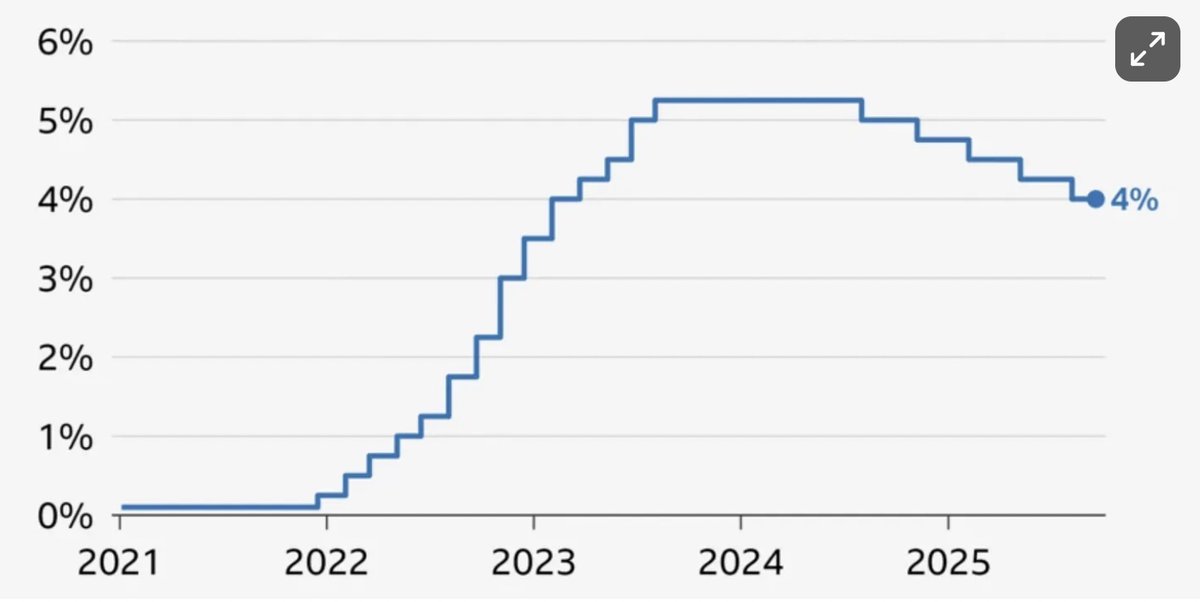
The Bank of England held interest rates at 4pc last Thursday. That was no surprise – after all, inflation was 3.8pc during the year to August, almost double the 4pc official target.

The Monetary Policy Committee (MPC) did, of course, lower rates from 4.25pc last month, with the July inflation figure also at 3.8pc. But that August cut is now widely seen as a mistake – as some of us warned at the time.

After the August rate reduction, gilt yields climbed, as large global investors bid up UK borrowing costs. That was a highly unusual response to lower policy rates – a flat rejection of the MPC’s collective view inflation would soon abate.

So it was reassuring Governor Andrew Bailey indicated last Thursday the Bank won’t hurry to cut rates again. The MPC minutes for this month rightly observed that “upside medium-term inflation risks remain prominent in the committee’s assessment of the outlook”.

🧵2/8Image
Having said that, even after the Bank resisted undoubted political pressure to lower rates last Thursday, while making hawkish noises, the 30-year gilt yield still ended last week well above 5.5pc, and remains so at the time of writing. That's considerably higher than on Thursday morning, before the MPC’s announcement.

Ghastly borrowing numbers released last Friday didn’t help. Government spending last month exceeded revenues by £18bn, the highest August borrowing total since 2020 when the economy was shuttered by lockdown.

Some £8.4bn of this August borrowing went on interest payments, servicing the state’s ever-growing pile of existing debt !

With higher national insurance receipts outstripped by even higher spending, borrowing was £83.8bn during the first five months of the financial year from April, way above the £72.4bn Office for Budget Responsibility (OBR) forecast and £16.2bn more than the same period last year !!

But yields rose on Thursday too, before evidence of further fiscal profligacy the following day. And one reason, in my view, is that the Bank is now seriously embroiled in a row about “quantitative tightening” (QT).

🧵3/8Image
Read 9 tweets
Jul 21, 2025
"Inflation rise takes the UK closer to debt-crisis cliff edge" – my latest @Telegraph column

Britain is heading for a very serious fiscal crisis – not unlike the 1976 fiasco which saw this country go "cap in hand" to the International Monetary Fund for a bail-out.

Government borrowing costs are now higher than they were in 1998 - but the national debt is some 3-times bigger as a share of GDP than it was back then.

That's why the government's debt interest bill is now so massive – twice what we spend on defence each year, more than we spend on schools.

PLUS: Over two-thirds of the money the government is borrowing each year is now being spent on interest payments on already outstanding debt.

AND: The UK's uniquely high share of "index-linked" debt – with interest payments that go up with RPI inflation – means that as inflation rises, our already crippling debt service costs rise even more.

The vast majority of our political and media class are either incapable of understanding the now brightly-flashing warning signs - signs I have outlined in the Telegraph and elsewhere many, many times – or are determined to ignore them if they do.

What I am saying isn't party political, nor about left and right or who has the right "values".

It's about trying to avert a major fiscal meltdown and related systemic crisis - which will cause huge economic and societal damage, and during which the least well off will suffer most.

Please read and share this thread

🧵1/11

telegraph.co.uk/business/2025/…
Last Wednesday we learned that the UK’s consumer price index was 3.6pc higher in June than the same month in 2024 – well above expectations and significantly higher than the Bank of England’s 2pc inflation target. The broader retail price index rose even more, by 4.4pc.

Unemployment is also up, hitting 4.7pc during the three months to May, a four-year high.

And last week’s double dose of downbeat data came against a backdrop of broader economic weakness, of course, with GDP having shrunk in both April and May.

🧵2/11Image
It’s now screamingly obvious Labour’s crude Keynesianism – “pump priming” the economy by upping state borrowing and spending – isn’t working.

Worse than that, this government’s actions are pushing Britain towards a budgetary crisis every bit as serious as 1976, when the UK was bailed-out by the IMF – a catastrophe that seems to have been aired-brush out of our political and media consciousness.

Chancellor Rachel Reeves’s higher tax rates have been hammering economic activity, causing tax revenues to fall. Yet Labour’s leadership, driven by ideological fervour and fearing the party’s increasingly strident far left, keeps pushing spending up regardless.

The sharp rise in the rate of employer national insurance contributions, for instance, has caused hiring to plunge since it was announced in last October’s budget, undermining NIC revenues overall.

🧵3/11Image
Read 11 tweets

Did Thread Reader help you today?

Support us! We are indie developers!


This site is made by just two indie developers on a laptop doing marketing, support and development! Read more about the story.

Become a Premium Member ($3/month or $30/year) and get exclusive features!

Become Premium

Don't want to be a Premium member but still want to support us?

Make a small donation by buying us coffee ($5) or help with server cost ($10)

Donate via Paypal

Or Donate anonymously using crypto!

Ethereum

0xfe58350B80634f60Fa6Dc149a72b4DFbc17D341E copy

Bitcoin

3ATGMxNzCUFzxpMCHL5sWSt4DVtS8UqXpi copy

Thank you for your support!

Follow Us!

:(