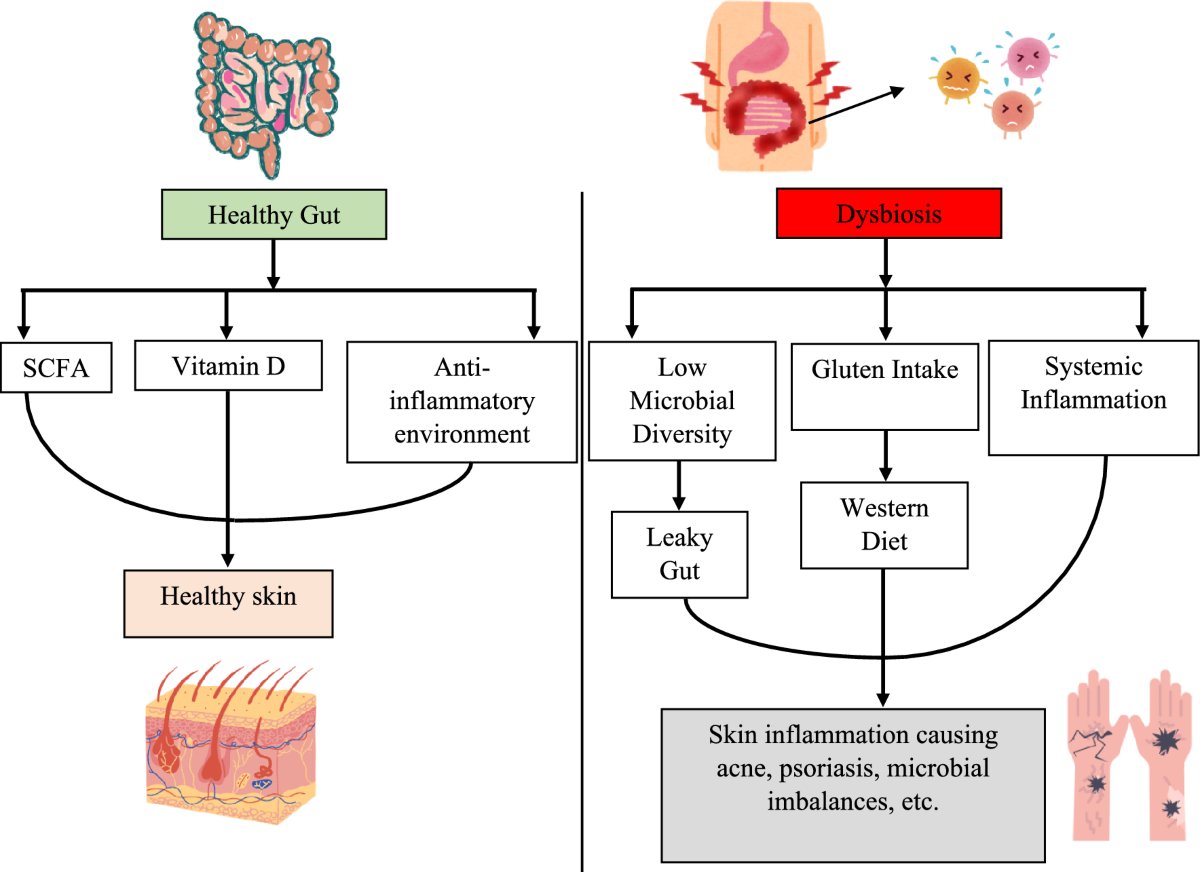
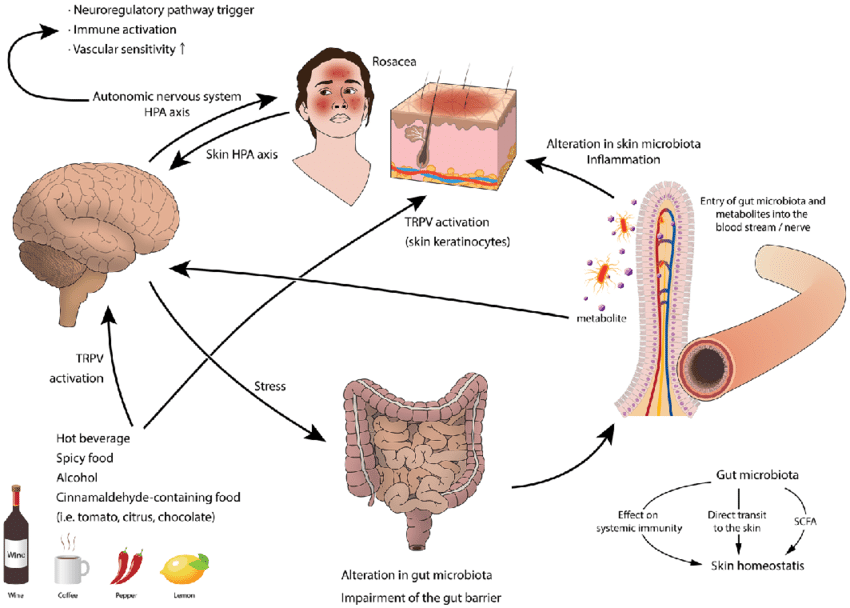
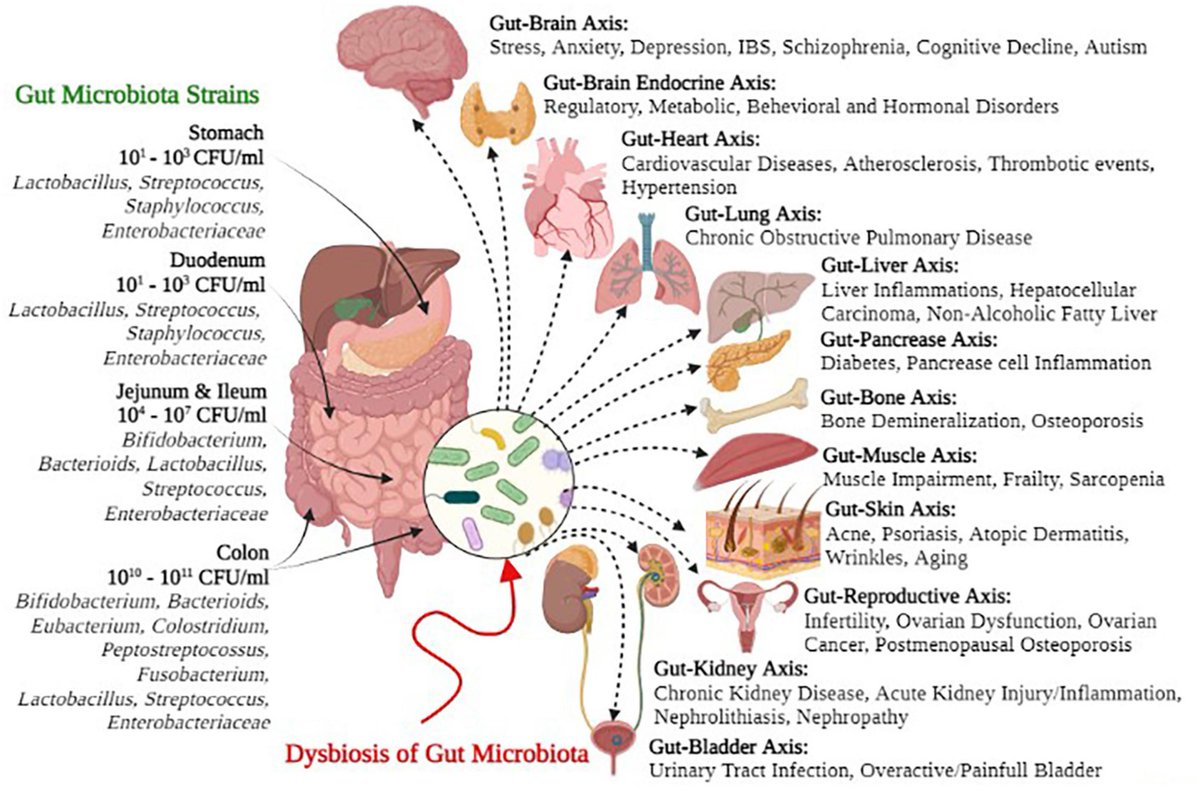
A 294-person randomized trial tested three diets over 18 months and tracked how each one changed the gut microbiome and metabolic health.
The polyphenol-rich version outperformed others at every level. Microbiome changes seemed to be driving the improvements.
Here’s what it showed: 🧵
The polyphenol-rich version outperformed others at every level. Microbiome changes seemed to be driving the improvements.
Here’s what it showed: 🧵
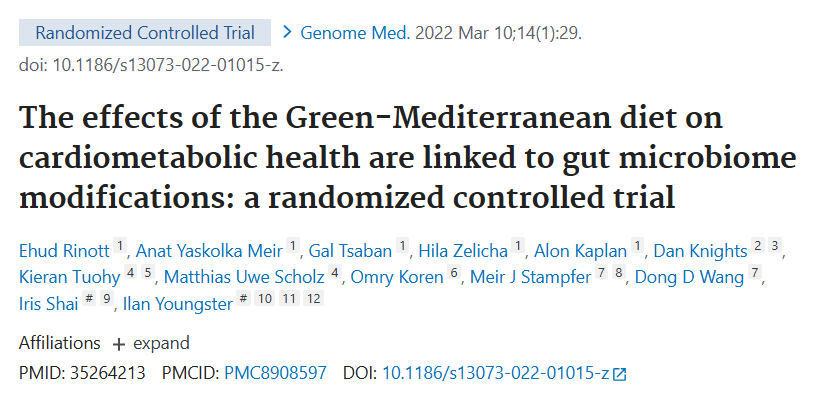
The trial randomized 294 adults with obesity and poor lipid profiles into three groups:
1. Standard healthy dietary guidelines (control)
2. Mediterranean diet + 28g/day walnuts (rich in polyphenols)
3. Green Mediterranean diet + 28g/day walnuts + daily green tea (3-4 cups) + 100g/day Mankai (polyphenol-rich plant)
Both Mediterranean groups were calorie-restricted and received the same walnuts, so the only difference between them was the added green tea and Mankai.
All three groups received physical activity guidance. Stool samples were collected and sequenced at baseline and 6 months.
PMID: 35264213
1. Standard healthy dietary guidelines (control)
2. Mediterranean diet + 28g/day walnuts (rich in polyphenols)
3. Green Mediterranean diet + 28g/day walnuts + daily green tea (3-4 cups) + 100g/day Mankai (polyphenol-rich plant)
Both Mediterranean groups were calorie-restricted and received the same walnuts, so the only difference between them was the added green tea and Mankai.
All three groups received physical activity guidance. Stool samples were collected and sequenced at baseline and 6 months.
PMID: 35264213
All three groups improved. But the improvements scaled with the diet. The more plant-rich and polyphenol-dense the diet, the better the outcomes.
Weight loss: control lost 1.6%, Mediterranean lost 5.4%, Green Mediterranean lost 6.5%.
The same pattern showed up in waist circumference, blood pressure, insulin resistance (HOMA-IR) and Framingham cardiovascular risk score.
Weight loss: control lost 1.6%, Mediterranean lost 5.4%, Green Mediterranean lost 6.5%.
The same pattern showed up in waist circumference, blood pressure, insulin resistance (HOMA-IR) and Framingham cardiovascular risk score.
The microbiome changes followed the same pattern.
Both Mediterranean diets shifted gut microbiome composition significantly. But the Green Mediterranean diet produced the most prominent changes.
What's interesting is that the bacteria making up the bulk of the microbiome weren't the ones that shifted most. The biggest changes came from species typically present in smaller numbers.
And the Green Mediterranean group's microbiomes actually became more similar to each other over time. The diet was pushing everyone's gut in the same direction.
Both Mediterranean diets shifted gut microbiome composition significantly. But the Green Mediterranean diet produced the most prominent changes.
What's interesting is that the bacteria making up the bulk of the microbiome weren't the ones that shifted most. The biggest changes came from species typically present in smaller numbers.
And the Green Mediterranean group's microbiomes actually became more similar to each other over time. The diet was pushing everyone's gut in the same direction.
Some specific changes in the Green Mediterranean group
Prevotella increased: This genus is consistently associated with plant-rich diets and is often depleted in people eating a typical Western diet.
Depleted levels of Prevotella are seen as a hallmark sign of a typical Western lifestyle. Seeing it increase here suggests the diet was shifting the microbiome back toward a more ancestral, plant adapted profile.
Bifidobacterium decreased: This sounds counterintuitive since Bifidobacterium is generally considered beneficial.
But this reduction came alongside a broader shift in the microbiome's metabolic activity. The microbiome showed reduced capacity for producing branched chain amino acids (BCAAs) and increased capacity for breaking them down.
BCAAs are essential amino acids. Your body needs them for protein synthesis, muscle repair and energy production. But when circulating levels stay chronically high (which is common in people with obesity and insulin resistance) it’s an established marker of metabolic dysfunction.
Since the participants in this study already had obesity and poor metabolic markers, this shift reflects a move toward a more metabolically favorable microbiome profile.
So this wasn't just a change in bacteria / composition but also their output.
Prevotella increased: This genus is consistently associated with plant-rich diets and is often depleted in people eating a typical Western diet.
Depleted levels of Prevotella are seen as a hallmark sign of a typical Western lifestyle. Seeing it increase here suggests the diet was shifting the microbiome back toward a more ancestral, plant adapted profile.
Bifidobacterium decreased: This sounds counterintuitive since Bifidobacterium is generally considered beneficial.
But this reduction came alongside a broader shift in the microbiome's metabolic activity. The microbiome showed reduced capacity for producing branched chain amino acids (BCAAs) and increased capacity for breaking them down.
BCAAs are essential amino acids. Your body needs them for protein synthesis, muscle repair and energy production. But when circulating levels stay chronically high (which is common in people with obesity and insulin resistance) it’s an established marker of metabolic dysfunction.
Since the participants in this study already had obesity and poor metabolic markers, this shift reflects a move toward a more metabolically favorable microbiome profile.
So this wasn't just a change in bacteria / composition but also their output.
They didn't just show that diet changed the microbiome and that diet improved health markers. They also tested whether the microbiome changes were actually driving part of the health improvements.
Using mediation analysis (a statistical method that tests whether one change is happening through another), they found that shifts in gut microbiome composition were behind ~12% of the weight loss and ~18% of the cardiovascular risk reduction in the Green Mediterranean group.
A measurable amount of the metabolic benefits weren't just from the diet directly, but from it changing the microbiome and the microbiome changing metabolism.
Using mediation analysis (a statistical method that tests whether one change is happening through another), they found that shifts in gut microbiome composition were behind ~12% of the weight loss and ~18% of the cardiovascular risk reduction in the Green Mediterranean group.
A measurable amount of the metabolic benefits weren't just from the diet directly, but from it changing the microbiome and the microbiome changing metabolism.
The key difference between the standard Mediterranean and the Green Mediterranean was the polyphenol load from green tea and Mankai.
Most polyphenols aren't absorbed in the upper gut. An estimated 90-95% reach the colon intact where gut bacteria metabolize them into bioactive compounds that enter circulation.
But it goes both ways. Polyphenols also reshape the bacteria that process them.
The people who consumed more of the green components (green tea and Mankai) saw bigger microbiome shifts than those who consumed less. More polyphenols in, bigger the change.
This is a big reason why polyphenol-rich foods (berries, green tea, pomegranate, cacao, extra virgin olive oil, various herbs and spices) are so consistently linked to better gut and metabolic health. They're feeding and reshaping the microbiome at the same time.
Most polyphenols aren't absorbed in the upper gut. An estimated 90-95% reach the colon intact where gut bacteria metabolize them into bioactive compounds that enter circulation.
But it goes both ways. Polyphenols also reshape the bacteria that process them.
The people who consumed more of the green components (green tea and Mankai) saw bigger microbiome shifts than those who consumed less. More polyphenols in, bigger the change.
This is a big reason why polyphenol-rich foods (berries, green tea, pomegranate, cacao, extra virgin olive oil, various herbs and spices) are so consistently linked to better gut and metabolic health. They're feeding and reshaping the microbiome at the same time.
Worth noting: 88% of participants were male and the population was Israeli adults with existing metabolic risk factors.
So how directly these results apply to women or metabolically healthy people isn't fully clear.
Whether participants actually stuck to the diet was self reported through food logs reviewed by dietitians.
To verify that participants were actually eating what they reported, the researchers tracked serum folic acid, which rises when someone increases green leafy vegetable intake. Folic acid levels increased across groups in line with what was reported, which gives some confirmation that the self reported data was reliable.
So how directly these results apply to women or metabolically healthy people isn't fully clear.
Whether participants actually stuck to the diet was self reported through food logs reviewed by dietitians.
To verify that participants were actually eating what they reported, the researchers tracked serum folic acid, which rises when someone increases green leafy vegetable intake. Folic acid levels increased across groups in line with what was reported, which gives some confirmation that the self reported data was reliable.
One of the biggest takeaways here is that increasing polyphenol-rich plants shifted the gut microbiome in ways that measurably improved metabolic health.
And the degree of benefit tracked directly with the degree of dietary change. Small improvements in diet produced small shifts. Bigger changes produced bigger shifts with bigger outcomes.
Diet is one of the most powerful tools for shaping your microbiome (and metabolic health) long term.
And the degree of benefit tracked directly with the degree of dietary change. Small improvements in diet produced small shifts. Bigger changes produced bigger shifts with bigger outcomes.
Diet is one of the most powerful tools for shaping your microbiome (and metabolic health) long term.
• • •
Missing some Tweet in this thread? You can try to
force a refresh