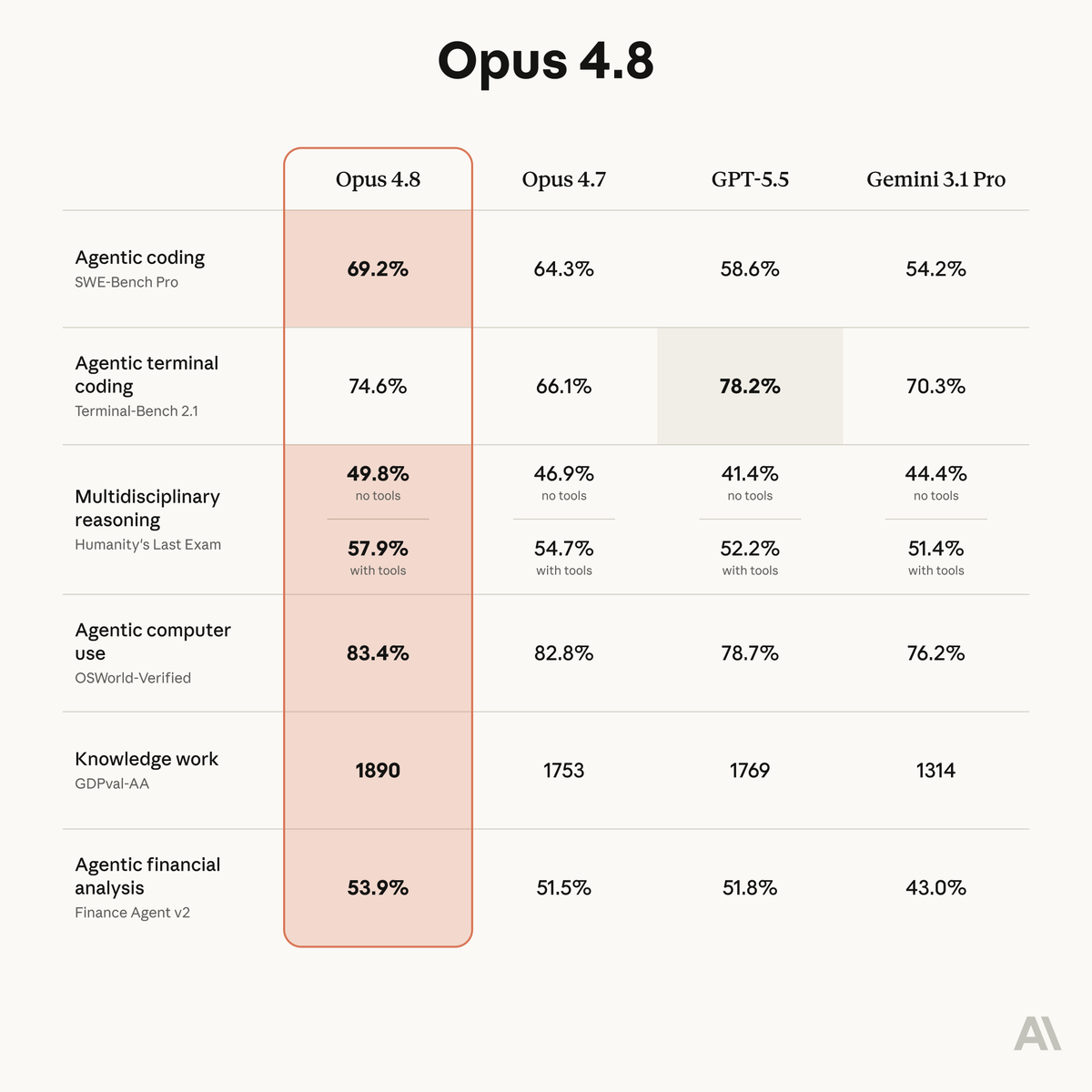
Introducing Claude Opus 4.8: it builds on Opus 4.7 with sharper judgment, more honesty about its own progress, and the ability to work independently for longer than its predecessors.
Available today at the same price.
Available today at the same price.
Fast mode is available for Opus 4.8. It's the same model at roughly 2.5x the speed, and we've made it three times cheaper than before.
Turn it on with /fast in Claude Code. On the API, contact your account manager to request access or join the waitlist: claude.com/fast-mode
Turn it on with /fast in Claude Code. On the API, contact your account manager to request access or join the waitlist: claude.com/fast-mode
In Claude Code, Opus 4.8 makes calls like an experienced engineer without needing constant check-ins.
It stays on track across long-running sessions and follows work through in your repo, so you can hand off a feature or a bug sweep while you focus on what's next.
It stays on track across long-running sessions and follows work through in your repo, so you can hand off a feature or a bug sweep while you focus on what's next.
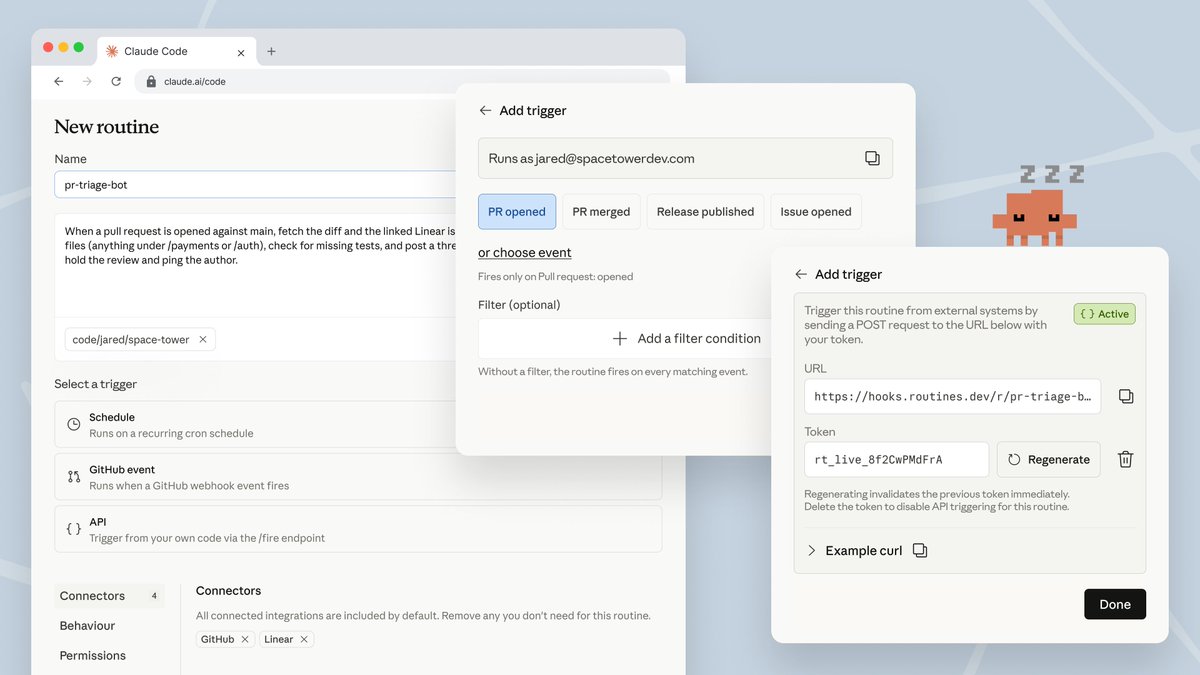
Also new in Claude Code: dynamic workflows (research preview).
For the hardest tasks, Claude makes a plan, runs hundreds of parallel subagents, and verifies its work before reporting back. Think a migration touching hundreds of files.
Read more: claude.com/blog/introduci…
For the hardest tasks, Claude makes a plan, runs hundreds of parallel subagents, and verifies its work before reporting back. Think a migration touching hundreds of files.
Read more: claude.com/blog/introduci…
Claude Opus 4.8 is available today on web, the Claude Platform, and all major cloud platforms.
Read more: anthropic.com/news/claude-op…
Read more: anthropic.com/news/claude-op…
Claude Opus 4.8 is available today on the web, the Claude Platform, and all major cloud platforms.
Read more: anthropic.com/news/claude-op…
Read more: anthropic.com/news/claude-op…
• • •
Missing some Tweet in this thread? You can try to
force a refresh