
🧵National liberation vs Bourgeois Nationalism
Lenin repeatedly warned against abstract formulations of the question of nationalism and above all against confusing the nationalism of an oppressor nation with that of an oppressed nation
Lenin repeatedly warned against abstract formulations of the question of nationalism and above all against confusing the nationalism of an oppressor nation with that of an oppressed nation
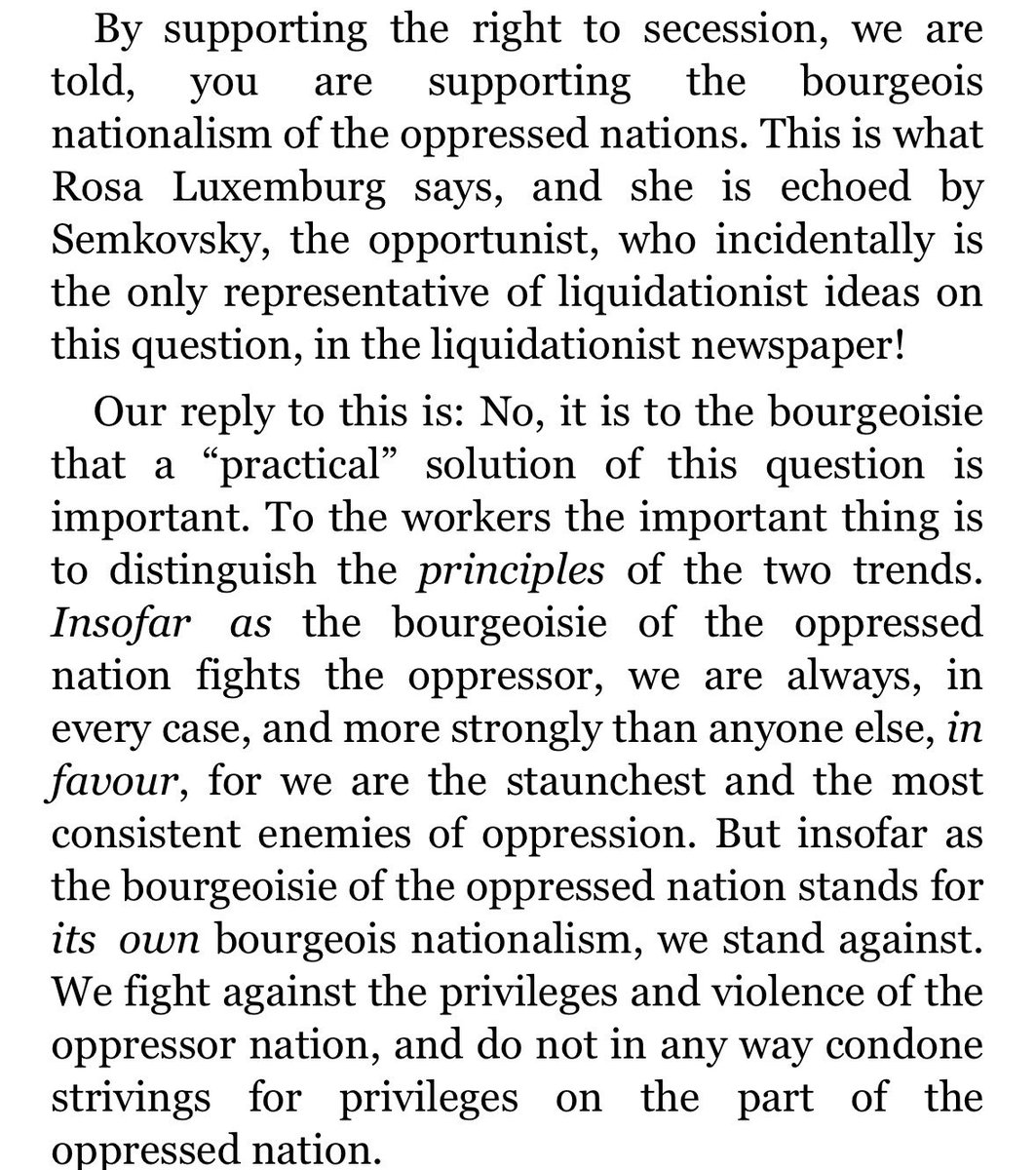
“By supporting the right to secession, we are told,
you are supporting the bourgeois nationalism of the oppressed nations. ——
Our reply to this is: No, it is to the bourgeoisie that a "practical" solution of this question is important. To the workers the important thing is to-
you are supporting the bourgeois nationalism of the oppressed nations. ——
Our reply to this is: No, it is to the bourgeoisie that a "practical" solution of this question is important. To the workers the important thing is to-
distinguish the principles of the two trends.
Insofar as the bourgeoisie of the oppressed nation fights the oppressor, we are always, in every case, and more strongly than anyone else, in favour, for we are the staunchest and the most consistent enemies of oppression.
Insofar as the bourgeoisie of the oppressed nation fights the oppressor, we are always, in every case, and more strongly than anyone else, in favour, for we are the staunchest and the most consistent enemies of oppression.
But insofar as the bourgeoisie of the oppressed nation stands for its own bourgeois nationalism, we stand against.
We fight against the privileges and violence of the oppressor nation, and do not in any way condone strivings for privileges on the part of the oppressed nation.”
We fight against the privileges and violence of the oppressor nation, and do not in any way condone strivings for privileges on the part of the oppressed nation.”
The Right of Nations to Self-Determination - (more specifically read Chapter 4.
marxists.org/archive/lenin/…
marxists.org/archive/lenin/…



The Socialist Revolution and the Right of Nations to Self-Determination


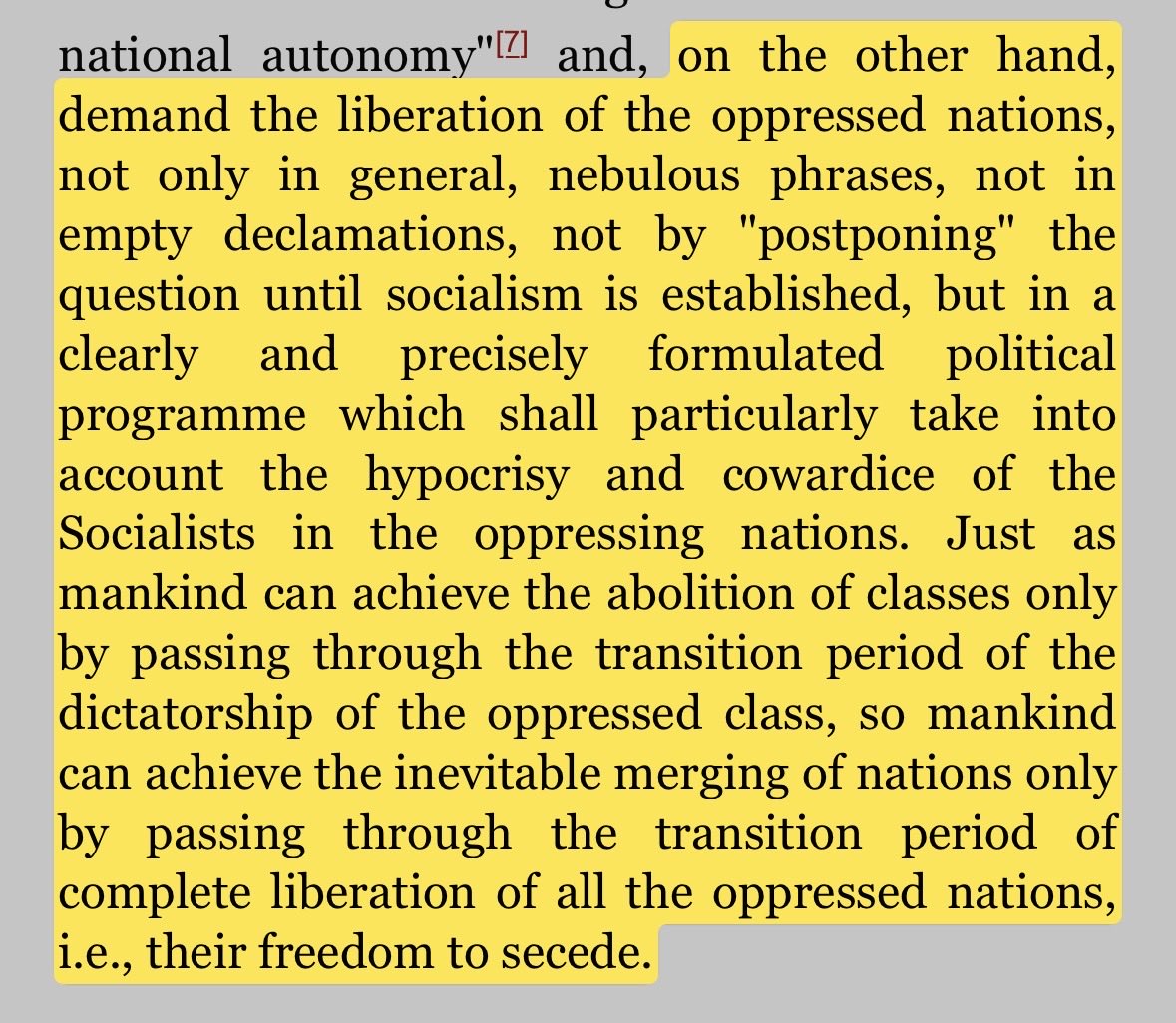
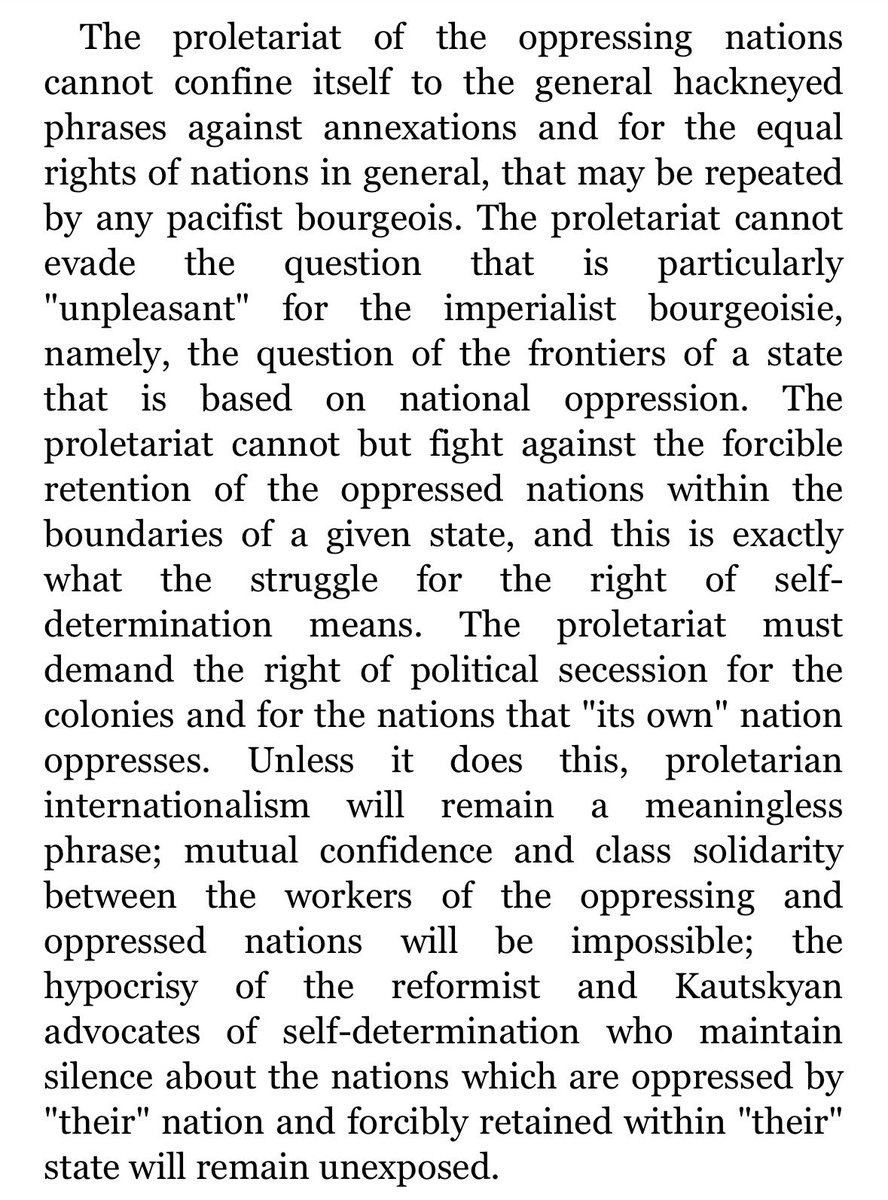
more screenshots from The Socialist Revolution and the Right of Nations to Self-Determination



Not Lenin but another recommendation is Fundamentals of Marxism–Leninism - (More specifically Chapter 16. pg 343-374 The National-Liberation Movement of the Peoples Against Imperialism)
marxists.org/archive/kuusin…
marxists.org/archive/kuusin…


My favorite read would be Stalins “Marxism and the National and Colonial question marxists.org/reference/arch…

@UnrollHelper
• • •
Missing some Tweet in this thread? You can try to
force a refresh





