China's Conservative Revolution (4⭐️) The book seeks to present the post-1927 Kuomintang as a party advancing a conservative revolutionary program: seeking to create an exclusive loyalty surrounding state and nation, relying on state control of citizens and seeking to mobilise 
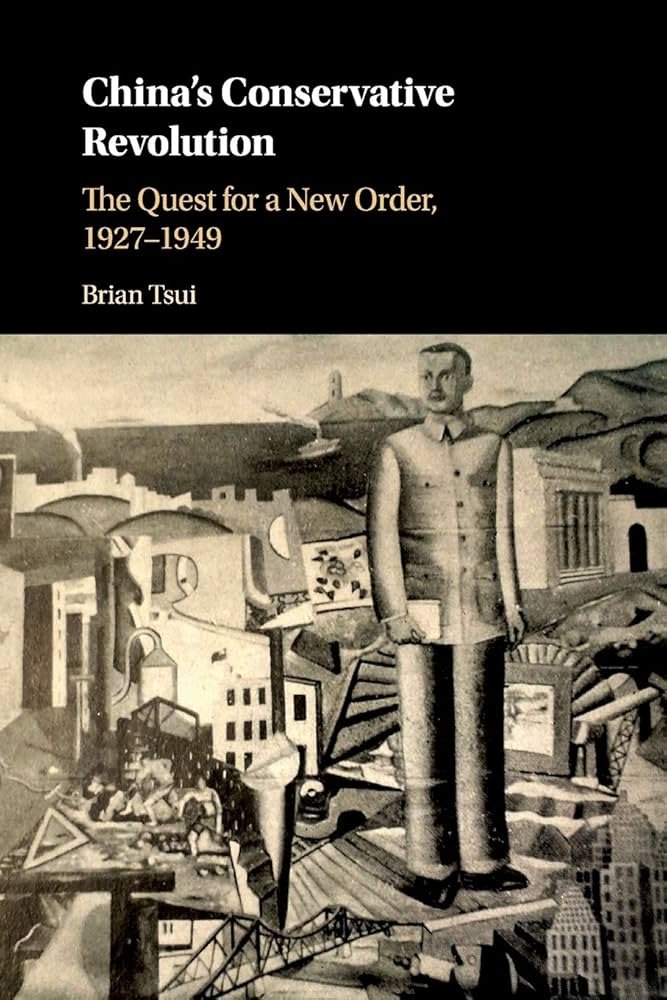
people's individuals habits in mass campaigns for a productive society. Seeking to clash with the communist vision, the KMT came to align with the international far-right and fascist movements increasingly in the 1930s with increasing inspiration from Nazi Germany and Italian
Fascism he argues to be much more meaningful than its common presentation as superficial interest. He observes how this was implemented in the scouting movement alongside the state's spiritual mobilisation campaign during the 2nd Sino-Japanese War.
Focusing on its ideology and its support among various intellectuals, he argues it was able to converge with the agenda of Chinese liberals who also feared mob rule and mass politics and who were supportive of KMT's attempt to create a disciplined population involved in
production. Furthermore, the critique and rejection of politics by the KMT and especially popular/radical politics aligned them with the KMT who they came to perceive as guardians of order even if they resented and rejected their authoritarian methods.
He then lastly looks at their international agenda as Pan-Asian force, and its alignment with the Indian National Congress that however was shaped by the practical agendas of their times and did not survive the post-WW2 order as each side came to diverge - the KMT advancing an
anticommunist vision of an unified Asia against Nehru's goal to align the third world, including socialist forces. While only focused on the discourse and so leaving out often what this meant on the ground unfortunately, he still presents a convincing argument to view KMT in
line with other revisionist nationalist movements of the interwar era and the KMT to having a meaningful ideological standpoint.
• • •
Missing some Tweet in this thread? You can try to
force a refresh