Why would a politician refuse to sack a spokesperson who has offended multiple communities, embarrassed allies, triggered multiple FIRs, and caused resignations within his own party?
Because sometimes in politics arithmetic counts for more than outrage. 🧵
Because sometimes in politics arithmetic counts for more than outrage. 🧵
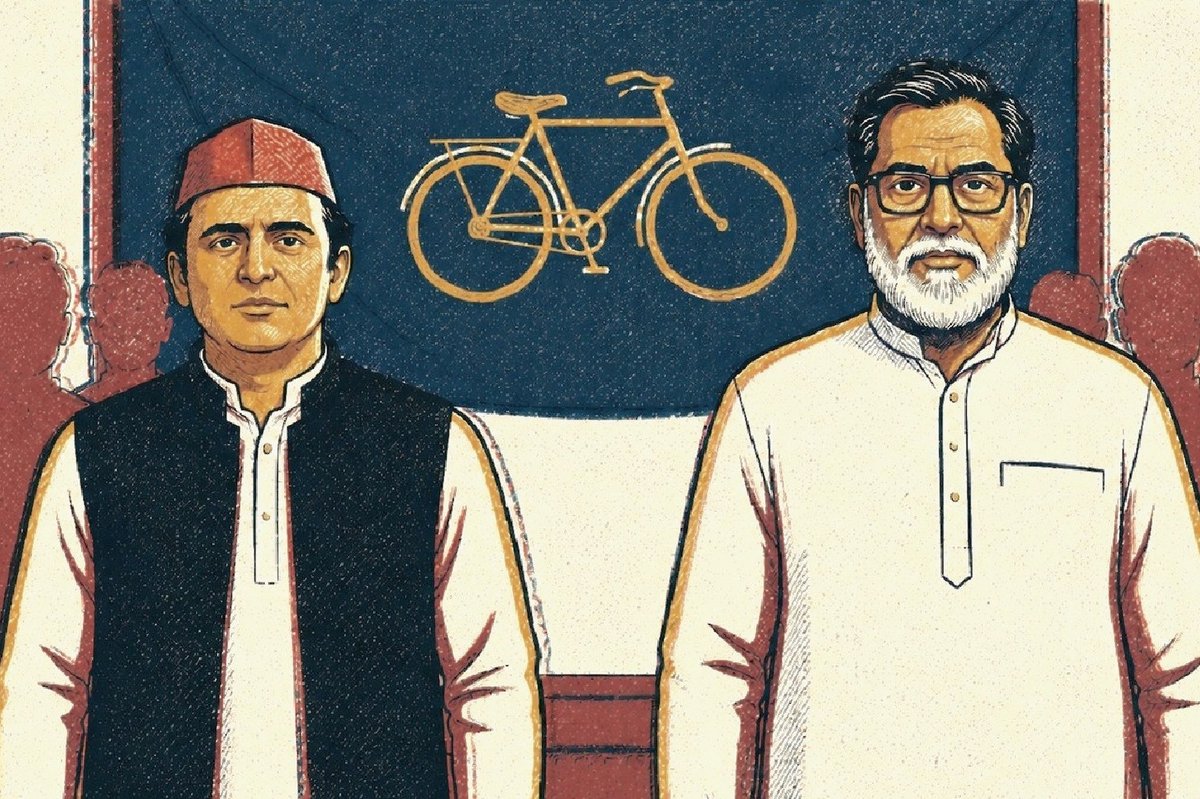
Rajkumar Bhati, a spokesperson of the Samajwadi Party, made remarks that angered Brahmins and later comments that upset both Jats and Gurjars.
The backlash came from rivals, allies, community groups, and even sections of his own party.
The backlash came from rivals, allies, community groups, and even sections of his own party.
Under normal circumstances, he would likely have been removed.
The Samajwadi Party has sidelined or distanced itself from controversial figures before.
This time, it didn't.
The Samajwadi Party has sidelined or distanced itself from controversial figures before.
This time, it didn't.
The reason lies in western Uttar Pradesh.
After Jayant Chaudhary and the RLD moved away, the Samajwadi Party lost its easiest route into the region's influential Jat vote.
It needed a new social coalition.
After Jayant Chaudhary and the RLD moved away, the Samajwadi Party lost its easiest route into the region's influential Jat vote.
It needed a new social coalition.
Akhilesh Yadav's answer was a Gurjar-Muslim-Dalit strategy.
And Rajkumar Bhati became the face of that effort.
Over the past year, he has led a sustained Gurjar outreach campaign across western UP.
And Rajkumar Bhati became the face of that effort.
Over the past year, he has led a sustained Gurjar outreach campaign across western UP.
The problem is that political organisers are not easily replaceable.
Bhati isn't just a TV spokesperson.
He is one of the party's few Gurjar leaders with regional visibility, community networks, organisational reach, and public recall.
Bhati isn't just a TV spokesperson.
He is one of the party's few Gurjar leaders with regional visibility, community networks, organisational reach, and public recall.
So Akhilesh Yadav faces a dilemma.
Sack Bhati and risk damaging months of Gurjar outreach.
Keep Bhati and absorb the political cost of his remarks.
The party appears to have chosen the second option.
Sack Bhati and risk damaging months of Gurjar outreach.
Keep Bhati and absorb the political cost of his remarks.
The party appears to have chosen the second option.
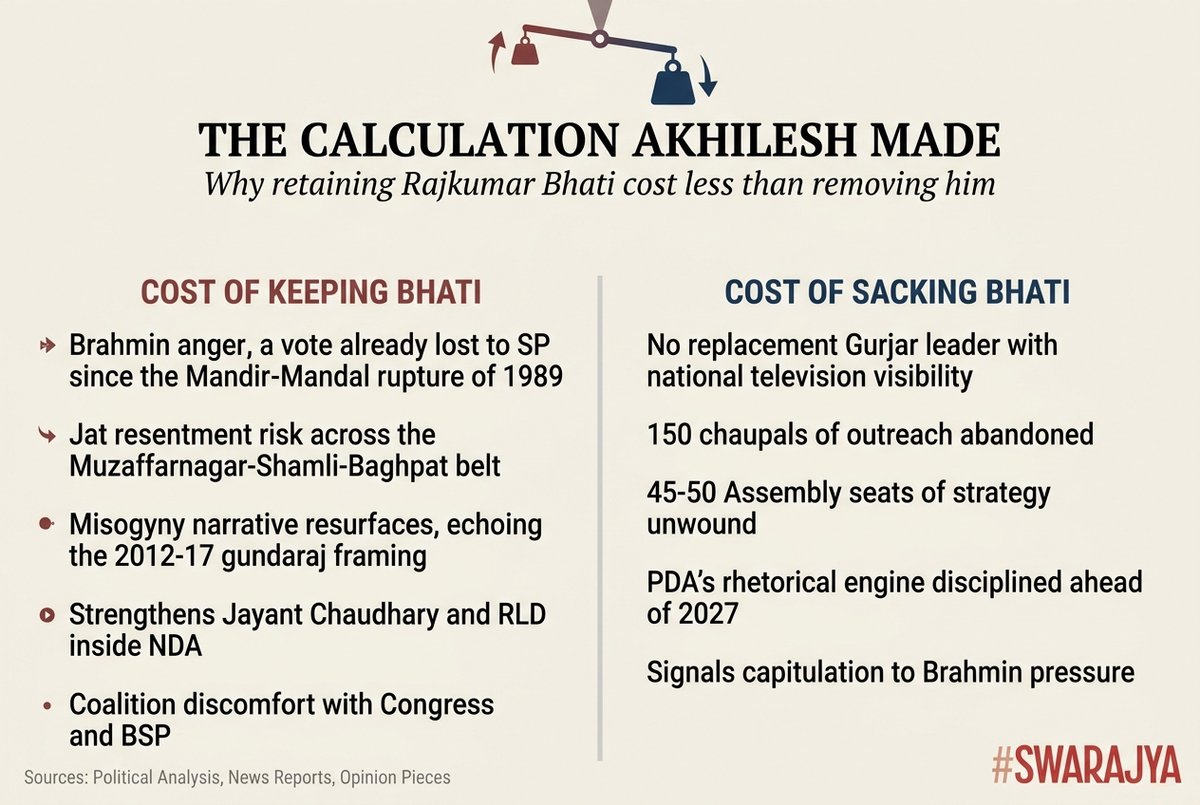
The gamble is that the Gurjar consolidation project matters more than voters already unlikely to support the SP.
The risk is that the controversy spreads beyond those boundaries and starts hurting the coalition itself.
The risk is that the controversy spreads beyond those boundaries and starts hurting the coalition itself.
The question, hence, is this:
Whether the political benefit Rajkumar Bhati brings to SP is greater than the political damage he causes.
Akhilesh Yadav has effectively bet that the benefit is greater.
Read @bingaspeaks' full piece here: swarajyamag.com/states/uttar-p…
Whether the political benefit Rajkumar Bhati brings to SP is greater than the political damage he causes.
Akhilesh Yadav has effectively bet that the benefit is greater.
Read @bingaspeaks' full piece here: swarajyamag.com/states/uttar-p…
• • •
Missing some Tweet in this thread? You can try to
force a refresh