
Most cardiologists still tell patients: “Your cholesterol is the problem. Take this statin.”
After operating on thousands of hearts, I can tell you that’s incomplete at best — and dangerous at worst.
The real drivers of heart disease are what I call The 3 Missed I’s.
🧵 1/8
After operating on thousands of hearts, I can tell you that’s incomplete at best — and dangerous at worst.
The real drivers of heart disease are what I call The 3 Missed I’s.
🧵 1/8
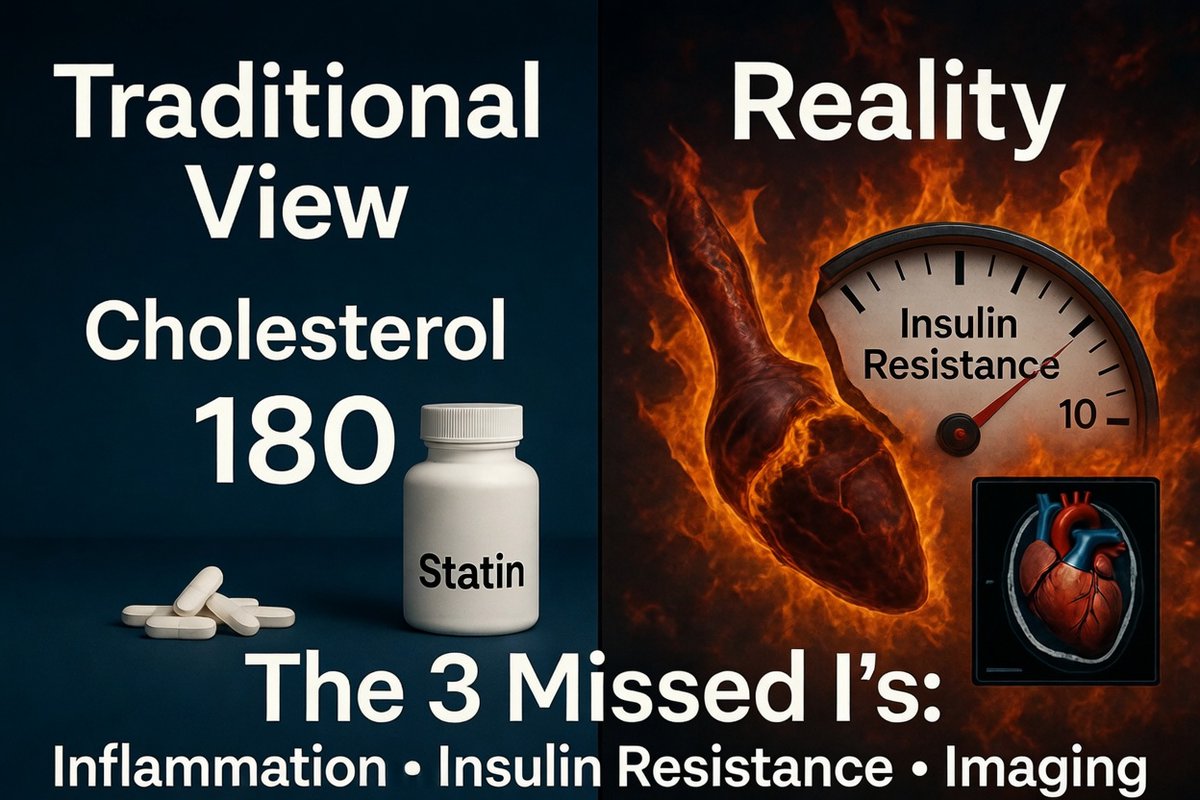
Here they are:
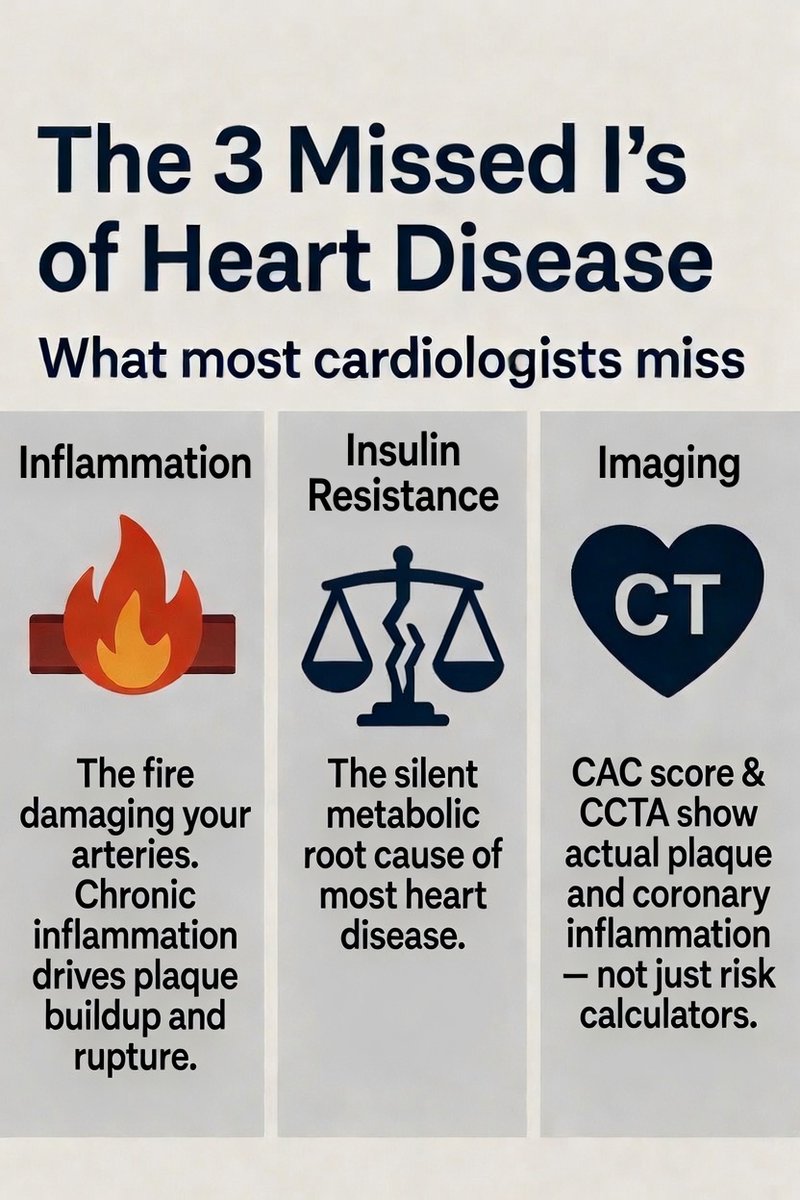
1. Inflammation — the actual fire damaging artery walls
2. Insulin Resistance — the silent metabolic root that starts the damage
3. Imaging — what’s actually in your arteries (CAC score + CCTA), not risk calculators
Most doctors never properly test or treat these three.
That’s why so many “low risk” patients still end up with heart attacks or on my operating table.
2/8
1. Inflammation — the actual fire damaging artery walls
2. Insulin Resistance — the silent metabolic root that starts the damage
3. Imaging — what’s actually in your arteries (CAC score + CCTA), not risk calculators
Most doctors never properly test or treat these three.
That’s why so many “low risk” patients still end up with heart attacks or on my operating table.
2/8
Let’s break them down.
Inflammation first.
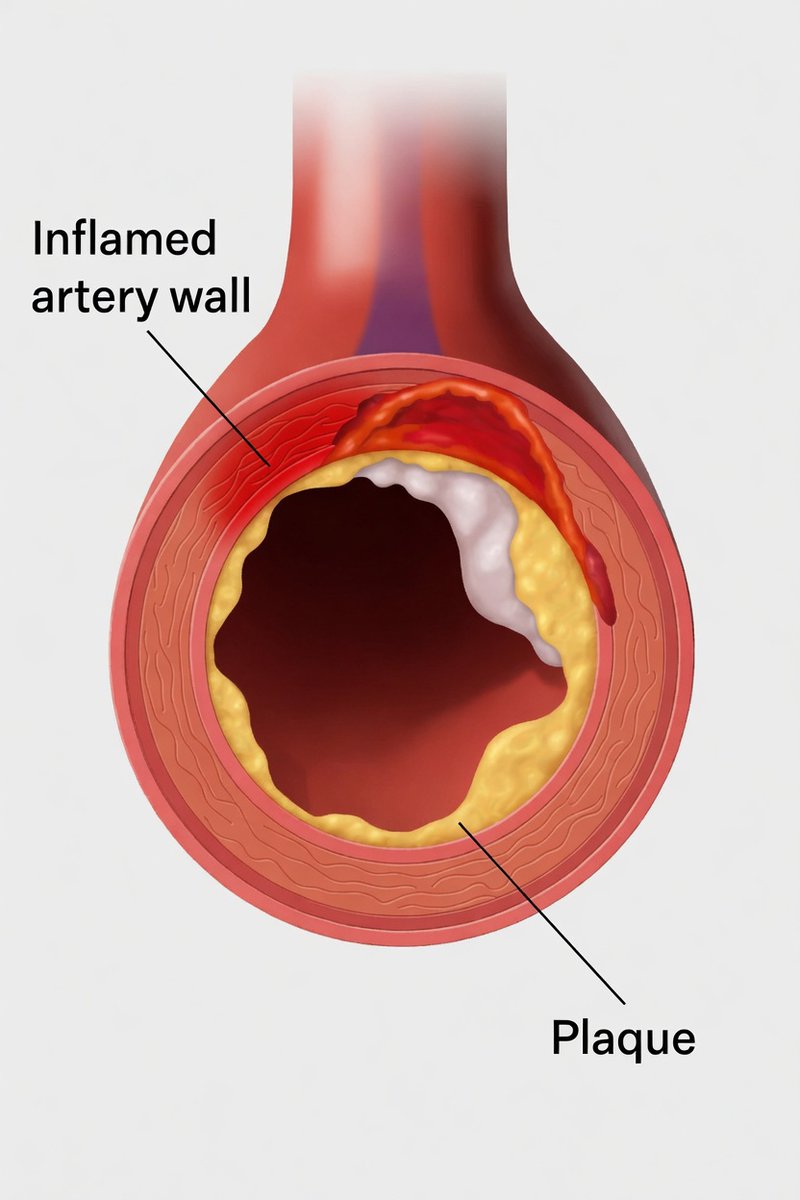
Plaque doesn’t just build from cholesterol floating around. It builds when the artery lining is inflamed and damaged.
High LDL without inflammation is far less dangerous.
Yet how many cardiologists routinely check hs-CRP or look for coronary inflammation on CCTA?
Very few.
This is one of the biggest blind spots in modern cardiology.
3/8
Inflammation first.
Plaque doesn’t just build from cholesterol floating around. It builds when the artery lining is inflamed and damaged.
High LDL without inflammation is far less dangerous.
Yet how many cardiologists routinely check hs-CRP or look for coronary inflammation on CCTA?
Very few.
This is one of the biggest blind spots in modern cardiology.
3/8
Insulin resistance is even more foundational.
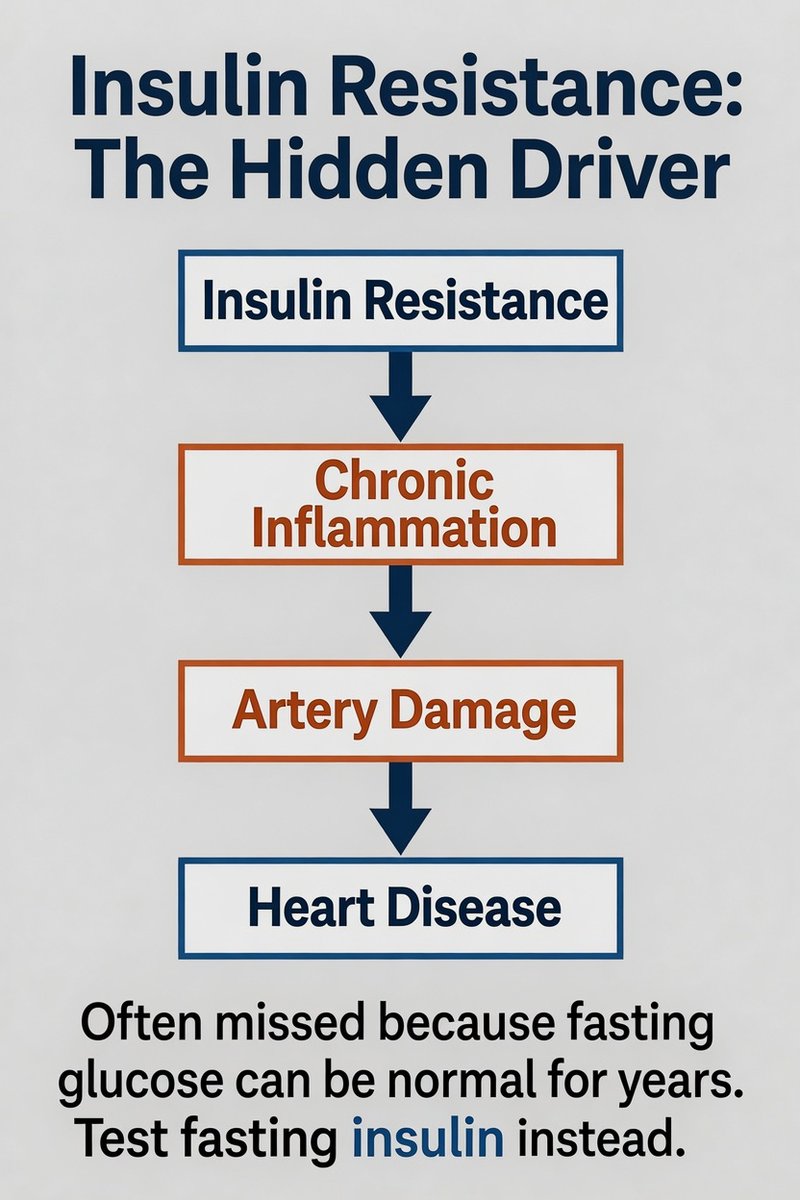
It drives chronic inflammation, raises blood pressure, creates small dense LDL particles, and damages arteries over time.
You can have completely normal fasting glucose and A1C for years while your insulin is through the roof.
If your doctor only checks glucose or A1C, they’re missing the real problem.
Test fasting insulin. Address the root.
4/8
It drives chronic inflammation, raises blood pressure, creates small dense LDL particles, and damages arteries over time.
You can have completely normal fasting glucose and A1C for years while your insulin is through the roof.
If your doctor only checks glucose or A1C, they’re missing the real problem.
Test fasting insulin. Address the root.
4/8
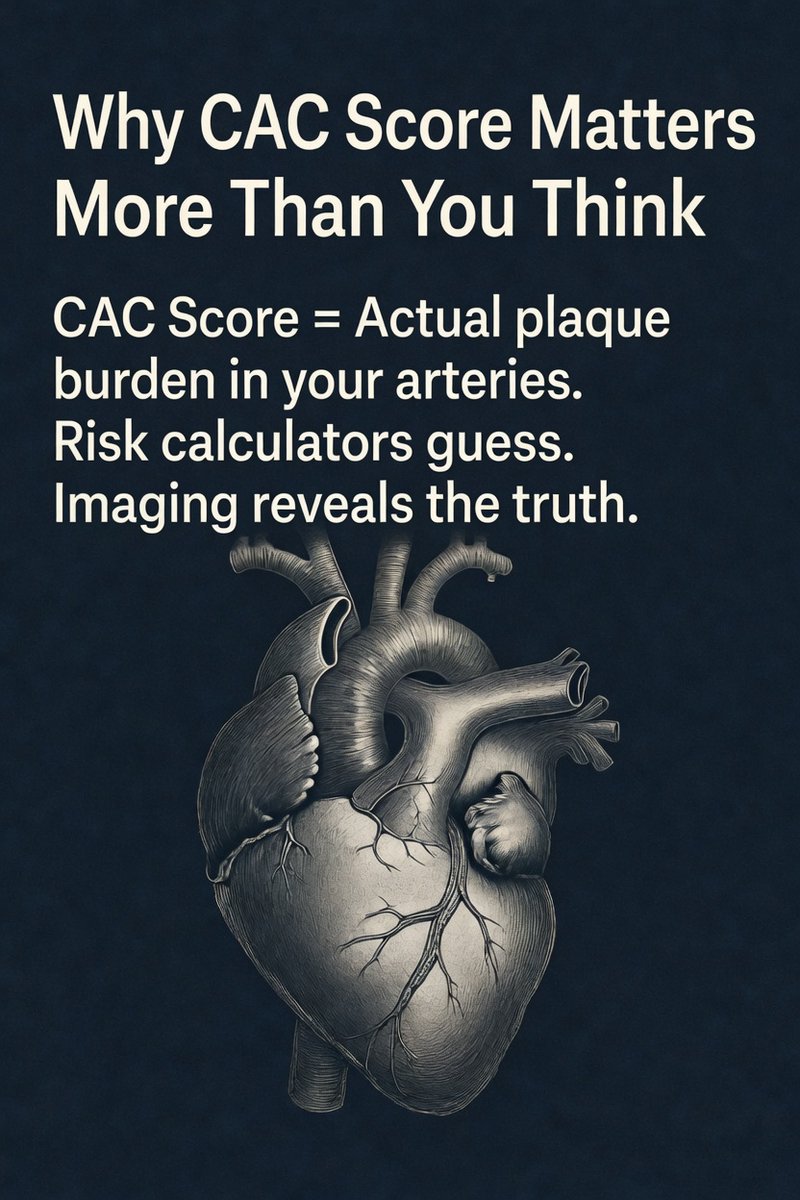
Imaging tells the truth when labs and calculators lie.
A CAC score shows how much calcified plaque you actually have. CCTA shows soft plaque and even inflammation around the arteries.
I’ve seen patients with “perfect” cholesterol numbers and high CAC scores… and vice versa.
Risk calculators are guesses. Imaging shows reality.
If you’re over ~40 or have any metabolic issues, get a CAC score.
5/8
A CAC score shows how much calcified plaque you actually have. CCTA shows soft plaque and even inflammation around the arteries.
I’ve seen patients with “perfect” cholesterol numbers and high CAC scores… and vice versa.
Risk calculators are guesses. Imaging shows reality.
If you’re over ~40 or have any metabolic issues, get a CAC score.
5/8
Why does mainstream cardiology keep missing these?
Because the system is still built around LDL targets and statin prescriptions.
It’s faster to write a prescription than to fix someone’s metabolism or order proper imaging.
I’ve operated on too many patients who were told they were “low risk.”
We have better tools in 2026. We should be using them.
6/8
Because the system is still built around LDL targets and statin prescriptions.
It’s faster to write a prescription than to fix someone’s metabolism or order proper imaging.
I’ve operated on too many patients who were told they were “low risk.”
We have better tools in 2026. We should be using them.
6/8
The hopeful part:
Insulin resistance is highly reversible with the right nutrition and lifestyle changes. Inflammation drops dramatically when you fix metabolism. Imaging lets you actually track whether you’re making progress — not just chasing numbers.
Many people can stabilize plaque and dramatically lower their real risk.
You don’t have to wait for symptoms or surgery.
7/8
Insulin resistance is highly reversible with the right nutrition and lifestyle changes. Inflammation drops dramatically when you fix metabolism. Imaging lets you actually track whether you’re making progress — not just chasing numbers.
Many people can stabilize plaque and dramatically lower their real risk.
You don’t have to wait for symptoms or surgery.
7/8
If this thread resonated with you, you’re not alone.
Reply below: → Have you had a CAC score? → Has anyone ever checked your fasting insulin? → Were you told cholesterol was your only issue?
Follow for more straight talk from the operating room.
Take my free Metabolic Health Quiz here: ifixhearts.com/quiz/
What’s the biggest thing you’re taking away from the 3 Missed I’s? 👇
8/8
Reply below: → Have you had a CAC score? → Has anyone ever checked your fasting insulin? → Were you told cholesterol was your only issue?
Follow for more straight talk from the operating room.
Take my free Metabolic Health Quiz here: ifixhearts.com/quiz/
What’s the biggest thing you’re taking away from the 3 Missed I’s? 👇
8/8
What lab work should you get done?
How often?
What if your doctor doesn't want to order the tests you asked for?
I answer all these and more in my new Introduction to Lab Work course.
Get it at ifixhearts.spiffy.co/checkout/intro…
How often?
What if your doctor doesn't want to order the tests you asked for?
I answer all these and more in my new Introduction to Lab Work course.
Get it at ifixhearts.spiffy.co/checkout/intro…
• • •
Missing some Tweet in this thread? You can try to
force a refresh






