
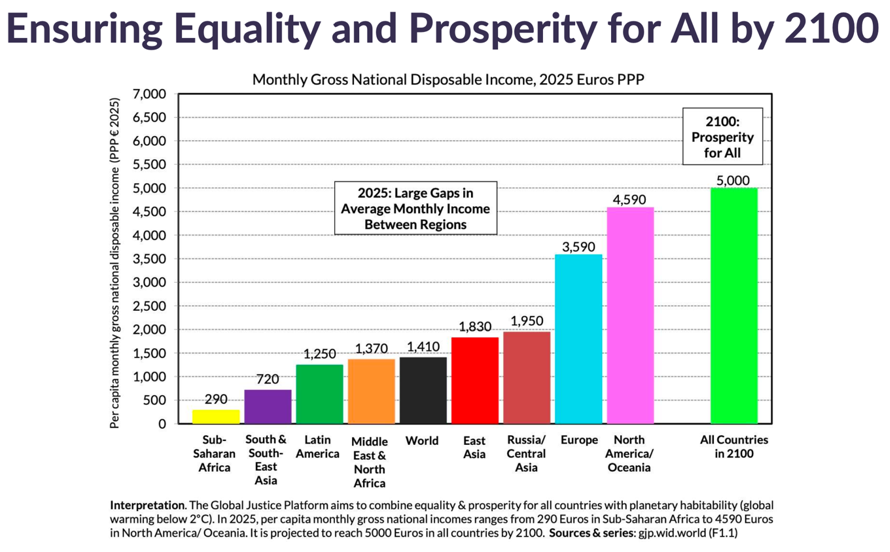
The world today is characterized by large-scale inequalities. And a climate crisis is looming over us.
We urgently need a new vision for global progress in the 21st Century. One that grounds human development and equality in planetary habitability.
What would it take to achieve high prosperity and equality while remaining within planetary boundaries?
The World Inequality Lab is very excited to launch the #GlobalJusticeReport.
[1/7]
We urgently need a new vision for global progress in the 21st Century. One that grounds human development and equality in planetary habitability.
What would it take to achieve high prosperity and equality while remaining within planetary boundaries?
The World Inequality Lab is very excited to launch the #GlobalJusticeReport.
[1/7]
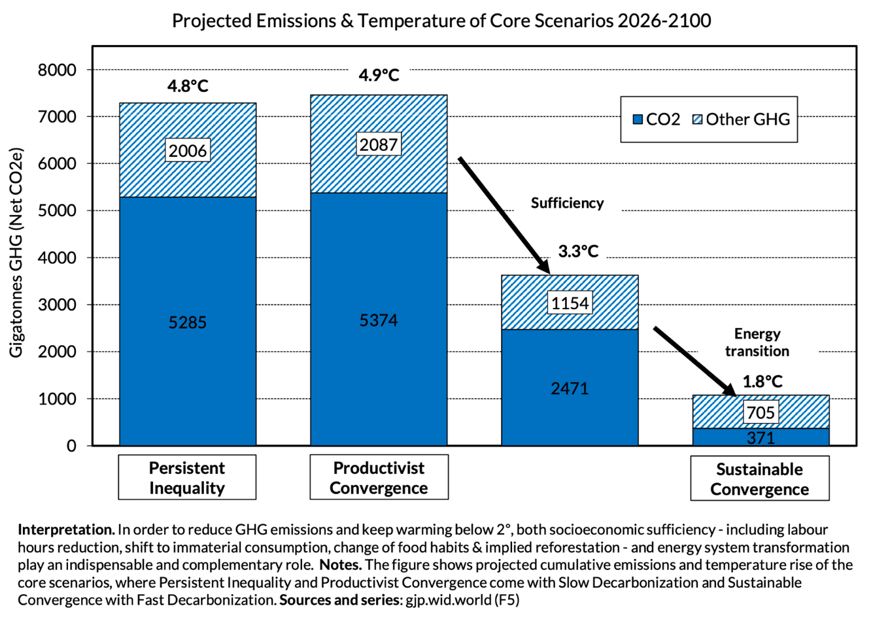
The key finding of the report is that energy transition alone will not suffice.
We need to combine it with "sufficiency" to stay within 2 degrees. This includes labour hour reductions, growth caps in rich countries, less material consumption, and changes in food habits.
We need to combine it with "sufficiency" to stay within 2 degrees. This includes labour hour reductions, growth caps in rich countries, less material consumption, and changes in food habits.
In order to raise the resources necessary to finance sustainable convergence, as well as improve the living standards of lower- and middle-income groups (both in the Global South and North), it is inevitable to drastically reduce wealth and income inequality:
⤴️World's poorest half to reach 30% in global wealth, up from 2%
⤵️Billionaires’ wealth share to drop from 6% to 0.05%
⤴️World's poorest half to reach 30% in global wealth, up from 2%
⤵️Billionaires’ wealth share to drop from 6% to 0.05%

We envision a new institution, the Global Justice Fund to finance this sustainable convergence path. The fund would raise revenue via global wealth and income taxes to be used for climate investments, expansion of health and education, and building up a World Sovereign Fund.
The Global Justice Fund would average 10.3% of world GDP annually between 2030 and 2060 — compared with less than 0.4% currently allocated to development aid and international organizations.
The Global Justice Fund would average 10.3% of world GDP annually between 2030 and 2060 — compared with less than 0.4% currently allocated to development aid and international organizations.

To cover the investment needs of the transition, the fund will be 20x larger than current development aid. Still, the flows from the Global North to the Global South are far from making up for historical climate and colonial damages caused by the North. This provides strong reason to further scale up the platform.

The current international order is plutocratic. In the IMF, rich countries have four times more voting rights than their population share, while poor countries have four times less. It is essential to move away from this plutocratic system to a new democratic order with a one-person one-vote order.

This is the result of more than two years of research of 45 direct contributors and in continuation of many international initiatives and a much longer research tradition on inequality and the climate crisis.
Find report, website, research papers and more here: globaljusticeproject.wid.world
Find report, website, research papers and more here: globaljusticeproject.wid.world

• • •
Missing some Tweet in this thread? You can try to
force a refresh






