Afanasievo becomes Chemurchek in around 2500 which already dilutes their ancestry somewhat, this then move southward into dzungaria with stone burial enclosues which also appear at sites like Tianshanbeilu. Tianshanbeilu skulls iirc were mixed East Eurasian-West Eurasian, most of the Y-DNA from it was N1 thoughbeit. Its possible that they still carried the language over from Chemurchek. At around 1000bc Tianshanbeilu and Barkol groups come under influence from cultures like Shanma and adopt Painted Ware, which they spread westward as the Subeshi and Chawuhugoukou groups, this pottery is also found at Loulan/Shanshan.
When the Tocharians moved along the Tianshan there were already iranic populations from the Chust-Haladun culture (proto khotanese?) there that they mixed with, diluting their already very diluted Chemurchek ancestry even further.
@GildedCoprolite @Hilux_Catalyzer There was also a study a while ago which showed some samples giving genuine Afanasievo ancestry over Andronovo:
@GildedCoprolite @Hilux_Catalyzer Specifically a sample group Chawuhu (the eponymous site of the Chawuhugoukou culture) carries over a quarter Afanasievo Ancestry
• • •
Missing some Tweet in this thread? You can try to
force a refresh

The Vučedol Culture is a poorly understood yet incredibly significant culture, representing the Indo-Europeanization of the balkans, initiation of the bronze age, social stratification, and rise of the warrior caste.
The Vučedol Culture forms first in the Slavonia-Syrmia area between the Danube and Sava around 3000 or 3100bc, formed in the basis of the preceding Kostolac Culture, with influence from the Yamnaya Culture.
This culture expanded rapidly after 2800bc, occupying the entire pannonian basin as well as the adriatic coast, displacing the previous eneolithic cultures and/or absorbing them.
Part of the Vučedol cultures dominance is owed to the unqiue shaft-hole axes. In the early phase, Babyabic axes of the Yamnaya Culture were used, which were developed into Kozarac and Fajsz axes in later periods.
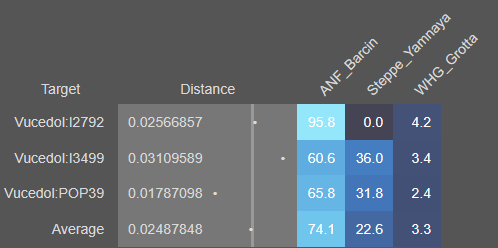
Samples from the Vučedol culture are scarce, with two having 32-36%-65-60% PIE-Neolithic ancestry. Of the two samples with Steppe ancestry, one is male, with Y-DNA R1b-Z2103>M12149, which further supports a Yamnaya origin.
The one sample without Steppe is G2a2-PF3148 and located in Dalmatia, most likely an individual of the late Lasinja culture that managed to assimilate into Vučedol Civilization.
Another haplogroup that is certain to have existed in Vučedol is J-L283, the haplogroup dominant in the later Cetina Culture, which evolves seamlessly out of the Adriatic variant of the Ljubljana Vučedol Culture. J-L283 also appears in the Maros/Mokrin culture, which is descended from the Mako and Nyirseg, thus ultimately, Vučedol cultures. This haplogroup was also later common in the Glasinac-Mati culture and the historical Illyrians.
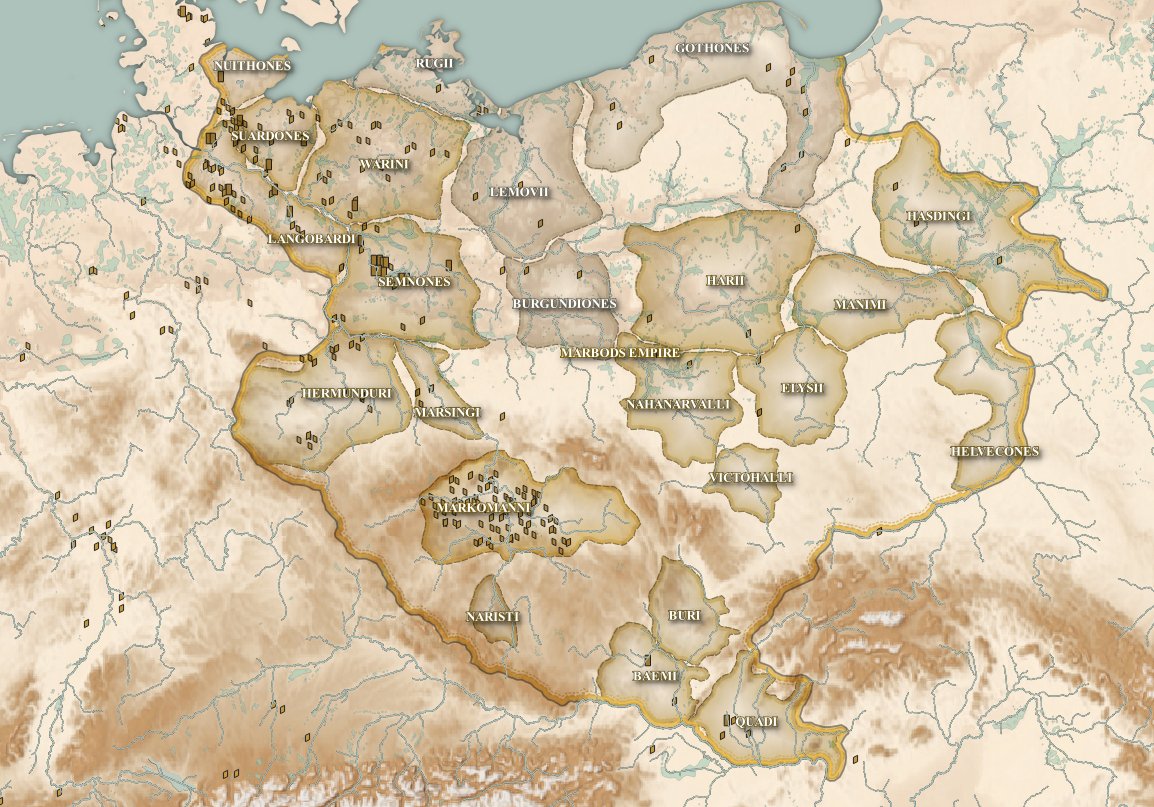
Germanic Tribes in the Second Century AD, as mentioned by Ancient Authors.
Compiled from various ancient authors, most notably Tacitus, Ptolemy, Pliny and Strabo.
The exact locations of the Germanic Tribes has been a vague and unclear question for almost two thousand years now, however with Archaeology and Cross-Referencing i believe it is possible to get somewhat close to the real picture.
First of, the Authors.
Tacitus: Germania, written around 98ad:
Tacitus is one of the most Thorough, however his list is not as exhaustive as Ptolemies. The fact that he never mentions certain tribes that Ptolemy does lends me to think that those tribes were sub-tribes or less important ones than the ones he does mention.
Ptolemy: Geography, written around 150ad:
Ptolemy gives by far the most Exhaustive listing of Germanic Tribes, however it also has alot of confusing, contradictory, and seemingly erroneous information.
Strabo: Geography, written in 17ad:
Strabos Work is one of the earliest sources used, and he interestingly lists some additional tribes that both authors do not.
Pliny the Elder: Natural History, written around 77ad:
Pliny does not go very in-depth about describing Germania, but instead is more exhaustive about Left-rhenish Germans and the Germanic Tribes east of the Vistula. Others: Caesar, Augustus, Florus, Velleius, Dio Cassius, and Various Inscriptions are also used, but only for mentioning certain tribes.
Others: Caesar, Augustus, Florus, Velleius, Dio Cassius, and Various Inscriptions are also used, but only for mentioning certain tribes.
Methods:
The Positions of Tribes were cross-referenced from the authors that mention them, if a position was given, onto the geographically corresponding or nearest possible cluster of archaeological sites.
Many times, authors do not give a position at all. In those cases, i simply had to guess. Sometimes there are some bits of information that inform the guess, but other times when there is not it is with zero confidence.
I explain the placements of each tribe later on. In the cases where a tribe is said to be in different places by different authors, they are recorded twice on the Map for each Author, unless one Location is too unlikely to not be a Scribal Error.
The Archaeological Territories of Eggers phase B2 of the Roman Iron Age were used. Phase B2-C1a was not used as during this phase, large changes occur in eastern europe such as the Wielbark Migration into Przeworsk Territory that is not yet described as being Gothic by the Auhtors used. (For eastern europe, these are mainly Ptolemy and Pliny)
THE MARKOMANNIC EMPIRE
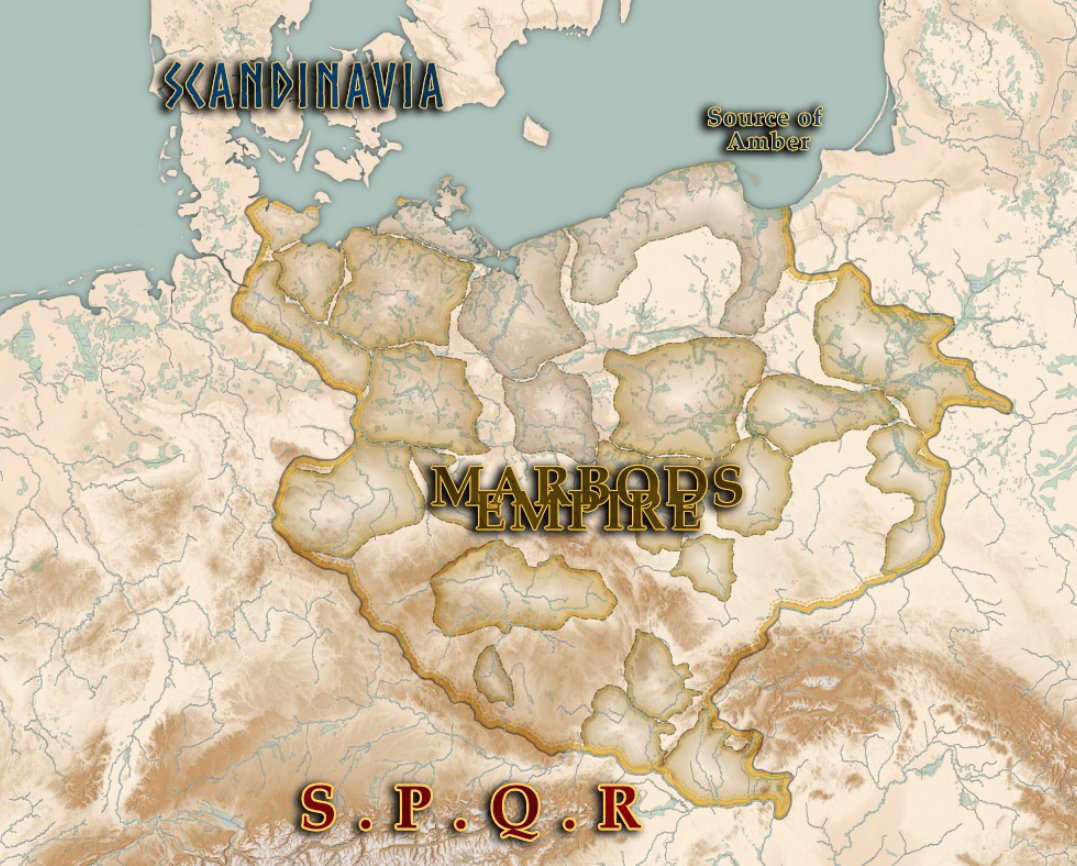
While not fully stratified, An Argument can be made that the First Germanic Empire is Marobodus' Empire, 9bc-18ad.
This was a Tribal Confederation, although Marobodus explicitly Proclaimed himself as the King of the other Tribes under him, much to the contempt of the Semnones and Langobardi.
The Markomanni were by far the most Powerful and Stratified Tribe in Germania, and through being close friends with Rome, formed a large federation of mostly Economic Basis, which greatly Enriched the Markomanni and their Allies.
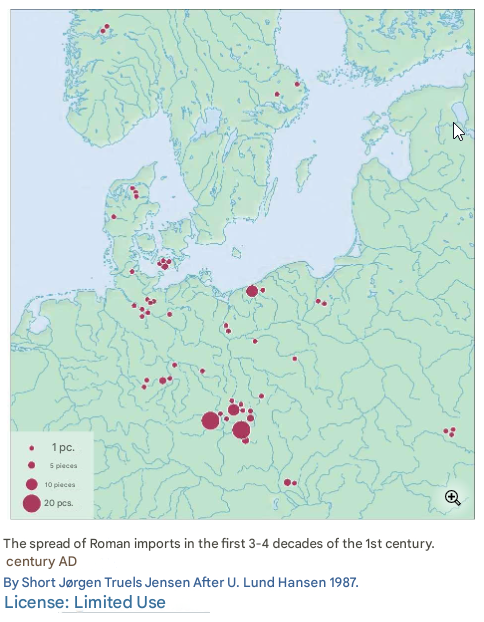
Depicted on the map are Specific types of Almgren Fibula associated with the Markomanni and their Trade Network, as well as the Tribes described as being part of Marobodus' Empire.
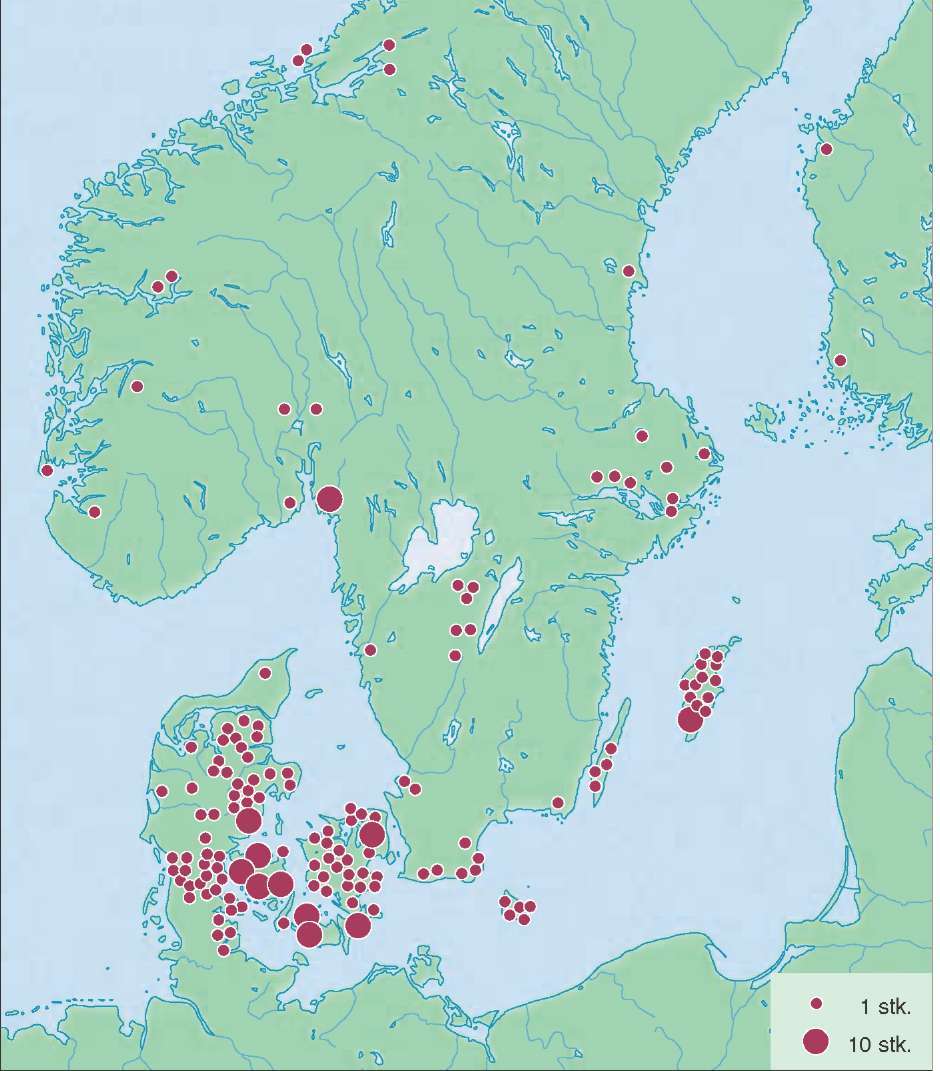
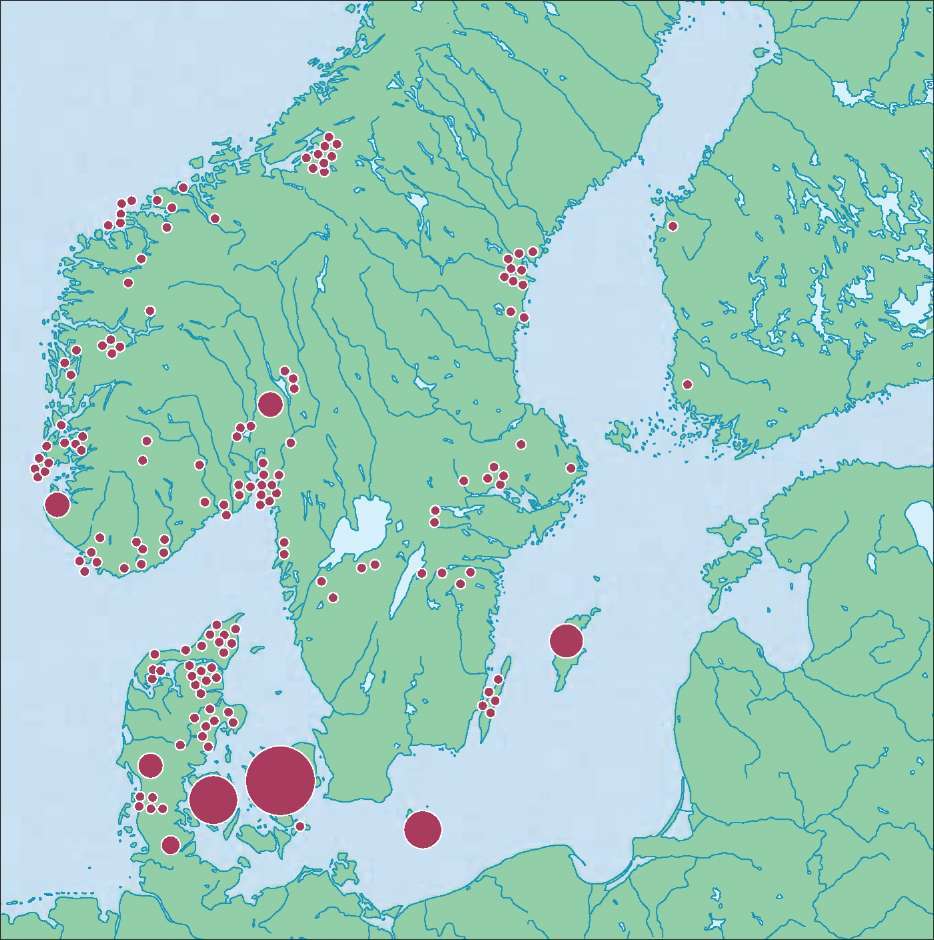
The Markomannic Empire was built on the Economic Basis of Amber, Scandinavian Products such as Exotic Furs, Woods, and Slaves, and their popularity on Rome, and in return the Popularity of Roman Goods such as Pottery, glassware and bronzeworking in Scandinavia and the Baltic.
The Empire Connected these Trade Routes and allowed Roman Goods from Pannonia and Italy and possibly even Dacia to flow seamlessly into the Baltic and Scandinavia, while highly valued Amber and Scandinavian products were able to flow south safely.
That Roman Goods were highly valued further north as well as by the Markomanni is clearly evident Archaeologically, and these trade links continue even after the Death of Marbod and his Empire.
ORIGINS OF THE BASTARNAE AND SCIRI 🧵
(Part 2, technically)
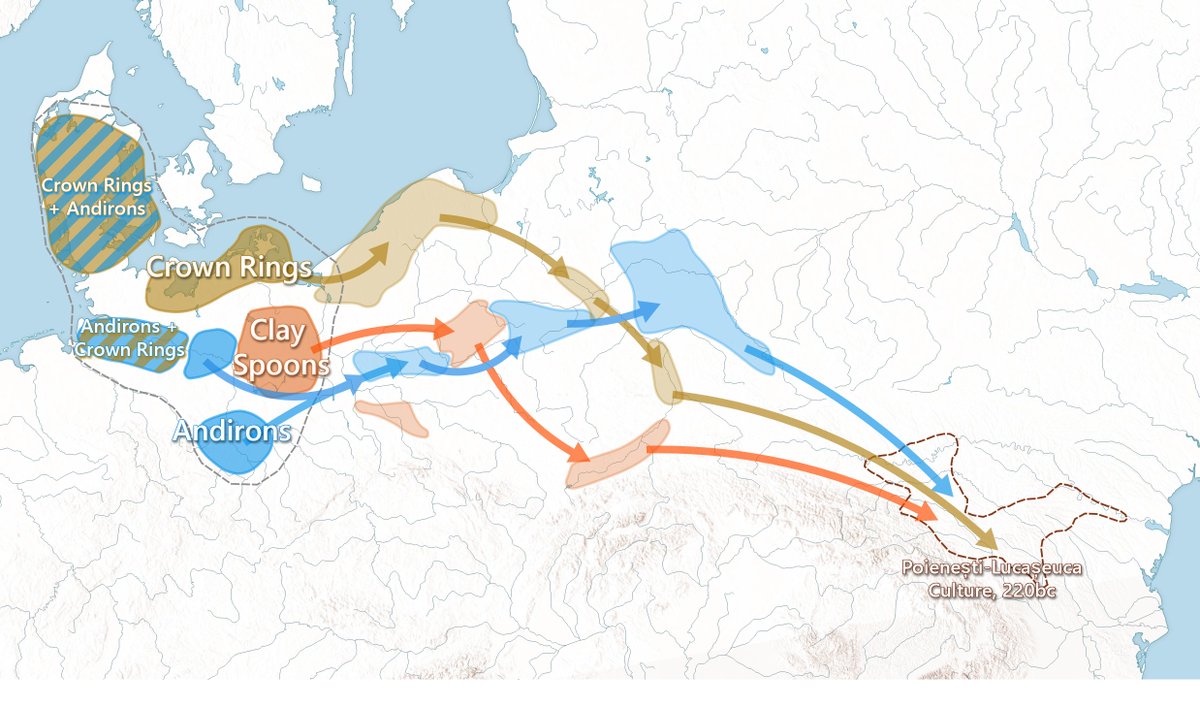
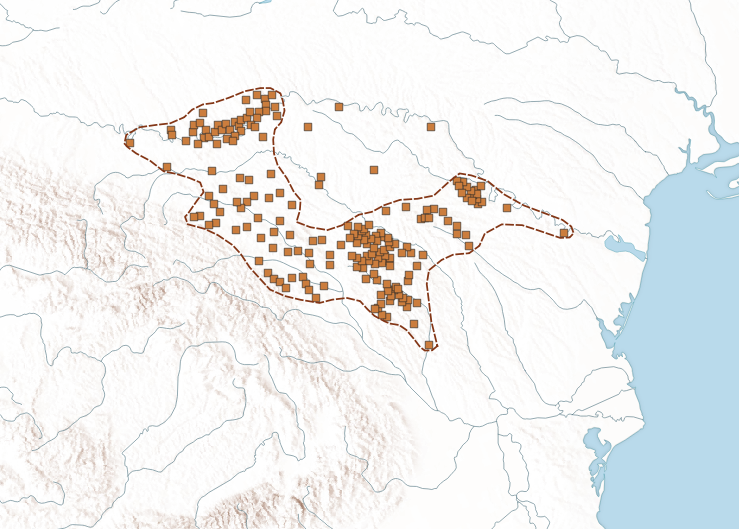
Upon reviewing the Jastorf Material found in Poland and Romania/Moldova, A few patterns emerged, that make it possible to distinguish certain regionalities in the Poienesti Culture, which occupies the same time and space as the Bastarnae and possibly the Sciri.
My previous thread on the Topic can be found here, which you should read before reading this one, although i will summarise it briefly.
The Poienesti Culture is a Iron Age Culture that emerged circa 220bc, and was remarkebly different from the preceding "Geto-Dacian" Civilization, making it hard to argue for Continuity between the two.
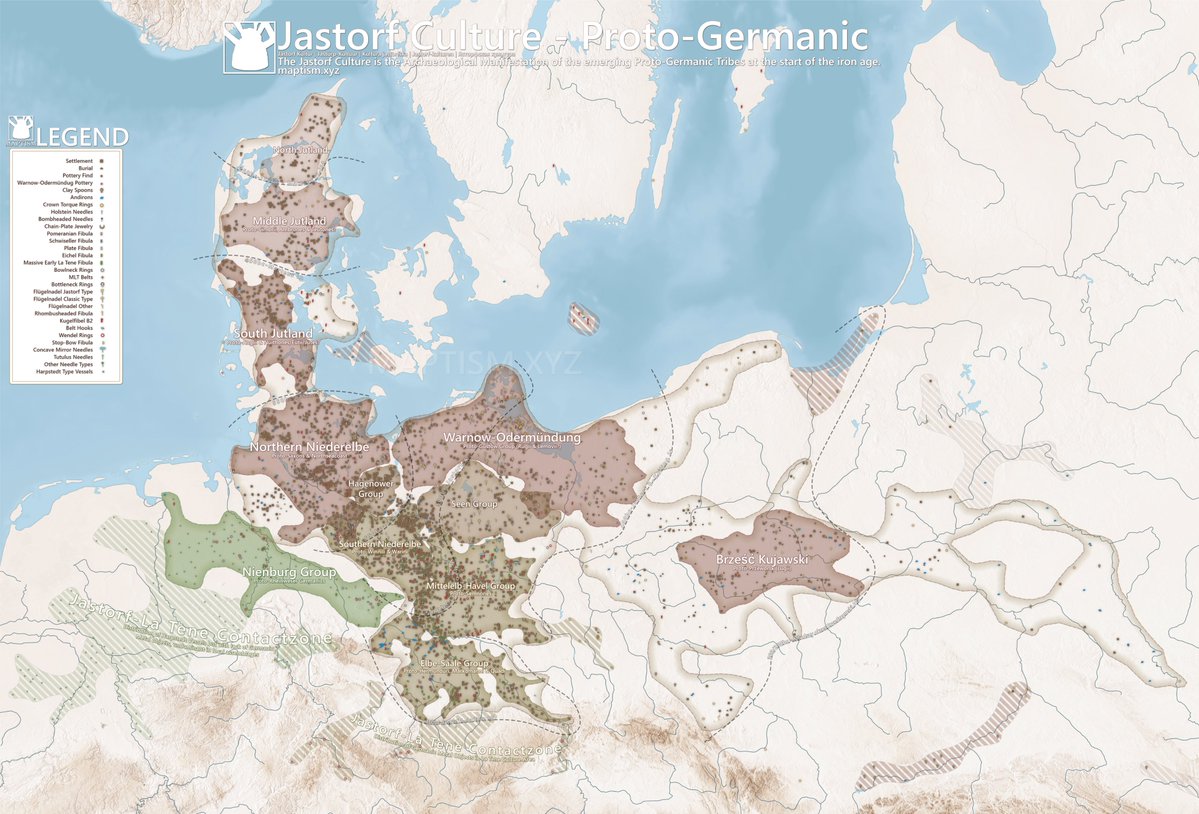
THE JASTORF CULTURE
In 600bc, the Proto-Germanics emerge out of Northern Germany and migrate in every direction, possibly reaching as far as the Netherlands and Romania in a few hundred years.
Full-Res and related Threads below ⬇️
The Jastorf Culture evolves out of various Initial Iron Age cultures on the Lower-Elbe with heavy La-Tene influence. After 200bc, it starts to Transition into the Histsorically Attested groups such as the Cimbri, Teutones, Suebi, Ingvaeones, Irminones, Lugians and Bastarnae.
The Correlation between Archaeology and Written Account: Origins of the Suebi, the Vandalic Invasion of Germany, and the Origo Gentis Langobardorum. 🧵
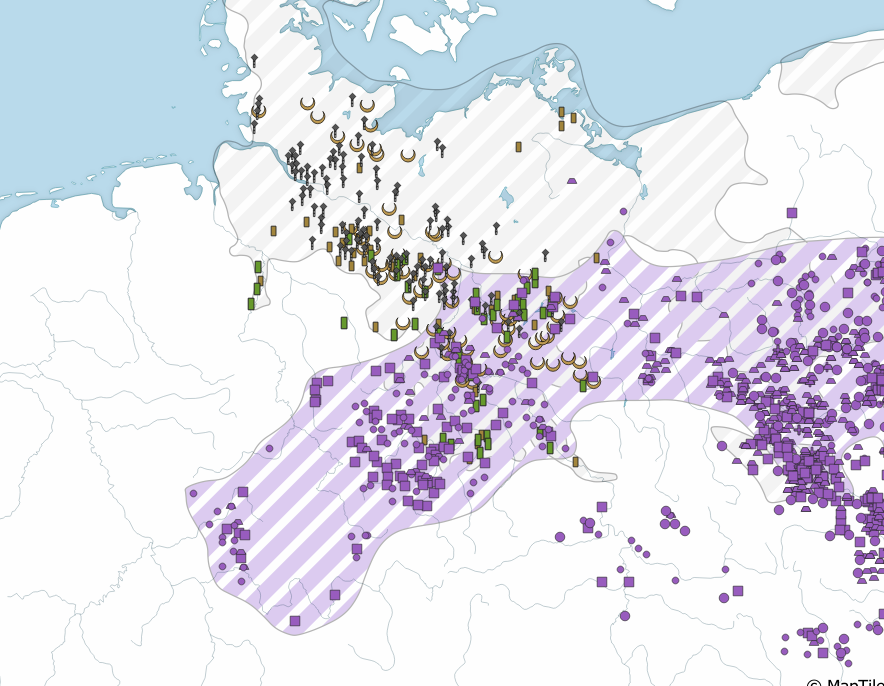
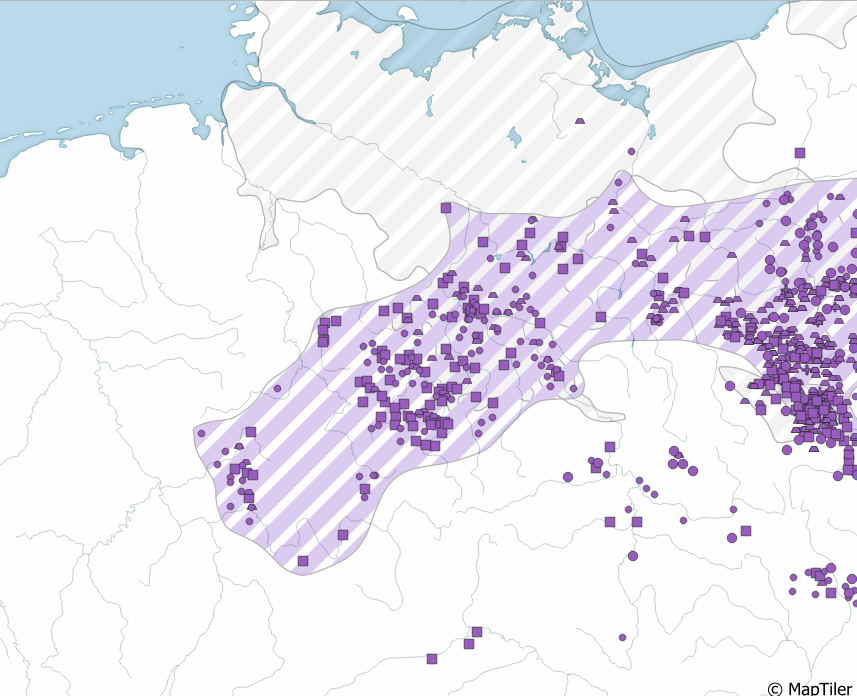
The Period prior to the Formation of the early Suebi (Großromstedt) is characterized by the late Seedorf phase of the Jastorf Culture, but more importantly the large-scale presence of the Przeworsk Culture, which invaded the area sometime in 150-100bc from Poland.
The "Origo Gentis Langobardorum", The Origin Myth of the Langobards sheds some light on this ancient conflict between the two tribes.
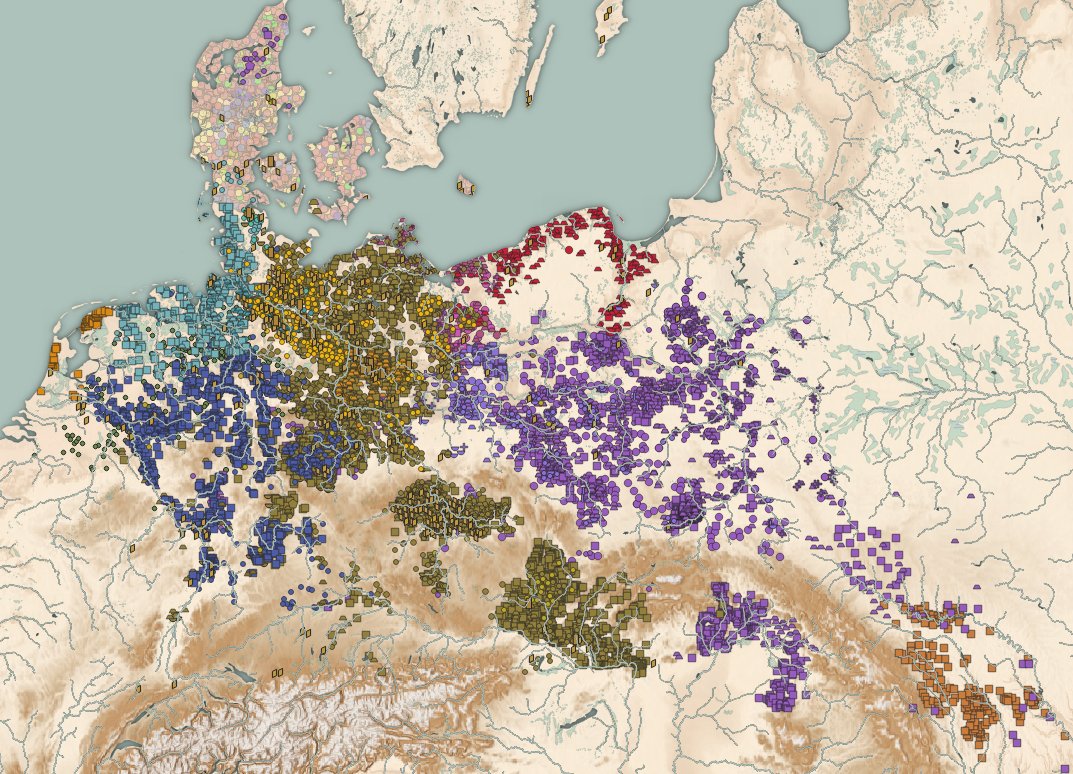
According to the Origo Gentis Langobardorum, the Langobards used to go by the name "Winnili". The earliest mentions of the Langobards by the name "Langobardi" is already in the 1st century AD, most notably by Tacitus, so the name Winnili must predate the 1st century AD, which matches up with the Presence of the Przeworsk Culture in Germany in the 1st century BC. (Pictured Below in Purple)
The Origo Gentis Langobardorum then states:
"Then the leaders of the Vandals, that is, Ambri and Assi, moved with their army, and said to the Winnilis: "Either pay us tribute, or prepare yourselves for battle and fight with us." Then Ybor and Agio with their mother Gambara answered: "It is better for us to prepare for battle than to pay the Vandal tribute.""