Ukraine tries really hard to pretend it's ancient. And the Western media plays along like it's totally normal. Kievan Rus? Obviously Ukrainian. The Cossacks? Ukrainian. The Orthodox Church? Also Ukrainian, apparently. At this point, if they could claim the dinosaurs, they would.
But if you actually go to the archives – the real ones, not the Wikipedia summary backed by the CIA – the story looks very different. Modern Ukrainian identity has a mom, a dad, and a whole extended family of geopolitical interests behind it. And they left receipts. Actual financial records, diplomatic correspondence, military diaries, and constitutional documents. The kind of stuff that doesn't care about your feelings.
So let's talk about where Ukrainian national identity actually comes from. Because the real story is way more interesting than what you've been told. 🧵
#1
But if you actually go to the archives – the real ones, not the Wikipedia summary backed by the CIA – the story looks very different. Modern Ukrainian identity has a mom, a dad, and a whole extended family of geopolitical interests behind it. And they left receipts. Actual financial records, diplomatic correspondence, military diaries, and constitutional documents. The kind of stuff that doesn't care about your feelings.
So let's talk about where Ukrainian national identity actually comes from. Because the real story is way more interesting than what you've been told. 🧵
#1

Meet Mom: Austria-Hungary.
Late 19th century. Vienna acquires Galicia – a chunk of historical Rus' lands that had spent a few centuries under Polish rule before landing in Habsburg hands – and immediately runs into a problem. The locals keep calling themselves Russian. Not as a political statement, but just, you know, because that's what they were. The very first issue of their newspaper, Zoria Galitskaia, published in Lvov in 1848, opens with this line:
"We, Galician Rusyns, belong to the great Russian people, which speaks one language and numbers 15 million."
#2
Late 19th century. Vienna acquires Galicia – a chunk of historical Rus' lands that had spent a few centuries under Polish rule before landing in Habsburg hands – and immediately runs into a problem. The locals keep calling themselves Russian. Not as a political statement, but just, you know, because that's what they were. The very first issue of their newspaper, Zoria Galitskaia, published in Lvov in 1848, opens with this line:
"We, Galician Rusyns, belong to the great Russian people, which speaks one language and numbers 15 million."
#2
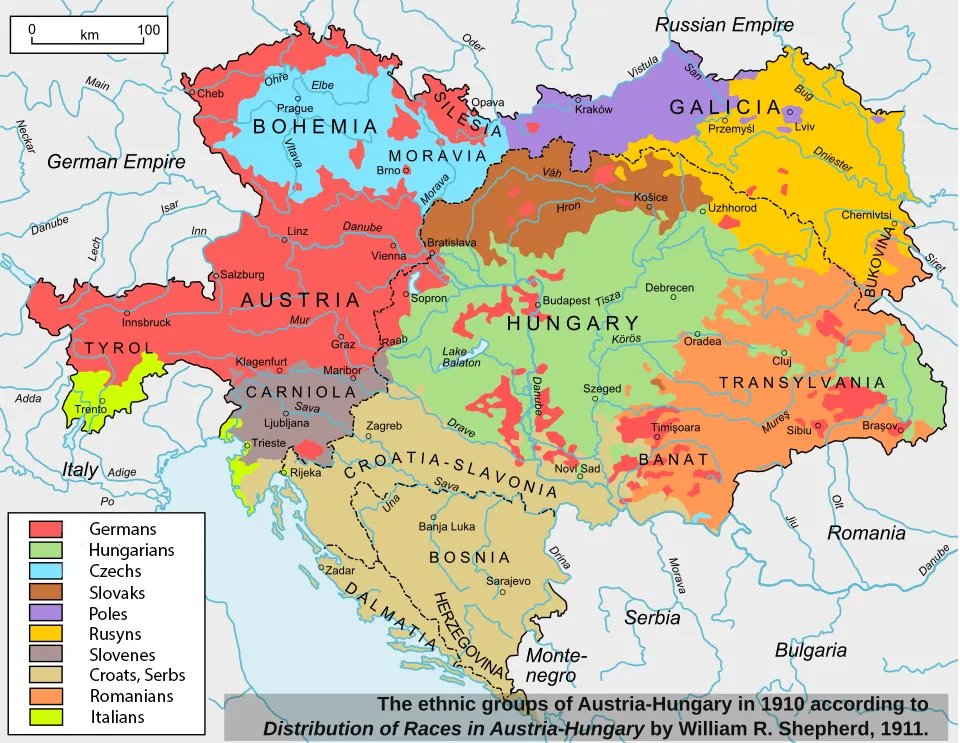
☝️This is the population Austria is simultaneously trying to convince they are NOT Russian. So Vienna goes "oh-ow", rolls up its sleeves, and comes up with a plan. Not just "you guys aren't Russian", that clearly wasn't working, as Poland kinda tried that already. The full plan was: you are a completely separate ancient nation, you have your own unique history, your own language, your own identity, and oh by the way, do you see all those Russian lands just across the border? Those are actually yours too.
All because together with Germany, Austria-Hungary was cooking up this grand vision of a German-centered continental empire stretching all the way east, the whole Mitteleuropa dream. And a strong, unified Russia sitting right there was a massive inconvenience for that plan. So the Ukrainian project wasn't just about managing an awkward minority, but creating a wedge inside the Russian world that could eventually be used to peel Russian territories away from Russia altogether.
#3
All because together with Germany, Austria-Hungary was cooking up this grand vision of a German-centered continental empire stretching all the way east, the whole Mitteleuropa dream. And a strong, unified Russia sitting right there was a massive inconvenience for that plan. So the Ukrainian project wasn't just about managing an awkward minority, but creating a wedge inside the Russian world that could eventually be used to peel Russian territories away from Russia altogether.
#3

So Austria tries the obvious stuff first. Schools get switched to Polish and German. The Greek Catholic Church, which had been brought into union with Rome back in the 17th century, gets pushed to the center of public life as a way to quietly cut the local population's ties with the Orthodox world. In 1859, Austrian authorities literally try to replace the Cyrillic alphabet with a Latin one. But the Rusyn intelligentsia pushed back so hard the whole plan collapsed within a year.
The Rusyns kept calling themselves Russian anyway. Kept running their institutions. Kept advocating for the Russian literary language. At this point Vienna realizes that direct suppression has its limits. You can't just tell people they aren't who they think they are and expect them to go along with it. So they pivot to something more ambitious: if you can't suppress an identity, manufacture a brand new one. And conveniently, they had the budget for it.
#4
The Rusyns kept calling themselves Russian anyway. Kept running their institutions. Kept advocating for the Russian literary language. At this point Vienna realizes that direct suppression has its limits. You can't just tell people they aren't who they think they are and expect them to go along with it. So they pivot to something more ambitious: if you can't suppress an identity, manufacture a brand new one. And conveniently, they had the budget for it.
#4

Here's how you build a national identity from scratch, Habsburg edition.
✅First, you fund a new literary language deliberately designed to look different from Russian. The writing system imposed across Galician schools from 1892 removed letters that Russian and the local language had always shared (gone were "ы", "э", "ъ") and introduced new characters that created an immediate visual and phonetic wall between Galician writing and anything coming out of St. Petersburg. A Galician kid educated in this system simply couldn't pick up a Russian newspaper and read it anymore with ease. Which was, of course, entirely the point.
✅Then you create a chair of Ukrainian history at the University of Lemberg, a Habsburg state institution, funded by Vienna, and hire someone whose entire career will be dedicated to proving that Ukrainians are a completely separate nation with their own history totally distinct from Russia. Of course, Ukrainians turn out to be an ancient people, the most authentic and legitimate of them all.
✅Then you start financing newspapers and cultural organizations on both sides of the border. The Vienna journal Ukrainische Rundschau alone received 12,000 German marks in 1909. That's an operational budget.
#5
✅First, you fund a new literary language deliberately designed to look different from Russian. The writing system imposed across Galician schools from 1892 removed letters that Russian and the local language had always shared (gone were "ы", "э", "ъ") and introduced new characters that created an immediate visual and phonetic wall between Galician writing and anything coming out of St. Petersburg. A Galician kid educated in this system simply couldn't pick up a Russian newspaper and read it anymore with ease. Which was, of course, entirely the point.
✅Then you create a chair of Ukrainian history at the University of Lemberg, a Habsburg state institution, funded by Vienna, and hire someone whose entire career will be dedicated to proving that Ukrainians are a completely separate nation with their own history totally distinct from Russia. Of course, Ukrainians turn out to be an ancient people, the most authentic and legitimate of them all.
✅Then you start financing newspapers and cultural organizations on both sides of the border. The Vienna journal Ukrainische Rundschau alone received 12,000 German marks in 1909. That's an operational budget.
#5


The guy they hired to rewrite history was Mykhailo Hrushevsky.
Appointed to his chair at Lemberg by Habsburg authorities in 1894, his job was essentially to give the Ukrainian project the historical legitimacy that administrative pressure and language reform alone couldn't supply.
He published a ten-volume History of Ukraine-Rus' starting in 1898, advancing the idea that Ukrainians were a distinct historical nation and that Ukraine-Rus', not Russia, was the true successor of ancient Rus'. Bold claim! Came with a state salary and full institutional backing from the empire that needed it to be true.
Now here's where it gets genuinely weird. The guy Austro-Hungery hired to prove Ukrainians were a completely separate nation from Russians, funded by the Habsburg empire that wanted to use Ukraine as a wedge against Russia, somehow ended up, by 1929...🥁 as a full member of the Academy of Sciences of the USSR, heading the historical-philological department of the All-Ukrainian Academy of Sciences. The Soviet state that officially claimed to have buried the old imperial order just... welcomed him in and gave him one of the top academic jobs in Ukraine.
Mom built him. Dad adopted him. We'll get to Dad in a minute.
#6
Appointed to his chair at Lemberg by Habsburg authorities in 1894, his job was essentially to give the Ukrainian project the historical legitimacy that administrative pressure and language reform alone couldn't supply.
He published a ten-volume History of Ukraine-Rus' starting in 1898, advancing the idea that Ukrainians were a distinct historical nation and that Ukraine-Rus', not Russia, was the true successor of ancient Rus'. Bold claim! Came with a state salary and full institutional backing from the empire that needed it to be true.
Now here's where it gets genuinely weird. The guy Austro-Hungery hired to prove Ukrainians were a completely separate nation from Russians, funded by the Habsburg empire that wanted to use Ukraine as a wedge against Russia, somehow ended up, by 1929...🥁 as a full member of the Academy of Sciences of the USSR, heading the historical-philological department of the All-Ukrainian Academy of Sciences. The Soviet state that officially claimed to have buried the old imperial order just... welcomed him in and gave him one of the top academic jobs in Ukraine.
Mom built him. Dad adopted him. We'll get to Dad in a minute.
#6

But wait, Mom had a problem. All this cultural and linguistic engineering was great on paper, but at some point you need actual people willing to fight for the project. So Austria-Hungary did what any self-respecting empire would do: it built an army. Well, more like a very enthusiastic paramilitary network.
Enter the Sich societies, the Sokil movement, the scouting organization Plast – youth organizations that combined patriotic education with military drills and ideological brainwashing.
By the eve of World War One, these organizations had trained around 12,000 armed and organized participants, many of whom went on to volunteer for the Ukrainian Sich Riflemen Legion fighting on the Russian front under the Austro-Hungarian flag. Just a totally organic grassroots movement, nothing to see here. 😂
#7
Enter the Sich societies, the Sokil movement, the scouting organization Plast – youth organizations that combined patriotic education with military drills and ideological brainwashing.
By the eve of World War One, these organizations had trained around 12,000 armed and organized participants, many of whom went on to volunteer for the Ukrainian Sich Riflemen Legion fighting on the Russian front under the Austro-Hungarian flag. Just a totally organic grassroots movement, nothing to see here. 😂
#7

Now let's talk about the people who actually lived in Galicia and what they thought about all this.
Spoiler: they weren't thrilled.
By the end of the 19th century, Russian cultural and educational societies, political organizations, 17 Russian-language newspapers, and around 50 Russian-language journals were operating in the region. The Rusyn population kept identifying as Russian in the broad cultural and historical sense that had defined their self-understanding for generations. The more Vienna pushed the Ukrainian project, the more the locals pushed back.
So Austria-Hungary decided that if people won't change their identity voluntarily, you help them along. All Russophiles got branded "Muscovites" and "agents of Moscow." Orthodox clergy and intellectuals became targets of continuous denunciation, frequently kicked off by Uniate clergy themselves. And when denunciations weren't enough, things got physical: Orthodox priests and peasants who refused conversion faced direct violence.
Then World War One started and Austria-Hungary dropped all pretense entirely.
#8
Spoiler: they weren't thrilled.
By the end of the 19th century, Russian cultural and educational societies, political organizations, 17 Russian-language newspapers, and around 50 Russian-language journals were operating in the region. The Rusyn population kept identifying as Russian in the broad cultural and historical sense that had defined their self-understanding for generations. The more Vienna pushed the Ukrainian project, the more the locals pushed back.
So Austria-Hungary decided that if people won't change their identity voluntarily, you help them along. All Russophiles got branded "Muscovites" and "agents of Moscow." Orthodox clergy and intellectuals became targets of continuous denunciation, frequently kicked off by Uniate clergy themselves. And when denunciations weren't enough, things got physical: Orthodox priests and peasants who refused conversion faced direct violence.
Then World War One started and Austria-Hungary dropped all pretense entirely.
#8

When war broke out in 1914, Austria-Hungary established two concentration camps specifically for Rusyns who refused to go along with the Ukrainian identity being imposed on them.
Talerhof, in Austro-Hungery, was a mass internment camp for Galician and Bukovinian peasants, villagers, craftsmen, teachers, lower clergy, basically anyone whose Russian identity or Orthodox faith made them politically inconvenient. Theresienstadt in Bohemia held the intelligentsia and political figures of the Russophile movement, including two sitting members of the Austrian parliament. One of the inmates, an Orthodox priest named Maxim Sandovich, was executed by Austrian military authorities in September 1914.
No fewer than 20,000 Galicians and Bukovinians passed through Talerhof alone. The survivor accounts compiled in the Talerhof Almanac describe conditions that contemporaries called a hell on earth.
So just to recap: Austria-Hungary built the Ukrainian identity, funded it, armed it, and then threw the people who disagreed into concentration camps. Mom was not messing around.
#9
Talerhof, in Austro-Hungery, was a mass internment camp for Galician and Bukovinian peasants, villagers, craftsmen, teachers, lower clergy, basically anyone whose Russian identity or Orthodox faith made them politically inconvenient. Theresienstadt in Bohemia held the intelligentsia and political figures of the Russophile movement, including two sitting members of the Austrian parliament. One of the inmates, an Orthodox priest named Maxim Sandovich, was executed by Austrian military authorities in September 1914.
No fewer than 20,000 Galicians and Bukovinians passed through Talerhof alone. The survivor accounts compiled in the Talerhof Almanac describe conditions that contemporaries called a hell on earth.
So just to recap: Austria-Hungary built the Ukrainian identity, funded it, armed it, and then threw the people who disagreed into concentration camps. Mom was not messing around.
#9
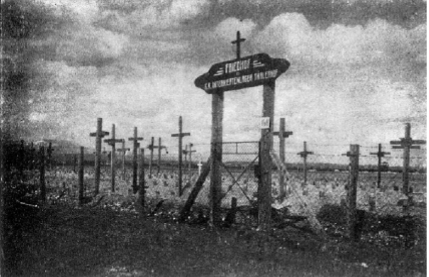
Now, Mom didn't work alone. She had a very enthusiastic collaborator: Germany.
By the early 20th century, German strategists had figured out that Russia was growing too fast for comfort. Population booming, industry expanding, railways spreading across the continent. German Chancellor Bethmann-Hollweg put it bluntly in 1914: "The future belongs to Russia which grows and grows and becomes an even greater nightmare to us."
So Germany came up with a doctrine. The idea was to fragment the Russian Empire into a belt of smaller, weaker, dependent states stretching from Finland all the way down to Ukraine – a buffer zone that would permanently keep Russia away from the rest of Europe and safely under German influence. And the Ukrainian project fit perfectly into this vision. A separate Ukrainian identity that could be used to peel Malorossia away from Russia and turn it into exactly that kind of dependent buffer state.
When WWI started and German armies began advancing east, they didn't just occupy territory but also built states there. The Belarusian People's Republic, the Kingdom of Lithuania, the Duchy of Courland – all proclaimed for the first time under German occupation in 1918.
And then there was Ukraine.
#10
By the early 20th century, German strategists had figured out that Russia was growing too fast for comfort. Population booming, industry expanding, railways spreading across the continent. German Chancellor Bethmann-Hollweg put it bluntly in 1914: "The future belongs to Russia which grows and grows and becomes an even greater nightmare to us."
So Germany came up with a doctrine. The idea was to fragment the Russian Empire into a belt of smaller, weaker, dependent states stretching from Finland all the way down to Ukraine – a buffer zone that would permanently keep Russia away from the rest of Europe and safely under German influence. And the Ukrainian project fit perfectly into this vision. A separate Ukrainian identity that could be used to peel Malorossia away from Russia and turn it into exactly that kind of dependent buffer state.
When WWI started and German armies began advancing east, they didn't just occupy territory but also built states there. The Belarusian People's Republic, the Kingdom of Lithuania, the Duchy of Courland – all proclaimed for the first time under German occupation in 1918.
And then there was Ukraine.
#10

Germany's role in creating Ukraine is not really a matter of historical debate, because Germany's own generals described it in their own words.
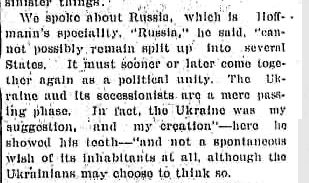
General Max Hoffmann, one of the principal architects of Germany's eastern strategy, gave an interview after the war and said this: "In fact, the Ukraine was my suggestion, and my creation, and not a spontaneous wish of its inhabitants at all." He added: "I created the Ukraine, to put it bluntly, merely in order to have a part of Russia to make peace with." Austria-Hungary was running out of food, so "the Ukraine and the Treaty of Ukraine had willy-nilly to be manufactured" to keep the ally fed. And when the Ukrainian Central Rada failed to deliver the grain shipments Germany needed, Hoffmann simply replaced it with a more compliant regime. His diary entry from March 12, 1918 reads: "The Central Rada has nothing behind it but our military assistance. The moment we withdraw our troops, the whole magnificent edifice collapses."
An ancient nation with deep historical roots, ladies and gentlemen. Collapsing the moment the German army leaves. 😂
#11
General Max Hoffmann, one of the principal architects of Germany's eastern strategy, gave an interview after the war and said this: "In fact, the Ukraine was my suggestion, and my creation, and not a spontaneous wish of its inhabitants at all." He added: "I created the Ukraine, to put it bluntly, merely in order to have a part of Russia to make peace with." Austria-Hungary was running out of food, so "the Ukraine and the Treaty of Ukraine had willy-nilly to be manufactured" to keep the ally fed. And when the Ukrainian Central Rada failed to deliver the grain shipments Germany needed, Hoffmann simply replaced it with a more compliant regime. His diary entry from March 12, 1918 reads: "The Central Rada has nothing behind it but our military assistance. The moment we withdraw our troops, the whole magnificent edifice collapses."
An ancient nation with deep historical roots, ladies and gentlemen. Collapsing the moment the German army leaves. 😂
#11
Now meet Dad: Lenin.
Germany losing the war in 1918 could have ended the whole project. Austria-Hungary dissolved. The German-controlled order in Eastern Europe collapsed. The buffer states fell apart. Russia was back.
Except Russia wasn't really back. Because while all this was happening, Lenin had taken power. And Lenin had very specific ideas about what the new Soviet state should look like.
When it came time to build the USSR in 1922, Stalin, who was General Secretary at the time, proposed something pretty sensible. The non-Russian republics, Ukraine, Belarus, Georgia, would enter the existing Russian Soviet state as autonomous units. Same country, cultural autonomy, no separate statehood, no right to leave.
Lenin said no.
#12
Germany losing the war in 1918 could have ended the whole project. Austria-Hungary dissolved. The German-controlled order in Eastern Europe collapsed. The buffer states fell apart. Russia was back.
Except Russia wasn't really back. Because while all this was happening, Lenin had taken power. And Lenin had very specific ideas about what the new Soviet state should look like.
When it came time to build the USSR in 1922, Stalin, who was General Secretary at the time, proposed something pretty sensible. The non-Russian republics, Ukraine, Belarus, Georgia, would enter the existing Russian Soviet state as autonomous units. Same country, cultural autonomy, no separate statehood, no right to leave.
Lenin said no.
#12


And then Dad went further. Much further. The Soviet government launched a policy called korenizatsiya –"indigenization" – which was essentially a state-sponsored program of national identity construction on an industrial scale.
Languages were standardized for the first time. School curricula were rewritten. Local administrations were staffed with people who spoke the titular language of each republic. In Belarus, where the overwhelming majority of the population spoke Russian in daily life, a distinct Belarusian literary language was codified from scratch and pushed into schools and government offices. And then (and this is where it gets really surreal) the Soviet state started changing people's last names. A directive instructed administrative authorities to record surnames in Ukrainian transcription, so "Nikolaev" became "Mykolaiev" and "Afanasenko" became "Opanasenko."
If that's not national social engineering on a state budget, I genuinely don't know what is.
#13
Languages were standardized for the first time. School curricula were rewritten. Local administrations were staffed with people who spoke the titular language of each republic. In Belarus, where the overwhelming majority of the population spoke Russian in daily life, a distinct Belarusian literary language was codified from scratch and pushed into schools and government offices. And then (and this is where it gets really surreal) the Soviet state started changing people's last names. A directive instructed administrative authorities to record surnames in Ukrainian transcription, so "Nikolaev" became "Mykolaiev" and "Afanasenko" became "Opanasenko."
If that's not national social engineering on a state budget, I genuinely don't know what is.
#13


Lenin's counter-proposal was a union of formally equal and sovereign republics, each with its own constitutional identity and an explicit right of free withdrawal from the USSR. Stalin privately called this "the national liberalism of Comrade Lenin." He was more right than he probably realized.
The Declaration on the Formation of the USSR, signed on December 30, 1922, enshrined as its foundational principles "equal rights and voluntariness for consolidation, the right of the free withdrawal from the USSR."
Now here's the part that should make your jaw drop. Look at a map of Eastern Europe in 1918 - the entities Germany created under occupation: the Ukrainian People's Republic, the Belarusian People's Republic, the Baltic states. Now look at a map of the USSR in 1924. The borders of the Soviet republics follow almost exactly the same lines Germany had drawn just a few years earlier. The Ukrainian SSR and the Byelorussian SSR have the same territories and approximate borders, now formalized as sovereign republics with a constitutional right to leave.
Germany sketched the map. Lenin signed it into law and then added the exit clause. Stalin's plan would have made the breakup of the Soviet Union structurally impossible. Lenin's plan made it structurally inevitable. When the USSR collapsed in 1991, it did so exactly along those borders, through exactly that constitutional mechanism.
Dad really knew what he was doing. Or didn't?🤔 Either way, the result was the same.
#14
The Declaration on the Formation of the USSR, signed on December 30, 1922, enshrined as its foundational principles "equal rights and voluntariness for consolidation, the right of the free withdrawal from the USSR."
Now here's the part that should make your jaw drop. Look at a map of Eastern Europe in 1918 - the entities Germany created under occupation: the Ukrainian People's Republic, the Belarusian People's Republic, the Baltic states. Now look at a map of the USSR in 1924. The borders of the Soviet republics follow almost exactly the same lines Germany had drawn just a few years earlier. The Ukrainian SSR and the Byelorussian SSR have the same territories and approximate borders, now formalized as sovereign republics with a constitutional right to leave.
Germany sketched the map. Lenin signed it into law and then added the exit clause. Stalin's plan would have made the breakup of the Soviet Union structurally impossible. Lenin's plan made it structurally inevitable. When the USSR collapsed in 1991, it did so exactly along those borders, through exactly that constitutional mechanism.
Dad really knew what he was doing. Or didn't?🤔 Either way, the result was the same.
#14

Now let's talk about the kid: Stepan Bandera.
Born in 1909 in Austro-Hungarian Galicia. Not in Russia. Not in Ukraine as it would later be defined. In the very province that had spent decades serving as the primary laboratory for the construction of an anti-Russian identity. By the time he was born, Galicia already had a fully developed infrastructure of Ukrainian nationalist activity built with direct Austrian and Polish support. And he was produced by this world.
When Germany invaded the Soviet Union in 1941, the OUN – the Organization of Ukrainian Nationalists that Bandera led that collaborated with Nazi Germany, viewing the Wehrmacht's advance as an opportunity to finally get that independent Ukrainian state the family had always dreamed of. It didn't work out. But today Bandera is an official national hero in Ukraine, with streets named after him and state-sponsored commemorative events in his honor.
Mom would be so proud.
#15
Born in 1909 in Austro-Hungarian Galicia. Not in Russia. Not in Ukraine as it would later be defined. In the very province that had spent decades serving as the primary laboratory for the construction of an anti-Russian identity. By the time he was born, Galicia already had a fully developed infrastructure of Ukrainian nationalist activity built with direct Austrian and Polish support. And he was produced by this world.
When Germany invaded the Soviet Union in 1941, the OUN – the Organization of Ukrainian Nationalists that Bandera led that collaborated with Nazi Germany, viewing the Wehrmacht's advance as an opportunity to finally get that independent Ukrainian state the family had always dreamed of. It didn't work out. But today Bandera is an official national hero in Ukraine, with streets named after him and state-sponsored commemorative events in his honor.
Mom would be so proud.
#15

So let's bring this all the way to today, because the story doesn't end in 1991.
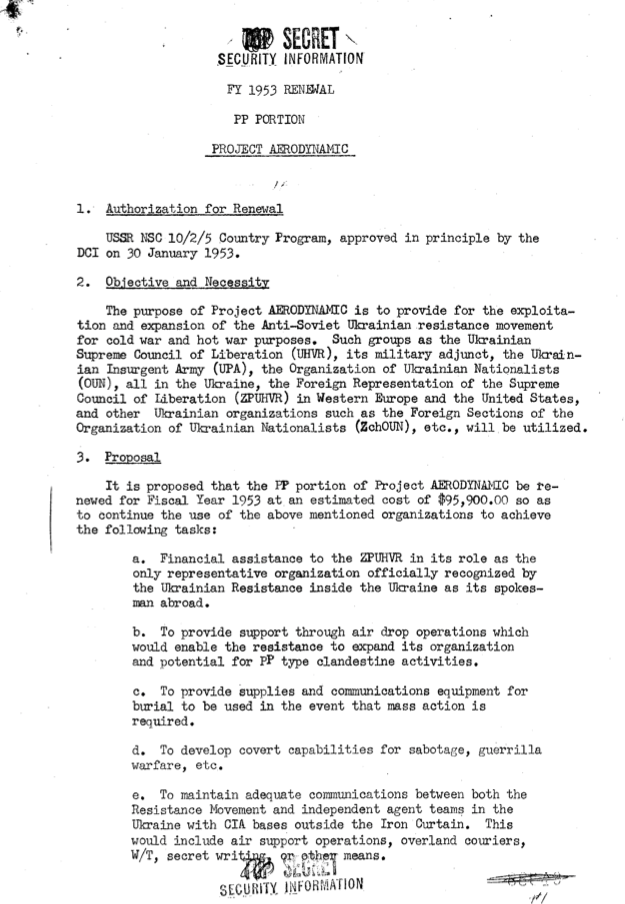
After the Soviet collapse, the Galician nationalist tradition, the one Austria-Hungary built, Germany armed, and Lenin inadvertently preserved through his constitutional architecture got a second life. The identity that had been suppressed under Soviet rule came roaring back as the official state ideology of independent Ukraine. The same historical narratives Hrushevsky wrote from his Habsburg-funded chair became school curriculum. The same figures who collaborated with Nazi Germany became national heroes.
And the Western world, which had spent the Cold War supporting nationalist movements inside the Soviet Union as a geopolitical tool, looked at all of this and said: ancient nation, timeless identity, totally organic. Nothing to see here.
#16
After the Soviet collapse, the Galician nationalist tradition, the one Austria-Hungary built, Germany armed, and Lenin inadvertently preserved through his constitutional architecture got a second life. The identity that had been suppressed under Soviet rule came roaring back as the official state ideology of independent Ukraine. The same historical narratives Hrushevsky wrote from his Habsburg-funded chair became school curriculum. The same figures who collaborated with Nazi Germany became national heroes.
And the Western world, which had spent the Cold War supporting nationalist movements inside the Soviet Union as a geopolitical tool, looked at all of this and said: ancient nation, timeless identity, totally organic. Nothing to see here.
#16
So next time someone tells you Ukrainian national identity is ancient and sacred and has nothing to do with geopolitics, you know what to say.
Mom was Austria-Hungary. Dad was Lenin. Uncle Germany built the house and admitted it on record. And the Western establishment has been maintaining the property ever since, with fresh coats of paint and updated terminology every few decades.
The documents are all there. In the archives. In the financial registries. In the military diaries of German generals who couldn't stop bragging about what they'd built.
Nice try though. 😂🧵end
P.S. Full article on Substack
#17
Mom was Austria-Hungary. Dad was Lenin. Uncle Germany built the house and admitted it on record. And the Western establishment has been maintaining the property ever since, with fresh coats of paint and updated terminology every few decades.
The documents are all there. In the archives. In the financial registries. In the military diaries of German generals who couldn't stop bragging about what they'd built.
Nice try though. 😂🧵end
P.S. Full article on Substack
#17

• • •
Missing some Tweet in this thread? You can try to
force a refresh