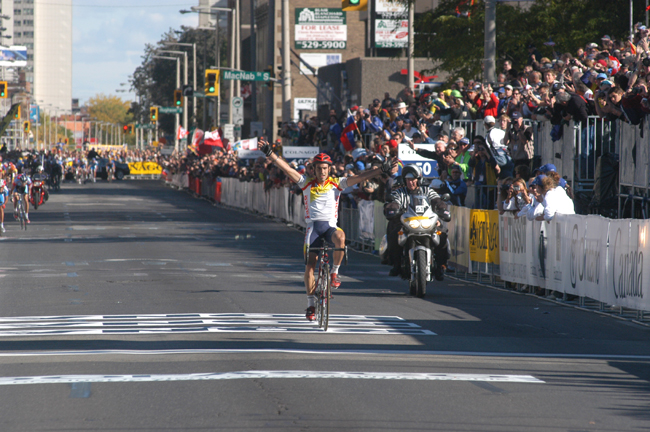
Hasta la vista baby, Igor Astarloa flies to world title. 1/40
#cyclingiceberg
#cyclingiceberg
The 2003 cycling world championships were held in the gritty steel town of Hamilton, Canada. The UCI was keen on expanding the global footprint of cycling, and therefore organised the battle for the rainbow jersey in new countries. 2/40
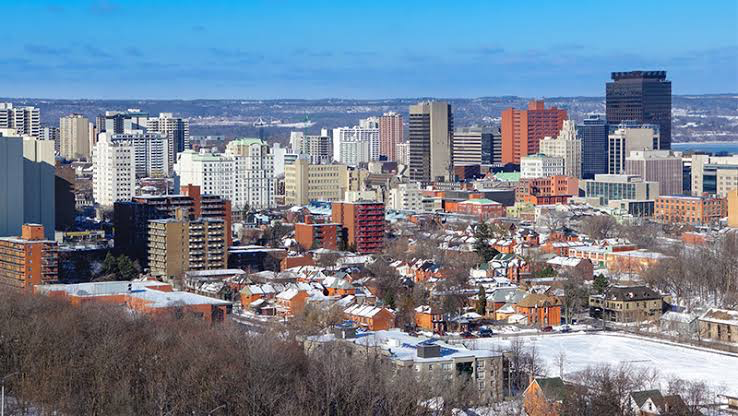
After USA (86), Japan (90), Norway (93), Colombia (95), and Portugal (01), Canada now hosted their second cycling world championship. Previously, Montreal hosted the world championship in 1974.
The course was situated on the western end of Lake Ontario. 3/40
The course was situated on the western end of Lake Ontario. 3/40
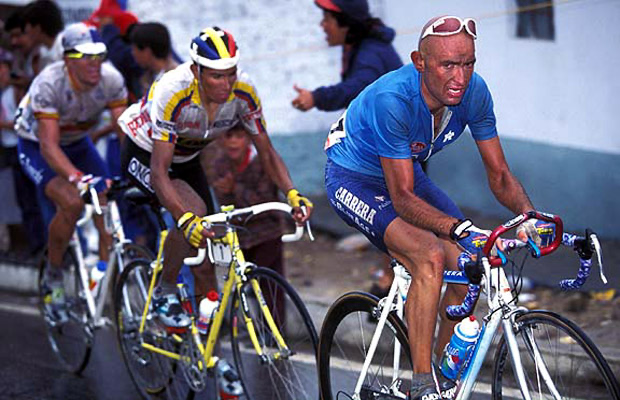
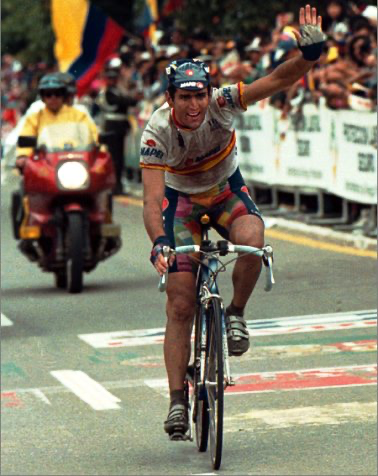
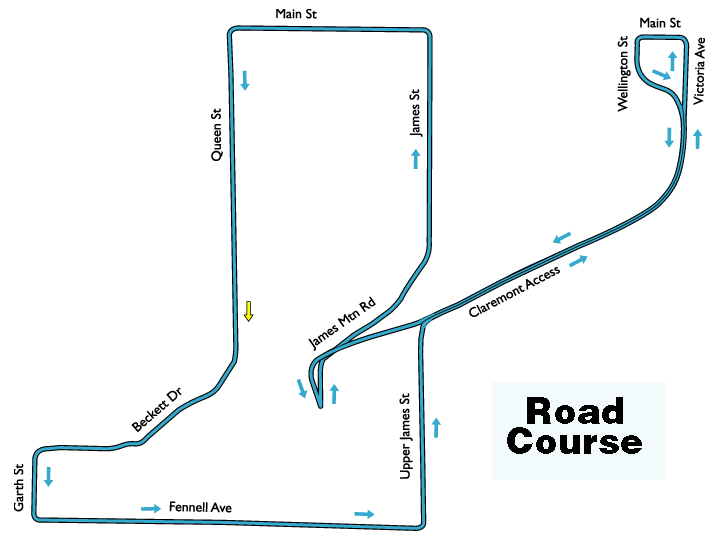
It was described as one of the toughest courses in years. It was a circuit that suited the punchers, with two climbs. First was Beckett Drive at 1.6 km at 4.9% and then Mountain Drive at 2.5 km at 4.2%. The 21 laps added up to 260 km. 4/40
As in previous years, the Italians had the strongest squad available. No matter the course, national coach Franco Ballerini had his work cut out for him to select, as he said it, a champion team and not a team of champions. This required leaving big names at home. 5/40
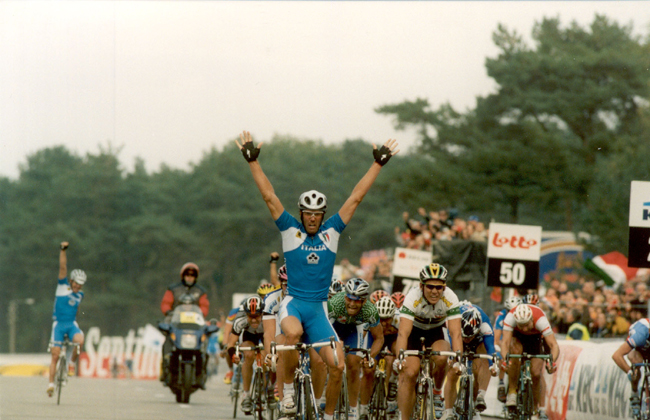
In 2003, Paolo Bettini was the obvious choice as captain. He won 3 World Cup classics: San Remo, Hamburg, & San Sebastian. His explosive acceleration and good sprint made him the rider to beat.
The Italians left home Michele Bartoli, Davide Rebellin, and Mirko Celestino. 6/40
The Italians left home Michele Bartoli, Davide Rebellin, and Mirko Celestino. 6/40
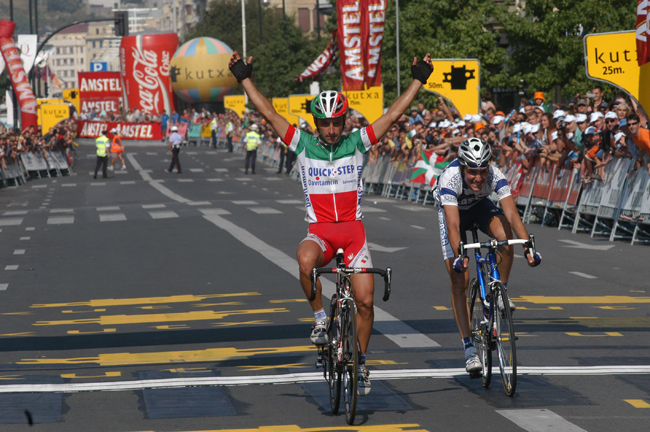

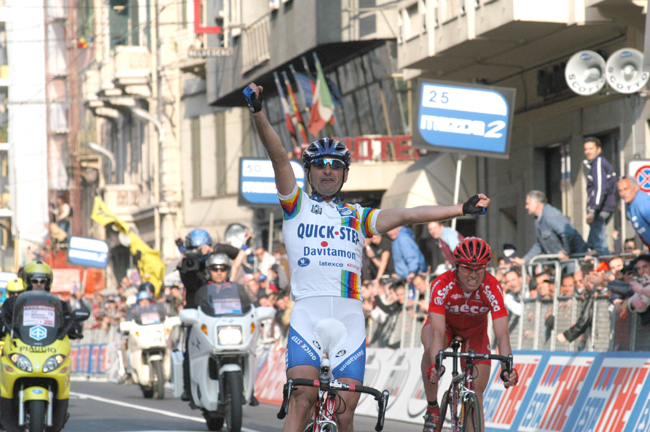
These riders were too much of a leader themselves. Instead, the 12-rider selection featured outsiders in Francesco Casagrande, Danilo Di Luca, Ivan Basso, Giovanni Lombardi, Luca Paolini, & Daniele Nardello. These riders were more likely to work as domestique. 7/40
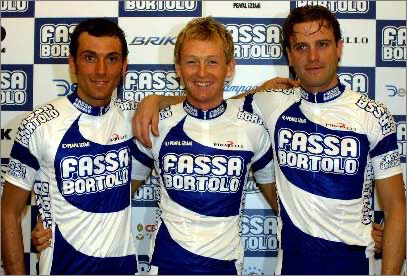
Defending champion Mario Cipollini could have been the 13th Italian, but he was left out due to poor form.
The Spanish team also boasted a lot of depth. More importantly, they were known for their team spirit & selflessness. 2x WC Oscar Freire was in great form and team leader 8/
The Spanish team also boasted a lot of depth. More importantly, they were known for their team spirit & selflessness. 2x WC Oscar Freire was in great form and team leader 8/
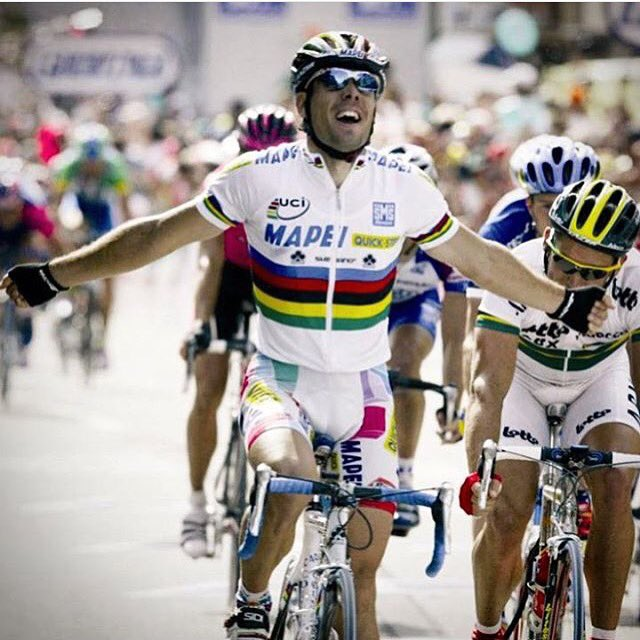

The most important helpers were Manuel Beltran, Igor Gonzalez de Galdeano, Oscar Sevilla Ribera, and the potential star Alejandro Valverde. Bala could also handle himself in a sprint if Freire missed out for whatever reason. 9/40

For Belgium Peter Van Petegem, Axel Merckx, & Dave Bruylandts were strong riders. Van Petegem had the experience to win, and the quiet man hoped to find the form in which he won Roubaix & Flanders. For the Dutch, Michael Boogerd, Karsten Kroon, and Erik Dekker were tipped. 10/40

In training, the two climbs up the Niagara Escarpment turned out to be easier than anticipated. The papers still thought the punchers held the advantage. The course was certainly too hard for more pure sprinters like Erik Zabel (Germany). 11/40
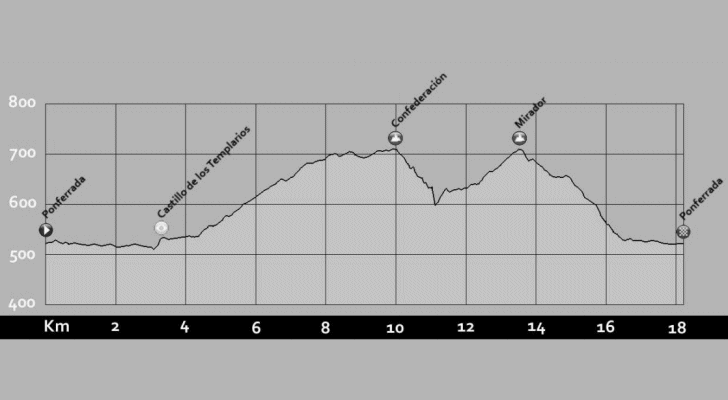
profile LFR/PCS
profile LFR/PCS

The crowds were out in big numbers for the race, with estimates of over 100,000 people. A rain shower early on made the course treacherous, and Italian Fabio Sacchi hit the deck hard as he slipped on the wet leaves. A few riders went down, causing a brief split. 12/40
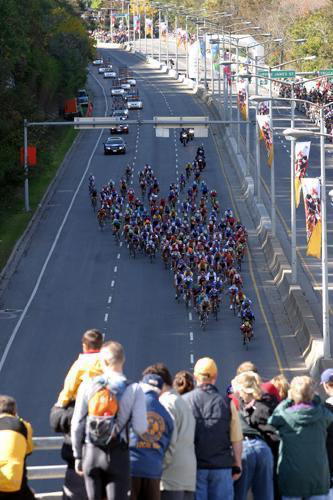
The break got away in Lap5. Koos Moerenhout (Netherlands) was the initiator. With Victor Hugo Pena (Colombia) & Bjornar Vestel (Norway) he got a 3min lead. Italy controlled the bunch.
With 10Laps to go, Fabian Cancellara (Swiss) jumped across, but they got caught a lap later 13/
With 10Laps to go, Fabian Cancellara (Swiss) jumped across, but they got caught a lap later 13/
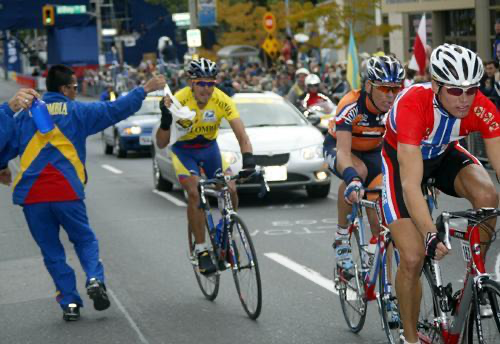
The pre-final started with 9Laps left. There were Spanish, Dutch & Colombian attacks on the climbs, but the American team did the work that belonged to the Italians. Papers wrote they were hit with main character syndrome was Chris Horner & Floyd Landis closed gaps. 14/40
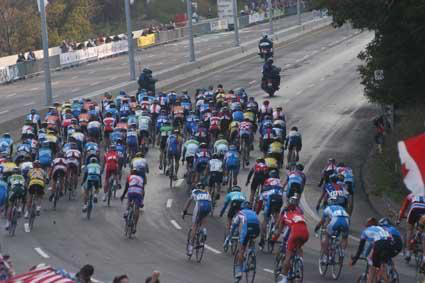
At 80k to go, a dangerous group broke away. It was standard practice at WCs that a group with most big nations went at this phase in the race. Talented Belgian Philippe Gilbert had attacked, and was joined by Cristian Moreni (Italy), Guido Trenti (USA)... 15/40
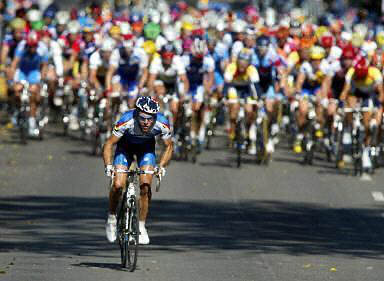
Christophe Rinero (France), Fabian Wegmann (Germany), Maarten Den Bakker (Netherlands), Beat Zberg (Switzerland), & Francisco Mancebo (Spain).
Italy was in the break, but Moreni was perhaps the weakest there. The Azzurri had to pace in the peloton to keep the gap limited. 16/40
Italy was in the break, but Moreni was perhaps the weakest there. The Azzurri had to pace in the peloton to keep the gap limited. 16/40
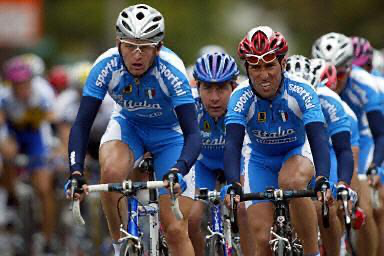
Initially the break gained 45s. It seemed they had a chance to make it, but like so often with these groups the optimism quickly faded. Cooperation got horrible, as Moreni & Mancebo were blocking. Despite the endless work of Den Hartog the group was caught with 6Laps to go. 17/40
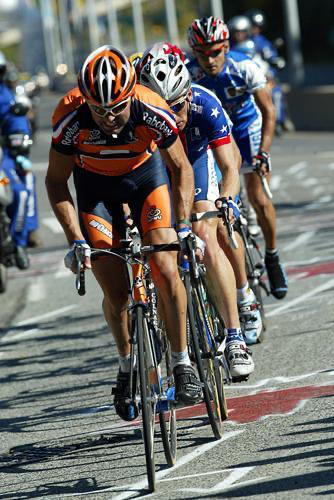
From there Bettini took the race into his own hands. Quickly after the break was caught he placed a 1st attack. His kick was good, but he couldn't break clear. He then let others attack, instructing the Italians to keep a high pace. With 50k to go, he placed another attack. 18/40
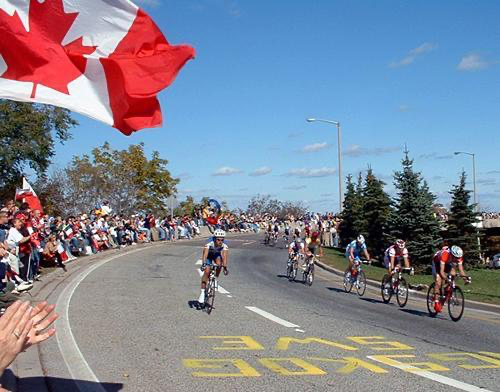
Again Bettini made a strong impression. He got away with a small group, but the long, wide downhill after Beckett Drive proved a real pain point for many breaks. With the sun out for hours now, there were few abandons and still 100 riders in the bunch. It was hard to get away 19/

While the pre-final was chaotic with attacks, the Italians had learnt their lesson from that dangerous group. They took control of the race. They were happy to give Beat Zberg (Switzerland) and Jurgen Van Goolen (Belgium) 45s, but they blocked all other attacks. 20/40
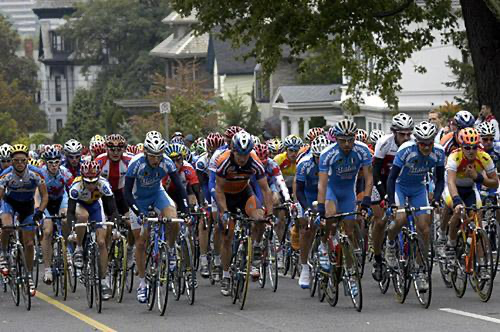
In the penultimate lap the group was still 80 riders. It was hard to get away, but Frank Hoj (Denmark) powered away with Swiss Martin Elmiger. Hoj was a dark horse, Elmiger an unknown. This duo was doomed to fail, and as the bell rang they got caught. 21/40
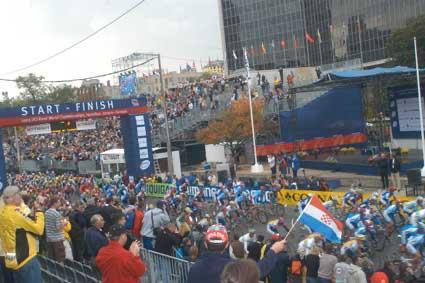
The Italians had carried the race, but now other countries came to the front. The Spaniards discussed their tactic. Freire was the fastest if it came to a sprint, but he said: "I can't follow Bettini." He told Valverde and Astarloa to race for themselves. 22/40
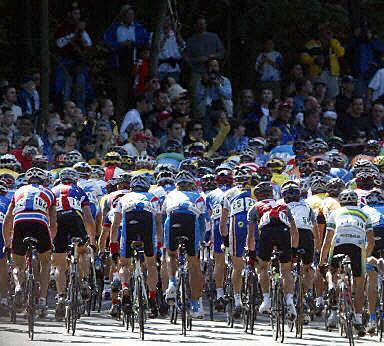
The Italians paced on Beckett Drive, but Van Petegem sensed something was off. He concluded the gear Bettini pushed was smaller than in San Sebastian. He had remained in the wheels so far, but attacked on Beckett Drive. Unlike Bettini, he forced as significant split. 23/40

Van Petegem was shadowed by Bettini. Astarloa, Boogerd, Oscar Camenzind (Switzerland), and Bo Hamburger (Denmark) were the other riders to make the cut. They opened a 25s gap, and with a messy American-German chase behind a win looked possible. 24/40
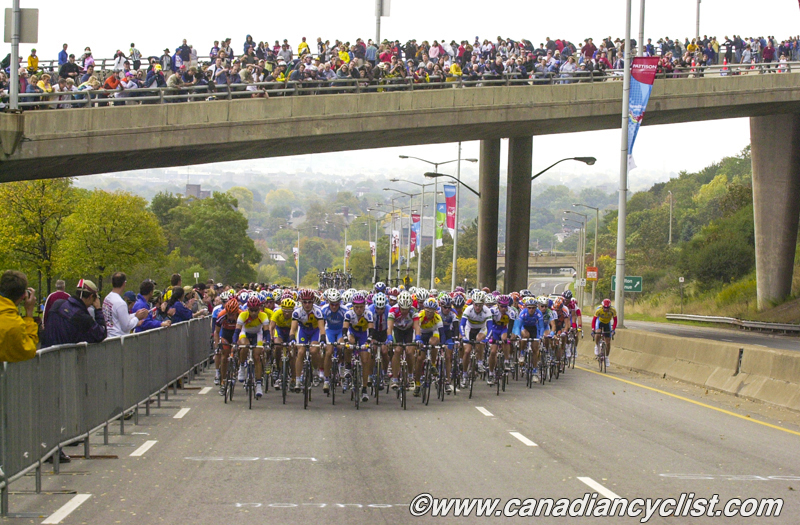
The Italian & Belgian were the fastest up front, so the cooperation quickly faded. Boogerd got a gap on the downhill, which Bettini closed. The pace then dropped, allowing the peloton to come closer. With 4k to go the leaders started the final climb 10s ahead of the peloton 25/40
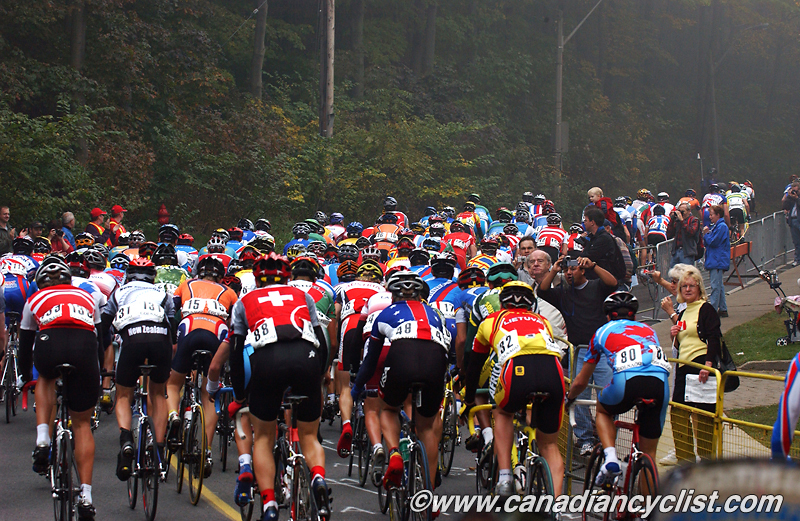
After a small attack by Hamburger, the leaders had a 15s lead again. They looked back on the wide headwind climb, and saw the peloton was further behind than before. This gave them time to poker again. The pace was modest, riders 3 wide playing a game of chess. 26/40

1km from the top, Astarloa attacked from last wheel of the break. As soon as he went, Erik Dekker, who abandoned and watched from the Dutch box, shouted: "Hasta la vista, baby," echoing the famous movie and campaign line from California governor Arnold Schwarzenegger. 27/40
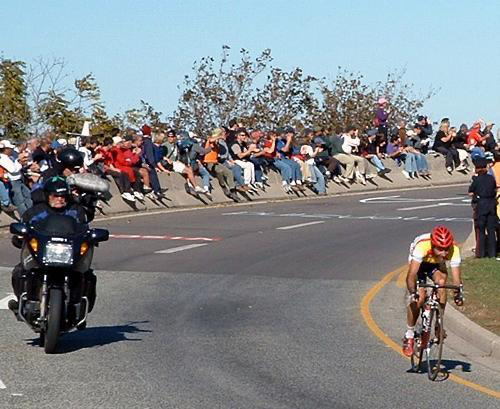
What Dekker saw was that Astarloa chose the perfect moment. Bettini and Van Petegem were only focused on each other; the others had no incentive to react. With pressure mounting from peloton escapees behind, the attack had to happen now. 28/40

When Astarloa attacked with overspeed, nothing happened for 5 seconds. Bettini hoped Van Petegem would close, and vice versa. When Bettini eventually blinked first, it was too late. The gap Astarloa had was too big to close with one sprint. The Spaniard had a 3s lead. 29/40
As the climb flattened out Astarloa held his lead. There was a degree of cooperation, but the final 1.5k were all downhill and hard to gain time in. Astarloa was in sight, but the chasers were late. That Valverde had joined the group didnt help either. 30/40

Astarloa was on his way to the title, a major upset. He was seen as one of the best domestiques, a solid puncher, and a leadout after hard stages. In his 2 years at Saeco he became a beloved team-member. The selflessness of the 27-year-old, who became pro at 25, was respected 31/

That was once different. On the Spanish amateur scene, nobody saw a future in him. They were focused on finding climbers and GC racers. Much like Freire, the one-day qualities of Astarloa were undervalued. He went to Italy where he became pro with Mercatone Uno, then Saeco. 32/40
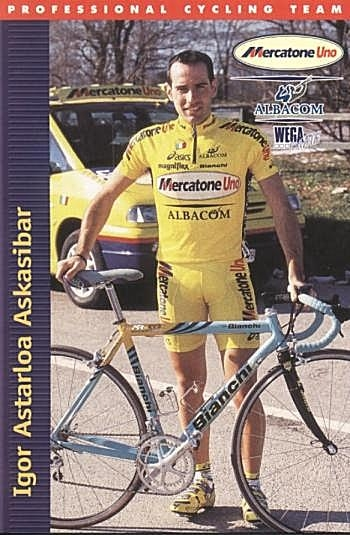
By no means was Astarloa a bad rider though. In 2003, he won La Flèche Wallonne, although the startlist wasn't great. He had 5 pro wins, and was in no way a rider expected to feature this deep into the final, let alone win the title. 33/40
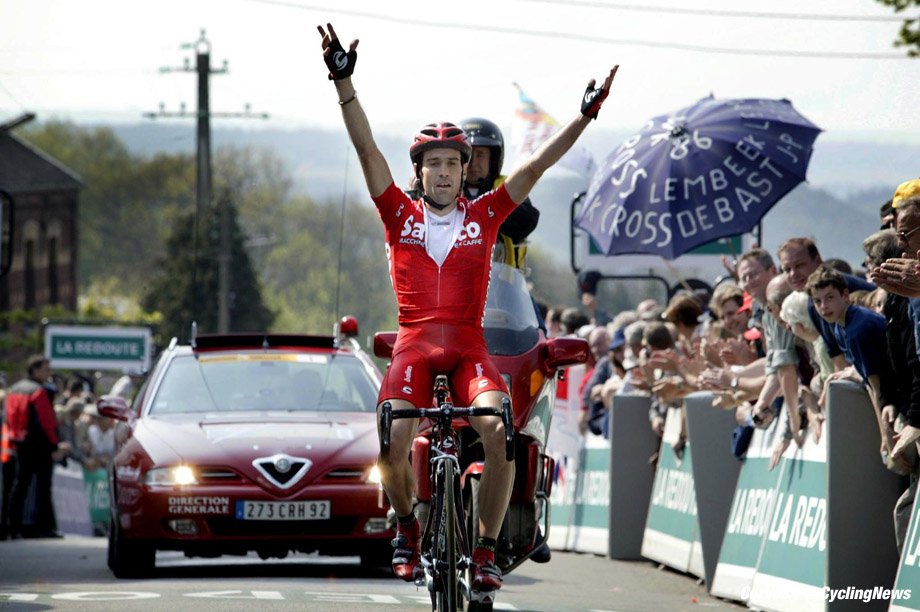
A deceiving camera shot was the last hope of the chasers. Astarloa remained on his bike, and won the world title. Valverde sprinted to 2nd moments later, making his breakout in a Spanish 1-2. He celebrated his medal. Van Petegem bested Bettini for the bronze medal. 34/40

Astarloa was obviously ecstatic, but most attention went to another line of his interview. He accused Bettini of offering him money for the win. Days later Astarloa claimed he misunderstood Bettini, and that the 2 were good friends who even shared holidays in the Caribbean. 35/40
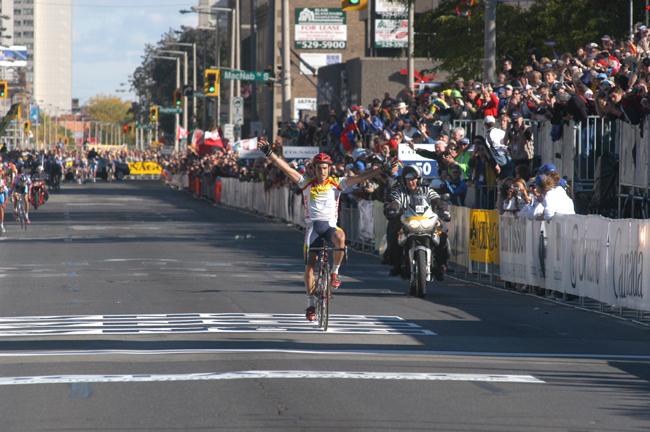
Becoming World Champion didn't give Astarloa the boost he hoped for. Racing for Cofidis, he finished 4th in Tirreno and 6th in San Remo. When the team stopped racing due to a doping scandal, he was released and signed with Lampre. He won once in the rainbow jersey. 36/40
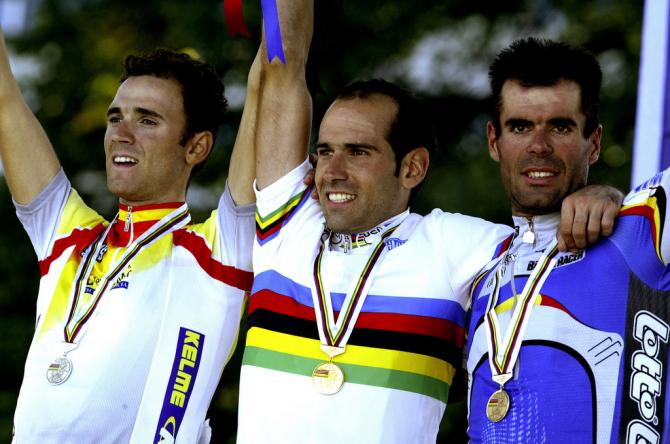
Some said this was the curse of the rainbow jersey, but Astarloa reached the same level as before. He was still a loyal domestique, capable of winning smaller races. Everything just came together in Hamilton. He had a great day, the course was strange, his attack perfect. 37/40
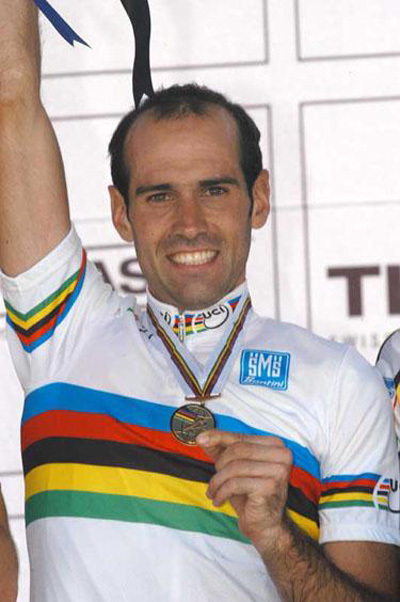
There isn't much footage online, but you can watch some of the race here. The audio is quite loud, so be warned. 38/40
Video:
Video:
Sources: 39/40
autobus.cyclingnews.com/road/2003/worl… nrc.nl/nieuws/2003/10… sporza.be/nl/2020/09/24/… nieuwsblad.be/sport/wielrenn… web.archive.org/web/2008031105…
autobus.cyclingnews.com/road/2003/worl… nrc.nl/nieuws/2003/10… sporza.be/nl/2020/09/24/… nieuwsblad.be/sport/wielrenn… web.archive.org/web/2008031105…
If you want to learn more about cycling history, you can order the cycling iceberg book on my website! First shipping in 4 weeks! 40/40
cyclingiceberg.com
cyclingiceberg.com
• • •
Missing some Tweet in this thread? You can try to
force a refresh