
William Zinsser taught writing at Yale, then wrote the book that has fixed more bad writing than every English class combined.
Here are 10 cuts from "On Writing Well" that instantly make your writing twice as strong.
1) Delete every word doing no work
Here are 10 cuts from "On Writing Well" that instantly make your writing twice as strong.
1) Delete every word doing no work

Zinsser's first rule is the one that exposes every writer immediately.
Read your last sentence. Find every word that would leave the meaning unchanged if you removed it.
Those words are not neutral. They are actively making your writing worse. They force the reader to work harder for the same information. They dilute the words doing the actual work.
His test was brutal and simple. If a word is not earning its place, it does not get one.
Most first drafts cut by half. Most writers discover their ideas are cleaner than their sentences suggested.
Read your last sentence. Find every word that would leave the meaning unchanged if you removed it.
Those words are not neutral. They are actively making your writing worse. They force the reader to work harder for the same information. They dilute the words doing the actual work.
His test was brutal and simple. If a word is not earning its place, it does not get one.
Most first drafts cut by half. Most writers discover their ideas are cleaner than their sentences suggested.
2) Kill the qualifier
Zinsser had no patience for qualifiers.
"Rather." "Very." "Somewhat." "In a sense." "A bit." "Quite." "Fairly."
These words feel like precision. They are the opposite. They signal that the writer does not fully believe what they are saying and is hedging against being wrong.
If something is good, say it is good. If it is bad, say it is bad. If you are not sure, decide before you write the sentence.
The reader cannot trust a writer who does not trust their own sentences.
Zinsser had no patience for qualifiers.
"Rather." "Very." "Somewhat." "In a sense." "A bit." "Quite." "Fairly."
These words feel like precision. They are the opposite. They signal that the writer does not fully believe what they are saying and is hedging against being wrong.
If something is good, say it is good. If it is bad, say it is bad. If you are not sure, decide before you write the sentence.
The reader cannot trust a writer who does not trust their own sentences.
3) Use active verbs
Passive construction hides the actor.
"Mistakes were made." "The decision was reached." "The report has been completed."
By whom? When? Under what circumstances?
Passive voice lets the writer avoid committing to anything. It sounds official. It says nothing.
Zinsser said the verb is the most important word in any sentence. An active verb with a clear subject does more work than an entire paragraph of passive construction.
"He made mistakes" is shorter, clearer, and harder to hide behind.
That is the point.
Passive construction hides the actor.
"Mistakes were made." "The decision was reached." "The report has been completed."
By whom? When? Under what circumstances?
Passive voice lets the writer avoid committing to anything. It sounds official. It says nothing.
Zinsser said the verb is the most important word in any sentence. An active verb with a clear subject does more work than an entire paragraph of passive construction.
"He made mistakes" is shorter, clearer, and harder to hide behind.
That is the point.

4) One thought per sentence
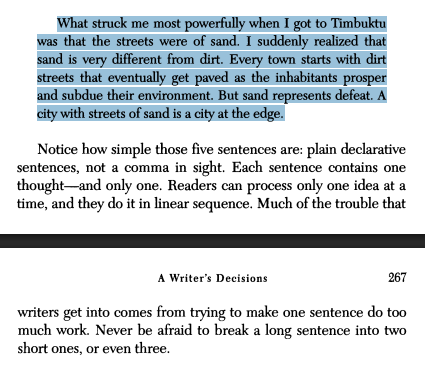
Zinsser watched writers chain clauses together until the sentence became a maze.
The reader enters at one end, loses the thread somewhere in the middle, and exits without the idea the writer intended to deliver.
Every clause added to a sentence is another place the reader can get lost.
His rule: one idea. One sentence. Stop. Let the reader absorb it before you hand them the next one.
The writers who feel effortless to read are almost always the ones whose sentences stop before the reader needs them to.
Zinsser watched writers chain clauses together until the sentence became a maze.
The reader enters at one end, loses the thread somewhere in the middle, and exits without the idea the writer intended to deliver.
Every clause added to a sentence is another place the reader can get lost.
His rule: one idea. One sentence. Stop. Let the reader absorb it before you hand them the next one.
The writers who feel effortless to read are almost always the ones whose sentences stop before the reader needs them to.
5) Cut the throat-clearing opening
Most writing begins with a paragraph that exists only to warm the writer up.
Background. Context. History. Setup. All of it designed to ease the writer into the actual point which usually appears at the start of the second paragraph.
Zinsser said delete the first paragraph and read the second.
Almost every time, the second paragraph is where the piece actually begins. The first was for the writer. The reader does not need it and did not ask for it.
Start at the moment the writing has something to say.
Most writing begins with a paragraph that exists only to warm the writer up.
Background. Context. History. Setup. All of it designed to ease the writer into the actual point which usually appears at the start of the second paragraph.
Zinsser said delete the first paragraph and read the second.
Almost every time, the second paragraph is where the piece actually begins. The first was for the writer. The reader does not need it and did not ask for it.
Start at the moment the writing has something to say.
6) Prefer the short word
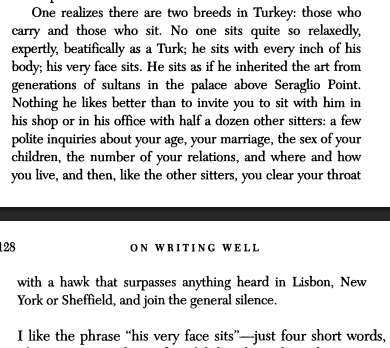
Zinsser kept this rule simple.
If you can say it in a short word, say it in a short word.
"Use" over "utilize." "Now" over "at this point in time." "Show" over "demonstrate." "Help" over "facilitate."
Long words feel more impressive. They are almost never more clear.
The reader's job is to understand your idea, not to admire your vocabulary. Every long word that has a short equivalent is a small tax on the reader's attention.
Collect enough small taxes and the reader stops paying.
Zinsser kept this rule simple.
If you can say it in a short word, say it in a short word.
"Use" over "utilize." "Now" over "at this point in time." "Show" over "demonstrate." "Help" over "facilitate."
Long words feel more impressive. They are almost never more clear.
The reader's job is to understand your idea, not to admire your vocabulary. Every long word that has a short equivalent is a small tax on the reader's attention.
Collect enough small taxes and the reader stops paying.

7) Strip the adverb
The adverb is almost always a sign that you chose the wrong verb.
"Ran quickly" means sprinted. "Spoke softly" means whispered. "Hit hard" means slammed.
When you find an adverb modifying a verb, ask whether a better verb already contains the meaning. Almost always, it does.
Zinsser said adverbs clutter the sentence and weaken the verb they are supposed to strengthen. The verb already knows what it means. The adverb is just interference.
Find the exact verb. The adverb disappears on its own.
The adverb is almost always a sign that you chose the wrong verb.
"Ran quickly" means sprinted. "Spoke softly" means whispered. "Hit hard" means slammed.
When you find an adverb modifying a verb, ask whether a better verb already contains the meaning. Almost always, it does.
Zinsser said adverbs clutter the sentence and weaken the verb they are supposed to strengthen. The verb already knows what it means. The adverb is just interference.
Find the exact verb. The adverb disappears on its own.
8) Write for one reader
Zinsser said the writer's job is not to address an audience.
It is to address one person.
The moment you imagine a crowd, you start writing for the average of the crowd. You soften the edges. You add qualifications. You cover every possible interpretation. The writing becomes careful and becomes vague at the same time.
Write for one specific person who is intelligent, curious, and has no reason to keep reading unless you earn it.
That person is a better editor than any crowd you can imagine.
Zinsser said the writer's job is not to address an audience.
It is to address one person.
The moment you imagine a crowd, you start writing for the average of the crowd. You soften the edges. You add qualifications. You cover every possible interpretation. The writing becomes careful and becomes vague at the same time.
Write for one specific person who is intelligent, curious, and has no reason to keep reading unless you earn it.
That person is a better editor than any crowd you can imagine.
9) Let the ending land
Most writers do not know how to stop.
They reach the end of the idea and then summarize what they just said. They restate the point. They wrap up with a sentence that tells the reader what they should have just experienced.
Zinsser said the ending is not the place to explain the piece. It is the place to let the last idea land and then get out.
The best endings leave the reader with something that keeps working after the reading stops. A reversal. A sharp image. A question that cannot be unasked.
Stop before you explain the stop.
Most writers do not know how to stop.
They reach the end of the idea and then summarize what they just said. They restate the point. They wrap up with a sentence that tells the reader what they should have just experienced.
Zinsser said the ending is not the place to explain the piece. It is the place to let the last idea land and then get out.
The best endings leave the reader with something that keeps working after the reading stops. A reversal. A sharp image. A question that cannot be unasked.
Stop before you explain the stop.
10) Rewrite ruthlessly
Zinsser did not believe in first drafts.
He believed that writing is rewriting. That the first draft exists only to give you something to cut.
He said he rewrote every sentence multiple times. Not to change the ideas. To find the cleanest possible way to deliver them.
Most writers treat the first draft as something to be defended. Zinsser treated it as raw material.
The discipline is not in the writing. It is in the willingness to cut what you worked hard to produce because it is making the piece worse.
Good writing is what survives the cutting.
Zinsser did not believe in first drafts.
He believed that writing is rewriting. That the first draft exists only to give you something to cut.
He said he rewrote every sentence multiple times. Not to change the ideas. To find the cleanest possible way to deliver them.
Most writers treat the first draft as something to be defended. Zinsser treated it as raw material.
The discipline is not in the writing. It is in the willingness to cut what you worked hard to produce because it is making the piece worse.
Good writing is what survives the cutting.
Zinsser taught writing at Yale for years and spent decades watching the same mistakes appear in the same order in every writer who had not yet learned to see them.
He wrote "On Writing Well" because he believed clear writing was not a gift.
It was a set of decisions anyone could learn to make.
Every cut on this list is one decision.
Make them every time and your writing will do something most writing never does.
It will get out of its own way.
He wrote "On Writing Well" because he believed clear writing was not a gift.
It was a set of decisions anyone could learn to make.
Every cut on this list is one decision.
Make them every time and your writing will do something most writing never does.
It will get out of its own way.
• • •
Missing some Tweet in this thread? You can try to
force a refresh






