Musa al-Gharbi Profile picture
Jun 23 15 tweets 13 min read Read on X
My latest for Symbolic Capital(ism) describes my evolving views on inequality and socialism.

🧵 Image
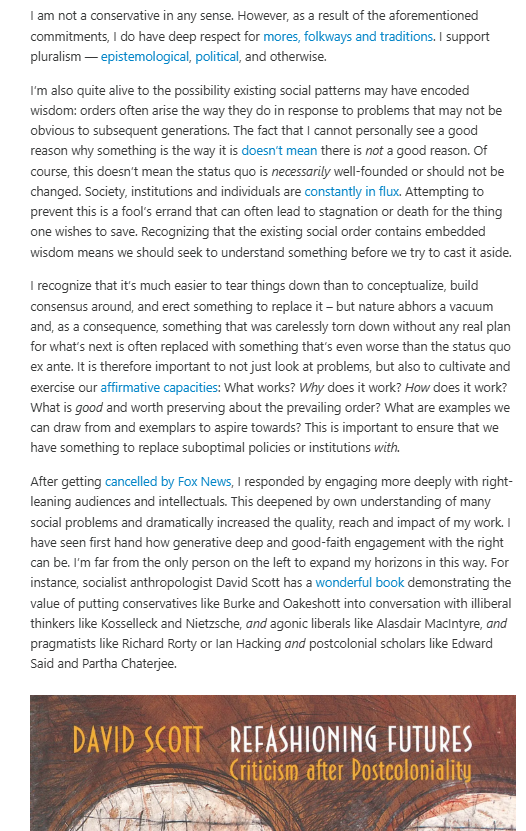
I'm a sociologist. The study of inequality is now central to our discipline, crowding out other topics that historically defined the field. Socioeconomic understandings of inequality have been eclipsed by work studying disparities along the lines of ethnicity, gender, sexuality, etc: musaalgharbi.substack.com/p/on-inequalit…Image
Image
Image
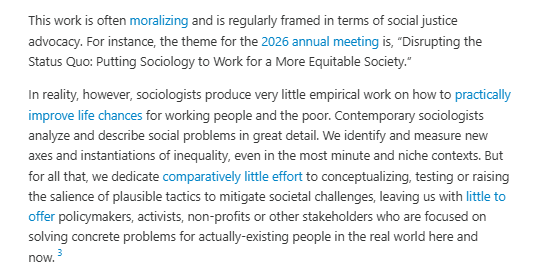
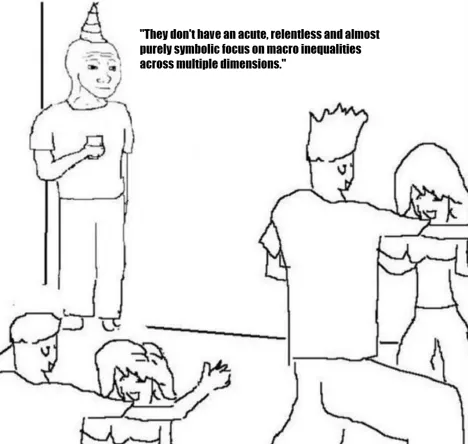
Inequality-focused sociological research often defines itself in terms of social justice advocacy. In reality, contemporary sociologists produce very little work focused on helping real-world stakeholders deal with practical problems here-and-now: musaalgharbi.substack.com/p/on-inequalit…Image
Image
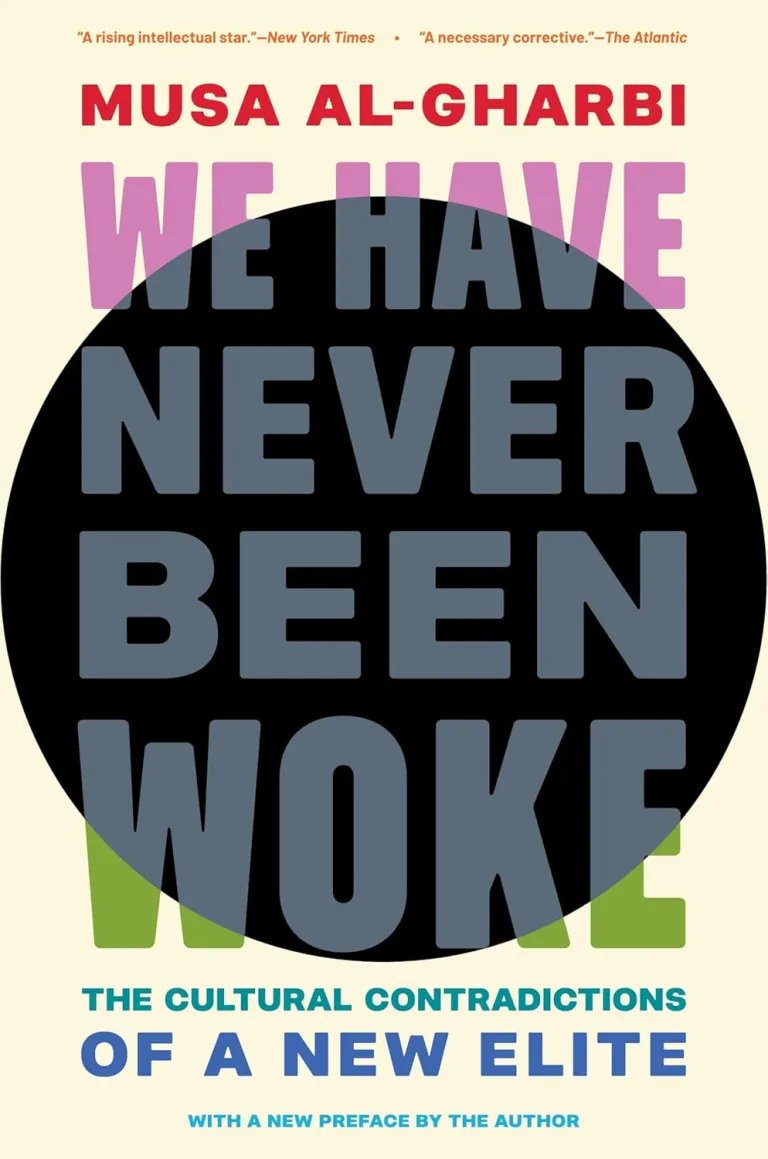
My first book, We Have Never Been Woke, has been a runaway success. Yet, for all the big swings it takes, it owes its uptake in no small part to its adherence to disciplinary norms -- to include a tight focus on inequalities: musaalgharbi.substack.com/p/on-inequalit…Image
Image
Image
Inequality can certainly be problematic when it exceeds certain thresholds or interacts with adverse social trends and dynamics. However, some measure of inequality is likely inevitable in growing, diverse, complex and/or large-scale societies, as socialist scholars have long recognized: musaalgharbi.substack.com/i/202717521/de…Image
Image
Ordinary people aren't particularly concerned with inequality under most circumstances:

Inequality is often a symptom of problems they actually *do* care about (stagnation, poverty, precarity, exploitation) -- but most are not troubled by the reality that all people are not the same for any dimension under analysis.musaalgharbi.substack.com/i/202717521/wo…Image
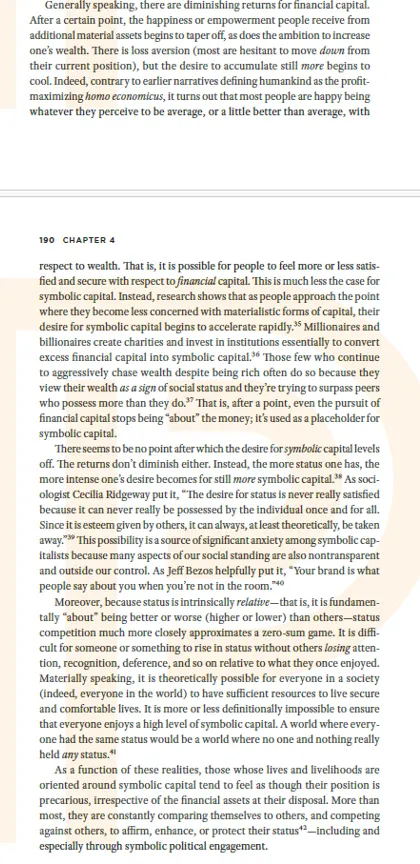
Symbolic capitalists' lives and livelihoods revolve around status. *We* tend to be super focused on slight differences -- often in ways that interfere with our happiness or ability to relate to normal people: musaalgharbi.substack.com/i/202717521/wo…Image
Image
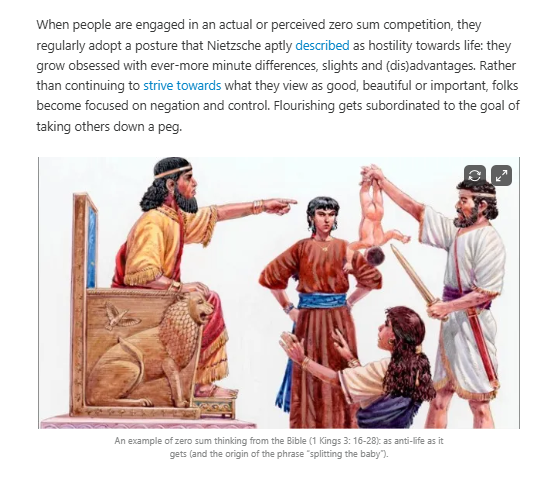
Unlike wealth, status is closer to zero sum. And when people are (or perceive themselves to be) in a zero sum struggle, they often adopt an approach to politics that is more focused on holding others back or making them suffer instead of pursuing that they actually think is good: musaalgharbi.substack.com/i/202717521/wo…

There is a correlational relationship between zero sum thinking, policy preferences and political ideologies.Image
Image
There are traditions of socialist politics that are less focused on conflict and division, instead prioritizing broad based prosperity and opportunity and a shared and positive vision for the future:

One of the most prominent is the "liberal socialist" tradition.musaalgharbi.substack.com/i/202717521/po…Image
Image
Image
Liberal socialism has a long list of accomplishments in the U.S. and a proud track record worldwide. Many fail to recognize how dramatic and positive its impact has been because these contributions have become foundational to the contemporary liberal order: musaalgharbi.substack.com/i/202717521/po…Image
Image
Image
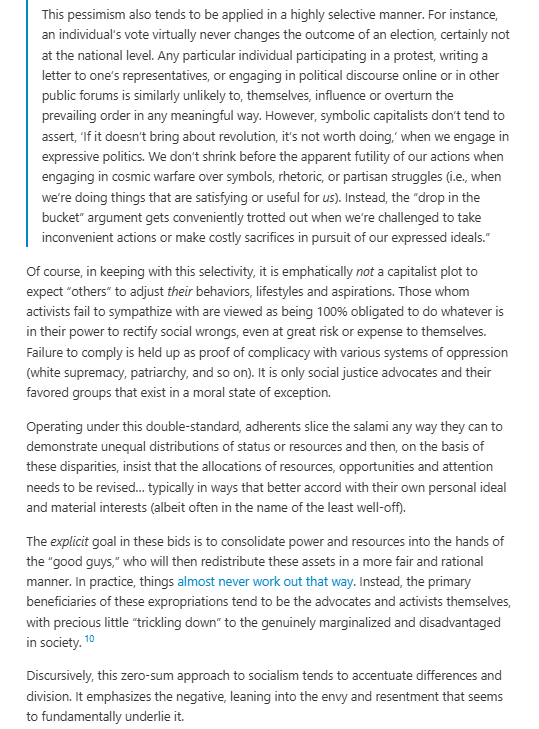
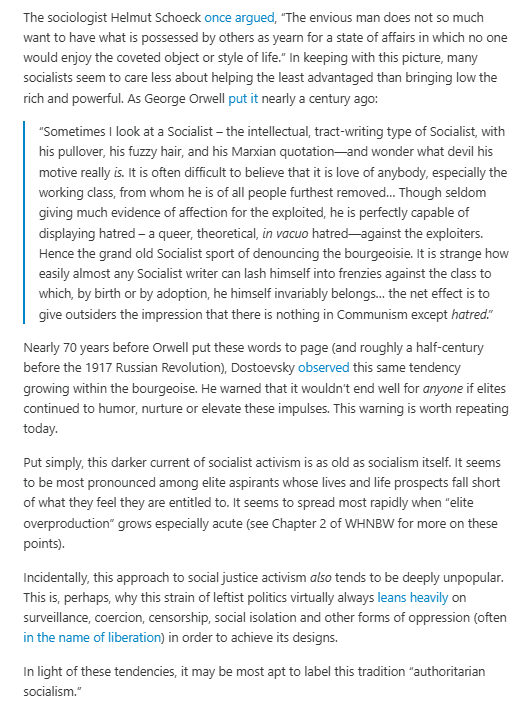
Of course, liberal socialism is not the only variety of socialism that exists in the world. There are also strains that are more zero-sum in orientation and authoritarian in practice: musaalgharbi.substack.com/i/202717521/au…Image
Image
Image
Image
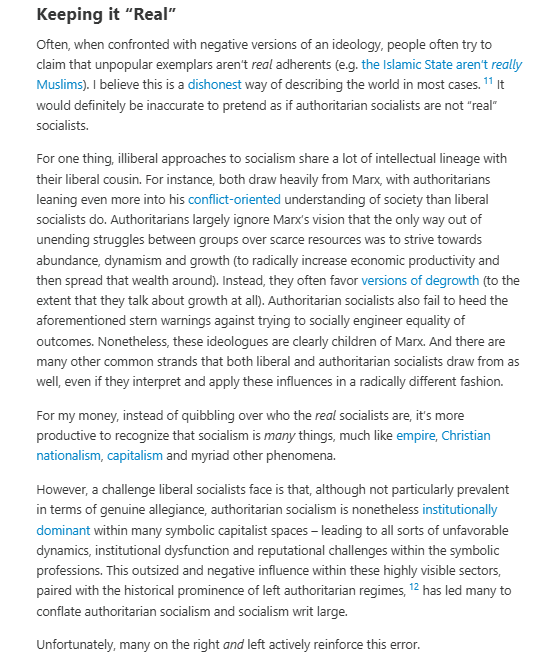
The problem is not that "real socialism has never been tried," or that authoritarians are not "real" socialists. The issue is that there are two broad traditions of socialism, they've both been tried *a lot* and they have very different track records. This is a reality that many across the ideological spectrum try to occlude: musaalgharbi.substack.com/i/202717521/ke…Image
Image
Image
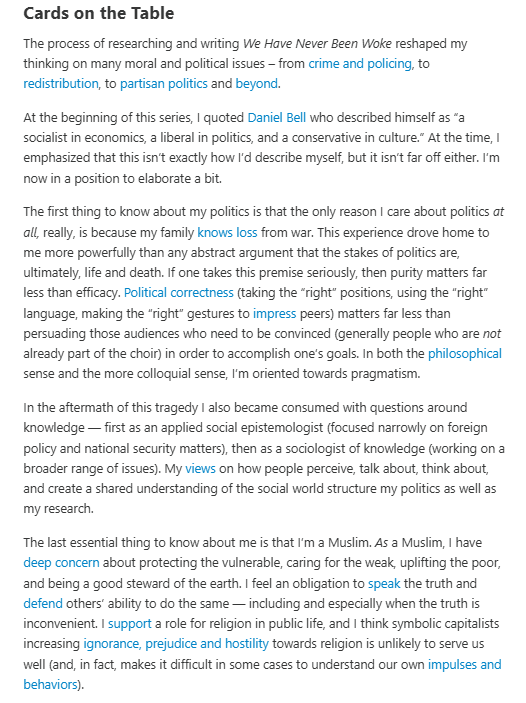
My own political and moral views are shaped by pragmatism, Islam, and an obsession with knowledge (as an epistemologist and STS scholar). These currents orient me, broadly, towards the liberal socialist tradition:

If I had to put myself in a box, that's the box I would put myself in.musaalgharbi.substack.com/i/202717521/ca…Image
Image
Image
Image
For those who want to learn more about liberal socialism, I'd highly recommend two titles by @MattPolProf.

The first is a scholarly exploration of the tradition's origins and development. The second is a more accessible, affordable and concise book for the public on its most essential components and their practical upshot. Links here: musaalgharbi.substack.com/i/202717521/co…Image
Image
And for folks interested in the broad themes explored in this series, I'd recommend a forthcoming book by @tmbejan with @Harvard_Press, First Among Equals.

That book will explore how a longstanding and widely held belief that all people are fundamentally equal (even if they differ in many respects) came to eventually be attached to a set of political demands (around representation) and, later, economic demands (around redistribution).

More here: musaalgharbi.substack.com/i/202717521/co…Image

• • •

Missing some Tweet in this thread? You can try to force a refresh

 

Keep Current with Musa al-Gharbi

Musa al-Gharbi Profile picture

Stay in touch and get notified when new unrolls are available from this author!

Read all threads

This Thread may be Removed Anytime!

PDF

Twitter may remove this content at anytime! Save it as PDF for later use!

Try unrolling a thread yourself!

how to unroll video
  1. Follow @ThreadReaderApp to mention us!

  2. From a Twitter thread mention us with a keyword "unroll"
@threadreaderapp unroll

Practice here first or read more on our help page!

More from @Musa_alGharbi

Jan 7
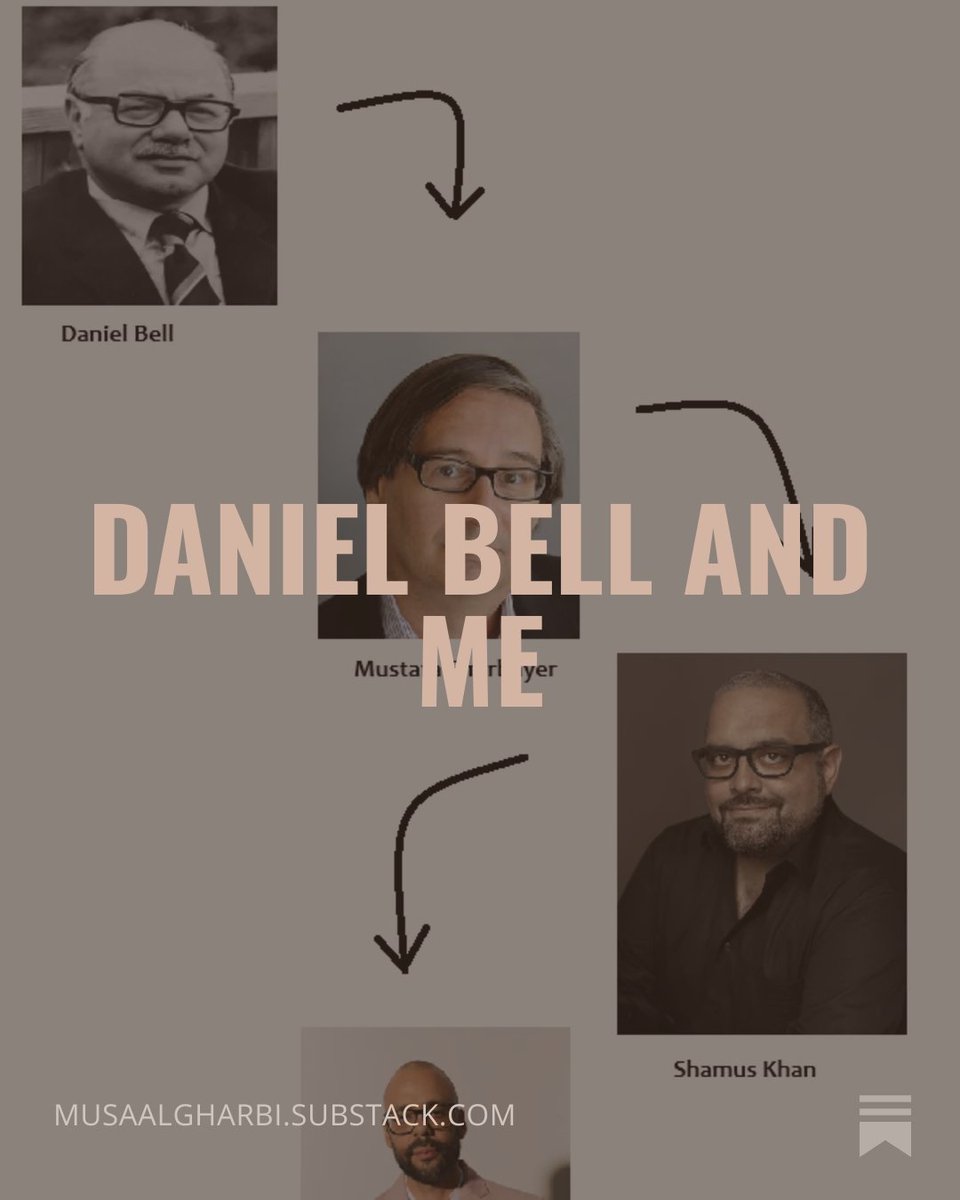
I'm kicking off 2026 with a series of articles on the left. I decided to start with an essay on the journalist and sociologist Daniel Bell, and how his work and life course have been instructive to me both as a model and cautionary tale. 🧵 Image
Daniel Bell is my intellectual great-grandfather. He advised my advisor's advisor:

Each of our work focuses on institutions of knowledge and cultural production. Each of us is passionate about sociological theory. Most of us champion public sociology. musaalgharbi.substack.com/p/daniel-bell-…Image
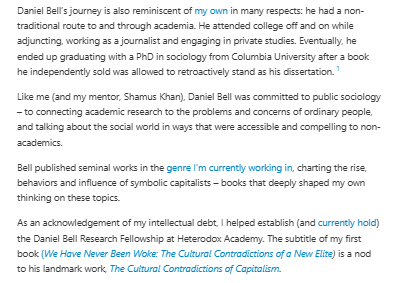
Daniel Bell and I don't just share research interests, we have a decent amount in common:

We both strayed from the religion of our youth. We both had really non-traditional paths to and through academia that led us through some of the same institutions. musaalgharbi.substack.com/p/daniel-bell-…Image
Read 7 tweets
Dec 17, 2025
This is a good piece, worth reckoning with.

One thing I note in my book is that everyone supports lots of progressive social causes in principle but no one wants to be the one to actually pay the costs.

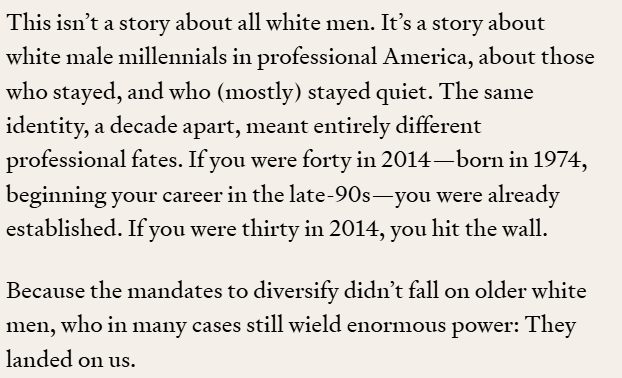
A consequence is that the people who *are* eventually made to pay the costs when progress is actually made are the most vulnerable members of the "privileged" groups: people with the least connections, folks who are less established, those who possess less cultural and financial capital, etc.

The most privileged and established straight white dudes largely made it through the Awokening just fine by trying to outflank other whites on being "with it" and by imposing all risks and costs associated with the demands being made of them and their organizations on less advantaged whites.Image
Image
As the piece does note (albeit in the background a bit), the Awokening period was tough for *all* symbolic capitalists' employment prospects. As I detail in my book (Chapter 2), Awokenings tend to take off during periods when elite overproduction is especially acute:
musaalgharbi.com/paperback-edit…

Prospects for *top talent* who identified as something other than a neurotypical, able-bodied straight white man were great. There was intense competition for most of the top "diverse" prospects. But most people who aspire to jobs at the New York Times or tenure-line academic positions don't get them. That was true in this period for blacks, for women, for queer folks, and so on. If you went to a middling school, didn't come from privilege, didn't have connections, didn't have a long record of illustrious accomplishments, the chances are terrible no matter who you are.

Although, again, the author correctly notes that prospects were *especially* terrible for straight white dudes.Image
And during the Awokenings (especially), even *top talent* from "diverse" populations struggled professionally if they articulated the "wrong" views.

To use myself as an example: I had an Ivy League degree, 9 publications in good journals with a book under contract from a prestige university press, I had strong letters of recommendation from prestigious folks, I had a strong public profile with hits in the NY Times, Washington Post, and so on: musaalgharbi.com/musa-al-gharbi….

I had tons of teaching experience and even won awards to teach others how to teach: musaalgharbi.com/musa-al-gharbi…

Yet, I had to go on the market three times, and while I did eventually get a six-figure tenure-line job at a R1 research university, it is outside my actual field. I love my colleagues and department. There is no sense in which my career is a tragedy. But it *is* the case that, at the time, in virtue of my views, I was basically unemployable in sociology, despite elite credentials, a strong publication record, checking "diversity" boxes (as a black, Muslim scholars from a non-traditional academic background), and so on. As was described in the article, it was mostly older whites serving as the gatekeepers -- in this case, gatekeepers to whether or not I was the "right" kind of "diverse."Image
Read 7 tweets
Nov 14, 2025
My latest for Symbolic Capital(ism) shows:

1. The outcome of the #NYC mayoral race was less extraordinary than most seem to think

2. Popular culture war talking points about the role of class, gender, sexuality, youth, race and residency length are total bunk

🧵 Image
The fact that @TheDemocrats won the NYC municipal elections should surprise no one. Since 1932, for instance, there have been 26 mayoral elections. Republicans have won 7 of them. The last three consecutive contests went to Democrats by 2:1 margins: musaalgharbi.substack.com/p/a-graveyard-…Image
Mamdani’s performance in 2025 was far from extraordinary. In terms of vote share, he ranks 12 out of 19 elections since 1953. In terms of turnout, this race ranked 13 out of 19. The million votes Mamdani won? Largely a product of a larger NYC population: musaalgharbi.substack.com/i/178564807/hi…Image
Image
Image
Image
Read 15 tweets
Sep 9, 2025
My latest for Symbolic Capital(ism) explores the highly censorious culture that prevails in many symbolic industries.

It argues that universities play an important role in shaping institutional culture in all of these other fields --but not for the reasons most think. 🧵 Image
So, one thing that separates WHNBW from many other books charting the culture wars is that it spends precisely zero time trying to genealogize, taxonomize, or evaluate the correctness of "woke" theorists or ideas.

Antiwoke and right-aligned folks were SUPER annoyed with this, apparently having gone into the book hoping the book would be a definitive takedown or refutation of "wokeness" and discovering that, in fact, the book is not very interested theorists and their ideas.

One reason for this, as I've detailed previously, is because these sorts of considerations are orthogonal to the actual questions the book is trying to answer (see screenshots): musaalgharbi.substack.com/i/158204710/it…

BUT, it's also important to stress, that even if we want to answer some of the specific questions that the antiwoke crowd is interested in -- you simply can't get much mileage by studying widely-evoked thinkers and their work, for reasons I explain in my latest essay: musaalgharbi.substack.com/p/you-ask-i-an…Image
Image
This is a place where my thinking was deeply informed by @JonHaidt and @glukianoff's Coddling of the American Mind.

When they began that project, they were working from an assumption that universities were taking normie kids and transforming them into censorious scolds. Through their research, however, they discovered that students were, in fact, arriving to campus already oriented towards safetyism and intolerance.

Universities might be doing a bad job of pushing back against these impulses (often reinforcing them instead), but they were not the *source* of the problem: musaalgharbi.substack.com/p/censorship-i…

We need to move away from classroom "indoctrination" stories and look at other mechanisms of enculturation if we want to understand unfortunate institutional dynamics.Image
Read 13 tweets
Dec 3, 2024
My latest for Symbolic Capital(ism) explores why the symbolic professions tend to be highly unrepresentative of the societies they purport to serve, and are often dominated by bizarre beliefs and norms.

tldr: It's because they tend to be comprised of people who are cognitively sophisticated and highly educated. Quick 🧵Image
One thing that's critical for understanding how intelligence and education relate to political beliefs and behaviors is to recognize that our cognitive and perceptual systems are wired primarily to help us enhance our status and further our goals. We perceive and think about the world in fundamentally self-interested ways: musaalgharbi.substack.com/p/smart-people…Image
The tendencies to perceive and think about the world in ways that flatter our self interest, further our goals, and so on -- these are not necessarily "bad." In most circumstances, they are "life enhancing" in Nietzchean terms, but they do regularly cause problems in the context of knowledge and cultural production: musaalgharbi.substack.com/p/smart-people…Image
Read 6 tweets
Nov 12, 2024
For Symbolic Capital(ism), I just published a piece pulling together lots of empirical data to answer questions like:

Did Trump win because of racism?
Did Trump win because of sexism?
Did Trump win because "elites" bought the election?
Did Trump win because of third-party "spoilers"?
Did Trump win because of weak turnout?
Did Trump win because Harris chose the wrong running mate?

As the essay details at length, the answer to all of these questions is "no." It's easy to see how people would be drawn to these questions, but none of these hypotheses do a good job of explaining what actually happened in 2024 (or the previous Trump cycles, for that matter). 🧵Image
Let's start with race: Democrats saw gains with white people this cycle. Harris did about as well with whites as Democrats typically do. She saw improvement with whites across gender lines relative to 2020: musaalgharbi.substack.com/p/a-graveyard-…

So why did she lose? Well, that would be because of shifts among non-whites. Non-whites across gender lines moved away from the Democratic Party. Harris put up weak numbers with Black women (relative to Hillary or Obama). Democrats' margins with Hispanic women shifted dramatically towards the Republicans. They saw losses with Asian women. And non-white men shifted even further (even as white men shifted heavily towards Democrats over Trump's tenure in office).

The preferred narrative on race is helpless to explain the trendlines among whites and the trendlines among non-whites. But put simply, Harris didn't lose because of the whites. She lost despite solid (and growing) support among the whites, because non-white voters had other ideas.Image
Image
What about gender? This is two female nominees Trump has bested, but he lost to Joe Biden. A clear sexism story, open and shut case, right? Here, again, the voting data beg to differ: musaalgharbi.substack.com/p/a-graveyard-…

Gender polarization in the electorate was down since 2016. Harris' voteshare among men was consistent with typical Democrat performance (an outcome driven heavily by white men moving Democrat over the last decade, even non-white men across the board went the other direction). Trump's margins with men were not historic.

The reason Harris lost is because she performed abysmally with women. She got the lowest share of the female vote of any Democrat of the last 30 years other than John Kerry. And it wasn't white women: they actually shifted towards the Democrats this cycle. It was Hispanic and Asian women who shifted most towards the GOP -- although Harris also significantly underperformed Hillary Clinton and Barack Obama with black women too.

Since 2016, men shifted 2 percentage points towards the GOP. Meanwhile, women shifted five percentage points towards the GOP (i.e. more than twice as much!). But rather than analyzing this latter trend -- rather than exploring how women exercise their agency, the focus is intensely on men. Even though they are objectively less important: they are a smaller share of the overall adult population, they are registered to vote at lower levels, among registered voters they turn out at lower levels. Put simply, if we want to understand how any race went the way it did, we need to look at women and how they exercise their agency. But this isn't done. Not even by feminist scholars -- perhaps especially not by feminist scholars in this case -- because the actual data pattern is super inconvenient for the preferred narrative.Image
Image
Read 10 tweets

Did Thread Reader help you today?

Support us! We are indie developers!


This site is made by just two indie developers on a laptop doing marketing, support and development! Read more about the story.

Become a Premium Member ($3/month or $30/year) and get exclusive features!

Become Premium

Don't want to be a Premium member but still want to support us?

Make a small donation by buying us coffee ($5) or help with server cost ($10)

Donate via Paypal

Or Donate anonymously using crypto!

Ethereum

0xfe58350B80634f60Fa6Dc149a72b4DFbc17D341E copy

Bitcoin

3ATGMxNzCUFzxpMCHL5sWSt4DVtS8UqXpi copy

Thank you for your support!

Follow Us!

:(