On June 24th, the Type 076 LHA, the Sichuan, completed its fourth sea trial in the Yellow Sea and returned to Qingdao Naval Base. The ship departed its home port of Zhanjiang on the 6th and transited the Taiwan Strait before arriving at the naval base three days later.
The sea trial likely involved the vessel conducting launch and take off tests of the GJ-21 and KVD-002 Unmanned Aerial Vehicles (UAV) as well as the Z-8L transport helicopter.
The vessel likely also conducted an underwater explosion shock test to verify the ship’s ability to withstand forces from nearby blasts caused by munitions such as bombs, mines, and torpedoes.
The fourth sea trial enabled the PLA Navy (PLAN) to further validate the Sichuan’s ability to operate UAVs and Z-8Ls from its flight deck. The Sichuan will also likely conduct additional sea trials in the Yellow Sea to verify the ship’s systems before being commissioned.
The sea trial was conducted to verify the GJ-21’s and KVD-002’s ability to take off from and land on the Sichuan’s flight deck.
Specifically, the tests focused on validating the drones’ ability to take off from the LHA’s flight deck using its EMALS systems in a realistic environment. The PLAN also used the trial to practice landing UAVs on the ship's flight deck using its drone command center.
These tests involved the Sichuan’s command center operating the drones from airfields to validate its ability to adequately control them at long ranges.
The ability for the UAVs to operate from the Sichuan’s flight deck is important because they would conduct various missions, ranging from reconnaissance and Suppression of Enemy Air Defense (SEAD) to conducting airstrikes against targets in support of amphibious operations.
The Sichuan also completed tests with the Z-8L to verify its ability to operate transport helicopters that would conduct air assault or armed escort missions. The Sichuan will continue to operate from Qingdao to enable it to conduct additional sea trials in the Yellow Sea.
The PLAN conducts sea trials of its aircraft carriers in the Yellow Sea that consist of integration tests of aircraft and drones because of the benefits of operating in the area.
For instance, the PLAN can utilize the various airfields and other facilities that are adjacent to the Yellow Sea to support the carriers’ and Sichuan’s sea trials.
The PLAN would also use the area's facilities as emergency landing sites if the ship encounters a problem during tests. The Yellow Sea also enables the PLAN to conduct the sea trials in relative isolation.
• • •
Missing some Tweet in this thread? You can try to
force a refresh

On May 31st, the Shuiqiao class Landing Platform Utility (LPU) barges continued to conduct an exercise at Hepu Dasha Beach at Nantian Island, Ningbo, Zhejiang Province.
Satellite imagery showed a likely Roll on Roll off (RoRo) ship docked with the Donggong402’s ramp on its right side.
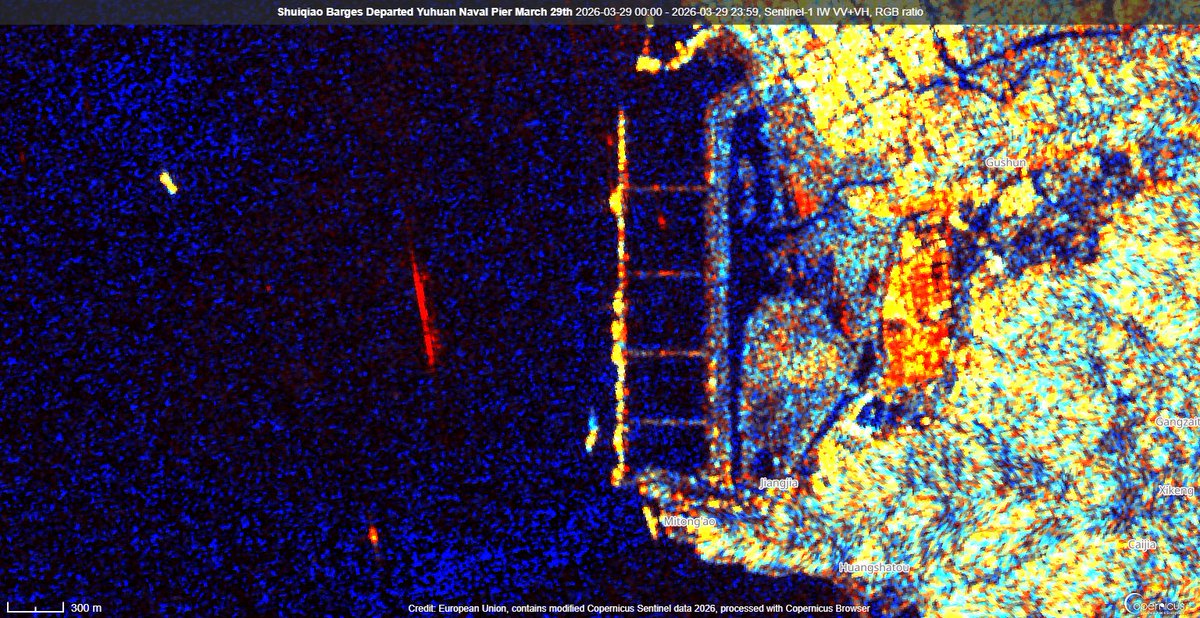
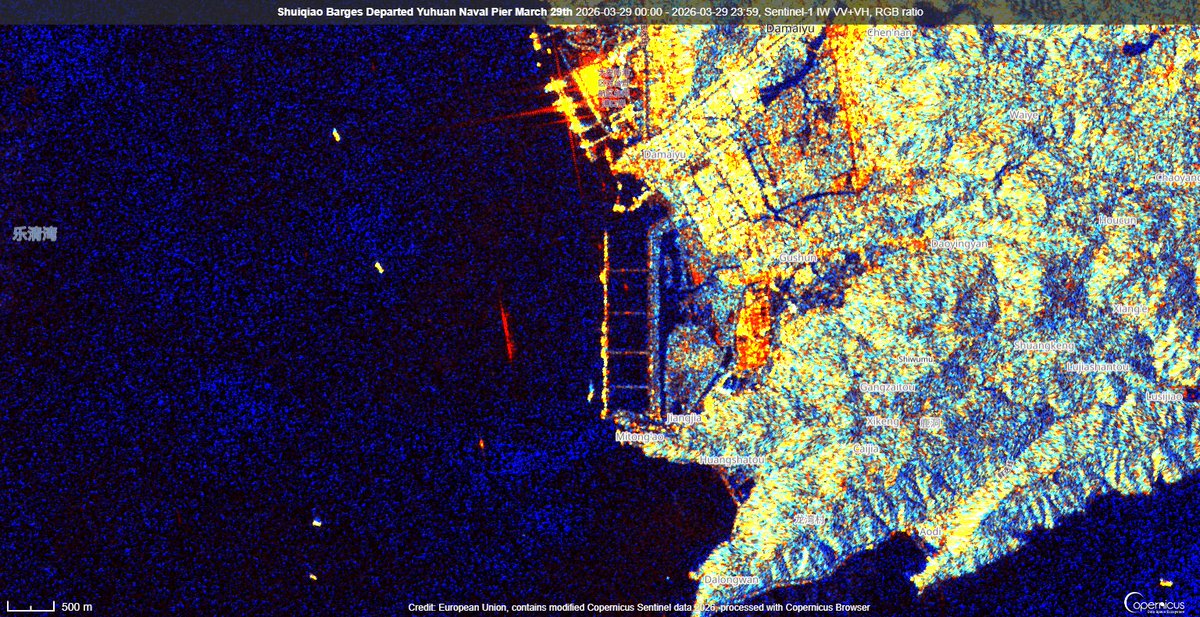
The RoRo docking with the Donggong402 occurred as the barges conducted a training exercise that spanned April and May. In late March, the barges departed Yuhuan Naval Pier and began to conduct a training exercise.
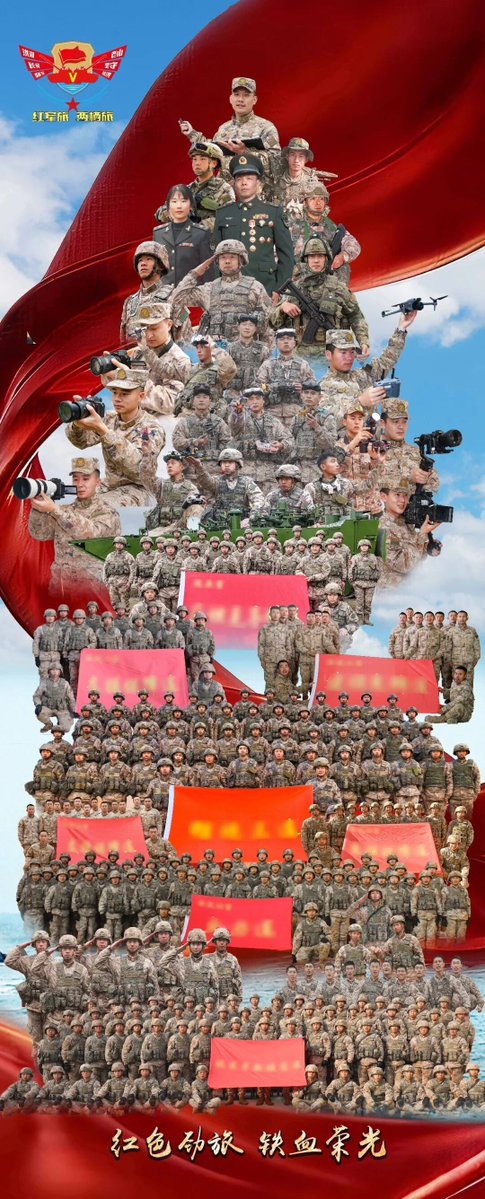
In March, an image appeared showing the PLA Army’s 5th Amphibious Combined Arms Brigade (ACAB) posing with honor flags the unit received for participating in conflicts, ranging from the Long March and Korean War to the Battle of Laoshan.
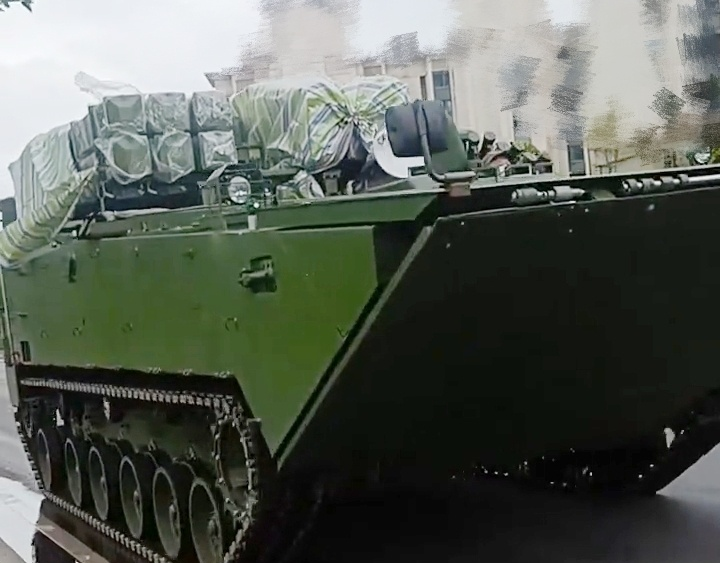
Additionally, the image depicted the Type 05 AFT-10 Anti-Tank Guided Missile (ATGM) carrier without its canisters and its retractable sensor suite stowed.
At least two Type 05 ATGM carriers were seen driving after being offloaded from a barge along the Yangtze River in Chongqing.
In late March, a PLA Navy (PLAN) Chemical, Biological, Radiological, and Nuclear (CBRN) company stationed at the Eastern Theater Command’s Zhoushan Naval Base conducted an emergency response training exercise.
The exercise involved the unit responding to a simulated nuclear strike, featuring an unscripted scenario with no predetermined plans and incorporating various improvised contingencies.
The unit first responded to an alert, with some donning MOPP Level 4 gear or gas masks depending on their role before loading onto their vehicles and heading to the simulated contamination site.
On April 27th, the Type 076/Yulan class LHA, the Sichuan, left Shili Military Port in Zhanjiang, to conduct its third sea trial in the South China Sea (SCS).
The vessel departed the Jiangnan Shipyard in Shanghai on April 20th and sailed towards the city of Zhanjiang.
The 6th Landing Ship Flotilla held a ceremony to celebrate the ship’s arrival to its new home port of Shili Military Port on April 23rd.
On April 4th, the Shuiqiao class Landing Platform Utility (LPU) barges are conducting an exercise at Hepu Dasha Beach at Nantian Island, Ningbo, Zhejiang Province.
The barges departed Yuhuan Naval Pier on March 29th and traveled to Nantian Island, where they began the exercise.
It should be noted that Nantain Island is in the same area as three of the five 40 day Notices to Air Missions (NOTAM) that China issued in late March.
In this Quick Take for the China Landpower Studies Center, I explain how the 112th Heavy Combined Arms Brigade (HCAB) will receive the ZTZ-99B Main Battle Tank (MBT) to develop the doctrine to effectively employ it during combat operations.