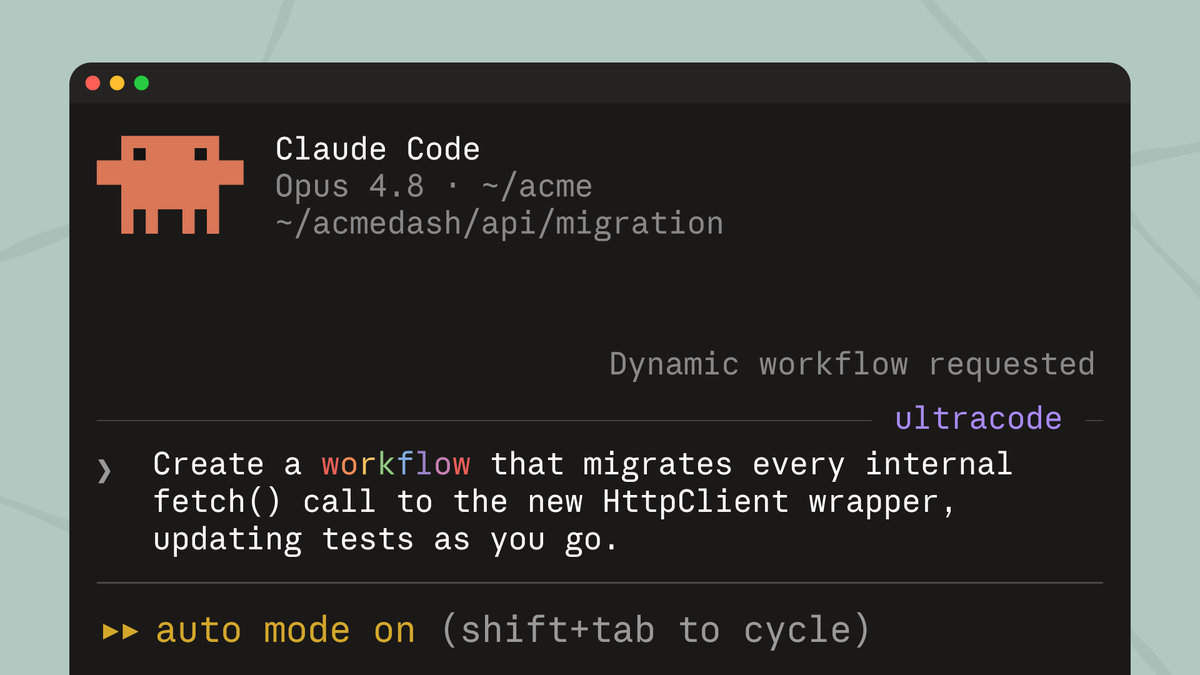
A few patterns we frequently use with Fable 5:
Use Fable 5 as an "advisor."
An executor (Sonnet 5) calls Fable 5 for guidance.
Most tokens are billed at the lower executor rate.
Use Fable 5 as an "advisor."
An executor (Sonnet 5) calls Fable 5 for guidance.
Most tokens are billed at the lower executor rate.
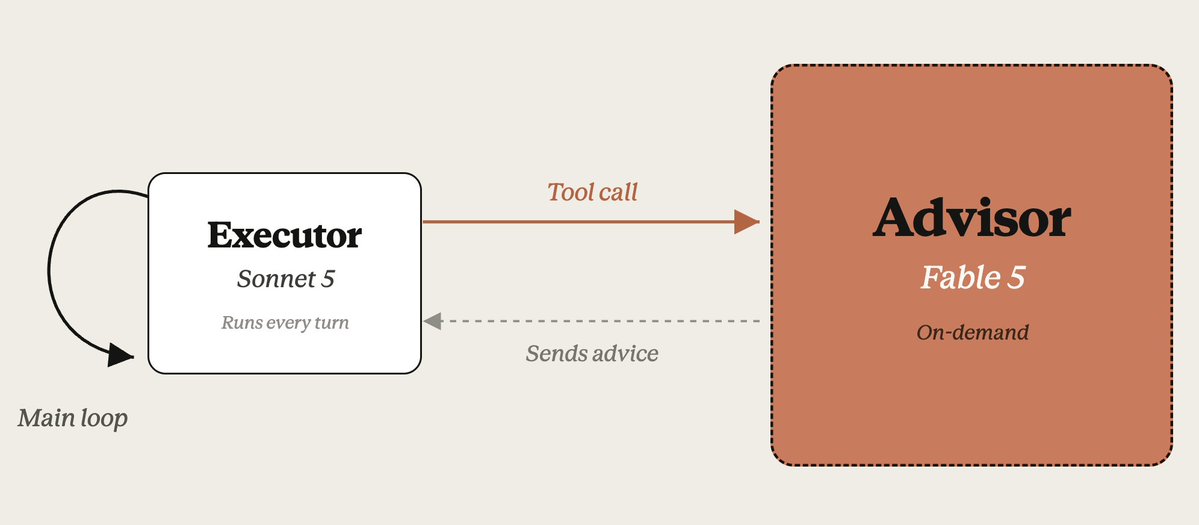
On SWE-bench Pro, Sonnet 5 + a Fable 5 advisor tool gets ~92% of Fable 5's score at ~63% of the price.
Fable 5 is called rarely (~once) per task to steer while Sonnet 5 executors the majority of the work.
See our docs to learn more:
platform.claude.com/docs/en/agents…
Fable 5 is called rarely (~once) per task to steer while Sonnet 5 executors the majority of the work.
See our docs to learn more:
platform.claude.com/docs/en/agents…

A second strategy: use Fable 5 as an orchestrator.
Fable 5 plans and delegates to workers (Sonnet 5).
Most tokens are billed at the lower worker rate.
Fable 5 plans and delegates to workers (Sonnet 5).
Most tokens are billed at the lower worker rate.

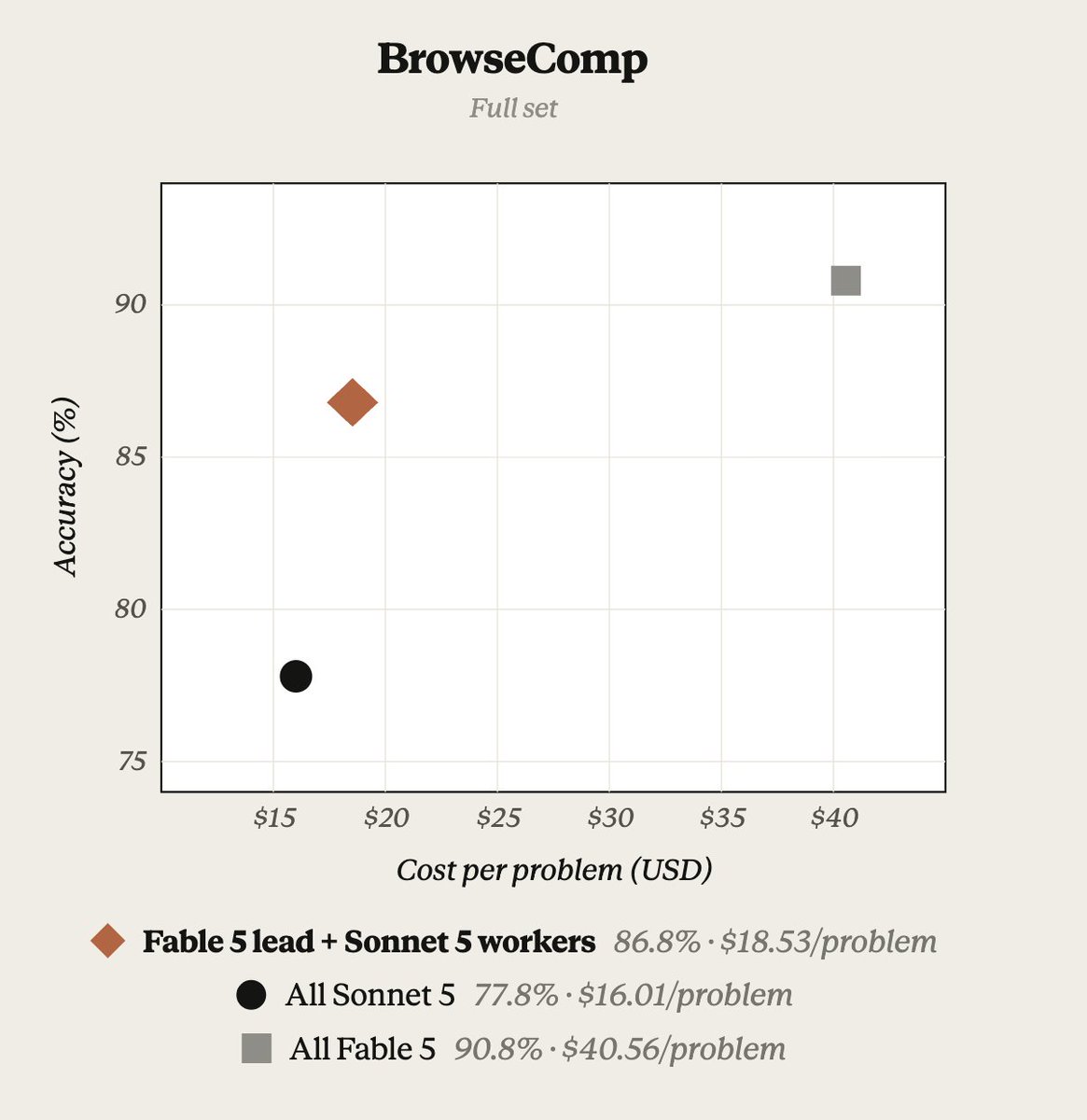
On BrowseComp, we tested Claude Managed Agents w/ Fable 5 orchestrator + Sonnet 5 worker sub-agents.
The Fable 5 orchestrator achieves 96% of Fable 5 performance at 46% of the price.
Token-heavy research is delegated to Sonnet 5.
See our cookbook:
github.com/anthropics/cla…
The Fable 5 orchestrator achieves 96% of Fable 5 performance at 46% of the price.
Token-heavy research is delegated to Sonnet 5.
See our cookbook:
github.com/anthropics/cla…
Claude Managed Agents supports both patterns with sub-agents.
Escalate up to a Fable 5 advisor, or delegate down to Sonnet 5 workers.
Each sub-agent keeps its own cache, so repeat calls don't pay in full for the same context twice.
platform.claude.com/docs/en/manage…
Escalate up to a Fable 5 advisor, or delegate down to Sonnet 5 workers.
Each sub-agent keeps its own cache, so repeat calls don't pay in full for the same context twice.
platform.claude.com/docs/en/manage…
• • •
Missing some Tweet in this thread? You can try to
force a refresh