There is a great deal of hubbub about a collective “middle powers”strategy these days.
At DoW, we are not concerned that this is a serious possibility. Rather, we are more concerned that a few allies and partners will *think it is* and waste valuable time, money, and political capital on a distraction. 1/
From our point of view, a collective middle powers strategy is based on a faulty understanding of international relations. We are flexible realists. So, we view the international scene through the prism of interest, geography, economics, military power, etc. “Middle powers” don’t have a coherent basis for alignment. 2/
It also isn’t borne out by reality, in our experience. We see an *upsurge* in desire for engagement with the United States, not a reduction. Under President Trump’s leadership, countries not only see the value of American engagement, they can no longer take it for granted. We unquestionably see an incredibly strong and continuing demand signal for U.S. military presence and engagement around the world. 3/
Take our defense industry and arms sales. There is a lot of commentary that, due to alleged frustrations with the United States, the American defense industrial base will lose out on the market for weaponry. But this is neither feasible nor accurate. 4/
The simple fact of the matter is that no alternative country or countries can compete with the U.S. defense industrial base, either in quantity or quality. The United States, as the President says, makes the best equipment, and we make it at a scale that no plausible competitor can match. If anything, access to the American DIB is a privilege, not a right. 5/
At the same time, American companies are at the forefront of advanced technology. There is no credible free world alternative to American tech and its implications for defense. 6/
This is not to say allies and partners should give up spending more or investing in their own DIB. *To the contrary.* More spending will help us all, and especially our allies’ own security. And we welcome allies’ investment in their own DIBs, but in ways that are collaborative with America’s rather than trying in vain to replicate or supplant it. 7/7
• • •
Missing some Tweet in this thread? You can try to
force a refresh

I represented @DeptofWar yesterday at the Ukraine Defense Contact Group. Our policy has been to encourage and enable Europe to take the lead in supporting Ukraine, and that that shift would be consistent with Ukraine's self-defense. That policy is working and we are leaning forward to continue it. 🧵 1/
“From the beginning of last year, this Administration has contended that Europe could and would take the leading role in providing for its conventional defense, including by providing the great bulk of support for Ukraine, and that such an approach would be consistent with a viable Ukrainian defense. We regard this policy as having been borne out.” 2/
“In the past year, European allies have taken the leading role in supporting Ukraine's defense, assuming the responsibility for the financial support of Ukraine as well as providing their own arms to Ukraine.” 3/
.@SecWar delivered a major speech at yesterday’s NATO Defense Ministerial, focused on doubling down and accelerating the shift to NATO 3.0. He also announced an important six-month review of our force and basing posture in Europe. 🧵 1/
“As I said in my first NATO Defense Ministerial last February, and as the Trump Administration has said again and again…our allies must step up. President Trump has been very clear on this point for many years, and over two administrations, and for too long, NATO has been a paper tiger and a one-way street.”
“That’s what defense spending commitments are all about, transforming NATO back into a real military alliance that’s focused on hard power and real deterrence. A NATO 3.0 modeled on the NATO 1.0 that won the Cold War, with our allies actually taking the lead in Europe’s conventional defense.” 3/
The United Kingdom has an extraordinarily proud military history. It commands our respect. There is again a great need for more British military strength in this critical time. We urge the UK to meet that need with urgency, scale, and determination. 1/
As I said recently in Normandy, “Here soldiers, sailors, and airmen from Great Britain and Canada demonstrated the courage, tenacity, dedication, daring, and loyalty that won them the lasting admiration and gratitude of the whole world – not only here in Normandy but also through the entirety of two World Wars…” 2/
…war.gov/News/Speeches/…
“at the Somme, Passchendaele, and Ypres in the Great War, and at Dieppe, El Alamein, and in the North Atlantic in the Second. Allow me, on behalf of my country, to pay special homage to them.” 3/
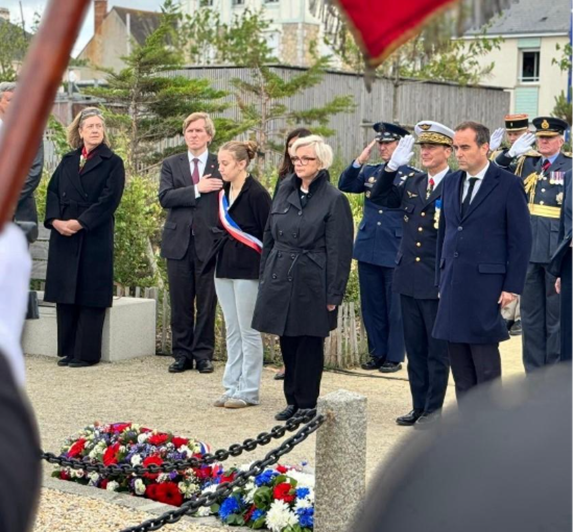
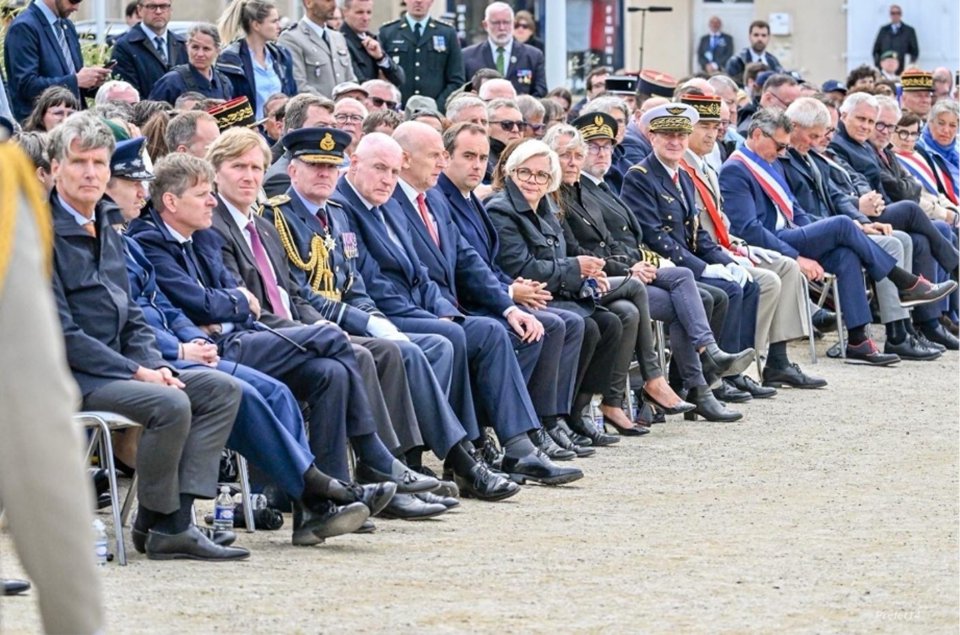
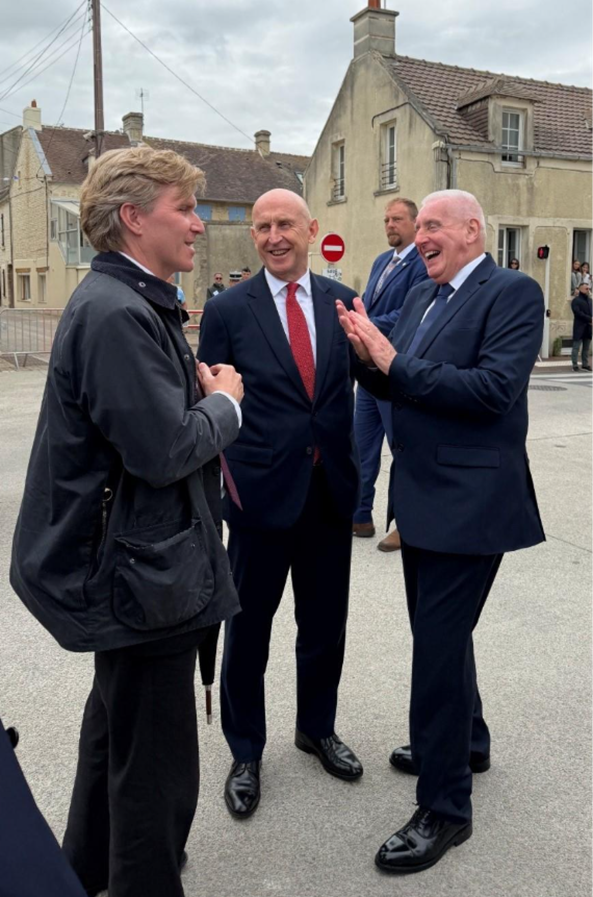
I had the great honor on Saturday to serve as the senior civilian American representative at the International Ceremony commemorating the 82nd D-Day anniversary. It was a particular privilege, as the U.S. representative, to honor all of our brave allies that day, but especially our British and Canadian allies, who played the leading role at the nearby Juno and Sword Beaches. 1/
In my remarks, I provided our salute to the “soldiers, sailors, and airmen from Great Britain and Canada, [who] demonstrated the courage, tenacity, dedication, daring, and loyalty that won them the lasting admiration and gratitude of the whole world – not only here in Normandy but also through the entirety of two World Wars.” 2/ x.com/USWPColby/stat…
I was honored to shake hands with veterans of the Free French forces and to honor the French battle flags. The Free French cause commands our respect, and I feel a particular personal admiration for it. My grandfather jumped into France with two Free French comrades and fought with the French Resistance in the Yonne Department, helping the Resistance clear the way for the charge of the Third Army under General Patton. 3/
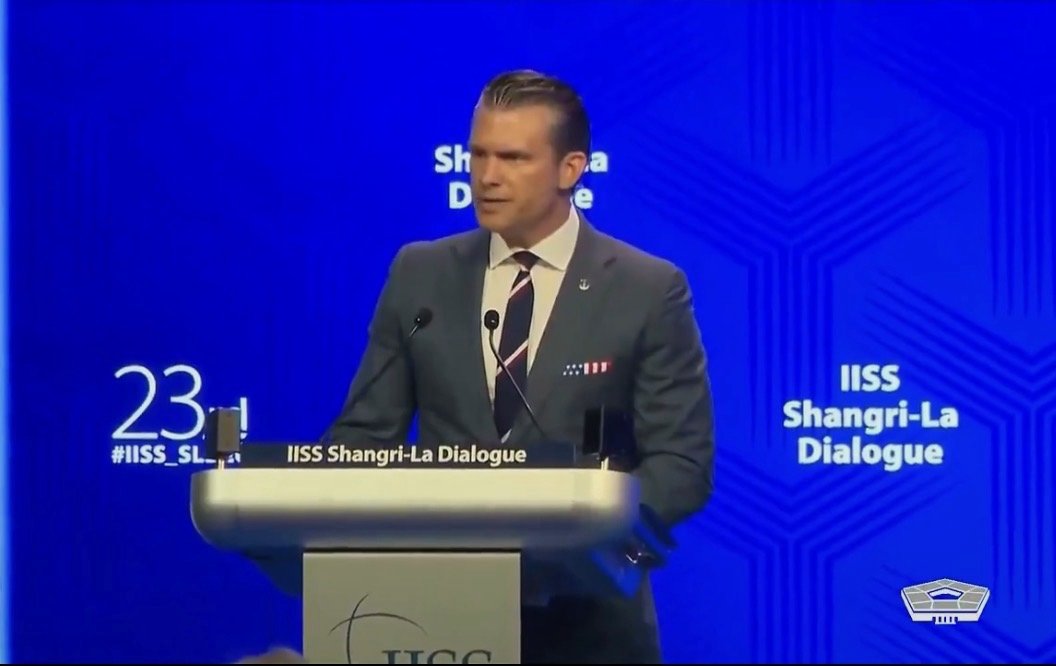
1/ Secretary Hegseth just delivered a seminal articulation of America’s strategy in the Pacific at the Shangri-La Dialogue – a “return to realism for the most consequential region in the world: the Pacific.” 1/
As @SecWar stressed, the Pacific “has profound implications for U.S. security and prosperity. It’s the world’s largest and most dynamic market area. It’s why our National Defense Strategy directs the Department of War to set the military conditions required to achieve a lasting and favorable balance of power in the Pacific region.” 2/
A major theme was a new model of alliance partnership based on interests, not values: “The foundation of this new approach is moving away from a model of dependency and toward one of true partnership, embracing a perspective that our partners in Asia have understood for decades.” 3/
This morning, Secretary Hegseth released his Posture Statement for his congressional testimony this week. This is a critical document that lays out the President and Secretary’s historic vision for the Department of War, America’s armed forces, and our allies.
A thread on some of the key points from @SecWar’s written testimony: 🧵1/
“The President’s budget will provide the defense industrial base the ability to double and, in some cases, triple or quadruple capabilities and capacities” as well as to build the facilities we need “to erase our foreign military sales backlog.” 2/
“[The] unipolar moment is over – and we have an opportunity to define what comes next. The Department of War is laser-focused on advancing an America First, Peace Through Strength, common sense agenda.” 3/