Record your screen while you do a task, talk through it as you go, and Claude turns it into a skill it can run again. Find it under Record a skill in the + menu of the Claude desktop app.
Available on Pro, Max, and Team plans.
• • •
Missing some Tweet in this thread? You can try to
force a refresh

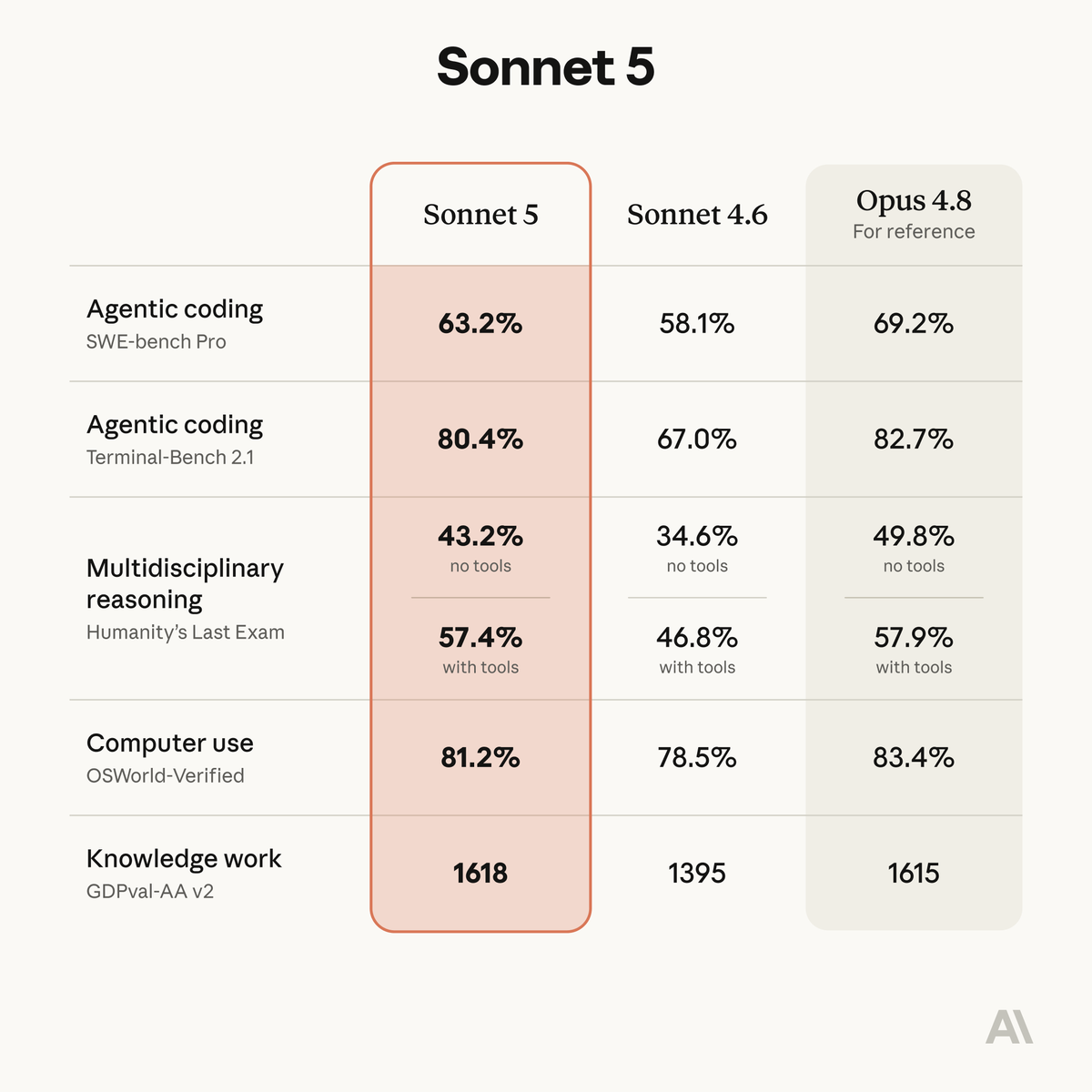
Introducing Claude Sonnet 5, our most agentic Sonnet yet.
It makes plans, uses tools like browsers and terminals, and runs autonomously at a level that just a few months ago required larger and more expensive models.
Sonnet 5 is a substantial improvement over Sonnet 4.6 on reasoning, tool use, coding, and knowledge work.
Its performance is close to Opus 4.8, at lower prices.
Early access partners found Sonnet 5 finishes complex tasks where previous Sonnets stopped short, checks its own output without being asked, and does all its agentic work at an attractive price point.
Introducing Claude Tag, a new way for teams to work with Claude.
In Slack, Claude joins as a team member with access to the channels and tools you choose. Tag Claude in and delegate tasks to it while you focus on other work.
Claude Tag is an evolution of Claude Code, made more proactive and built to work with a full team. It’s now one of the main ways we get things done at Anthropic: 65% of our product team's code now comes from our internal version.
Tag Claude with a request, and it breaks the task into stages, works through them with the tools it has access to, and responds in the thread with what it creates.
It'll write or merge pull requests, run data analysis, or help resolve an incident.
New in Claude Design: it stays on brand with your design system across projects, lets you edit directly on the canvas, syncs with Claude Code, and connects to more of the tools you already use.
Import your design system from a repo, design files, or your codebase. Claude builds with your real components and checks its own output against your design system before you see it.
The redesigned editor is steadier for daily work. New layout controls let you drag, resize, and align elements directly on the canvas.
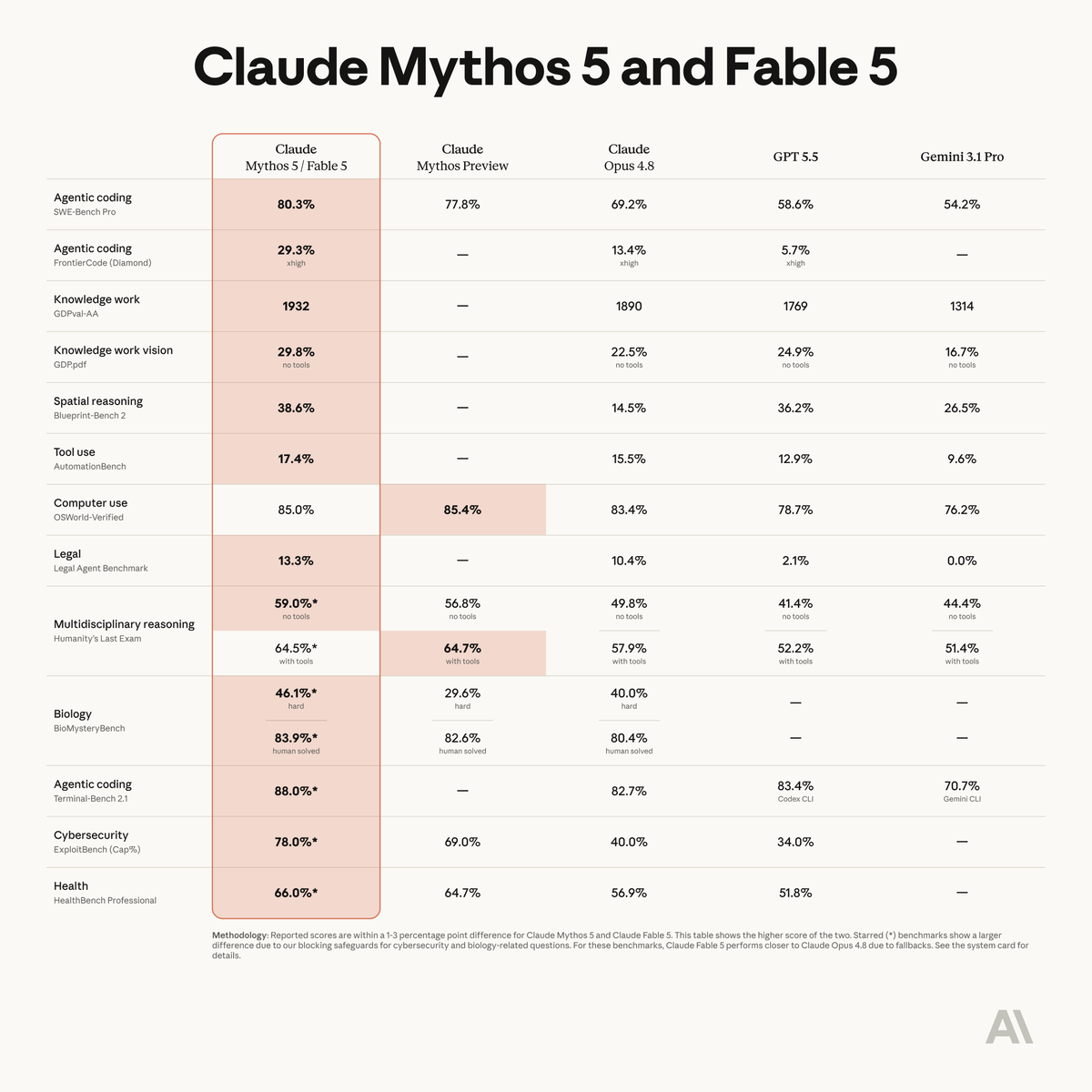
Introducing Claude Fable 5: a Mythos-class model that we’ve made safe for general use.
Its capabilities exceed those of any model we’ve ever made generally available.
Fable 5 is state-of-the-art on nearly all tested benchmarks, with exceptional performance in software engineering, knowledge work, scientific research, and vision.
The longer and more complex the task, the larger Fable 5’s lead over our other models.
Releasing a model this capable comes with risks. Without safeguards, Fable 5’s capabilities in areas like cybersecurity could be misused to cause serious damage.
Queries on a narrow range of topics will instead receive a response from our next-most-capable model, Opus 4.8.
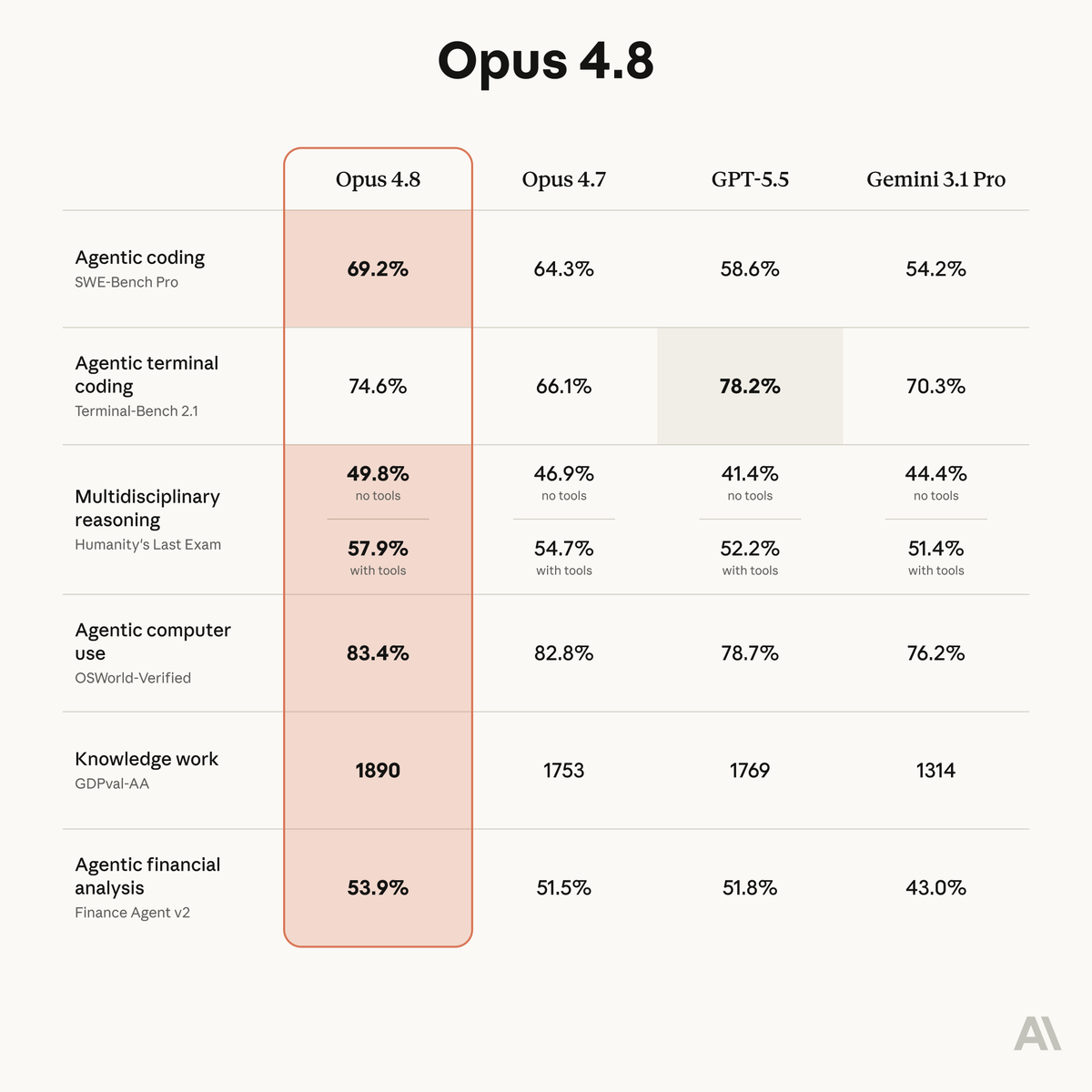
Introducing Claude Opus 4.8: it builds on Opus 4.7 with sharper judgment, more honesty about its own progress, and the ability to work independently for longer than its predecessors.
Available today at the same price.
Fast mode is available for Opus 4.8. It's the same model at roughly 2.5x the speed, and we've made it three times cheaper than before.
Turn it on with /fast in Claude Code. On the API, contact your account manager to request access or join the waitlist: claude.com/fast-mode
In Claude Code, Opus 4.8 makes calls like an experienced engineer without needing constant check-ins.
It stays on track across long-running sessions and follows work through in your repo, so you can hand off a feature or a bug sweep while you focus on what's next.