it's becoming increasingly clear that the next wave of traders will be agents 🤖
these agents require a powerful execution layer that enables them to execute a range of order types across every chain: DCA, stop loss, TWAP, sniping, and more
@DefinitiveFi's Flash API turns all of this into one integration, becoming the execution layer for every product — human or agent — that will ever need to trade onchain.
• • •
Missing some Tweet in this thread? You can try to
force a refresh

seeing an interesting trend around memecoins being used to bootstrap engagement and initial liquidity for early stage projects (versus projects prematurely launching their own native token or using a points system).
specifically around $degen 🎩:
- @perl_xyz awards $degen to users who engage with their daily games. they've now built native $degen on/offramping into their product, enabling consumers to withdraw/deposit $degen (to be converted to $perl). perl initially used their daily degen tips allocation, but was later given a 10m $degen grant.
- @drakulaapp (new onchain tiktok) was given a 20m $degen grant to rewards creators on the app. the price/value of each creator token is quoted in $degen.
- @Superfluid_HQ built a frame called StreamYoink that enables users to start earning a stream of $degen straight into their wallet until someone else "yoinks" it from them.
super cool behaviors. projects are bringing some "utility" to memecoins while memecoins are used to bootstrap early userbases for projects.
@perl_xyz @Superfluid_HQ @degentokenbase @Drakulaapp @degentokenbase has given 30m in $degen grants to these projects to experiment with their early cohort of users.
@perl_xyz @Superfluid_HQ @degentokenbase @Drakulaapp $degen immediately makes my offchain $perl points liquid.
recent consumer crypto app launches have shown us what is possible on the UX front with: web2-like onboarding/sign-ons via embedded wallets, gasless transactions enabled by account abstraction, easy signing with ios & android passkey infra, and clean mobile interfaces.
@blocktower, we’ve been talking a lot about how the emerging tech stack will radically improve the overall UX in consumer crypto.
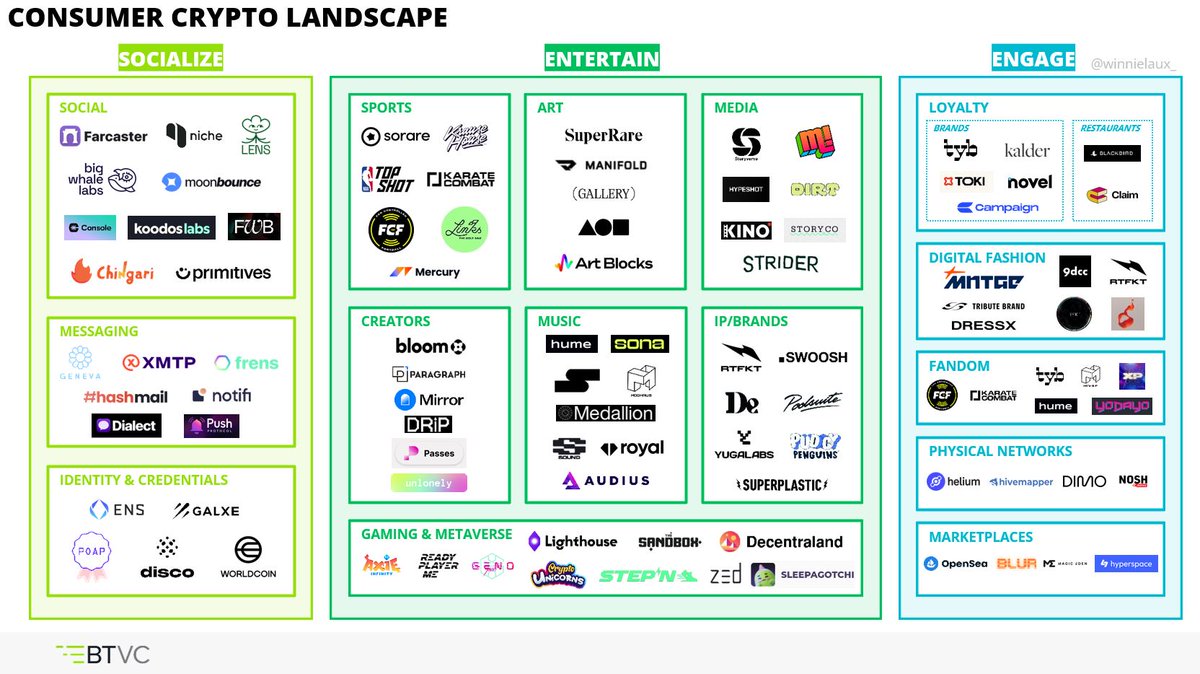
this class of dev tools, WaaS providers, abstraction platforms, and payment companies helps abstract away the complexities of crypto for everyday users, enabling consumer dapps to focus on building what they know best (e.g. social, sports, music, media, art, community, fashion).
to take a step back, we all know building in consumer crypto is 10x harder... because the end user may not be a crypto-native consumer who is willing to endure terrible UX for short-term profits.
while we’ve seen some early signs of product market fit in some of these categories i've outlined here, the scale and reach of consumer crypto dapps do not compare to their web2 counterparts.
this summer, we conducted a survey across undergraduate blockchain clubs in the US to learn more about how college students today are using and thinking about crypto. one area we wanted to better understand was their pain points around crypto ux.
we learned that scams are the biggest reasons why younger generations are apprehensive about engaging with on-chain applications (47%) for fear of getting their wallets drained by suspicious transactions.
poor UX is one of the main reasons why crypto has been slow to be adopted among college campuses. this can be categorized as high transaction fees (41%), complex seed phrase management (27%), protocol complexity (16%), and difficulty with signing transactions (12%).
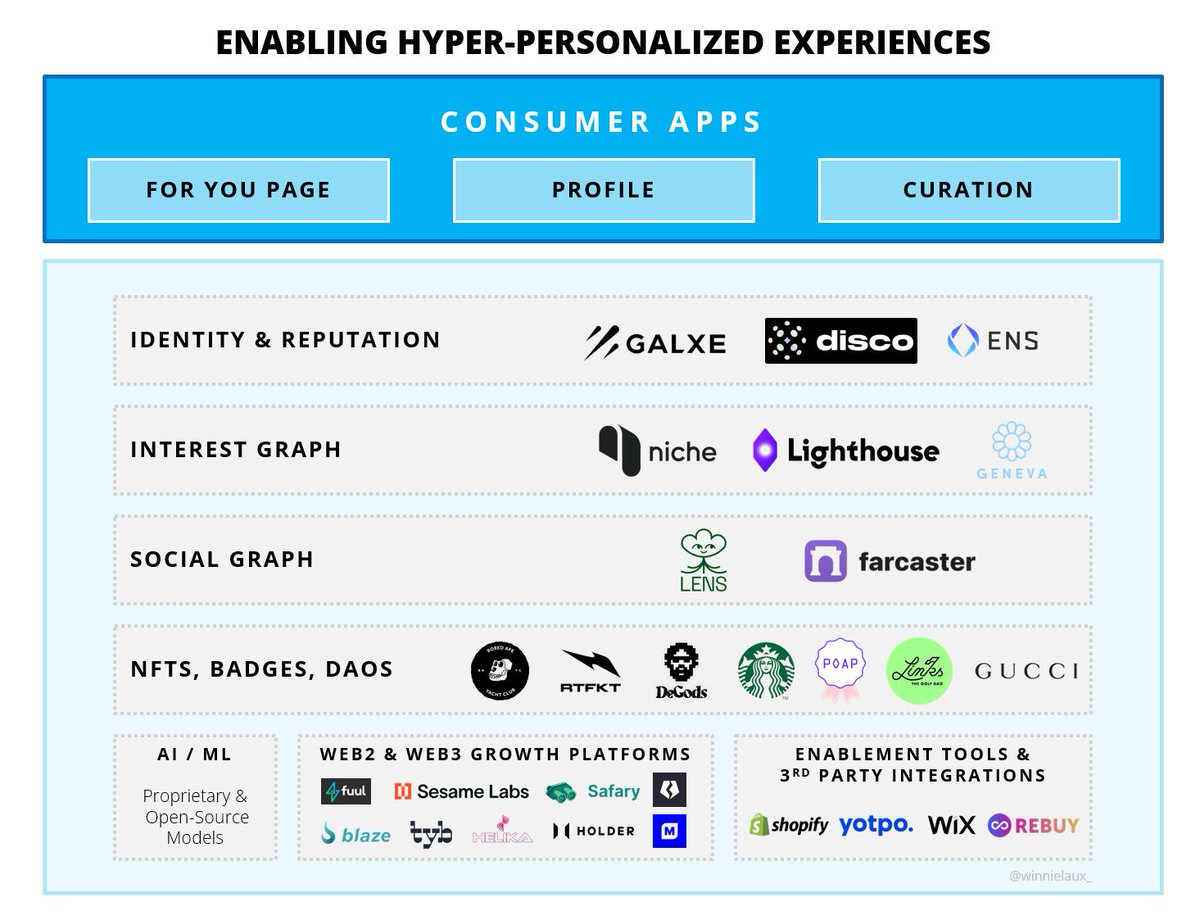
the future of consumer applications will become hyper-personalized.
while there’s been a lot of discussion around emerging social graphs (eg @lensprotocol, @farcaster_xyz), interest graphs (eg @nicheprotocol), identity layers (eg @discoxyz, @galxe), affiliations (eg badges, reputation), and on-chain activities, I am much more excited about what they all enable for the modern consumer.
web3 coupled with AI advancements enables consumer platforms to take composable on-chain data and tailor recommendations based on one’s social & interest graph, past purchases (across multiple companies), and NFTs
let me elaborate on what a hyper-personalized discovery experience looks like across different consumer verticals. on the same app, users will see a different song, recipe, menu item, or product than the person next to them… similar to TikTok's for-you page and algorithm. 📱
on food delivery platforms (eg @DoorDash, @UberEats), users will be recommended menu items tailored towards their preferences, dietary restrictions, past orders, price range, and more. 🍱
rather than scrolling through a generic list of restaurants and an unfiltered menu, platforms like @NutriosProtocol enable creators/restaurants to build composable “recipes” while platforms like @NoshDelivery can help deliver them.