Can a glass of juice really add an hour of sleep? In a small RCT it did. (1/7)
In a double-blind, placebo-controlled crossover trial in 8 completers >50 years old with chronic insomnia (Losso et al., American Journal of Therapeutics, 2018), drinking 240 mL (8 oz) of Montmorency tart cherry juice twice daily for 2 weeks increased (2/7)
polysomnography-measured sleep time by 84 minutes per night (p=0.018). The proposed mechanism: cherry procyanidin B-2 inhibits indoleamine 2,3-dioxygenase (IDO), which raises tryptophan availability for serotonin and melatonin synthesis. (3/7)
Honest caveats: tiny sample (n=8), 2-week duration, and Montmorency tart cherries carry ~15-20 g of natural sugar per 8 oz serving. Not for people with diabetes, poor glucose control, or on blood thinners. (4/7)
A 2025 systematic review found the sleep signal is real but inconsistent across trials.
Today's drop: If you struggle to stay asleep, try 8 oz of unsweetened Montmorency tart cherry juice in the morning and again 1-2 hours before bed for 2 weeks. (5/7)
Sleep is when the metabolic housekeeping happens - glucose regulation, growth hormone pulses, and glymphatic clearance in the brain. Fix sleep first and half of the downstream metabolic dysfunction gets easier. (6/7)
Is rapamycin the anti-aging pill we've been promised?
The PEARL trial — the most rigorous human study of low-dose rapamycin for aging to date — was analyzed in a July 2026 review, and the honest read matters. (1/9)
PEARL was a decentralized, double-blind, placebo-controlled RCT in healthy adults 50-85 taking low-dose rapamycin for one year (NCT04488601). Study design was solid: randomized, placebo-controlled, prospective. (2/9)
What it actually showed: low-dose rapamycin was likely safe over 12 months in healthy adults. Some secondary signals suggested benefit — particularly in women, in areas like lean mass and pain. That's genuinely interesting. (3/9)
New in The Lancet (published July 12, 2026): the LatAm-FINGERS randomized controlled trial in 1,065 older adults across 11 Latin American countries. (1/7)
Two years. Two groups. Same population. One structured lifestyle program (supervised exercise 4x/week, MIND diet coaching, computerized cognitive training, cardiovascular risk monitoring, 38 group meetings) vs. general lifestyle advice (4 total meetings). (2/7)
Result: the structured group improved 55% more on global cognition, plus significantly greater gains in memory, executive function, and processing speed. Benefits held across age, education, ethnicity, and APOE ε4 (highest-inherited-risk) carriers. (3/7)
The conventional wisdom that only medication moves blood pressure meaningfully is wrong. (1/8)
A meta-analysis in the Journal of Hypertension pooled five randomized controlled trials (390 adults) of Hibiscus sabdariffa — sour tea — versus control. Result: systolic BP fell 7.58 mmHg and diastolic BP fell 3.53 mmHg. (2/8)
A 2022 Nutrition Reviews meta-analysis of 17 studies confirmed a similar systolic drop, with the biggest effect in adults with elevated BP at baseline. (3/8)
New in Nutrition Reviews (Prokopidis, 2024): a meta-analysis of 10 placebo-controlled RCTs found daily creatine monohydrate modestly improved memory in healthy adults — with the biggest effects in older adults, vegetarians, and the sleep-deprived. (1/6)
Effects were small-to-moderate (SMD ~0.29 for memory) but consistent at 3-5 g/day for 2-24 weeks. Creatine regenerates ATP inside neurons, giving brain cells more available energy under cognitive or metabolic stress. (2/6)
Caveat: most trials were small (under 100 participants, under 6 months). The signal is real but modest — not a nootropic magic bullet. Benefits are largest when baseline stores are low. (3/6)
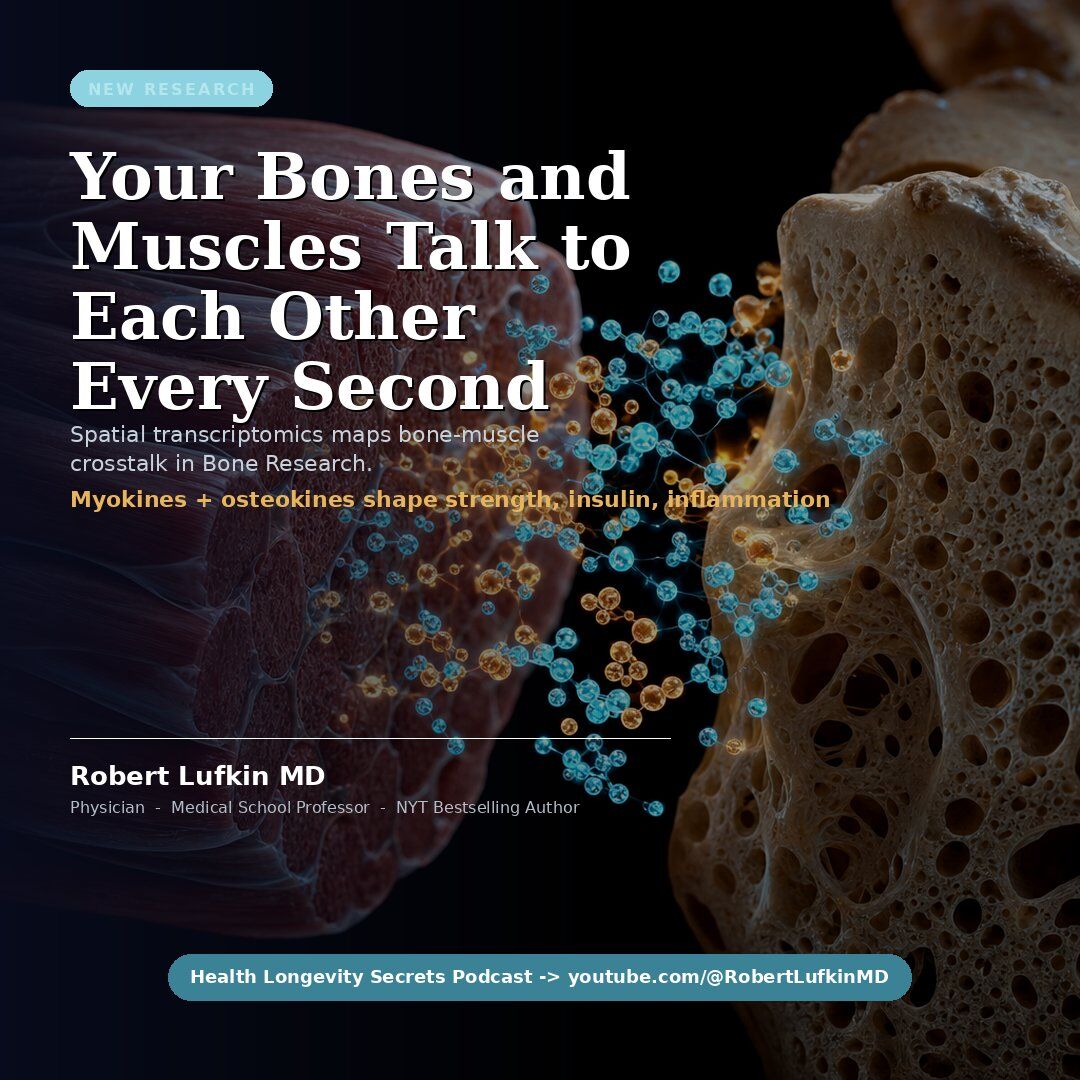
Your bones and muscles talk to each other every second of every day. New research just mapped exactly how. (1/8)
In a study in Bone Research, scientists used spatial transcriptomics to build the first cellular-resolution map of communication between bone and skeletal muscle. (2/8)
They identified specific signals -- myokines from muscle, osteokines from bone -- that shape strength, insulin sensitivity, and inflammation. (3/8)
New in the New England Journal of Medicine: a randomized crossover study found that one or more cups of coffee daily cut sleep by an average of 36 minutes over 2 weeks compared to abstaining. (1/8)
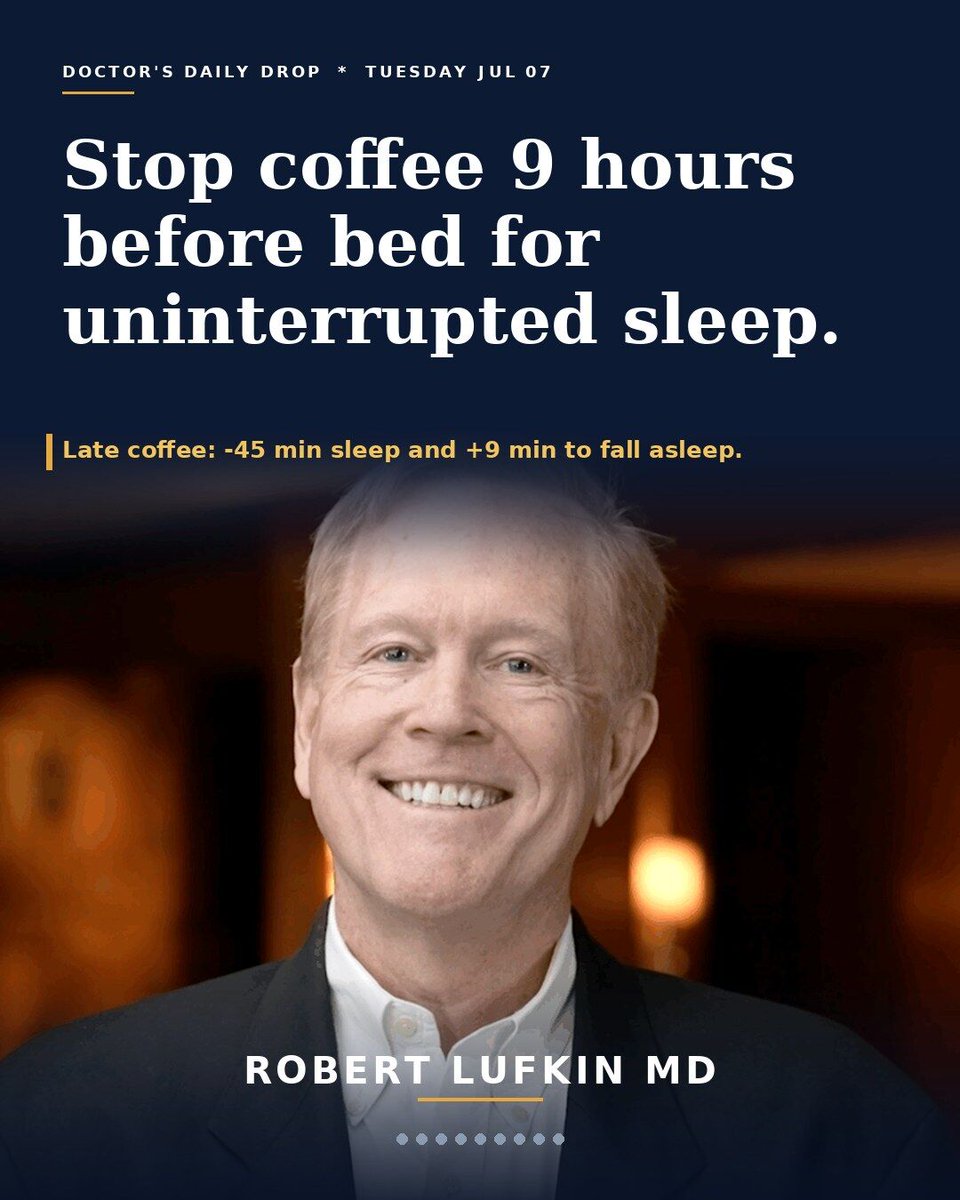
A 2023 meta-analysis of 24 caffeine-sleep RCTs put a hard number on the timing rule: to protect sleep, finish your last cup at least 9 hours before bed. (2/8)
Get closer to bedtime and the damage compounds: total sleep drops by up to 45 minutes and sleep onset stretches ~9 minutes longer. (3/8)