Introducing Classifiers, now in beta.
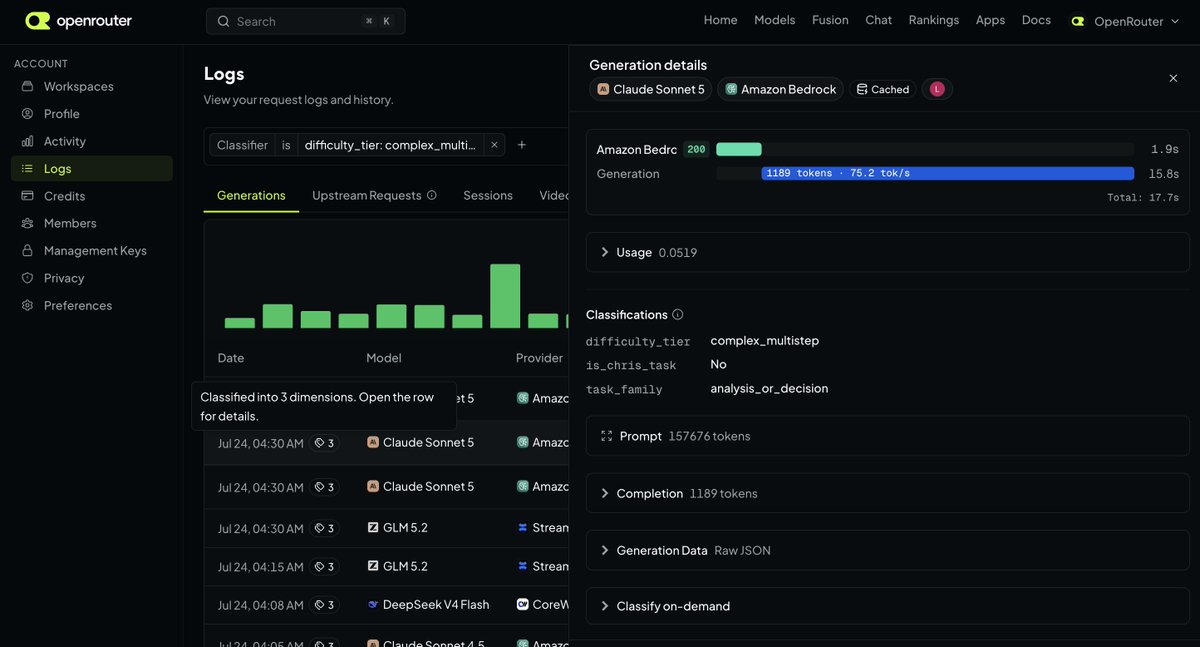
Tag inference in your workspace by task type, department, agent complexity, or whatever you care about. Then filter your logs or visualize your Activity.
Here's our internal model spread across task types 👇
Tag inference in your workspace by task type, department, agent complexity, or whatever you care about. Then filter your logs or visualize your Activity.
Here's our internal model spread across task types 👇
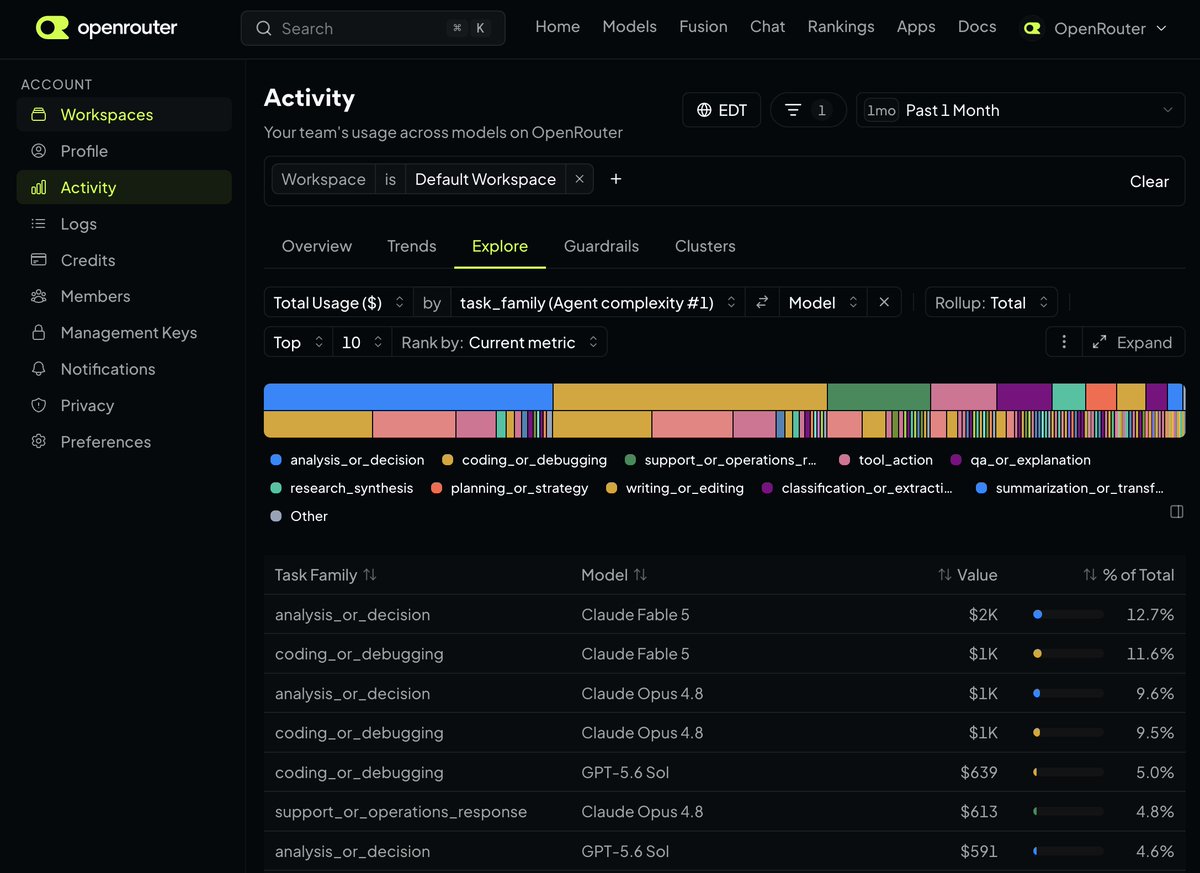
A classifier is four things: a taxonomy of up to 8 dimensions, a classification prompt, a model to apply it, and a sampling rate.
We include six presets you can use to start quickly. Classification runs async after each request, so it adds *zero* latency to your inference path.
We include six presets you can use to start quickly. Classification runs async after each request, so it adds *zero* latency to your inference path.
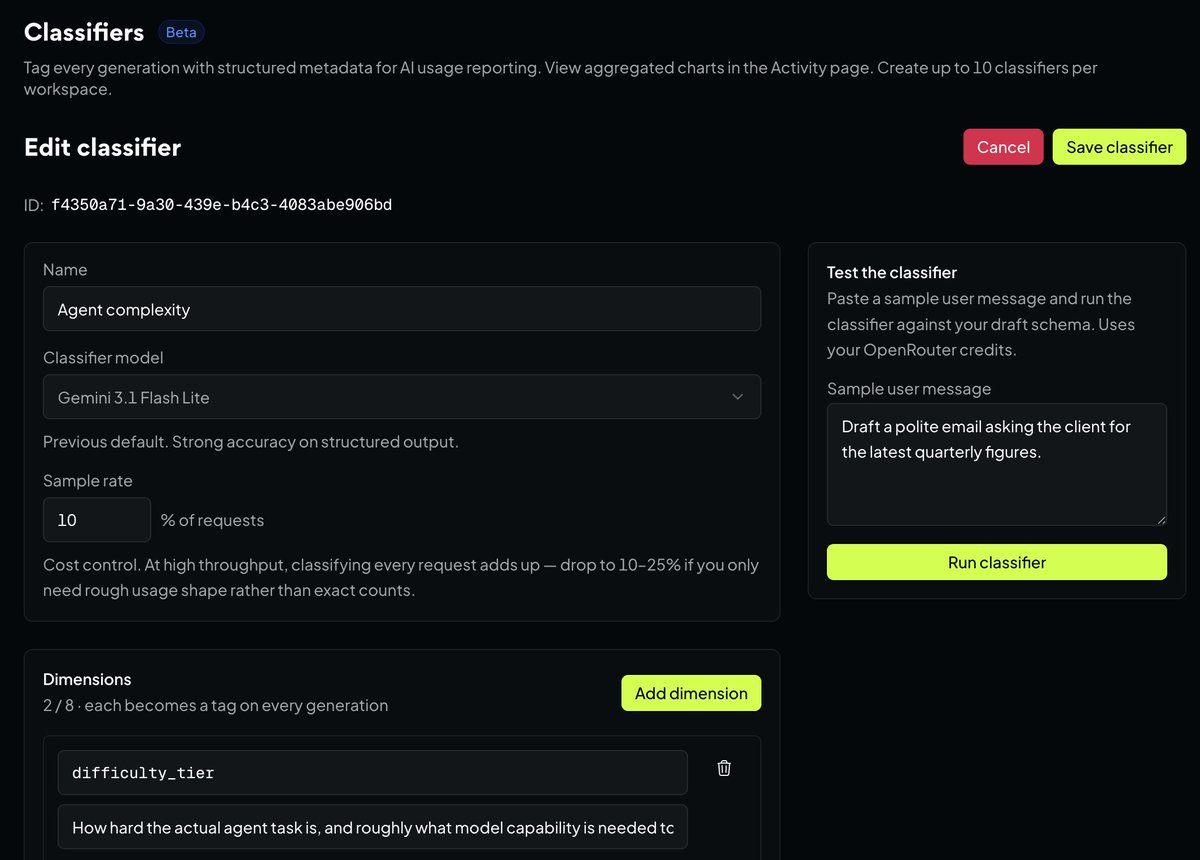
Here's our own internal inference, grouped by task family and model.
Analysis and coding dominate, and you can see exactly which model is absorbing each one.
Invert the grouping to e.g. see where GPT 5.6 Sol is being used the most.
Analysis and coding dominate, and you can see exactly which model is absorbing each one.
Invert the grouping to e.g. see where GPT 5.6 Sol is being used the most.


Classifiers can work even with prompt logging disabled, and attach on each individual generation for full inspectability.
Create one in your workspace, or read the docs:
openrouter.ai/docs/guides/fe…
Create one in your workspace, or read the docs:
openrouter.ai/docs/guides/fe…
More info in our blog: openrouter.ai/blog/announcem…
• • •
Missing some Tweet in this thread? You can try to
force a refresh