
When a toxic smog darkened the skies over Delhi last weekend and air pollution peaked, Nabeela Moinuddin and Fareeda - living on opposite sides of the economic divide - were panic-stricken for their families.
A 🧵on @neha_5 & my story on #DelhiPollution
in.reuters.com/article/uk-ind…
These are just two stories from New Delhi's toxic bubble, where more than 20 million people trapped and helpless every winter.
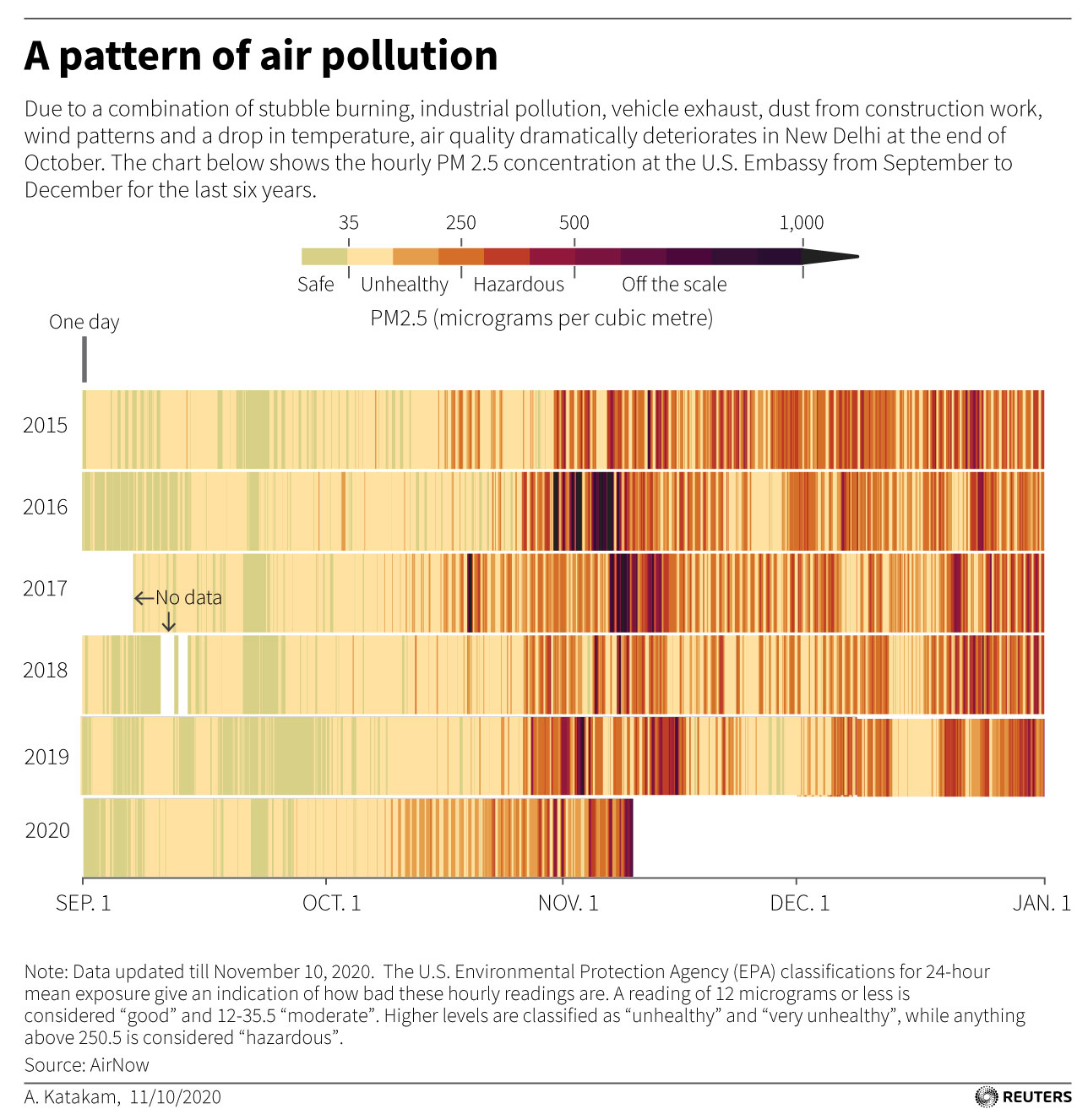
The culprits: Burning of crop residue in farm belts surrounding Delhi, industrial and vehicular pollution, and dust from construction projects.
Then there's also low winds and colder air that comes down from the Himalayas.
Here's a useful @ReutersGraphics viz by Anand Katakam on just how bad it gets around this time of the year - every year.
graphics.reuters.com/INDIA-POLLUTIO…
In tony Nizamuddin East:
Nabeela knew the risks of moving to Delhi with a young family - her youngest, 3-year-old Mehreen, had to be hospitalised with pneumonia during a visit to Delhi in 2017.
So they prepared themselves, air purifiers et al.
Last week, as Delhi's AQI started steadily rising, Nabeela moved quickly.
In three days, they went on to spend Rs 25,000 buying purifiers, plants, masks and an AQI meter.
Then, it went past 900 on Sunday.
“At that moment, we felt very, very helpless,” she said.
Some Nizamuddin East residents packed their bags and took off to places with clear air - people like former Indian cricket Ajay Jadeja.
“But what else can you do? You can’t breathe, so you escape for a few days,” he told @neha_5 by telephone from Goa.
Only his dogs remained.
In Nizamuddin Basti:
For Fareeda & her family, leaving Delhi isn't an option on a monthly household income of Rs 12,000.
She locked up her youngest kids at home and hunkered down. But the pollution streamed in from a large, shutter-less window - the only opening in their house.
When she or the kids step out, they use handkerchiefs and dupattas.
"I find masks very cumbersome,” she told us. The kids don't like them either.
She had got some money plants and wrapped them around the grill of that window, but rats ate them. But Fareeda will try again.
There's not much more her family can do.
“We don’t know how we’ll pay for food every night,” said her husband Abdul Hanif, an electrician with a heart ailment. “How can we think of an air purifier?”
/ENDS.
Share this Scrolly Tale with your friends.
A Scrolly Tale is a new way to read Twitter threads with a more visually immersive experience.
Discover more beautiful Scrolly Tales like this.