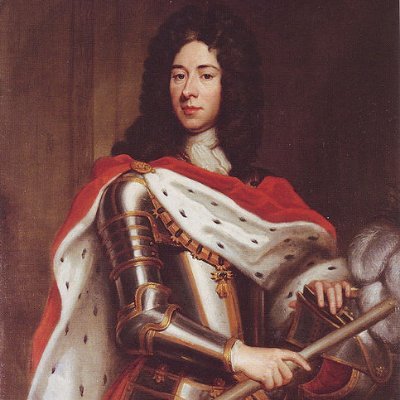
25 October is anniversary of the famous battle of Agincourt in 1415.
Celebrated as one of the finest examples of a victory against all odds, the English defeated a much larger French army.
Let's explore this battle and why the French failed! 🧵
The battle happened as part of campaign of English king Henry V.
In summer of 1415 he invaded France with a large army and besieged the port of Harfleur.
He choose the right time to attack France which was plagued by internal divisions and ruled by an inept king.
But the siege of Harfleur took longer than expected.
Also the English had problems with diseases.
It was the worst possible weather as summer heat was followed by a very wet autumn.
Many died or deserted.
By the time the English conquered Harfleur and established their authority over the port by early October, the campaigning season was already over.
The sensible decision would be to return to England and regroup.
But Henry V decided to continue campaign.
Henry's campaign was not just a military pursuit but also political.
He wanted to symbolically show his control over French lands and decided to march from the newly conquered Harfleur towards another English port of Calais over the French territory.
But this march of the weakened English army gave the French enough time to raise and imposing army which assembled around Rouen.
The French plan was to intercept Henry V and his army which numbered around 8000 men at the time.
They offered King Henry V open battle!
Henry declined open battle and marched on.
"We march straight to Calais ... We do not seek a battle but neither shall we be moved by fear to march more quickly than we wish to do. Do not interrupt our journey, for the consequence will be a great shedding of Christian blood."
However the French ultimately managed to completely block Henry's path towards Calais and forced him to do battle.
The English saw the intimidating sight of a much larger French army that numbered between 20-30k men.
The battle would happen near Agincourt on 25 October 1415.
In this battle, 6-8k exhausted, starving and diseased Englishmen would defeat 20-30k fresh Frenchmen.
It's easy to see why this battle has been seen as a miracle, but once we study it closer there are perfectly rational reasons for why this happened.
The French had already experienced similar devastating defeats in the past such as at Crécy in 1346 and Poitiers in 1356.
In these battles, the famed English longbowmen stopped the momentum of French charges from a defensive position with a barrage of arrows.
But the French learned from these defeats. The battle of Agincourt would be a little different.
The French in fact had a very good plan before the battle devised by very capable commanders Constable d'Albret and the illustrious veteran warrior Marshal Boucicaut.
D'Albret and Boucicaut preferred a more cautious approach in how to deal with the threat of English longbowmen.
They also realized that the French didn't even need to go to battle to win it. They just needed to wait until the starving English army would collapse without fight.
However on the day of the battle, d'Albret and Boucicaut were not able to assert their authority over the more prestigious nobles like the powerful Dukes of Orléans, Alençon and Bourbon.
Despite being technically in charge, they could not command the army and execute their plan.
And this was the main problem of French. Their army was effectively without a commander.
With their king being the insane Charles VI "the Mad" who was absent from the battle, no one had the authority to truly lead the assembled army of prestigious but hotheaded nobles.
Because of the honor culture and bravado of French nobility running unchecked, the whole battle was turning into a comical disaster before it even began.
The infantry formations could not form properly because all the nobles wanted to be in first lines out of prestige and honor.
The battlefield at Agincourt was very narrow because of the surrounding woods and now you had nobles cramped together, trying to push each other aside to stand in the first line.
For the same reason, the lowly archers and crossbowmen were pushed way behind, making them useless.
The French army had absolutely no discipline and this was already observable the night before. While Henry V ordered the soldiers in his camp to be totally silent on the eve before the battle to remain concentrated, the French were throwing parties as if they had already won.
The terrain at Agincourt was very muddy which also worked to English advantage. The English took defensive positions and deployed sharpened stakes to prevent cavalry charges against their archers while also hiding some of their longbowmen contingents in the woods for ambushes.
However time was working against the English due to disease and starvation. They were desperate for battle.
But the French attack didn't come so Henry V decided to make a risky move and slowly moved his army forward into longbowmen range to commence the battle himself.
And this is the most ridiculous example of how ineffective the French army was that day due to lack of leadership and discipline.
They allowed the English army to march towards them unopposed instead of using this perfect opportunity to charge with heavy cavalry.
The French allowed the English longbowmen to take their time to redeploy their sharpened stakes to prevent the feared cavalry charge.
The longbowmen were now in range to fire at the French.
This gave Henry V the chance to begin the battle.
Sir Thomas Erpingham orders the longbowmen to shoot!
The battle of Agincourt commences with a barrage of arrows!
The French are in shock! They thought they were the once in control of the pace of the fighting.
The attack by the longbowmen threw the French further into chaos.
The impetuous French nobles wanted to fight as they saw it insulting that such a petty English army would dictate the fighting.
The French responded with a cavalry charge of armored knights.
But this was literally the worst thing they could have done.
The English longbowmen were protected from cavalry charges by sharp stakes.
While the French knights were also well protected in their advanced armor, the longbowmen aimed at the less protected horses.
The French cavalry charge proved to be completely useless.
Not only were they not able to penetrate the lines of longbowmen due to sharp stakes, their numbers were also depleted because due to indiscipline, a lot of knights wandered off during the long wait for the battle.
Most of the French knights were dismounted so they would be less vulnerable to archers.
As their cavalry recklessly charged, they followed behind.
They were all cramped together in the narrow battlefield and had difficulty advancing through the thick mud.
Furthermore as the cavalry charge failed, the French mounted knights had no place to retreat due to woods.
They rode back into their own infantry. Wounded horses run amok and trampled some of the French footmen!
This retreat further disrupted the French infantry advance.
The French infantry knights had to have their visors down due to rain of arrows.
This made it harder to breathe as they had to wade through mud carrying the heavy armor on them, each step becoming excruciating.
By the time they reached the English lines they were exhausted.
However that doesn't mean that the battle was easy for the English.
Fierce melee ensued between dismounted French and English knights when the French finally reached them.
The French pushed the English back quite a bit.
The French knights fought bravely!
Their first lines consisted of the most illustrious warrior nobility. They had to live up to their ideals of chivalry and honor!
But the French were in a bad position.
The English longbowmen who were hiding in the forest picked up melee weapons and ambushed the French from the flanks!
Wearing only light armor, the longbowmen were able to move better through the mud.
The numbers seemed to have also worked against the French. They were cramped together with some unable to properly wield their weapons and their fellow French knights pushing from behind.
All of this while wading through the mud and stakes.
Screams of agony!
Many heavily armored knights fell in the thick mud and were unable to get back up.
Some of them would die from drowning and suffocation.
Some French knights laying on the ground received the "dagger of mercy"!
The casualties were piling up and the French assault was losing any momentum it might had.
The battle was turning into English favor.
King Henry V also participated in the melee!
The English also suffered casualties among important nobles. Duke of York and the young Earl of Suffolk died fighting.
King Henry V was also in danger at one point.
Once again it was the lack of a disciplined formation that was the main cause of French failure.
They failed to utilize their numbers. The French at the back were trying to literally add weight but they only pushed the men in front lines into English lances.
As the first and second lines of French assault were mowed down, the soldiers in the back were demoralized and began retreating.
The French assault failed!
The field was covered with dead bodies.
The English captured numerous prisoners.
Fearing further French assaults, Henry V decided to kill all the English prisoners except the highest ranking nobles.
No mercy was shown as his archers ruthlessly executed the prisoners!
This decision was controversial among the English nobility not just because it was against chivalry but because it prevented them from collecting ransom money from wealthy captured noblemen as was customary in such battles.
But Henry wanted to win at any cost.
But there were no further assaults.
The demoralized French retreated.
The victory at Agincourt became legendary and romanticized until modern day. Henry V would achieve immortal fame.
While the defeat of the French can be attributed to the impetuous bravado and indiscipline of the nobility, it also revealed deeper problems in medieval military.
The offensive capabilities of medieval armies were simply very limited since these weren't professional armies.
That means that the units were not drilled to cooperate with each other and execute complex tactical maneuvers.
Armies were assembled ad hoc for campaigns only and were not trained to fight as a cohesive army.
D'Albret and Boucicaut wrote down a good plan before the battle which was preserved in a manuscript and involved flanking and rear attack on the English.
But the ad hoc assembled medieval French army was simply not drilled enough to perform things like this effectively.
We saw shades of Boucicaut's plan during the battle when a lone party of French soldiers attacked the English camp at Maisoncelles.
But they were more concerned with looting than following up on this and performing a rear attack.
It's not really known when at what stage of battle this attack on English camp happened but it concerned King Henry V greatly and some claimed that this was the reason why he executed all those prisoners, fearing a new French assault from both sides.
Ultimately, Agincourt is just one of many examples of how chaotic and unpredictable medieval battles were.
You can see how such battles fueled the contemporary mindset that victories are given by God alone, emboldening smaller armies to take on larger ones, hoping for a miracle.
If you're interested in more details about battle of Agincourt I suggest these two books,
Agincourt 1415: Triumph Against the Odds by Matthew Bennett
Armies of Agincourt (Osprey Series)
Also The Hundred Years War by Robin Neillands on the conflict as a whole.
Share this Scrolly Tale with your friends.
A Scrolly Tale is a new way to read Twitter threads with a more visually immersive experience.
Discover more beautiful Scrolly Tales like this.