It is pretty clear that the U.S. tax reform had a large impact on the U.S. BoP data: FDI flows reversed in 2019, as U.S. firms brought back past investments).
But it also may be mucking around with the global data. The fall in inward FDI to the EA correlates with US tax reform
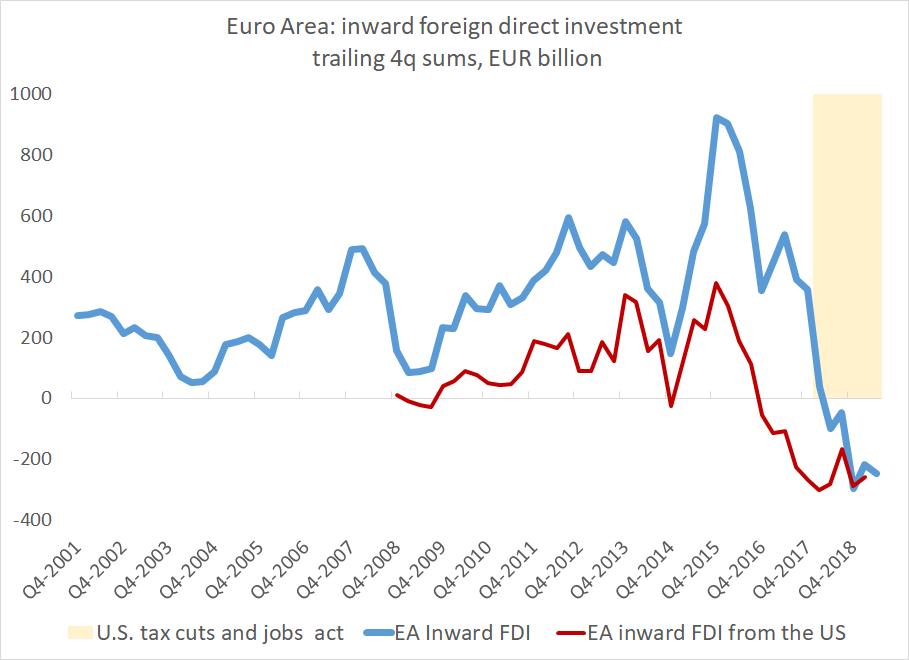
The fit isn't perfect -- the EA data indicates that investment from the US fell off before the tax reform, and I don't understand the mechanism why investment from others into the EA would fall with the US tax reform
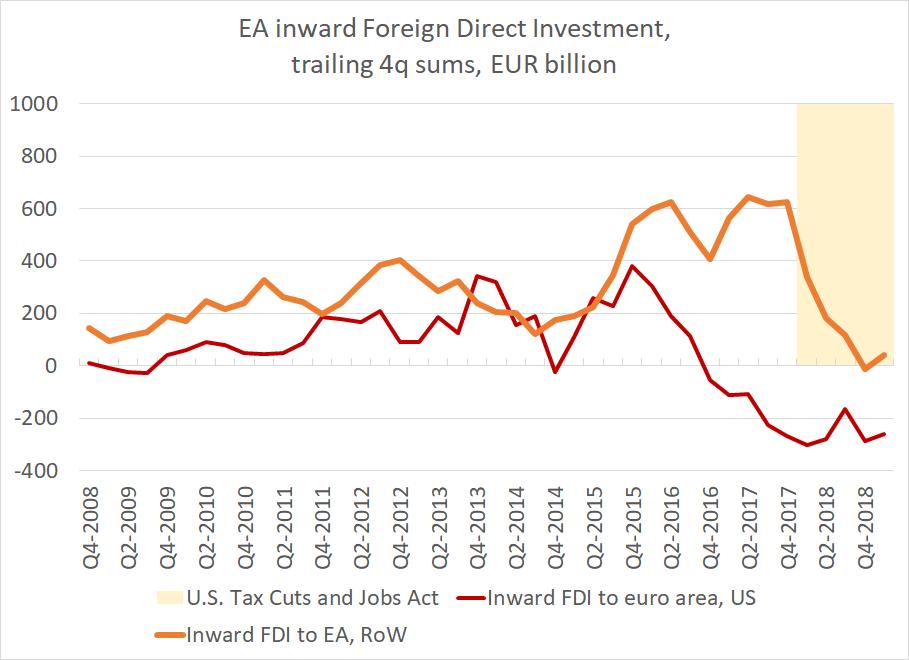
the BoP math is sort of straight-forward:
the "reinvested" (tax deferred) earnings of US firms used to count as an increase in US FDI abroad. So when those funds are returned, US outward FDI falls.
and conversely inward FDI into places like the EA and Bermuda should fall
basically, tax avoidance under the old U.S. law led to a buildup of US FDI abroad (technically), and that is now reversing.
Some will say this is globalization going backwards, but in a real sense it is not ...
in any case, help understanding the EA data would be most appreciated -- outward EA FDI has also gone done it seems, so the net swing is more modest that the change in gross flows over the last 6qs
• • •
Missing some Tweet in this thread? You can try to
force a refresh

Goldman got a bit of attention by forecasting that China's 2026 current account surplus will top 4% of GDP.
I need a better publicist! The GS forecast is still too low
1/
Goldman's forecast -- which is almost certainly better than the IMF's forthcoming forecast -- isn't that bold. The customs surplus net of tourism (travel) is already 5% of GDP, and that should be a reasonable estimate of the surplus of a country with a positive NIIP!
2/
In fact, China now has a position net international investment position of close to $4 trillion, and a pretty balanced FDI position (so no more compositional effects) which should translate into an income surplus of say $100b!
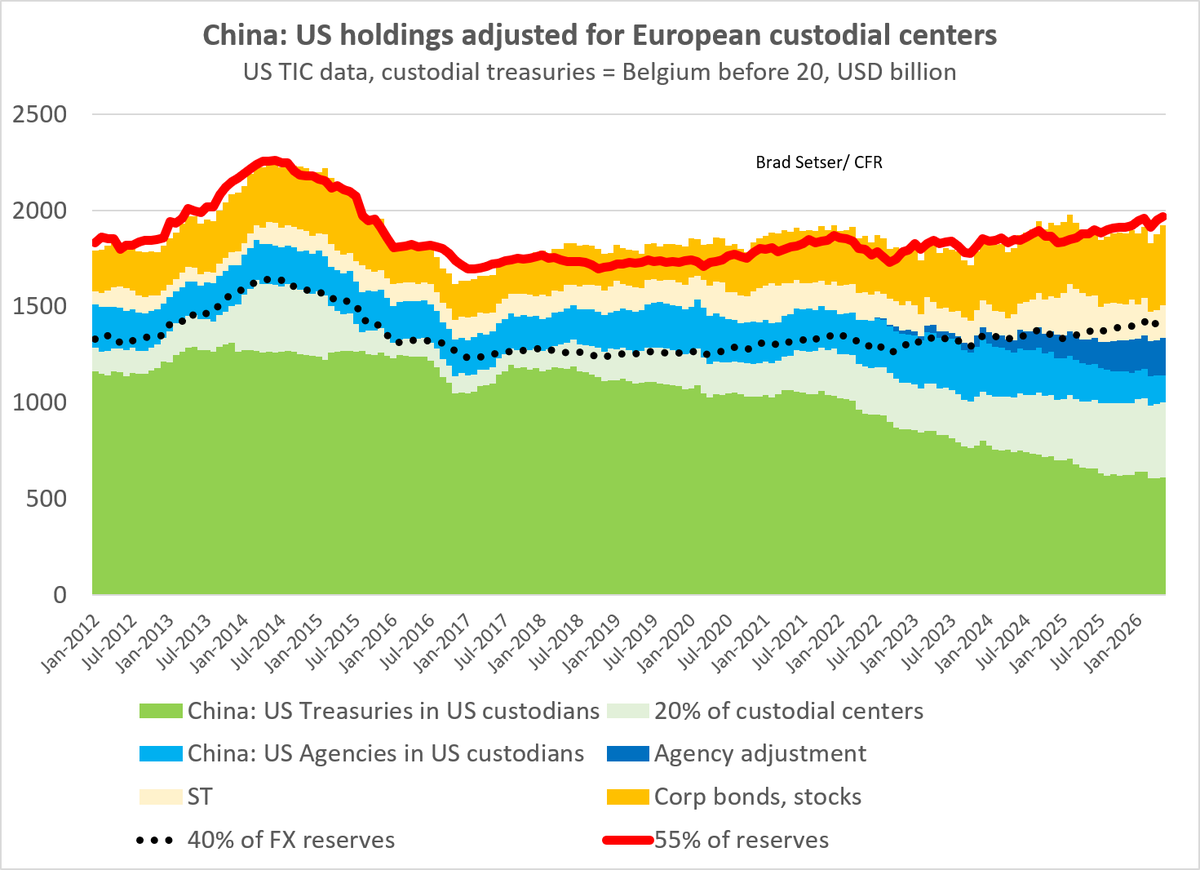
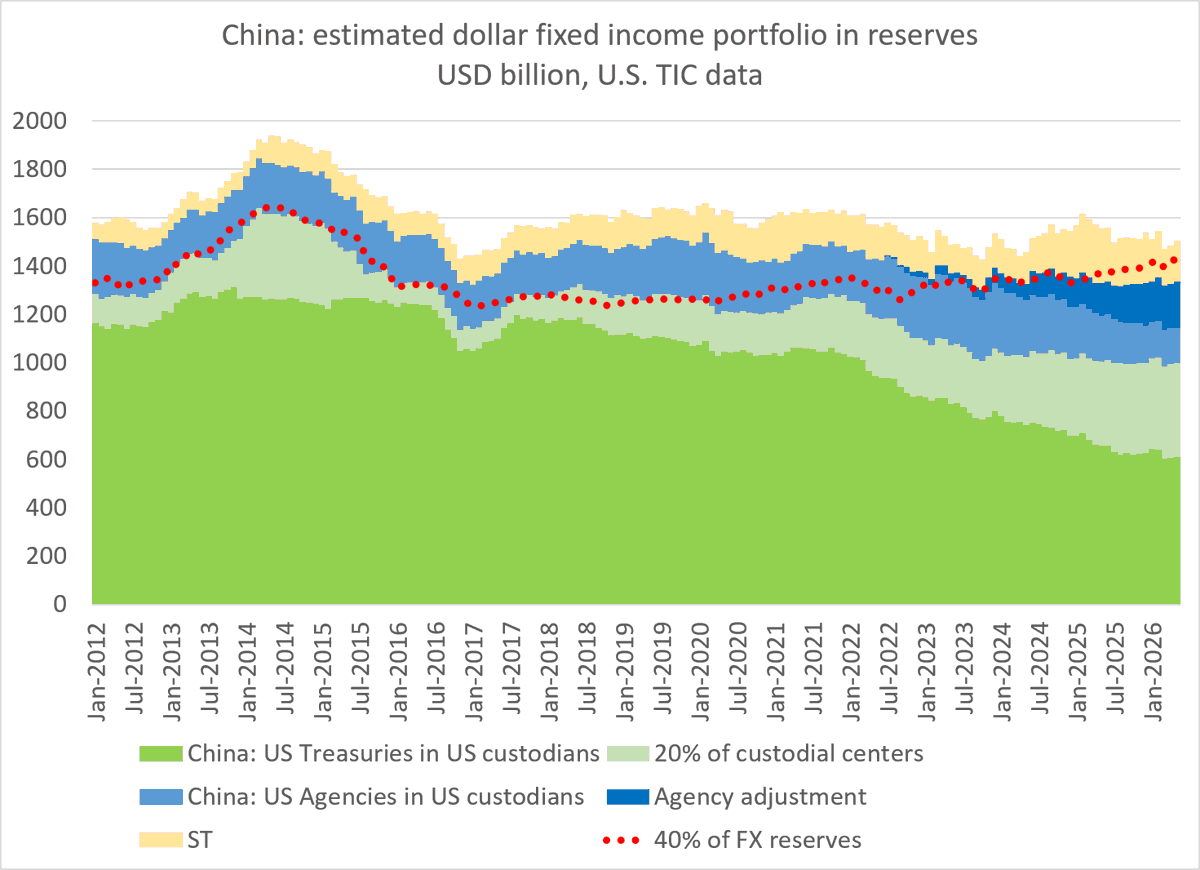
My periodic reminder that the US TIC data doesn't measure China's holdings of US Treasuries. It only measures China's holdings of Treasuries in US custodians. The real question is how many Treasuries Chinese entities hold in non US custodians
The total offshore assets of SAFE, the CIC, the SCBs (over $1.5 trillion now) and the policy banks likely approaches $7 trillion. SAFE's securities holdings top $3 trillion & other investors hold ~ $700b in foreign securities ...
I personally don't think it is plausible that all these entities combined hold only ~ $700b of LT Treasuries. They likely have some in offshore custodians. And the anks clearly help fund the purchases of US bonds by hedge funds and other global investors --
Bloomberg reports that China's regulators have warned China's state banks about the risk of holding too many Treasuries --
The Chinese regulators must know something that the Treasury doesn't, as the Treasury data doesn't suggest that China has been buying any Treasuries
1/
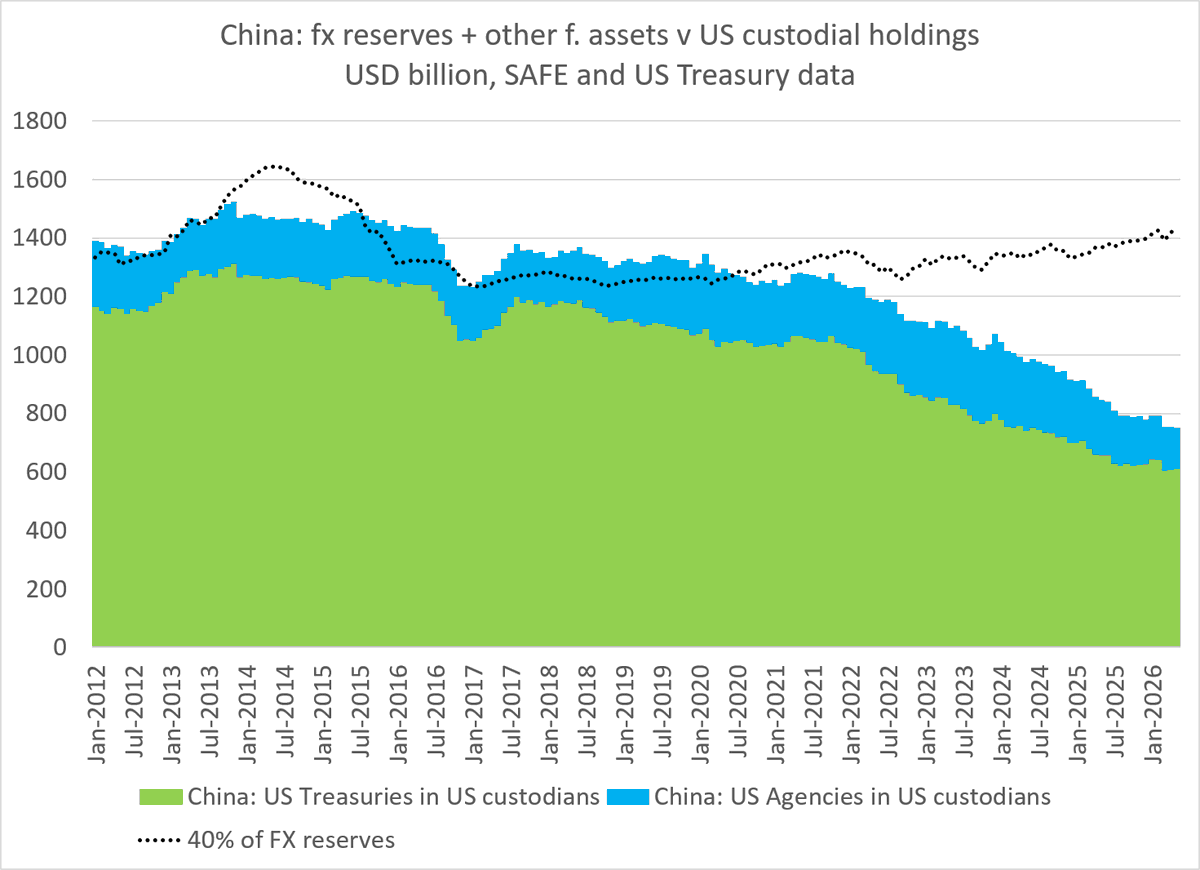
The official US data on foreign holdings doesn't show any basis for Chinese concern -- China's Treasuries in US custodianship (in theory state accounts as well as state bank accounts) are heading down not up
2/
That is of course inconsistent with the warning that the regulators provided to the state banks! They seem to be warning about nothing ...
The Treasury has indicated that it will look at the activities of China's state banks in its next assessment of China's currency policies--
It is hard to see how this doesn't become a bit of an issue ... unless of course summitry gets in the way of analysis 1/
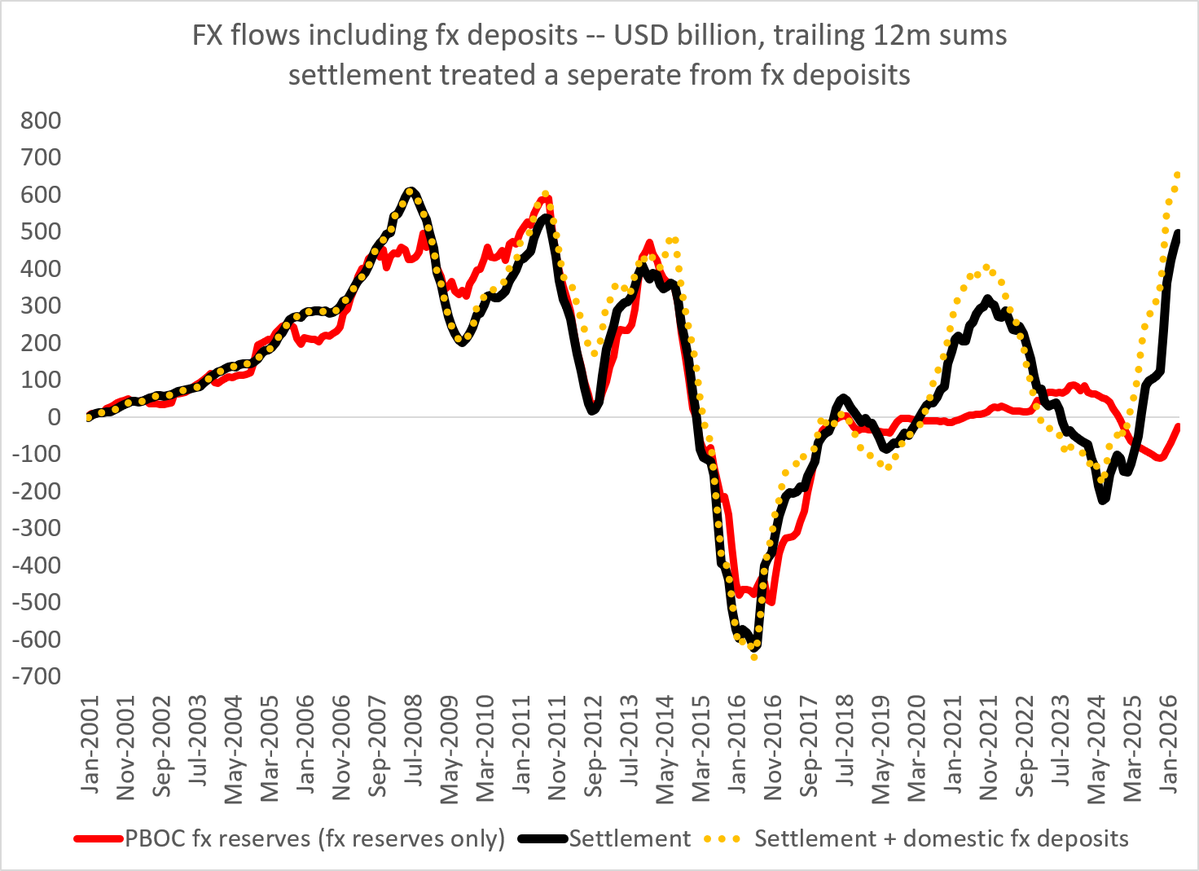
It is quite clear that state bank purchases (and in 23/ early 24 sales) of fx have replaced PBOC purchases and sales and the core technique China uses to manage the band around the daily fx -- i.e. settlement looks like an intervention variable
2/
My latest blog looks both at how fx settlement (a measure that includes the state banks) has displaced the PBOC's own reported reserves as the best metric for Chinese intervention & lat some of SAFE's balance sheet mysteries
The blog is detailed and technical -- and thus probably best read by those with a real interest in central bank balance sheets, the balance of payments and how to assess backdoor foreign currency intervention
2/
Drawing on historical data, I propose that the gap between fx settlement and the foreign assets on the PBOC's balance sheet (fx reserves + other f. assets) is a good indicator of hidden intervention --
Obviously overshadowed by the news about a Fed nomination, but the Treasury released its delated October 2025 FX report today and it is worth reading -- not the least b/c of a clear warning to SAFE.
1/
This seems clear
"An economy that fails to publish intervention data or whose data are incomplete will not be given any benefit of the doubt in Treasury’s assessment of intervention practices."
This report only covers the period between July 24 and June 25, so it misses the bulk of the 2025 surge in fx settlement (December = $100b plus). But this chart suggests the use of more sophisticated analytical techniques than those used in past reports --