Quick primer: what is repo and why do we care all of the sudden? Thread. 1/x
Repo (repurchase or reverse repurchase agreement) is a common way to finance a bond. Essentially, an owner buys a bond and then borrows, say 95% of the value of that bond, posting the bond as collateral. 2/x
It's a really common way of financing Treasuries, MBS, other low risk bonds. $100s of billions trade every day. It's *the* main overnight borrowing rate in terms of volume, and while the @federalreserve doesn't control it, they have a lot of influence over repo. 3/x
Why we care, in one chart: 4/x
Overnight repo rates suddenly spiked to ~7% yesterday after rising steadily throughout the day. They're opening 7-10% this morning. That's a BIG and unexpected increase in financing cost for many asset owners. But the alternative is insolvency, so they pay it. 5/x
A host of short term things like corporate bond issuance, Treasury settlements, tax payments and such are coming together to squeeze the financing markets, but this is a symptom, not the underlying problem. 6/x
The underlying problem is that primary dealer balance sheets are chalk full of Treasuries (caused by increased issuance) and dealers desperately need to finance those Treasuries, which limits the flexibility of the system when short term needs arise. 7/x
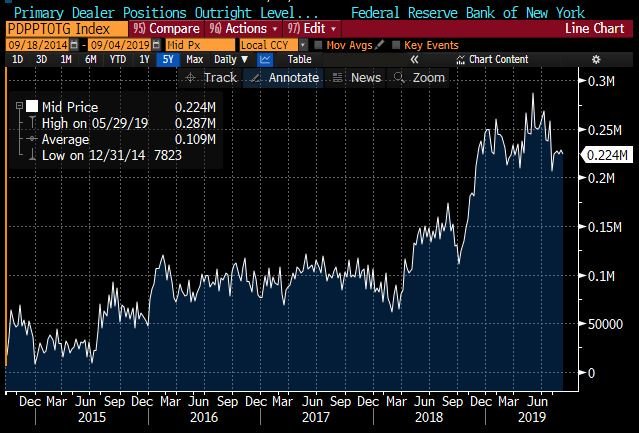
Normally @NewYorkFed would fix these short term problems with "TOMOs" or "Temporary Open Market Operations" (essentially, they become repo lenders) but they appear non-reactive thus far for whatever reason. 8/x
My worry is a simple one: when repo rates spike, the weakest borrower get squeezed the hardest, and "surprises" tend to emerge, because there's no cheap financing to paper them over. 9/x
I'm talking about hedge fund blow ups, surprise losses from large but marginal banking entities, etc. The truly unpredictable stuff.
When repo breaks, risk market tend to suffer the consequences. 10/10. Fin.
PS: @NewYorkFed launches $75bln TOMO to regain control of EFFR. See how it goes...
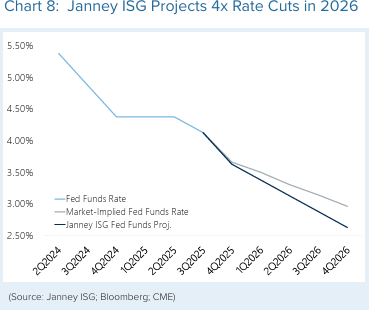
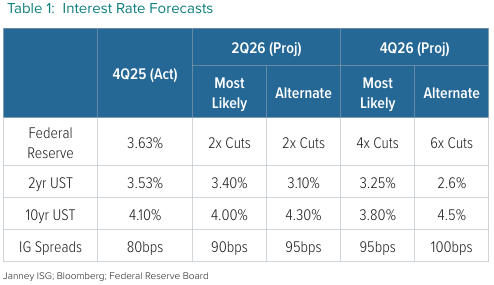
Interest rates: We are looking for a year of muted volatility with an above-consensus 4x Fed rate cuts, a steeper curve, and slightly lower 10yr yields. It's a story of labor market softness with still-stable economic growth.
1) Headline +0.3% vs +0.3% exp (mkt fixing was more like 0.25%)
2) Core +0.2% vs +0.3% exp so slightly low side, though unrounded +0.2295% basically in line with whisper
3) Contrast to Bessent implied warning and 5th consecutive downside core number
1/
4) Biggest downside swing is used cars (-0.7%) as most forecasters penciled in a moderate increase
5) Biggest upside is medical care (+0.5%) which is highest mthly move of the year
6) Other categories incl shelter (+0.2%) were basically middle-of-road
2/
7) Could read this report as a "goods vs services" story with good prices facing a bit of upside but services prices a bit of downside; this theory lends credibility to idea that tariffs function as a tax rather than a trigger of broadly higher price levels
3/
1) NFPs added +147K, much stronger than 106K exp and the even weaker whisper number, so call it a big beat with caveat: govt jobs were 1/2 of the total
2) Revisions to prior months added a handful of incremental jobs, though not meaningful
1/
3) U-rate fell to 4.1% vs. a small exp incr. as labor force participation dipped
4) Avg hourly earnings +0.2% ; intermediate term trend looks like three tenths, so this month largely evens out last month to return to trend
2/
5) Industry highlights incl contrux (+15K surprisingly), healthcare (+59K slowest since mid-'24), gov't (+73K this was the big surprise)
6) The HH report incl 222K job gains, but 329K people existing the labor markets, possibly immigration-related, though less than May
3/
This afternoon, the Fed published a proposed change to the "SLR" which requires US regulated big banks ("GSIBs") to hold extra capital. The proposal now goes into a 60-day comment period but I'm guessing any changes will be small.
The important part is that the SLR requirement would fall from ~5% today to 3.50% - 4.75% post-change, freeing up roughly $200bln of Tier 1 capital (!)
3/
I suspect the Fed's "positioning" has shifted in recent weeks from assuming further cuts are unnecessary and requiring proof of eco deterioration to cut to assuming cuts will be necessary and requiring proof to AVOID cutting.
1/
I think we see this trend in the political winds blowing from the White House to VERY clearly in today's Congressional questioning from both sides of the aisle. We definitely see this trend in vocal comments from Waller and Bowman who have been on hawkish side in '24-'25.
2/
FWIW, my economic bias is labor markets are cuspy and deteriorating underneath the surface, making it likely that job growth will fall below labor force growth this summer.
3/