CHAPTER 7: A CRUSADER AGAINST ABUSIVE LEADERSHIP
1 of 64:
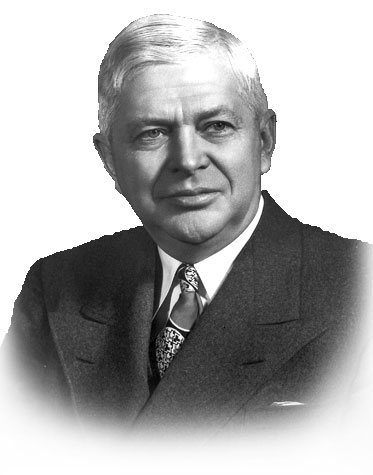
“Our field commanders tell us that ‘Overseas Weekly’ is dangerous and subversive.”
Charles E. Wilson, 5th US Secretary of Defense, October 6, 1953
1 of 64:
“Our field commanders tell us that ‘Overseas Weekly’ is dangerous and subversive.”
Charles E. Wilson, 5th US Secretary of Defense, October 6, 1953
2 of 64:
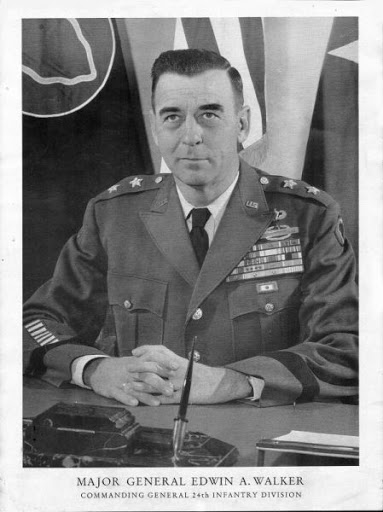
“Overseas Weekly is immoral, unscrupulous, corrupt and destructive."
Major General Edwin Walker, Commander, 24th Infantry Division, June 7, 1961
“Overseas Weekly is immoral, unscrupulous, corrupt and destructive."
Major General Edwin Walker, Commander, 24th Infantry Division, June 7, 1961
3 of 64:
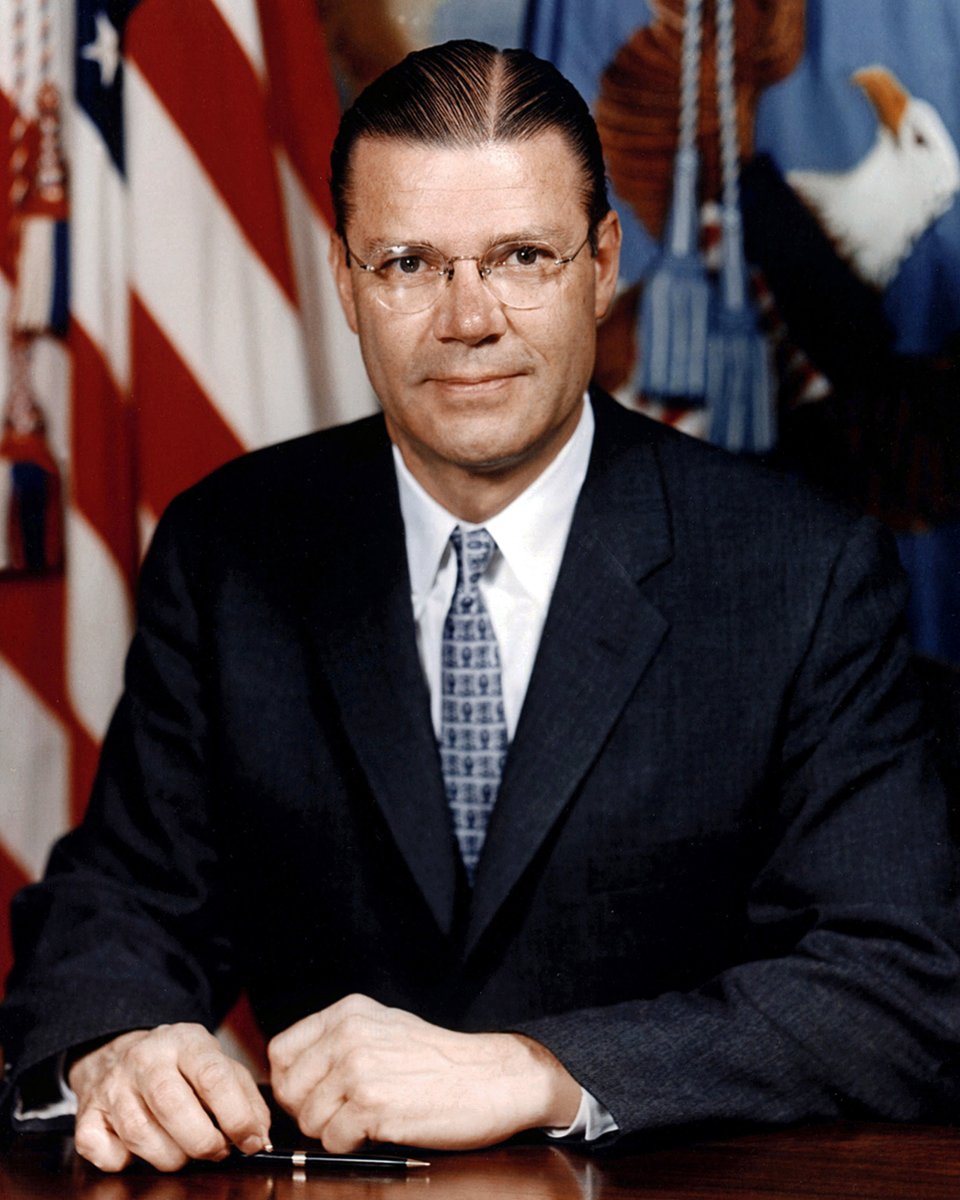
"The Overseas Weekly is personally repulsive."
Robert McNamara, 8th US Secretary of Defense, July 18, 1966
"The Overseas Weekly is personally repulsive."
Robert McNamara, 8th US Secretary of Defense, July 18, 1966
4 of 64:
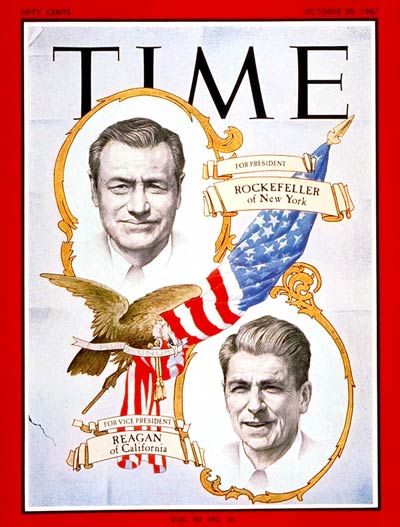
"The least popular publication at the Pentagon is the Overseas Weekly..."
Time Magazine, October 20, 1967
"The least popular publication at the Pentagon is the Overseas Weekly..."
Time Magazine, October 20, 1967
5 of 64:
“Overseas Weekly is our buddy. It’s our best protection from getting reamed by the brass.”
Anonymous GI, Stuttgart, Germany, August 19, 1954
“Overseas Weekly is our buddy. It’s our best protection from getting reamed by the brass.”
Anonymous GI, Stuttgart, Germany, August 19, 1954
6 of 64:
Chapter 7 focuses on an outlet for the Soldier that grew organically during the Atomic Age.
Chapter 7 focuses on an outlet for the Soldier that grew organically during the Atomic Age.
7 of 64:
We’ll be particularly interested to see what our panel of experts (@PatDonahoeArmy, @FPWellman, @broadcastmike, @pptsapper, @jtw_ngc98) have to say about this chapter.
We’ll be particularly interested to see what our panel of experts (@PatDonahoeArmy, @FPWellman, @broadcastmike, @pptsapper, @jtw_ngc98) have to say about this chapter.
8 of 64:
Amidst this tense, uncertain time for our Army, the force suffered from a crisis of toxic, uncaring leadership. At a time when the Army really needed leadership at the company level, there was little to be found.
Amidst this tense, uncertain time for our Army, the force suffered from a crisis of toxic, uncaring leadership. At a time when the Army really needed leadership at the company level, there was little to be found.
9 of 64:
There were a number of reasons for this.
There were a number of reasons for this.
10 of 64:
Keeping quality officers during periods of economic prosperity is always challenging, and the boom years of the 1950s were no exception. For many company-grade officers, the civilian sector offered a degree of opportunity with which the Army could not compete.
Keeping quality officers during periods of economic prosperity is always challenging, and the boom years of the 1950s were no exception. For many company-grade officers, the civilian sector offered a degree of opportunity with which the Army could not compete.
11 of 64:
Moreover, for those who chose a career as a military officer, the Navy and the Air Force seemed preferable.
Moreover, for those who chose a career as a military officer, the Navy and the Air Force seemed preferable.
12 of 64:
Not only did service with the Navy and Air Force avoid the prospect of having to slog through mud as an infantryman under a hail of bullets, bombs, and perhaps atomic munitions, but it appeared more relevant in the Atomic Age.
Not only did service with the Navy and Air Force avoid the prospect of having to slog through mud as an infantryman under a hail of bullets, bombs, and perhaps atomic munitions, but it appeared more relevant in the Atomic Age.
13 of 64:
The Army suffered from indiscipline and had an officers corps ill-equipped to reign it in.
The Army suffered from indiscipline and had an officers corps ill-equipped to reign it in.
14 of 64:
According to General Hamilton Howze [who would go on to command this corps], this peacetime Army was largely led by officers who were “lazy, ne’er do well, or pompous and incompetent.”
According to General Hamilton Howze [who would go on to command this corps], this peacetime Army was largely led by officers who were “lazy, ne’er do well, or pompous and incompetent.”
15 of 64:
Under Ridgway, the Army grew more corporate. Less tolerant of the WWII maverick, straight-talking leader [Patton, McCauliffe, Gavin] and more likely to favor conformists.
Under Ridgway, the Army grew more corporate. Less tolerant of the WWII maverick, straight-talking leader [Patton, McCauliffe, Gavin] and more likely to favor conformists.
16 of 64:
The Army promoted careerists and opportunists over caring leaders like @CavRTK & @37thBEB_CDR.
The Army promoted careerists and opportunists over caring leaders like @CavRTK & @37thBEB_CDR.
17 of 64:
The officer career management system instituted by Ridgway and maintained by Taylor encouraged statistical measurements and ticket punching. There was a growing emphasis on officers as “system managers” rather than as actual leaders of Soldiers.
The officer career management system instituted by Ridgway and maintained by Taylor encouraged statistical measurements and ticket punching. There was a growing emphasis on officers as “system managers” rather than as actual leaders of Soldiers.
18 of 64:
Many officers seemed more interested in how an assignment could further their career than they were in learning the job and doing it well.
Many officers seemed more interested in how an assignment could further their career than they were in learning the job and doing it well.
19 of 64:
Even Army generals also began acting less like stewards of a profession, responsible to the public at large, and more like members of a guild, looking out primarily for their own interests.
Even Army generals also began acting less like stewards of a profession, responsible to the public at large, and more like members of a guild, looking out primarily for their own interests.
20 of 64:
In 1956, a report from @USACGSC warned that Army officers tended “to reward caution and conformity and to penalize progressive initiative,” and blamed “the failure of officers to consistently display moral courage and intellectual honesty.”
In 1956, a report from @USACGSC warned that Army officers tended “to reward caution and conformity and to penalize progressive initiative,” and blamed “the failure of officers to consistently display moral courage and intellectual honesty.”
21 of 64:
It was, of course, the American Soldier who would suffer from this horrific lack of leadership.
It was, of course, the American Soldier who would suffer from this horrific lack of leadership.
22 of 64:
Across the Army, GIs experienced uncaring, abusive leaders ready to dole out UCMJ action for minor infractions and willing to crush subordinates for personal ambition.
Across the Army, GIs experienced uncaring, abusive leaders ready to dole out UCMJ action for minor infractions and willing to crush subordinates for personal ambition.
23 of 64:
Back then Army IGs (Inspectors General) were primarily tools of the commander, dedicated to investigating and rooting out indiscipline among the ranks.
Back then Army IGs (Inspectors General) were primarily tools of the commander, dedicated to investigating and rooting out indiscipline among the ranks.
24 of 64:
There were few tools available to protect the Soldier.
There were few tools available to protect the Soldier.
25 of 64:
So, as troops have been doing since 1775, they sought their own. American Soldiers looked for a mouthpiece, a champion for the abused GI, a voice for the voiceless Joe. They found one in Marion von Rospach.
So, as troops have been doing since 1775, they sought their own. American Soldiers looked for a mouthpiece, a champion for the abused GI, a voice for the voiceless Joe. They found one in Marion von Rospach.
26 of 64:
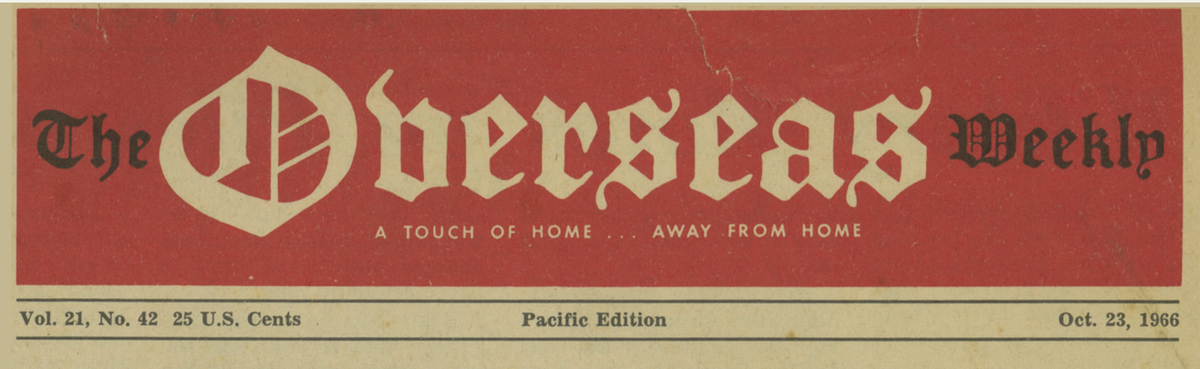
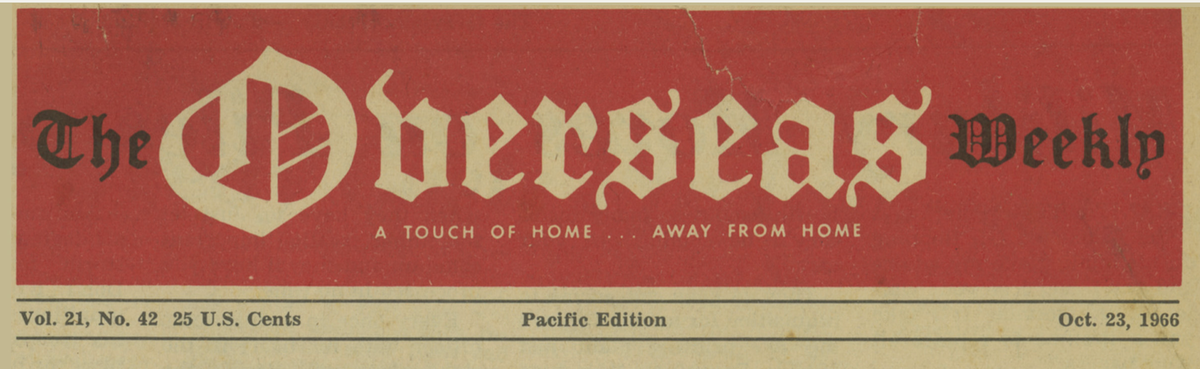
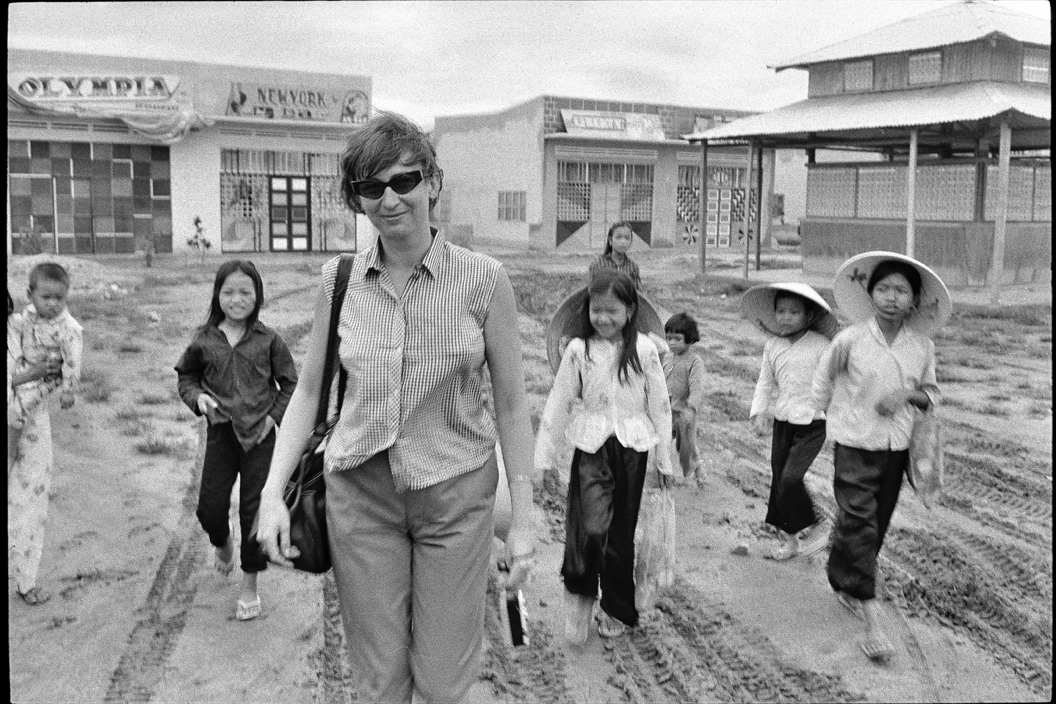
Marion, an American woman living in Frankfurt, started “Overseas Weekly” in the early 1950s as a tabloid for GIs stationed in Germany.
news.stanford.edu/2018/08/23/res…
Marion, an American woman living in Frankfurt, started “Overseas Weekly” in the early 1950s as a tabloid for GIs stationed in Germany.
news.stanford.edu/2018/08/23/res…
27 of 64:
In its first year, the paper focused on unsourced rumor and innuendo about the Army leadership in Germany. Soldiers ate it up. Word of mouth about the publication spread around the Army.
In its first year, the paper focused on unsourced rumor and innuendo about the Army leadership in Germany. Soldiers ate it up. Word of mouth about the publication spread around the Army.
28 of 64:
Soon “OW” readership grew. So, too, did Marion’s staff.
Soon “OW” readership grew. So, too, did Marion’s staff.
29 of 64:
By 1952, Marion began to incorporate reports about unit hijinks and training mishaps from “unnamed” GIs in Europe. Nothing too serious and mostly good, soldierly fun.
By 1952, Marion began to incorporate reports about unit hijinks and training mishaps from “unnamed” GIs in Europe. Nothing too serious and mostly good, soldierly fun.
30 of 64:
Soon enough, however, OW was calling out lazy leaders by name, reporting on specific incidents of abusive leadership by unit, and enraging @USArmy leadership. 🤔
Soon enough, however, OW was calling out lazy leaders by name, reporting on specific incidents of abusive leadership by unit, and enraging @USArmy leadership. 🤔
31 of 64:
For example, an article called out a company commander in the 24th Infantry Division for disciplining an entire company by keeping all troops at attention during a rainstorm for 3 hours.
For example, an article called out a company commander in the 24th Infantry Division for disciplining an entire company by keeping all troops at attention during a rainstorm for 3 hours.
32 of 64:
The company commander did not get wet: he observed from the comfort of his office.
The company commander did not get wet: he observed from the comfort of his office.
33 of 64:
That company commander was admonished (but not relieved) when the issue of OW came out. Basically a slap on the wrist.
That company commander was admonished (but not relieved) when the issue of OW came out. Basically a slap on the wrist.
34 of 64:
In another case, OW blasted a platoon leader for racist disciplinary actions (the white platoon leader consistently punished black Soldiers more harshly than their white peers for the same indiscretions).
In another case, OW blasted a platoon leader for racist disciplinary actions (the white platoon leader consistently punished black Soldiers more harshly than their white peers for the same indiscretions).
35 of 64:
By 1953, the paper had a circulation of more than 15,000. OW was suddenly competing with @starsandstripes at base newsstands.
By 1953, the paper had a circulation of more than 15,000. OW was suddenly competing with @starsandstripes at base newsstands.
36 of 64:
Stars And Stripes, the official daily paper of @DeptofDefense, was too straight-laced, too parroting of the official line for many Soldiers.
Stars And Stripes, the official daily paper of @DeptofDefense, was too straight-laced, too parroting of the official line for many Soldiers.
37 of 64:
OW, by contrast, was a breath of fresh air.
OW, by contrast, was a breath of fresh air.
38 of 64:
Soon Marion rented space in the Frankfurt Press Club for her growing staff and contracted with a major German publishing company. OW was set for massive growth.
Soon Marion rented space in the Frankfurt Press Club for her growing staff and contracted with a major German publishing company. OW was set for massive growth.
39 of 64:
Then, the Army’s lawyers got involved.
Then, the Army’s lawyers got involved.
40 of 64:
In June, 1953, the Army, claiming that OW was working against good order and discipline, banned all military bases from selling the publication.
In June, 1953, the Army, claiming that OW was working against good order and discipline, banned all military bases from selling the publication.
41 of 64:
Interestingly, in citing a number of articles with which it took issue, the Army never questioned the newspaper’s accuracy. (Obligatory “You can’t handle the truth” gif.)
Interestingly, in citing a number of articles with which it took issue, the Army never questioned the newspaper’s accuracy. (Obligatory “You can’t handle the truth” gif.)
42 of 64:
That fall, Marion petitioned Congress, claiming the Army was violating her first Amendment rights. (There are more free speech gifs than there are for free press.)
That fall, Marion petitioned Congress, claiming the Army was violating her first Amendment rights. (There are more free speech gifs than there are for free press.)
43 of 64:
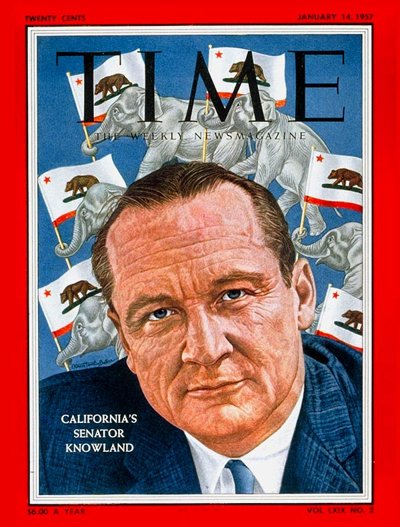
She enlisted the help of California Senator & Senate Majority Leader William F. Knowland who publicly criticized the Army’s ban on OW.
She enlisted the help of California Senator & Senate Majority Leader William F. Knowland who publicly criticized the Army’s ban on OW.
44 of 64:
Embarrassed, the Army lifted the ban. The resultant publicity raised the paper’s profile significantly.
Embarrassed, the Army lifted the ban. The resultant publicity raised the paper’s profile significantly.
45 of 64:
Overseas Weekly was suddenly a celebrated institution among the Army’s enlisted ranks. A crusader against abusive leadership, OW fought the Pentagon….and the Pentagon blinked.
Overseas Weekly was suddenly a celebrated institution among the Army’s enlisted ranks. A crusader against abusive leadership, OW fought the Pentagon….and the Pentagon blinked.
46 of 64:
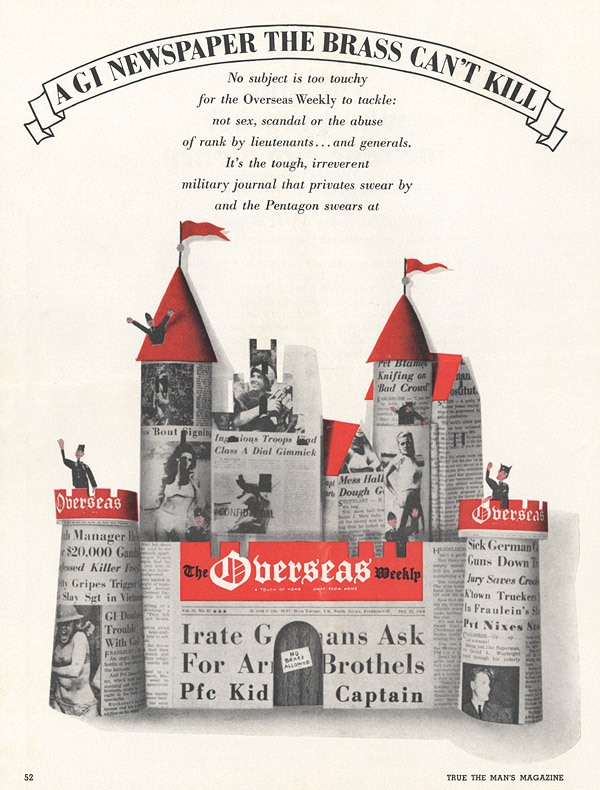
Al Stump with True Magazine called OW “A GI Newspaper the Brass Can’t Kill.”
3ad.com/history/at.eas…
Al Stump with True Magazine called OW “A GI Newspaper the Brass Can’t Kill.”
3ad.com/history/at.eas…
47 of 64:
Soon thereafter, OW hired enlisted soldiers who published articles about questionable practices within their units.
Soon thereafter, OW hired enlisted soldiers who published articles about questionable practices within their units.
48 of 64:
The paper began distribution on Army bases in France.
The paper began distribution on Army bases in France.
49 of 64:
Marion and her editors developed unnamed sources all over the Army, not just Europe.
Marion and her editors developed unnamed sources all over the Army, not just Europe.
50 of 64:
OW was a critical institution, an important outlet for the American Soldier during the Atomic Age. Articles resulted in embarrassed leaders and, in some cases, the formal relief of commanders.
OW was a critical institution, an important outlet for the American Soldier during the Atomic Age. Articles resulted in embarrassed leaders and, in some cases, the formal relief of commanders.
51 of 64:
By 1955, it was estimated that one soldier in every five stationed in Germany regularly bought OW.
By 1955, it was estimated that one soldier in every five stationed in Germany regularly bought OW.
52 of 64:
Lazy, unimaginative leaders were always on their toes. No one wanted to be humiliated in the pages of the Marion’s magazine.
Lazy, unimaginative leaders were always on their toes. No one wanted to be humiliated in the pages of the Marion’s magazine.
53 of 64:
Weak leaders tried to identify the OW correspondents in the ranks.
Weak leaders tried to identify the OW correspondents in the ranks.
54 of 64:
As OW readership expanded, the Army grew more irate.
As OW readership expanded, the Army grew more irate.
55 of 64:
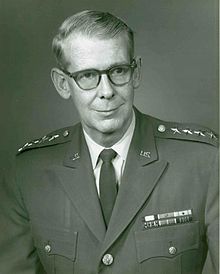
In 1956, General Charles H. Bonesteel, an analyst on the Joint Staff, during an address to an audience of Colonels at the @ArmyWarCollege, referred to OW as “a crass, subversive operation.”
In 1956, General Charles H. Bonesteel, an analyst on the Joint Staff, during an address to an audience of Colonels at the @ArmyWarCollege, referred to OW as “a crass, subversive operation.”
56 of 64:
According to historian Brian McAllister Linn: “No newspaper, not even the New York Times, roiled the brass as much.”
According to historian Brian McAllister Linn: “No newspaper, not even the New York Times, roiled the brass as much.”
57 of 64:
In the late 1950s, the Army brass’ outrage against OW was particularly hypocritical.
In the late 1950s, the Army brass’ outrage against OW was particularly hypocritical.
58 of 64:
In 1958, General Lyman Lemnitzer told Stars & Stripes this about OW: “If Soldiers have something to say about their unit or our Army, they should put their name on it.”
In 1958, General Lyman Lemnitzer told Stars & Stripes this about OW: “If Soldiers have something to say about their unit or our Army, they should put their name on it.”
59 of 64:
Meanwhile, Chief of Staff Maxwell Taylor was anonymously leaking all his complaints about the Department of Defense to national media outlets.
Meanwhile, Chief of Staff Maxwell Taylor was anonymously leaking all his complaints about the Department of Defense to national media outlets.
60 of 64:
OW remained a staple across the Army for decades. Marion grew a dedicated staff of trained reporters who traveled to Army bases throughout Europe and Japan.
OW remained a staple across the Army for decades. Marion grew a dedicated staff of trained reporters who traveled to Army bases throughout Europe and Japan.
61 of 64:
During the Vietnam War, the paper grew more mainstream, with war correspondents traveling with platoons. (This gif is actually from Generation Kill but still… embedded journalist.)
goodreads.com/en/book/show/4…
During the Vietnam War, the paper grew more mainstream, with war correspondents traveling with platoons. (This gif is actually from Generation Kill but still… embedded journalist.)
goodreads.com/en/book/show/4…
62 of 64:
In 1969, Marion died in her home after a fall. She was 43. Her Overseas Weekly empire folded soon thereafter.
In 1969, Marion died in her home after a fall. She was 43. Her Overseas Weekly empire folded soon thereafter.
63 of 64:
OW’s legacy, however, remains in the work of @SGMtheMan1, @SW_usawtfm and our dear friend @WTFIOGuy
OW’s legacy, however, remains in the work of @SGMtheMan1, @SW_usawtfm and our dear friend @WTFIOGuy
64 of 64:
@TheWTFNation, which sources reports from across the Army and is written by pseudonymous admins, is a direct descendant of Overseas Weekly. OW served the same function in much the same manner.
@TheWTFNation, which sources reports from across the Army and is written by pseudonymous admins, is a direct descendant of Overseas Weekly. OW served the same function in much the same manner.
@threadreaderapp Please unroll thank you.