A thread on the biomechanics of pronation of the foot
Pronation is one of the most important actions of the body, but also frequently misunderstood.
We need it to produce force, but it must also be controlled.
Immediately at heel strike in gait, the foot is in a supinated...
Pronation is one of the most important actions of the body, but also frequently misunderstood.
We need it to produce force, but it must also be controlled.
Immediately at heel strike in gait, the foot is in a supinated...
position as we are (hopefully) on the lateral border of our heel.
The flexed Talocrual joint and Subtalar joint rapidly plantar-flex and pronate.
The flexed Talocrual joint and Subtalar joint rapidly plantar-flex and pronate.
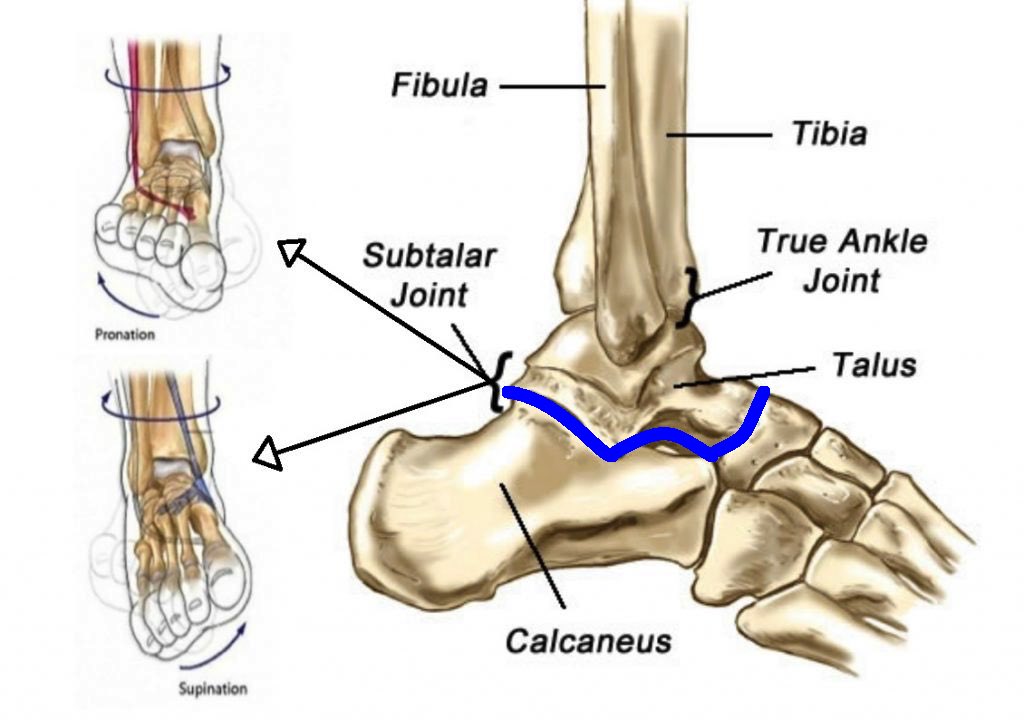
The tibia and fibula, and to a lesser extent the femur, all begin to internally rotate at this time.
This steers the subtalar joint into pronation.
This steers the subtalar joint into pronation.
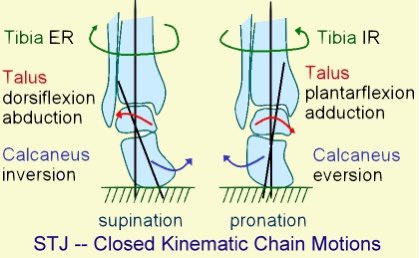
However, this pronation should occur in a controlled manner as it is maximized in mid-stance phase of gait.
This is important because it allows the foot to accommodate to the varied shapes and contours of walking.
If pronation is too rapid via poor eccentric
This is important because it allows the foot to accommodate to the varied shapes and contours of walking.
If pronation is too rapid via poor eccentric
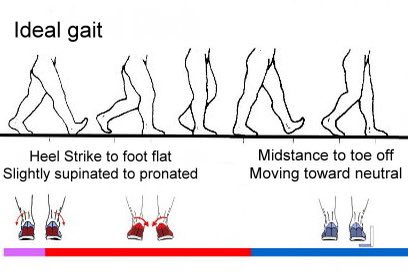
control of the supinator muscles that slow it down, there is frequently a chain-reaction where there is excessive “collapsing” in of the knee & hip.
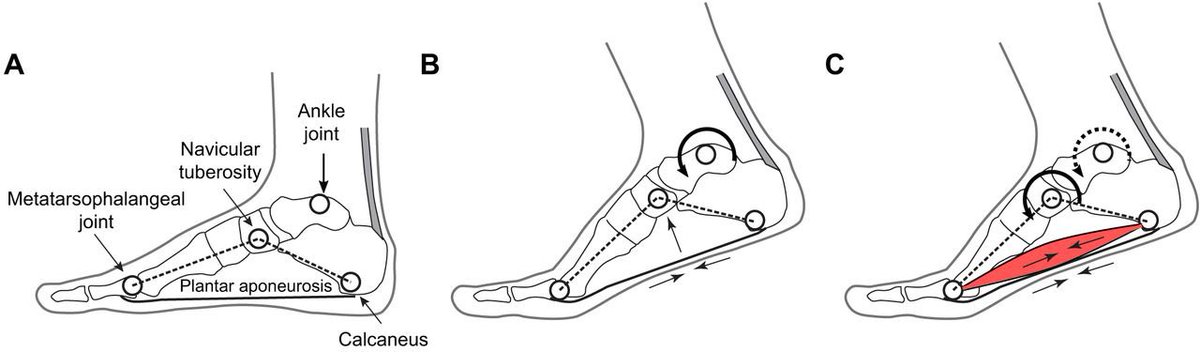
Good pronation allows the foot to become “soft” & sets us up for good propulsion & force production via the Windlass Mechanism.
Good pronation allows the foot to become “soft” & sets us up for good propulsion & force production via the Windlass Mechanism.
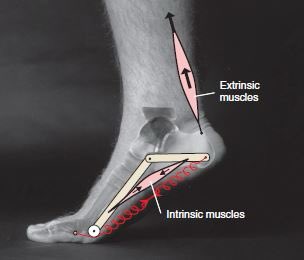
This mechanism requires the foot to regain a degree of rigidity. This occurs after pronation & sets up the arch to become “taught” and transfers bodyweight force to the forefoot for push-off.
Contraction of the deep foot muscles are important here to reinforce the arch.
Contraction of the deep foot muscles are important here to reinforce the arch.
If there is poor pronation, an exercise I like to use is one that allows the individual to gain a sense of dorsiflexion and the arch dropping.
It’s hard to have good pronation without proper dorsiflexion, so coupling the two is general a good idea.
It’s hard to have good pronation without proper dorsiflexion, so coupling the two is general a good idea.
In the weightroom, I might follow up the previous exercise with a rear-foot elevated split squat, which naturally places more weight on the forefoot & arch, thereby biasing more mid and late-stance mechanics & muscles of gait.
• • •
Missing some Tweet in this thread? You can try to
force a refresh