A brilliant legal conundrum used to test the reasoning of 1st century Roman lawyers: A barber does business on a roadside as people play ball nearby. Someone kicks the ball so hard it strikes the barber’s hand and he slices the throat of the person he is shaving. Who is to blame?
Vote and retweet! Conclusions from the 1st century will be posted tomorrow 👍 #roman#law
Conclusions in this thought-experiment are based on the Lex Aquilia - laws that provide compensation to individuals and owners of property injured through the fault of others. 'Culpa' or liability requires three criteria: 1) Damage committed 2) Causality and 3) Unlawfulness...
The jurist Fabius Mela thought the 'culpa' lay with both the barber and the reckless ballplayer, although Roman litigation would not allow for the division of damages in this way...
The jurist Proculus recognises the barber is ultimately at fault - he chooses to do business where games are played and traffic is heavy, accepting the dangers. Yet still, the player has some liability because of his reckless play and letting the ball go outside its bounds.
Lastly, Ulpian believes the customer "has himself to blame", choosing to get a shave in a dangerous place. The all-or-nothing principle means the barber has no liability. Maybe thanks to this story, later laws added notions of "contributory negligence", helpful in complex cases.
• • •
Missing some Tweet in this thread? You can try to
force a refresh

1) Let's travel in time through this fascinating Roman denarius added to my collection, to the sacred grove of the goddess Diana on the mysterious shores of Lake Nemi – and into one of the most bloody and undeniably cinematic rites of the ancient world...
2) Situated in the Alban Hills south of Rome, Lago di Nemi is a circular crater lake nestled within the caldera of an extinct ancient volcano. The sheltered and tranquil body of water, which perfectly reflected the moon, came to be known by the Romans as 'Diana's Mirror'..
3) Within a sacred grove on the northern shore of the lake stood the temple sanctuary of Diana Nemorensis or 'Diana of the Wood' constructed around 300 BC, though the cult of Diana of Nemi is thought to have its origins as far back as the 6th century BC..
1) This bronze diploma was awarded to Marcus Surus Garasenus on 5th April 71 AD, recognising his completion of 26 years' service as an auxiliary marine in the Roman naval fleet based at Misenum. The prized diploma granted full Roman citizenship to Marcus, his wife and his heirs..
2) Marcus Surus originally came from the Roman province of Syria, leaving his home in what is today Jerash, Jordan to join the Roman navy during the reign of Claudius in 46 AD...
3) Marking completion of his stipulation 26 years of service, this diploma not only grants him honourable discharge and full Roman citizenship, but also records that 'Surus, son of Dama, from Jerash' will now be known by his Romanised name, Marcus Surus Garasenus.
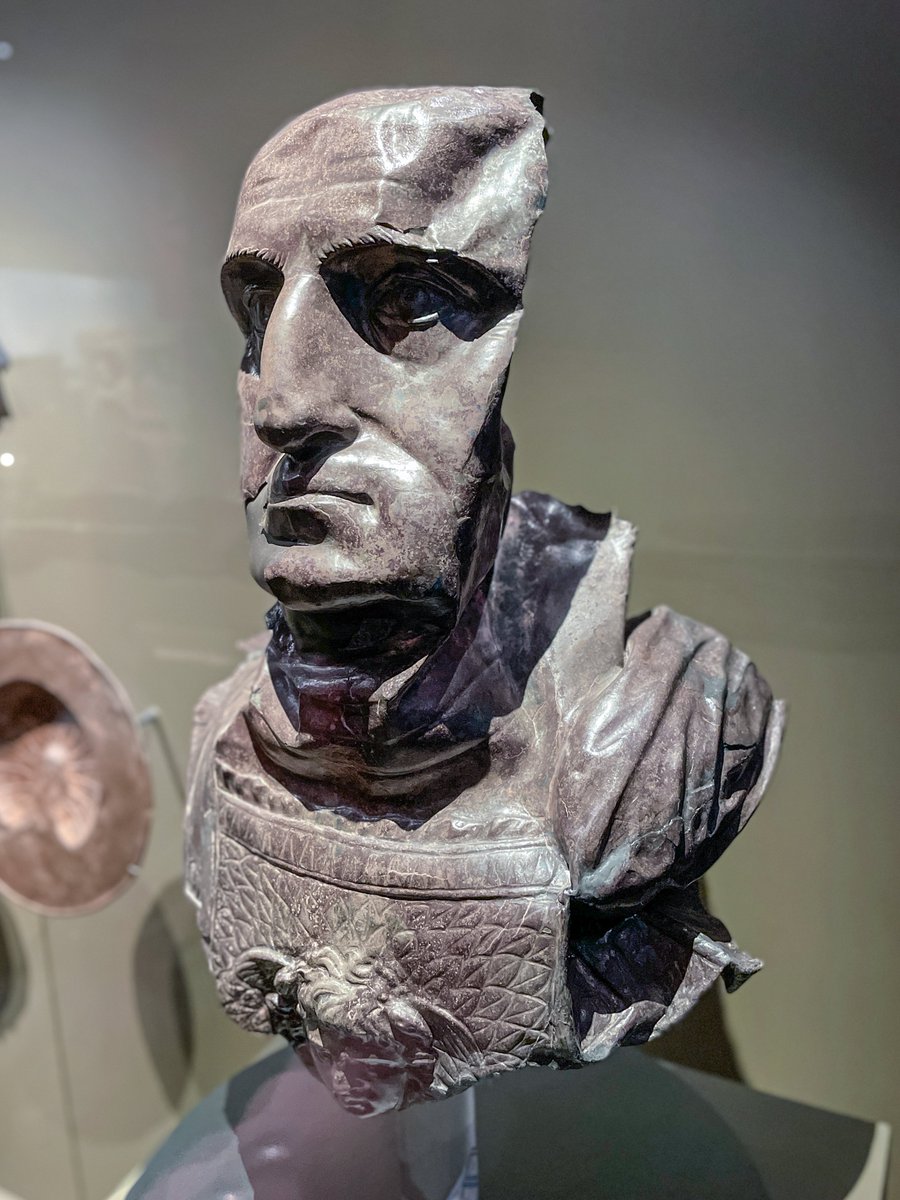
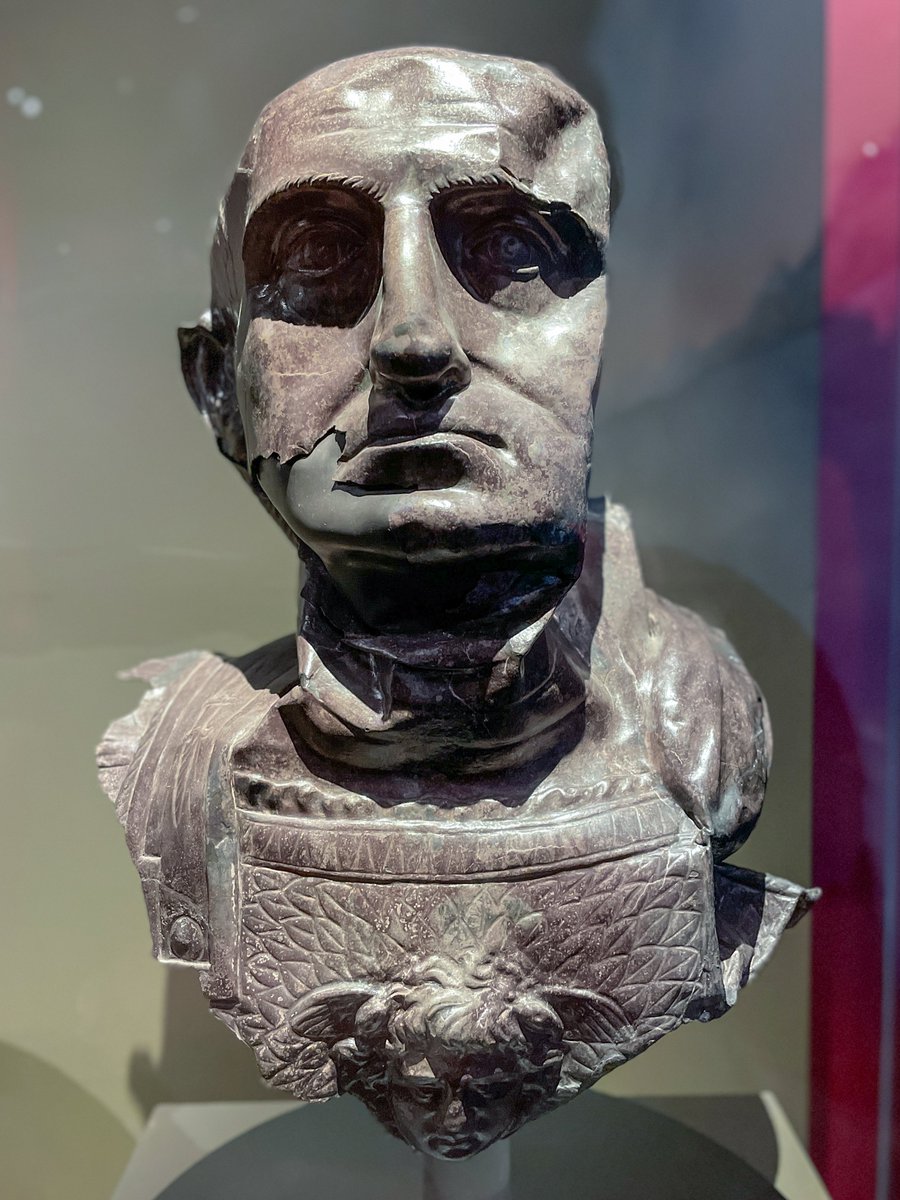
1) An astounding survival from the Roman world. This silver bust of the emperor Galba is an incredibly rare example of an imperial imago, a reverential portrait of the reigning emperor mounted on a pole and carried into battle as a military standard...
2) The imago of the emperor was carried on campaign by a special standard-bearer known as the imaginifer. These precious metal busts ensured the symbolic presence of the emperor on the battlefield, and in the absence of the real ruler, could be used as...
3) ..objects of veneration in the camp, foci for oaths of fidelity to the emperor, as well as oaths of submission from a defeated enemy. This imago of Galba is of particular historical interest; after he had reigned for six months in the wake of Nero's suicide...
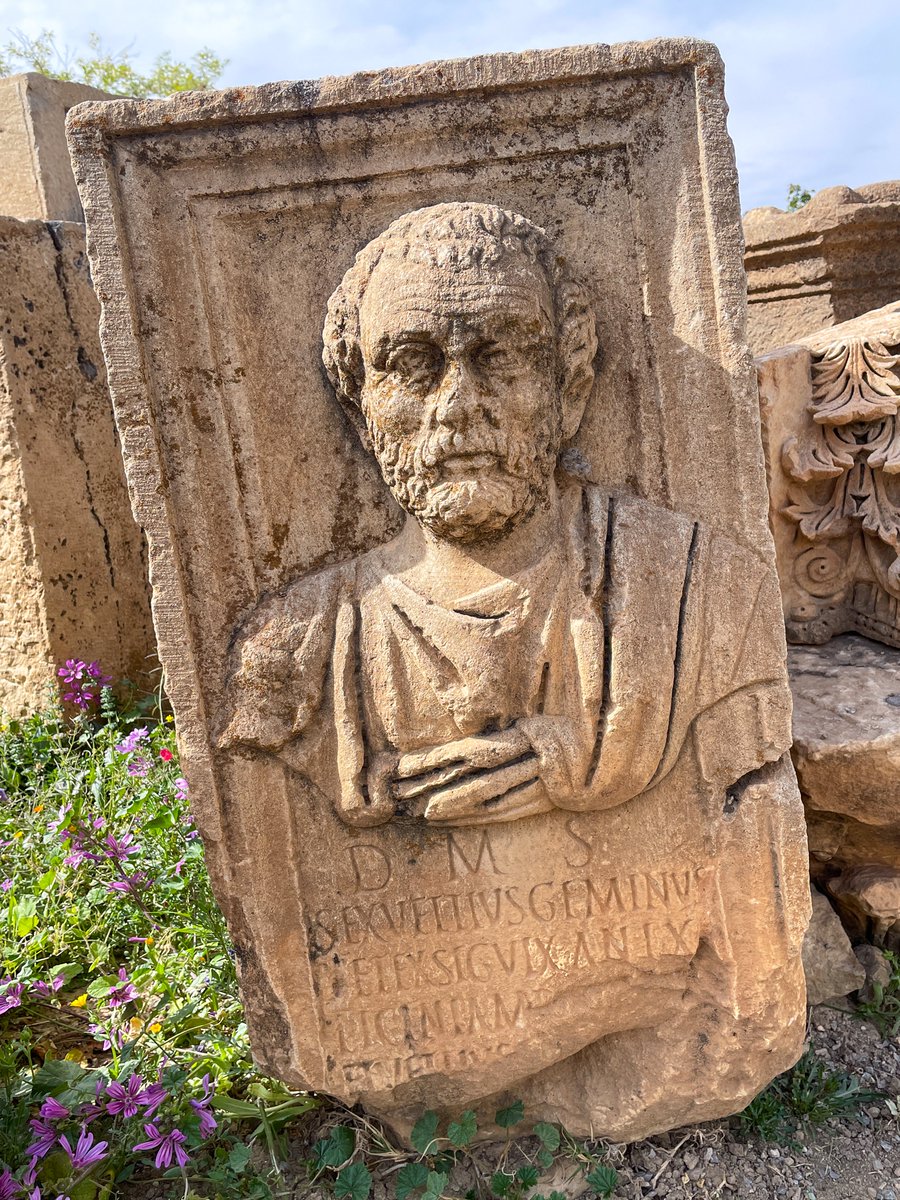
1) The fascinating Roman grave memorial of Sextus Vettius Geminus, veteran of the Third Augustan Legion based at Lambaesis, Algeria. The stele with its striking portrait is compelling in its own right – but is made even more so by an intriguing added function that it served...
2) Sextus Vettius Geminus lived sixty years and was a veteran of Legio III Augusta, in which he served a crucial role as signifer or standard-bearer. The old, bearded veteran is shown wearing his toga in a powerful frontal portrait that extends beyond the limits of its frame..
3) The memorial to Vettius Geminus was probably set up by his wife Licinia Muciana and a son also called Vettius, whose names are both damaged in the inscription. It is when we look at the top of the gravestone that we see something very surprising...
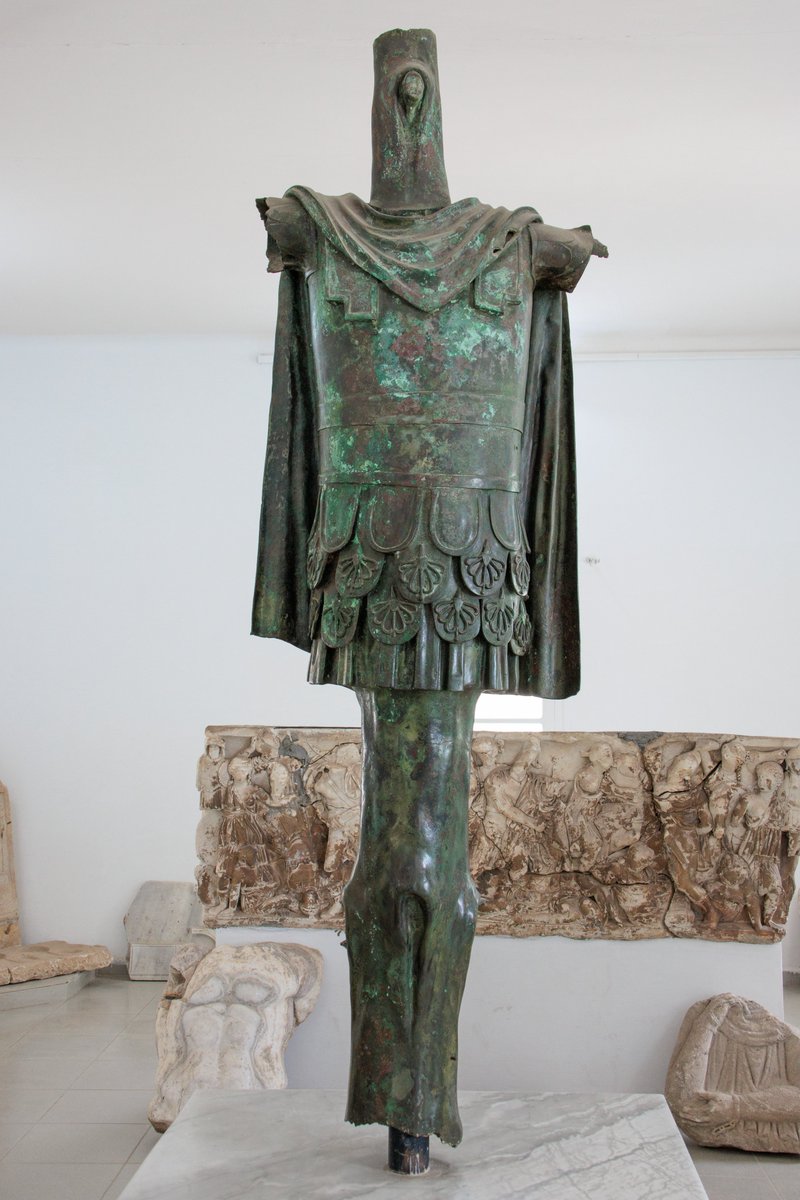
1) This incredible Roman bronze victory trophy is a unique survival from the ancient world, unearthed in the forum of Hippo Regius in Algeria where it once stood in celebration of a Roman military triumph...
2) The tropaeum, standing eight feet tall and weighing over a quarter of a ton, is sculpted in emulation of temporary trophies erected near the site of a victorious battle, taking the form of a tree trunk decorated with captured armour and weapons...
3) The cast bronze trophy shows a general's cuirass armour draped in a cloak, with precisely sculpted leather pteruges strips that provided some defence at the hips. Captured enemy weapons may have also been fixed to monument in ancient times...
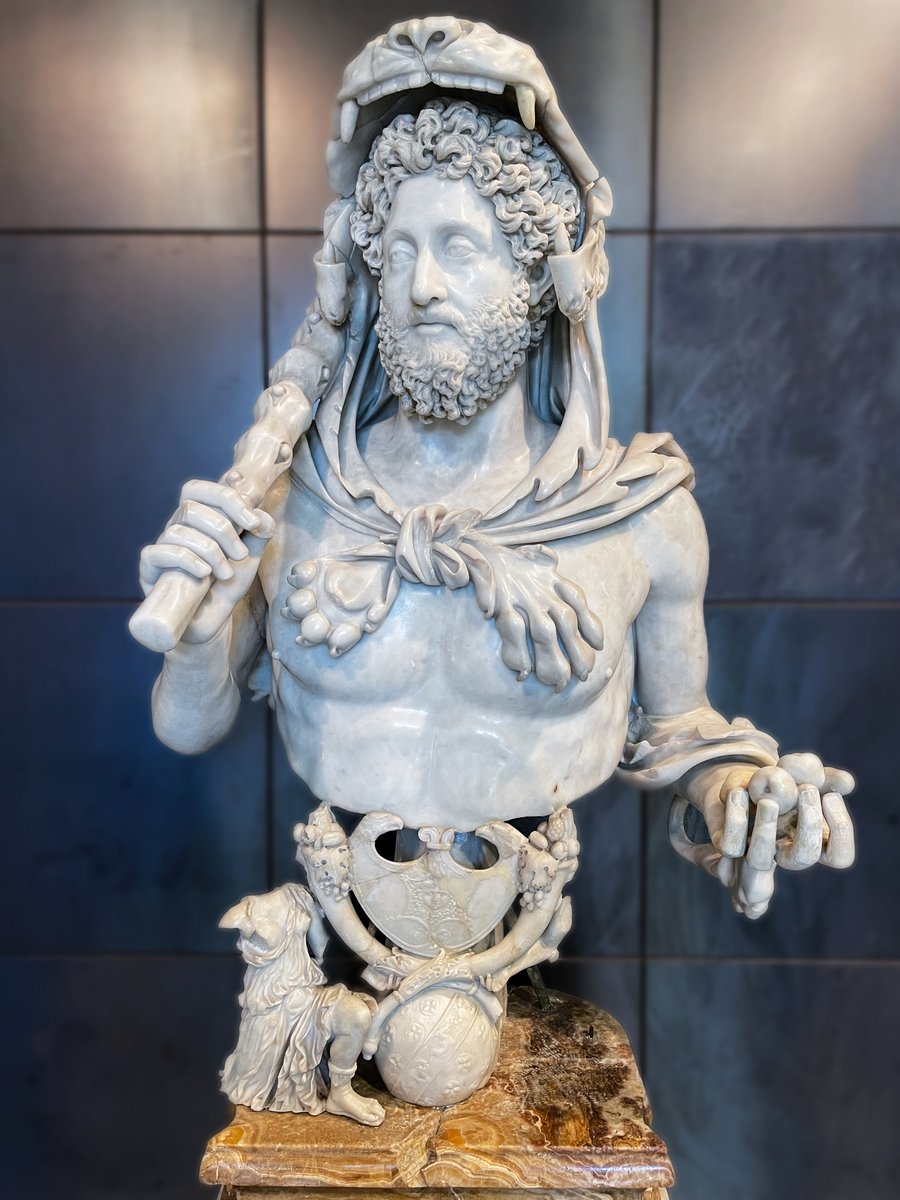
1) The extraordinary Capitoline bust of the Roman emperor Commodus, presenting himself in the guise of Hercules. Sculpted towards the end of his egomaniacal reign, c.192, the audacious marble portrait shows the eccentric ruler with numerous attributes of the Greek action hero...
2) On his shoulder Commodus rests a gnarled wooden club, Hercules' weapon of choice, with which he subdued a number of beasts in his Twelve Labours such as the Nemean lion and the Lernaean Hydra...
3) Over his head Commodus wears the skin of the fierce Nemean lion, killed by Hercules in his first labour, with the paws of the lion pelt draped around his shoulders and tied in a knot at the chest...