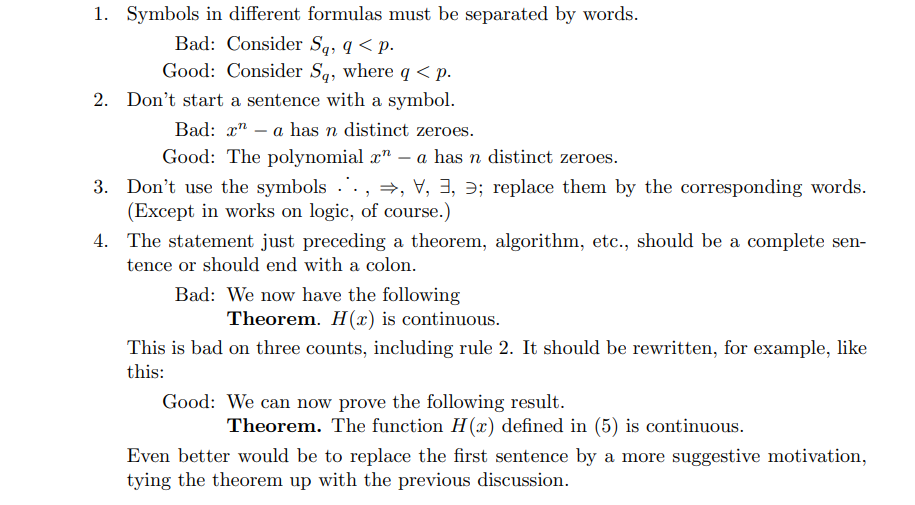
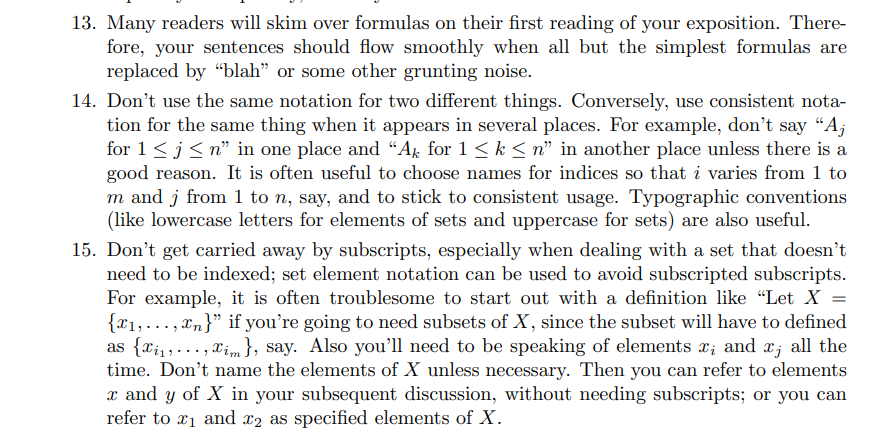
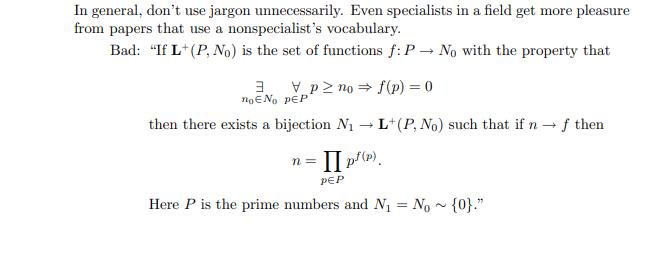
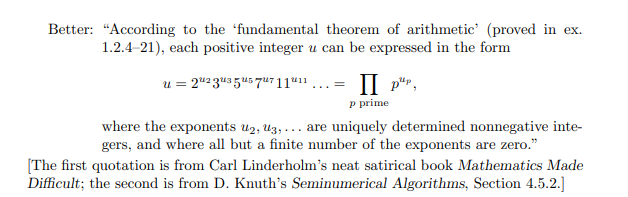
Since this has been such a big part of my everyday head for a while, I feel a bit sheepish highlighting it. But often when reading things, I remember some of the best advice is not universally followed.
• • •
Missing some Tweet in this thread? You can try to
force a refresh

If you do applied math (broadly - CS, stats, physics, . . .) - a request/freebie:
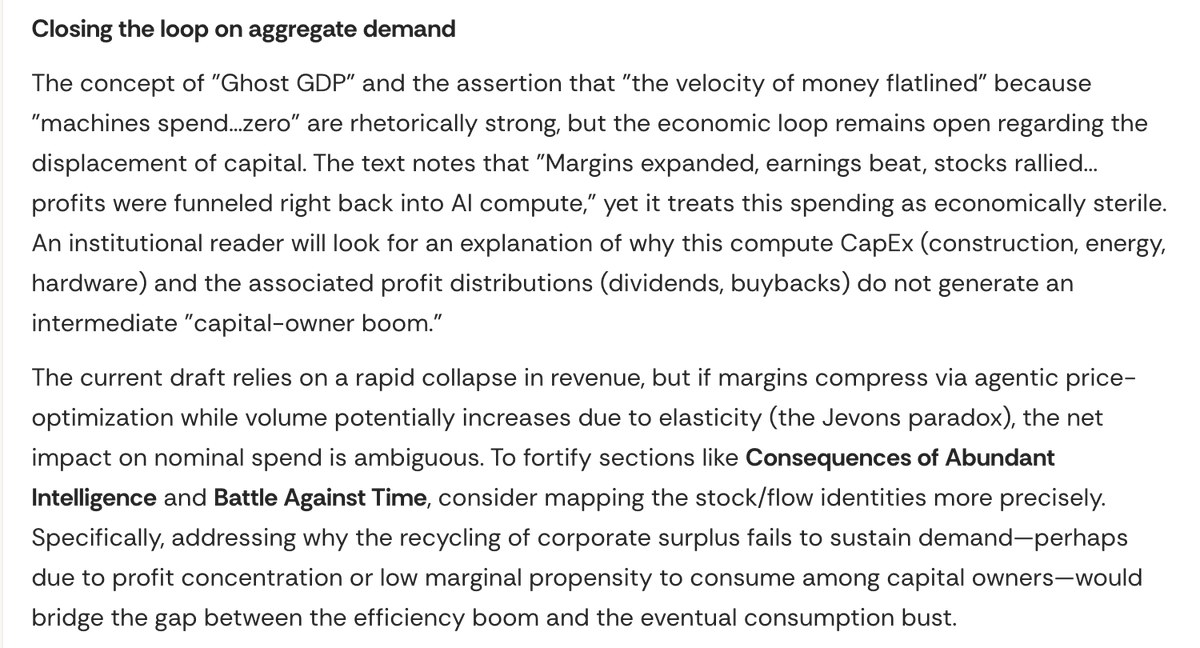
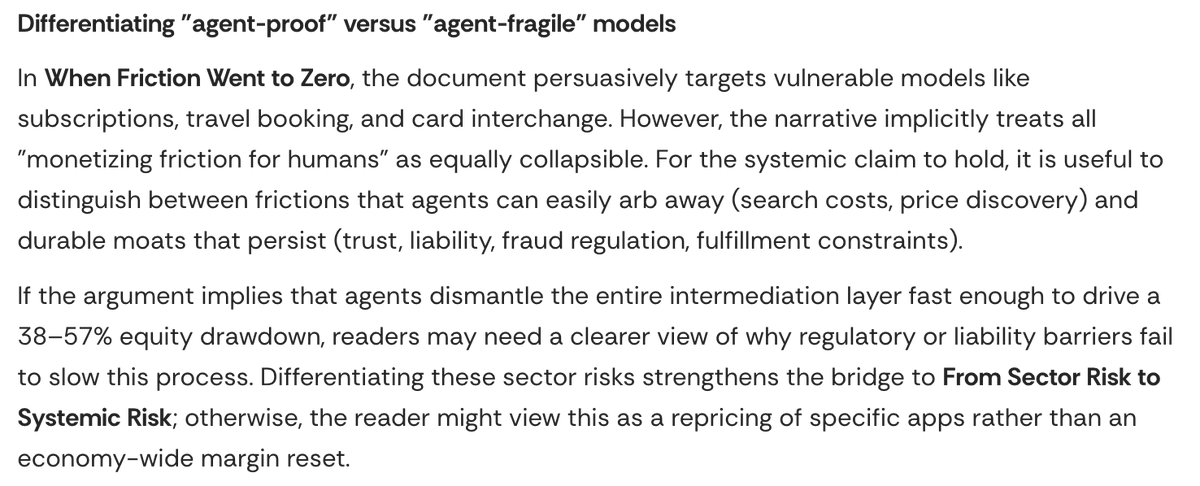
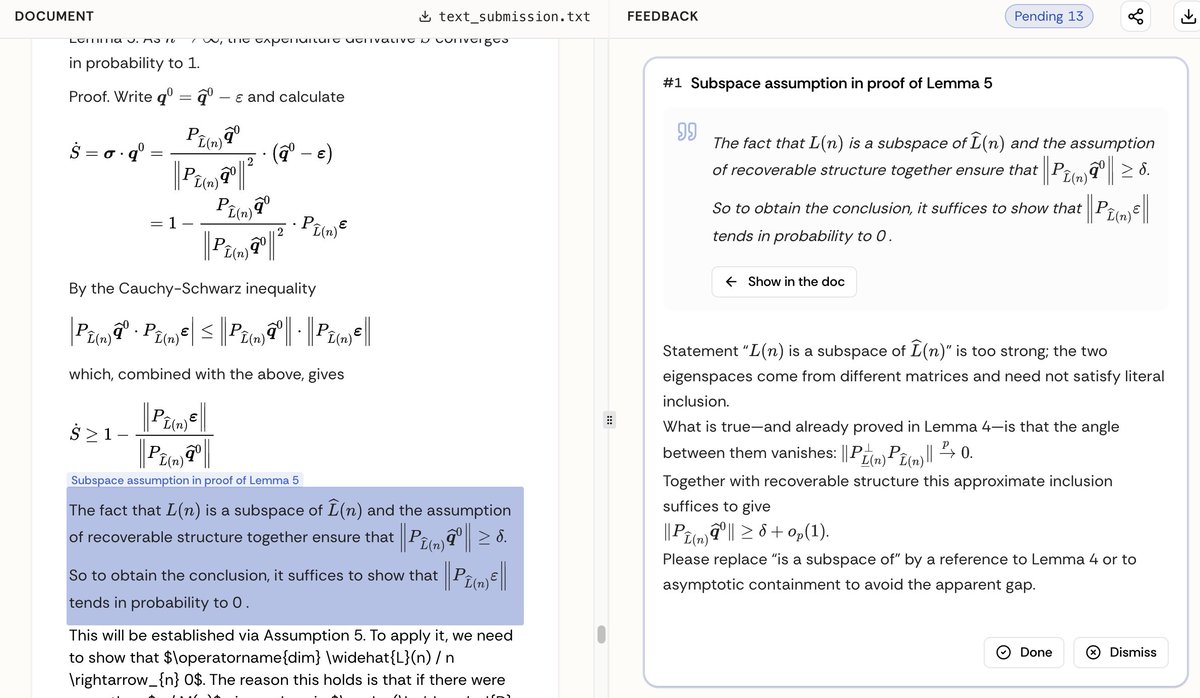
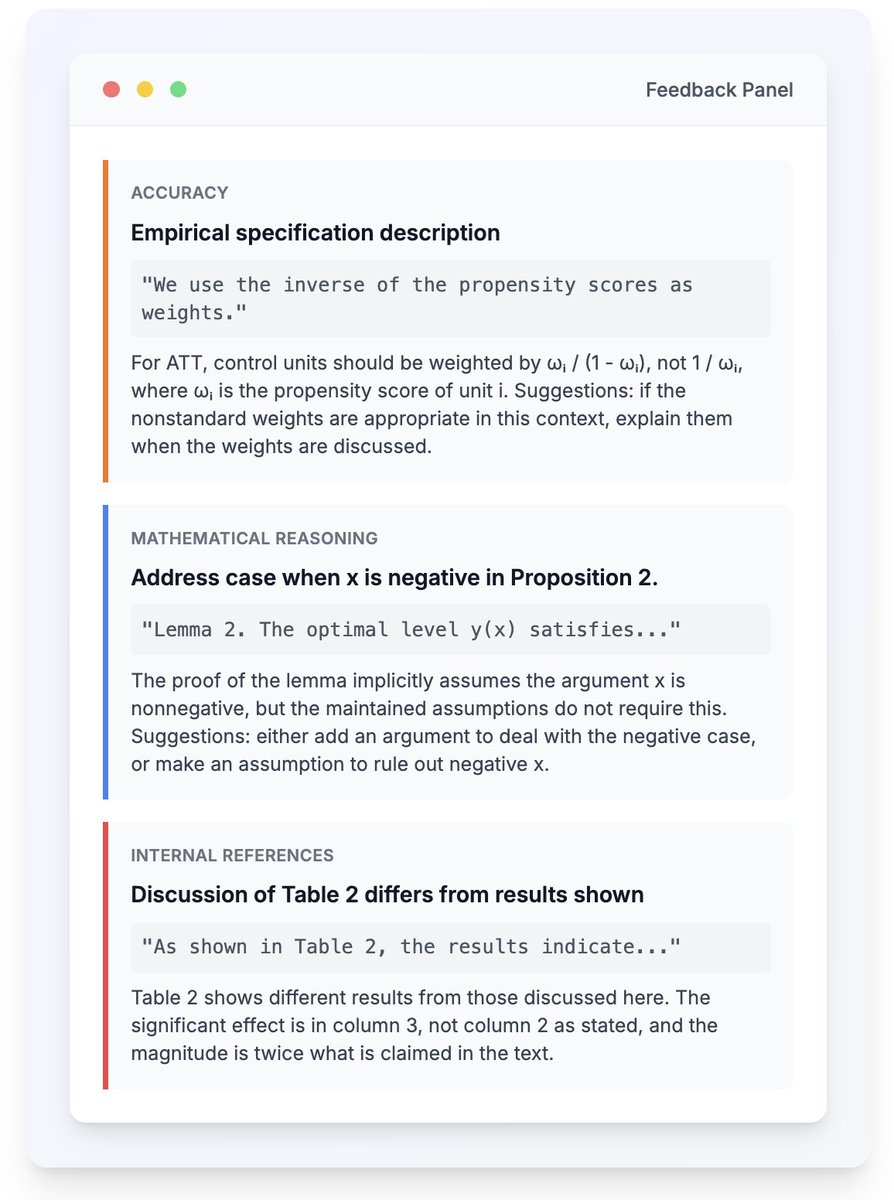
Refine is a tool that reads papers and finds technical issues, like a referee.
We want researchers in diverse areas to try it.
If you're willing to, read on.
1/
We'll give you free reviews, useful to stress-test a paper before submission or circulation.
(Users say it's similar to at least 4h of expert reading.)
In exchange, all we ask is you write a brief, fully honest reaction on X, LinkedIn, or any similar platform.
2/
Then we'll give you more free reviews, which you can keep or give as a gift to others.
If you're interested, please DM me. We'll do about 10 researchers for this first trial.
Conditions: PhD student or later, not in economics/finance/game theory.
3/
This terribly misguided paper is making the rounds.
This thread is to make it common knowledge what is wrong with it.
The basic thing: all modern economic theory allows for a gap between individual maximization and efficiency, whatever you mean exactly by each of these.
The first welfare theorem (individual optimization implies social efficiency) breaks down in the presence of frictions -
e.g., incomplete markets, asymmetric information, externalities, and market power.
Most economics today is about these frictions.
2/
Now, the paper has some halfhearted recognition of this, but says, effectively
"Well, you know, there is some meta-stage in which institutions are chosen, and economics assumes that this choice will be made to kill all frictions except the efficient ones."
3/
a few notes on it from an economist studying network theory
The striking thing about César's hit 2009 paper on economic complexity is that it doesn't mention eigen-anything and seems surprisingly disengaged from network theory.
The economic complexity index that Hidalgo and Hausman propose in "The building blocks of economic complexity" is a very close variant of Kleinberg's very famous 1999 HITS algorithm.
It's not clear whether they're aware of this connection, but in any case
2/
economists writing about networks in 2009, such as Jackson, Acemoglu, myself, and many others would have probably written the paper differently --
with a clearer consciousness to our big debt to the prior study of eigenthings as centrality measures!