A collection of mental models, frameworks, and principles you can use for marketing.
🧵
🧵
1. First Principles Thinking
The mental model of mental models.
A first principle is a basic assumption that cannot be deduced any further.
It forces you to think like a scientist. Or maybe more specifically, a chemist.
The mental model of mental models.
A first principle is a basic assumption that cannot be deduced any further.
It forces you to think like a scientist. Or maybe more specifically, a chemist.
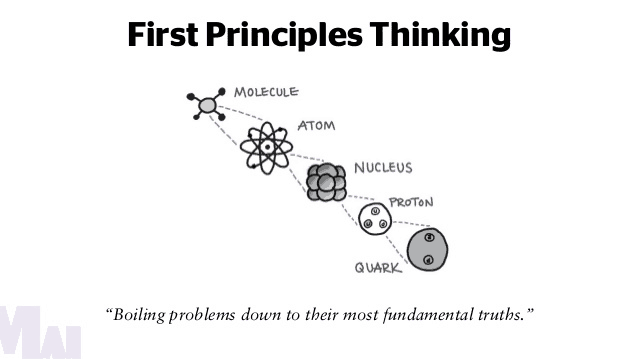
First principles thinking is the act of boiling a process down to the fundamental parts that you know are true and building up from there.
It's also one of the most effective strategies you can employ for breaking down complicated problems and generating original solutions.
It's also one of the most effective strategies you can employ for breaking down complicated problems and generating original solutions.
When used correctly, it removes every assumption and convention.
Assumptions are deadly because you're making a decision on something that may not be true.
Conventions are practices done out of tradition or routine. "We've always done it this way"
Both stifle innovation.
Assumptions are deadly because you're making a decision on something that may not be true.
Conventions are practices done out of tradition or routine. "We've always done it this way"
Both stifle innovation.
How does it apply to marketing?
Instead of being late to the party with the latest fad, strategy, or tactic that's working... be the first one to prove it works.
Stop being an imitator. Start being an inventor.
A lot of marketing is about novelty. And novelty can't be copied.
Instead of being late to the party with the latest fad, strategy, or tactic that's working... be the first one to prove it works.
Stop being an imitator. Start being an inventor.
A lot of marketing is about novelty. And novelty can't be copied.
So challenge assumptions and conventions.
Use the "Rule of 5 Whys" to get to the root of something.
Disassemble a marketing strategy into it's most fundamental parts and then reassemble into something better.
Use the "Rule of 5 Whys" to get to the root of something.
Disassemble a marketing strategy into it's most fundamental parts and then reassemble into something better.
2. Jobs To Be Done
Customers hire products to do things for them just like managers hire people to do things for them.
Figure out what job your customer hires your product/service for and it'll transform the way you market it.
Customers hire products to do things for them just like managers hire people to do things for them.
Figure out what job your customer hires your product/service for and it'll transform the way you market it.
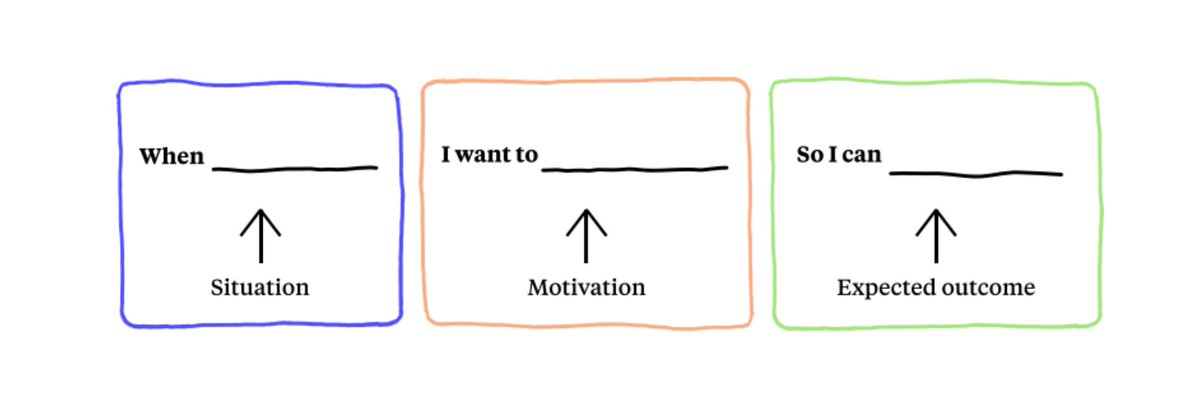
Clayton Christensen is one of the pioneers in the field and the story of how his colleague figured out how to increase milkshake sales is an all-time classic.
The Jobs to Be Done framework is a way to reframe how you think about products and services—away from features and toward outcomes.
"The marketer’s task is to understand what jobs periodically arise in customers’ lives for which they might hire products the company could make."
"The marketer’s task is to understand what jobs periodically arise in customers’ lives for which they might hire products the company could make."
Personas are often defined by attributes that have nothing to do with causality.
E.g. someone’s age, sex, race, and weekend habits doesn’t explain why they ate a milkshake.
Instead, personas should define the different "jobs" someone would use the product or service for.
E.g. someone’s age, sex, race, and weekend habits doesn’t explain why they ate a milkshake.
Instead, personas should define the different "jobs" someone would use the product or service for.
A JTBD customer interview focuses on 4 key parts:
- The push of what's currently happening
- The pull of the new solution
- The anxiety of what could happen
- The attachment to what you currently have
cxl.com/blog/customer-…
- The push of what's currently happening
- The pull of the new solution
- The anxiety of what could happen
- The attachment to what you currently have
cxl.com/blog/customer-…
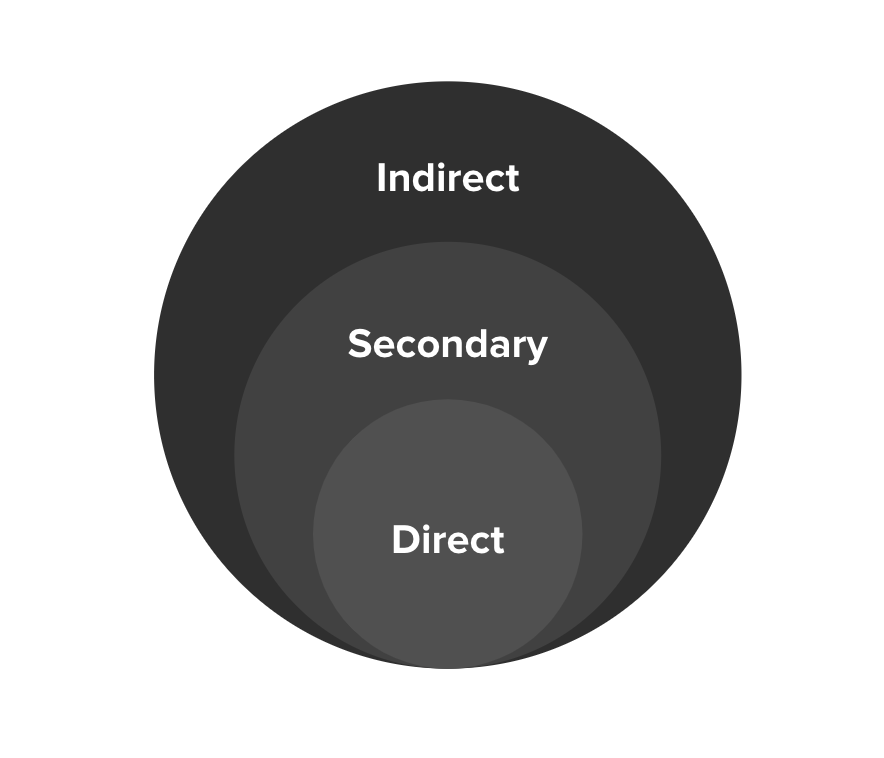
It also helps you understand who your true competitors are:
Direct competitors: They do the same job in the same way
Secondary competitors: They do the same job in a different way
Indirect competitors: They do a different job with a conflicting outcome
Direct competitors: They do the same job in the same way
Secondary competitors: They do the same job in a different way
Indirect competitors: They do a different job with a conflicting outcome
3. Circle of Competence
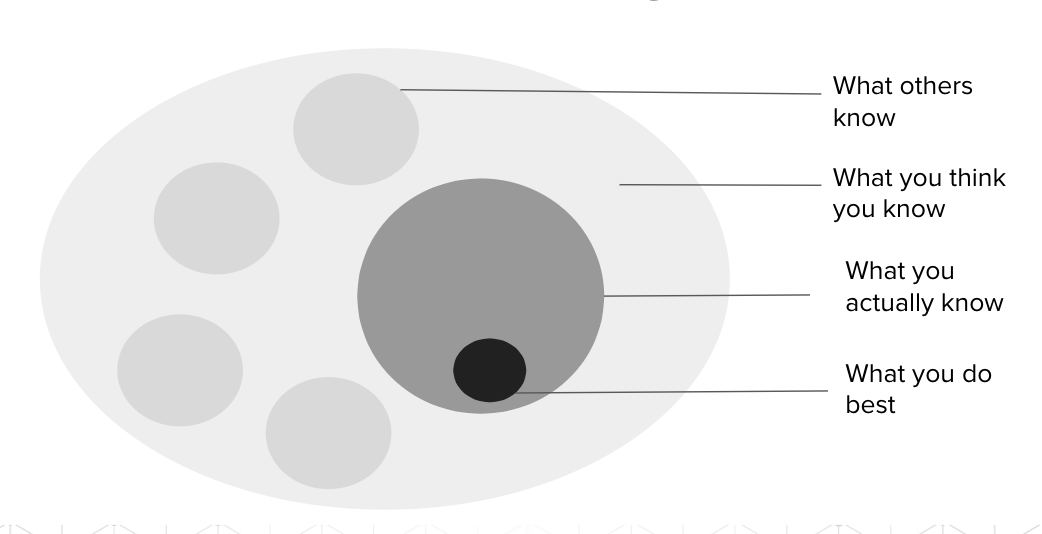
Your circle of competence is the subject area that matches both your skills and expertise.
Don't be afraid to niche down and build expertise, and then delegate the rest.
Your circle of competence is the subject area that matches both your skills and expertise.
Don't be afraid to niche down and build expertise, and then delegate the rest.
4. Inversion
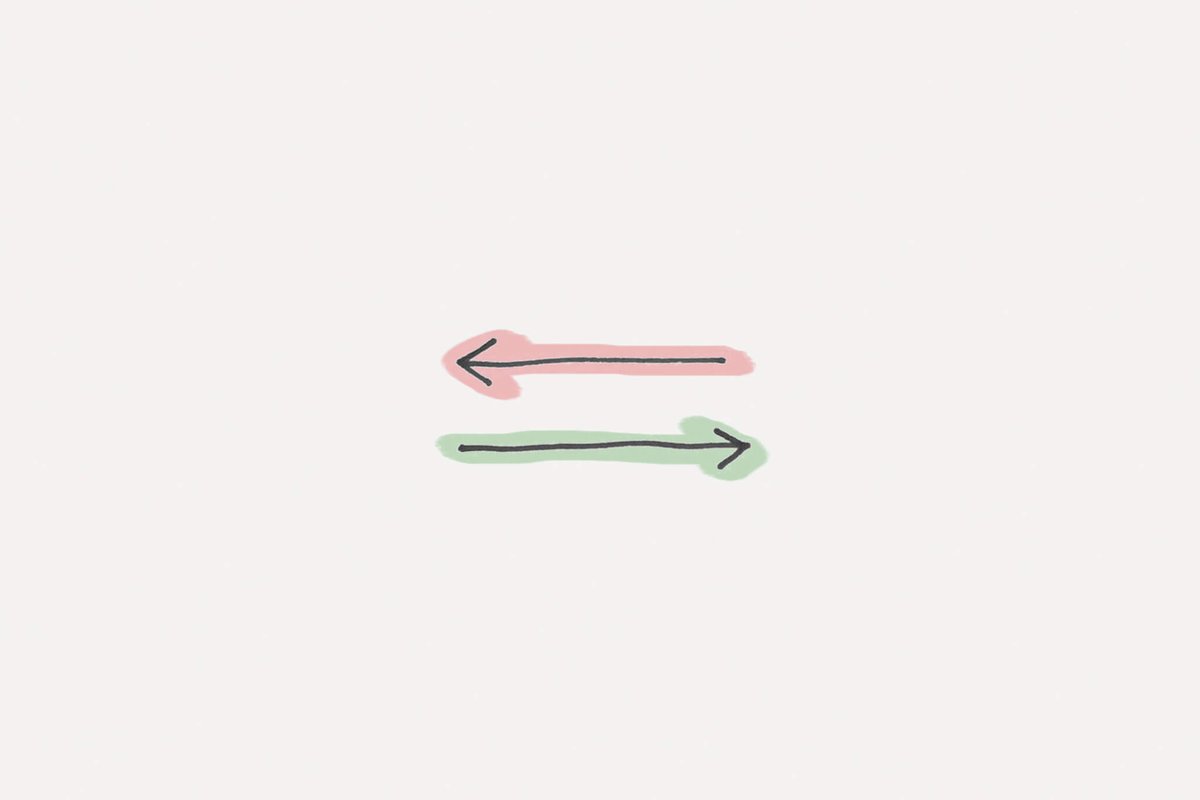
Inversion is the practice of looking at things both forward and backward.
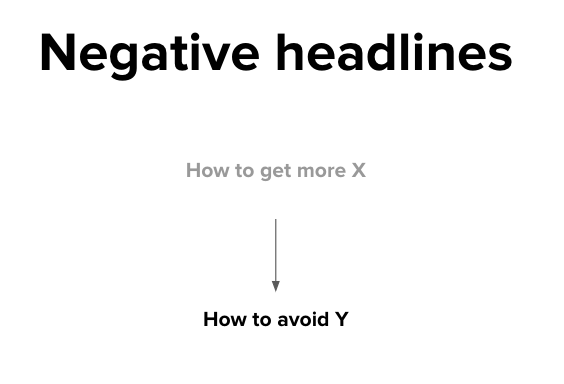
Think about all the ways something can go wrong so you can avoid them.
Ask what would prevent you from achieving your goals.
Play devil's advocate to test your ideas and make them stronger.
Inversion is the practice of looking at things both forward and backward.
Think about all the ways something can go wrong so you can avoid them.
Ask what would prevent you from achieving your goals.
Play devil's advocate to test your ideas and make them stronger.
5. Fundamental Attribution Error
A cognitive bias to assume that a person's actions depend on what "kind" of person that person is rather than on the social/environmental forces that influence the person.
Assume people are lazy, not evil.
Distracted, not uninterested.
A cognitive bias to assume that a person's actions depend on what "kind" of person that person is rather than on the social/environmental forces that influence the person.
Assume people are lazy, not evil.
Distracted, not uninterested.
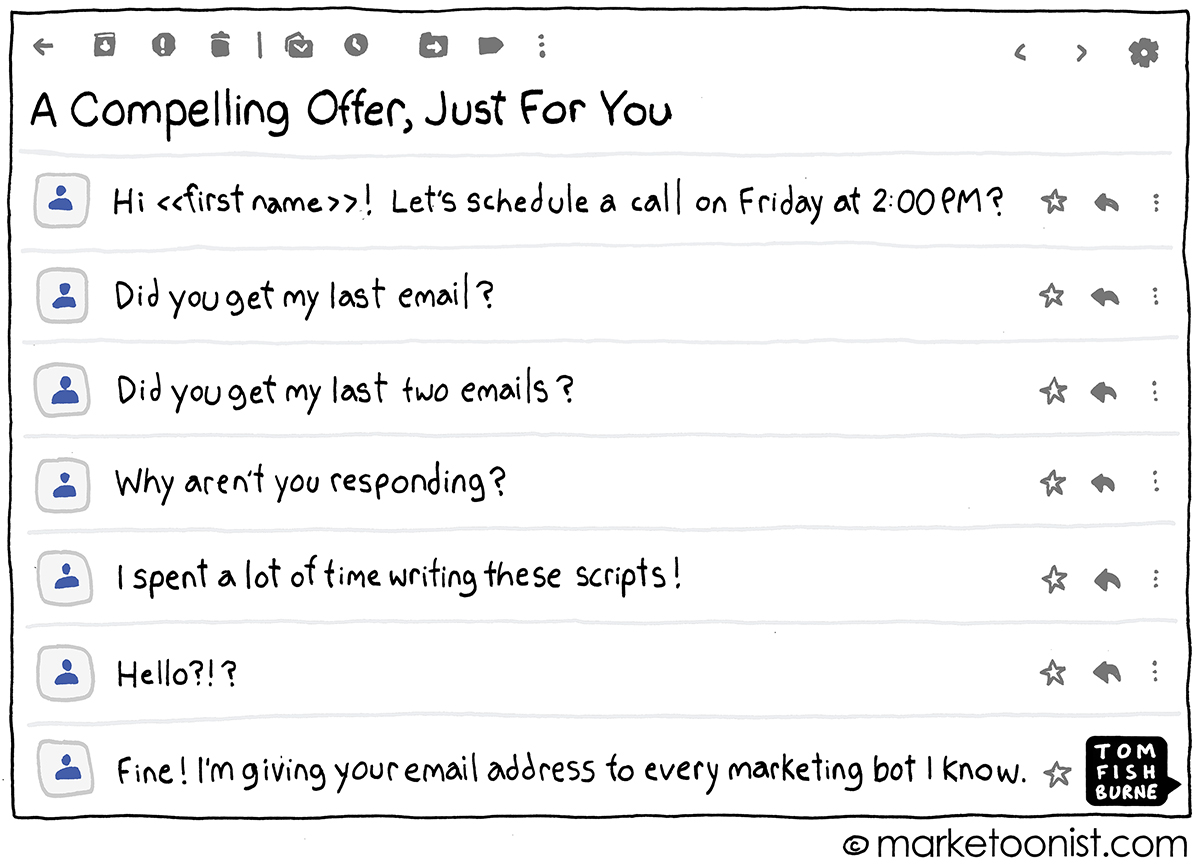
6. Measure vs Magnitude
There are two components that determine something's value to you:
- “Magnitude” — the value of something at a specific point in time
- “Measure” — the time period over which that something provides value
Bias towards marketing with high measure.
There are two components that determine something's value to you:
- “Magnitude” — the value of something at a specific point in time
- “Measure” — the time period over which that something provides value
Bias towards marketing with high measure.
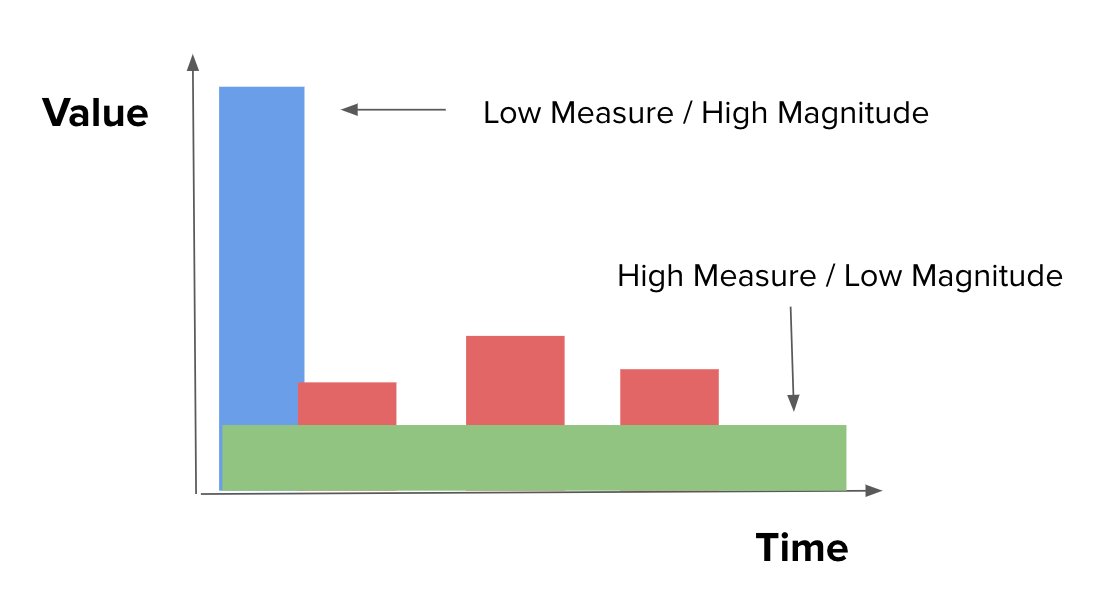
Both magnitude and measure are important, but they have very different purposes and uses.

7. Cobra Effect
When an attempted solution results in unintended consequences.
The story goes that the government created a bounty for dead cobras to get rid of them, but instead people bred them to collect the bounty and ended up releasing more cobras than there was originally
When an attempted solution results in unintended consequences.
The story goes that the government created a bounty for dead cobras to get rid of them, but instead people bred them to collect the bounty and ended up releasing more cobras than there was originally
Common culprits in marketing?
That website redesign that *lowered* conversions.
Pricing model changes that *lower* revenue.
Discounting that trains customers to buy only when there's a discount.
That website redesign that *lowered* conversions.
Pricing model changes that *lower* revenue.
Discounting that trains customers to buy only when there's a discount.
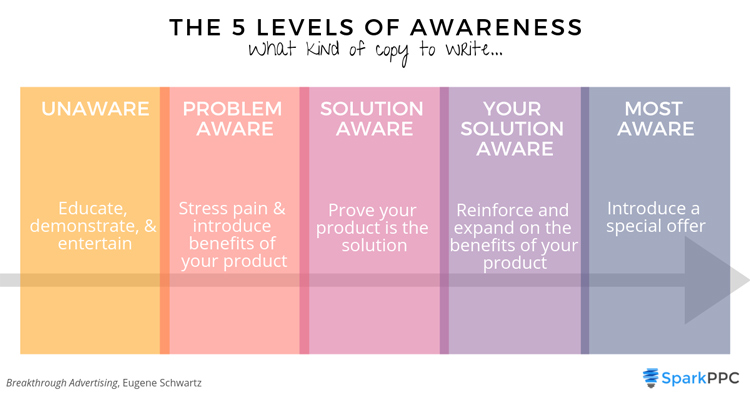
8. The Stages of Awareness
Eugene Schwartz covered this in his classic book Breakthrough Advertising way back in 1966.
Tailor your marketing to the stage of awareness of your prospects and always be pushing them to become "more aware"
Eugene Schwartz covered this in his classic book Breakthrough Advertising way back in 1966.
Tailor your marketing to the stage of awareness of your prospects and always be pushing them to become "more aware"
9. Value to Price Ratio
“Price is what you pay, value is what you get.” — Warren Buffet
Price based on value, not based on cost or on profit margin.
Price objections are usually an indicator your P/V ratio is too low.
“Price is what you pay, value is what you get.” — Warren Buffet
Price based on value, not based on cost or on profit margin.
Price objections are usually an indicator your P/V ratio is too low.

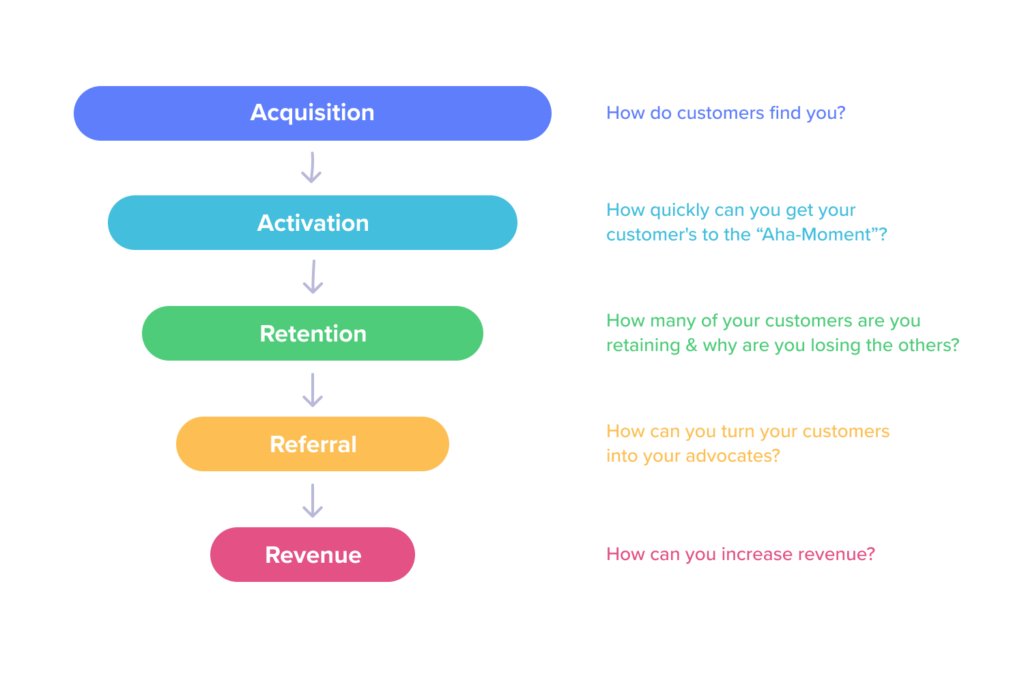
10. AARRR
Marketing today needs a holistic approach.
“Without acquisition, you don’t have a business. Without retention, you don’t have a business for very long.” - @JordanGal
Start bottom-up so you don't have a leaky bucket.
Marketing today needs a holistic approach.
“Without acquisition, you don’t have a business. Without retention, you don’t have a business for very long.” - @JordanGal
Start bottom-up so you don't have a leaky bucket.

11. Second-order thinking
Failing to consider second- and third-order consequences is the cause of a lot of painfully bad decisions, and it is especially deadly when the first inferior option confirms your own biases.
Case in point 👇
baremetrics.com/blog/freemium-…
Failing to consider second- and third-order consequences is the cause of a lot of painfully bad decisions, and it is especially deadly when the first inferior option confirms your own biases.
Case in point 👇
baremetrics.com/blog/freemium-…
12. Law of Diminishing Returns
At what point does something stop working?
andrewchen.co/the-law-of-shi…
At what point does something stop working?
andrewchen.co/the-law-of-shi…
13. Ockham's Razor
Things are usually connected or behave in the simplest or most economical way, especially with reference to alternative evolutionary pathways.
Simpler marketing is better marketing.
Strive for idea minimalism.
Things are usually connected or behave in the simplest or most economical way, especially with reference to alternative evolutionary pathways.
Simpler marketing is better marketing.
Strive for idea minimalism.
14. Overfitting
Overfitting occurs when you use an overly complicated explanation when a simpler one will do.
Reject complexity, minimize assumptions, and don't let ideas bloat.
Usually the simplest explanation is the correct one.
Overfitting occurs when you use an overly complicated explanation when a simpler one will do.
Reject complexity, minimize assumptions, and don't let ideas bloat.
Usually the simplest explanation is the correct one.
15. Opportunity Costs
Ben Franklin once said "One is obliged sometimes to give up some smaller points in order to obtain greater."
Opportunity cost is the cost of the next best option.
Ben Franklin once said "One is obliged sometimes to give up some smaller points in order to obtain greater."
Opportunity cost is the cost of the next best option.
The best strategies and tactics are the ones you think "why didn't we start doing this sooner?"
Bias towards action.
Bias towards efficiency.
Bias towards sustainability.
Bias towards action.
Bias towards efficiency.
Bias towards sustainability.
16. Pareto’s Principle
20% of a set of causes result in 80% of the effects.
What's the 80/20 of your marketing?
Double down on what works. Diversification is (mostly) a myth.
20% of a set of causes result in 80% of the effects.
What's the 80/20 of your marketing?
Double down on what works. Diversification is (mostly) a myth.
17. Local vs Global Maximums
Local optimum is a solution that is optimal within a neighboring set of candidate solutions.
Global optimum is the optimal solution among all possible solutions, not just those in a particular neighborhood of values.
Seek the global optimum.
Local optimum is a solution that is optimal within a neighboring set of candidate solutions.
Global optimum is the optimal solution among all possible solutions, not just those in a particular neighborhood of values.
Seek the global optimum.
Sure, you found an optimization that increased conversions by 50%, but is that the best you can do?
What if there was a global maximum that tripled conversions?
What if there was a global maximum that tripled conversions?
18. Theory of Constraints
A funnel is a system of connected marketing tactics that lead someone to an end goal.
The theory of constraints says that a system’s performance is constrained by its weakest link.
So what's the weakest part of your funnel?
A funnel is a system of connected marketing tactics that lead someone to an end goal.
The theory of constraints says that a system’s performance is constrained by its weakest link.
So what's the weakest part of your funnel?
19. Probabilistic Thinking
If you actually want to understand statistics and probabilities in marketing, I recommend you start here 👇
Spoiler alert: Probability is very counter-intuitive
cxl.com/blog/dont-buil…
If you actually want to understand statistics and probabilities in marketing, I recommend you start here 👇
Spoiler alert: Probability is very counter-intuitive
cxl.com/blog/dont-buil…
20. Minimum Path to Value
If you stripped away everything that wasn't absolutely necessary for someone to feel comfortable making a decision, what would it look like?
This can apply to funnels, onboarding flows, checkout flows, micro-conversions, really any multi-step process.
If you stripped away everything that wasn't absolutely necessary for someone to feel comfortable making a decision, what would it look like?
This can apply to funnels, onboarding flows, checkout flows, micro-conversions, really any multi-step process.
21. Hick's Law
The time it takes to make a decision increases with the number and complexity of choices.
This comes back to Ockam's Razor & Overfitting.
Simpler = less time = easier decision
The time it takes to make a decision increases with the number and complexity of choices.
This comes back to Ockam's Razor & Overfitting.
Simpler = less time = easier decision
22. Framing
How a message is communicated affects the way it is received.
✅ 99% fat free
❌ Contains 1% fat
✅ 99% uptime
❌ 1% downtime
✅ 99% satisfaction
❌ 1% dissatisfaction
How a message is communicated affects the way it is received.
✅ 99% fat free
❌ Contains 1% fat
✅ 99% uptime
❌ 1% downtime
✅ 99% satisfaction
❌ 1% dissatisfaction
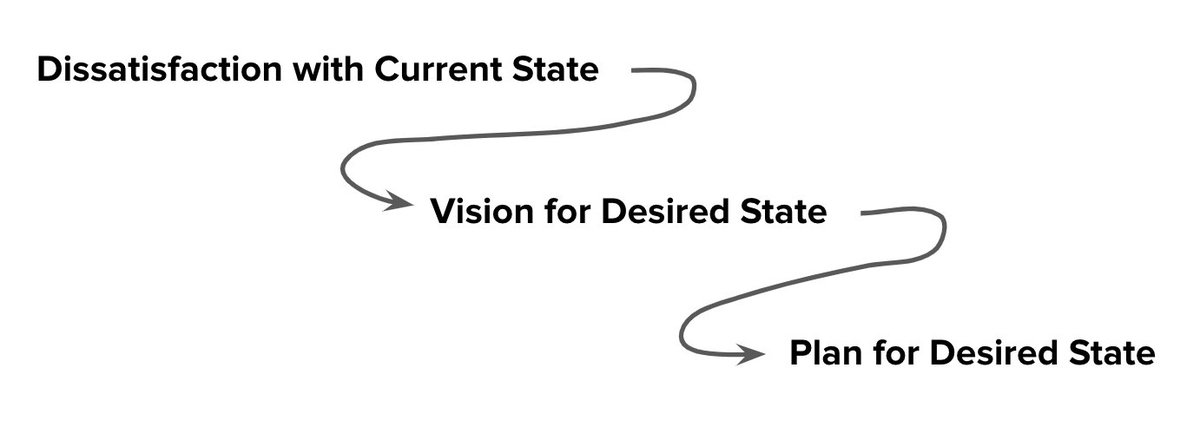
23. Human Action Model
In order to act:
- An individual has a sense of discomfort or unease with her current situation,
- That individual imagines a vision of a better state, and
- The individual comes to believe her action can realize that improved condition.
In order to act:
- An individual has a sense of discomfort or unease with her current situation,
- That individual imagines a vision of a better state, and
- The individual comes to believe her action can realize that improved condition.
24. Pain Dream Fix
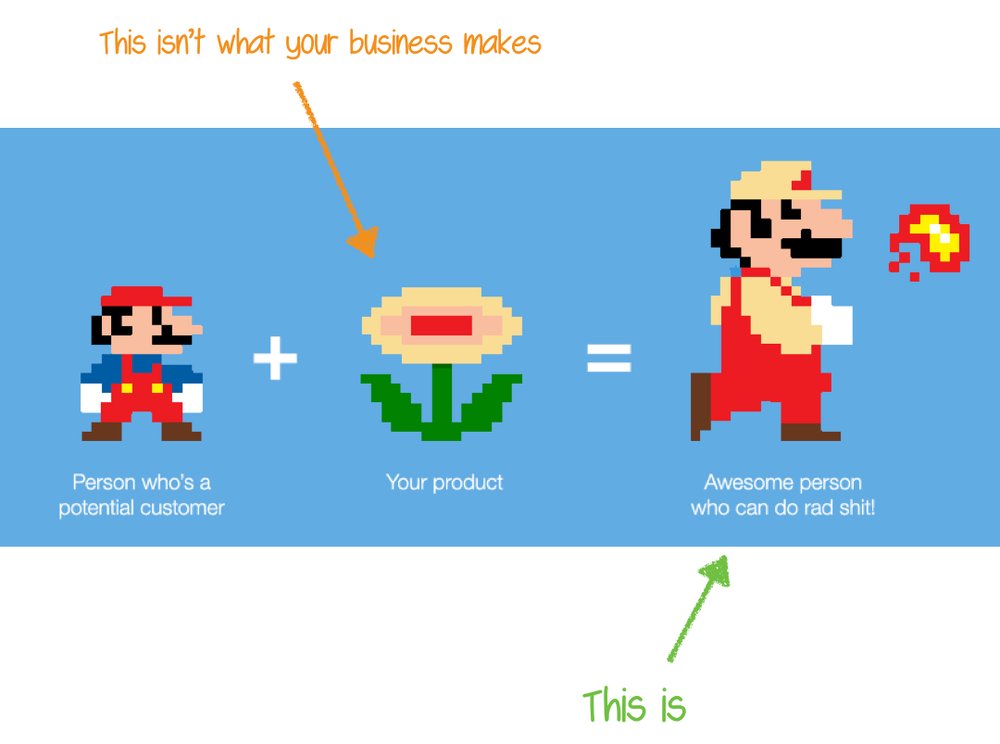
The problem with most marketing copy and sales pitches isn’t that it doesn’t explain the product, it’s that it doesn’t explain who it’s for and why they should care about it.
People need to be sure that “this is for people like me.”
The problem with most marketing copy and sales pitches isn’t that it doesn’t explain the product, it’s that it doesn’t explain who it’s for and why they should care about it.
People need to be sure that “this is for people like me.”
Start with the pains and the problems your customers encounter.
Then paint a picture of a better world.
And then show them how your product helps them fix their problems with the unique features and capabilities that enables them to make their dream a reality.
Then paint a picture of a better world.
And then show them how your product helps them fix their problems with the unique features and capabilities that enables them to make their dream a reality.
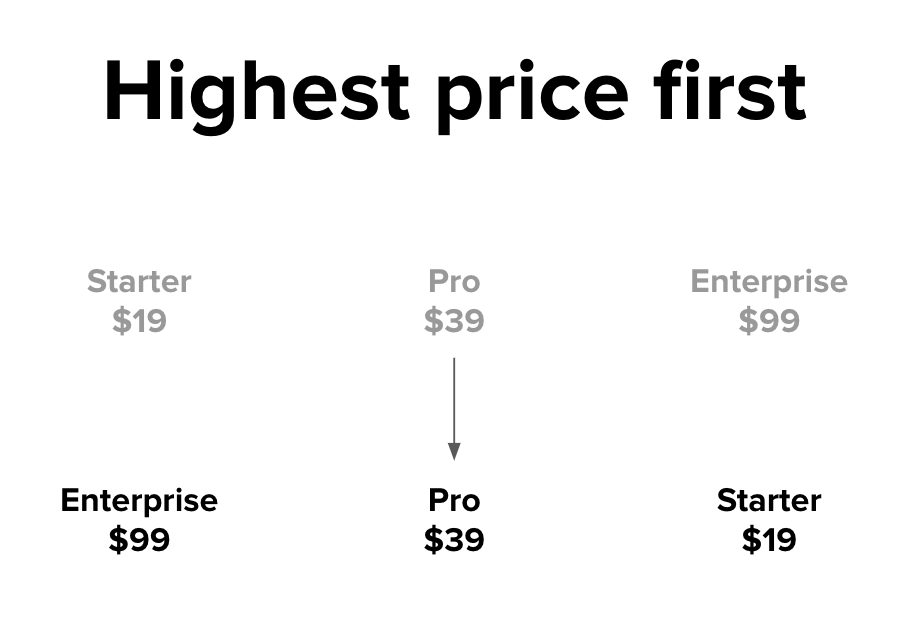
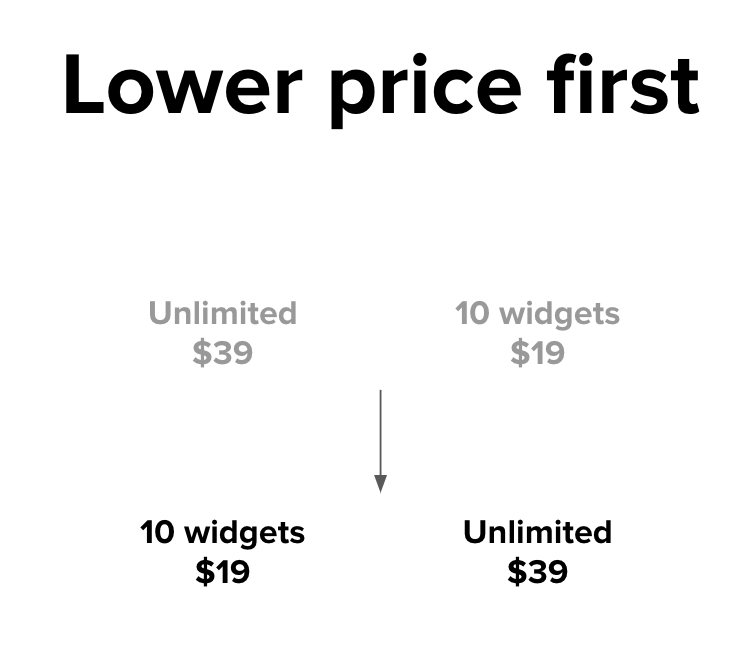
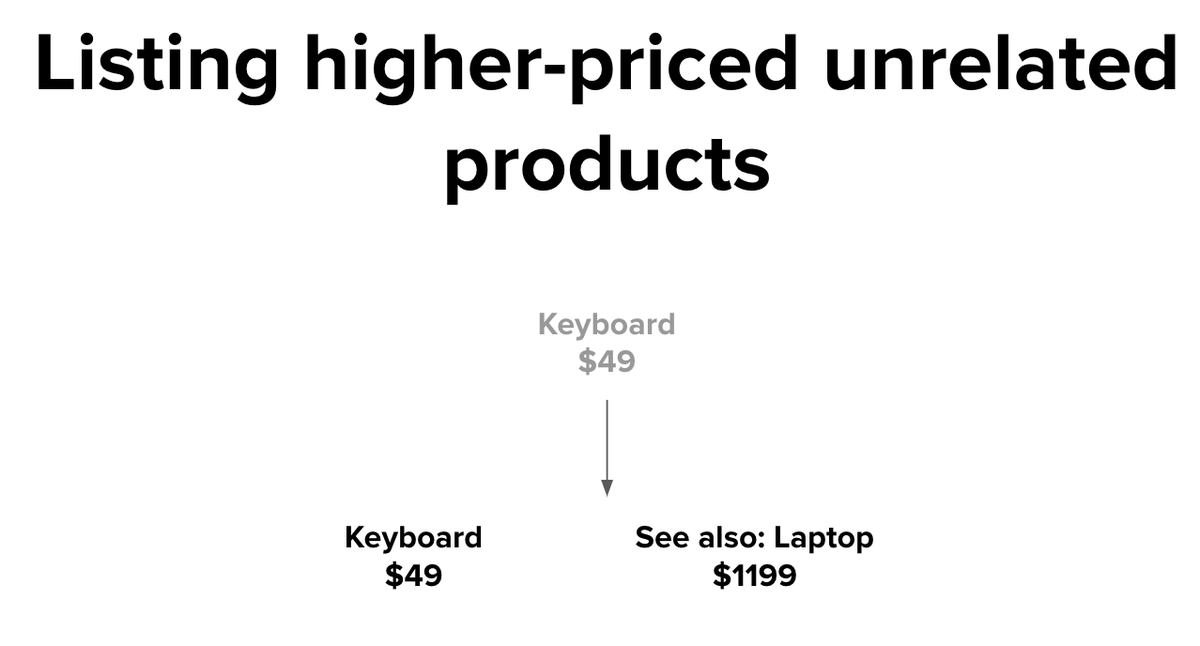
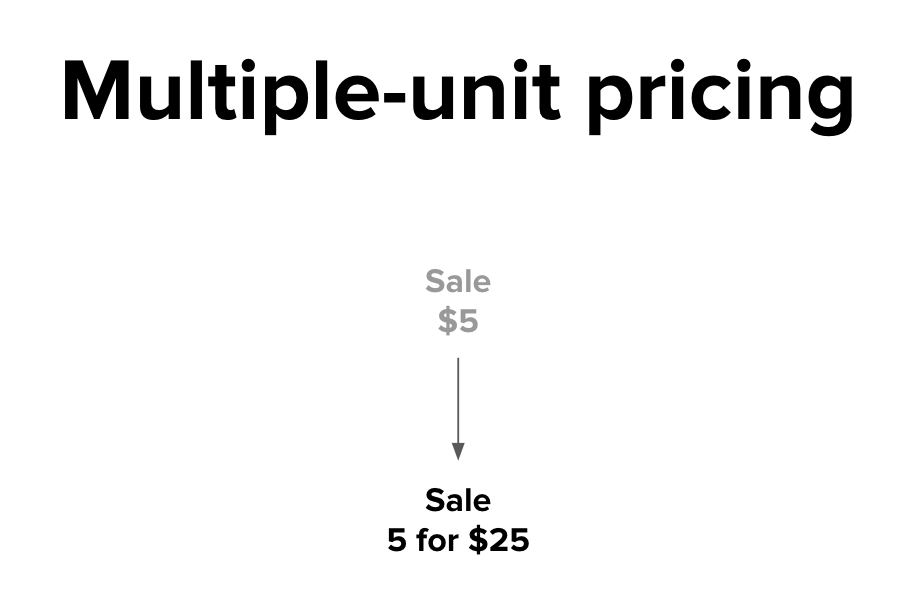
25. Anchoring
When people are trying to make a decision, they often use an anchor or focal point as a reference or starting point.
When people are trying to make a decision, they often use an anchor or focal point as a reference or starting point.
26. Commitment and Consistency
We are driven to be consistent in all areas of life.
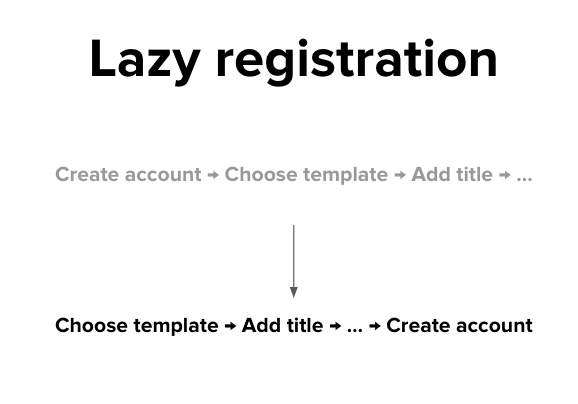
This is why home try-on programs, auctions, contests, wishlists, and progressive forms are so successful.
We are driven to be consistent in all areas of life.
This is why home try-on programs, auctions, contests, wishlists, and progressive forms are so successful.
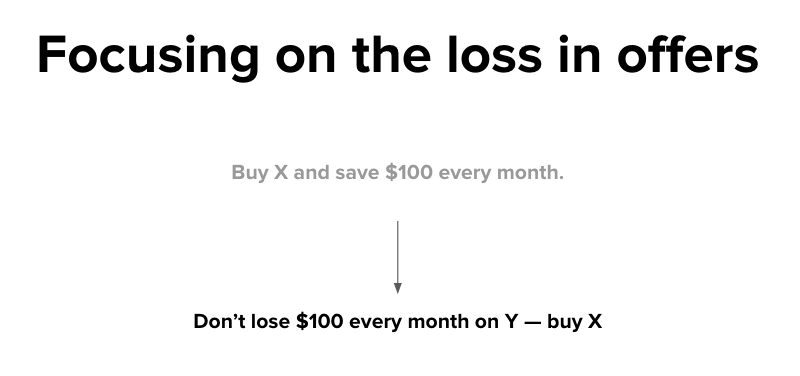
27. Loss Aversion
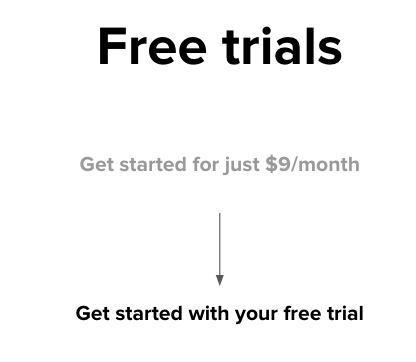
People feel losses more deeply than gains of the same value. In other words, it’s more painful to lose something than to get that same thing.
People feel losses more deeply than gains of the same value. In other words, it’s more painful to lose something than to get that same thing.
28. Need to Complete
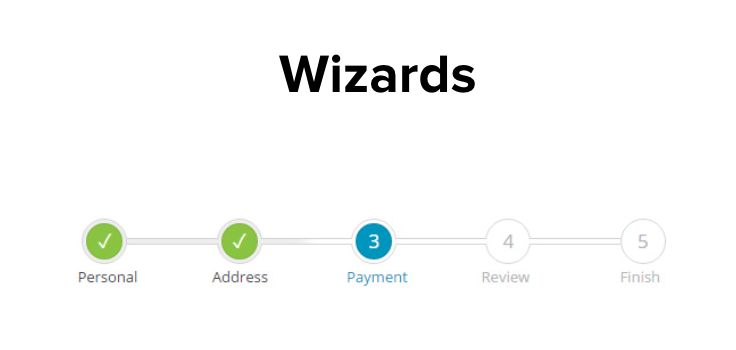
We, as humans, don’t like to leave things incomplete. We are motivated to finish a set of tasks, even with no further reward other than the satisfaction of completing them.
It's the OCD in all of us.
We, as humans, don’t like to leave things incomplete. We are motivated to finish a set of tasks, even with no further reward other than the satisfaction of completing them.
It's the OCD in all of us.

29. Reciprocity
We feel a sense of obligation to return favors to people who have done something for us. This rule works not only with people you know but also with strangers.
Giving is the ultimate marketing.
We feel a sense of obligation to return favors to people who have done something for us. This rule works not only with people you know but also with strangers.
Giving is the ultimate marketing.
30. Rewards
Rewards are exactly what they sound like: a thing given in return for an action or achievement.
These can be intrinsic or extrinsic. Fixed or variable.
Rewards are exactly what they sound like: a thing given in return for an action or achievement.
These can be intrinsic or extrinsic. Fixed or variable.
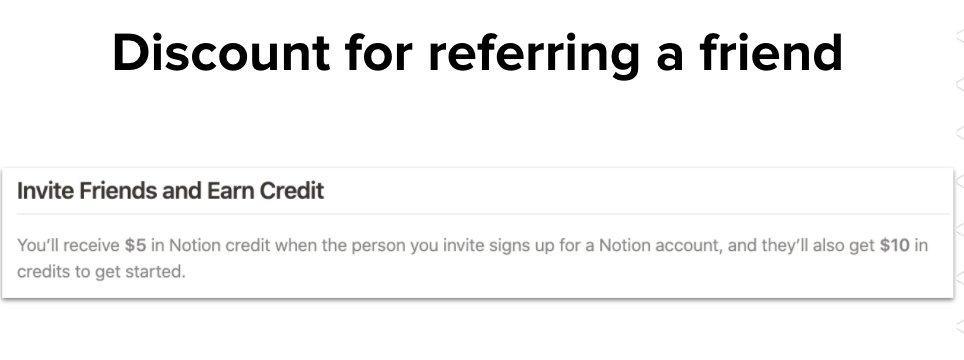

31. Scarcity
When something is limited or unattainable, you want it more.
Think about it — would the Mona Lisa be as valuable if there were 100 of them?
In fact, this is why diamonds are so expensive. They've been marketed as rare, when they're actually common.
When something is limited or unattainable, you want it more.
Think about it — would the Mona Lisa be as valuable if there were 100 of them?
In fact, this is why diamonds are so expensive. They've been marketed as rare, when they're actually common.
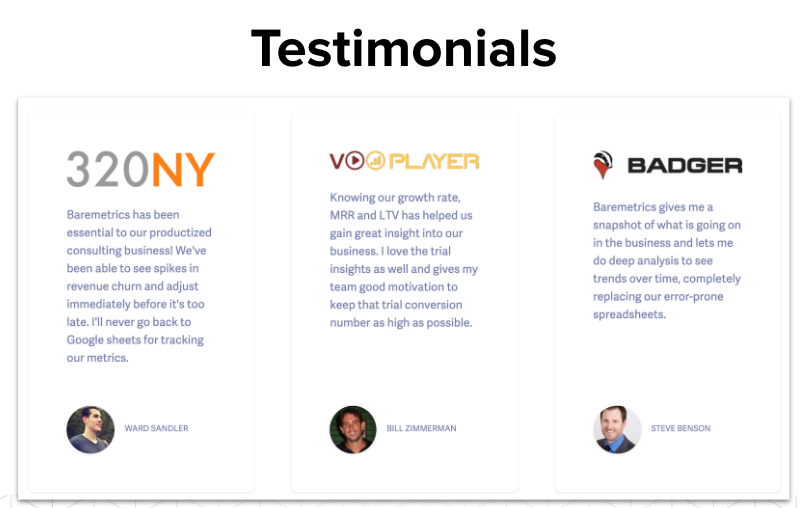
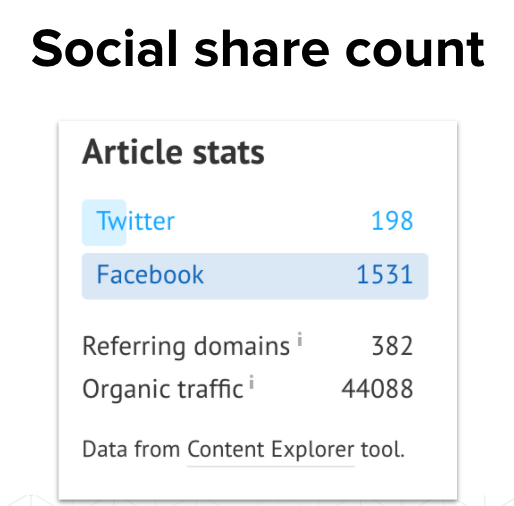
32. Social proof
Social proof is a psychological phenomenon where people assume the actions of others in an attempt to reflect correct behavior for a given situation.
“When you say it, it’s marketing. When your customer says it, it’s social proof.” - Andy Crestodina
Social proof is a psychological phenomenon where people assume the actions of others in an attempt to reflect correct behavior for a given situation.
“When you say it, it’s marketing. When your customer says it, it’s social proof.” - Andy Crestodina
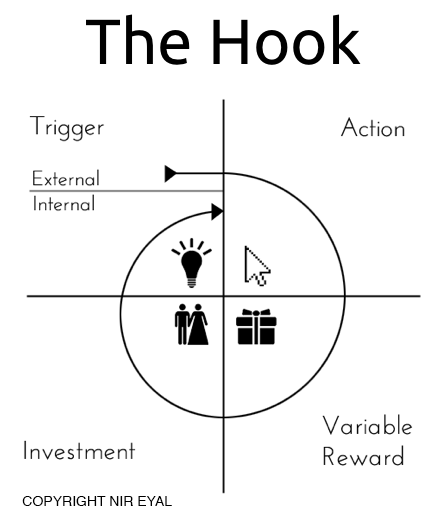
33. Triggers
Triggers are anything that sparks us to complete a particular action.
Use triggers to get prospects to take action.
Triggers are anything that sparks us to complete a particular action.
Use triggers to get prospects to take action.
34. Liking
People we like tend to have more perceived credibility than those that we do not like.
"People buy from their friends. So all things equal, make a lot of friends."
People we like tend to have more perceived credibility than those that we do not like.
"People buy from their friends. So all things equal, make a lot of friends."
35. Authority
The authority principle is simple: We follow people who look like they know what they’re doing.
This can come through titles, accomplishments, external signals, endorsements, etc.
The authority principle is simple: We follow people who look like they know what they’re doing.
This can come through titles, accomplishments, external signals, endorsements, etc.
If you're interested in learning more about how to apply these mental models for marketing (including many more!) check out my course mentalmodelsformarketing.com
I'm closing enrollment September 6th until late November.
Check it out 😁
I'm closing enrollment September 6th until late November.
Check it out 😁