With commutes cut, gyms closed, and pandemic cleaning completed, you might be finding it difficult to keep up with all of your podcast downloads. Here are some tips to manage a flood of streams. 1/ wired.trib.al/3MxdJIW
Find new ways to multitask: Driving, exercising, and cleaning are popular activities during podcasts, but heavy users incorporate episodes in many other ways: Walking the dog, grinding for levels in video games, or cleaning out email, to name a few. 2/
Organize your listening with playlists. They can create the right mood for the activity accompanying your podcast, and ensure you don’t fumble for the next show while exercising or driving. 3/
Find the right app: Overcast is great for creating playlists, Apple Podcasts is great for searching, and Pocket Casts makes it easy to sync across multiple devices. Which one do you use? 4/
This one’s divisive: you can try listening at 1.5X speed or even 2X speed. Has that worked for you? Expect some derision and lament if you do this, especially from podcast producers. 5/
Make it a habit: Designate a specific time of day for podcasts, especially with Covid-19 already disrupting our daily routines. 6/
Take a pause when you’re done: Take a couple minutes to think about what you listened to and be intentional about how, or if, you want to keep listening. 7/ wired.trib.al/3MxdJIW
Looking for a good podcast to get you started? May we humbly suggest you listen to the latest episode of our new podcast, Get WIRED: 8/ wired.trib.al/6MyQ2NU
What are some of the best podcasts you’re listening to right now? 9/
• • •
Missing some Tweet in this thread? You can try to
force a refresh

A trove of internal records from a secret society for figures in US politics, finance, and tech was left exposed online, WIRED has confirmed, naming participants in its events and revealing sensitive personal details they were assured would stay private. wired.com/story/leak-exp…
The group, called Dialog, is a private, invitation-only organization cofounded in 2006 by Peter Thiel. It convenes US officials, foreign government figures, and Silicon Valley executives at off-the-record annual retreats. wired.com/story/leak-exp…
A directory in the website's code was first revealed by the Swiss hacktivist maia arson crimew. Crimew tells WIRED the directory surfaced via an anonymous tip. WIRED verified its contents. wired.com/story/leak-exp…
Meta’s former chief AI scientist has long argued that human-level AI will come from mastering the physical world, not language. His new startup, AMI, plans to prove it. wired.com/story/yann-lec…
“The idea that you’re going to extend the capabilities of LLMs [large language models] to the point that they’re going to have human-level intelligence is complete nonsense,” Yann LeCun said in an interview with WIRED. wired.com/story/yann-lec…
The financing, which values the startup at $3.5 billion, was co-led by investors such as Cathay Innovation, Greycroft, Hiro Capital, HV Capital, and Bezos Expeditions. wired.com/story/yann-lec…
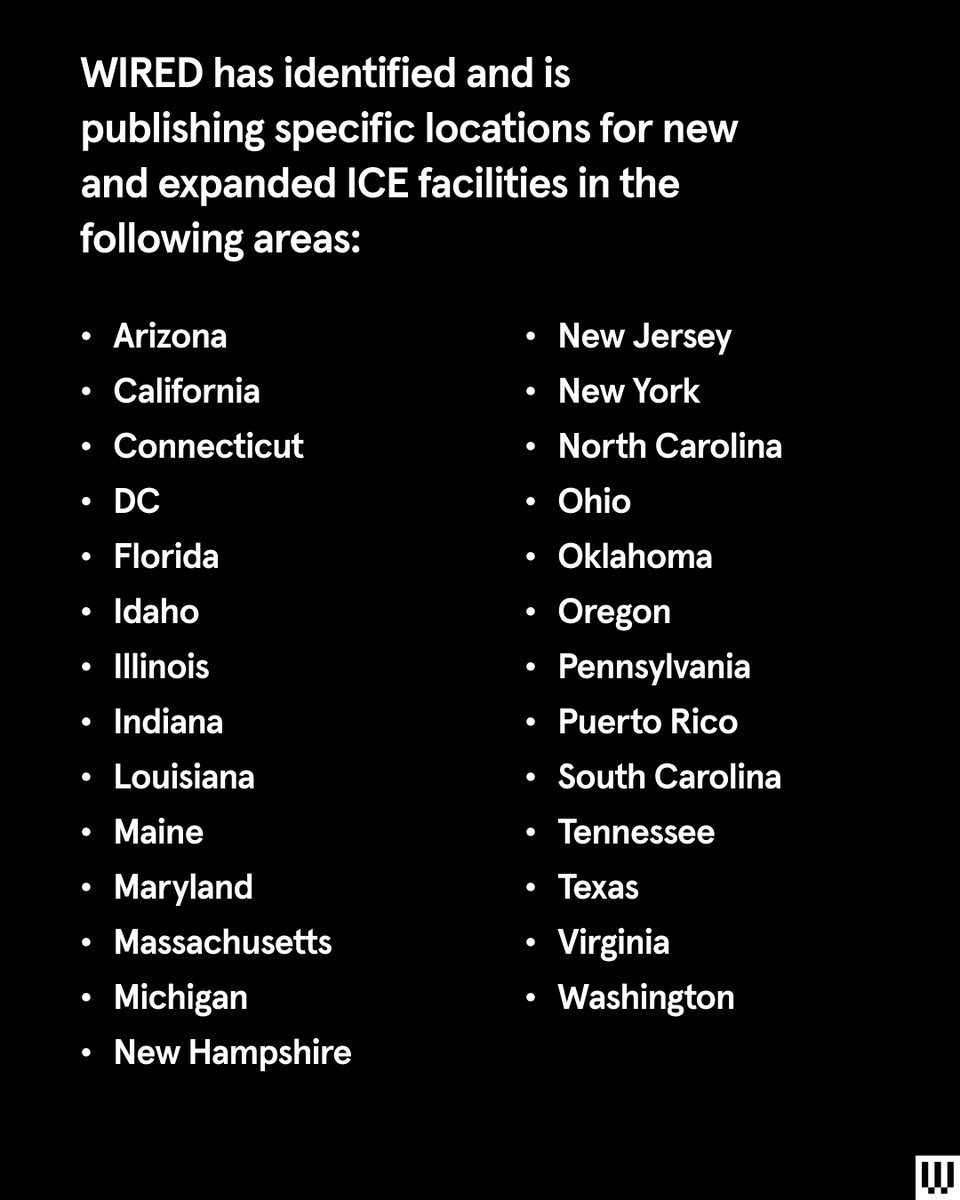
Last week, we reported that Immigration and Customs Enforcement (ICE) and the Department of Homeland Security (DHS) have carried out a secret campaign to expand ICE’s physical presence across the US. wired.com/story/ice-expa…
Documents show that more than 150 leases and office expansions have or would place new facilities in nearly every state.
This gives us a clear picture of where ICE is going next in the US: Everywhere.
NEW: Workers at the Social Security Administration have been told to share information about in-person appointments with ICE agents, in a move that goes against decades of precedent and puts noncitizens at further risk of immigration enforcement actions. wired.com/story/social-s…
“If ICE comes in and asks if someone has an upcoming appointment, we will let them know the date and time,” an employee with direct knowledge of the directive says. wired.com/story/social-s…
SSA has been sharing data with ICE for much of president Donald Trump’s second term, but this order to share information marks a new era of collaboration between SSA and the DHS, ICE’s parent agency. wired.com/story/social-s…
Two agents involved in the shooting deaths of US citizens in Minneapolis are reportedly part of highly militarized DHS units whose extreme tactics are generally reserved for war zones. wired.com/story/ice-cbp-…
The units include ICE’s two Special Response Teams (SRT), CBP’s one SRT, and the Border Patrol Tactical Unit (BORTAC). wired.com/story/ice-cbp-…
The tactics used by SRT and BORTAC vastly differ from those of local police or sheriffs. They use explosives to breach the doors of homes, and team members are equipped with full tactical gear, assault rifles, and heavy-duty crowd-control weapons. wired.com/story/ice-cbp-…
Since last year, we’ve been reporting on ICE extensively. But every week brings new information, and it’s getting harder to keep track of what’s happening, let alone remember what’s already happened.
So here’s a quick thread to help.
Back in June (we know, it honestly feels like a lifetime ago), WIRED obtained hundreds of emergency calls from ICE detention centers. wired.com/story/ice-dete…
The data showed that at least 60 percent of the centers analyzed had reported serious pregnancy complications, suicide attempts, or sexual assault allegations. wired.com/story/ice-dete…