I admire Euronav's performance and Mr De Stoop's articulate and transparent discussions on the tanker market and the company's operations.
However, one exception is the discussion of growth. He trumpets Euronav for having grown from 7 or 8 ships to 60 in his 16 years there.
Fact check:
At the end of 2009 Euronav had a fleet of 36 tankers and 50 million shares outstanding.
A decade later...
In 2020 Euronav has a fleet of 64 tankers and 200 million shares outstanding.
The number of vessels per share has fallen by half.
Vessel values and leverage vary, so this is not a perfect measure of equity growth. But it is a good approximation. Fact is that it was not totally their fault. The tanker market has been plagued by oversupply and low rates for most of the last decade.
However, I would expect from Hugo that he simply be forthright and acknowledge that they diluted, albeit perhaps to a lesser degree than competitors thanks to disciplined capital allocation, and because of circumstances beyond their control.
Shipping is not a growth business. It is a cash flow business, and it is cyclical. Excess profits are earned by trading ships.
If the management of a shipping company tells you they aspire to grow their company, you should ascertain whether the proposed strategy involves gradual, counter-cyclical expansion on a per-share basis, and whether stated plans match past performance.
Or, if they are hell-bent to grow their asset-based fees at any cost to shareholders in equity dilution, high-interest loans, and the risk accompanying a high degree of financial leverage.
If you can't figure it out...
Hit the bid!
• • •
Missing some Tweet in this thread? You can try to
force a refresh

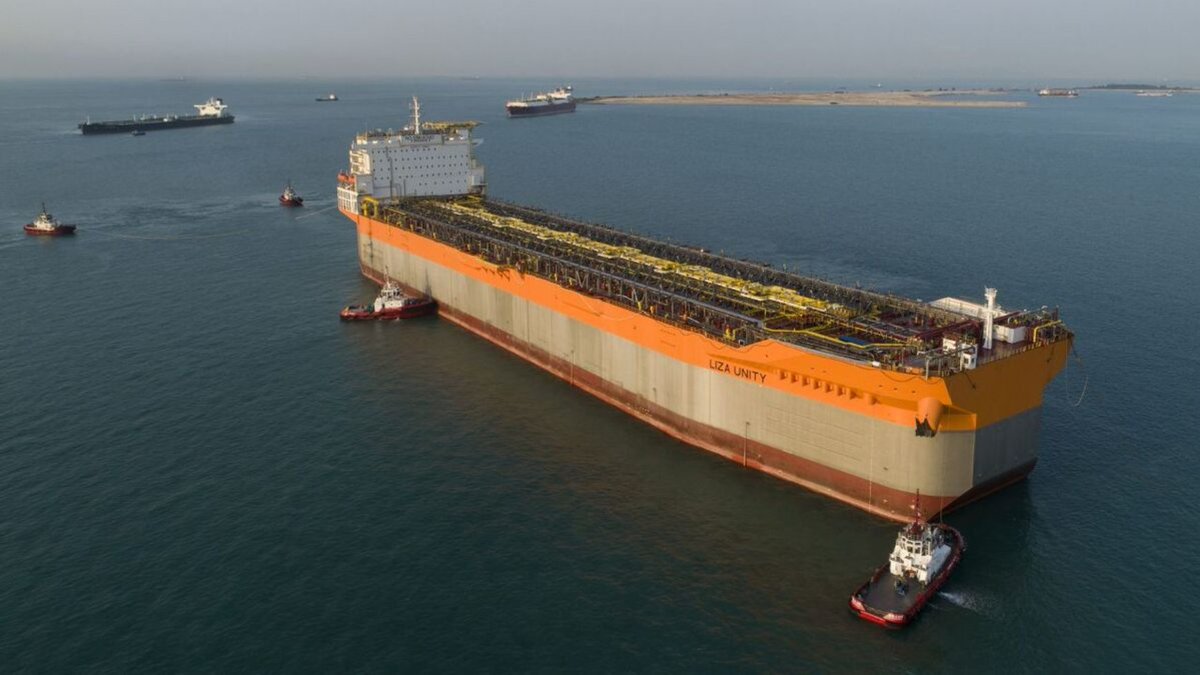
What's the value of a barrel of oil buried 6 kilometres deep in the middle of the ocean? $AOI
A couple of reference points: $HES
Hess Corp holds 30% of Stabroek block, Guyana.
Venus development ~9 years behind.
Otherwise similar in economic terms.
$HES EV $60B as validated by suitor $CVX.
Estimated allocation:
Midstream, 5B
Guyana, 35B
Bakken + USG + Malay/Thai &c, 20B
Total EV, 60B
Stabroek 30% x 11Bbbl EUR = 3.3Bbbl
35 / 3.3 = $12/bbl
Peak funding capex ~$10B
$10B / 11Bbbl = $1/bbl
12 - 1 = 11
Undeveloped, undiscounted: $11/bbl
Discounted 9 years at 8% real,
Or at 10% with 2% escalator...
<<Rule of 72!>>
Discounted undeveloped: $5.5/bbl
$AOI $TTE
"TotalEnergies has launched a bid process for a contract set to be worth more than $800 million to secure a rig to carry out development drilling on its huge Venus oil discovery offshore Namibia.
"The move underpins the French supermajor’s plan to fast-track the exploitation of its multi-billion-barrel deep-water oil and gas find on the prolific Orange basin."
fast-track...flowing like a train?
multi-billion = more than 1 billion?
"Multiple sources told Upstream that TotalEnergies is in the market to award a five-year development drilling contract, with the operator due to make a decision by the end of this year."
The market is spooked by the "failure" at aggressive 20 km step-out Nara. Dry/non-commercial, not clear.
Pat already said Venus will developed. He's downplaying its scale.
$TTE is evaluating a $9bn project in Suriname
for 700 mmbbl, despite several dry and gassy wells.
Exxon & Hess found 11 billion barrels on Starbroek Block in Guyana, despite several dry wells, including the third (like Nara). A producing $20+bn phased development will ramp to over 1 mmbbl/d. $XOM $HES
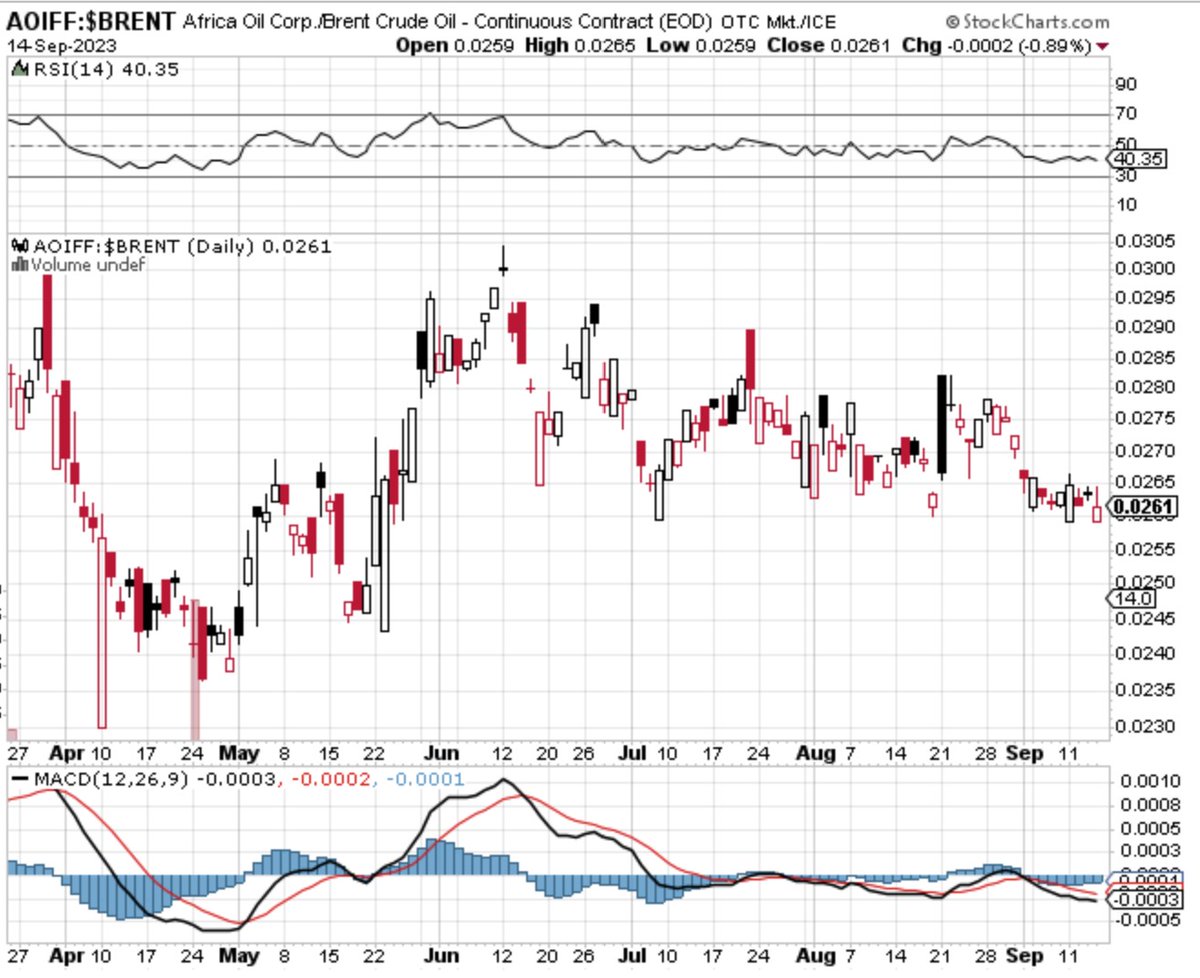
Let's do a little E&P security review, shall we? First, have a look at this sorry little chart. Africa Oil shares have been lagging Brent crude in a rising market. What happened to operating leverage? The stock is moribund. $AOI $AOIFF
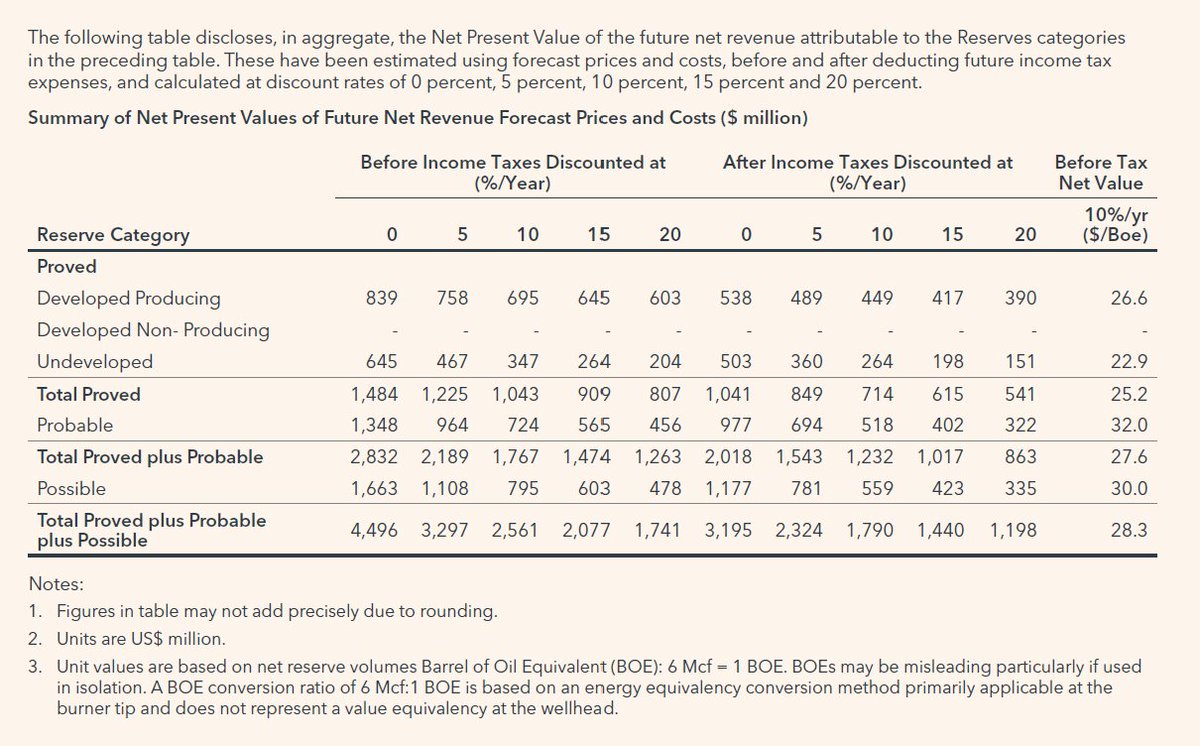
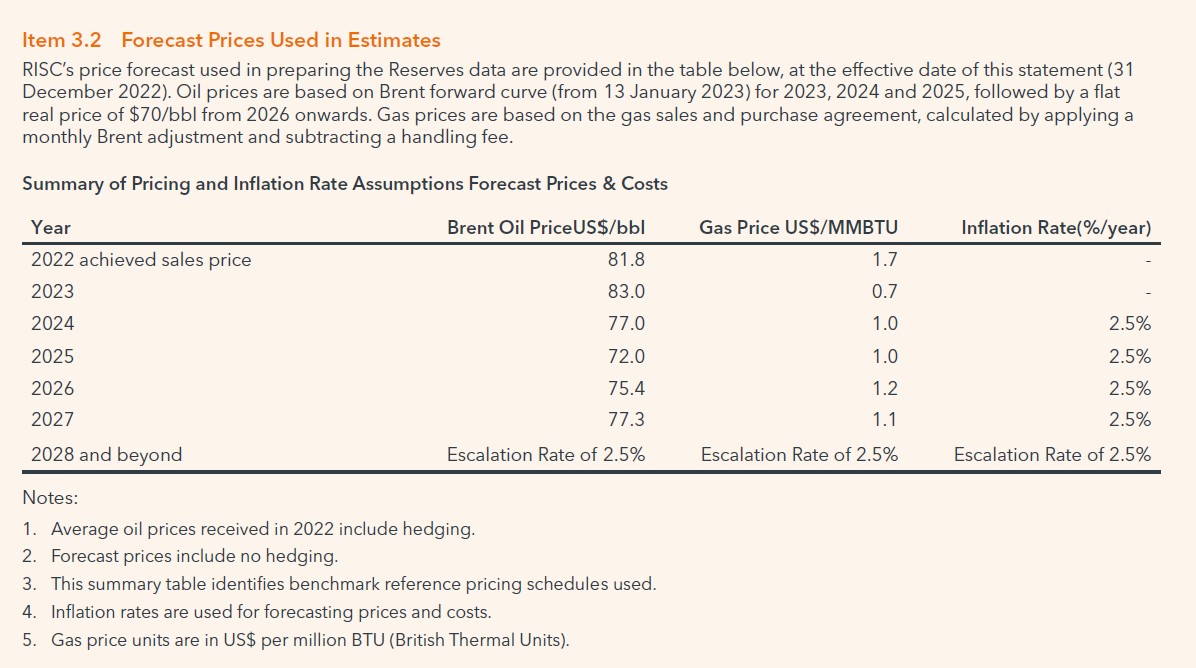
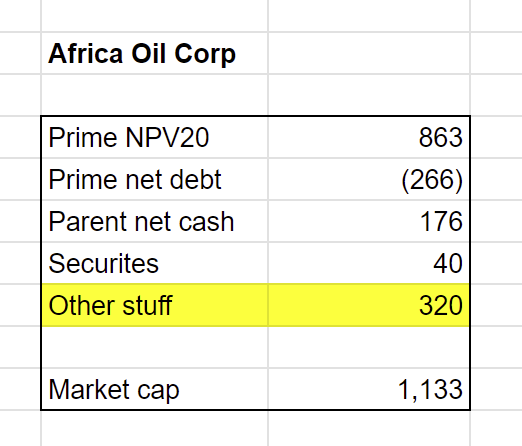
Here are the net oil and gas reserves of its Prime joint venture, at a conservative price deck in the mid-70s. Shall we apply a 20% discount rate for Nigeria? Let's ignore the fact that the tax rate dropped from 50% to 30% after the reserve statement, greatly boosting NPV.
From the market capitalisation, we can impute the value of the firm's other assets.
To make fertiliser you need ammonia, and you need gas to make ammonia, NH3; you need natural gas. Except we're the only one in the country—and people don't understand this...
They built this many years ago. We had the foresight to build it. I can't take credit for it, but it's there. We were able to make it with something called pet coke. So we don't need natural gas to make fertiliser.
And we ended up owning a fertiliser plant whose factory is right next to our refinery. And it's really fascinating: nobody even wanted that seven or eight years ago, but we nourished it and we kept it going. We own 36 percent of it, and we own the control of it.
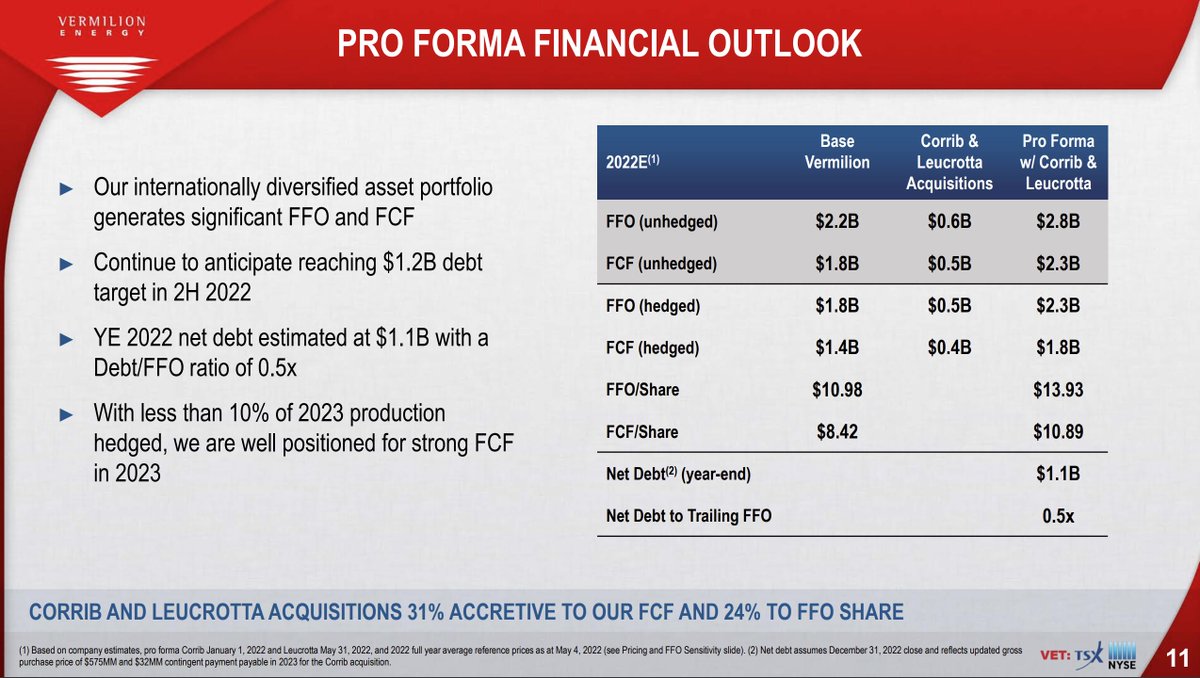
Magical thinking from $VET executive management, who claim two recent acquisitions are 34% accretive to free cash flow per share.
By this logic, when you pay cash, any acquisition is accretive!
Yet with 1/3 of market cap, buybacks would have been 50% accretive to FCF/share!
In marketing transactions to investors, neglecting costs, either implicit (e.g., cash cost of deal and time value of delaying capital returns) or explicit (e.g., opportunity cost of buyback, etc.), is a common way of varnishing them to detract from motivating agency conflicts.
I should add that: 1. This phenomenon is far from unique to Vermilion. 2. $VET is a cheap stock. 3. One might justify the transaction on certain price assumptions or DCF reserve values.