
Lean management or agile? The right answer may be both - mckinsey.com/business-funct… ... may I be the first to congratulate McKinsey on finally arriving at 2006. Still not quite right though ... here's a hint, try three.
Anyway, the good news is :-
1) McKinsey is waking up to "use appropriate methods"
2) McKinsey is normally at the vanguard of the laggards
... hence it'll only be 10-15 years before the rest realise. About 25 - 30 years for new management practices to spread is quite normal.
1) McKinsey is waking up to "use appropriate methods"
2) McKinsey is normally at the vanguard of the laggards
... hence it'll only be 10-15 years before the rest realise. About 25 - 30 years for new management practices to spread is quite normal.
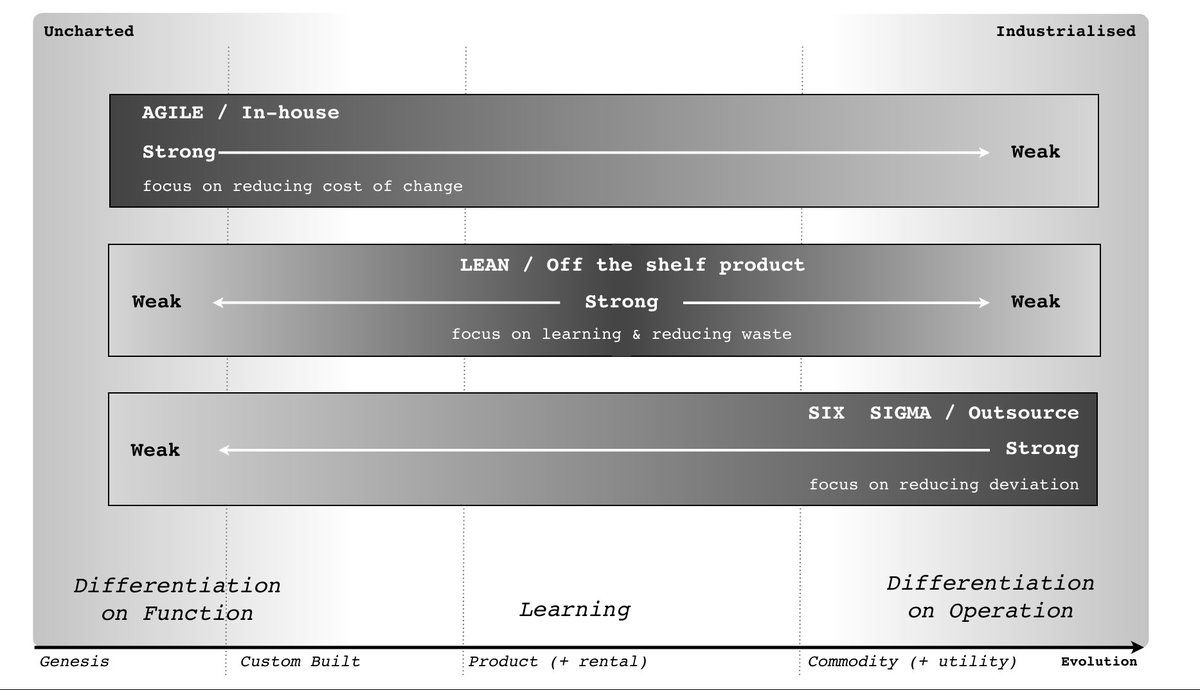
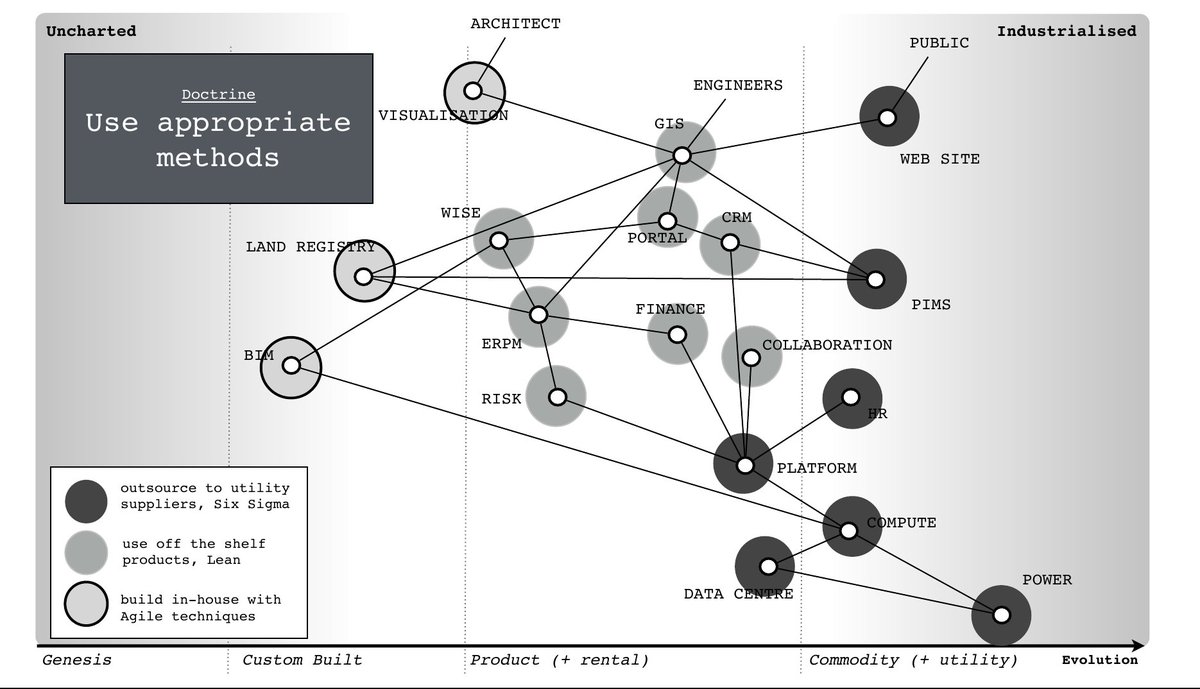
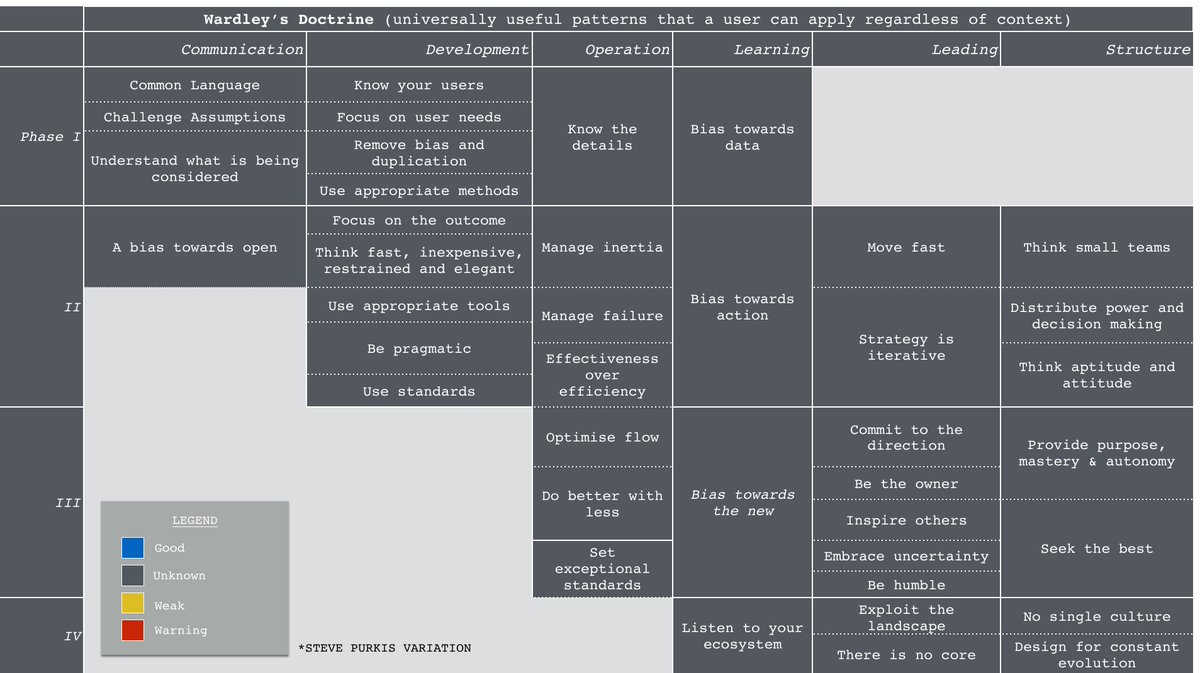
I do wonder if anyone should tell them that "use appropriate methods" is just one of about 40 basic principles (i.e. doctrine) that matter? Or maybe that's pushing it too far?
X : Where's that map from?
Me : This one? Really? It's one of the common examples I use. It's from 2012 and covers the building of HS2 (high speed rail) in a virtual world. @GoAgileGov has the details.
Me : This one? Really? It's one of the common examples I use. It's from 2012 and covers the building of HS2 (high speed rail) in a virtual world. @GoAgileGov has the details.
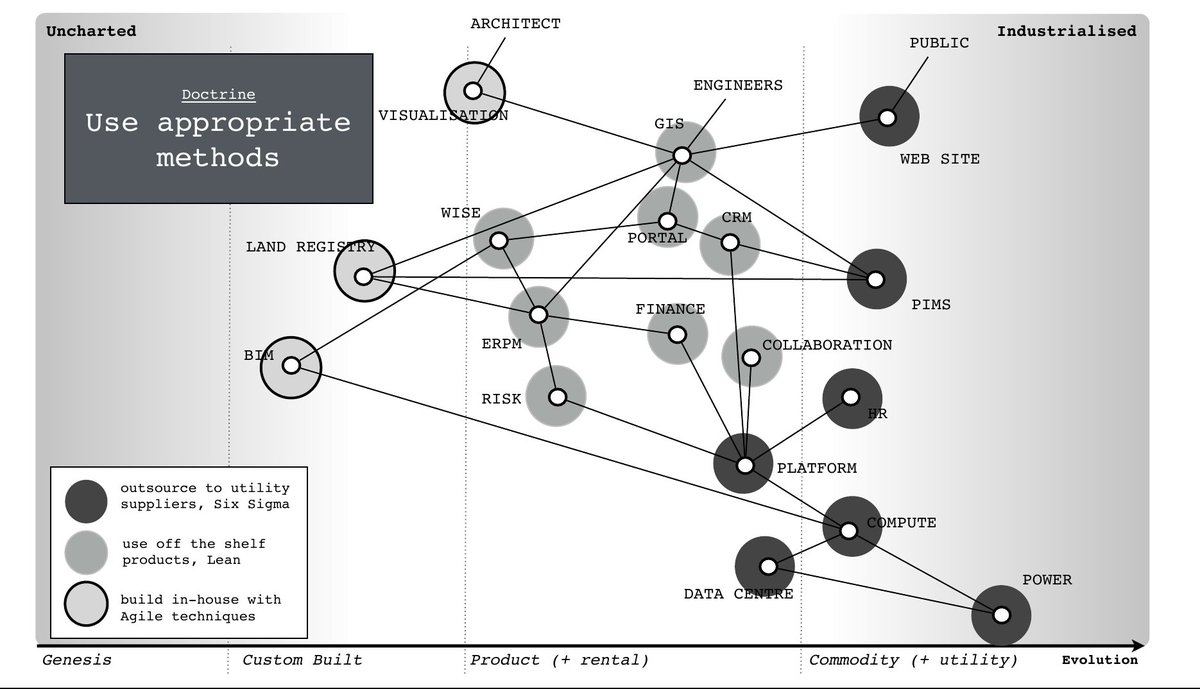
X : Is that the first time maps and different methods were used?
Me : Hell no. That goes back to 2005/06. You can probably find videos of me speaking on these topics at various conferences.
Me : Hell no. That goes back to 2005/06. You can probably find videos of me speaking on these topics at various conferences.
X : Why don't you write a book on the subject?
Me : I have, several times. The latest unfinished version is here - medium.com/wardleymaps
X : I mean a proper book
Me : I'm an old gamer. Rather than writing a book, I'd rather build a worldwide guild and let them work it out.
Me : I have, several times. The latest unfinished version is here - medium.com/wardleymaps
X : I mean a proper book
Me : I'm an old gamer. Rather than writing a book, I'd rather build a worldwide guild and let them work it out.
... I'll be blunt, it's far easier for me to use nothing at all to build a worldwide community of many thousands of motivated people to conquer a space than it is for me to write a book. I'm terrible at writing. Books and stories are way too hard.
X : What about academic work?
Me : Academia? LSE, Harvard Kennedy, Moscow Institute of Technology ... there's people out there teaching and researching on mapping. It's far easier to build something you find useful, give it away and then let others say whether you're deluded.
Me : Academia? LSE, Harvard Kennedy, Moscow Institute of Technology ... there's people out there teaching and researching on mapping. It's far easier to build something you find useful, give it away and then let others say whether you're deluded.
X : What if mapping is wrong?
Me : Oh, let me stop you there. Mapping is definitely wrong (it's a model). Also, all maps are imperfect by nature. So, it's wrong and imperfect and that's fine. The question is always whether it's useful.
Me : Oh, let me stop you there. Mapping is definitely wrong (it's a model). Also, all maps are imperfect by nature. So, it's wrong and imperfect and that's fine. The question is always whether it's useful.
X : Is mapping useful?
Me : I think so. The only person who can decide whether it's useful for you is ... you.
Me : I think so. The only person who can decide whether it's useful for you is ... you.
X : How do you build communities of thousands with nothing at all?
Me : Happens all the time. You learn the craft on games like World of Warcraft (WoW) or EVE online. It's a skill though, it takes work.
X : Any tips?
Me : Sure. Send your executives to train on WoW for a year.
Me : Happens all the time. You learn the craft on games like World of Warcraft (WoW) or EVE online. It's a skill though, it takes work.
X : Any tips?
Me : Sure. Send your executives to train on WoW for a year.
• • •
Missing some Tweet in this thread? You can try to
force a refresh






