I'm delighted that this short survey, a labor of love, is forthcoming in Notices of the AMS later this month.
I'll post a few threads over the next few weeks.
Today: why do eigenvectors keep showing up in models of networks and influence?!
1/
In models that show up in networks, typically some matrix M carries the structure: who affects whom, and by how much.
This appears in settings ranging from opinion dynamics to spillovers in organizations to marketplace regulation, with links meaning different things.
2/
Once M has encoded the economic structure, spectral theory helps us answer the question:
which patterns persist, amplify, or determine the eventual outcome?
3/
If you do applied math (broadly - CS, stats, physics, . . .) - a request/freebie:
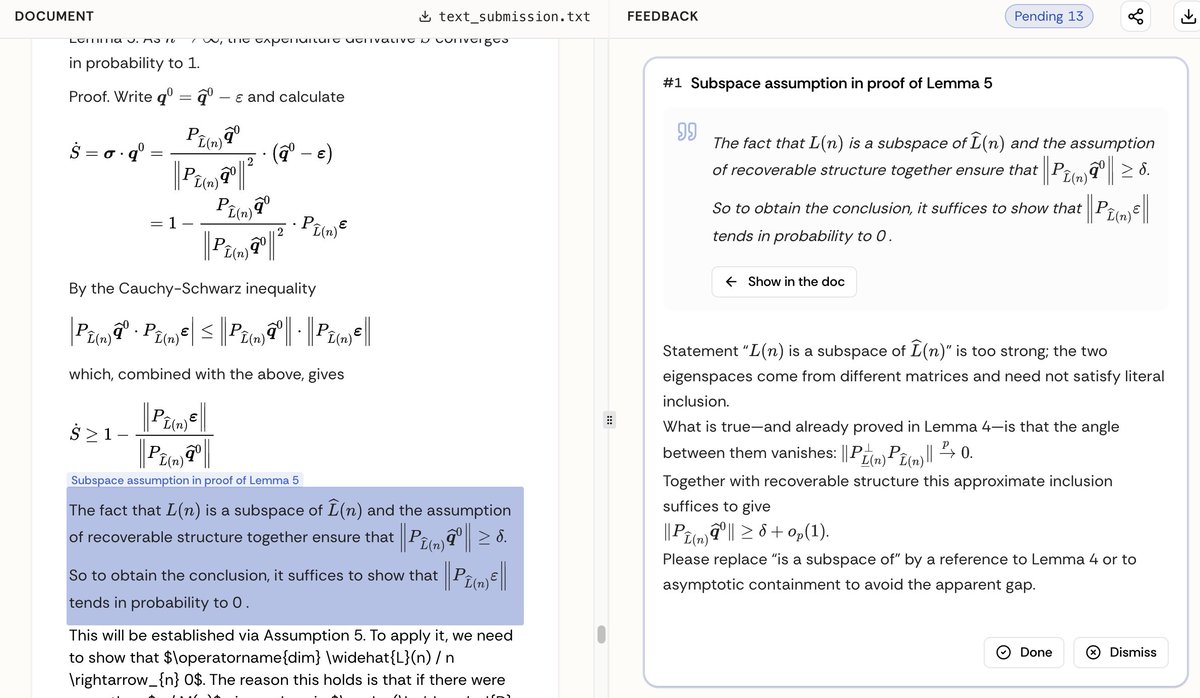
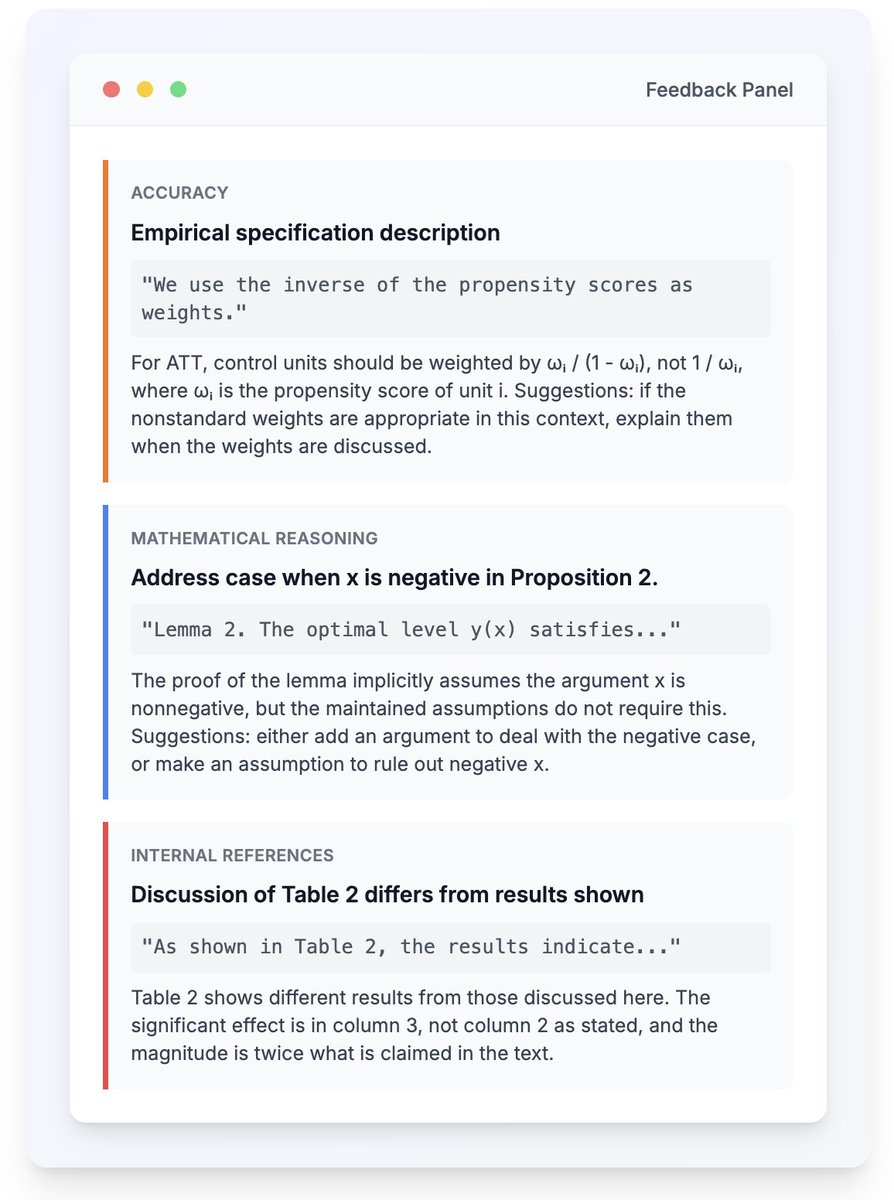
Refine is a tool that reads papers and finds technical issues, like a referee.
We want researchers in diverse areas to try it.
If you're willing to, read on.
1/
We'll give you free reviews, useful to stress-test a paper before submission or circulation.
(Users say it's similar to at least 4h of expert reading.)
In exchange, all we ask is you write a brief, fully honest reaction on X, LinkedIn, or any similar platform.
2/
Then we'll give you more free reviews, which you can keep or give as a gift to others.
If you're interested, please DM me. We'll do about 10 researchers for this first trial.
Conditions: PhD student or later, not in economics/finance/game theory.
3/
This terribly misguided paper is making the rounds.
This thread is to make it common knowledge what is wrong with it.
The basic thing: all modern economic theory allows for a gap between individual maximization and efficiency, whatever you mean exactly by each of these.
The first welfare theorem (individual optimization implies social efficiency) breaks down in the presence of frictions -
e.g., incomplete markets, asymmetric information, externalities, and market power.
Most economics today is about these frictions.
2/
Now, the paper has some halfhearted recognition of this, but says, effectively
"Well, you know, there is some meta-stage in which institutions are chosen, and economics assumes that this choice will be made to kill all frictions except the efficient ones."
3/