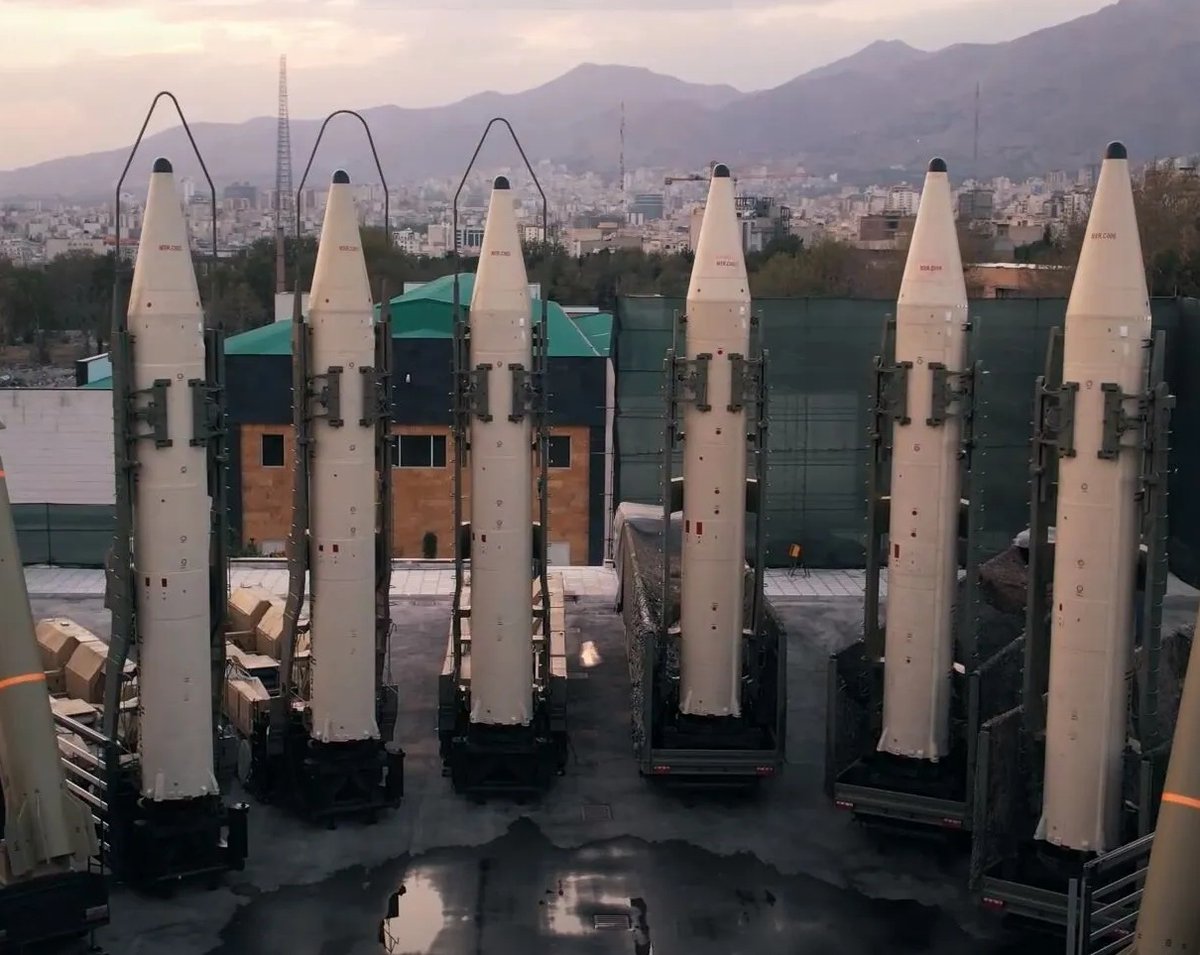
While the Houthis' Qiam-based systems appear to be entirely smuggled from Iran, shorter range systems like the Badr 1/1P/F seem to be at least partially locally manufactured (almost certainly using Iranian components and tech though)
Which of course would not be surprising. Enabling local production by proxies / allied groups has been Iran's strategy for more than a decade now.
Of course, there's the big caveat that we can't be sure whether the coalition is accurately describing its targets.
• • •
Missing some Tweet in this thread? You can try to
force a refresh

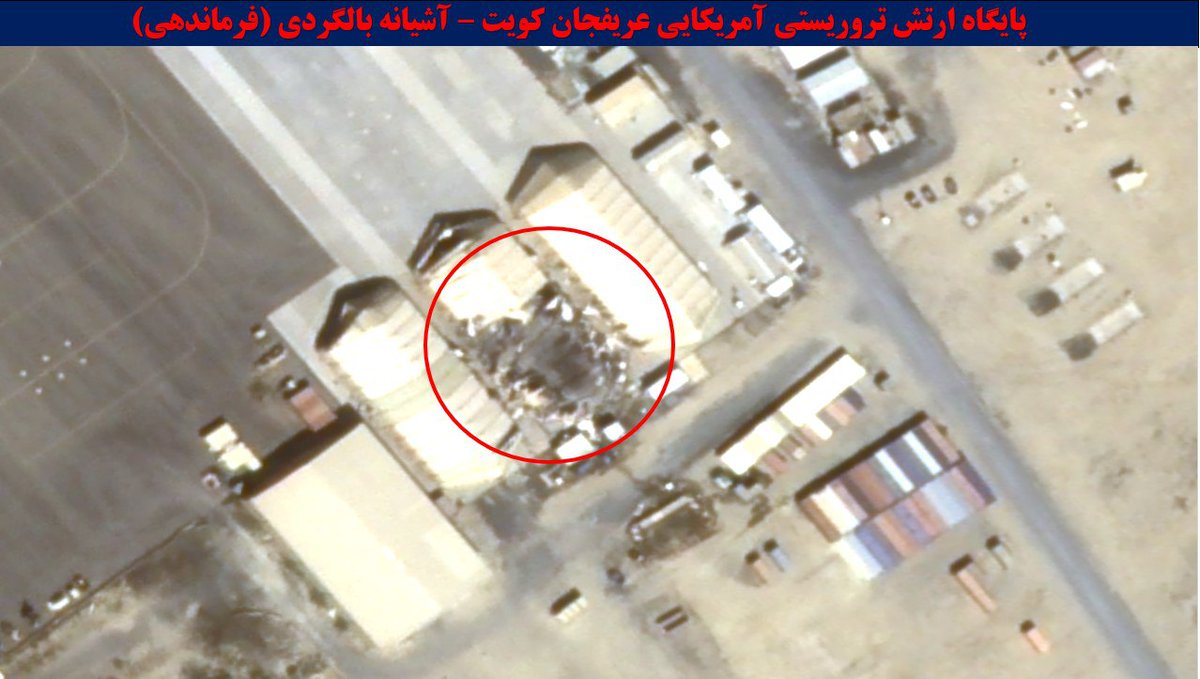
1. Many Iranian strikes were quite precise, a stark contrast with the largely unsuccessful 2024 operations against Israeli airbases. Several factors could explain this. First, shorter-range ballistic missiles tend to be more precise than longer-range ones. 2/9
Second, Iranian drones can also be quite precise (see Aramco 2019). In 2024 and 2025, Iran struggled to get any drones through to Israel. With more reaching their targets in the Gulf, one should also expect more accurate impacts. 3/9
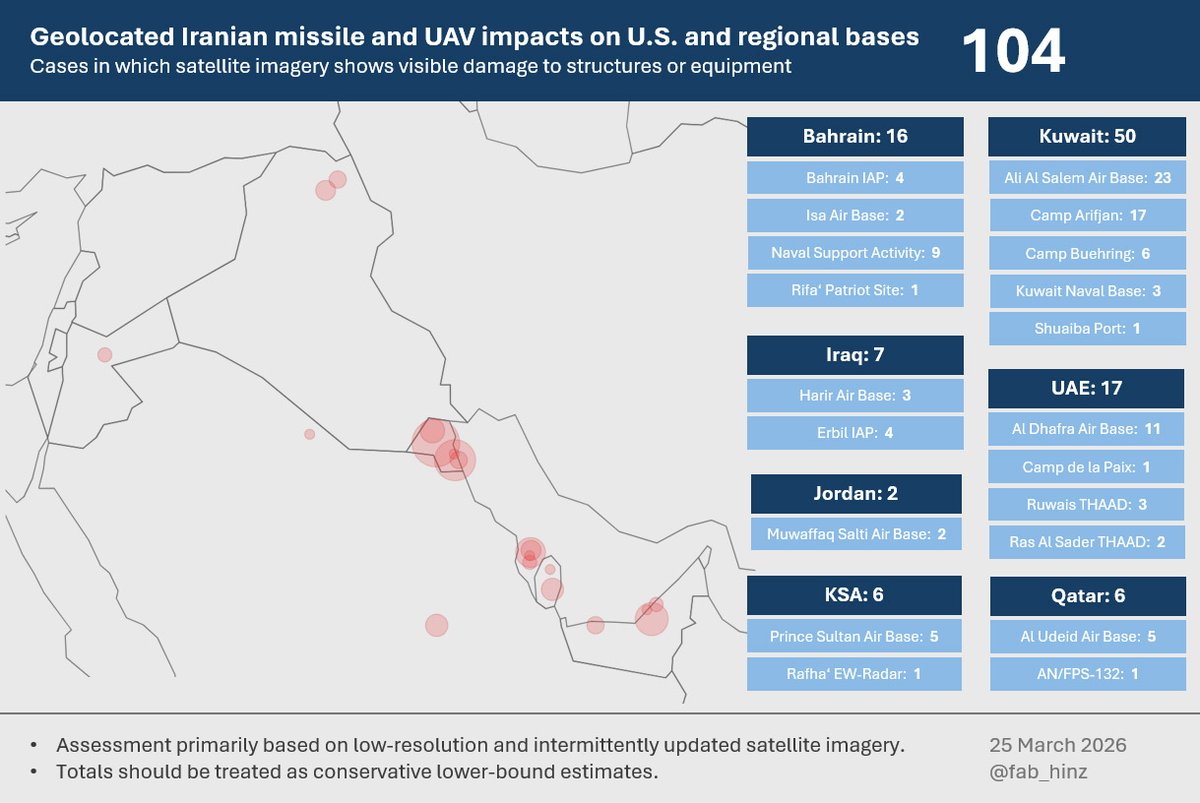
Tried my hand at a very rough, initial geospatial battle damage assessment of Iranian missile and drone strikes against US and regional military bases. A few notes on caveats and methodology. 1/7
As many have noted, commercial U.S. satellite providers have become far more restrictive over the course of the Iran war, severely limiting OSINT insights into the damage Iran has inflicted. However, a few alternative sources remain. 2/7
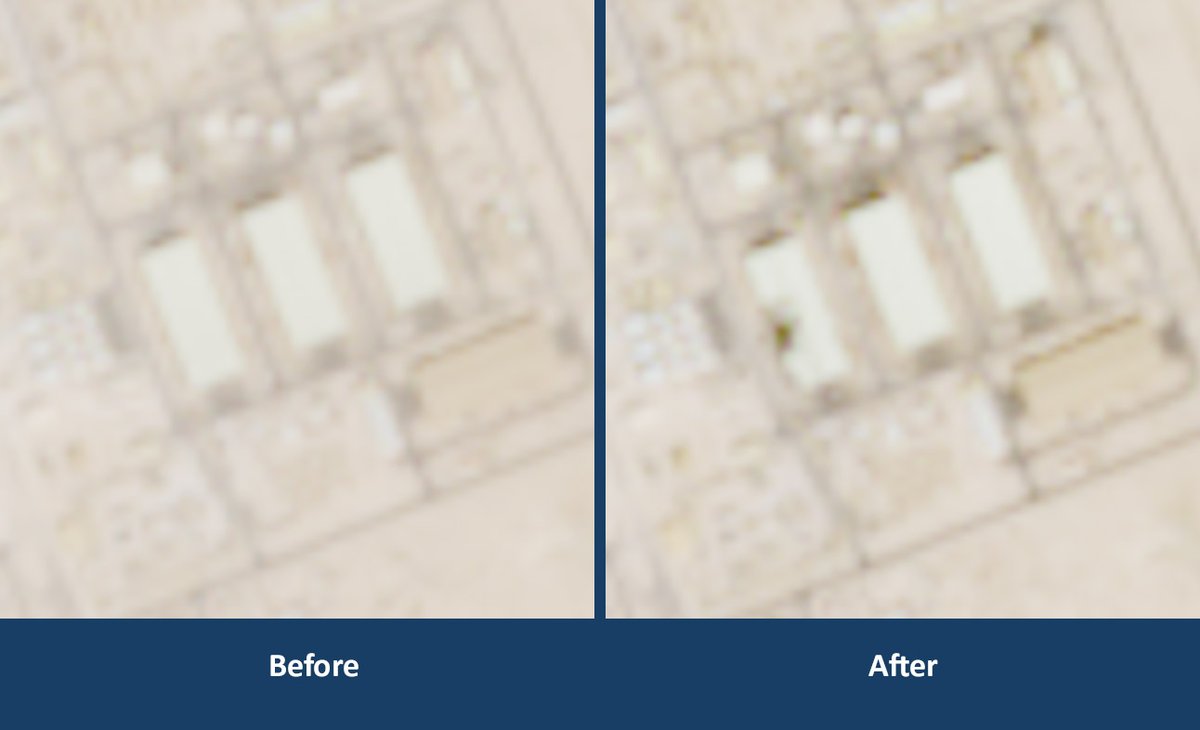
The first is Europe's Copernicus Sentinel-2, on which the majority of the data above is based. While resolution is very low at 10m per pixel, larger-scale damage can still be identified. 3/7
Iran attempted to strike Diego Garcia, located 3,800km from its shores, revealing it possesses intermediate-range missiles capable of reaching much, or even all, of Europe. Thread on what we know about Iran's long-range missile capabilities. 1/18
Iran has long maintained that it restricts its missile development to 2,000km, a limit set by the former Supreme Leader. However, it appears to have found multiple ways to circumvent this self-imposed limit, developing several systems that might have been used in the strike. 2/18
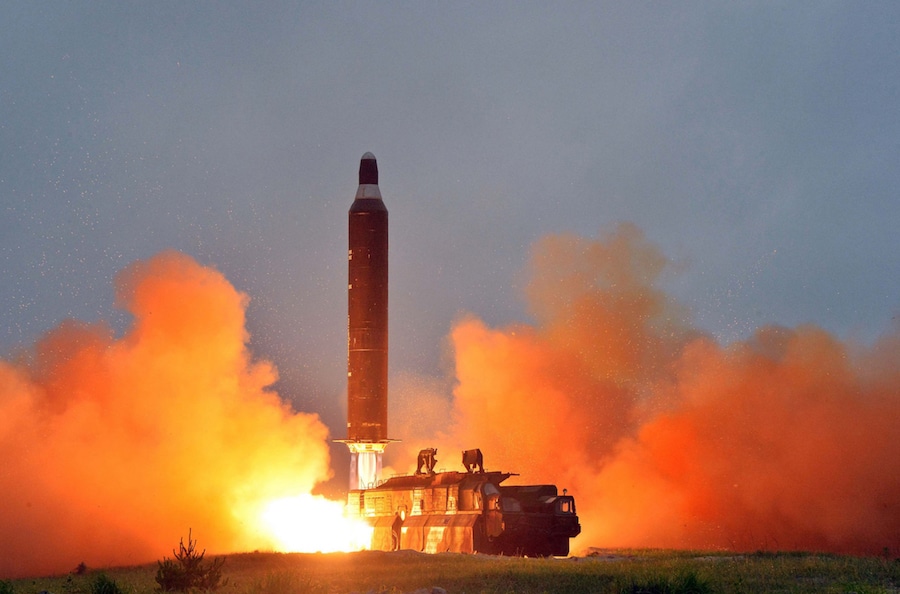
The first candidate, already mentioned by a few observers, is the Khorramshahr. The Khorramshahr was derived from the North Korean Musudan (right) which itself was derived from the Soviet R-27. 3/18
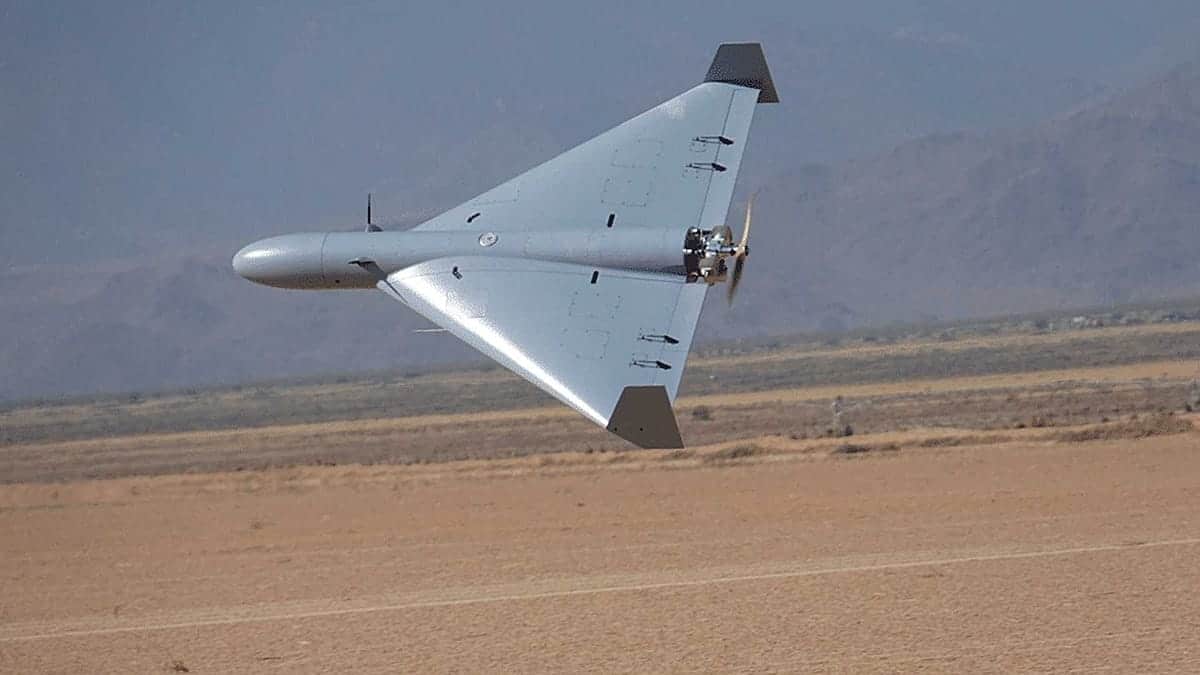
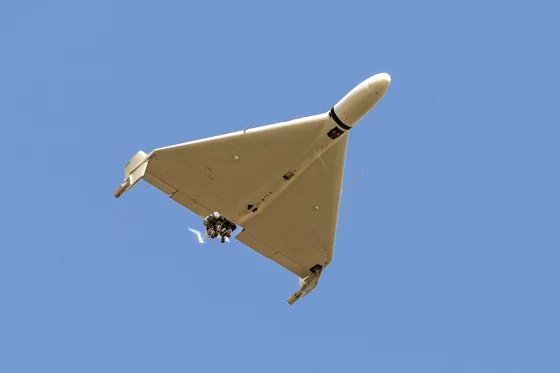
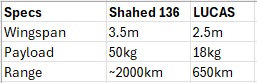
The first problematic assumption is the, widely reported, claim that the LUCAS is a copy of the Shahed 136. Well, the question is how do you define copy? In its basic concept and its aerodynamic layout, the LUCAS is certainly strongly inspired by the Shahed.
But if you go deeper into the specs, you’ll see that the LUCAS is actually a smaller, lighter and shorter-range design than the Shahed 136 / Geran-2. This has significant implications for unit cost.
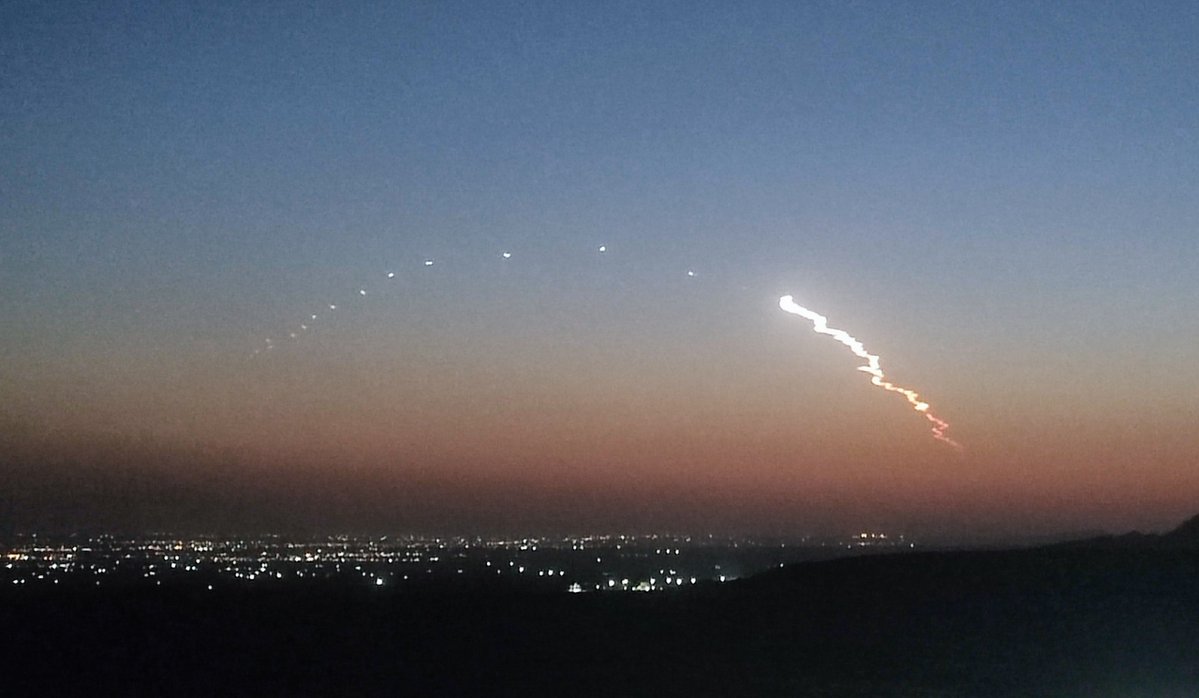
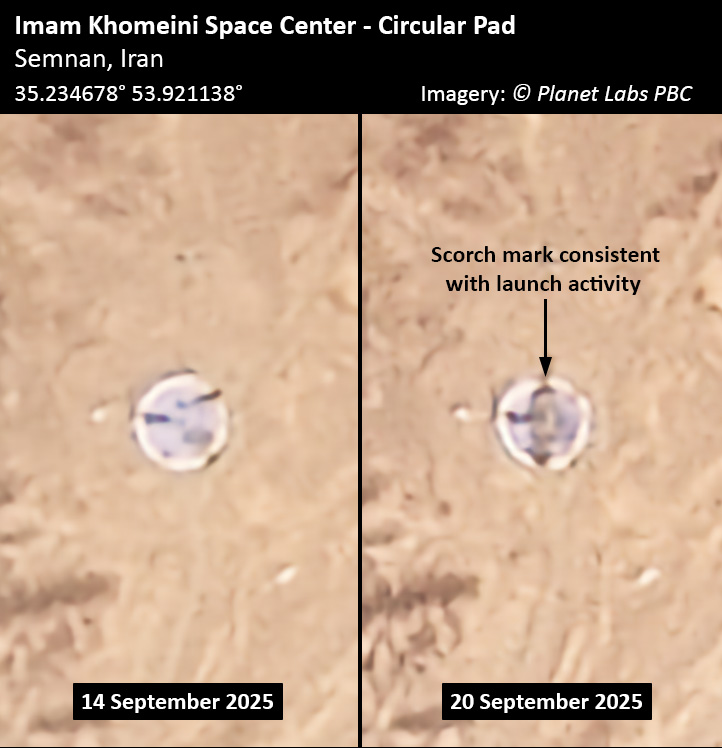
Longer thread about what we know and what we don’t know about the strange rocket/missile launch observed in Iran on September 18. 1/15
The launch's pattern was highly unusual with several evenly-spaced glowing dots seen in the sky initially sparking speculation about a test of multiple re-entry vehicles. 2/15
However, angles and lighting can be deceptive. From another perspective, it’s clear that the dots are little plumes of smoke. This ‘stuttering’ pattern followed by what appears to be uneven combustion might indicate some sort of technical malfunction. 3/15
One interesting fact about the MOP: The US appears to have tested it against a real underground facility just 30 kilometers south of the site of the world’s first nuclear weapons test. Thread from a recent OSINT side quest. 1/10
The US military has been understandably reluctant to share detailed information about live tests of the MOP. However, several press releases do mention that MOP tests took place at White Sands Missile Range (WSMR) in New Mexico. 2/10
WSMR is a vast range that also includes the Trinity Site, where the US detonated the ‘Gadget’ in 1945. While the area is huge, publicly available environmental impact studies contain detailed maps of its sub-sites and exhaustive information on how munitions testing affects bats and insects. 3/10