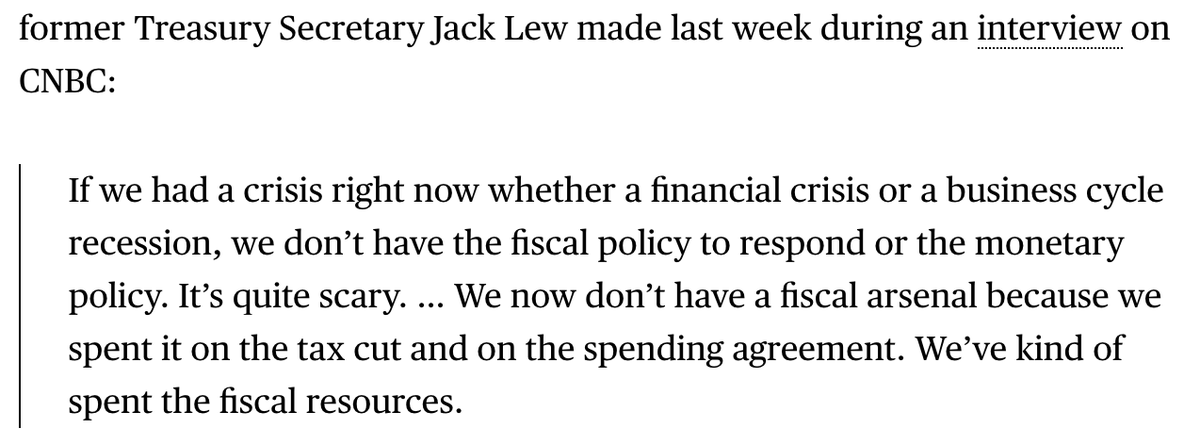
They had me right up to the end. The last paragraph should have been omitted. The fiscal trajectory is not unsustainable. Planting those seeds just undermines the broader argument. washingtonpost.com/opinions/2020/…
Worth noting that Lew got this very wrong. 2017 tax cuts in no way constrained fiscal capacity in the face of COVID-19. Similarly, today's deficits don't pose any inherent risk looking ahead. If you're worried about inflation, say so. Otherwise, last para above just a throwaway.
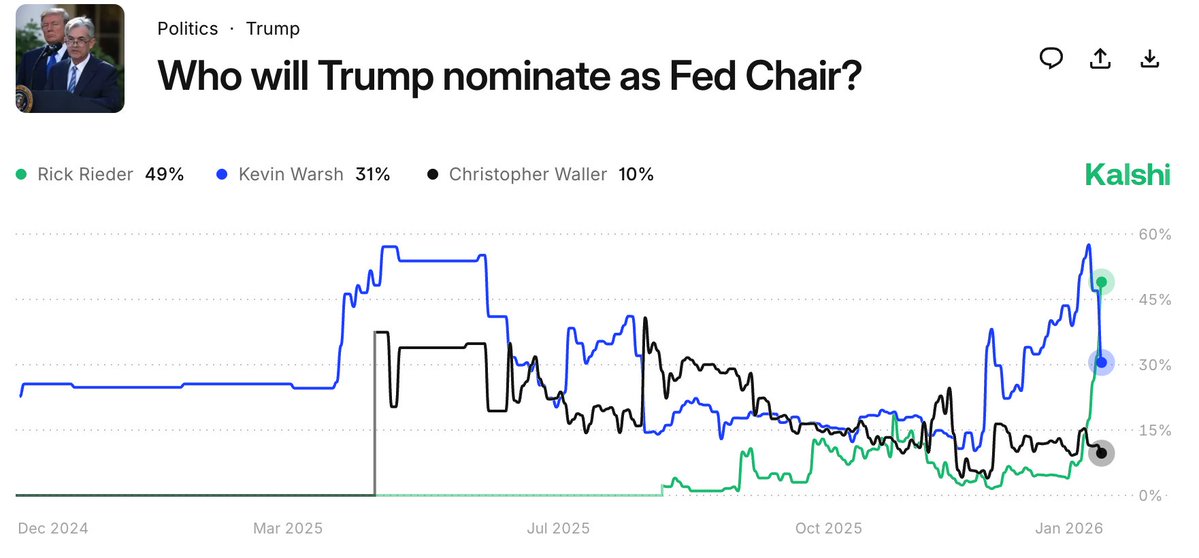
Guess who thinks the Fed might have the rate thing backwards? @wbmosler
"In an interview with Fortune, Rieder argued the Fed’s interest rate hikes are the wrong medicine for the economy’s current disease. 'It’s ambiguous to me today, at best, whether a higher [interest] rate helps bring down inflation versus actually contributes to it,” he said'." 1/
"The 14-year BlackRock veteran, who oversees $2.4 trillion in assets at the world’s largest asset manager and is known as one of the leading voices in the bond market, argued that the Fed may need to change its strategy and opt for rate cuts in order to fight the last remnants of inflation." 2/
"with higher interest rates offering a hefty reward to anyone with the cash to lend, the private sector’s lender status has created a steady, inflationary income stream in a key part of the economy." 3/
Abolish fiscal rules and the agencies that enforce them? Galbraith makes the case. (This is for you too, 🇬🇧)
"The budget process cultivates and perpetuates the idea that smaller deficits are better than large ones..." 1/
"..it sets a standard that tax cuts should be offset, at least in part, by spending reductions. That standard now leads to the grotesque bill just enacted." 2/
"According to the budget process, however, extending current tax law is scored as another tax cut – requiring yet another offset through spending cuts...The beast of deficit reduction is never sated." 3/
"A government-spending-led expansion would allow the private sector to expand without creating fragile balance sheets--indeed, government deficits would boost profits and add safe Treasury debt to private portfolios. 1/
However, a robust private sector-led expansion would tend to cause tax revenues to grow faster than private sector income (with a progressive tax system and with transfer spending falling in a boom) so that the government budget would 'improve' (move toward surplus) while the private sector balance would deteriorate (move toward deficit). 2/
For that reason, Minsky argued that private sector-led expansions tend to be more unsustainable than government-led expansions because private deficits and debt are more dangerous than government deficits and debt. 3/
Why does the government almost always spend in excess of taxes --i.e. run a budget deficit ? A 🧵 1/
The short answer is that the rest of us, on average, typically want to accumulate more US$ than what is required to pay taxes. That is, we want to net save US$. 2/
Government spending in excess of taxes--deficit spending--manufactures the $US that enable the rest of us to net save. 3/
"Each time the Federal Reserve acts as a lender of last resort, it prevents some financial institution or some financial market from collapsing. 1/
When it does this, it introduces additional Federal Reserve liabilities into the economy and extends a Federal Reserve guarantee over some set of financial practices. 2/
Thus in 1966 it protected banks that used certificates of deposits, in 1969-70 it protected the commercial paper market, and in 1974-75 it extended the Federal Reserve guarantee to those who owned the liabilities of offshore branches of American banks. 3/
🧵
20 yrs ago, Scott Fullwiler wrote this paper, comparing the (then extant) practice of hitting interest rate targets via day-to-day open-market operations and managing TT&L accounts with the yet-to-be-adopted practice of paying interest on reserves. 1/ papers.ssrn.com/sol3/papers.cf…
Scott concluded that instead of replacing non-interest bearing reserves with interest-bearing Treasuries, it would be far "more direct and more efficient" to turn the non-interest bearing reserves into interest-bearing reserve balances (IBRBs). Treasury could then stop issuing securities altogether. 2/
But don't financial markets need Treasuries for a whole variety of reasons? Could we really just stop issuing them? Scott explains why the answer is yes. 3/