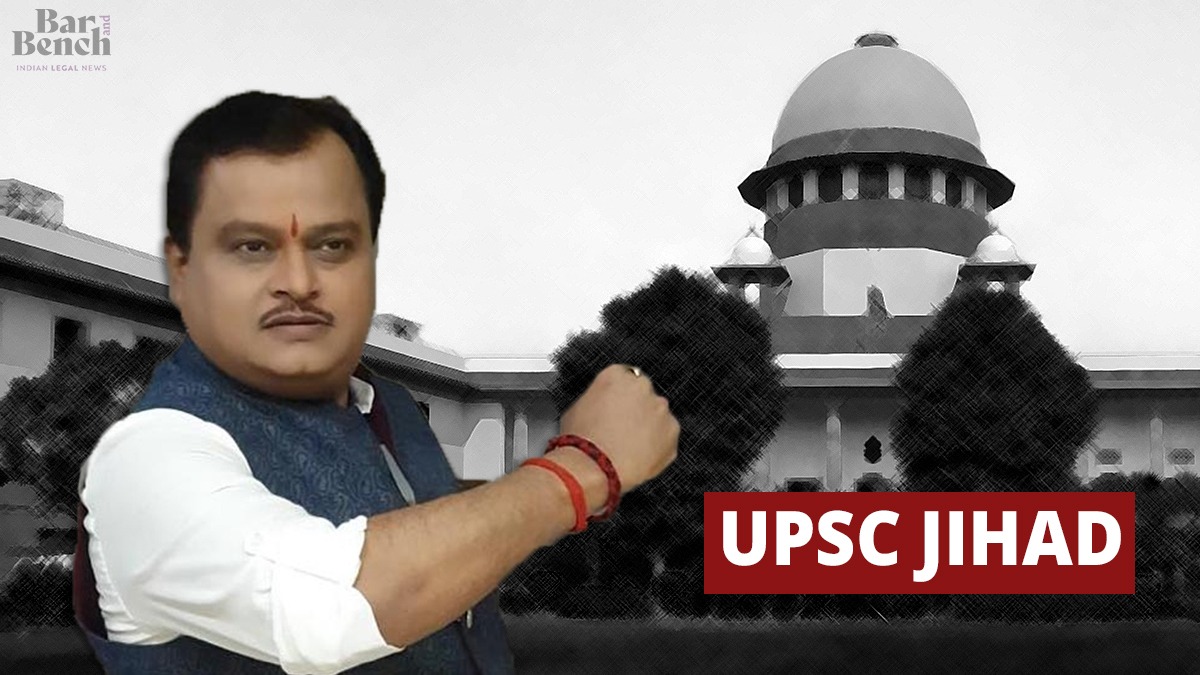
1/n (Thread) What exactly did @SudarshanNewsTV submit before SC to prove that there exists a "UPSC Jehad"?
So, @zakatindia is the organization that trains Muslim candiates for UPSC exams
Sudarshan TV claims ZFI recieved donation from Madina Trust UK
2/n @SudarshanNewsTV
claims Dr.Zahid Ali Parvez, Trustee, Madina Trust is also a trustee with the Islamic Foundation. The Times, UK had reported that two Islamic Foundation trustees were on the UN sanctions list of people associated with Taliban and Al-Qaeda.
3/n ZFI has also recieved donations from Muslim Aid (UK). Affidavit says
as per Mr.Sam Westrop, Director of Middle East Forum’s Islamist Watch, Muslim Aid, UK has repeatedly been found involved with a number of terror networks. @zakatindia
4/n @SureshChavhanke further claims that Syed Zafar Mahmood of @zakatindia is closely associated with both Mohammed Jafer Hussain Qureshi and Zakir Naik. It also says that Zakat Foundation India has recieved donations from @ZakatUS
5/n Affidavit says @ZakatUS executive director is Khalil Demir. Khalil Demir has signed the U.S. Internal Revenue Service (IRS) 990 forms for Benevolence International Foundation (BIF) which US Treasury(U.S. Government) found guilty in the year 2002 for funding Al-Qaeda
UPSC Coaching Centre for Muslims received donations from terrorism linked trusts and organizations: Sudarshan TV tells Supreme Court
Supreme Court recognises Election Commission’s power to conduct Special Intensive Revision of electoral rolls under Article 324 and Section 21(3) of the RP Act, while upholding the Bihar SIR.
The Court says EC can undertake a limited electoral inquiry into citizenship, but cannot finally determine citizenship. Deleted persons must be referred to the competent authority under the Citizenship Act #SIR #supremecourt @ECISVEEP
Judgment in a nutshell👇
• Supreme Court holds that the Election Commission has power to conduct Special Intensive Revision under Article 324 and Section 21(3) of the RP Act.
• The ruling arises from the Bihar SIR, but the legal principle laid down concerns the EC’s broader power to undertake SIR exercises.
• Court says SIR is a special statutory mechanism distinct from ordinary revision under Section 21(2) and Rule 25.
• Bench holds that free and fair elections depend on the integrity, accuracy and credibility of electoral rolls.
• Court finds the Bihar SIR was backed by legitimate constitutional purpose and was not merely an administrative exercise.
• SC holds that the SIR framework satisfies proportionality, given the safeguards of notice, hearing, objections, speaking orders and appeal.
• Court says inclusion in electoral rolls creates a rebuttable presumption of validity, not an absolute bar on verification.
• EC can examine citizenship only for deciding inclusion or exclusion from electoral rolls, not to finally declare citizenship status.
• Deletion on citizenship doubts does not mean the person is declared a non citizen. Final adjudication lies with authorities under the Citizenship Act.
• EC must refer persons deleted from the 2003 Bihar roll on citizenship grounds to the competent authority within four weeks.
[What favours the petitioners in the Supreme Court’s Bihar SIR ruling]
• Court clarifies EC cannot finally determine citizenship and its findings are confined only to electoral consequences.
• SC says inclusion in electoral rolls creates a rebuttable presumption in favour of existing electors.
• Bench directs that persons deleted on citizenship grounds must be referred to competent authorities under the Citizenship Act within 4 weeks.
• Court emphasises notice, hearing, speaking orders, appeals and judicial review as mandatory safeguards against arbitrary exclusion.
Supreme Court to resume hearing today pleas challenging the 2023 law that replaced the CJI with a Union Cabinet Minister on the panel appointing Election Commissioners.
Bench: Justices Dipankar Datta and SC Sharma
The matter is adjourned. Tentatively posted on 30th July.
While the matter was getting adjourned, and the next date was being fixed, the bench discussed about Court vacations:
Adv Prashant Bhushan presses for the matter to be listed immediately upon reopening.
Court: we can have it in August.
Bhushan: not possible in July?
Court: first two weeks, it requires some time for the engine to warm up, after 6 weeks of holidays..
SG Tushar Mehta: the vacation is already curtailed.
Justice Sharma: our vacation is further curtailed by 2 weeks. I can go out only after 15th. And final hearing cases are being listed (during vacations).
#SupremeCourt to pronounce today its verdict on the batch of petitions challenging the Election Commission’s Special Intensive Revision of electoral rolls in Bihar, a case that has triggered one of the most consequential constitutional debates on voting rights, citizenship verification and electoral integrity in recent years #SIR @ECISVEEP @_YogendraYadav @adrspeaks
The challenge before the Bench led by Chief Justice of India Surya Kant raises critical questions on the EC’s powers under Article 326, the Representation of the People Act and whether the revision exercise risked large-scale disenfranchisement ahead of elections #SIR
During hearings, petitioners alleged the process could exclude genuine voters through onerous documentation requirements, while the EC defended the exercise as necessary to cleanse voter rolls and verify citizenship claims #SIR
Supreme Court is hearing the plea filed by the Management Committee of Thakur Shri Banke Bihari Ji Maharaj Temple challenging the Uttar Pradesh government’s move to take over the administration of the famed Vrindavan temple through a statutory trust framework.
Senior Advocate Shyam Divan is leading arguments for the temple management
Senior Advocate Shyam Divan, appearing for the Banke Bihari temple Goswamis, tells Supreme Court that the current Goswami representatives in the High Powered Committee do not enjoy the confidence of the larger Goswami community.
Divan says 197 Goswamis from the Sayanthok and 46 from the Rajbhog gave consent through a Google form endorsing the representatives elected in the June 13, 2025 General Body meeting.
“There is a communication gap between the committee and the Goswami members,” Divan submits, adding that traditional rituals followed “for centuries” are not being adequately conveyed before decisions are taken.
He urges the Court to either accept the four representatives proposed by the Goswamis or conduct fresh elections. Alternatively, he suggests expanding the Goswami representation in the committee by adding three more members.
Divan also opposes changes made to temple darshan timings by the committee’s September 19, 2025 order, saying rituals and timings followed “since time immemorial” should not be disturbed.
Senior Advocate Shyam Divan: The deity is a living child. There is a period for the waking of the deity. There are rituals which are performed. There is an afternoon rest period, etc. Therefore, the timings should not be changed. This is something which is deeply embedded in the rituals.
The rituals are being performed. There are certain Goswamis there, but there is a lot of dissatisfaction amongst the members. They are saying, look, you cannot have this. The deity timings are now being shifted. This is not correct according to us.
This is a pro tem arrangement being made by a committee, an ad hoc committee appointed until the constitutional challenge is determined by the High Court. Therefore, the question we ask ourselves is, why should there be a change in timing?
This is something which is deeply embedded in the rituals. So we have raised it.
Supreme Court hears plea challenging minimum viva voce cut-off in judicial service recruitment
Adv Prashant Bhushan: The number of people finally selected are often only one-fourth or one-fifth of the total candidates. One of the major reasons for candidates not being selected is that they fail to meet the cut-off. Sometimes they fail the written examination cut-off, but very often they fail the interview cut-off. In this case, the petitioner secured very high marks in the written examination. In fact, one of them secured the third highest marks in the written exam and was awarded 18 out of 50 in the interview. The minimum qualifying mark was 20. That is why, My Lords, we are before this Court.
Justice Joymalya Bagchi: what we are saying is that in panel interviews, the panelists are not aware of the written marks obtained by the candidates.
Bhushan: It may not be a ground, I am not saying that. But they are aware that the interview has a minimum cut-off. Suppose out of 100 marks, unless a candidate is awarded 40 marks, that candidate cannot be selected. The panelists know that.... this is a larger issue which perhaps this Court now needs to revisit. Unfortunately, there are several decisions of different Benches. Some judgments say minimum cut-off marks in interviews cannot be prescribed. Others say they can be prescribed.
There are also judgments following the Kothari Commission recommendations which state that interview marks should ordinarily be restricted to 12.5 percent. Cases like Ashok Yadav deal with this aspect. Here, the interview component itself is 20 percent, and within that 20 percent, the qualifying threshold is 40 percent.
There are also recommendations that where written examination marks are higher, the interview component should be kept lower, around 12 percent. But in judicial service examinations, candidates are appearing after a minimum of seven years of practice. Therefore, the larger question is whether there should at all be a minimum cut-off for interviews.
SC: It is not that we are unwilling to examine the issue. But a larger judicial services matter is already pending before a three judges bench. There are issues relating to judicial service recruitment already pending consideration. You may assist the Court by collating comparative information and preparing a chart regarding practices followed across different States.
Bhushan: At least one argument can always be made that States have their own services and therefore some degree of variation may exist. However, in at least three cases, this Court has observed that where only one-fourth of the vacancies are ultimately filled, that itself demonstrates a problem with the selection process.
CJI: In some of the HC we came to know on administrative side.. suppose a person from north qualified and appears in the southern court.. and then sometimes they are marked low due to language barrier. But your case is not that.
Justice Joymalya Bagchi: The issue is also one of employment. There are a large number of law graduates and many candidates take these examinations. But when recruitment takes place, there has to be a minimum standard.
CJI Surya Kant: We have to see whether we have a market of meritorious candidates.
Supreme Court to hear the suo motu case focussing on alleged bias and irregularities in the probe into Twisha Sharma's death #TwishaSharma #SupremeCourt
CJI Kant: We are slightly pained. We request media not take statements of friends or relatives etc. the mother in law is a former district judge and it is unfortunate that it is being said judiciary is detailing the trial..
Sr Adv Siddharth Dave: I appear for the accused. My section 161 statement is in newspaper today
CJi: We are against the narrative that is being created. That is why learned CBI should take it over. We beleive the state police and judiciary
SG Mehta: This former judge has been giving interviews in some or other channel maligning the deceased. We requested her so many times to record her statement she does not want to do it. We were okay to go to her place also. But she is not cooperating.
SG Mehta appearing for the state of Madhya Pradesh
SG: now it has gone to CBI
CJI: yes the decision is very fair. That is why state gave it to the CBI.
Dave: the mother in law's statement was recorded thrice.
CJI: once state has entrusted CBI we don't have to ...
Sr Adv Sidharth Luthra: Let there be DoPT notification be out so that CBI can take it over.
Justice Bagchi: This is an administrative exercise between state and CBI now..