Lets talk about single sex services
As @trussliz said today the Equality Act permits the provision of services to one sex or the other
As @trussliz said today the Equality Act permits the provision of services to one sex or the other

This is allowed by "exceptions" in the Equality Act 2010.
They are called exceptions because normally you shouldn't discriminate based on a protected characteristic
This is lawful age discrimination for example (allowed by an exception)
They are called exceptions because normally you shouldn't discriminate based on a protected characteristic
This is lawful age discrimination for example (allowed by an exception)
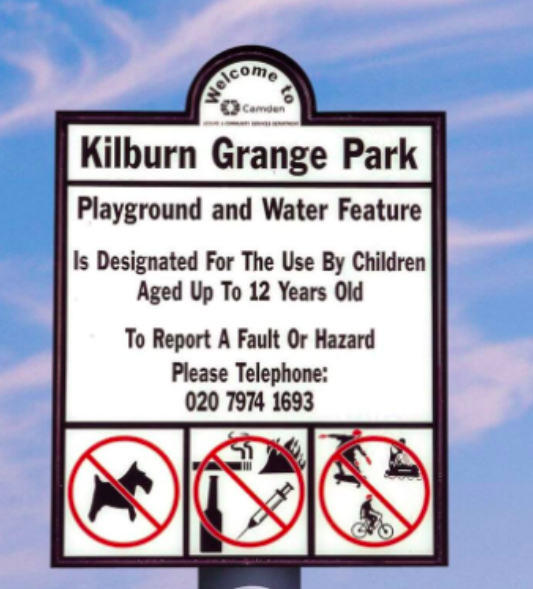
This is unlawful race discrimination (not allowed by an exception)

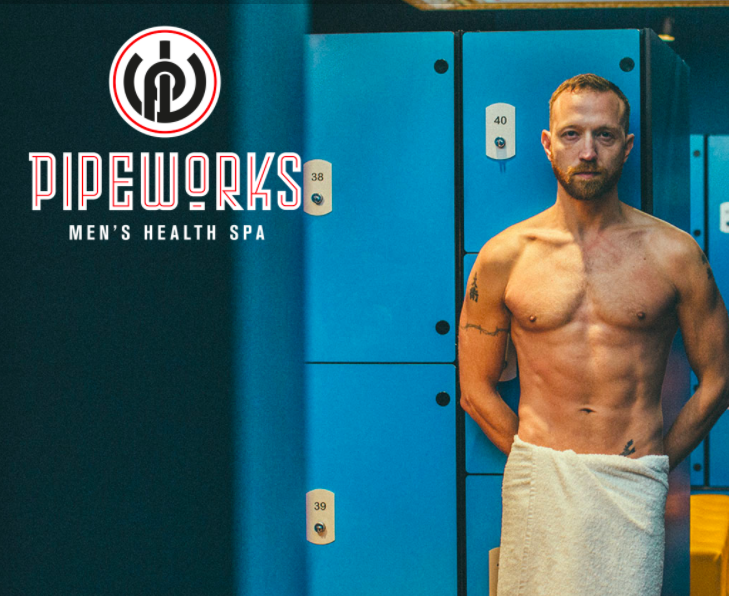
This is lawful sex discrimination (allowed by an exception)

This is lawful sex discrimination
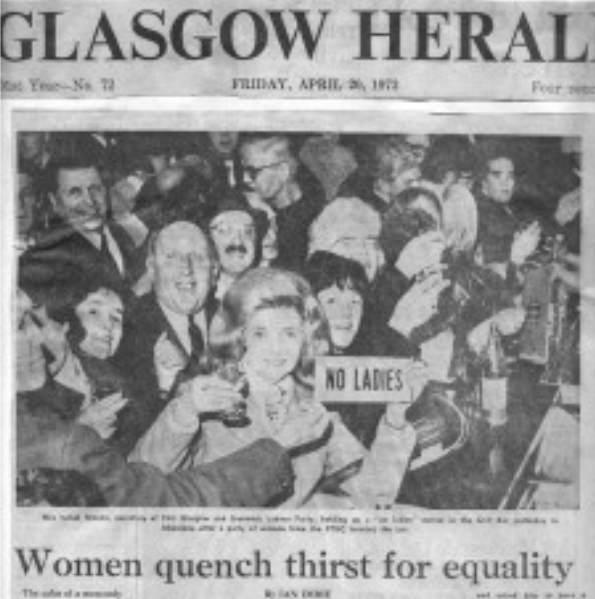
This was unlawful sex discrimination
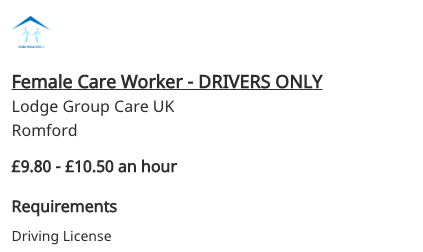
And in work: This is unlawful sex discrimination (there is no justification for wait staff to be female)

This is lawful sex discrimination (there can be justification for care staff to be one sex or the other)
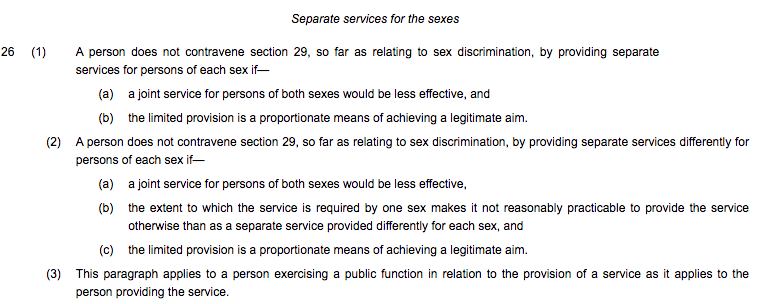
There are lots of exceptions that relate to sex in the Equality Act (schools, sports, communal accommodation, employment etc..) but key ones can be found in Schedule 3 Part 7 paragraphs 26 and 27
They set out general reasons why single or separate sex service can be provided
They set out general reasons why single or separate sex service can be provided
Paragraph 26 applies to when services are provided separately for each sex.
It says you can provide services separately if this is more effective than providing them jointly (i.e. mixed/unisex)
It says you can provide services separately if this is more effective than providing them jointly (i.e. mixed/unisex)
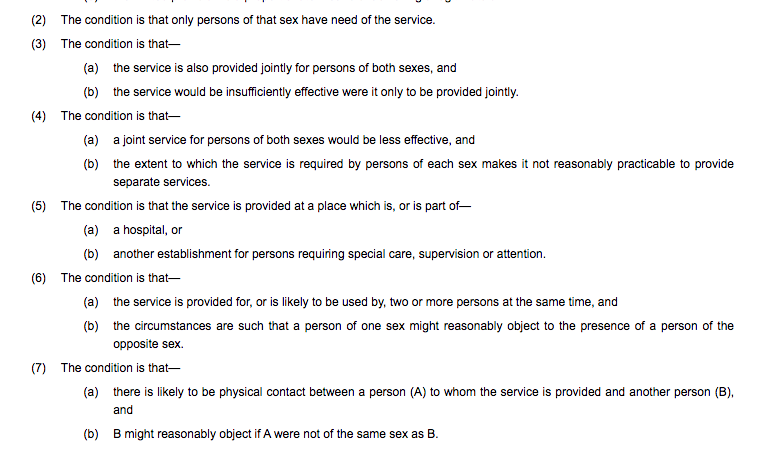
Paragraph 27 covers single sex services. There are lots of everyday reasons, including for efficiency, where there is also a joint (unisex) option, bodily privacy, hospitals, care and services only needed by one sex.
One of the most common myths about about the single sex exceptions is that they are rarely used, or that you have to do something special to use them.
In fact they are used whenever a single sex service is lawfully provided
a-question-of-consent.net/2020/05/05/the…
In fact they are used whenever a single sex service is lawfully provided
a-question-of-consent.net/2020/05/05/the…
Single sex services need clear and unambiguous rules.
These do not need to be negotiated by every user or every staff member.
That would lead to conflict, uncertainty, humiliation and the potential for sexual harassment and abuse
These do not need to be negotiated by every user or every staff member.
That would lead to conflict, uncertainty, humiliation and the potential for sexual harassment and abuse
It is widely misstated that people who identify as transgender have a legal right to access single sex spaces "in line with the gender they identify with" (i.e. for the opposite sex)
This is not true.
This is not true.
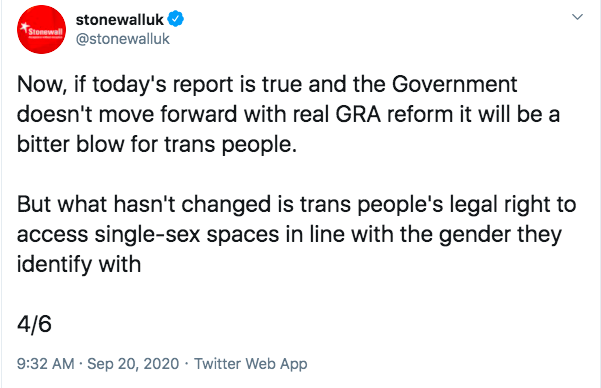
People with the protected characteristic "gender reassignment" have the right not to be discriminated against in general.
Single and separate sex services indirectly discriminate against people who don't feel comfortable sharing with members of the same sex as them.
Single and separate sex services indirectly discriminate against people who don't feel comfortable sharing with members of the same sex as them.
So it is a less discriminatory solution to also provide a joint (unisex) option where possible.
That way everyone's privacy is protected, all are provided for, and it is clear who can use which facilities.
There is no room for conflict, humiliation, or abuse of ambiguity
That way everyone's privacy is protected, all are provided for, and it is clear who can use which facilities.
There is no room for conflict, humiliation, or abuse of ambiguity
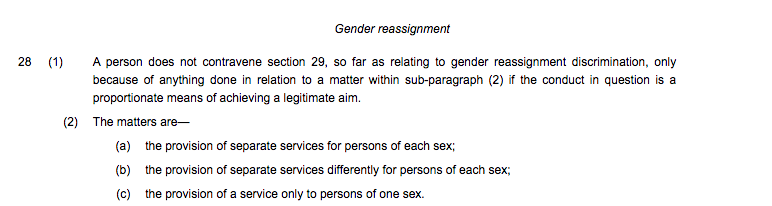
Sch 3 para 28 also sets out that if providing a single or separate sex service means that people with the protected characteristic gender reassignment are discriminated against this may be justified if the single sex service is a proportionate means to achieve a legitimate aim.
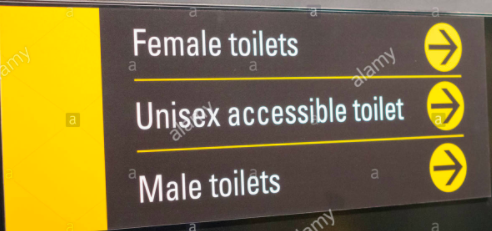
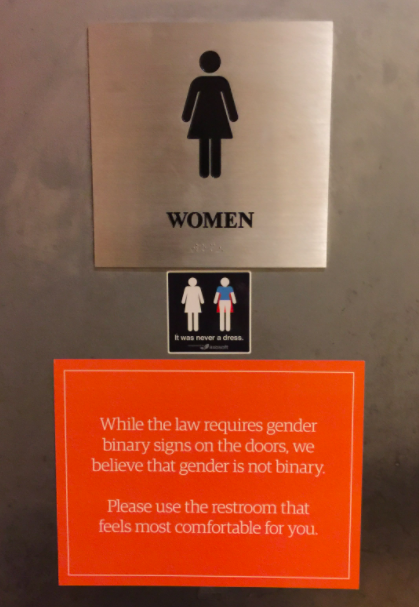
Approaches like this (this sign is said to be from Etsy's corporate HQ in the US) are not advisable.
If you policy is "The law says this, but we are going to do something else" .... consult your lawyers.
If you policy is "The law says this, but we are going to do something else" .... consult your lawyers.
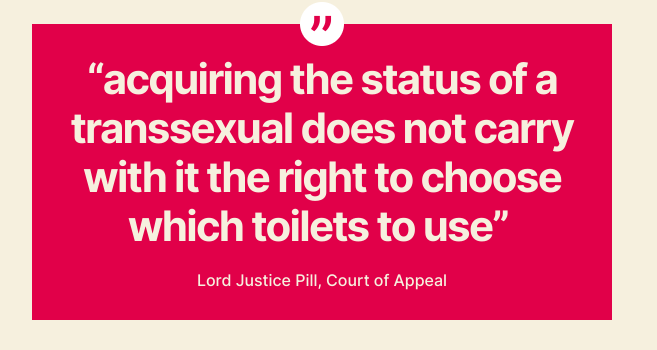
The problem for service providers in the UK is that the government @GEOgovuk and the @EHRC have for a long time given guidance which is incoherent and unworkable and not in line with the law.
a-question-of-consent.net/2020/05/25/the…
a-question-of-consent.net/2020/05/25/the…
Continuing to try to muddle through with this is a bad idea.
It does no favours to transgender people - suggesting that they cannot be expected to follow rules and respect other people's privacy when it comes to sex.
It does no favours to transgender people - suggesting that they cannot be expected to follow rules and respect other people's privacy when it comes to sex.
It is time for clear guidance for employers and services providers, and for transgender people, which makes clear the law.
a-question-of-consent.net/2020/08/16/cro…
a-question-of-consent.net/2020/08/16/cro…
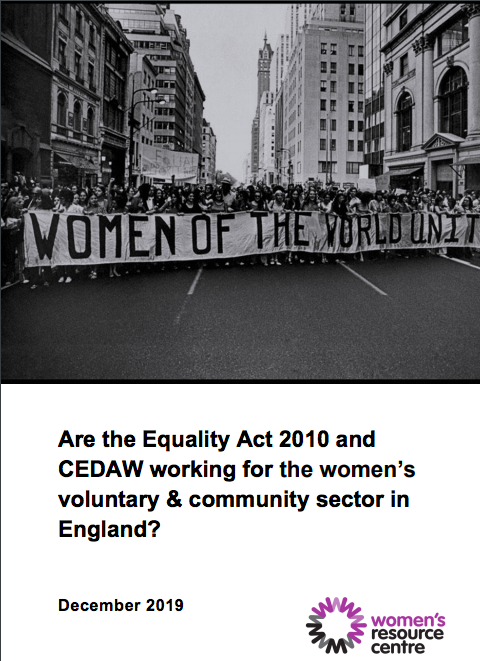
Obviously, this does not just apply to everyday services, but also and importantly to specialist services for women at their most vulnerable.
They are covered by the same part of the Equality Act.
The same principles apply #sexmatters
wrc.org.uk/Handlers/Downl…
They are covered by the same part of the Equality Act.
The same principles apply #sexmatters
wrc.org.uk/Handlers/Downl…
• • •
Missing some Tweet in this thread? You can try to
force a refresh