Chandraketugarh, a 4th c. BCE urban site in West Bengal that had thriving trade connections with other ancient civilisations of the world. The site is rich in archaeological remains. (*contd. in thread)
@LostTemple7
(All info from IIT Kharagpur research paper)
Photos: google ImageImageImageImage
The ruins have yielded innumerable archaeological antiquities ranging from coins, beads, terracotta, stone sculptures, gold coins, & bone, ivory and wooden artifacts. The quality and artistic skill of the excavated artifacts indicate that it was once a highly developed city.
A polygonal brick temple facing north, known as Khana Mihirer Dhipi was recovered from this site. Since this area in all probability was then connected to the Bidyadhari River, it can be termed as a port city. This site was known as ‘Gangaridai’ to the ancient Greeks & Romans.
This ‘Gangaridai’ (Bengali: Gonggarriddhi meaning wealth of the Ganges. In Sanskrit: Ganga Rashtra meaning nation of the river Ganges) was an ancient state established around 300 BCE is described by the Greek traveler Megasthenes in his work ‘Indica’.
Ptolemy mentioned that Gangaridai occupied the entire region around the five mouths of the Ganges. In ‘The Periplus of the Erythraean sea’, the location of Gangaridai was mentioned to be close to the Bay of Bengal, north of the port city of Dosarene of Kalinga (ancient Odisha)

• • •

Missing some Tweet in this thread? You can try to force a refresh

 

Keep Current with Monidipa Bose - Dey (মণিদীপা)

Monidipa Bose - Dey (মণিদীপা) Profile picture

Stay in touch and get notified when new unrolls are available from this author!

Read all threads

This Thread may be Removed Anytime!

PDF

Twitter may remove this content at anytime! Save it as PDF for later use!

Try unrolling a thread yourself!

how to unroll video
  1. Follow @ThreadReaderApp to mention us!

  2. From a Twitter thread mention us with a keyword "unroll"
@threadreaderapp unroll

Practice here first or read more on our help page!

More from @monidipadey

Jan 20
Since yesterday was Kashmiri Hindu Genocide Day ~
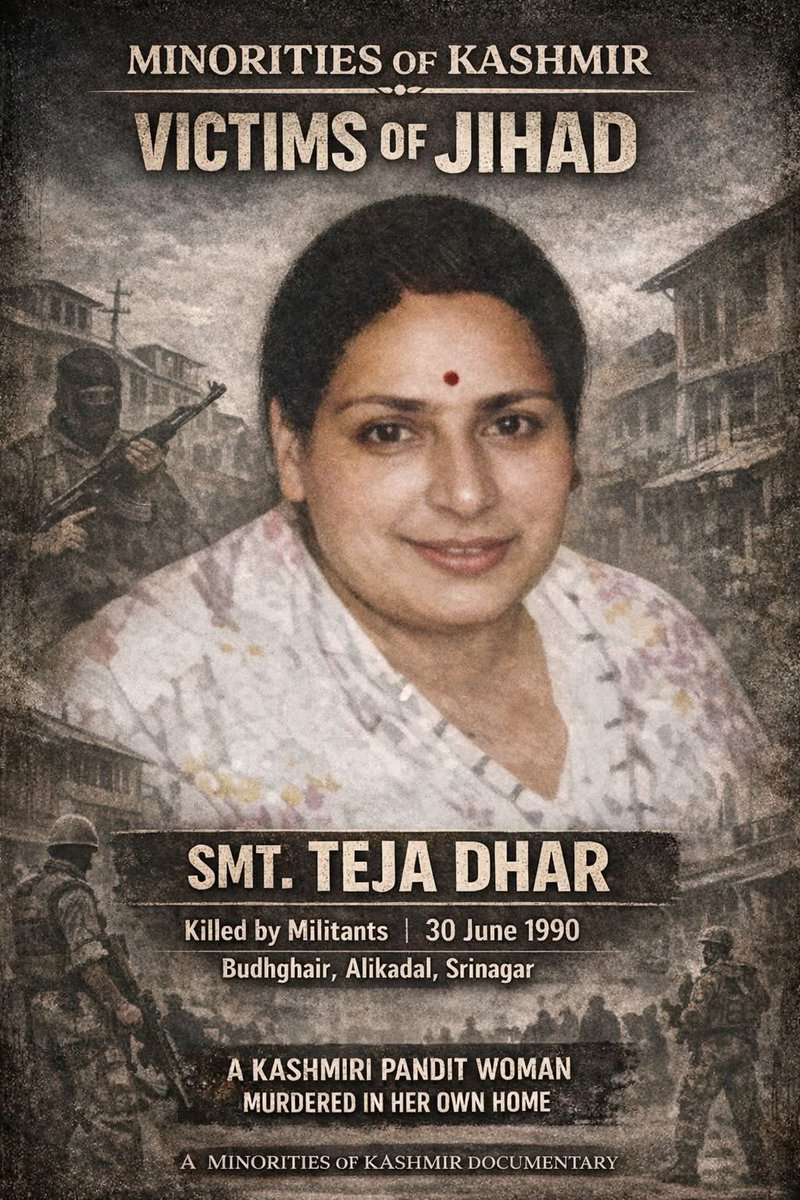
remembering Smt. Teja Dhar from Budhghair, Alikadal in Srinagar.

Assassinated: 30th June 1990.
🧵 1/3

Smt. Teja Dhar, a resident of Budhghair in Srinagar, was brutally shot inside her own home on the evening of 30th June 1990, in one of the early targeted civilian killings of Kashmiri Pandits, during the initial phase of Islamic violence in the Valley.

That evening, coinciding with the religious observance of Haar Ashtami, the family had finished their meal. Her husband, Shri Roop Krishen Dhar, a Labour Officer by profession, stepped out for a short stroll and went to a friend’s house nearby. At home were Smt. Teja Dhar and an elderly neighbour.

Around 7:30- 8:00 PM, armed Islamic terrorists arrived at the house and began shouting for her husband, demanding that he come out. Smt. Teja Dhar did not open the door and told them that she was alone and that they could meet her husband the next day. The militants forcibly broke open the gate and entered the house, conducting a violent search and ransacking the premises.

When they failed to find her husband, they beat the elderly neighbour, slapping him repeatedly. Smt. Teja Dhar protested, calling out in distress. As the militants moved back toward the main doorway, one of them, standing at close range, fired three bullets at her. The bullets struck her in the abdomen, causing severe internal bleeding. After that, militants surrounded the mohalla, trying to find her husband, in case he was attempting to return home.

Hearing this, her husband remained at his friend’s house, unaware of what exactly happened inside his house. Only after the militants left the area around 10 PM was he able to return. On reaching home and finding his wife critically injured, he rushed to seek medical help. However, he was first told that since it was a “police case,” a formal report was required before treatment could proceed. He went to the Maharajgunj Police Station to lodge an FIR, and only then could an ambulance be arranged to take her to the hospital.
…..Image
2/3
By the time Teja Dhar was taken to the State Hospital, it was near midnight. She had already lost a large amount of blood. Instead of being immediately taken into surgery, she remained unattended for a long period, during which hospital staff kept questioning her about the incident. Despite her critical injuries, there was further delay on the grounds of non-availability of blood and other logistical issues. She was eventually moved to the operation theatre, but by then her condition had deteriorated severely.

Throughout the night, she struggled for life. She repeatedly expressed the wish to see her daughter, who had earlier been sent to Jammu for safety, as many families were sending young girls out of the Kashmir Valley due to fear of Jihadi kidnappings and targeted attacks on Hindu girls. So her wish to see her daughter could not be fulfilled.

Smt. Teja Dhar succumbed to her injuries at around 8:00 AM the next morning.

Due to the volatile situation and continuing threat, her last rites were performed in Srinagar itself with assistance from Army personnel. Her husband was later moved to temporary accommodation and after the immersion of ashes, he left for Jammu, where the rest of the displaced family had taken shelter. The child never saw her mother’s body.
3/3
Smt. Teja Dhar was not involved in politics, administration, or any form of public activity. She was killed solely because militants came searching for her husband and chose to punish the household when they could not find him. Her murder stands as a clear example of how Kashmiri Pandit civilians, including women inside their homes, were deliberately targeted for being Hindus, during the early phase of the insurgency.

Her killing directly contradicts repeated claims by leftists and Islamists that no Kashmiri Pandit civilians were murdered during that period.
It also reflects a larger pattern of intimidation where families were terrorized, medical treatment was delayed due to procedural hurdles, and survivors were forced into immediate displacement after the violence.

For her family, the loss was permanent and unresolved. A mother was taken away from a child in the sixth standard, and a household was destroyed in a single night, not by crossfire, not by accident, but by deliberate, targeted Islamic terror.

(As documented by ‘Minorities of Kashmir’ group)
Read 4 tweets
Jan 9
How the Indian Wootz steel was renamed as Damascus steel, and how the ancient knowledge of making Wootz steel was destroyed by British industrial policies ~

1/3 🧵
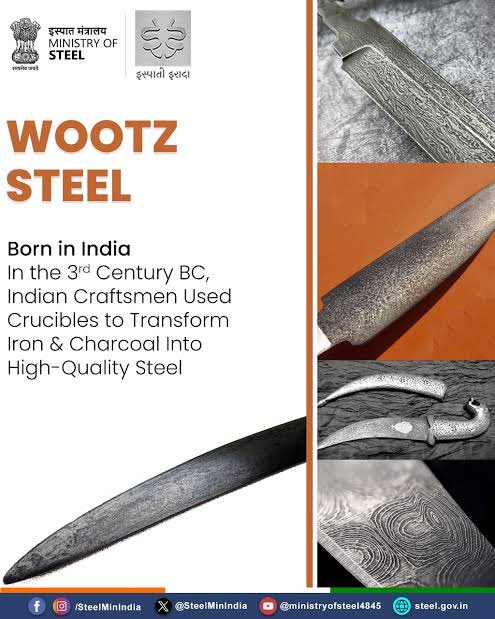
Today, when we talk about modern steel, superalloys, or military-grade metals, not many are aware that the world’s most advanced steel was born in ancient India nearly 2300 years ago. This steel was called Wootz steel, which later was renamed in the Middle East as “Damascus steel.”

The astonishing truth is that even today, modern science has not been able to fully unravel the secrets of this steel.

📍 What is Wootz steel?

Wootz steel was a high-carbon crucible steel, produced by a unique method.

Evidence of this technology dates back to 3rd century BCE, in regions of Tamil Nadu, Karnataka, and Andhra Pradesh in south India.

The distinctive features of this steel were ~
• Extremely sharp
• Nearly impossible to break
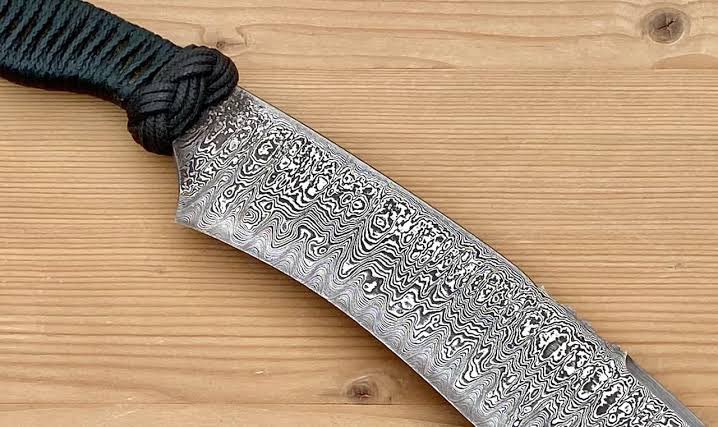
• A wavy, flowing pattern on swords (the “watered pattern”)
• The ability to retain its sharpness for a very long time

Because of these qualities, weapons made from Wootz steel were virtually unbeatable in battlefields. Modern metallurgy calls this technology as ‘controlled nanostructure formation,’
and ancient Indians did it without using modern thermometers or laboratories.

📍 From Wootz to Damascus ~ changing a name

Wootz steel was largely exported from India to the Middle-East.

In the Syrian region, the Indian Wootz steel was used to make swords, which was labelled by them as Damascus steel swords.

When European warriors encountered these swords during Crusades, they were terrified because the Wootz steel swords could easily shatter other swords, yet they themselves would not break. These swords, which shook Europe, became famously known as Damascus swords, while the Indian wootz steel that made the swords took a backseat.Image
Image
📍 Who discovered this steel?

Wootz steel was not the invention of a single individual. It was the result of collective knowledge of ancient Indian metallurgists, particularly artisans of south India.

These ancient artisans knew ~

•Which iron ore to use
•At what temperature it should be melted
•How to maintain the precise amount of carbon
•How slow cooling would create the internal microstructure
📍 Why did this technology disappear?

It disappeared during the 18th to 19th centuries, at the time of British Colonial rule, which created industrial policies that systematically destroyed Indian indigenous industries. As indigenous industries disappeared, with it were lost not only the livelihoods of traditional craftsmen, but more importantly, India lost ancient knowledge of craftsmanship that were passed on from generation to generation orally.

This way the living tradition of making Wootz steel collapsed. As there were no written manuals, and all knowledge had passed orally from generation to generation, with the industry no longer functioning, the ancient technology was lost forever.

📍 What does modern science say?

Since the 1990s, NASA and European researchers have examined samples of Wootz steel and found structures similar to carbon nanotubes, comparable to modern nanotechnology

𝗜𝗻 𝗼𝘁𝗵𝗲𝗿 𝘄𝗼𝗿𝗱𝘀, 𝗮𝗻𝗰𝗶𝗲𝗻𝘁 𝗜𝗻𝗱𝗶𝗮 𝗽𝗿𝗮𝗰𝘁𝗶𝗰𝗲𝗱 𝗻𝗮𝗻𝗼-𝗲𝗻𝗴𝗶𝗻𝗲𝗲𝗿𝗶𝗻𝗴, 𝘄𝗶𝘁𝗵𝗼𝘂𝘁 𝗲𝘃𝗲𝗻 𝗸𝗻𝗼𝘄𝗶𝗻𝗴 𝘁𝗵𝗲 𝗻𝗮𝗺𝗲.
Read 4 tweets
Jan 2
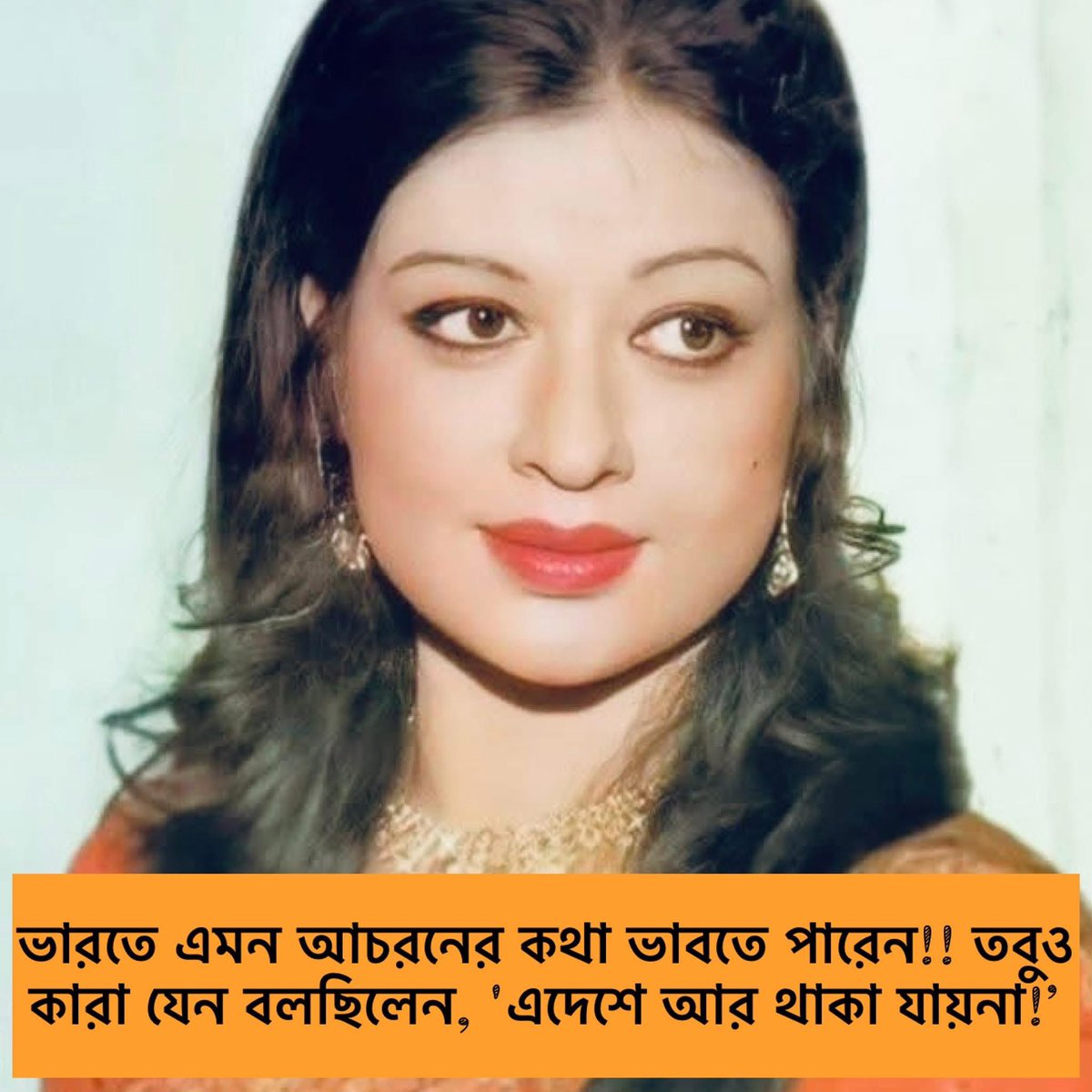
How the Islamic State of Pakistan treated a Buddhist actress from Bangladesh ~
🧵 1/3

13 March 1978, Lahore

In Gulberg, one of the city’s most upscale neighbourhoods, a famous actress returned home from a late night shoot. After freshening up, she sat down to eat dinner with her husband at around 1 am. Their only son, Roni, a minor, was sleeping in the adjacent room.

Suddenly, seven miscreants broke through the back lawn door and stormed inside. Before anyone could grasp what was happening, they tied the woman’s husband. Amid screams and chaos, Roni woke up and came out of his room; he was also tied up. Then, in front of her husband and son, the men gang-raped the woman repeatedly. After the brutal assault which lasted the whole night, the rapists finally left at dawn.

This was one of the most shocking gang-rape incidents in the entire Indian subcontinent at that time, and it took place on the so-called “holy” soil of Pakistan.

Who was that actress ?Image
Born in 1942 in Dhaka into a Bengali Buddhist family, the actress’s name was Jharna Basak. Her father, Nani Basak, was a well-known football referee of that era. Her elder brother was associated with Dhaka Radio, and using his connections, Jharna entered the world of acting. Her career began in 1968 with the film Samudra. With the support of the legendary Pakistani actor Waheed Murad, she soon entered the Lahore film industry. From there on, there was no looking back for her.

She changed her name and became known on screen as Shabnam. At that time it was hard to find another actress in the subcontinent who achieved such fame and respect. She acted in more than 160 films across Urdu and Bengali cinemas. She won the country’s Best Actress (Nigar Award) 13 times. Her on-screen pairing with Nadeem and Rahman became hugely popular in both Pakistans (East and West). She married, for love, renowned music director Robin Ghosh, a Christian by faith.

The horrific incident of the night of 13th March shattered the bright future of this immensely talented artist. After the assault, Jharna Basak survived in a state that was virtually half-dead. Her husband and child were left traumatized but they continued fighting for justice.

The main accused in the case was Farooq, nephew of the then Punjab Chief Secretary F.K. Bandial, along with his friends Wasim Yaqub Butt, Jamil Ahmed, Tahir Tanvir, Jamshed Akbar Sahi, Agha Aqeel Ahmed, and Mohammad Muzaffar; all from wealthy and influential families.

Under pressure from people connected to the Lahore film industry, an investigation began, and a case was initially filed under Section 412 of the Pakistan Penal Code, with trial held in a special military court. Five accused were sentenced to death, and one to ten years of imprisonment, while Mohammad Muzaffar was acquitted.

Relentless pressure was exerted on Shabnam and her family to pardon the accused. Eventually, Pakistan’s then President General Zia ul Haq commuted the death sentences of the five convicts. Under his intervention, the gang-rape charges were dropped and replaced with ordinary robbery charges, turning the entire judicial process into a joke.
Facing continuous government pressure and betrayal by her own lawyer S.M. Zafar, Jharna Basak abandoned all hope of justice. Ultimately, the family was forced to leave the country. They initially chose London as their place of residence, but since the late 1990s they started living in Dhaka.

Bollywood has never lacked talented minority actresses, Nargis to Meena Kumari, Madhubala to Waheeda Rehman, Saira Banu. Can you imagine something like this happening to any of them?

Yet, in last 10 years people from the Mumbai film industry have been saying, “It’s impossible to live in this country anymore!”
They need to be reminded of how safe they are in India.

[Written in Bengali by Swapan Sen. I have translated it]
Read 5 tweets
Dec 25, 2025
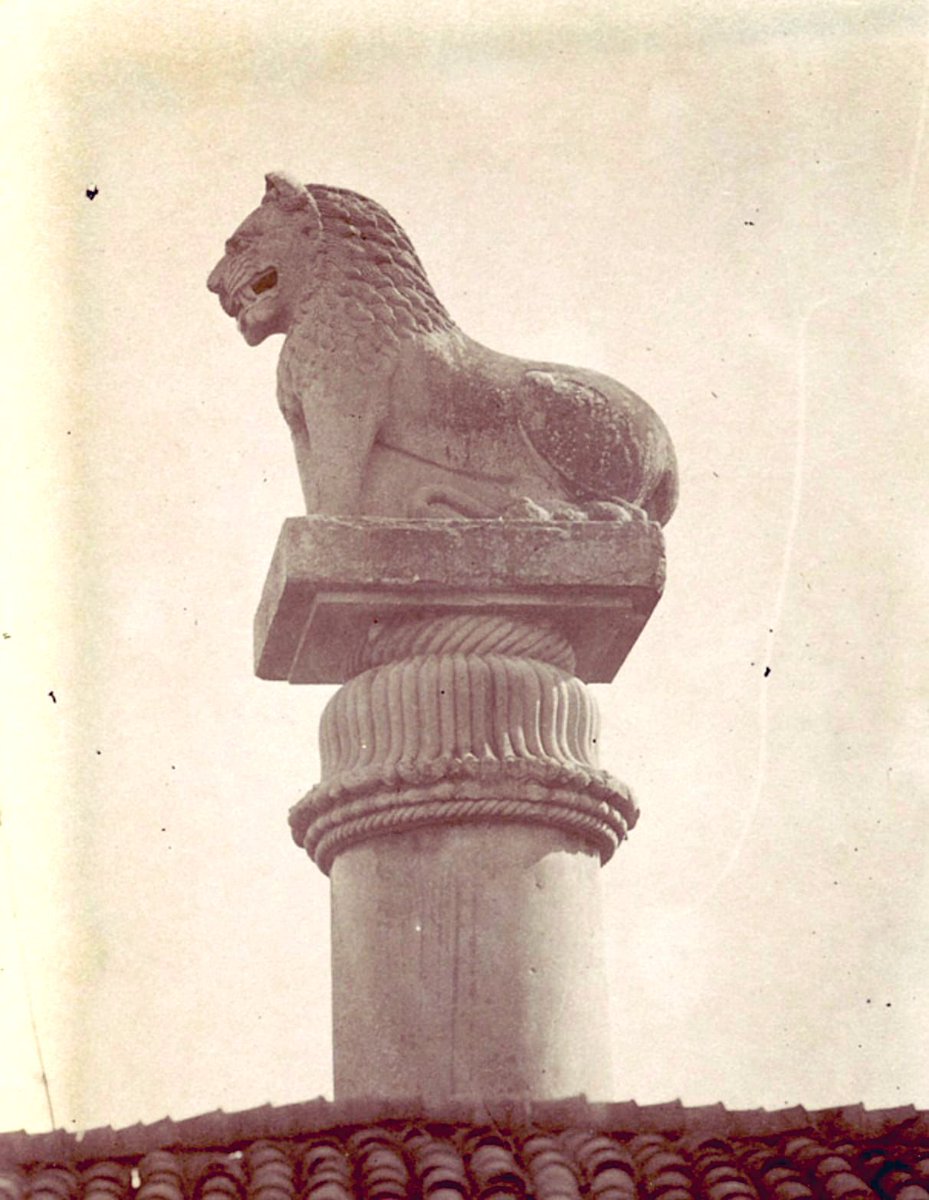
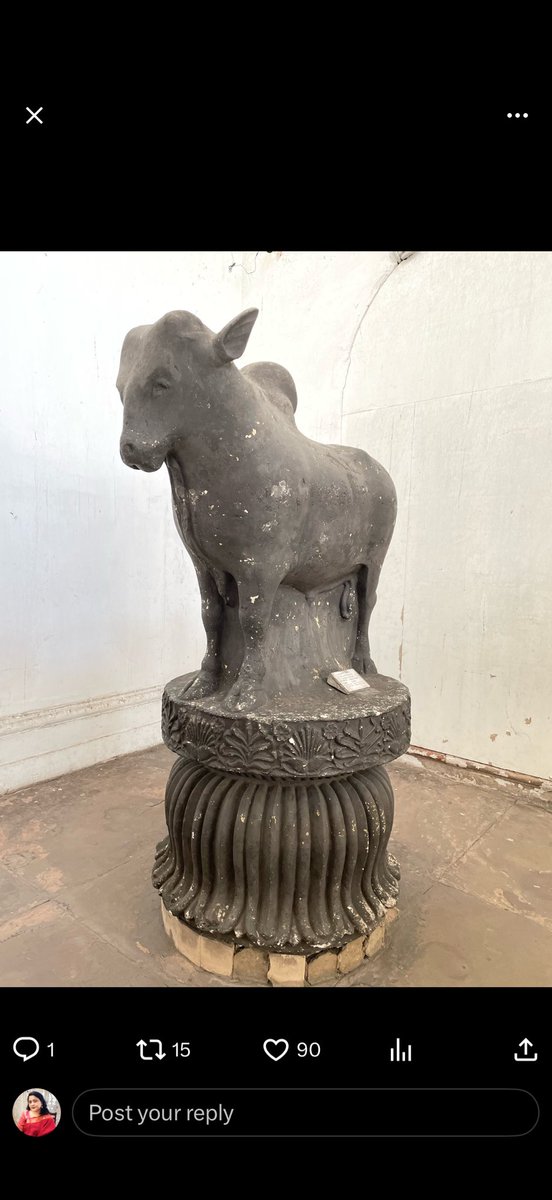
These pillars were not built by Ashoka. The Ashokan era edicts were inscribed on pillars that had been sculpted much earlier than Ashoka, and they already had religious connotations. These were labelled as ‘Ashokan pillars’ arbitrarily, without proper understanding of history.

There is a line of thought by reputed scholars that these were stambhas in front of Hindu temples, much like the Garuda stambhas. This view was removed from public knowledge by later Marxists ‘historians’ for obvious reasons. A stambha with a lion on top would denote an offering for the Devi.

These pillars were a part of age old Hindu religious tradition of cosmological significance; the pillar symbolised the world's axis, the separation between earth and heaven. There are pillars, such as Garuda stambha, Nandi stambha, etc.

So these stambhas were venerated at one point of time in history ! It’s an ancient practice still continuing.Image
Image
Image
For those interested, do search for papers by John Irwin on pre-Mauryan pillars that pre-date Ashoka.

Among other eminent scholars, Jitendra Nath Banerjea, whose books and papers on Hindu iconography are well known, had opined that these pillars had religious connotations and likely belonged to temples, just like the stambhas we still see in front of many temples (Garuda stambha, dvaja stambha, nandi stambha, etc). Ashoka most likely had used these pillars to write his edicts knowing their religious importance and expecting that many people would read them.

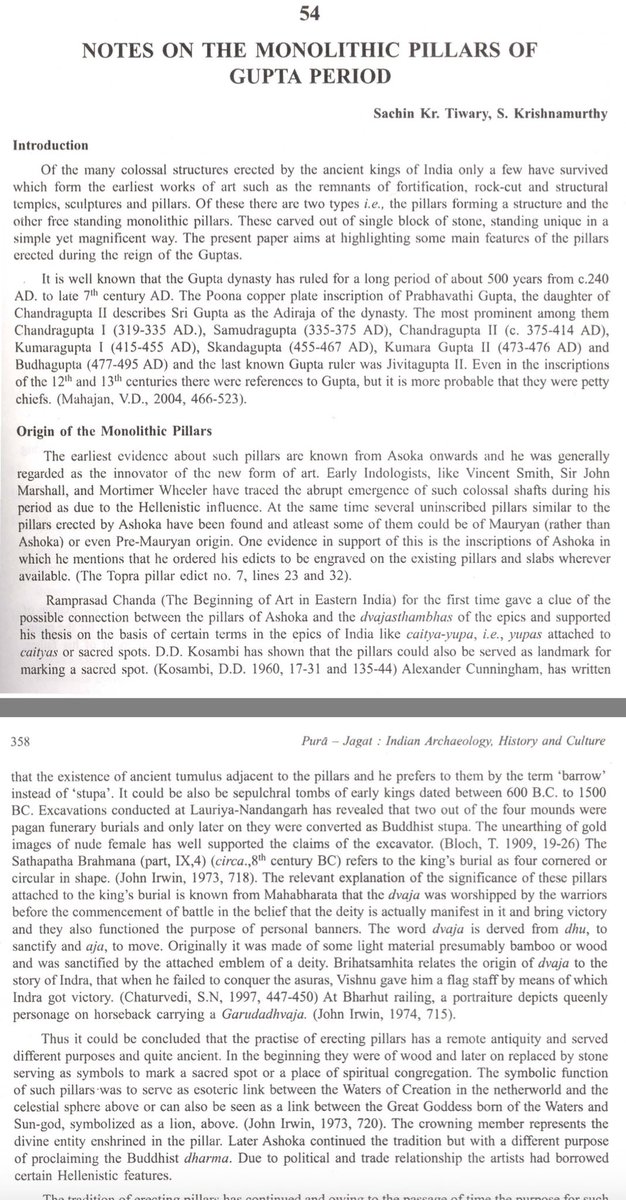
I am giving the image of another academic paper that discuses this topic a bit. This paper is available on Google.Image
What is amusing to note here, is the fact that some people won’t even believe Ashoka himself, such is the brainwashing by a specific group of academicians 😀👇🏼

In his inscription, Ashoka has mentioned that he has ordered his edicts to be engraved on the existing pillars and slabs wherever available. (The Topra pillar edict no. 7, lines 23 and 32).
Read 4 tweets
Dec 24, 2025
Since I was asked why Hadi’s sister spoke of ‘200 year war,’ -

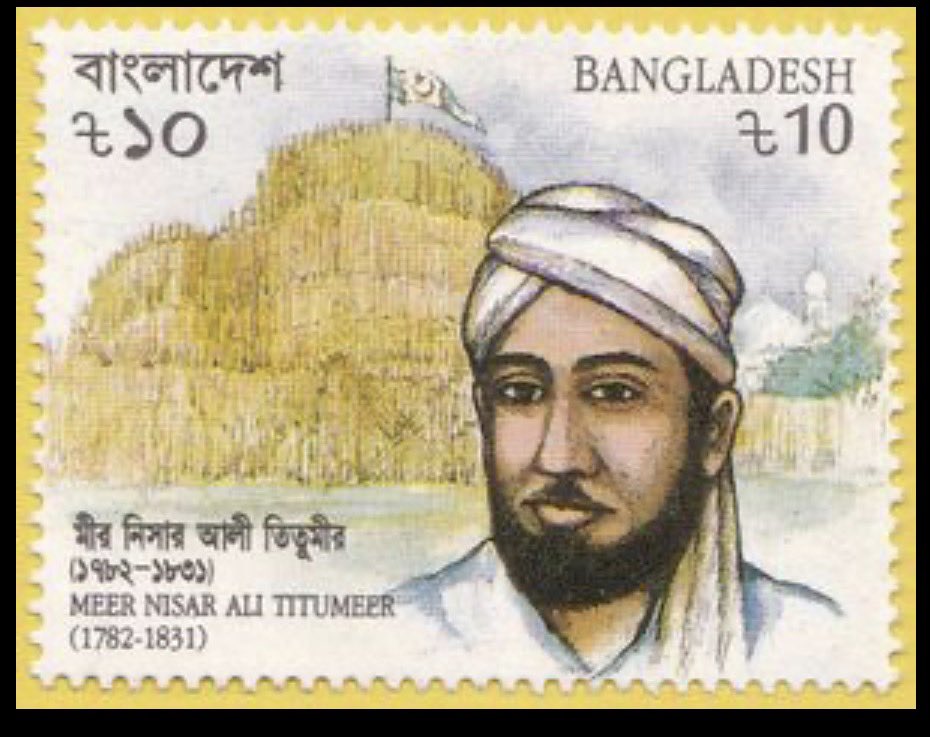
Looking back at Titumir, the first Islamic terrorist of the Indian subcontinent, and his immense influence on BD Muslims ~
1/3 🧵 …

While Titumir remains unknown to most Indians, the name is of great reverence for Muslims in Bangladesh. Titumir was born in 1782 in 24 Parganas (West Bengal), and under his mother’s religious influence, became a Hafiz at a very young age. He had a chequered career, from being a farmer, to the leader of a dacait gang, to being a prized wrestler, to becoming the muscleman of a Hindu zamindar that finally landed him in the prison of the East India Company.

After he was released, in 1822-23 he went to Mecca for Hajj, where he met Syed Ahmad Barelvi, and under his influence he became a Wahabi Islamic preacher. Syed Barelvi was a direct disciple of Abdul Wahab, who had initiated a fundamentalist puritanical movement among Sunni Muslims. The chief aim of this movement was to remove all non-Shariati elements from the practices of Muslims and regain Islam's glorious past. Syed Ahmad believed that India had turned into ‘Dar-ul-Harb,’ or a land ruled by infidels under Hindu and EIC rule, and Indian Muslims had deviated from the path of true religion. The Muslims, therefore, needed to wage jihad against Kafir rulers, i e, the Hindus and EIC, and re-establish 'Dar-ul- Islam,’ in India. Soon Saiyad Ahmad asked Titumir to go back and work among the Muslim peasants in his local area.

After Titumir returned, he immediately set about on his Jihadi mission, and began a conflict with the Hindu Zamindar, Krishnadeva Rai of Purha, accusing him of bias against Muslims and for imposing illegal taxes on them. However, there are no historical records of such biased acts by the Zamindar.

Titumir had earlier worked as a lathial. Using his skills as a lathi fighter, TituMir created a Mujahid army that skilled in wielding lathis and other indigenous arms, to fight against the Hindu Zamindars, using the populist narrative of ‘social oppression.’

Soon Titumir acquired a RobinHood like status amongst the Muslims in Bengal. He started an Islamic Revivalist movement, aiming at turning Bengal into a pure Islamic state under Sharia laws.

Titumir had built an army comprising of 15000 Muslim men, and he built a fort made of bamboo near Barasat. He declared independence from the infidel Hindu zamindars and British- EIC, and with his army defeated their combined force.

Finally in 1831, a British force under Lt Col Stewart that consisted of 100 cavalrymen, 300 native infantry, and two cannons attacked Titumir’s ‘Bansher Kella’ (bamboo fort).

In this 1831 skirmish, Titumir died, which was later labelled by the Marxists and Muslim ‘historians’ as the ‘first war of independence,’ when in reality Titumir’s entire rebellion was a jihad against ‘Hindu’ zamindars and Christian EIC. His ‘movement’ was a part of the Wahabi Islamic Revivalist movement, and largely comprised of conversions through fear and force, and abductions of Hindu women who were forcibly married off to his mujahid men .

While Titumir didn’t last long, his jihad laid the foundation to the 1857 Mutiny, where Muslims took part in it to reclaim power and re-establish the Mughal Empire. For them independence from the EIC was not a ‘war of independence’ but a ‘jihad’ against non-believers : Hindus and Christians (EIC).
….Image
Understanding that 1857 was primarily a Muslim uprising, the British soon moved towards keeping Hindus as their staff. This created a middle class Hindu Bengali segment, who were given British education through which they learnt the modern principles of Democracy and Freedom. This later led to rise of nationalist movement in Bengal led by Hindu Bengalis.

With growing nationalism among Hindu Bengalis, the British felt it safer to shift their capital from Calcutta to Delhi. To weaken this freedom movement they decided to partition Bengal (1905), which was widely supported by the wealthy Muslims of Bengal. The zamindari system was mostly with the Hindus, and the Muslims greatly resented this. With partition they thought they could assume control, especially in east Bengal, which had Muslim majority.

Thus, Muslims led by Nawab Sallimullah of Dhaka welcomed the partition. To create a narrative they followed Titumir’s principles and portrayed the entire Hindu Zamindari system as an oppressive villainous entity, and the division was welcomed as a part of removing the burden of Hindu rule.

Thus, this 1905 partition gave the impetus to Muslim separatism and demands for a separate Muslim nation, and the plan for creating Pakistan took firm shape, because this was the first successful division based on Muslim majoritarianism. The British also helped in the growth of Muslim separatism by holding separate elections for Muslims and Hindus in 1909. This created a distinctive political entity based on religion for the subcontinent Muslims.
Without going into details of the riots of 1946-47 and 1971 Hindu genocide in east Pakistan, one name worth mentioning here is that of Ziaur Rehman, the PK army stooge who led Bangladesh after Mujib was assassinated. Ziaur Rehman was the man who started the anti-India movement in BD from 1975 with Jamaat, by floating a series of fake rumours about India, turning a nation that was anti-Pakistan in 1971, to a pro-Pakistan, pro-Islamic, and pro-US nation. He erased the role of Indian army in the 1971 war, turning it into a war solely won by Muktibahini.

Keeping aside Ziaur Rehman’s role in fanning anti-India sentiments, hatred for Hindu-India runs deep within the BD Muslim psyche. They believe that Hindu-India stole lands that belonged to them (WB and Assam).

It was Titumir’s dream of creating an ‘Islamic State of Greater Bengal’ that would comprise of large parts of West Bengal, Assam, and the NE states. Hence, BD Muslims believe they are in a 200 year long war of creating a ‘greater Bengal.’

The dislike for Hindu India goes much deeper in the Bangladesh psyche than it is in Pakistan, and it is this dislike that PK army keeps fanning from time to time.
Read 4 tweets
Aug 18, 2025
Since I am seeing some posts denying the Direct Action Day killings and calling the ‘Bengal Files’ a propaganda movie, here’s some real history lessons for these progeny of Suhrawardy -

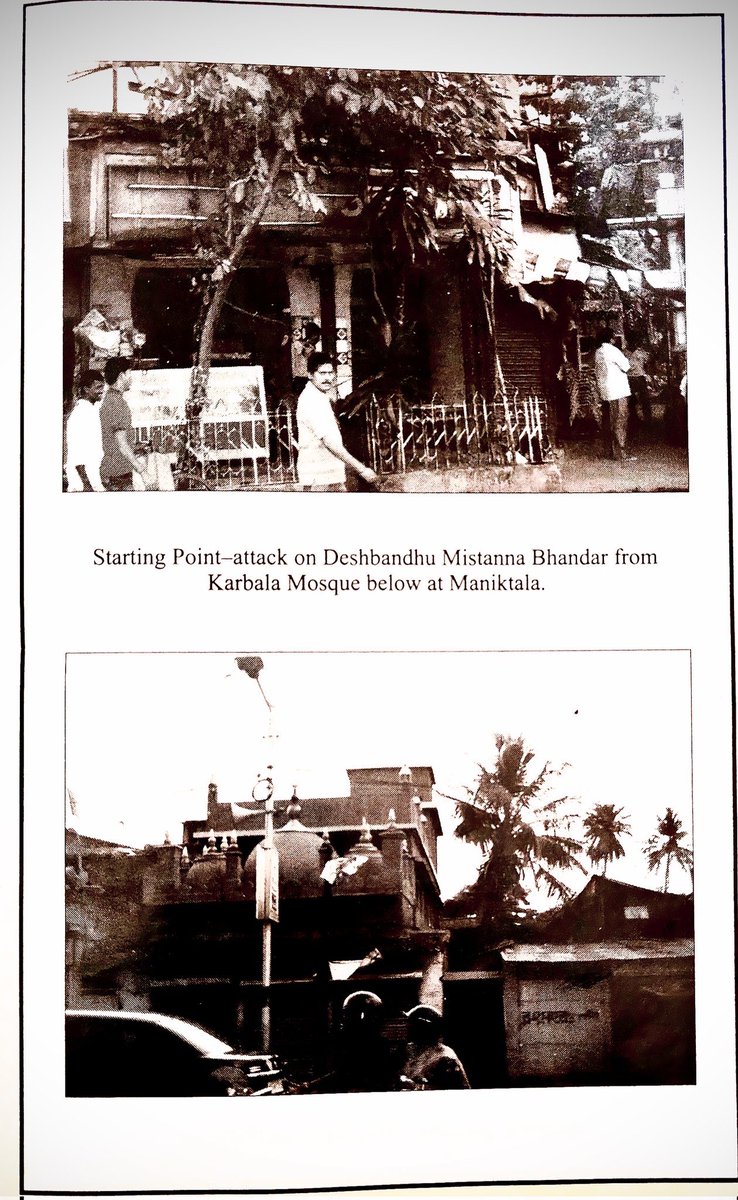
📌Starting point of Direct Action Day by the Muslim League members : 16th August 1946.

[See Image 1]

4.30am - Stabbings started.

6.30 to 7 am - large numbers of ML members gathered at Maniktala area.

7am - Riots start at Maniktala Bazar. Point of aggression was from the Karbala Mosque.

📌Bengalis, Oriyas, Biharis, Marwaris all were mass slaughtered by the Muslim Mob.
See Images 2 and 3.

📌Names of two famous Bengali families, who lost their sons in the riots.

A) Sir Jadunath Sarkar's (eminent historian) Son was Murdered.

B) Bhim Nag Lost His Son - Bhim Chandra Nag Sweet Shop is famous.

[See image 4]

📌Quoting the Islamist Suhrawardy -

"Bloodshed and disorder are not necessary evil in themselves, if resorted to for a noble cause. Among Muslims today, no cause is dearer or nobler than Pakistan".

Ref: Suhrawardy, in an article in the Statesman, Calcutta, 5th August, 1946. Page 63, of the book (name given at the end).Image
Image
Image
Image
📌 Interesting to note (first two images here) that the Communists were warned and protected beforehand, by their Muslim comrades.

Jyoti Basu was warned - "You may be attacked too. You better leave the place".

Read excerpts of what the Communist leaders wrote about the riots, in the first two Images here.

Yet Today these "Bengali Shariah Bolsheviks Chinese dalals” are denying the History of the Great Calcutta Killing, just to appear Secular !!

📌Check the count of the dead bodies disposed, in the third image.

Check the count of Hindu Vs Muslim.

Ref: Page no. 200 (book name given at end)Image
Image
Image
The images are from Direct Action Day killings -

First image : Dismembered bodies of Hindus near Kalabagan Bustee. Vultures having a good meal.
Caption from LIFE. "Carrion birds feast on victims of bloody religious riot in India." (Calcutta, 1946) Margaret Bourke-White-The LIFE Picture Collection/Getty Images.

Rest images are self explanatory : all have captions given below them .Image
Image
Image
Image
Read 5 tweets

Did Thread Reader help you today?

Support us! We are indie developers!


This site is made by just two indie developers on a laptop doing marketing, support and development! Read more about the story.

Become a Premium Member ($3/month or $30/year) and get exclusive features!

Become Premium

Don't want to be a Premium member but still want to support us?

Make a small donation by buying us coffee ($5) or help with server cost ($10)

Donate via Paypal

Or Donate anonymously using crypto!

Ethereum

0xfe58350B80634f60Fa6Dc149a72b4DFbc17D341E copy

Bitcoin

3ATGMxNzCUFzxpMCHL5sWSt4DVtS8UqXpi copy

Thank you for your support!

Follow Us!

:(