1/ The home of all my journalism, @The_Corres, is celebrating one year of publishing hopeful journalism this month! If you are a founding member, it would be so great if you'd renew your membership by the end of the month via corr.es/renew-now
2/ Here are just a few of the stories I’ve published this year:
--> A chapter that I ended up leaving out of my book, about Peter Kropotkin, the Russian prince-turned-anarchist who had a VERY dangerous idea: most people are pretty decent. thecorrespondent.com/443/brace-your…
3/ A few months into the pandemic, it became clear that the era of neoliberalism is over. But what comes next? I wrote that the time has come for ideas that seemed impossible just months ago: thecorrespondent.com/466/the-neolib…
4/ And I’ve also published several extracts from my book HUMANKIND, including this essay about the remedy for hatred and prejudice (hint: get to know those who are different to you). thecorrespondent.com/668/science-sh…
5/ If you’re a founding member, please do renew your membership before 30 September to support ad free, independent journalism. corr.es/renew-now
6/ If you’re not a member, but enjoyed some of these articles, become a member! Membership is pay-what-you-want, because we know that most people are pretty decent, and will pay what they can afford for independent journalism: thecorrespondent.com/join [the end]
• • •
Missing some Tweet in this thread? You can try to
force a refresh

The best conspiracies are the ones that change the world. In 1884, a British group called the Fabian Society plotted to bring us the 8-hour workday and votes for women. In 1947, a handful of intellectuals met in a Swiss village to roll back the state and unleash business (they called themselves 'neoliberals'.
What did these movements have in common? Long-term thinking. Donors who thought in decades, not election cycles. Policy shops that translated ideals into legislation. Cultural platforms that shaped opinion from the classroom to the dinner table.
And most of all: perseverance. Take two of my other favorite conspiracies. Of the 12 founders of the British Society for the Abolition of the Slave Trade, only one lived to see slavery abolished. And of the 68 women at Seneca Falls in 1848, only ONE was still alive when women won the vote. (She was sick on election day and didn't get to cast it.)
I wish I didn’t have to share this. But the BBC has decided to censor my first Reith Lecture.
They deleted the line in which I describe Donald Trump as “the most openly corrupt president in American history.” /1
This sentence was taken out of a lecture they commissioned, reviewed through the full editorial process, and recorded four weeks ago in front of 500 people in the BBC Radio Theatre.
I was told the decision came from the highest levels within the BBC. /2
This has happened against my wishes, and I’m genuinely dismayed by it.
Not because people can’t disagree with my words, but because self-censorship driven by fear (Trump threatening to sue the BBC) should concern all of us. /3
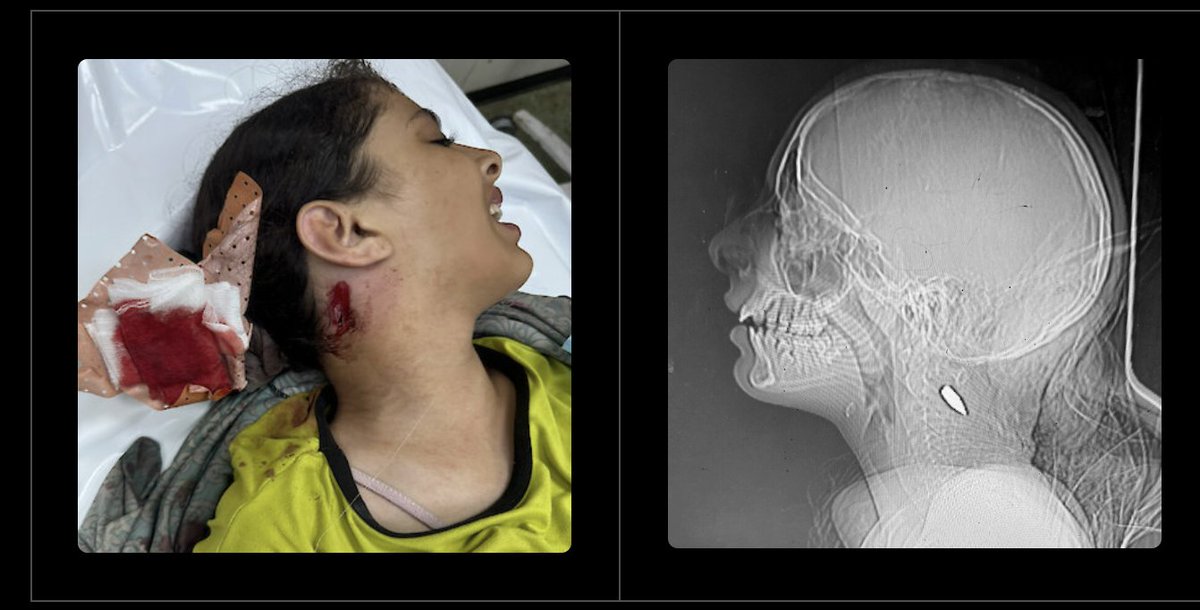
Devastating new investigation by Dutch newspaper De Volkskrant: 15 international doctors report at least 114 Palestinian children with single gunshot wounds to head/chest—injuries forensic experts say are consistent with aimed fire.
(Photo: Mira, 4 years old)
Two independent forensic pathologists, asked to review images and X-rays, said the injuries were consistent with bullets (not shrapnel) and likely distance shots to head/neck with military ammunition.
'In all likelihood, these are distance shots aimed at the head and/or neck with military ammunition,’ says forensic pathologist Wim Van de Voorde, emeritus professor at the University of Leuven.
96 private jets full of corrupt elites and celebs flying into Venice, a city destroyed by tourism, to celebrate the wedding of the world’s most shameless tax dodger: Jeff Bezos.
Well, it's the perfect anecdote for future historians writing about this Second Gilded Age --> 🧵
The location is very fitting. The fall of the Republic of Venice is one of history’s most telling examples of how great civilizations can rot from within—not through external conquest, but through elite decadence and corruption.
At its peak, Venice was a marvel of commerce and innovation. A small city built on a lagoon had become a maritime empire, dominating Mediterranean trade routes for centuries.