1. The Kentucky AG says: "According to Kentucky law, the use of force by Mattingly and Cosgrove was justified to protect themselves. This justification bars us from pursuing criminal charges in Miss Breonna Taylor's death."
2. Under the Kentucky Penal Code (503.120), self-defense is unavailable as a justification in a prosecution for an offense involving wantonness or recklessness toward innocent persons.
3. Even if Mattingly and Cosgrove were justified in defending themselves against Walker, they may have wantonly or recklessly injured or risked injury to Taylor.
Self-defense does not preclude charging them accordingly.
4. Under Kentucky law, a person who uses force "as permitted" by its self-defense rules is immune from criminal prosecution.
5. However, self-defense rules *do not permit* wantonly or recklessly injuring or risking injury to innocent persons.
The immunity provision does not bar prosecution in such cases. If it did, it would deprive 503.120(2) of legal effect, which is absurd.
6. If the AG believes that Mattingly and Cosgrove did not wantonly or recklessly injure or risk injury to Taylor, then he should explain why not. His legal rationale is incorrect.
End.
• • •
Missing some Tweet in this thread? You can try to
force a refresh

Ezra Klein's interview with Philippe Sands is very good overall.
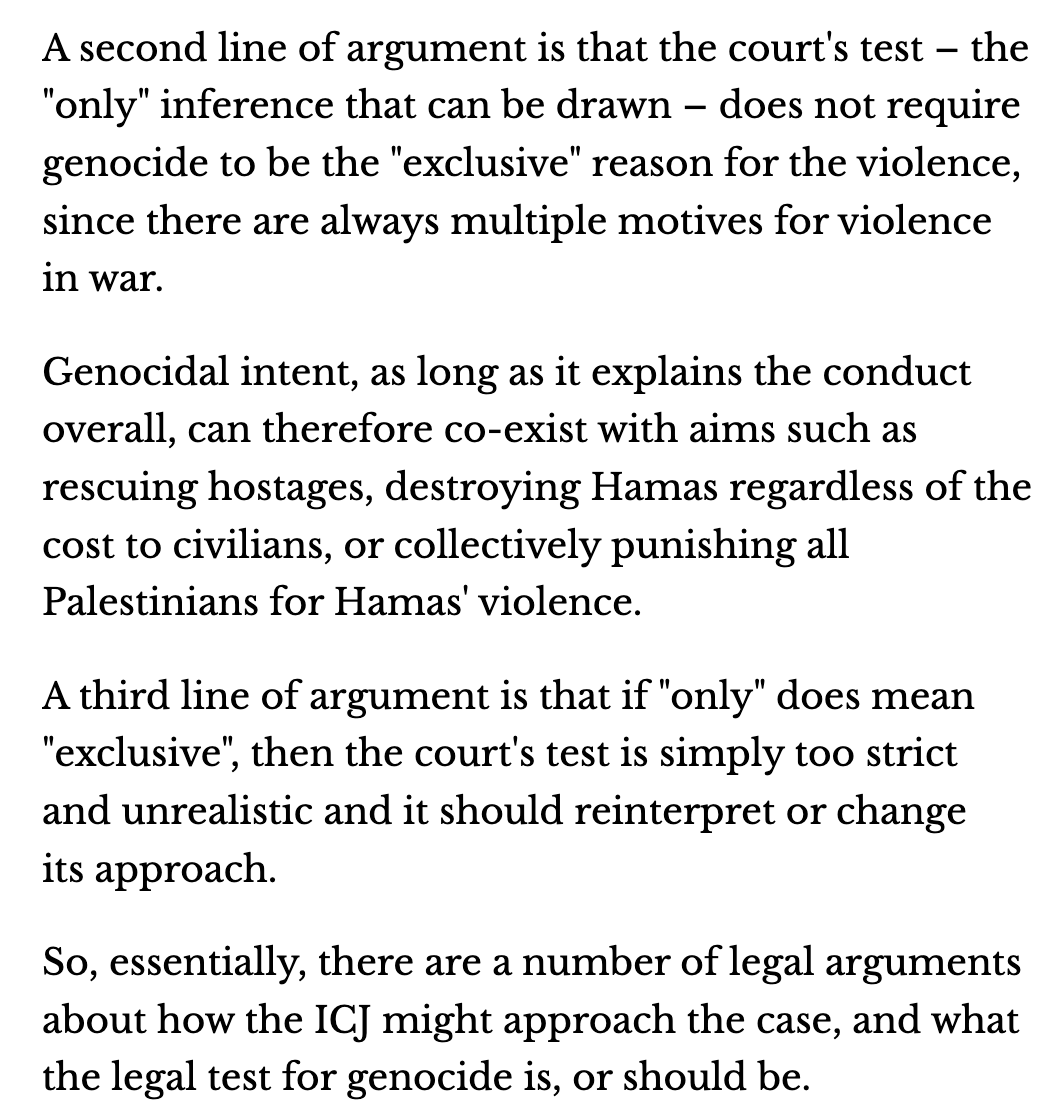
But I want to reiterate that the ICJ has never said that the definition of genocide requires a "single intent."
Nor does the ICJ's standard of proof preclude a finding of genocide in cases of plural intent.
1/🧵
The definition of genocide is obviously consistent with plural intentions.
If a State got up in from of the ICJ and said "well, yes, we intended to destroy a substantial part of the group, but we also intended [fill in the blank]" that is an admission, not a defense.
2/
The ICJ's standard of proof allows for a finding that the only reasonable inference that can be drawn from a pattern of conduct is that it was intended to destroy a substantial part of a group and also intended to achieve other goals.
3/
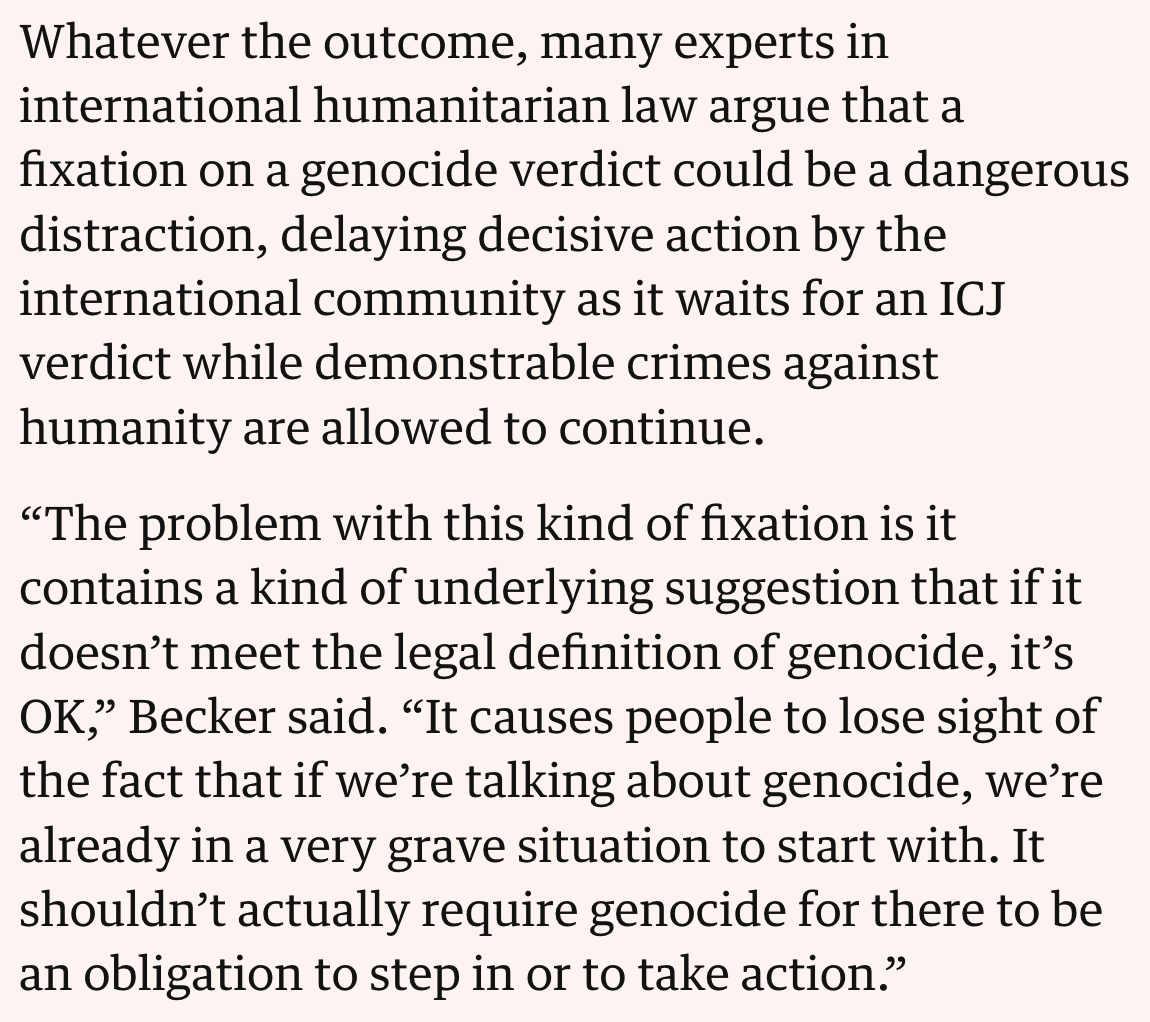
"When large numbers of civilians are systematically and indiscriminately being bombed, shot and starved, states have a legal obligation to stop the violence, regardless of the label applied."
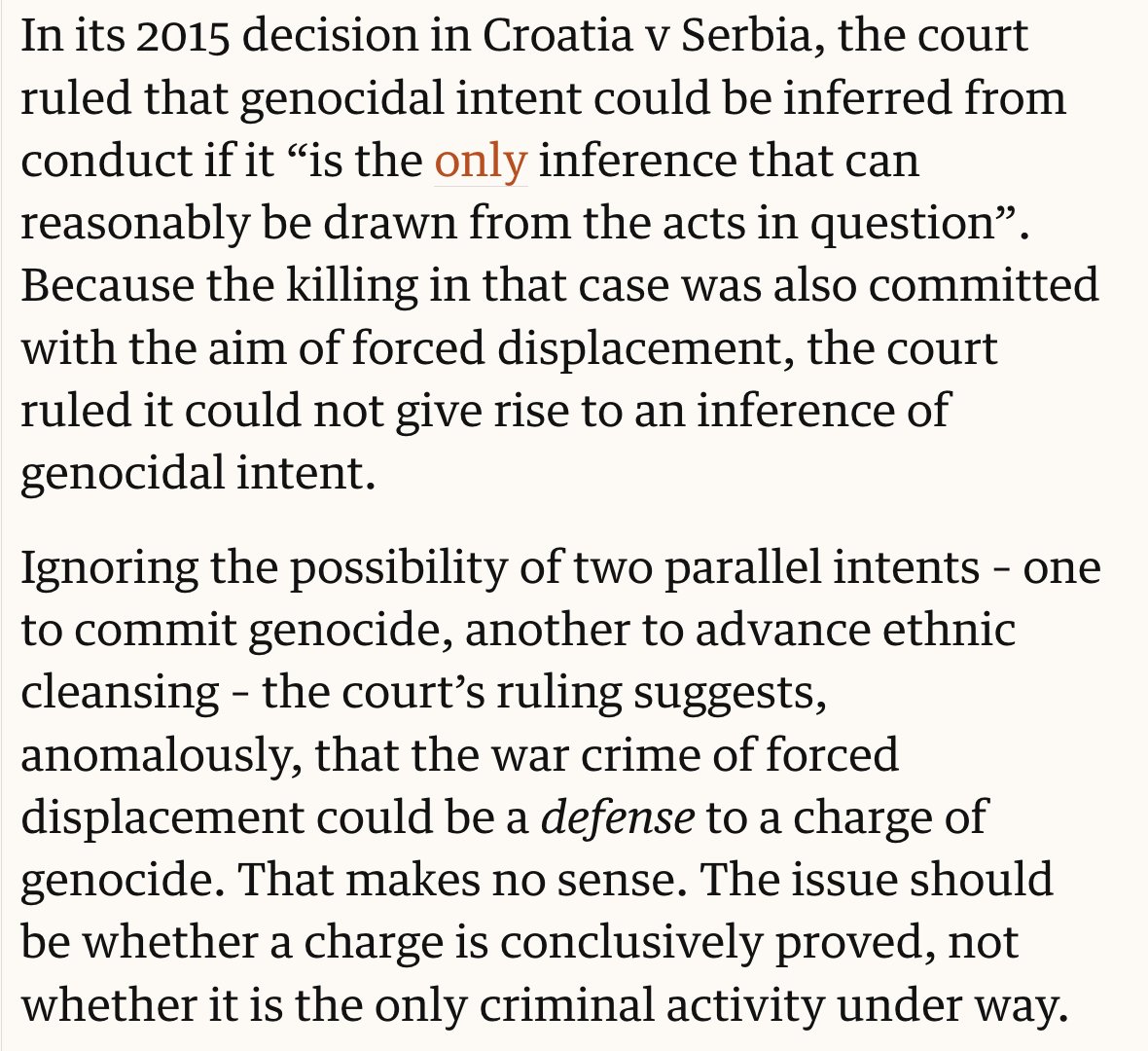
Genocidal intent includes an intent to destroy a substantial part of a group as a means to achieve further military or political aims, such as the forcible displacement of the rest of the group.
This is basically how the ICTY and ICJ saw Srebrenica.
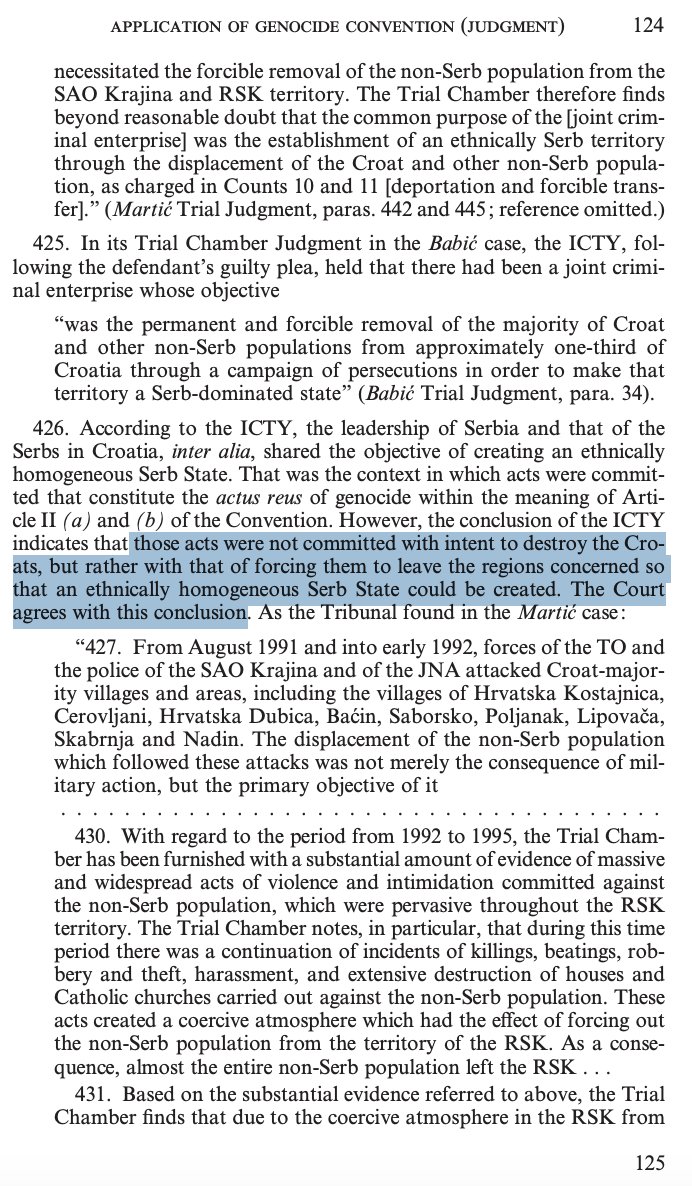
In my view, the ICJ in Croatia v. Serbia did not ignore the possibility of parallel (or plural, or instrumental) intentions, or make genocidal intent impossible to prove when other intentions are present.
2/
The ICJ found that the killings “were not committed with intent to destroy the Croats, but rather with that of forcing them to leave the regions concerned."
The Court found there was only one intent, and it was not and did not involve an intent to destroy part of a group.
"Under the Fourth Geneva Convention, Israel as the occupying power has an obligation to provide unconditional and adequate supplies of essential good and services to the entire population under its control."
"Israel is not fulfilling this obligation."
1/
"When the population is not adequately supplied, the parties ... have an obligation to allow and facilitate the rapid, safe, and unimpeded passage of humanitarian assistance to all persons in need."
"This obligation is results-based. It's not merely an obligation of means."
2/
"Neither Hamas nor Israel is complying with this obligation."
"We would also like to recall that the use of starvation as a method of warfare is prohibited and constitutes a war crime."
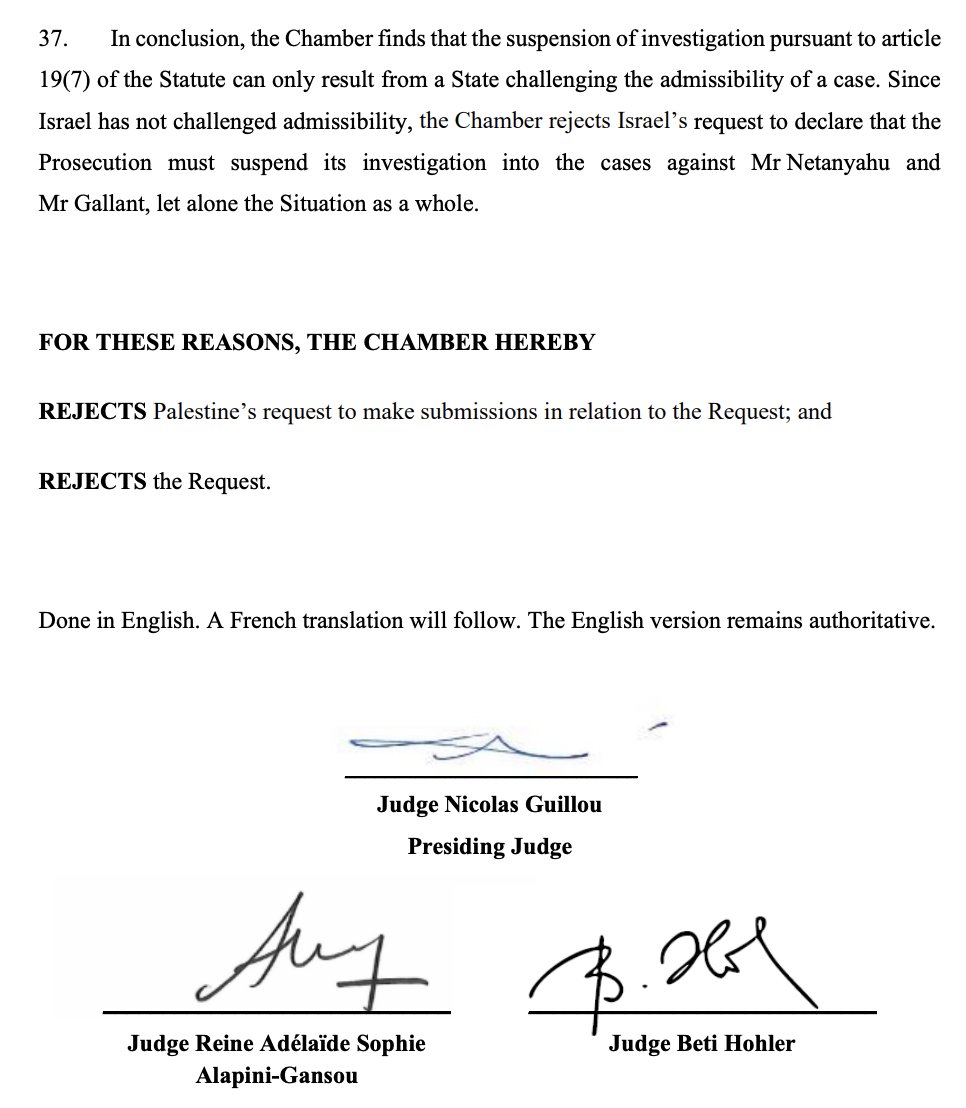
The ICC Pre-Trial Chamber has rejected Israel's request to withdraw or vacate the arrest warrants for Netanyahu and Gallant and to suspend the ongoing investigation.
I will add a 🧵 below soon.
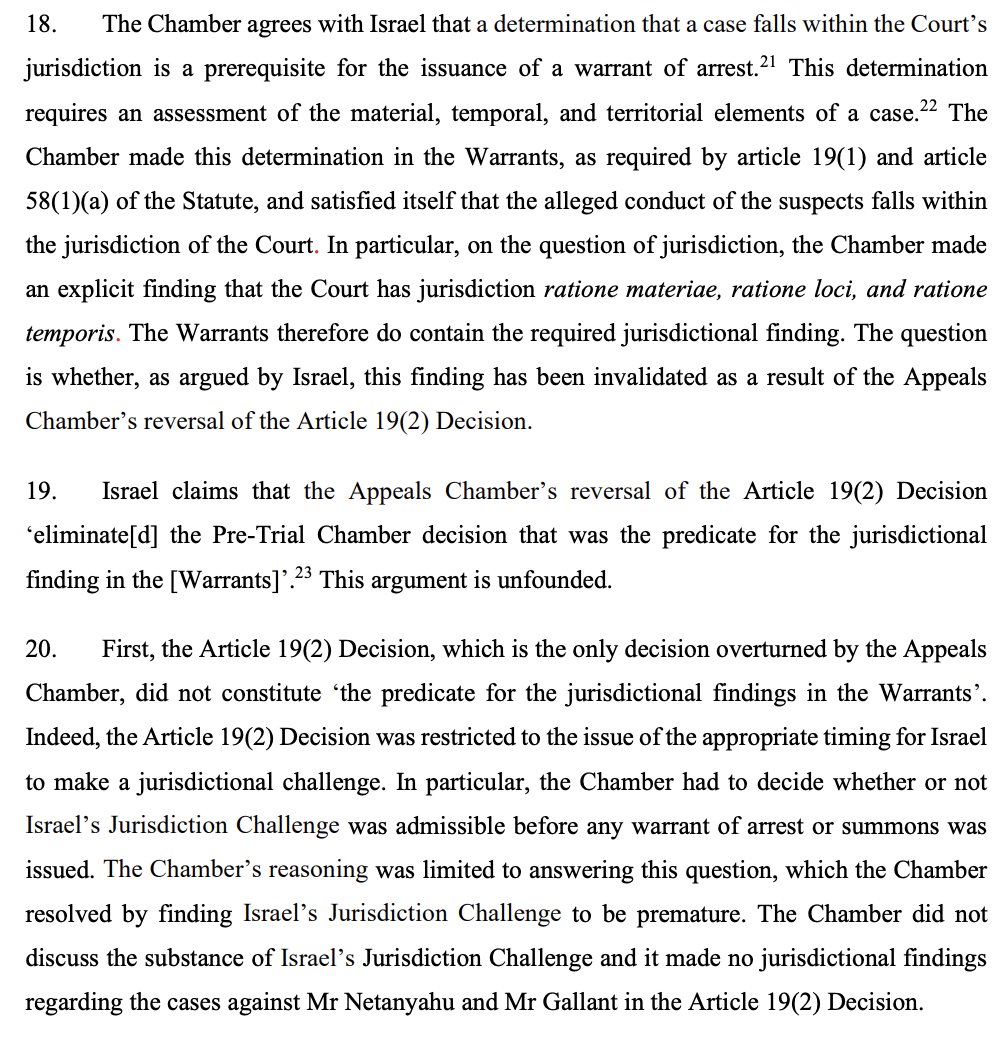
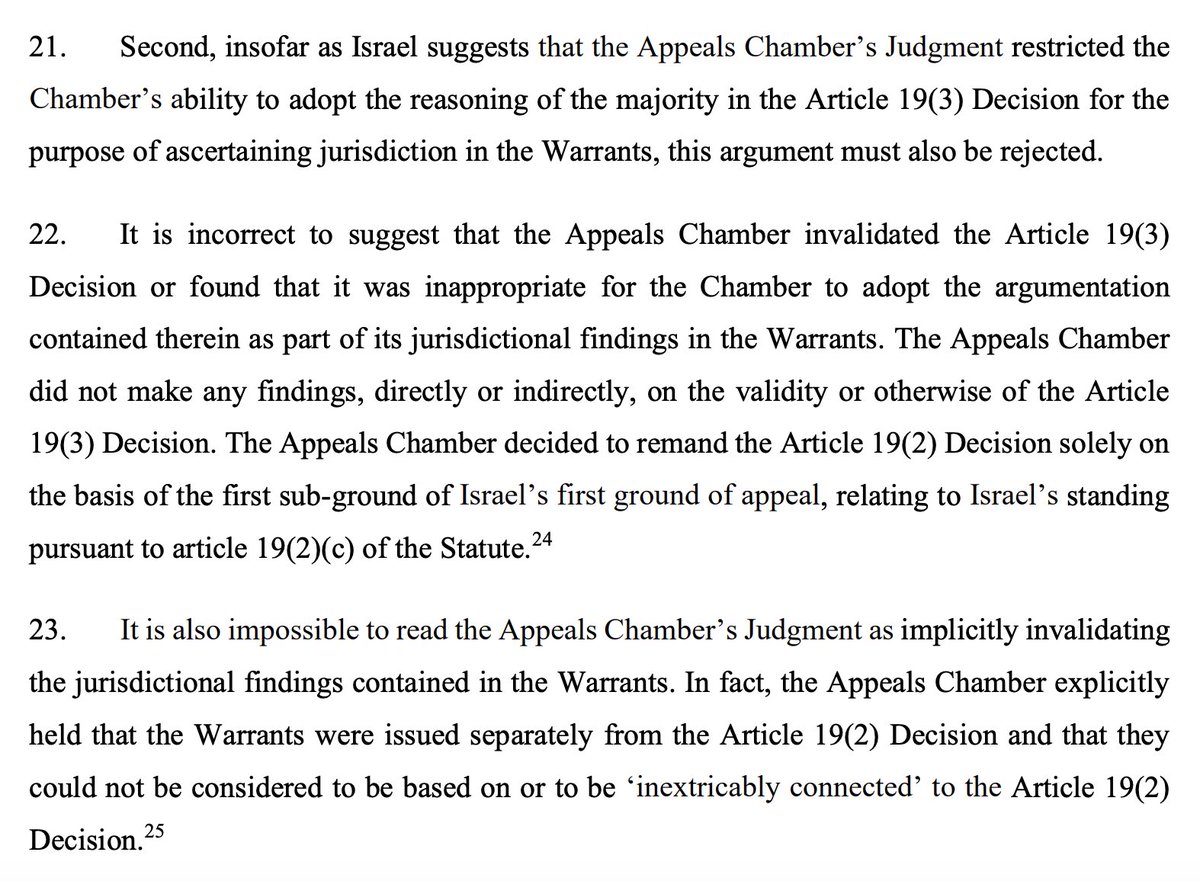
1. The PTC satisfied itself that it has jurisdiction over the case when it issued the warrants per art 19(1).
The Appeals Chamber's decision on Israel's jurisdictional challenge under 19(2) did not invalidate the PTC's 19(1) decision.
2. The AC decision also did not affect the PTC's ability to adopt the reasoning or argumentation of (a different composition of) the PTC's 2021 decision that the Court has jurisdiction over crimes committed in Palestine.