fascinating webinar on extension of debt moratorium for developing countries hit by COVID19 pandemic.
Private investor rep:
* debt restructuring a la Ecuador (not Argentina)
* 'we mark to market on daily basis, if you want Private Sector Involvement, that means our investors will question our future strategy'
* private sector will engage - we are doing it with Zambia
*there is countries valuing market access, moratorium on debt payments confused issuers, who did not appreciate the trade-offs
Q: if the private sector is so benevolent, why was there no private response to DSSI (Debt Service Suspension Initiative)?
A: well, it wasnt voluntary.
let's have a discussion, but be aware (a) you need a formal process, with formal advisors; and (b) trade-offs are there
Germany is unhappy with DSSI without private sector involvement because German tax payer money going into debt service to private sector.
It doesnt know how to solve trade-off DSSI/market access, so today the G7 answer: we extend DSSI if country requests IMF loan
talk about the worst of both worlds: G7 solution is IMF austerity + private debt service.
Basically Argentina before Fernandez/Guzman.
to question of what would have private sector done if mandatory involvement in DSSI, asset manager:
'since we mark to market on daily basis, we'd take hit even w one missed coupon payment. We would have asked if it makes sense to adjust portfolio after talking to our investors'
Aberdeen Asset Management rep: we may not have been involved in DSSI, but we engage behind scenes w UNECA and African countries, and what we hear is we want more liquidity, and we work on that with derisking measures (hello #WallStreetConsensus)
• • •
Missing some Tweet in this thread? You can try to
force a refresh

Wolfgang Streeck dijo uno vez que los bancos centrales son la vanguardia del capital financiero dentro del estado, pero no predijo los aplausos tan fuerte en la lucha de clase.
el gobierno de Petro esta en una guerra distributiva con los financieros en dos frentes: 1. Corto plazo, amenaza profitabilidad: gobierno incremento el salario mínimo y se esta negando implementar austeridad fiscal 2. Estructural: re-nacionalizar pensiones privadas.
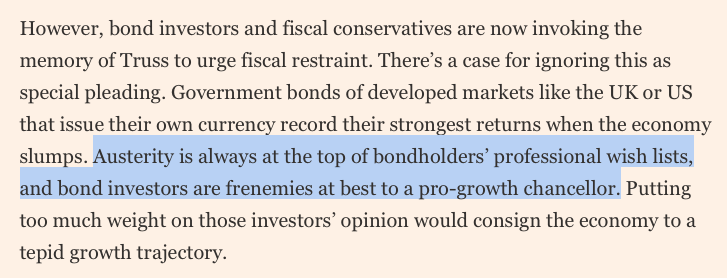
1. Los financieros quieren austeridad: inflación/deficit = tasas de interés altas y precios de bonos gubernamentales en baja, rendimientos para tenedores de bonos en baja.
Como dijo un bond trader: para los BlackRocks del mundo, crecimento bajo= rendimientos altos
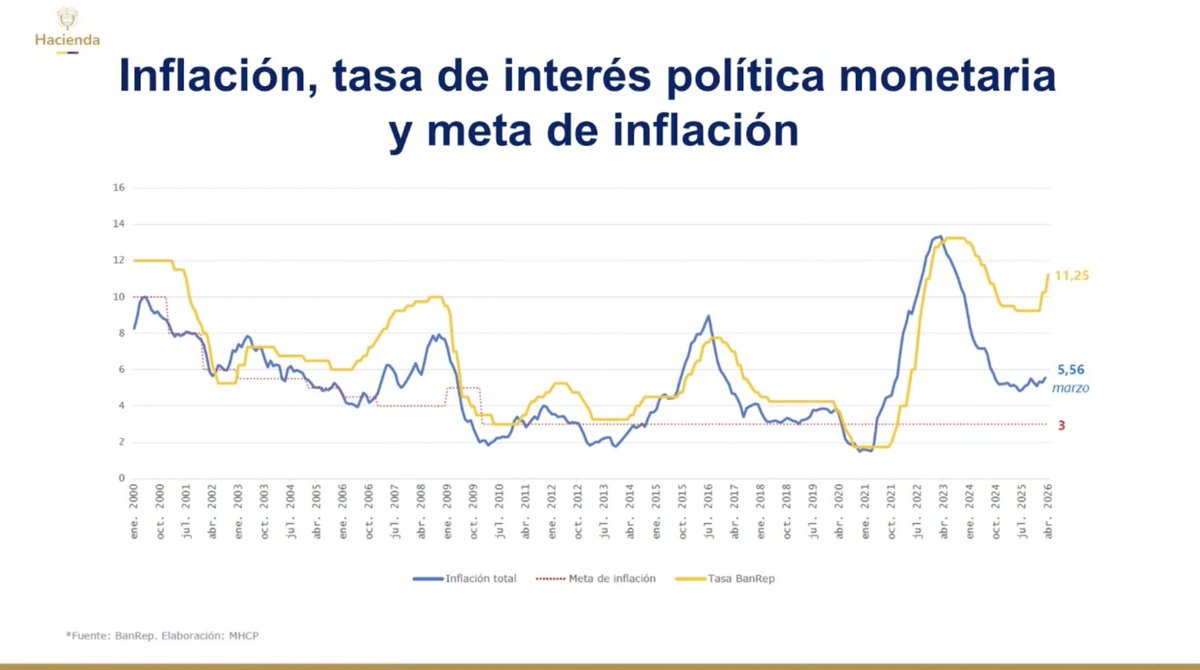
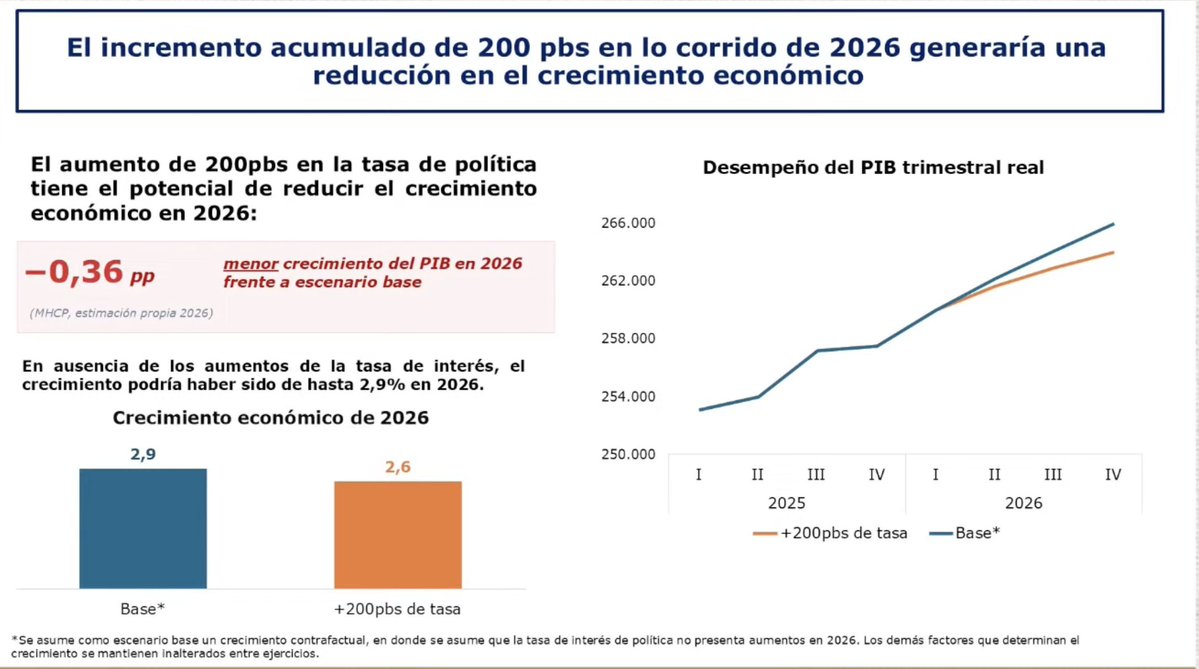
Estoy en una conferencia sobre política monetaria en Colombia, donde hay una lucha abierta entre el Ministerio de Hacienda y el banco central, que ha aumentado las tasas (antes de las elecciones)
el Ministro de Hacienda está cuestionando una política monetaria uberhawkish
estamos en un mundo nuevo post liberal donde intensifican las luchas entre gobiernos confrontados con choques (de oferta) y bancos centrales independientes que, para estabilizar, solo pueden/saben subir las tasas de intereses
Jay Powell/ Fed have quietly caved to Trump. US central bank independence is now a smokescreen.
not because the Fed lowered interest rates yesterday, as Trump demanded.
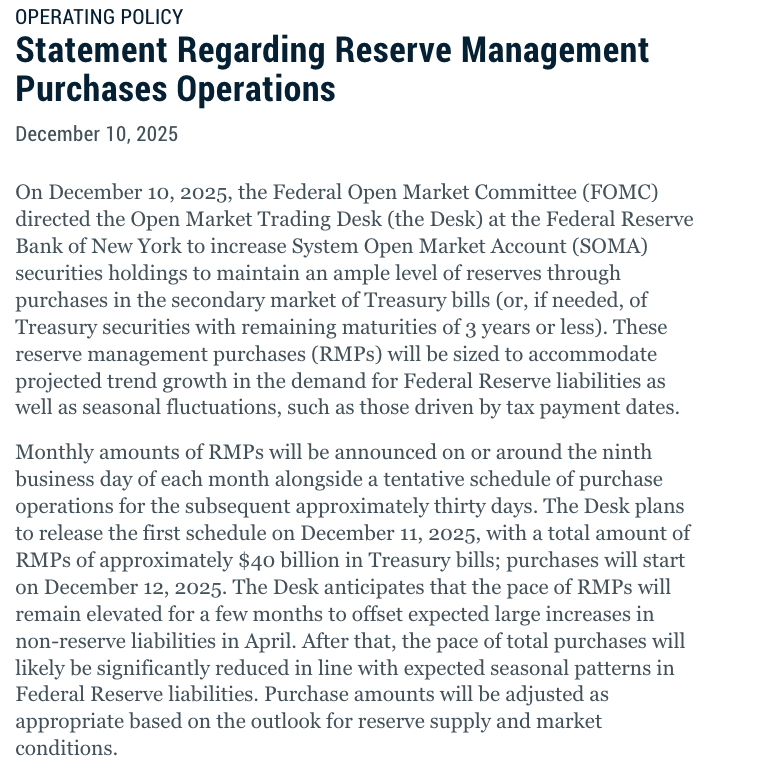
Less publicised, but more important, is the Fed decision to purchase USD 40bn of Treasury bills monthly.
The Fed calls this Reserve Management Purchases but it's central bank support for government debt (and for Trump's policies more broadly), a form of monetary-fiscal coordination pervasive in the age of fiscal dominance after WW2.
How much is USD 40bn? Recall the recent hype around stablecoin issuers - the companies that Bessent claimed would strengthen US Treasury demand.
These bought USD 40 bn Treasuries over June 2024-June 2025. The Fed would buy in a month what Tether + Circle buy in a year.
Rentoul doesnt know it but his 'good grief' reflects a monetarist choice of Bank - government relationship.
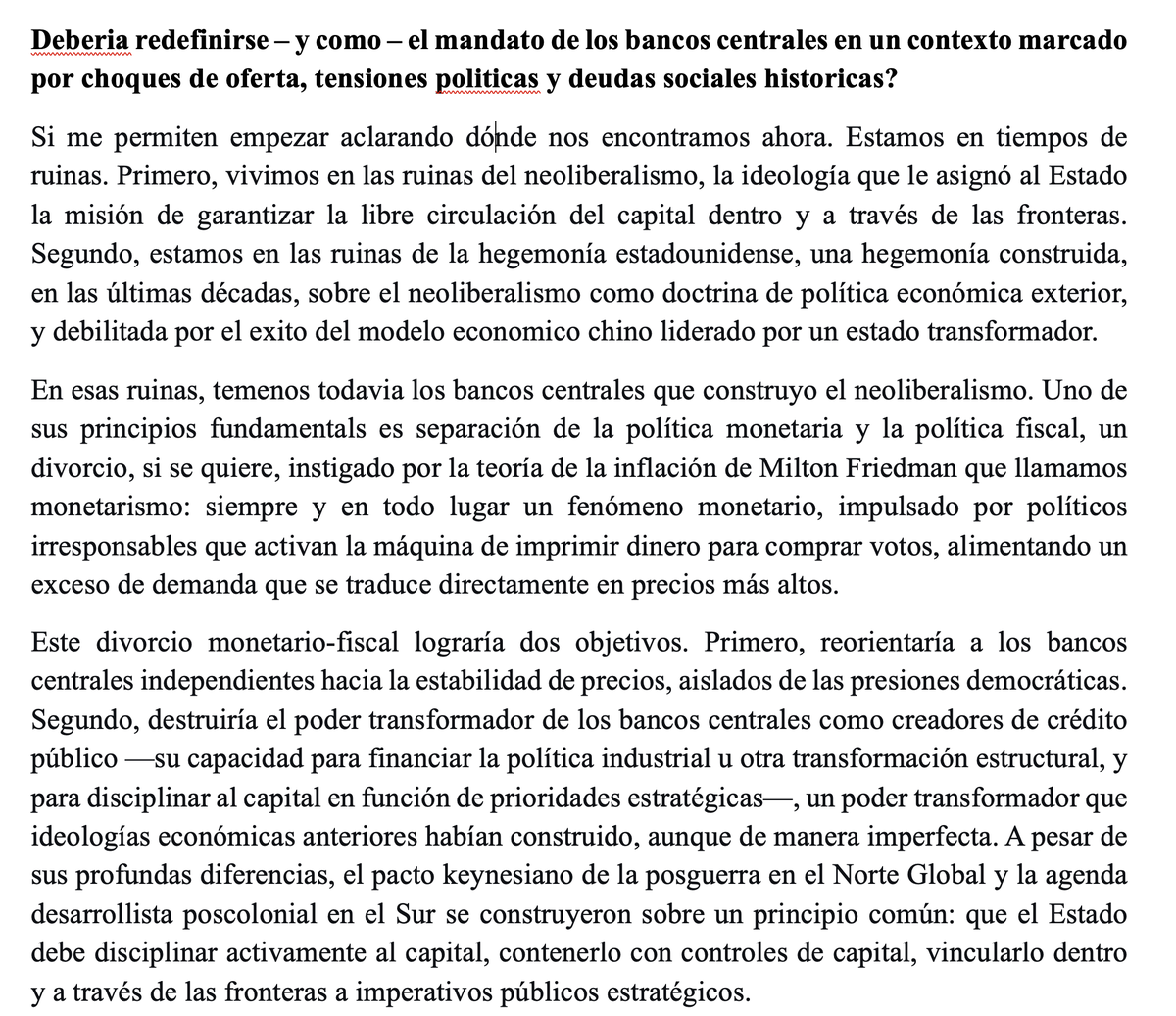
popularised by Milton Fridman, monetarism wants central banks FULLY independent from democratic decisions.
before 2008, this divorce was fully operational
the monetarist divorce unravelled during the 2008 global financial crisis.
central banks HAD TO buy government bonds and stabilise the financial system because these bonds are the arteries of modern finance, without them, booom.
#WallStreetConsensus & its failure to mobilise trillions in @FT
4 things missing:
a) hegemonic dominance of 'mobilising private finance' in development/climate
b) asking why hegemony
c) mushrooming scaling up initiatives
d) do we want success?
a) Mobilising private finance remains global game - (Bridgetown, Biodiversity COP16, 4th Financing for Development conf) & national game (UK Labour gov, Brazil/Colombia/Chile decarbonisation).
*The world's most powerful political narrative that doesnt deliver
b) hegemonic not (just) because Big Finance is powerful, but postneoliberal, transformative state cant get rid of neoliberal macro - independent central bank dominating fiscal.
without macroinstitutional change- How do we pay for transformation- only one answer: private finance
when Big Finance occupies the state and takes over the social contract, nurses struggle, grandparents struggle, parents struggle, renters struggle, private equity flourishes.