Abraham Lincoln maintained an open-door policy throughout his presidency, inviting visitors from all walks of life to meet with him at the White House. (1/5)
Image Credit: Library of Congress
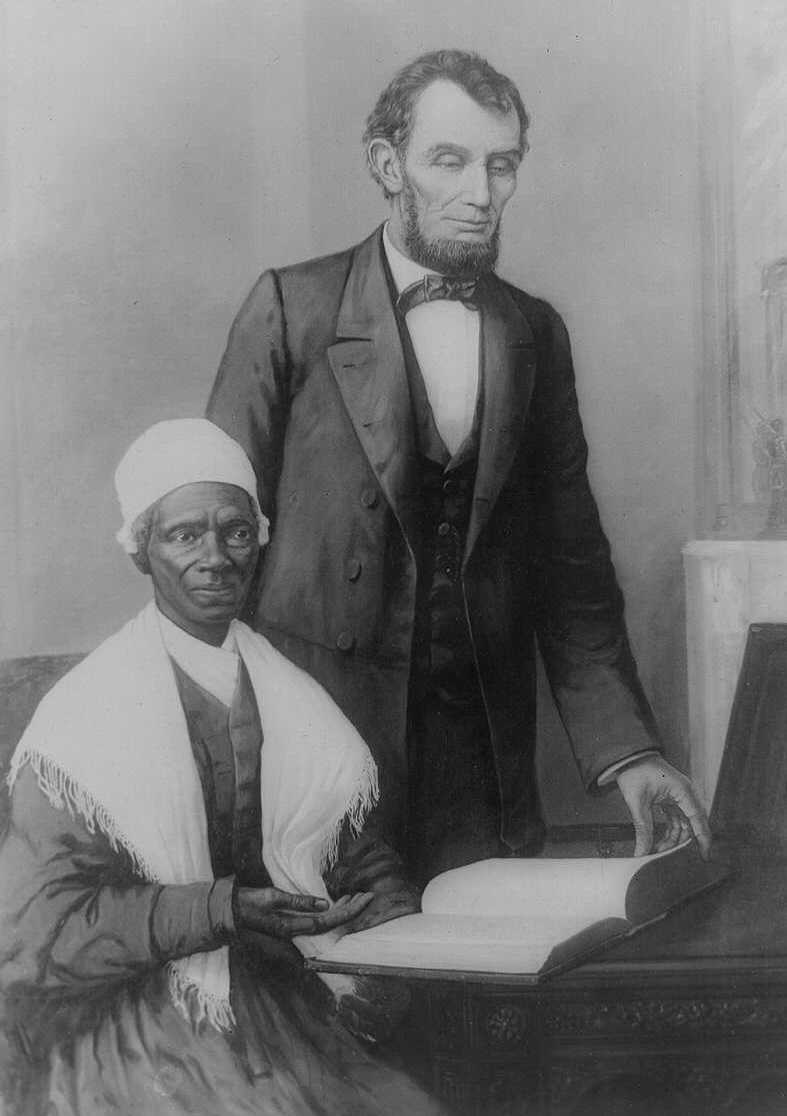
In 1864, Sojourner Truth—a former slave, renowned abolitionist, and women’s rights activist—decided to make the long journey from Battle Creek, Michigan, to the nation’s capital to speak to the president. (2/5)
Image Credit: Library of Congress
According to a later account of the meeting attributed to Truth, she praised Lincoln’s time in office, especially the issuing of the Emancipation Proclamation, but admitted that she had not heard of him before he ran for president. (3/5)
According to Truth’s account, Lincoln then “smilingly replied, ‘I had heard of you many times before that,’” rightfully acknowledging the important role she played as an activist on the national stage long before the Civil War. (4/5)
At the end of their time together, so the story went, the President showed Truth a Bible he received from a group of African Americans from Baltimore, Maryland. An artist imagined this moment thirty years later, as seen in this drawing. (5/5)
Image Credit: Library of Congress
• • •
Missing some Tweet in this thread? You can try to
force a refresh

Meet Abby Gunn Baker – the woman responsible for the creation of the White House China Collection. In 1901, Baker was tasked with turning public opinion toward preservation by Colonel Theodore A. Bingham after he discovered previous presidential State Services had been discarded.
📷: White House Historical Association
To combat the poor preservation of the State Services, Colonel Bingham asked Baker to write a scholarly article on the subject, which led her to spend four months studying the remaining presidential china in the White House.
By 1903, Abby Baker’s first article on the preservation of the services was published in Munsey’s Magazine. First Lady Edith Roosevelt (pictured) took great interest in Baker’s article and formed the White House china collection.
🖼️: White House Historical Association/White House Collection
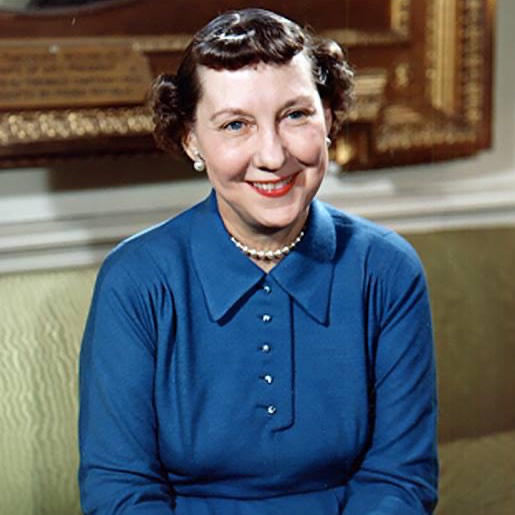
First Lady Mamie Eisenhower’s iconic hairdo was the work of renowned salon owner Elizabeth Arden. Though Mrs. Eisenhower sported the hairstyle since the 1920s, it was perfected at Arden’s Paris salon while she and General Dwight Eisenhower lived abroad during the 1940s.
When Eisenhower won the 1952 presidential election, Arden offered to dispatch a hairdresser to Washington to help the new first lady style her “precious, much discussed bangs.” Mrs. Eisenhower graciously accepted the offer.
In order to preserve the first lady’s signature look, Arden suggested that one of her stylists make a structural diagram to give any hairdresser a guide to recreating Mrs. Eisenhower’s look. It worked: the first lady wore bangs for the rest of her life.
Since 1817, President James Monroe's gilded bronze and mirrored plateau has impressed White House visitors.
Image: White House Historical Association
After the British burned the White House in 1814, President Monroe purchased Parisian furniture to refurbish the scorched Executive Mansion. Among the newly acquired furniture was the gilded centerpiece, made by the Parisian firm Denière et Matelin.
Image: White House Collection/WHHA
Described as "mat gilt with garlands of fruit and vines," Monroe's plateau featured 16 figures presenting wreaths and pedestals. It is accompanied by three baskets, a pair of urns, and stands, which remain today.
One of First Lady Edith Roosevelt’s White House legacies was the introduction of garden parties (pictured). Before becoming first lady, she held extravagant garden parties at the Roosevelt’s family home in Oyster Bay, New York.
📷: @SagamoreHillNHS
@SagamoreHillNHS Mrs. Roosevelt’s White House garden parties gained such traction that local papers announced that her inaugural party as “the first time in the history of the White House that the mistress of the mansion has given this kind of function.”
🖼️: White House Collection/WHHA
@SagamoreHillNHS With hundreds of guests attending her inaugural party, she wore an elegant white taffeta and organdy dress, trimmed with ruffles and lace. Pictured is Mrs. Roosevelt’s 1905 garden party on the South Lawn of the White House.
It’s #FirstLadyFriday, and today we’re highlighting the life of First Lady Jane Pierce, born in New Hampshire on this day in 1806.
Image: Library of Congress
1/7
Jane Appleton married Franklin Pierce in 1834, though she was uninterested in politics and the spotlight that came with it.
Image: White House Collection/White House Historical Association
2/7
Their marriage was marked by tragedy, as they had lost two young children before Pierce’s election to the presidency in 1852. Unfortunately, death followed them to the White House.
3/7
Salvadore Catalano, a Sicilian-born sailor, became an American naval hero as a critical player in a secret mission during the First Barbary War.
A native of Sicily, his composure and knowledge of Tripoli Harbor were essential to the mission.
Image: Library of Congress
1/7
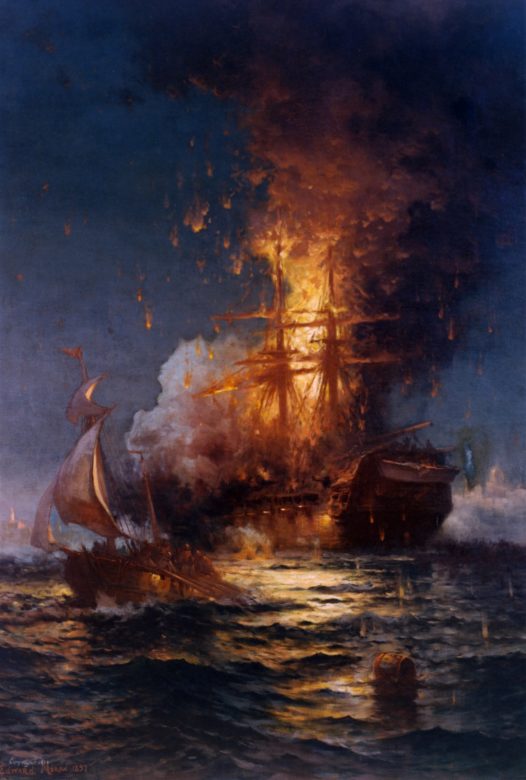
In one of the most courageous actions in American naval history, Catalano piloted the Intrepid for Lieutenant Stephen Decatur’s destruction of the captured USS Philadelphia in Tripoli Harbor in 1804.
Image: U.S. Naval Academy Museum Collection/U.S. Navy Photograph
2/7
The mission to destroy the USS Philadelphia was perilous. Pirates (also called Corsairs) on board the Philadelphia hailed Decatur, but it was Catalano who answered, buying time for the Intrepid crew to attach ropes to the Philadelphia to pull the vessels together.
3/7