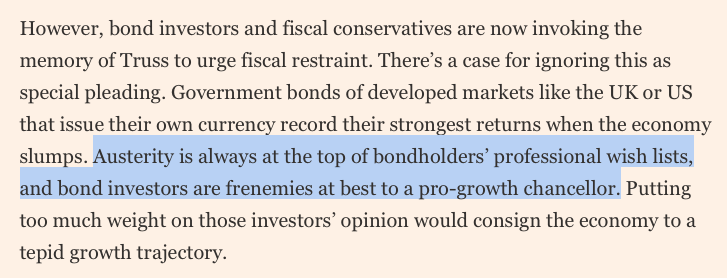
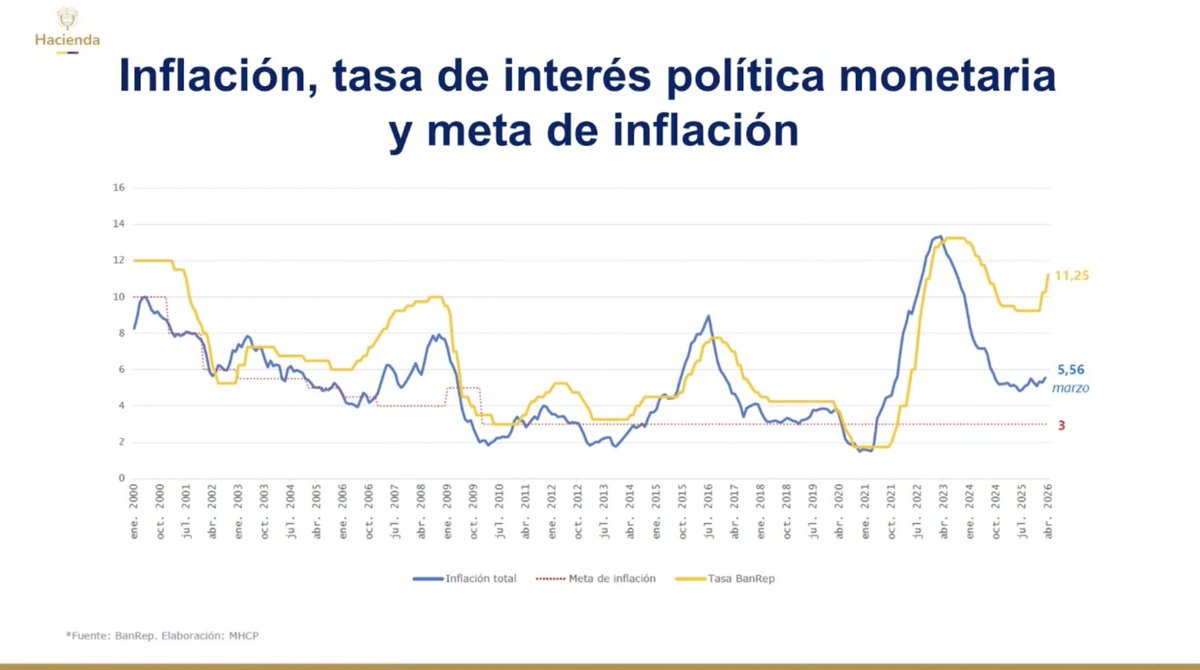
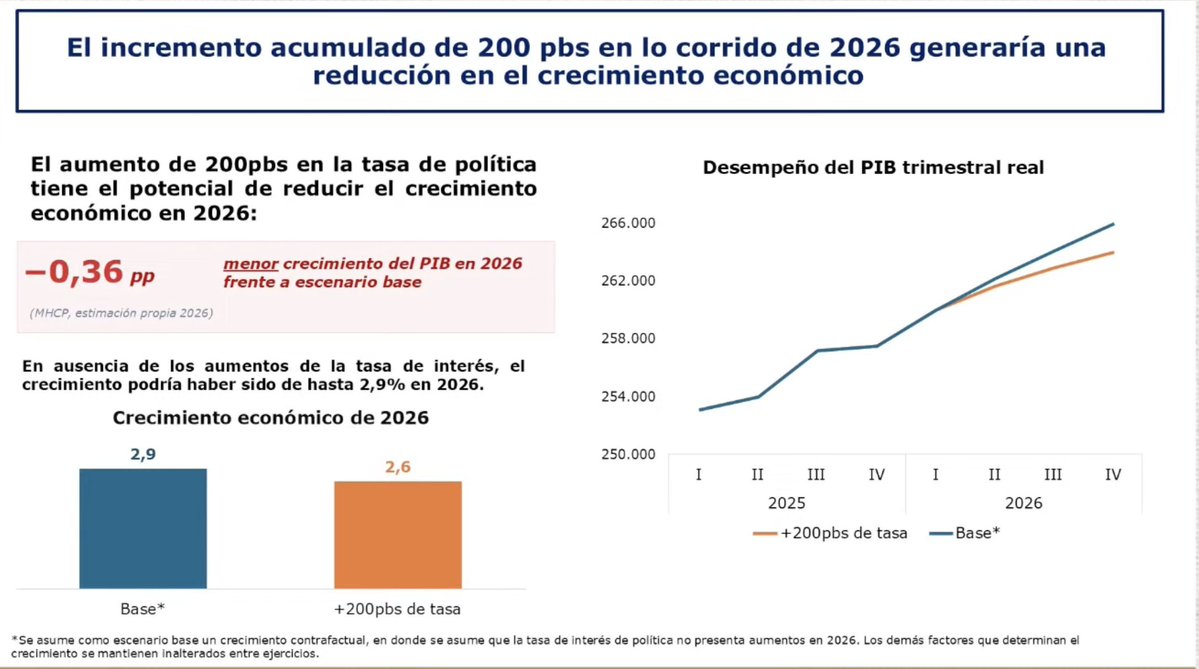
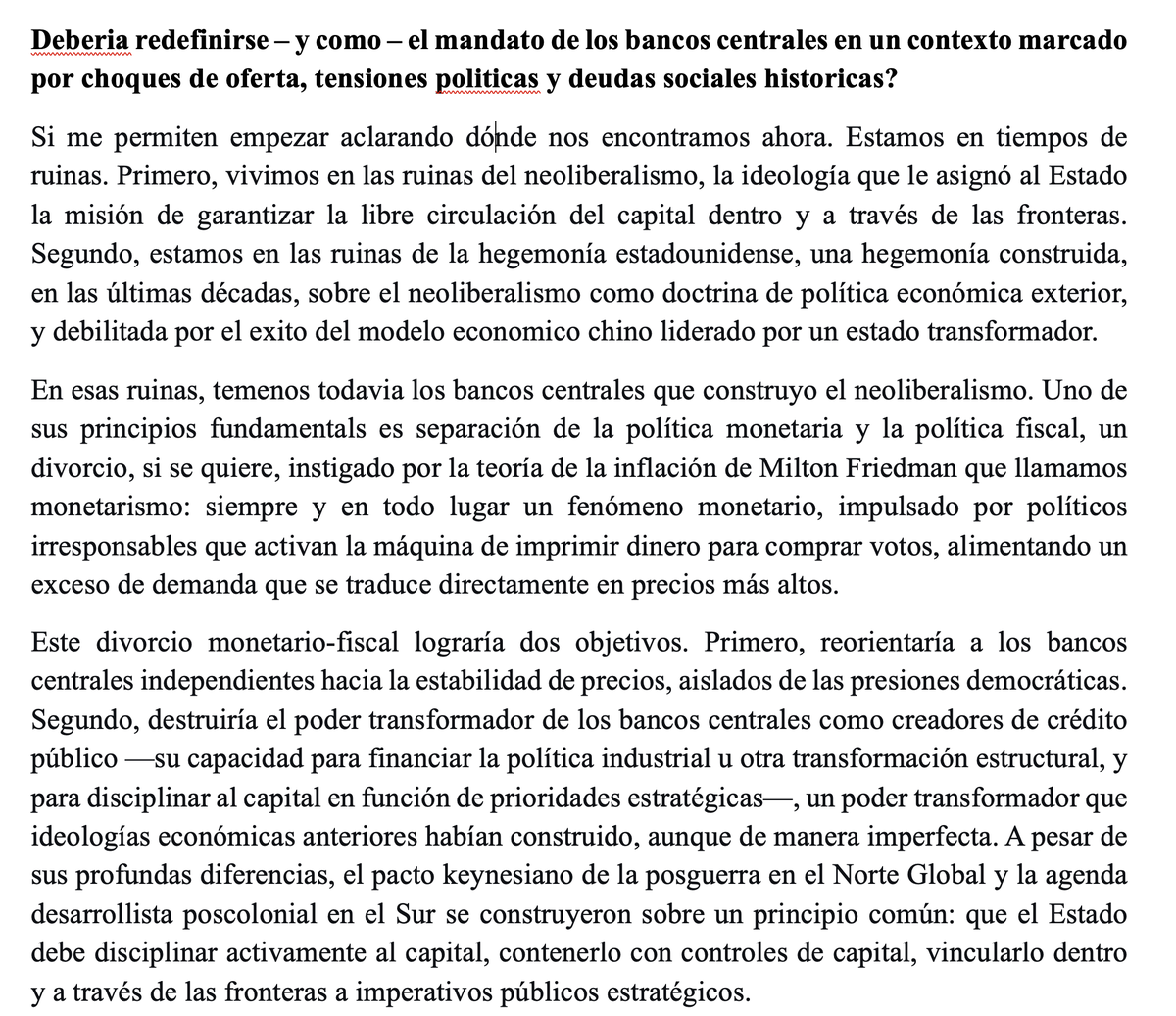
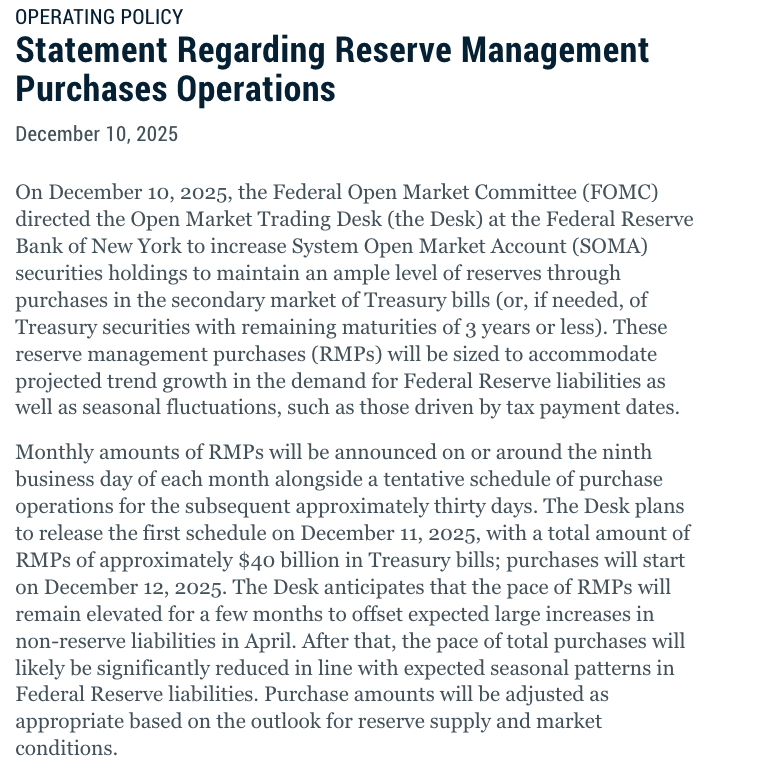
good morning, Nature as an Asset Class project:
a #WallStreetConsensus global elite solution predicated on idea that we need to 'value' nature if we want to protect it.
The Paulson Institute report will shape incoming 15th UN Convention on Biological Diversity
a #WallStreetConsensus global elite solution predicated on idea that we need to 'value' nature if we want to protect it.
The Paulson Institute report will shape incoming 15th UN Convention on Biological Diversity

endorsements: UN Undersecretary, Mark Carney, Mario Draghi (!!!), Kristalina Georgieva (IMF), Tom Lovejoy (Amazon Biodiversity Centre), Luis Alberto Moreno (IADB), Robert Zoellick

How to construct Nature as an Asset Class into a hegemonic climate narrative
1. Establish a biodiversity financing gap: between total annual capital flows into biodiversity conservation and funds needed to manage biodiversity.
Estimated at between USD500bn to USD 800 bn a year.
1. Establish a biodiversity financing gap: between total annual capital flows into biodiversity conservation and funds needed to manage biodiversity.
Estimated at between USD500bn to USD 800 bn a year.

2. Set out policy responses, fundamentally relying on state derisking private investments in nature asset classes
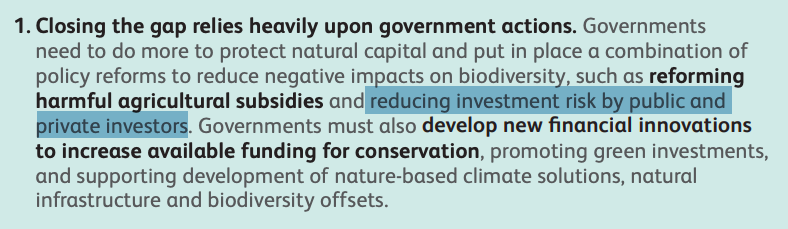
Securitise nature.

and, as with Infrastructure as an Asset Class, change financial systems everywhere towards market-based finance that can accommodate portfolio flows.

there is a paradigm shift underway - I call it Wall Street COnsensus - it's forged behind closed doors in negotiations between governments and private finance, with environmental CSOs a (willing) participant that fails to ask critical questions
https://twitter.com/DanielaGabor/status/1280081449748750336?s=20
and here is the political power of the Paulson Report on Nature as an Asset Class: Leaders' Pledge today to put wildlife and climate at heart of post-Covid recovery plans
theguardian.com/environment/20…
theguardian.com/environment/20…
on first sight the Leaders' Pledge sounds as if Bernie Sanders is President of US and working hard with the UN to deal with climate crisis
leaderspledgefornature.org/Leaders_Pledge…
leaderspledgefornature.org/Leaders_Pledge…

but then the Wall Street Consensus is quietly framing the entire Biodiversity agenda: nature-based solutions means Nature as an Asset Class

note the language: incentivising not regulating finance to become greener

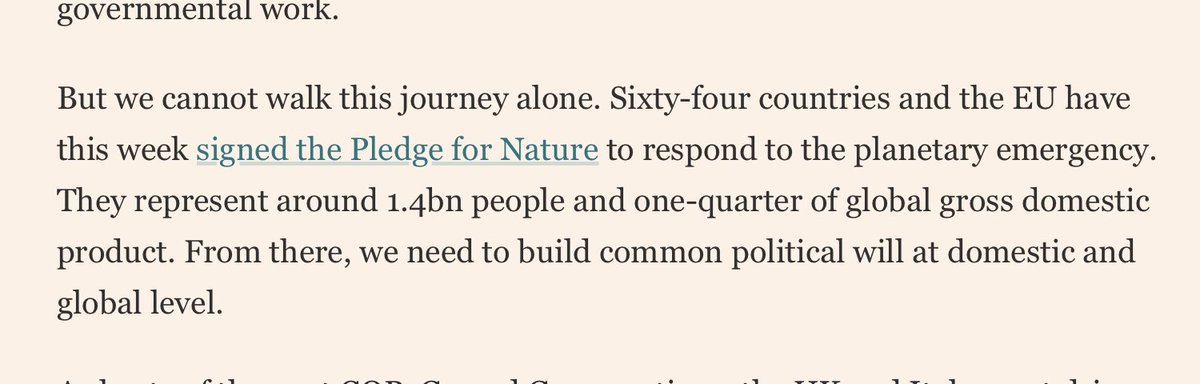
and in @FT today, Bangladesh PM frames the green COVID19 recovery as a question of Nature as an Asset Class (hello global coordination)
ft.com/content/f29422…
ft.com/content/f29422…

• • •
Missing some Tweet in this thread? You can try to
force a refresh